Categories
Health

A Second Woman Accuses Supreme Court Nominee Brett Kavanaugh of Sexual Misconduct


If you’re finding it difficult to keep up with the fast-moving news cycle around Supreme Court nominee Brett Kavanaugh, you are not alone. Sunday night brought a new allegation of sexual misconduct from a second woman via a piece by Ronan Farrow and Jane Mayer in The New Yorker. And now Thursday’s scheduled hearings—which were to feature testimony by Kavanaugh and his first accuser, Christine Blasey Ford—may be in jeopardy of being canceled.

So let’s break down the latest updates in Kavanaugh’s nomination hearings.

A second woman, Deborah Ramirez, has accused Kavanaugh of sexual misconduct.

Ramirez claims that the incident occurred during she and Kavanaugh’s freshman year at Yale University. She told The New Yorker that she was initially hesitant to speak publicly (partly because of gaps in her recollection due to the consumption of alcohol) but later told Farrow and Mayer that “she remembers Kavanaugh had exposed himself at a drunken dormitory party, thrust his penis in her face, and caused her to touch it without her consent as she pushed him away.”

Like Ford before her, she is asking the FBI to investigate the incident and Kavanaugh.

Kavanaugh denied the allegations in a statement to the magazine. “This alleged event from 35 years ago did not happen. The people who knew me then know that this did not happen, and have said so,” it reads. “This is a smear, plain and simple. I look forward to testifying on Thursday about the truth, and defending my good name—and the reputation for character and integrity I have spent a lifetime building—against these last-minute allegations.”

But according to an unnamed former classmate, who told the New Yorker he is “one-hundred-per-cent sure,” Kavanaugh was the student who exposed himself to Ramirez. “I’ve known this all along,” he told the magazine. “It’s been on my mind all these years when his name came up. It was a big deal.”

Others, including the wife of one of the male students she says was involved in the incident, disputes Ramirez’s claims.

“We were the people closest to Brett Kavanaugh during his first year at Yale. He was a roommate to some of us, and we spent a great deal of time with him, including in the dorm where this incident allegedly took place,” a statement given to the New Yorker from the wife and three other classmates—identified as Dino Ewing, Louisa Garry, and Dan Murphy—reads. “Some of us were also friends with Debbie Ramirez during and after her time at Yale. We can say with confidence that if the incident Debbie alleges ever occurred, we would have seen or heard about it—and we did not.”

Christine Blasey Ford agreed to publicly testify about her allegations.

On Sunday, the New York Times reported that Ford had reached an agreement with the Senate Judiciary Committee to appear before them on Thursday. This was after much back and forth that saw Republican leadership pushing for a quick date while Ford and her legal team worked to ensure she was treated fairly.

“Despite actual threats to her safety and her life, Dr. Ford believes it is important for senators to hear directly from her about the sexual assault committed against her they will not impede the hearing taking place,” her lawyers said in a statement.

However, Sen. Dianne Fienstein (D-Calif.) is calling for Thursday’s hearings to be canceled.

In a letter to Senate Judiciary Committee chairman Chuck Grassley (R-Iowa), Feinstein cited the second allegation against Kavanaugh as reason to postpone the hearings. She called for both Ramirez and Blasey Ford’s claims to be investigated by the FBI.

“We need a fair, independent process that will gather all the facts, interview all the relevant witnesses, and ensure the Committee receives a full and impartial report,” she writes. “Should the White House continue to refuse to direct the FBI to do its job, the Committee must subpoena all relevant witnesses.”

“It’s time to set politics aside,” she continues. “We must ensure that a thorough and fair investigation is conducted moving forward.”

The White House and leading Republicans are standing by Kavanaugh—for now.

White House spokesperson Kerri Kupec said in a statement to CNN, “This 35-year-old, uncorroborated claim is the latest in a coordinated smear campaign by the Democrats designed to tear down a good man. This claim is denied by all who were said to be present and is wholly inconsistent with what many women and men who knew Judge Kavanaugh at the time in college say. The White House stands firmly behind Judge Kavanaugh.”

Just this morning President Donald Trump called the allegations “totally political” and says “I am with him [Kavanaugh] all the way.”

Sen. Lindsey Graham (R-S.C.), a member of the Senate Judiciary Committee went on Fox News Sunday to deride Ford’s claims. “What am I supposed to do? Go ahead and ruin this guy’s life based on an accusation?” he said. “I don’t know when it happened, I don’t know where it happened, and everybody named in regard to being there said it didn’t happen.”

Women are mobilizing in support of Blasey Ford and Ramirez.

A number of women’s groups have organized a walkout scheduled for 1 PM ET Monday. The National #BelieveSurvivors Walkout will call attention to the plight of survivors of sexual assault and misconduct everywhere, while also asking the Senate to vote against Kavanaugh’s nomination.

“The groundswell of support for Dr. Ford is exactly what the me too. movement is about. So often, survivors struggle to disclose their assault or abuse and when they do, the response is similar to what we’re seeing now,” says #MeToo founder, Tarana Burke. “It’s been almost 30 years since Anita Hill’s testimony and we want to ensure that the Senate Judiciary Committee does the right thing this time.”

We will continue to update this story as it evolves.
MORE: Death Threats and Discrediting: The Treatment of Christine Blasey Ford Is a Reminder of What’s at Stake for Sexual Assault Survivors


Source link

Categories
Health

MeToo Advocate Alyssa Milano: Christine Blasey Ford Has 'Zero Reason to Lie' About Brett Kavanaugh


On the surface, they might seem to have little in common. One is an actress and activist who’s been in the public eye since she was eight. The other, a professor and research scientist who has spent most of her life out of the limelight.

But Alyssa Milano and Christine Blasey Ford share a bond: Both stand with the ranks of women who identify as sexual assault survivors.

Ford’s decision to come forward with claims that Supreme Court nominee Brett Kavanaugh attacked her at a high school party in the 1980’s has thrown America—and her own life—into an uproar. As a result of her reluctant choice to voice the allegations, which Kavanaugh categorically and emphatically denies, she’s been besieged by doubters and death threats.

But Ford has also generated a groundswell of emotional support, and in this case, of the financial variety as well: “We have to support Dr. Ford in any way we possibly can, and to me, part of that means assisting in her legal bills,” Milano told Glamour by phone Friday, marking the official rollout of a new GoFundMe campaign,“We Believe Dr. Christine Blasey Ford.”

The campaign includes groups like #VoteProChoice—whose founder, Heidi Sieck, was among those recently arrested for protesting Kavanaugh’s Senate Judiciary Committee confirmation hearings. The current GoFundMe goal: To raise $100,000 to underwrite Ford’s “legal and communications strategy.”

Milano is known not only for her acting or anti-poverty missions as a UNICEF ambassador: She has used her celebrity to champion the #MeToo movement and has detailed her own experiences with harassment and misconduct. The activist said she has not yet spoken directly with Ford, who first publicly identified herself as Kavanaugh’s accuser to the Washington Post, but has been in contact with her attorney’s office.

To the professor, whose Senate testimony plans have not yet been set, “I hope she feels the love and support and the heartache that women feel in standing in solidarity with her,” Milano says. “I want her to know that if she needs anything at all, that I’m here and I want to thank her for her bravery in doing the right thing for the country, even though it’s the harder thing for her personally.”

And, she adds, “For every woman that has been triggered by this, you’re not alone. We stand with you. I’m right next to you. I understand. I see you. I hear you. I feel you.”

President Donald Trump’s Friday Twitter weigh-in to defend Kavanaugh and question why Ford hadn’t gone public earlier sat poorly with Milano, who calls herself “appalled” and “angry” with the process and the cultural and political climate that could foster it.

“Does he just have no idea how this works? Or is he trying to fool the American people? The majority of sexual assaults go unreported. That is a fact,” Milano says.

“Her credibility is being questioned. This woman has zero reason to lie,” she says of Ford. “She is not on trial. Christine Blasey Ford is not on trial.”

Milano took some of her outrage to Twitter, using the platform to confront the president directly: “Hey, @realDonaldTrump, Listen the fuck up. I was sexually assaulted twice. Once when I was a teenager. I never filed a police report and it took me 30 years to tell me parents,” she wrote, using the #MeToo hashtag and inviting others to respond.

The coalition Milano is working with to raise money for Ford includes Lady Parts Justice League and Lizz Winstead; SisterSong: National Women of Color Reproductive Justice Collective; Trans United Fund; Ultraviolet and Shaunna Thomas; Democrats.com; Humanity for Progress; and others.

Not lost on these activists: The imperfect parallels between Ford’s case and that of Anita Hill, the law professor who was vilified after she accused then-Supreme Court nominee Clarence Thomas of past sexual harassment amid his 1991 confirmation hearings.

“Black women know all too well the pain and degradation that Dr. Christine Blasey Ford is facing now that she has come forward and that Anita Hill endured nearly 30 years ago,” SisterSong said in a statement provided to Glamour. “We are speaking out with Dr. Ford. We believe her. We support her. We stand with Anita and with every woman and girl of color told to stay silent or bullied into silence by a culture and a system does not value our voices, our bodies, or our lives.”

Karla Gonzales Garcia of the Colorado Organization for Latina Opportunity and Reproductive Rights, also saluted Ford: “We know all too well the risk she is taking [because] she understands how important it is to halt the nomination of Brett Kavanaugh. The women of this country cannot afford to have another sexual predator on the highest court in the land and the women in our community will not stand by silently and allow this to happen.”

Neither the White House nor Ford’s attorney immediately responded Friday to Glamour requests for comment about the fundraising initiative.

Milano, for her part, is up front about having bone-deep political disagreements with both Trump and Kavanaugh that go way beyond the current turmoil surrounding Ford’s allegations. But no matter what ultimately happens with the SCOTUS confirmation, she says what America is watching play out right now is cause for another grave concern.

“We are certainly not making it easier for young women to come forward and report their sexual assault or abuses. What that prevents is the capacity for healing and growth and change of the systemic social issues that we face within the country,” she says.

“We’re witnessing exactly all of Dr. Ford’s worst fears realized.”


Celeste Katz is senior politics reporter for Glamour. Send news tips, questions, and comments to celeste_katz@condenast.com.

MORE: Death Threats and Discrediting: The Treatment of Christine Blasey Ford Is a Reminder of What’s at Stake for Sexual Assault Survivors


Source link

Categories
Health

Christine Blasey Ford Forced From Home and Receiving Death Threats After Publicly Accusing Brett Kavanaugh of Sexual Assault


Christine Blasey Ford. Over the past few days, you’ve likely heard her name on the news and across social media platforms. You might know that she’s a 51-year-old research psychologist and professor in California, and you’ve almost certainly heard her allegation that Supreme Court nominee Brett Kavanaugh sexually assaulted her at a party when they were both in high school. He has categorically denied her allegations, which you also may have heard.

If you’re paying attention, you’ll realize a familiar narrative emerged this week, one that tends to create an invisible line between those who believe Blasey Ford’s claims and those who attribute her coming forward as a partisan way to derail the confirmation of Donald Trump’s second SCOTUS nominee. Immediately following Ford’s decision to go public, however reluctant, doubts were raised about the veracity of the story and the motives behind it. Excuses were made about Kavanaugh’s behavior—even if he did it, he was just 17. Boys will be boys, they said. I know how honest he is, one Sen. Orrin Hatch said in defense.

In the week that the public has come to know her name, and the disturbing claims of sexual assault she unearthed, never once was Blasey Ford afforded the same benefit of the doubt. Not even now, in the age of #MeToo. In fact, a good amount of commentary about the woman who says Kavanaugh drunkenly groped her in 1982 (and placed his hand over her mouth when she tried to scream) is negative. Violent and threatening, even. This rhetoric isn’t exclusive to those on the right who hope to seat another conservative justice. A quick look at Twitter reveals that many civilians are having a difficult time recognizing the credibility of her claim—yet somehow buy into Kavanaugh’s version of the story with ease. Essentially, the situation is a boiled-down version of what it means to be a woman: the burden lies on you to prove your worth and your truth.

In this way, Ford is being re-victimized in reliving her trauma. But something else is happening as well, something insidious and dangerous. According to reports, Ford says she’s been forced from her home and is receiving death threats. In a letter to Senator Chuck Grassley (R-Iowa), the chair of the Senate Judiciary Committee, her lawyers wrote: “In the 36 hours since her name became public, Dr. Ford has received a stunning amount of support from her community and from fellow citizens across our country. At the same time, however, her worst fears have materialized. She has been the target of vicious harassment and even death threats. As a result of these kind of threats, her family was forced to relocate out of their home. Her email has been hacked, and she has been impersonated online.”

On Friday morning, the President of the United States doubled down on his support of Kavanaugh by attempting to discredit Ford even further, questioning why she didn’t report the incident when it occurred. “I have no doubt that, if the attack on Dr. Ford was as bad as she says, charges would have been immediately filed with local Law Enforcement Authorities by either her or her loving parents,” Donald Trump tweeted. “I ask that she bring those filings forward so that we can learn date, time, and place!”

The irony? While Ford is the one actually under the attack of credible death threats and violent vitriol, Kavanaugh is the person with all the protections of the government. If that’s not infuriating enough, you’re not paying attention.

But if there’s one thing that we can take from the threats against Ford, it’s a reminder that women don’t come forward for fame. No one asks for death threats. And every woman knows what’s at stake when they make the decision to speak out. Sometimes, it’s a sacrifice and a total upending of life as they knew it. According to the National Sexual Violence Resource Center, 63 percent of sexual assaults are not reported to police, and the way Ford’s situation is playing out, it’s not hard to deduce why.

To further the point, survivors are now courageously sharing their #WhyIDidntReport stories on social media.

Here are some other ways in which the treatment of Ford reinforces why women choose to remain silent with their pain.

Kavanaugh supporters claim Ford must be in it for the attention.

Frankly, this sort of nonsense is what should make you want to scream the loudest. The woman has been forced out of her own home and is living in fear for herself and her family. By her own lawyers words, she had no desire to become a public figure. “Dr. Ford sought to tell her story, in confidence, so that lawmakers would have a fuller understanding of Brett Kavanaugh’s character and history,” their letter to Grassley reads. “Only after the details of her experience were leaked did Dr. Ford make the reluctant decision to come forward publicly.”

I can think of exactly zero people in my life who would ask for that kind of attention, and yet it’s usually the first response by detractors when a woman comes forward about a powerful or famous man’s alleged bad behavior.

Ford is being treated dismissively by many of the leaders of our government.

Here’s one example: By refusing to call her by name, Senator Lindsey Graham (R-S.C.) is dismissing the courage it took for Ford to come forward, and essentially erasing her experience.

“They’ve had tons of time to do this. This has been a drive-by shooting when it comes to Kavanaugh,” Graham said. “I’ll listen to the lady, but we’re going to bring this to a close.”

The lady. As Anita Hill said in her New York Times op-ed, “Finally, refer to Christine Blasey Ford by her name. She was once anonymous, but no longer is. Dr. Blasey is not simply ‘Judge Kavanaugh’s accuser.’ Dr. Blasey is a human being with a life of her own. She deserves the respect of being addressed and treated as a whole person.”

Isn’t that the least these men could do?

Ford is being re-victimized.

Ford’s request that the FBI conduct a thorough investigation of her allegations is being twisted as some sort of stalling tactic or evidence that she isn’t telling the truth by her detractors. That, to me, is completely irrational. She is literally asking that professionals dig deeper into her story, not running from it. And she is hoping that the relevant information would be provided to the committee before she sits down to answer their inquiries under oath.

“While Dr. Ford’s life was being turned upside down, you and your staff scheduled a public hearing for her to testify at the same table as Judge Kavanaugh in front of two dozen U.S. Senators on national television to relive this traumatic and harrowing incident,” her lawyers’ letter to Grassley notes. “The hearing was scheduled for six short days from today and would include interrogation by Senators who appear to have made up their minds that she is ‘mistaken’ and ‘mixed up.’ While no sexual assault survivor should be subjected to such an ordeal, Dr. Ford wants to cooperate with the Committee and with law enforcement officials.”

Every time Ford’s character and motives are called into question, she is victimized again. It’s no wonder that Psychology Today cites “fear of consequences” as a reason that women don’t report sexual harassment and assault.

I know I’m not alone in expressing how thankful I am that Ford was brave enough to come forward, but also so desperately sorry that this predictable outcome is the reality she now faces. I am fearful about the repercussions of this situation and the way it has been handled for women all across the country. Ford’s situation is a classic case of the kind of victim-shaming that is so common in these moments. Hers is playing out on the national news, but it could just as easily be happening in your own community, no matter how big or small.

I am incredibly terrified about what it means to have (another) alleged sexual abuser or harasser on the highest court in the land, deciding on cases that affect our bodies. But I am also scared of the message this sends to young women about what happens when you bravely tell your story, whether it’s about a powerful public figure or a guy in your high school.

We’ve seen a transformational year since last October, when Tarana Burke’s #MeToo campaign went viral in the wake of Harvey Weinstein allegations. Women were supported. Women were believed. But to see a case of this magnitude be ignored and discredited by those deciding who gets to sit on the Supreme Court, well, that’s just a reminder that there is no progress without some backlash. We must continue to fight.

Related Stories:

Read This Before Asking Why Christine Blasey Ford Waited to Tell Her Brett Kavanaugh Story

In the Age of #MeToo, Will Christine Blasey Ford’s Experience Be the Same as Anita Hill’s?


Source link

Categories
Health

Read This Before Asking Why Christine Blasey Ford Waited to Tell Her Brett Kavanaugh Story


On Monday, the #MeToo movement will get its highest wattage moment yet when psychology professor Christine Blasey Ford and Supreme Court nominee Brett Kavanaugh testify in front of Congress about one night in Maryland over 36 years ago.

Ford’s lawyer calls what happened an “attempted rape,” involving Kavanaugh shutting her in a bedroom, pinning her down while pawing at her bathing suit, and clapping a hand over her mouth when she screamed; Kavanaugh says he “categorically and unequivocally” never did anything of this sort to Ford or anyone else.

Monday’s hearing is being touted by lawmakers as a chance to find out the truth. But it’s also going to be, in many ways, a public trial for the woman who accused Kavanaugh. With rape culture and victim shaming working overtime, as it so often does in our society, a familiar question will be on the table: Why did she wait so long to come forward?

Conservatives are already teeing up the argument that jumping on a girl and pawing at her is the type of every day occurrence that shouldn’t make headlines. “Sorry, but having a drunk 17 year old BOY grope you at a teenage party is not newsworthy!” one Twitter user posted this week. And by the standards of 1982, when the alleged incident occurred, they’re right. That adds context when considering Ford’s decision to keep the experience to herself. Back then, the phrase “date rape” was newly minted in the lexicon and not widely used. Boys did whatever they wanted to girls. And girls mostly accepted this as the natural order of the species. “Boys will be boys,” explained a lawyer for three high school football players in Glen Ridge, N.J. who sexually assaulted a mentally disabled 17-year-old girl with a baseball bat and a broom handle in 1993.

Back then, as I chronicled in my book Blurred Lines: Rethinking Sex, Power, and Consent on Campus, Americans didn’t consider anything that wasn’t a violent assault by a stranger to be rape. Even intellectuals in the 1980s and 1990s didn’t take sexual assault all that seriously—they treated it more as a philosophical koan of sex relations than an important social issue. In David Mamet’s Oleanna, a play about a feminist college student who accuses her professor of rape, he calls her “frightened, repressed, confused . . . abandoned young thing of some doubtful sexuality who wants power and revenge.” Controversial academic Camille Paglia, extremely popular in those decades, argued that masculine sexual aggression was normal, and a woman’s only choice was to protect herself; to say otherwise, she declared later, was to join a brigade of “fanatical sex phobes.”

In our era of #MeToo reckoning, these voices have become quieter and things have finally started to change. But things haven’t changed enough for one woman’s word to be believed simply on its own without corroborating evidence. Or without the argument that her experience has timed-out—that statue of limitations exist when it comes to trauma.

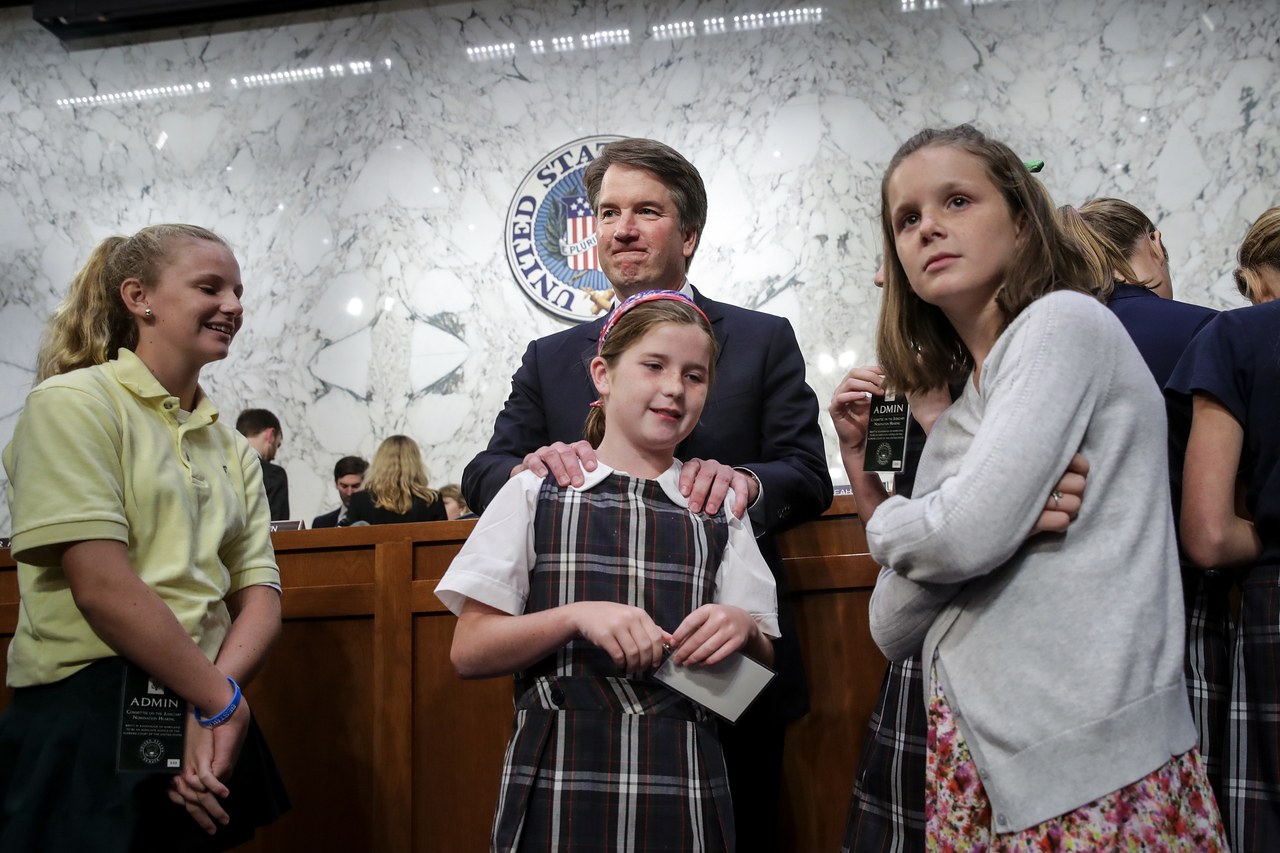
If history is any indication (or Justice Clarence Thomas’ defense when accused of sexual harassment during his Supreme Court confirmation hearings in 1991) Kavanaugh is going to use the usual playbook to defend himself: calling himself a standup fellow—or, as Kellyanne Conway said, “a man of character and integrity”—and explaining he’s shocked, simply shocked, by this character assassination. He’ll talk about being raised right by his parents and point out that he’s a “carpool dad” for his two daughters, hoping that their mere existence will act as a shield against accusations against a member of their sex. But most importantly, he’ll talk about whether Ford told anyone at the time what happened that night.

No one who understands the nature of trauma and sexual assault thinks that it’s a big deal when women don’t tell an authority for months or years about an assault. Not every woman wants to upend her life in the pursuit of justice, or even deal with criticism about “playing the victim” from their peers or institutions. Couple that with an era where women, if something bad happened with a guy, would likely keep it to themselves due to the blasé attitude surrounding sexual violence and the permission boys and men had to engage in it. A cool Gen-X girl brushed off anything untoward, knowing there was no percentage in calling a boy out because even if a few of her friends believed her, the rest of the school would not. And how could they? In the 1980s, there were no tools and very little language to identify or corroborate assault.

As a friend who went to high school in the 1980s posted on Facebook this week, what might have happened to Ford “happened all the time when I was growing up and no doubt still does.”

“This is such a common story,” she wrote. “This happened ALL THE TIME. What also happened all the time was that women who this happened to didn’t really talk about it much because, see above.” Whether Kavanaugh is confirmed to the Supreme Court or sent off to play endless rounds of golf, one thing we know is that women aren’t being quiet about this any longer. But in addressing sexual misconduct, we must also grapple with our past and understand that the experiences of women of a certain age group cannot be examined without historical context. We cannot dismiss claims with the lazy excuse that “that’s how it was then.”

In fact, in cases like Ford’s, there’s no excuse to resort to old victim-shaming tropes. We have the tools, now. We must use them.


Vanessa Grigoriadis is the author of Blurred Lines: Rethinking Sex, Power, and Consent on Campus, out October 2018, and a contributing writer at The New York Times magazine and Vanity Fair.


Source link

Categories
Health

Supreme Court Nominee Brett Kavanuagh Didn't Answer All of Our Questions


You like drama? Stories with strong female voices? Shade in spades? Then Supreme Court nominee Brett Kavanaugh’s confirmation hearings are the show for you—oh, also because they’ll directly, and significantly, affect your life. Unfortunately, this bit of must-see TV airs when most everyone’s working or watching their kids, so we’ll be here to recap each day of these monumentally important proceedings.

Here’s the good news about Brett Kavanaugh, who looks likely to be the country’s next Supreme Court justice: He is great on carpool duty! Also, probably an attentive listener at parent-teacher conferences! This much, we have been told.

All week, during his confirmation hearings, Kavanaugh was painted as the nice guy. We heard about his commitment to hiring and mentoring women, his standing volunteer date at a local soup kitchen, and his passion for coaching girls’ basketball. All week, Republican senators, Kavanaugh’s colleagues, and the judge’s own unfailingly polite demeanor reminded us: This is a normal man. This is the dad next door.

The theme reached its saturation point today, when Rebecca Taibleson, a former clerk of Kavanaugh’s, pointed out that he’s a “regular at his local bar, where he’s partial to a Budweiser and a hamburger.”

I like beer and hamburgers and nice people. After watching over 30 hours of Kavanaugh-TV, I am thoroughly sold on the fact that he is a hoot at a neighborhood BBQ.

PHOTO: Drew Angerer

But here’s the bad news for anyone concerned about reproductive freedom, unchecked presidential power, or common sense gun reform: He refused to address his views on any of them. I heard his jump shot extolled this week, but based on what I’ve seen, it’s nothing compared to his duck. He dodged just about every opportunity to say something of substance.

Perhaps the most bizarre example of this: Kavanaugh repeatedly name-checked four landmark Supreme Court decisions, calling them “the four greatest moments in Supreme Court history.” But whenever someone asked him if these personal faves of his were “correctly decided,” he refused to say. Great, but not correct? Sounds like a MAGA hat went to law school.

Is there a protocol-related reason that might make Kavanaugh feel unable to confirm that something he just said is great is great? Maybe. But is it possible that this is all comical, tragic shadiness? I’m just a regular gal who likes Budweiser and beer, so what do I know?

And that’s not the only question I have. As a result of this weeklong shade brigade—brought to you by your own taxes, by the way—I still have several questions about Brett Kavanaugh, and you should too.

What was the point of all that relentless branding of Kavanaugh this week? Being nice to women and following precedent is to Kavanaugh as Calabasas is to Kim Kardashian—in other words, essential to his new brand. This was driven home hard all week. In the short term, this was likely meant to pacify whichever American women aren’t protesting his nomination yet. But it has a second, long-term purpose. If Kavanaugh gets on the Court, and casts ice-cold votes against women’s health interests, he’ll want us to remember that as a dude, he actually loves women. Awesome, cool. I’ll think of him fondly when I have to smuggle my birth control in from Toronto.

But wait—does he always follow precedent? If you ask him, abso-frickin’-lutely! (Frickin’ is for sure as crass as this guy gets.) But if you ask other knowledgeable parties: Not so much, especially when it comes to matters of same-sex marriage and abortion. When questioned on both topics, Kavanaugh repeatedly referenced specific decisions as the legal last word on the subjects—even though there were more recent cases expanding or clarifying the Court’s opinion on them. If that sounds complicated, you can read more about it here—but suffice to say that Kavanaugh has a curious habit of deferring to cases that happen to match his conservative beliefs, rather than the most current rulings. Convenient.

So, with that in mind—would he vote to overturn Roe v. Wade, or not? Judiciary Committee members tried, to no avail, to get a straight answer from him all week. Ten million times, Kavanaugh referred to Roe as “settled law”—though, characteristically, he would not say whether he believed it was correctly decided—and for some time, that chorus of “precedent on precedent” seemed, on its face, reassuring. But while Kavanaugh’s poker face never broke down, his show of sureness on the matter did. First, a leaked email from his time working in the White House seemed to indicate that Kavanaugh doesn’t really think Roe is all that airtight. Then, in what felt like perhaps the loudest indication of his own personal views from the entire proceedings, Kavanaugh referred to various kinds of contraception as “abortion-inducing drugs.” And perhaps that’s no big deal! Happens to all of us, right? We wake up, panicked, and we text our best friends, “Oh shit! Forgot to take my abortion last night!” Could be an honest mistake. Who knows.

Okay, so—what could this guy have possibly told Senator Susan Collins (R—Maine), a key vote in his confirmation and a firm advocate of choice, to reassure her that he won’t gut abortion rights? Hard to say. If you’re a Maine resident and want to talk it over with someone from her staff, call (202) 224-2523 and press 0 to be connected.

Does Kavanaugh really believe that a sitting president can’t be investigated or indicted? Kavanaugh went out of his way to say that “no one is above the law,” and reiterated over and over the importance of an “independent judiciary,” but he evaded all Trump-related questions under the guise of wanting to “stay three zip codes away” from political matters. Fine.

What should concern us here is the same thing that’s concerned us since it was announced that Kavanaugh would be the Supreme Court nominee: Despite what his pals and coworkers would have us believe, he’s not coming into this nomination with a reputation for measuredness. On this issue, he’s coming in as a potential presidential appointee, culled from a short list of options, and what seemed to set him apart from everyone else was his stated belief that presidents shouldn’t have their days interrupted by investigations. Kavanaugh had the opportunity this week to assuage the country’s collective raised eyebrow on that one by firmly asserting that he wouldn’t let presidential power go unchecked. He simply didn’t do it. He wouldn’t tell the committee whether he’d recuse himself in Trump-related matters.

Furthermore, as Senator Sheldon Whitehouse (D—Rhode Island) pointed out, he may have chosen his words carefully to create an “escape hatch” that would allow him to spare President Trump from having to appear before a grand jury by differentiating those circumstances from ones that eventually led to President Richard Nixon handing over the infamous Watergate tapes. Clever.

How good of a friend would Kavanaugh be to the NRA? Uh, BFF-level, it seems. Claiming a blind loyalty to precedent once again, Kavanaugh more or less confirmed that he would be unlikely to vote for the regulation of semiautomatic weapons or the future regulation of 3-D printed weapons. He hinted at his personal ideas about how to deal with America’s mass-shooting crisis when he talked about his daughters’ (private) school: “They do a lot of things now that are different than they did just a few years ago in terms of trying to harden the school and make it safer for everyone.”

Wasn’t there something in the mix about him doing something sketchy with emails?Yes, though the implications are unclear. In the early 2000s, while he was working in the Bush administration, Kavanaugh was the recipient of some strategy intel on several Democratic congresspersons. As he testified this week, he didn’t know that the information had been stolen in a hack of the congresspersons’ emails. But Kavanaugh’s emails from back then—which leaked this week—make that theory seem kinda hard to believe. Much of the information that was passed on to Kavanaugh was still labeled “not for disclosure”—meaning that he wants us to believe he saw that and thought, “Well, shucks, I guess the Dems didn’t want anyone outside their office to see this except for me, a guy working in a Republican White House. Two points!” And, um, the subject heading of this one is literally “spying.” Anyway, seeing as double standards don’t exist, I’m sure we’ll be hearing cries of “But his emails!” any second now.

Lastly: Why was Kavanaugh taking notes with a Sharpie all week? Sir! What do you have against the other side of the paper?


Megan Angelo writes about TV and is the author of the novel Followers, which will be published in 2019.

MORE: The Kavanaugh Hearings, Day 3: In a Surprise Bring It On Reenactment, Democratic Senators Channel the Toros


Source link

Categories
Health

As a Parkland Shooting Survivor, This Is What I Want Brett Kavanaugh to Know About Gun Violence


A stark image stood out in a tumultuous week of Supreme Court confirmation hearings for Trump nominee Brett Kavanaugh: The judge declining to shake hands with a man who lost a child in the tragic Parkland, Florida school shooting in February.

Kavanaugh walked away from the father of Jaime Guttenberg, who was among 17 people murdered in the Valentine’s Day rampage at Marjory Stoneman Douglas High School. The encounter sparked a range of responses from Twitter users, with many suggesting that it was a visual representation of where conservatives stand on gun control reform.

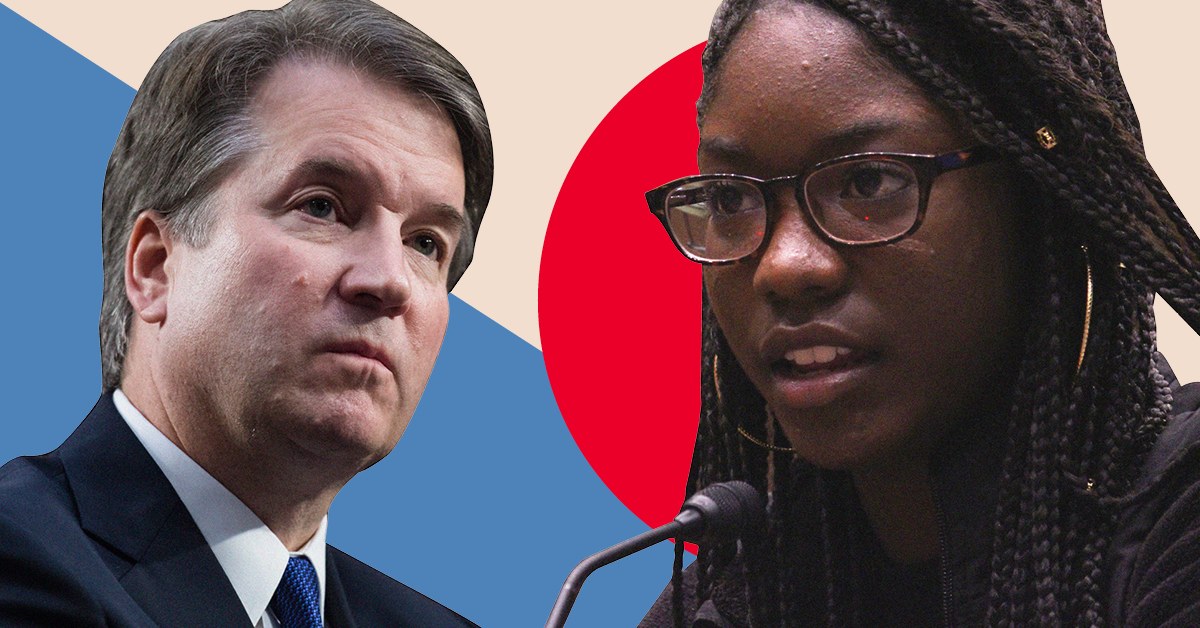
But on Friday, the issue of gun violence was upon Kavanaugh again when the Senate Judiciary Committee heard an emotional testimony from Stoneman Douglas survivor Aalayah Eastmond.

Kavanaugh has defended his dissent in a case related to a ban on semi-automatic rifles—the weapon of choice in the Parkland slayings. Still, the judge, whose two daughters joined him (for a time) at the hearings, says he knows the U.S. must address gun violence.

Not convinced: Eastmond, who spoke at the March For Our Lives rally and became a youth advocate with the Brady Campaign to Prevent Gun Violence and student-led Team ENOUGH.

Eastmond was appalled by the judge’s refusal to engage with Jaime’s dad at the hearing: “The amount of disrespect is unimaginable, and this is who, ‘so-called President’ nominated,” tweeted the Parkland senior. “See you Friday Kavanaugh.”

At the hearing, she used the horror she had seen at her own school (she hid under the body of a dead classmate to survive the shooting), and also the loss of an uncle to a shooting in Brooklyn, New York, to raise questions about Kavanaugh’s views on gun control: “As you make your final decision, think about it as if you had to justify and defend your choice to those who we lost to gun violence,” she urged the committee in her prepared remarks.

On the eve of her Senate testimony, Eastmond talked to Glamour about her decision to speak against Kavanaugh’s confirmation. Here are the highlights, in her own words.


I’m here to testify at Kavanaugh’s hearing [so] people can understand that gun violence is an everyday problem… Lives are being taken every day. And not only that, but lives in urban communities, every day.

I was there on February 14th. And I was in Room 1214, which was the third classroom the shooter shot into, and I had to hide underneath one of my deceased classmate’s bodies to survive. That is the story that I’m sharing [so] people can understand that it’s not, you know, normal. And it shouldn’t be normalized.

I saw things that nobody should have seen and that nobody should have to see in their lifetime. Being in school, [a] place where you should feel safe and you’re learning—in fact, I was in Holocaust History [class], learning about hate and terror. And just to experience that right after going over [a] hate groups project was just unimaginable, and a coincidence.

Hearing gunshots and not knowing what gunshots sound like. Not knowing what to do and then just thinking in a survival-mode type of way to do what I did, which was hide underneath a body. Smelling the gunpowder and seeing the smoke, and seeing the red on the floor and having flesh and body matter in my hair. At the age of 17 in school — [well] I was 16 at the time — that shouldn’t be.

I shouldn’t have to be talking about this, and I’m not the only one that has this story. There’s people all over the country that share similar stories.

It’s something that nobody wants to talk about — and it’s something that I am forced to talk about every day. [It’s] not only just what I experienced, but the fact that black and brown youth are disproportionately impacted by gun violence every day.

I don’t think [Kavanaugh] should be [a] Supreme Court judge. Period. [If] we’re gonna have a judge on the highest court of the land, they need to be a judge that recognizes the issue of gun violence and the epidemic that the youth is experiencing every day, and he doesn’t recognize that it’s a problem, so I don’t think he should be getting that seat.

[Based on] his comments towards the Second Amendment, he doesn’t believe it should be altered or changed at all because it’s “a well-regulated militia” and everybody deserves the right to own a gun. But I disagree, because your freedom to own a gun is not more important than my freedom to live.

If he doesn’t have the decency to shake a hand of a father of a victim, he definitely will not have the decency to make changes and decisions that will impact the lives of people every day… I honestly just think we need a different nominee. I think we’ve seen enough of Kavanaugh, and I don’t think we should wait any longer for him to say anything else, because we clearly know what his stance is on the Second Amendment and other things as well.

I’m sure Fred Guttenberg [father of Parkland student Jaime Guttenberg] would have loved to bring his daughter.

Fred had a daughter, too, that lost her life on February 14. And I don’t appreciate Kavanaugh not addressing that. I feel like he will [not] recognize that it’s an issue until he loses one of his kids, or until he loses a family member, so he understands the pain and the way that it impacts you and that it’s senseless.

So that’s how I look at it: [Kavanaugh] can bring his kids wherever, but don’t wait until your kids are gone for you to care.

I have faith that he will not [be confirmed]. I hope he doesn’t, but I can’t tell the future. All I know is that we’re [going] to share our stories and our views and opinions on him, and hopefully they hear us out and they take action.

At times, it’s frustrating, because I shouldn’t have this story and I shouldn’t have had to experienced that. But it is important that I share my story, so people can again get a different perspective and understand that it is an issue that impacts everybody — no matter the color of their skin or where they live. It is a problem in America, and it needs to be fixed.

Right now, I’m okay, because I have my fellow Team ENOUGH members supporting me here. So I’m not worried, and I know that we are stronger than Kavanaugh and any of his views, and I know that we can take him down, no matter what.

You can watch Eastmond’s full testimony, here.


Celeste Katz is senior politics reporter for Glamour. Send news tips, questions, and comments to celeste_katz@condenast.com.

MORE: Piper Perabo: ‘It Was a Privilege’ to Get Arrested for Protesting Brett Kavanaugh Hearings


Source link