Categories
Health

The Best Book Subscription Box for Any Kind of Reader


These days, there’s a subscription service for just about anything—meal kits, clothing rentals, personalized wine recommendations, and yes, your reading list. A book subscription box may finally help kick your habits into high gear, especially now that you may find yourself spending more time indoors than ever, and your local bookstore may be dealing with mandatory closures. (P.S. You can check to see whether your local bookstore offers curbside delivery or pickup through Postmates.)

Whether you’re into steamy romance, Y.A. novels, or sci-fi, there’s a book box out there for you—and one that may deliver more than just a great read to your doorstep. Some book rental services let you join a virtual book club (hi, approved social distancing activity), or send socks and bubble-bath soap themed to your selection. From crowdsourced reads by women for women like the Feminist Book Club to expertly curated picks from Book of the Month, we found 12 of the best book subscription boxes that’ll please even the choosiest readers.

All products featured on Glamour are independently selected by our editors. However, when you buy something through our retail links, we may earn an affiliate commission.


Source link

Categories
Health

The First Body-Positive Children’s Book Just Came Out, and It’s Exactly What the World Needs Now


Ady: And that is why we were so conscious to have the illustrations in the book portray friends of all different types: kids with different physical abilities, different hairstyles, different races, different sizes, and different religions. The pictures in this book say loud and clear, “Everyone is equal.”

Why is this book important now?

Ady: Body positivity is a movement right now in our space as adults, and I love it, but it needs to be taught at a young age, and that’s our goal. Just yesterday I got trolled on the internet and called fat, and that’s not going to stop me from being me, but that confidence in myself is very new. And honestly the process of writing this book has really helped me choose definitively to put away a lot of my negative thoughts once and for all. I really believe that if I’d had a book as a kid that taught this type of message, maybe it wouldn’t have taken me until I was 34 to be that confident. The book is definitely about teaching kids not only to accept and love themselves, but accepting and loving others for their differences too.

What inspired the book’s title?

Katie: Ady’s original brainstorm for the book was a plus-size princess, but after our first creative meeting, we were really gravitating toward action statements and things this girl could do. I had already started a movement called #herbodycan, focused on what our bodies can do versus their appearance, and with the ultimate direction of this book, that title just made sense here too.

Did any of your personal life experiences shape the book?

Ady: It was really important to us to address specific restrictions that were imposed upon us growing up because of our size, and negate them. My whole life I heard, “Don’t wear two-piece bathing suits, don’t wear white, don’t wear color, don’t wear crop tops,” so we made it a point to have our heroine wear every single thing we were told we couldn’t wear because of our size. We want to change that narrative for the next generation of children.

East 26th Publishing

What do you hope to offer parents with your book?

Katie: Most of us were parented in an atmosphere that was fatphobic, and most of us have outdated, ingrained ideas on body image. We are all likely trying to do the same work on ourselves that we are trying to teach our children, and it’s not easy. Having something tangible like a book when trying to teach anything to children is key, and not only is this book a great tool for sensitive moments; it is also just a happy, uplifting story of a girl who lives her best kid life in the body she was born with, and what else could we hope for in a child?


Source link

Categories
Health

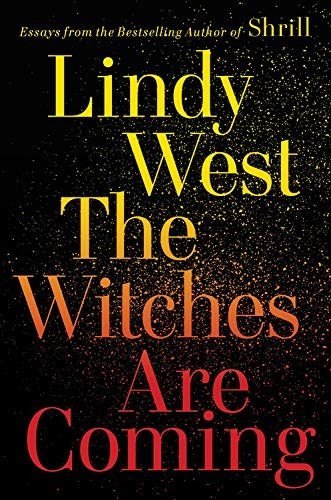
Lindy West Has a New Book, a Hit TV Show, and No Shortage of Opinions


To write her new book, Lindy West went where few women have dared to go before—deep, deep in to Adam Sandler’s oeuvre.

The 37-year-old author watched Happy Gilmore, Billy Madison, Little Nicky, The Wedding Singer, and more for a rigorous meditation titled, “Is Adam Sandler Funny?” West found the work exhausting, but she’s thorough when it comes to her research process. “That was a part of the book that sounded like it was going to be really fun. Because watching Adam Sandler movies and making fun of them is fun,” she tells Glamour. “But if it’s for work, it’s the last thing I want to do, so I watched them in big marathons.” (We thank her for her service.)

West’s latest book, The Witches Are Coming, excavates the corners of her brain. Her obsessions, irritations, and child heroes. Often, she does that with a test case, like Sandler, who stands in for general white male averageness. In another chapter, Joan Rivers become a symbol of how women can be broken into complicity. And the movie Clue serves as a launchpad to discuss superficial representations of women on film. The specificity is the genius. “I think it would be easy to dismiss [the book] as making broad generalizations based on analysis of too narrow a sliver of culture,” West allows. “But I tried to choose things that resonated with me.”

Still, even as West claims a modest area of focus, in fact the book’s preoccupations are vast and sometimes a delightful surprise. Topics include not just Sandler or Rivers, but Goop, Grumpy Cat, her viral hashtag, #ShoutYourAbortion, and the creation of her hit Hulu show, Shrill. (Let the countdown clock begin: Season two premieres on January 20, 2020.) Parts also pick up where her 2017 New York Times op-ed, “Yes, This Is a Witch Hunt. I’m a Witch and I’m Hunting You,” leaves off—eviscerating the men who dare to evoke the phrase “witch hunt” in the face of their overdue reckoning. Witch hunts, book readers will learn, is something West has been thinking about for ages.

“I had this thought about the term ‘witch hunt’ [while writing for Jezebel],” she explains. “That witch is a term that’s been traditionally used to discredit women, but as soon as men are feeling a little bit sad, then women become the witch hunters and men are the witches, being victimized. I was like, ‘Is there a way to turn this on its head?’ I remember pitching it and my editor was like, ‘That’s a little too spicy. I don’t think we can say that.'”

Hachette Books

Flash forward to Donald Trump’s election and a cultural upheaval or two, and the pitch was published in the same newspaper that broke the first allegations against Harvey Weinstein. Her editor at the Times green lit it in an instant. West credits Jezebel and other feminist publications for helping to mainstream not just that level of snark (welcome in 2017), but an honesty about, as she puts it, “how bad our reality actually is.”

In The Witches Are Coming, West points to the fact that mere acknowledgment is an insufficient, but still essential kind of progress. One of the best sections of the book invokes her person experience pitching Shrill to television executives. (Shrill was first published as a book in 2016 and later adapted for Hulu, premiering last March. It stars Aidy Bryant.) West details in her new book how it felt to push for the show as a plus-size woman in a business still obsessed with thinness. “I remember going to all these meetings and having this anxious feeling, wondering if the chairs in the conference room would be too narrow for me to fit comfortably in the chair,” she says. “That’s an anxiety I have all the time, everywhere I go but there’s some extra stress involved because Hollywood is the place where a lot of these insecurities came from for me. This is the world that has taught us that there’s only one acceptable body type.”


Source link
Categories
Health

Don’t Be Mad, but I’m a Feminist Who Decided to Write a Book About Men


I’ve always felt feminism to be like a block party: euphoric, emancipating, jubilant, and open to all. I often fear that many women in my generation think about it instead like a speakeasy: closed, password-protected, and open to the already enlightened.

The narrowing of feminism has presented itself in subtle and not so subtle ways. A few years ago, when I was on a panel and suggested that making the world better for women involved a plan for generating better men, the rhetoric I received was shocking, but familiar. “I don’t care about men,” one of the panelists said. I heard the retort and a round of applause from the audience and sat there dumbfounded. A few months ago, when I suggested that an abortion rights movement that is in peril should remind people that men who get women pregnant also benefit from a women’s right to choose, I was told that “there’s something slightly demeaning about framing women’s fundamental human rights as worthwhile because men have ‘personally benefited’ from them.” When I advised a Western government on a gender equality ministry program and suggested moving a sliver of the resources currently budgeted for girls over to boys to reach them how to be feminists, I was told none of the existing gender equality budget could go to them. For the last five years, when I’ve told people I am working on a book about how we need to develop a new kind of man in order to secure our freedom as women, I was routinely ridiculed. “Yes, because we don’t hear enough about men,” came the sarcastic sneer.

I am all for a feminism that decenters men. I am all for a feminism that puts women’s voices front and center. I am all for a feminism that seeks structural change and expects men to surrender power, but more and more I’m alarmed at a feminism that has no plan for men at all.

It wasn’t always like this for me. I too used to dismiss men’s role in the feminist movement. Men betrayed, harassed, assaulted, and traumatized me before I was even old enough to kiss one. I had to change schools due to violent bullying from the boys in my class. My experience with the opposite sex is far from unique. In fact, it’s shockingly normal and far worse for girls who aren’t white, middle-class, and able-bodied. In the United States, more than one in three women report domestic abuse from a partner in their lifetime. And in an average month, at least 52 women are shot and killed at the hands of an intimate partner. These are men women know. Never mind the men we don’t know.

To put it simply, women have been hurt and harmed by men for centuries, so as they’re enjoying increasing liberation, worrying about their oppressors isn’t on the agenda. It’s not like we don’t still have work to do on our own behalf. Despite major wins, poverty is still so feminized that the gender wealth gap is expected to take more than two centuries to close. Programs that benefit women have had to endure the steepest cuts under the Trump administration. Even in the make-believe world Hollywood creates to distract us from the grim world we live in, women are less likely to be protagonists and speak half as much as men do. Given that women already get a smaller slice of the pie, there is a legitimate concern that dedicating resources to men is shortchanging women.


Source link

Categories
Health

It Chapter Two Review: How Jessica Chastain Made Sure a Key Scene From the Book Was Included


When It hit theaters in 2017, a new generation of fans—ones who hadn’t read the Stephen King novel or seen the 1990 miniseries—may have expected a simple horror movie about a kid-murdering clown. Instead, they got an unsettling look at the intense pain and fear that develops from childhood trauma via the Losers’ Club, a group of kids (Bill, Richie, Ben, Mike, Eddie, Stanley, and Beverly) who face their personal demons head on in the form of “It,” a creature that shape-shifts itself into its opponents’ worst nightmares.

The sequel It Chapter Two, now in theaters, picks up 27 years later. The Losers’ Club may have defeated Pennywise two decades ago, but they’re still dealing with the effects. Bill (James McAvoy), a successful-ish author, is haunted by guilt over his brother’s death. Ben (Jay Ryan) has transformed into a hot architect still pining over his childhood crush. Though Richie (Bill Hader) turned his wise-cracking personality into a stand-up career, he’s without love, family, or friends who aren’t employees. Mike (Isaiah Mustafa) gave up his dreams to stay in Derry and obsess over Pennywise. Eddie (James Ransone) remains a hypochondriac, but he’s replaced his overbearing, emotionally abusive mother with an overbearing, emotionally abusive wife. Only Stanley (Andy Bean), now a wealthy accountant with a happy marriage, seems to be centered…that is, until Mike calls with the news that Pennywise is back.

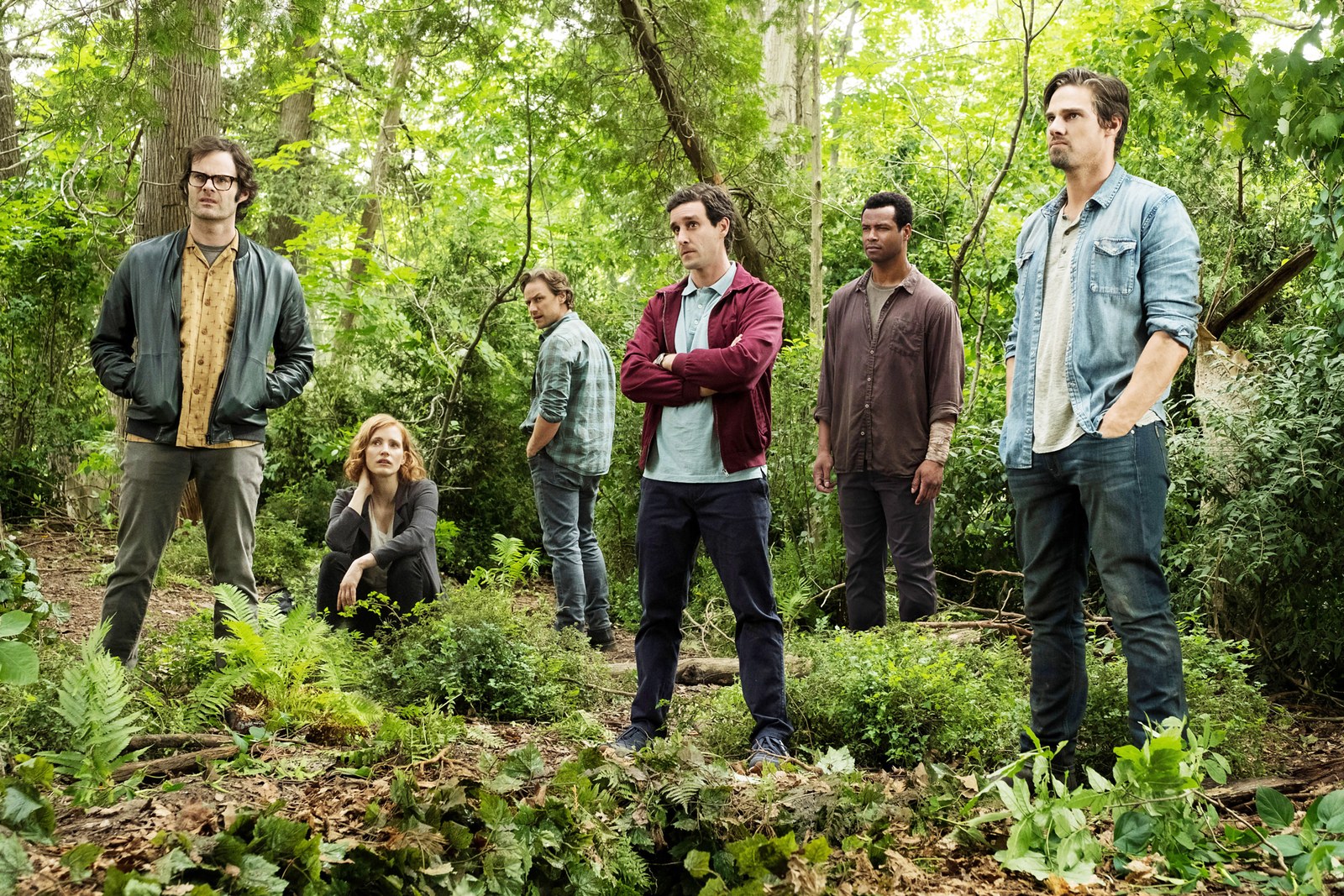
Bill Hader (Richie), Jessica Chastain (Beverly), James McAvoy (Bill), James Ransone (Eddie), Isaiah Mustafa (Mike), Jay Ryan (Ben) in It Chapter TwoBrooke Palmer / © Warner Bros. / courtesy Everett Collection

And then there’s Beverly, the only female member of the Losers’ Club. She was abused by her father growing up; now, she’s in an abusive marriage. When Mike calls about Pennywise’s return, though, something switches. Beverly packs a bag, ready to book the first flight to Maine. Her husband catches her in the act, accuses her of cheating, and physically assaults her. It’s clear this isn’t the first attack—but this time Beverly fights back. On her way out the door, as her husband nurses his wounds and shouts after her, she pointedly leaves her wedding ring on the front porch.

For Jessica Chastain, who plays adult Beverly, this scene was important to get right. It’s the first time we’re re-introduced to Beverly, and Chastain had to convey what might have happened to the character in the 27-year gap since we’ve last seen her.

“I had to think about Beverly’s journey, in terms of the pattern that she kept repeating,” she tells me about preparing for It Chapter Two. “In terms of what she thought love was supposed to be—that it was something that was supposed to be conflicted and difficult and painful and abusive in some sense. She didn’t really understand what love truly could be. That’s where I started with this character. Twenty-seven years of repeating the same pattern.”


Source link

Categories
Health

Erin Lee Carr Released Two Documentaries and a Book in the Past Six Months. Here's How She Did It


It’s my personality to take on more things. I was already working on another gymnastics film when that story broke, so I knew I needed to include Larry Nassar.

Do you remember where you were when you first heard about Michelle Carter?

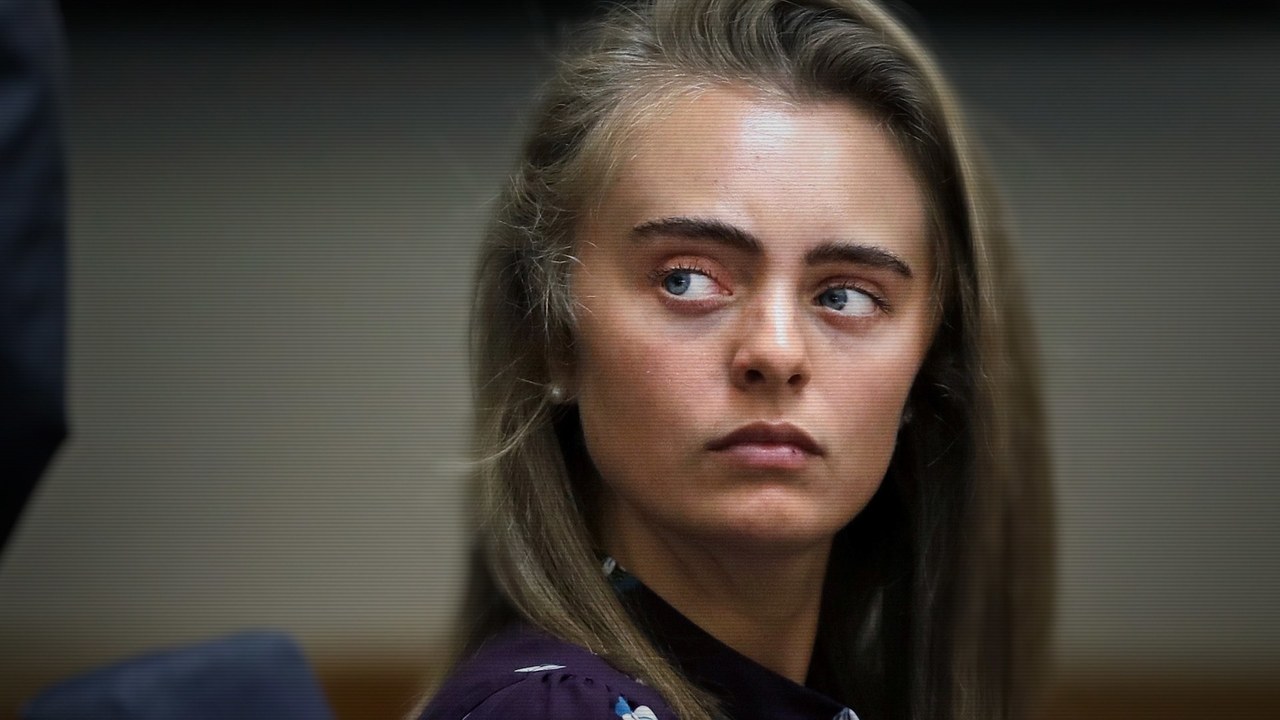
I’m always researching things that are crime and Internet related—that’s basically my sweet spot—and so I think it was a Washington Post headline and it had the text, “It’s now or never,” that Michelle Carter sent to Conrad Roy [her boyfriend]. And those small words strung together led me to the bigger story. I immediately started reaching out to people involved with the case.

How is writing a book similar to or different from writing a documentary?

[embedded content]

Filmmaking is collaborative and writing is lonely. I was alone with my thoughts, day after day. I’d written short pieces before but nothing of the order of 75,000 words.

Your dad’s memoir, The Night of the Gun, told the story of his own life from the perspective of a reporter. Did you approach All That You Leave Behind the same way?

I had emails and text messages and voicemails that have a timestamp and could tell me the time and place and help with my memory, but I chose not to continue the same reporting style as The Night of the Gun, one, because I didn’t want to do a repeat and, two, because my dad is an incredible investigative reporter and I knew if I tried to do anything like that, wouldn’t be successful. I always use the present tense to describe him since he’s part of my every day. I involve him in my life and think about him all the time.

The book is a roadmap through your grief and struggles with addiction. What was it like to write about such personal subjects layered on top of losing your dad?

When we talk about early recovery, there’s this thought of, “Don’t talk about it, you can’t write about this until you’re 5, ten, fifteen years in to make sure it’s real.” To mention your sobriety is to break the rules. But given that my father was the one who said, “You have a problem,” I thought it made a lot of sense to include in the book. I knew I was going to be writing about things that were pretty embarrassing, and I didn’t want anyone who’s paying me large sums of money to do a documentary to wonder if I’m trustworthy. So I checked in with some of my dad’s creative consiglieres and I said, “Am I going to hurt my chances of continuing the job I love?” The answer was no. Luckily we live in a society that values honesty and recovery.

[embedded content]

What’s the hardest interview you’ve ever done?


Source link