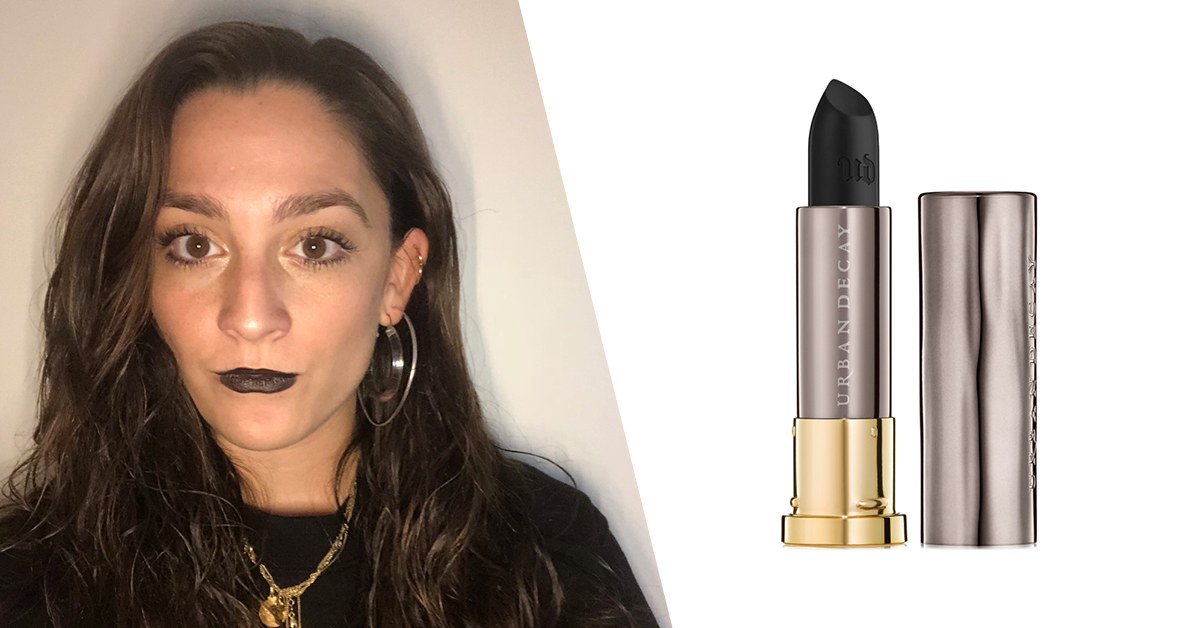
When you think of black lipstick, an old Halloween costume might come to mind, or maybe that goth phase you went through in middle school. But when I think of black lipstick, I think of Rihanna.
The specific image of RiRi that comes to mind is one that showed up on my Instagram feed uninvited (which is my way of making a joke since that’s the name of the black Fenty lipstick shade she was wearing). She looked cool, modern, and not particularly witchy, and it got me thinking about how I’d look in black lipstick.
Other celebrities like Slick Woods, Kylie, Beyoncé, Hailey Baldwin, and Joan Smalls have also worn an ultra-dark lip casuall,y and it’s looked surprisingly right-now on them too, regardless of skin tone.
To make the case for black lipstick as a potential everyday look, I asked a few editors at the Glamour office to try out different brands, shades, formulas, and price points to see what they thought. Turns out, wearing a black lip doesn’t mean you’ll get unsolicited directions to the nearest Hot Topic.
See below for the best black lipsticks and how to realistically incorporate them into your routine on days that aren’t October 31.
Sandra Diaz wasn’t expecting to find the courage to come forward with her story of sexual assault. But, over the years, as she watched security officers, janitors and airport workers coming together to protest against the sexual misconduct they often face on the job, everything seemed to change. These women were members of the labor union which she co-leads, and in them, she found an unexpected strength stand firm in her own power.
“I saw the sacred wounds that, like me, they had held inside of them with shame” she says. “But I also saw the relief in their eyes to finally let it out.” In union meetings, as they fought back against gender violence at work, their stories rang out: Yes, I was raped while I was working. I didn’t say anything to the union. I kept silent for one year … 10 years.
“As a survivor, I understood the burden of silence and the relief and uncertainty when silence is broken,” Diaz, the Vice President and Political Director for SEIU United Service Workers West, says.
Feeling safe within a sisterhood of women reclaiming their power, she was finally able to feel what many have taken to social media to say in the past year: Me too.
Like so many others, Diaz and the women she serves have kept their stories of abuse and misogyny to private conversations, group chats, and whisper networks. In late 2017 however, it seemed as though a critical turning point was reached; a turning point that cued up all women to stop whispering in order to let their stories be heard. And yet, it hasn’t exactly played out that way.
It’s been a year since the #MeToo Movement became part of the national discourse online, having been kicked off by reports from the New York Times and the *New Yorker*which featured multiple women alleging that Harvey Weinstein—the burly, bullish Hollywood executive—had sexually harassed or assaulted them. (This summer, Weinstein pleaded not guilty to six felony sex crimes, including two counts of rape and two counts of predatory sexual assault.) Following the accusations, actress Alyssa Milano retweeted something she found online that encouraged women to share their own stories of abuse. The hashtag was #MeToo, and it went viral shortly after, but the criticism about who started it—and who it served—would dot headlines for the next 12 months.
What Milano didn’t know at the time was that #MeToo had been created in 2006 by activist Tarana Burke to advocate for women and girls of color who had been sexually abused. The 2017 iteration, by default, was intended to belong to the everywoman, thousands of whom responded to Milano in a deluge of tweets and status updates. And yet, it still felt as though the movement was most talked-about when familiar Hollywood stars joined in. And why not? Their stories were salacious, empowering, and captivating—a lurid peek into the darker side of the industry.
But that was only part of the story—of course, there were other women who had been trying to get their voices heard for years. And as the star power behind #MeToo grew, so did the opinion that it was owned by liberal women. Republican and conservative women who have #MeToo stories have reportedly felt left behind, like their experiences were being ignored by their party, and the movement.
One woman’s narrative crushes the criticism that #MeToo is strictly left-leaning. When Gretchen Carlson, formerly a face at Fox News, sued the conservative network’s chief in 2016, she was one of few women associated with that world to publicly come forward. Carlson’s lawsuit alleges that the late Roger Ailessabotaged her career when she rejected his sexual advances. Like Weinstein, Ailes was a larger-than-life executive whose misogynistic tycoon persona seemed to emanate from an old Hollywood playbook. According to reports, Ailes told her they should have had a “sexual relationship a long time ago and then you’d be good and better and I’d be good and better.”
Eventually, she decided enough was enough.
“It was the most excruciating decision of my life,” Carlson tells Glamour of coming forward. “Before there was a [Hollywood] #MeToo movement, before there was Time’s Up, before there was anything, it was me taking on one of the most powerful men in the world by myself.” Stepping forward a year before the hashtag’s meteoric rise gave her a new purpose and birthed her best-selling book, Be Fierce: Stop Harassment and Take Your Power Back, which was released just days after the Weinstein allegations were made public.
A year later, other women who identify as conservatives have come forward, but the movement on the right is slow to pick up, Vox points out. But it’s not about party lines for Carlson. More importantly, it’s about “every socioeconomic line” having access.
“It’s important to me that the every woman story is also heard,” the author, who recently defended herself against accusations of bullying, says. “Because this … pervasive epidemic, as I call it, it’s not just famous, rich people.”
The struggle to gain access to the movement goes beyond class lines, cash or politics. There’s also the elephant in the room when it comes to #MeToo: The racial disparity and how underreported the narratives of black, brown and gender nonconforming women are.
“White women have always had dominion over the narrative concerning sexual violence and gender-based empowerment.”
This was on the minds of Kenyette Barnes and Oronike Odeleye, who together created the #MuteRKelly movement, which seeks to put the alleged victims of the accused predator, musician R. Kelly, at the forefront. According to several accounts, Kelly has spent decades hunting for teenage “pets,” who, according to a recent documentary, he groomed to be sex slaves. (Kelly has denied the accusations.) Barnes and Odeleye, who began the organization to stand up for these young black women, both credit Burke and #MeToo as being extremely integral in their quest to bring Kelly to justice. And yet, their push is often overshadowed by high-profile alleged predators like Weinstein, Ailes or Bill Cosby, men whose alleged victims are often white.
“White women have always had dominion over the narrative concerning sexual violence and gender-based empowerment,” Barnes tells Glamour. “There’s a tendency to marginalize the unique experiences of black and brown women. This is no different in the attempted appropriation of #MeToo.”
It’s not like everyone in Hollywood completely ignored Burke’s original standard for #MeToo. Celebrity women who have engaged with the hashtag seem well-intentioned enough. But lip service is different from inclusion, and over the last year, actresses like Rose McGowan—whose outspoken participation seems to exclude black, brown and gender nonconforming victims, at least to some accounts—has been called out for her lack of it. She’s been criticized for dismissing the experiences of women of color and trans women, and yet, is hailed as one of the movement’s strongest heroines. She’s even earned an E! reality show—which aired in May—while most of the activists at the center of the movement, who organize marches and protests or offer support for victims, continue to move in the margins.
To be clear, McGowan is hardly an outlier. Often praised for her feminist ideals, actress and writer Lena Dunham drew criticism for dismissing a woman of color, actress Aurora Perrineau, who came forward with accusations against Dunham’s friend, writer Murray Miller, last year. And in the midst of Weinstein’s wave of accusers coming forward last year, the mogul was radio silent until actress Lupita Nyong’o shared her own account of his alleged misconduct towards her. Only then, after a black woman accused him, did he feel the need to publicly defend himself.
“There is no one coming to rescue black women,” Odeleye says of the struggle. “We have to save ourselves.”
One of the biggest culprits in pushing the false idea that the fight to end sexual abuse is the same for all women and men has been the media, Odeleye and Barnes note, which often fails to center varied identities in their coverage. Even Burke herself, who was unavailable for comment on the story as she organized and prepared protests against Supreme Court Justice nominee Brett Kavanaugh, addressed this in a recent op-ed for Variety.
“I launched the #MeToo movement because I wanted to find ways to bring healing into the lives of black women and girls,” she wrote. “But those same women and girls, along with other people of color, queer people and disabled people, have not felt seen this year.”
This is especially evident in the coverage of the sexual degradation of female victims over the last few years like Chikesia Clemons, whose breasts were exposed in her violent arrest at a Waffle House in Alabama earlier this year or Daniel Holtzclaw, the police officer convicted in 2015 of assaulting 13 women and raping eight in Oklahoma City. His victims, all of whom are black and many of whom had criminal records, remain ghosts lost in the coverage. We do not know many of their names. We do not speak of their immeasurable trauma.
It’s a similar story for the staggering number of trans women who have been murdered in the past two years alone. The National Center for Transgender Equality estimates that 2018 could be ‘the deadliest year on record’ for violence against trans women. (As of September 2018, 27 trans women have been reportedly murdered). And yet, a year later, as dozens of cisgendered women are given magazine covers and major platforms to discuss their trauma, there has been little to no coverage of the clear and present dangers our trans sisters face.
These challenges for women of color or varied identities can be, in part, attributed to the unique set of consequences that they face, both from society and their own cultural norms.
“We have to challenge our biases and ask ourselves, ‘Why don’t we see the power in women of color and in immigrant women?'”
“Often black women and girls are shamed into pushing aside their need for gender justice,” Barnes explained. Instead, it is often seen as “of little importance [when] viewed within the larger system of White Supremacy.”
This is also prominent in the Latinx community, according to Lilia Garcia-Brower, executive director of the watchdog group, Maintenance Cooperation Trust Fund, who advocates for janitorial workers in California. For these women, many of whom are undocumented, work is synonymous with sexual violence, intimidation and wage theft.
“If [these women] don’t believe that they are more valuable than the violence that they’re confronting every day, they’re not going to denounce what’s happening to them,” Garcia-Brower says. “ We’ve spent a lot of time unpeeling the gender socialization that tells [women] that we are less than a man … that we cannot defend ourselves.”
For both the unions and the watchdog groups, it was clear that the women would have to be the ones in charge of empowering themselves since they could not trust the industry to do it. As Diaz adds: “How do you hold an industry accountable for training their workers on sexual violence when we can’t even hold them accountable for paying them?”
These workers, whose struggles were chronicled in the Frontline documentary aired on PBS, “Rape on the Night Shift,” teamed up with the SEIU-USWW labor union and Garcia-Brower’s group to form the YA BASTA! COALITION. Through hunger fasts, protests and community training of “promotoras, (who educate their peers on self defense), the women of Ya Basta, which means ‘Enough Is Enough,’ are taking back their lives.
At the end of a recent march, a group of the janitors took off their shirts to call attention to the power dynamics at play in sexual violence—an action that was meant to reject the shame that survivors feel and to denounce that idea that sexual misconduct is about sex.
There, standing in their bras with their resolve at an all time high, they shouted: “Quien es dueña de tu cuerpo. Yo soy dueña de mi cuerpo.” Translated, it means, “tell me who owns your body. I own my body!” It was a simple declaration, but an immensely profound one in a society that, as Odeleye notes, “does not value a women’s ownership of her body.”
Still, the question remains: what does protection look like? And who has access to the new #MeToo as it reaches its first birthday?
“As a society, we have to challenge our biases and ask ourselves, why don’t we see the power in women of color and in immigrant women,” Diaz says. Shifting that power back to them, she says, “is at the center of eradicating sexual violence.
“But first we have to recognize the humanity in them.”
Allison McGevna is an editor and writer based in New York City. You can follow her @AllieMcGev on Twitter.
The CMT Artists of the Year special only honored male performers in 2017, which, unsurprisingly, caused some backlash online. It looks like the network heard people’s complaints, though, because this year’s honorees are exclusively women. Yes, for the first time since its inception eight years ago, the CMT Artists of the Year ceremony will tribute the current queens of country music—and only the queens.
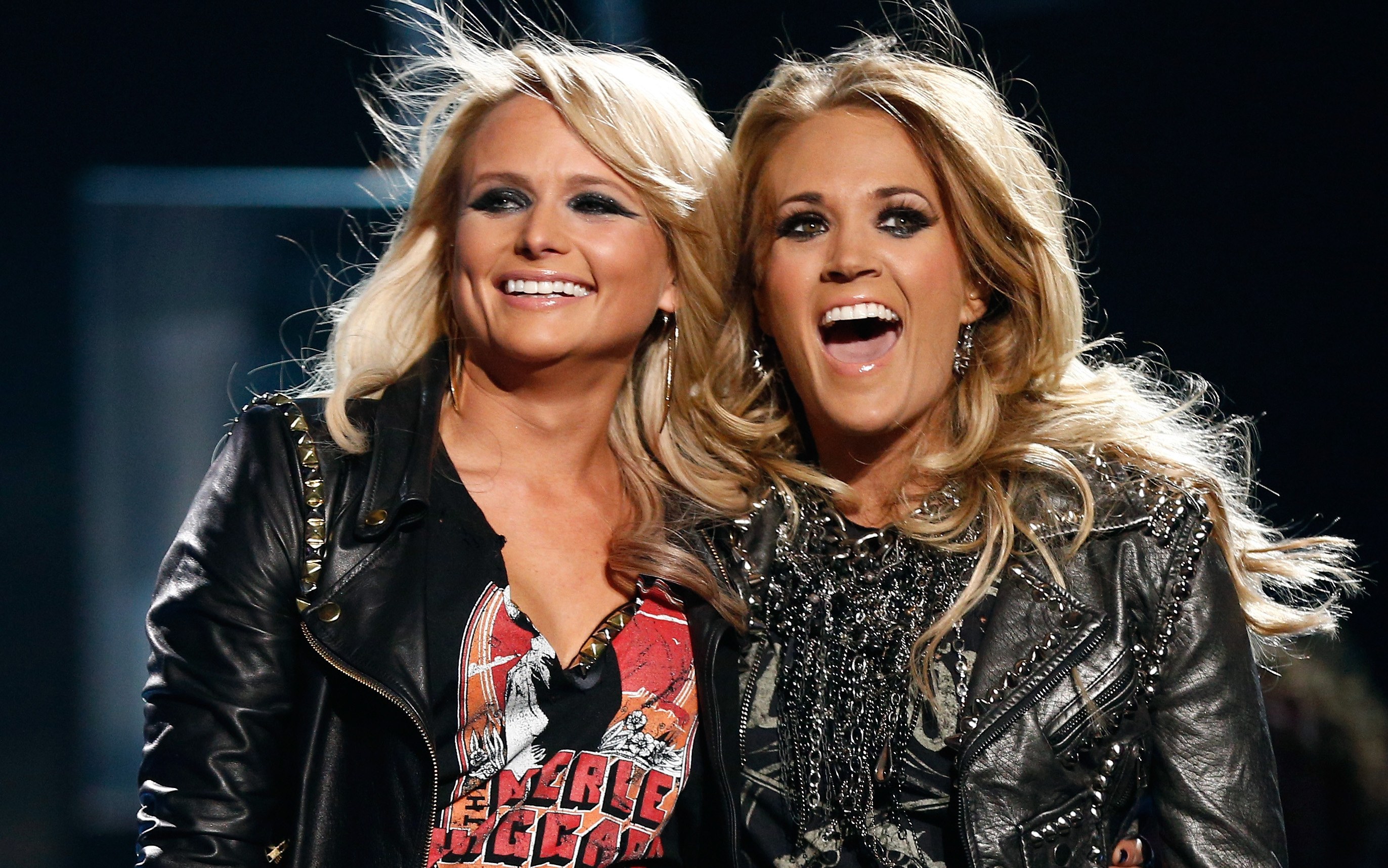
Carrie Underwood, Miranda Lambert, Kelsea Ballerini, Maren Morris, Little Big Town’s Karen Fairchild and Kimberly Schlapman, and Lady Antebellum’s Hillary Scott are the seven women CMT will honor during the show—and each are more than deserving of the praise. Morris took the country and pop music world by storm this year with her crossover hit “The Middle,” featuring Zedd; Lambert spent the first half of the year killing it on tour; and Underwood publicly emerged stronger than ever with her song “Cry Pretty” after enduring a facial injury. (Her album of the same name drops this Friday, September 14.) Little Big Town also found success on tour this year, and Lady Antebellum is still riding the success of their 2017 album Heart Break. Ballerini, meanwhile, was just tapped to be a fifth coach on NBC’s hit competition series The Voice.
[embedded content]
“In this monumental year for women, dedicating one of the biggest nights in the genre to applaud female country artists not only solidifies our commitment, but we hope will spark a much-needed change in the industry,” CMT senior VP Leslie Fram said in a statement.
All the women receiving honors this year are returnees, except Morris, who released her first album in June 2016.
The CMT Artists of the Year Awards will air live from Nashville on October 17 at 8 P.M. ET. Mark your calendars accordingly.
Glamour’s 28th annual Women of the Year Awards and Live Summit (hosted by Phoebe Robinson!) are set for November 10-12. Expect three days of can’t miss events, including a vintage shopping trip with iconic designer Patricia Field, an expert-led cryptocurrency master class, and a workout overlooking New York City with top female trainers. The summit will also provide invaluable career and life advice from women including actress Yvonne Orji, Ann Dowd, Pamela Adlon, and Awkwafina, as well as businesswomen like Outdoor Voices founder Ty Haney and The Wing founder Audrey Gelman.
The event will be capped off with our inspiring annual awards ceremony, which honors 2018’s rule breakers and game changers.
Last year’s festivities made us laugh, cry, and everything in between — from surprise appearances by former Vice President of the United States Joe Biden to an emotional gathering of Me Too survivors. And we can guarantee this year’s event won’t disappoint. To give you a taste of what’s to come in 2018, scroll down for our favorite moments from last year’s unforgettable celebration. To sign up for ticket info and event updates for this year’s event, visit glamourwotysummit.com now.
Highlights from the 2017 WOTY Summit at the Brooklyn Museum:
Last November, the Golden Globe-winning actress, activist, and producer was tired of hearing that being married and having kids were the only things that mattered. Ross refused to let it determine her self-worth, and her frustration led her to free write in her journal, “My life is mine.” Those three words changed her whole perspective on life for the better. She told the audience at the Brooklyn Museum, “Those words stopped me in my tracks and honestly brought so many tears to my eyes. “Seems so obvious, but obviously it wasn’t. Because I have not been living my life as if it was my own. I mean to a certain extent yes, but on a deep level no. So, if my life is actually mine…then I have to really live it for myself. I have to put myself first and not be looking for permission to do so.” Powerful stuff.
The Orange Is The New Black actress honored 2016 Woman of the Year Nadia Murad with an incredibly emotional live reading of her 2017 memoir about escaping ISIS called The Last Girl: My Story of Capacity, and My Fight Against the Islamic State. The tear-filled reading was followed by a conversation between Murad and Aduba during, in which the 25-year-old Murad said: “Where I come from, it’s not easy to talk about these things and talk about what happened to you, especially with something like this. Someone had to tell this story. Someone had to come forward and tell people what happened to us.”
An unannounced visit from the 47th Vice President of the U.S. resulted in a standing ovation and cheers from the crowd that filled the auditorium. In discussion with former Glamour editor-in-chief Cindi Leive, Dr. Jill Biden and Joe Biden discussed their late son, Beau, the Me Too movement, and the 2020 election. “The greatest sin a person can commit is the abuse of power,” Biden said. “Women hold up half the sky, and it’s time this ends. Don’t let this slow up. This is the time to fundamentally change the culture of how women are treated in American society.”
And we revealed the first-ever hijab-wearing Barbie.
Mattel designed a no thigh-gap Barbie for Ashley Graham at Glamour‘s 2016 Women of the Year Summit, and last year Olympic fencer Ibtihaj Muhammad was surprised with her very own. “This is such a big moment for little girls everywhere,” the 32-year-old said upon receiving her likeness of the groundbreaking doll.
Highlights from the 2017 WOTY Awards, at Brooklyn’s Kings Theatre:
Congresswoman Maxine Waters told us to reclaim our time, and then some.
After Zendaya presented Waters with her Women of the Year award to a standing ovation, she told the crowd at Kings theater: “This is your time. I’m reclaiming my time—it’s time you claim yours.” She then passed on some amazing wisdom: “You see again what is going on, you understand who is being disadvantaged, who is being undermined. Trust yourselves. Do not doubt yourselves. Do what you know in your heart is right and trust yourselves.”
Female trailblazers stood united.
In an inspiring speech, Atlanta actress Zazie Beetz told the crowd that women are able to speak and live freely because once upon a time, another woman was brave enough to do it first. Ibtihaj Muhammad, the first Muslim woman to compete for the U.S. in the Olympics while wearing a hijab, was joined by Sarah Weddington, the first woman to ever argue a case in front of the U.S. Supreme Court (Roe v. Wade), Katie Couric, the first solo female anchor of a nightly news program, Laverne Cox, the first transgender woman to be nominated for a primetime Emmy, and Ruby Bridges, the first African-American child to desegregate an all-white school in New Orleans. “They kicked open a million doors for us,” Beetz said.
Women of the Me Too movement shared their stories.
New York Times journalists Jodi Kantor and Megan Twohey, who broke the story about the Harvey Weinstein sexual abuse allegations last fall spoke about the impact of their story, and then introduced four survivors to the stage: Anita Hill, Ann Cardenas, Aly Raisman, and Cameron Russell. The women stepped forward to speak out against the men who had sexually harassed and abused them. Then they invited the audience members for whom sexual harassment and assault were personal—because it had happened to them or someone they loved—to stand. In a powerful closing, Russell said: “And to those who continue to speak out, we hear you.”
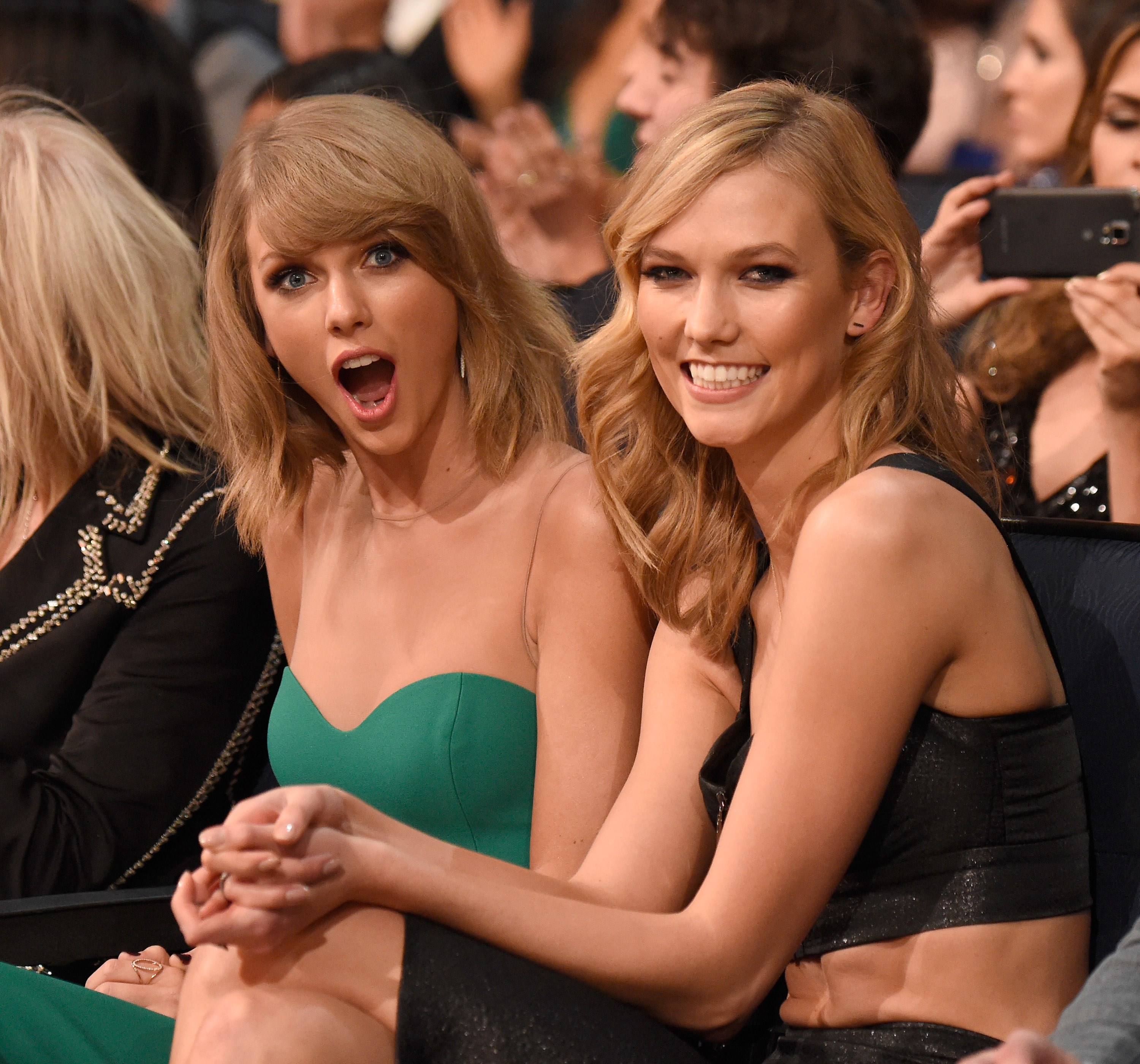
Rumors about ‘bad blood’ between Taylor Swift and Karlie Kloss might finally be things of the past: Per the Daily Mail, Swift and Kloss have been spotted in the same vicinity for the first time in more than a year. During the latest stop of Swift’s Reputation tour on Saturday night, eagle-eyed concertgoers in Nashville spotted a surprising fan dancing along to “Blank Space” in the V.I.P. section: none other than Kloss.
The sighting was a surprising but welcome update: Though Swift’s squad reunited in mid-July, Kloss was missing from the group. Suspicions of a feud between the two had peaked last year with Kloss’s notable absence from Swift’s friend-filled “Look What You Made Me Do” video—but if any such animosity ever actually existed, it seems like it’s all in the past.
Videos taken by fans in the crowd show Kloss taping Swift’s performance on her phone and singing along like a supportive friend.
Another fan took covert selfies with Kloss in the background, which Kloss later liked on Twitter. What can that mean other than that Swift and Kloss are friends again?
Although this is the first time we’ve seen Swift and Kloss in the same place since 2017, it’s not the only sign that the two were, in fact, still tight despite rumors to the contrary. In March, Kloss shared in an interview with the New York Times that she counts Swift among her “closest friends.”
Now there’s pics to prove that it’s true—and all that drama with rat emojis and the “Look What You Made Me Do” video is, thankfully, put to rest.
Sadly, after spending lots (and lots) of money on a wedding dress, wearing it for a few hours, and taking as many photos in it as possible, most brides typically pack up their gowns and never see them again. Meghan Markle, however, isn’t most brides. According to The Daily Express, the Duchess of Sussex’s custom Givenchy gown from her May wedding to Prince Harry could go on display at Windsor Castle some time before the end of this year, and rightfully so.
Royals sources told The Daily Express that palace officials are reportedly in talks to make Markle’s wedding dress the focal point of an exhibition that would be open to the public at Windsor Castle, the site of Markle and Prince Harry’s nuptials. A spokesperson for the Royal Collection Trust, which oversees the many royal residences, told The Daily Express that, if the exhibition is indeed finalized, an official announcement will be made before the end of 2018.
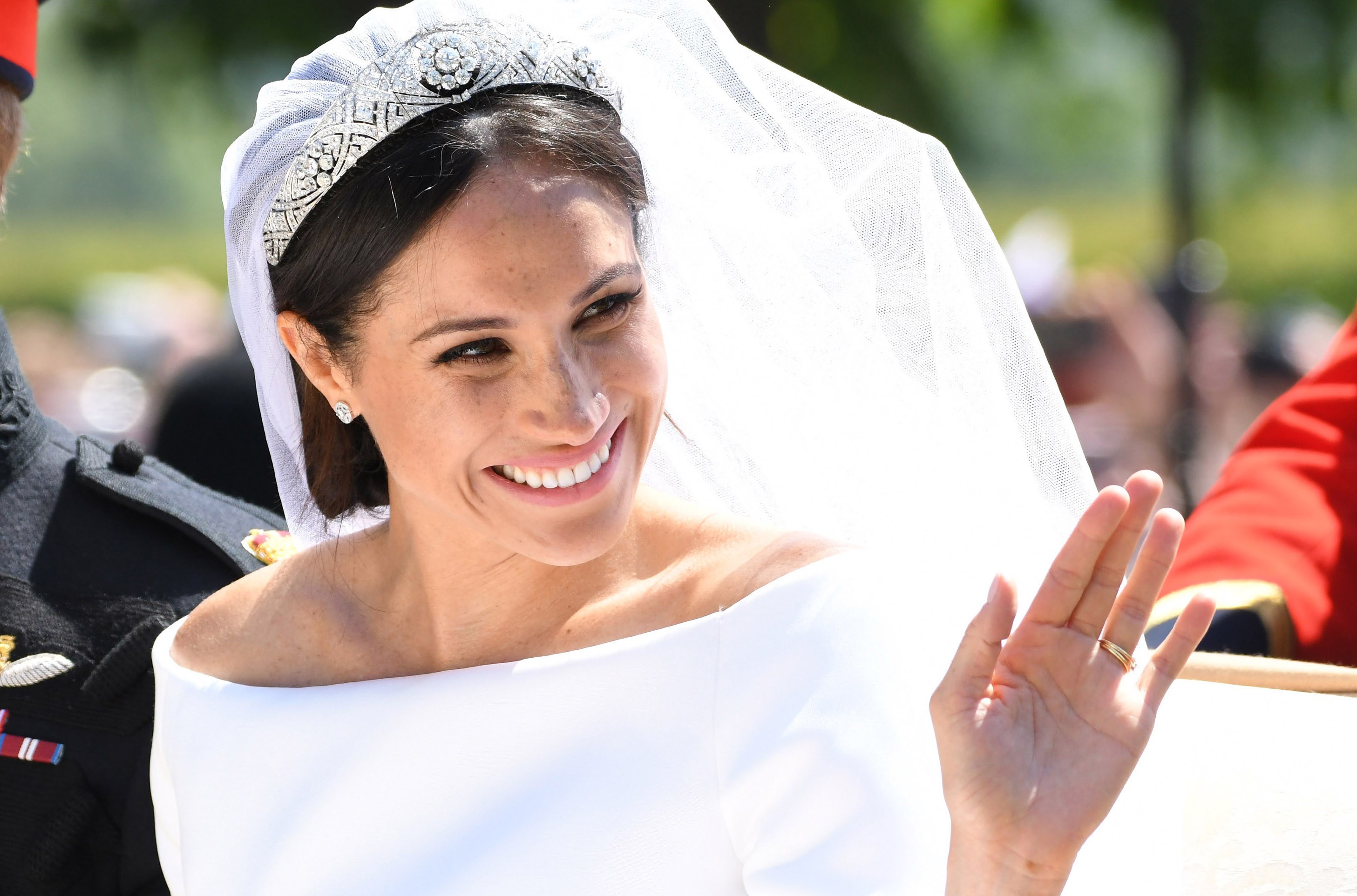
To refresh your memory: Markle’s gown was custom designed by Givenchy creative director Clare Waight Keller and featured a bateau neckline, three-quarter-length sleeves, and a long, trailing train, all done in triple silk organza. She completed the look with Queen Mary’s diamond bandeau tiara, loaned to her by Queen Elizabeth II, and a dreamy, floaty veil that was hand-embroidered with flowers from across the Commonwealth and measured 16 feet long.
Shortly after the wedding, Waight Keller spoke to Good Morning America about how the gown had been received by Markle’s new husband. “[Prince Harry] came straight up to me and he said, ‘Oh my God, thank you! She looks absolutely stunning,'” Waight Keller said. “Well, I think everybody saw on television — he was absolutely in awe, I think. She looked just incredible and it showed.” The designer added, “So, I think for the both of them, they were just radiant at that time.”