Categories
Health

People Are Debating Which Fictional Characters Would Have Voted for Donald Trump


Every once in a while, a viral moment happens on the Internet that brings everyone together—like when the Cats trailer dropped last week, or this new viral thread about which fictional characters voted for Donald Trump. Yup, on Sunday, July 21, Twitter user @MalKatz gave the world this challenge: “Name a fictional character who absolutely voted for Trump. NO villains.”

The responses have been hilarious, and, in some cases, highly debatable. The tweet’s original author offered up a couple of solid suggestions, including Lady Gaga‘s dad in A Star Is Born and Amy Poehler’s “cool mom” from Mean Girls. (Though, obviously Leslie Knope would never.)

It may be tough to admit for liberal fans, but it’s hard to argue with some of these. “When Emily [from Gilmore Girls] votes for Trump, it’s the final straw between her and Lorelei,” Ashley Nicole Black tweeted. I see no lies.

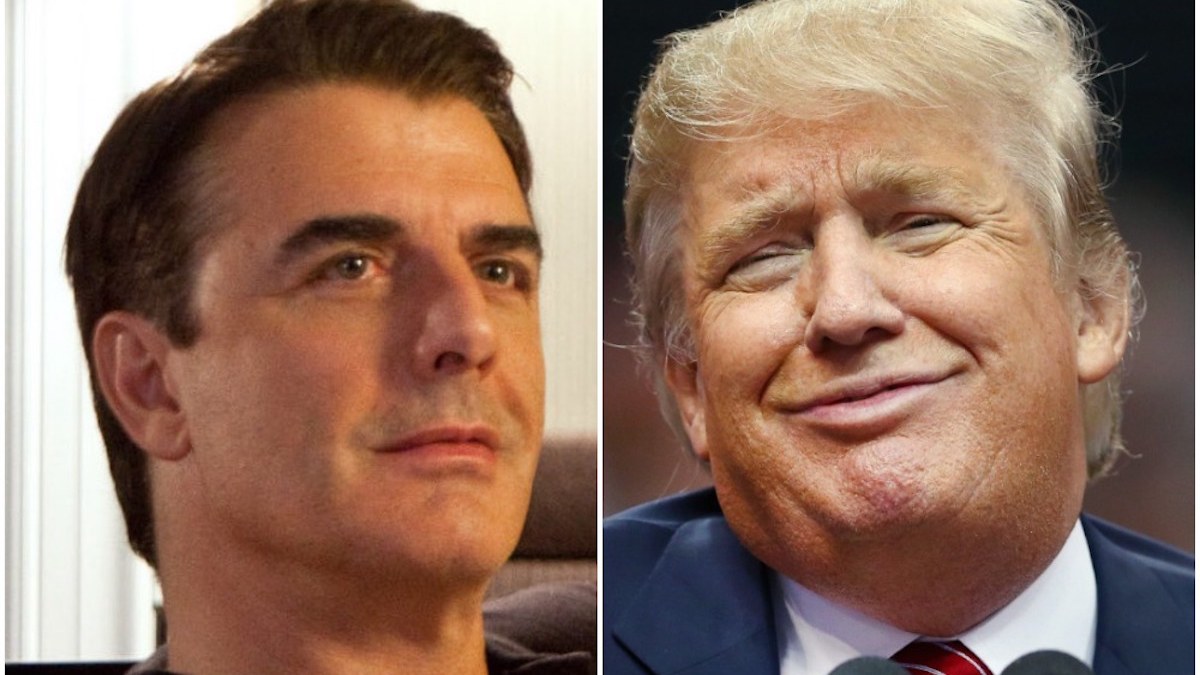
Mr. Big’s name popped up too, but to the person who also nominated Sex and the City‘s Carrie, we’d like to point out that Ms. Bradshaw told us herself she doesn’t vote (during the plot arc about her dating the politician). Charlotte York may have gone for Donald Trump, though. “I feel like Charlotte [from Sex and the City] would have secretly voted for [Trump] too, but would’ve also been genuinely devastated with his ‘behavior,'” one fan posited. How scarily accurate, am I right?

Check out some more responses to this inquiry, below.

“Phoebe [from Friends] voted for Jill Stein. Or not at all, because I could see her ‘not believing in voting,'” tweeted one person. Another wrote, “Most likely, Lucille Bluth [from Arrested Development] would find a place in the administration.”

Now let’s do who’s supporting who in the 2020 primaries. Let’s start with the characters in Gossip Girl. You know Blair Waldorf has some opinions.


Source link

Categories
Health

SNL's Leslie Jones Unloads on the Alabama Senators Who Voted to Criminalize Abortion


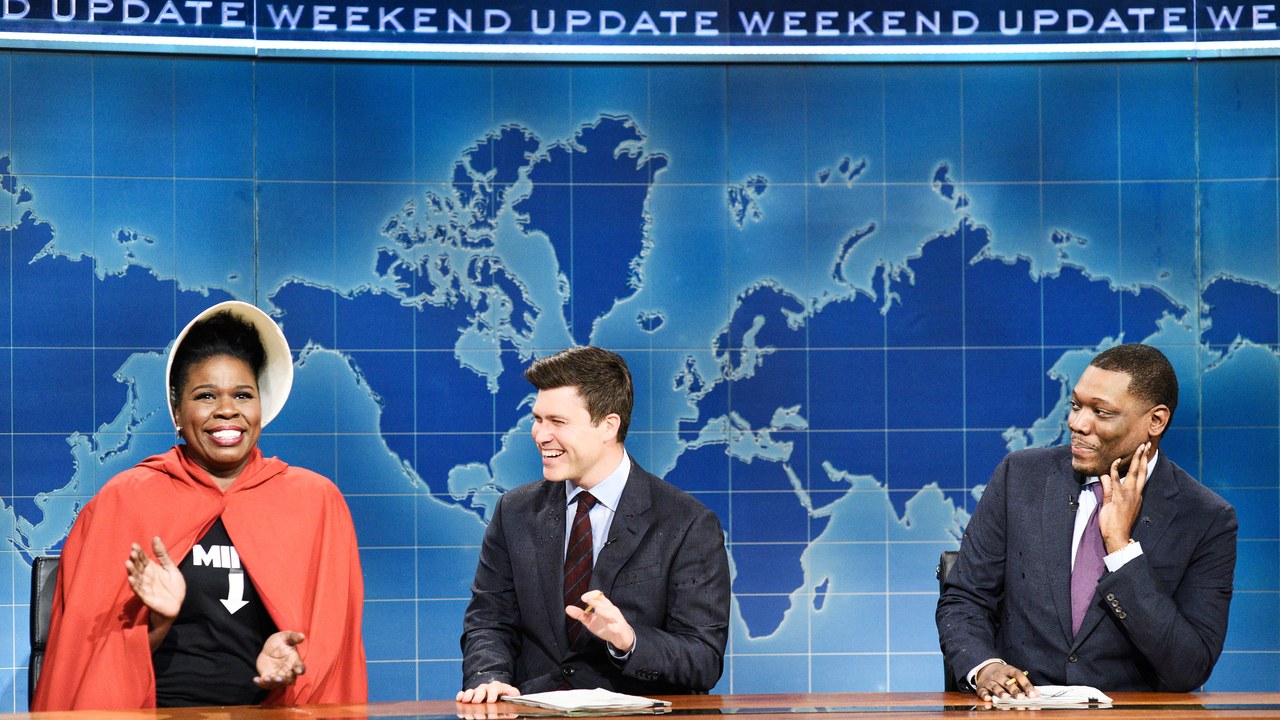
Saturday Night Live cast member Leslie Jones took on Alabama’s new anti-abortion law last night during the show’s “Weekend Update” segment—and she didn’t hold back on condemning it.

Jones joined co-anchors Colin Jost and Michael Che decked out as a handmaid from The Handmaid’s Tale in a red robe and bonnet. After joking that her name is now “Ofjost,” she then ripped off her costume to display a black T-shirt that had “mine” written on it along with an arrow pointing down. What followed was a powerful, yet comical, take on the newly passed Alabama legislation that makes performing an abortion at any stage of a pregnancy a felony.

“You can’t control women. Because, I don’t know if y’all heard, but women are the same as humans. And I’m Leslie ‘Dracarys’ Jones!” she said. “I mean, why do all of these weird-ass men care what women do with their bodies?”

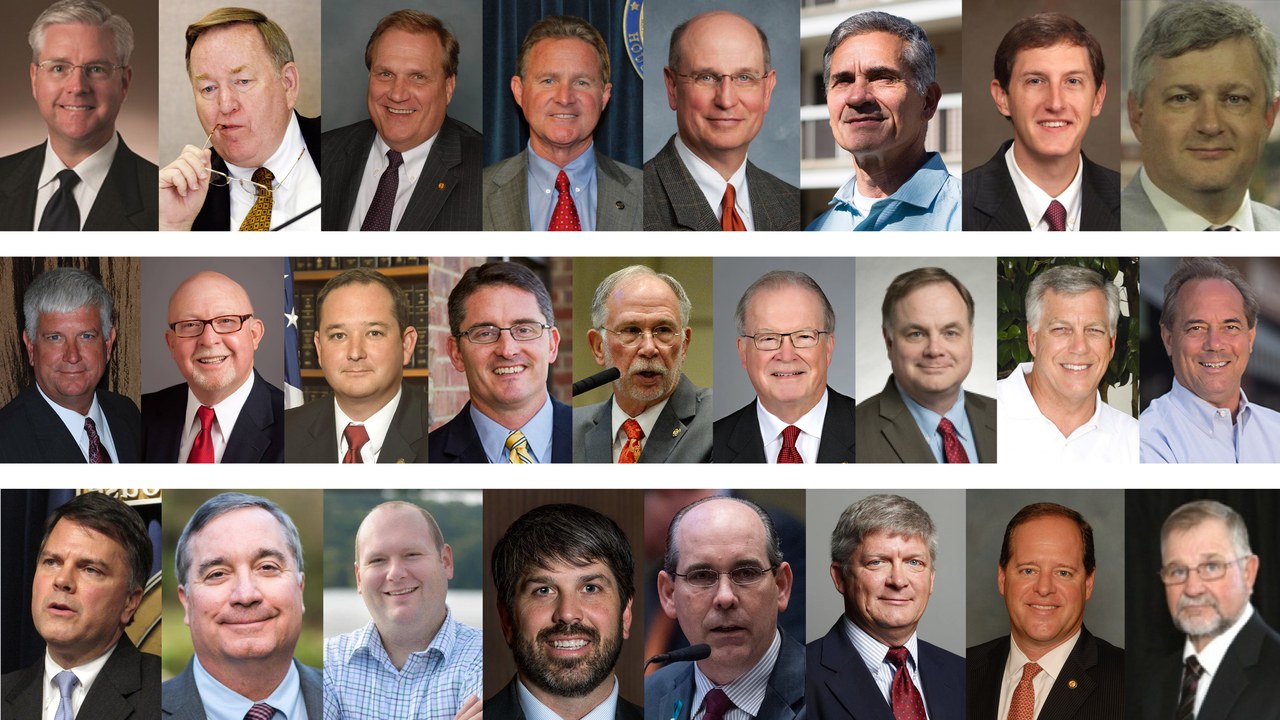
She then showed a photo of all 25 of the white male Senators who voted for the legislation and said, “This looks like the mugshots of everyone arrested at a massage parlor,” Jones said. “And if any of them had lips, I would tell them to kiss my entire ass.”

Jones then went on to say, “The fact that nine states are doing this means this really is a war on women.” She then made it clear that anyone feeling alone or scared is not alone.

She concluded her compelling bit on the segment with a “Dracarys” command, which is what Emilia Clarke’s character Daenerys uses on her dragons to release fire.

Watch the entire segment below:


Source link

Categories
Health

In Alabama, These 25 Men Voted for the Most Restrictive Abortion Ban in America


This week Alabama passed the most restrictive abortion ban in America, outlawing the procedure from the moment of conception onward. There are no exceptions for cases of rape or incest, with a lone allowance made for instances in which a woman’s health is at risk. As Glamour has reported, doctors who administer an abortion could be prosecuted and face up to 99 years in prison. One headline summed it up well: “Under Alabama’s Abortion Ban, Doctors Who Perform Abortions on Rape Victims Could Get More Prison Time Than Rapists.” The article goes on to explain that even doctors who just attempt to administer one could be sentenced to up to 10 years behind bars.

So who voted to strip women of their reproductive freedom, a right that has been enshrined in our law at the national level since 1973? Well, in Alabama, the antichoice movement has a look. All 25 state senators who voted for the bill are Republican white men; there are just four women in the chamber and all of them are Democrats, who opposed the bill.

This means that despite widespread support for Roe v. Wade nationwide and in both parties, just over two dozen men have voted for a bill whose explicit purpose is to challenge the Supreme Court decision. In other words, 25 men who will never need this procedure (but who can, of course, put a woman in a position where she might need one) have limited the medical options available to 51 percent of the population. The lopsidedness of this equation was not lost to people on social media, some of whom pointed out that just nine women have ever served in the Alabama state senate.

Here are the names of the senators who’ve decided that, in Alabama, women don’t deserve the right to make their own health care decisions: Greg Albritton, Gerald H. Allen, Will Barfoot, Tom Butler, Clyde Chambliss, Donnie Chesteen, Chris Elliott, Sam Givhan, Garlan Gudger, Andrew Jones, Steve Livingston, Del Marsh, Jim McClendon, Tim Melson, Arthur Orr, Randy Price, Greg Reed, Dan Roberts, Clay Scofield, David R. Sessions, Shay Shelnutt, Larry Collins Stutts, James Thomas “Jabo” Waggoner, Cam Ward, and Jack Williams.

It should be noted that the bill will now head to Alabama’s female governor, Kay Ivey, who has not commented on the law but who is antichoice. If she signs it, it could take effect within six months. Women, and white women in particular, have of course supported antichoice legislation. But no matter what Gov. Ivey decides to do, the optics of the bill at this point are impossible to ignore.


Source link

Categories
Health

Supreme Court Justice Ruth Bader Ginsburg Voted on Trump's Asylum Reform From Her Hospital Bed


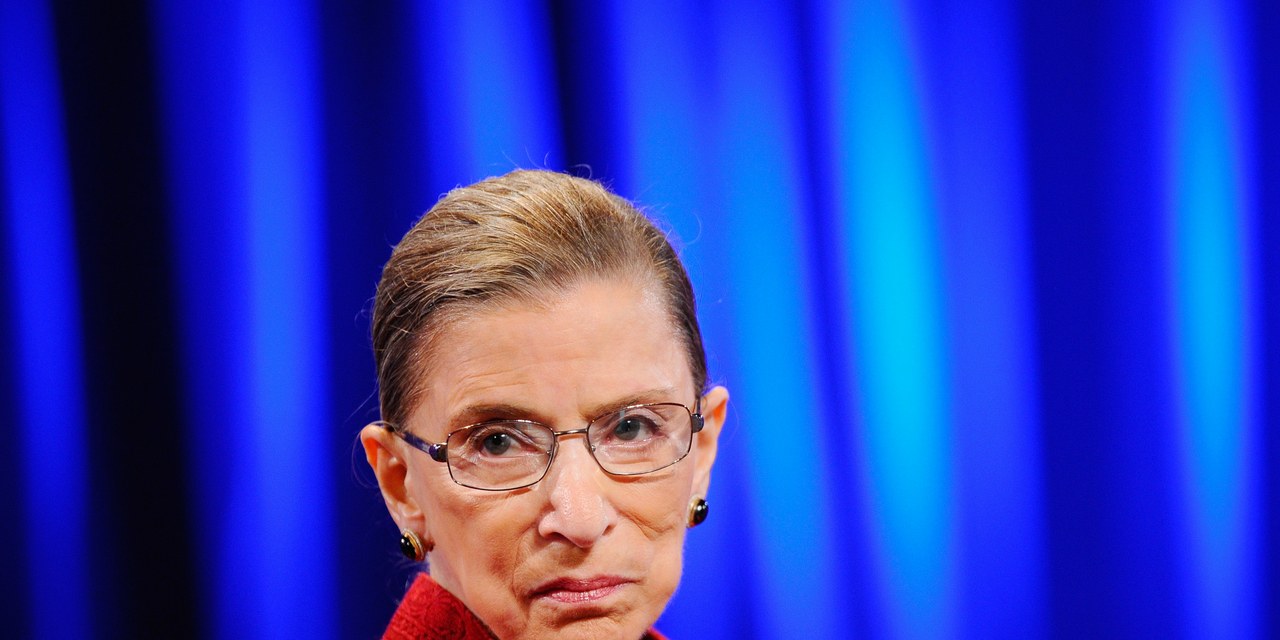
On Friday, immediately following surgery to remove two cancerous nodes from her left lung, Justice Ruth Bader Ginsburg voted against President Donald Trump’s proposed immigrant asylum restrictions from her hospital bed. Hers was the decisive vote in the 5-4 decision to strike down the proposal, NPR reported.

The proposal, NBC explained, would have automatically denied asylum to people who enter the United States from Mexico without going through official border crossings. Trump said the proposal was in direct response to the migrant caravan making its way toward the southern border.

Beyond being able to cast her vote, it appears the Notorious RBG is also on the up and up with her health. In November, the Supreme Court justice was hospitalized following a fall that left her with several broken ribs. According to a statement from the Supreme Court, doctors discovered her cancerous nodes while undergoing routine care for her injury. Following the surgery, doctors announced they were able to remove all of the cancer, and it appears it did not spread.

“According to the thoracic surgeon, Valerie W. Rusch, MD, FACS, both nodules removed during surgery were found to be malignant on initial pathology evaluation,” a statement by her physicians read. “Post-surgery, there was no evidence of any remaining disease. Scans performed before surgery indicated no evidence of disease elsewhere in the body. Currently, no further treatment is planned. Justice Ginsburg is resting comfortably and is expected to remain in the hospital for a few days. Updates will be provided as they become available.”

As NPR noted, by Friday evening, the 85-year-old was sitting up in her hospital room’s chair calling friends and sounding “chipper.” She apparently even hopes to be back in the courtroom for the next argument session, which begins in early January—and that’s entirely possible, according to Dr. Douglas Mathisen, chairman of thoracic surgery at Massachusetts General Hospital, who told NPR that recovery from an operation like hers typically ranges from two to four days in the hospital. And because RBG seems to get a lifetime’s worth of work done in an hour, we’re confident we’ll see her back in her robe in January.

Related Content:

Supreme Court Justice Ruth Bader Ginsburg Undergoes Surgery for Lung Cancer

How Many Women Does It Take to Change a Congress?

The Notorious RBG Got the Epic Rap Tribute She Deserves on SNL


Source link

Categories
Health

This Is How Women Voted in the Midterms—and What It Means for Election 2020


When Hillary Clinton’s second attempt to become America’s first female president failed in 2016, a lot of women were angry—at other women.

Much of the disappointment and finger-pointing that went on after the election that put Donald Trump in the White House was specifically aimed at white women: While Trump only got about 41 percent of the women’s vote overall, a majority of white women—52 percent—sided with him over Clinton at the polls.

In the weeks leading up the 2018 midterm elections, Republicans were fighting to maintain control of both the House and the Senate in a cycle that let voters make a judgment call not just about their lawmakers, but about Trump’s presidency. He literally told Americans they should “pretend I’m on the ballot.”

Fast forward to last week: Women go to the polls again—and run for office—in droves. As a whole, 59 percent say they supported their local Democratic candidate for the House—up from 51 percent in the 2014 midterms and 48 percent in 2010. Republicans manage to hang on to the Senate, but lose the House—making it harder for Trump to deliver what he’s promised. The head of the Democratic Party gives special thanks to women for their part in changing the game.

The headlines practically write themselves, right? Blue Wave! Pink Wave! Rainbow Wave! Shove over, 1992: This is the New Year of the Woman.

But dig deeper and you get a sharper, more complicated picture. There’s no question this election was A Big Deal for women. The House will see a new record of at least 125 women in office in 2019, and women voters in specific demographics helped them get there.

Some figures aren’t surprising. Number crunching by the Center for American Women and Politics, for example, finds an overwhelming 92 percent of black women supported a Democrat for the House in Tuesday’s election, as did 73 percent of Latinas. The non-profit Voter Participation Center broadly credited a coalition of unmarried women, people of color, and millennials as key to flipping the House—something VPC’s Page Gardner forecasted in a pre-election interview with Glamour.

Among white women, however, midterm exit polling shows a full-on split: As the Pew Research Center reports, 49 percent voted Democratic; 49 percent went Republican.

And for those white female voters, education level is a bright, dividing line.

This year, about 59 percent of college-educated white women supported a Democrat for the House. As Susan Carroll, senior scholar at CAWP, pointed out in a phone interview, that’s a big jump from 2016, when not even half did the same. It was almost the reverse among white women with no college degree: Around 56 percent voted for Republican House candidates this year, according to Pew; just over 60 percent of that same group supported Trump in 2016.

Given that outcome in America’s first return to the polls since Trump took office (and stirred women’s rage by separating migrant mothers and children at the border and putting Judge Brett Kavanaugh on the Supreme Court), a fresh surge of post-election finger pointing was no surprise.

“What is wrong with white women?” demanded columnist Moira Donegan of The Guardian. “Why do half of them so consistently vote for Republicans, even as the Republican party morphs into a monstrously ugly organization that is increasingly indistinguishable from a hate group?”

Gender Watch, a non-partisan research project tracking women in elections, quoted Melanye Price, an Africana Studies professor at Rutgers, as saying that “in the last two years, progressive white women’s sense of urgency has increased but in many parts of this country they have not been able to convince their sisters,” and also that “having to continually remind white women that fighting their own racial bigotry is as important as fucking the patriarchy is tiresome.”

Women’s March co-founder Breanne Butler put out a call for progressives to use the upcoming holidays to start helping white female relatives see the light ahead of the 2020 presidential race: “Here’s where you can talk to your aunt that gave money to her church’s mission trip but fails to recognize the [South American migrant] caravan,” she tells Glamour via email. “Here’s where you can talk to your cousin who loves hip hop music, but fails to see that black lives aren’t valued.”

And Princeton scholar Dara Strolovitch says while it’s inspiring to see midterm wins by women, LGBT, and minority candidates, she has lingering concerns: “Although the last two years have been a crash-course [on] the implications of persistent and institutionalized misogyny,” she writes in a post-midterms takeaway, “many straight white Christian women” may not only accept what could be seen as anti-feminist attitudes, but embrace them.

In this or any election, naturally, there’s a big, big difference between spotting trends in how women voted and establishing why they made their choices. The decision may come down to party loyalty, feelings about a specific candidate, a national issue, or a local problem. And of course, Carroll notes, “the culture of the [voter’s] state really does matter.”

Meanwhile, even as liberal analysts and activists lament some of Tuesday’s outcomes, not only the president, but groups like Susan B. Anthony List, which promotes anti-abortion women candidates for public office, are claiming victory.

“In 2010, there was not a single pro-life woman in the U.S. Senate. Next year there will be at least four pro-life women senators, and five if pro-life Martha McSally wins in Arizona,” SBA List President Marjorie Dannenfelser said in a post-election statement that also applauded the success of anti-abortion ballot measures in Alabama and West Virginia. Additionally, Dannenfelser cheered the re-election of Iowa Gov. Kim Reynolds, a woman she praised as having “signed the most aggressive pro-life state legislation to date.”

Elsewhere, the conservative Independent Women’s Forum posted a rundown on its website of liberal candidates who lost despite their celebrity endorsements, and Republican National Committee Chairwoman Ronna McDaniel tweeted that the one-two punch of Trump’s persuasive campaigning and a good GOP ground game “turned the forecasted Democrat tsunami into a ripple.”

The political divisions laid bare in the 2018 midterms, where some close contests still remain undecided, are definitely not limited to women: While that 59 percent of female voters supported Democratic House candidates, just over half of men voted Republican. That went up to 60 percent for white men, Pew calculated—and even higher, to 66 percent, for white guys with no college degree.

The divide between men and women voters extended to other other races, CAWP finds, including 20 of 21 Senate battles and nine of 11 governor’s races as of last week.

In contests that made national news, CAWP’s tally shows, women were likelier to go with the Democrat—win or lose: More than half of women voters supported Democrat Andrew Gillum’s unsuccessful bid to become Florida’s first African-American governor and Texas Rep. Beto O’Rourke’s failed challenge to incumbent Sen. Ted Cruz. Higher percentages of women than men also sided with incumbent Democratic Senators Claire McCaskill of Missouri and Heidi Heitkamp of North Dakota, who both lost to male Republican challengers.

The Democratic nominee in one of the country’s hottest Senate contests, Nevada’s Jacky Rosen, beat Republican incumbent Dean Heller with the support of 60 percent of women voters—versus just 42 percent of men. In Tennessee, just over half of female voters helped make Marsha Blackburn the first woman to represent the state in the Senate.

On the plus side for better female representation in Congress, Carroll says, “This is going to be the largest-ever freshman class of women in the House,” but there’s a lesson to keep in mind from 1992’s “Year of the Woman,” she cautions: Some of those female candidates won in politically mixed or Republican-leaning districts and went right on to lose their seats in 1994.

The Class of 2018 may face a similar challenge: “They have to run for re-election in two years, [and] who knows what the electoral context will be? It may not be as favorable for Democrats as it was this year,” she says. “You don’t know.”

Also unknown: Whether more female voters will veer to the left in the run-up to the 2020 presidential cycle—or if white women will stay on the fence, a divided part of the electorate served by a divided government in a divided America.

Celeste Katz is senior political reporter for Glamour. Send news tips, questions, and comments to celeste_katz@condenast.com.

In a pivotal election year, Glamour is keeping track of the historic number of women running (and voting) in the midterm elections. For more on our latest midterm coverage, visit www.glamour.com/midterms.


Source link
Categories
Health

These 109 Celebrities Voted Today. Did You?


The midterm elections are today, which means you have the opportunity to exercise your civic duty and vote. It’s a crucial election and the stakes couldn’t be higher, which is why so many celebrities have taken to social media to encourage people to get out and vote. Taylor Swift practically set the Internet ablaze in early October when she broke her silence on politics. Her advocacy is reportedly one of the reasons why voter registrations spiked last month, so here’s hoping all the celebrities who posted today inspired people to cast their ballots.

From Demi Lovato (who posted on Instagram for the first time since entering rehab to talk voting) to Leighton Meester, Viola Davis, and Adam Rippon, these 108 celebrities all rocked the vote and posted selfies to mark the occasion. Did you?

Check out their photos for yourself, below:

PHOTO: Instagram

Related Stories:

Voters Don’t Come Out for Midterm Elections—but That Could Change This Year

In a Record-Breaking Election Year for Women, Here Are the Races to Watch

Five Activists Crisscrossed the Country to Hear from Women—Here’s What They Learned


Source link