Categories
Health

The Supreme Court Backed Trump's Travel Ban. But Judges Sotomayor and Ginsburg Aren't Having It.


As the Supreme Court upheld President Donald Trump’s travel ban by a margin of 5-4 on Tuesday, it was two of its female justices—Sonia Sotomayor and Ruth Bader Ginsburg—who provided the harshest critiques of both the ruling and the policy itself.

As a refresher, this version of the travel ban (the administration’s third) restricts entry into the United States from seven countries, many of which have majority Muslim populations: Iran, North Korea, Syria, Libya, Yemen, Somalia, and Venezuela. The rules for entry vary by country. For example, immigrants (even those seeking asylum) and non-immigrants from Syria are barred from entering the country, but most Venezuelans will be unaffected. (Per CNN, the ban will mostly affect government officials from that country.)

Citizens from banned countries are able to apply for waivers on a case-by-case basis, like traveling to the US for medical treatment, or to visit a close family member. But The Guardian reports that there are a very limited number of waivers actually being granted.

Sotomayor, who was joined by Ginsburg in her dissent, boldly stated that the court failed to uphold the fundamental right of freedom of religion in her opening remarks. “The United States of America is a Nation built upon the promise of religious liberty,” she wrote. “Our Founders honored that core promise by embedding the principle of religious neutrality in the First Amendment. The Court’s decision today fails to safeguard that fundamental principle.”

She continues by calling the ban one that is designed to keep Muslims out of the country and calls out attempts to repackage it. “It leaves undisturbed a policy first advertised openly and unequivocally as a ‘total and complete shutdown of Muslims entering the United States’ because the policy now masquerades behind a façade of national-security concerns.”

Sotomayor calls out fellow justices in the majority saying they are “turning a blind eye to the pain and suffering the Proclamation inflicts upon countless families and individuals, many of whom are United States citizens.”

And the justices were not afraid to mention the president directly in their formal dissent.

“Ultimately, what began as a policy explicitly ‘calling for a total and complete shutdown of Muslims entering the United States’ has since morphed into a ‘Proclamation’ putatively based on national-security concerns,” the dissent reads. “But this new window dressing cannot conceal an unassailable fact: the words of the President and his advisers create the strong perception that the Proclamation is contaminated by impermissible discriminatory animus against Islam and its followers.”

Sotomayor did not shy away from noting the instances of Trump calling the policy a “travel ban” and his negative remarks about Islam and Muslims. “Despite several opportunities to do so, President Trump has never disavowed any of his prior statements about Islam. Instead, he has continued to make remarks that a reasonable observer would view as an unrelenting attack on the Muslim religion and its followers.”

“History will not look kindly on the court’s decision today—nor should it,” Sotomayor concluded.

While many applauded the justices’ passion in calling out the bigotry in the policy and ruling, the New York Times classified Sotomayor as having “lashed out” against President Trump in a tweet—and Twitter users were not happy about it.

You can read the full dissent here.

Related Stories:

The Hypocrisy in the Supreme Court’s Backing of California’s Anti-Abortion Pregnancy Centers

What Does That Supreme Court ‘Narrow Ruling’ on the Same-Sex Wedding Cake Case Really Mean?


Source link

Categories
Health

Meghan Markle and Prince Harry Will Reportedly Travel to Mexico to Meet Her Father


Now that Prince Harry and Meghan Markle have made it official (in front of the queen, Oprah, and the rest of the world), it looks like it’s finally time for him to meet Markle’s father, Thomas. If you somehow forgot, Thomas was initially supposed to walk Meghan down the aisle at her May 19 royal wedding, but after a paparazzi scandal and subsequent health problems, he was unable to attend. Now that he’s in recovery post-surgery, though, it seems the Duke and Duchess of Sussex may be planning a visit to his home in Mexico.

“I hear one of the things they want to do sooner than later — and now that they’re married — is to go and see Thomas Markle, who is recovering from a heart operation,” royal expert Katie Nicholl told Entertainment Tonight. “We don’t know when this trip might happen. … I’m hearing from people close to Meghan and Harry that they’re very keen to do it.”

Understandably, Prince Harry reportedly “feels it’s very important that he gets to meet Thomas,” (according to Nicholl). She added, “Of course, Meghan — who’s been really concerned about her father’s health — is keen to go see him as soon as possible.”

Meanwhile, Prince Harry has spent time with his mother-in-law, Doria Ragland, who was at the royal wedding and spent the preceding days getting to know Prince Charles and Queen Elizabeth. In the couple’s engagement interview, Prince Harry called Ragland “amazing.” In the same interview, Markle confirmed that her husband-to-be had not met her dad. “He’s talked to my dad a few times, hasn’t been able to meet him just yet, but it’s all been — it’s all been worth every effort,” she said.

Of course, it makes sense that Prince Harry is eager to meet this father-in-law, especially in the wake of what happened in the weeks leading up to the wedding. And it’s likely the feeling is mutual. Thomas issued a heartbreaking statement on the day of the wedding, expressing his regret for not being there to walk his daughter down the aisle. “The service was beautiful and it’s history. I will always regret not being able to be there and not being able to hold my daughter’s hand,” he told TMZ. “… Now I pray that Harry and Meghan can go on a nice honeymoon and rest and relax, and all of my relatives will just shut up about everything.”


Source link

Categories
Health

What It's Really Like to Travel With Vice President Mike Pence? One Female Journalist Explains Her Experiences Thus Far


You may have seen the hashtag #PenceFence erupt on Twitter this week, after female journalists covering Vice President Mike Pence‘s trip to the Western Wall in Israel were forced to report from the other side of a fence, behind their male colleagues. Some of those journalists, unsurprisingly, were not happy about it—and said as much on Twitter. Prominent Israeli journalist Tal Schneider wrote: “Separation at the Western Wall. The women stuck in isolation and can not photograph, work. Women journalists are second-class citizens.”

This incident had especially viral potential, considering what Pence has said in the past about working with women. Pence previously made headlines when comments re-surfaced that he does not dine alone with a woman other than his wife, and that he won’t attend events where alcohol is served without his wife, either. Both rules, of course, got their own share of blowback.

But Jenna Johnson, a political reporter for the Washington Post, who was traveling with the Vice President on his Middle East trip, says that the Vice President’s team was actually advocating on behalf of the women reporters at the Western Wall. We asked Johnson, who just completed her second international trip with Vice President Pence, to give us the inside scoop on what she saw happen in Israel—and what it’s really like to work alongside Pence as a reporter, who is, you know, a woman.

Can you explain the story behind #PenceFence? What happened at the Western Wall this week, when women journalists were forced to stand behind male journalists?

When you visit the Western Wall, you get put into two groups: Men can go to one section, and women can go to another section. There is talk in Israel of adding another section, where men and women can go, and that idea has caused a big controversy. Last year, it seemed like everyone had reached a mutual agreement—there could be a co-ed section—but that upset the ultra Orthodox jews in the area, so Prime Minister Netanyahu closed that plan. So again, anytime you go to the wall, men and women are split up. That complicates a visit like the one that Pence did, because only the men would be able to see it.

Who controls the rules at the Western Wall? It’s not Pence, to be clear.

Correct. It is called the Western Wall Heritage Foundation. The Vice President was a guest there. And while his staff did work with them to get everything ready, it is their wall. They set the rules. And the [Western Wall Heritage Foundation] set up a work-around. They put up a platform on the male side so that all of the men could be a little higher up and get a good look at the Vice President. Then they made a platform on the female side, so that women could stand over the wall and look over and see the Vice President. This is the same setup that they did when President Trump was there. In the van ahead of time, [the Vice President’s] staff explained to us that this is how it works, this is what to expect. Once we got there, we got out of the vans. The male reporters went one way, the female reporters went another way. We got to our section and there were a number of female journalists, a lot of them local, who were already there. And they were very upset. Because on the women’s side, you just don’t have as great of a view as the guys do. We were behind them.

Did the Pence team step in to try to resolve the situation for the female reporters?

The Vice President’s office had really jumped in and tried to make things better. They added chairs to the women’s side—that way we could stand up on chairs and be a little bit higher. There had been some rain earlier in the day, so there was actually a little tent up over the men. It totally blocked the view that the women had, so they took the tent down.

Did the set-up obstruct your view, or prevent you from doing your job in any way, shape, or form?

For me, as a print reporter, I reported in a little notebook with a pen, and I was able to stand on a chair, see the Vice President through the crowd, and get what I needed for my story. But it was a big problem for women [reporters] who were taking photos—or taking video. One woman who ran a television station said, “The guys who did their stand-up [shots] were able to have the Western Wall as their backdrop. When I did my stand-up, there was a crowd of people behind me.” They felt like it was not fair, and they started tweeting about it.

Do you think the Pence team handled the situation well? Do you wish they handled anything differently?

I think they were honestly trying their best to make it as good of a situation as possible. Again, we walked into a hot topic—there is a lot of disagreement over who can go where at the Western Wall. So given that, they did their best to try to make it as good as they could. And anytime a United States’ leader is traveling overseas, the [leader’s] communications [department] has a tough job of trying to negotiate how much access American reporters can get, especially in countries that aren’t used to that. Earlier in the trip, we were in Egypt and President el-Sisi’s staff did not want American reporters to come into a meeting that Pence and el-Sisi were having. And at one point, we were trapped in a bus for a couple of minutes. The security guard barred us from going into the Palace and doing our jobs. It actually took Pence’s staff passing a note to the Vice President during the meeting—and letting him know what was going on—so that he could appeal to el-Sisi himself to get the issue resolved. So this is part of being a reporter overseas: Navigating countries and the way they handle journalists.

“The Vice President really makes an effort to get to know thereporters who are traveling with him … On our way back [from theMiddle East], we could look up and see him standing there in hissocks, talking to his staff.”

What is it like to travel with the Vice President?

This was my second trip with him. Right before Christmas, we did a secret trip to Afghanistan to see troops there. These are often really long days. You’re watching something unfolding and trying to absorb every detail. Or you’re writing as quickly as you can, to get your story in before you lose wireless. Or you’re exhausted and sleeping.

Do reporters have any informal interaction with the Vice President on these trips?

The Vice President really makes an effort to get to know the reporters who are traveling with him. At the beginning of the [Middle East] trip, and at the end of the trip, he and his wife would come back and thank us for coming along and chat with us about what was to come or what had happened. On our way back, we could look up and see him standing there in his socks, talking to his staff. He didn’t have any shoes on, chatting with his staff. [Laughs.]

What were your biggest takeaways from this Middle East trip?

Back in December, President Trump announced that the United States was going to formally recognize Jerusalem as the capitol of Israel. It’s a decision that pretty much every ally urged him not to make. It has not been popular over in the Middle East, other than in Israel, and so, at each stop, this is something that was being talked about, whether publicly or behind closed doors. When we were in Jordan, King Abdullah [II] publicly laid out his concerns, and was kind of lecturing the Vice President about it. But Vice President Pence did not budge at all on this decision. At the end of the trip, he was as confident as ever. He heard the concerns, but he really didn’t see that much protest while he was there, because we were kept to barricaded-off streets, red carpets, palaces, and things like that. And he was welcomed, in Israel, as a hero. He became the first Vice President to address the Knesset, which is the Israeli parliament, and there were trumpets playing and people cheering. I think, for him, this trip just confirmed that the Trump administration made the right decision, despite what others might be saying.


Source link
Categories
Health

The Supreme Court Just Ruled that Donald Trump's Travel Ban Can Go Into Effect—for Now


As the third and latest iteration of President Donald Trump’s travel ban remains tied up in lower courts, the Supreme Court ruled on Monday that the order can go into effect even amid the continuing legal battles.

Trump issued this most recent order in September, barring certain travelers from Iran, North Korea, Libya, Syria, Venezuela, Somalia, Chad, and Yemen from entering the U.S. Six of these eight nations are Muslim-majority countries, and per The New York Times, Solicitor General Noel J. Francisco has argued that the ban falls under the President’s “broad constitutional and statutory powers to control immigration.” Though the specifics of the restrictions vary among the eight nations, in most circumstances, citizens will be prohibited from studying, working, vacationing, or permanently relocating to the U.S.

Already, two federal appellate courts in Maryland and Hawaii have blocked major portions of the ban, particularly as they affect travelers who have “a credible claim of a bona fide relationship with a person or entity in the United States”—like a grandparent, aunt, uncle, brother- or sister-in-law, cousin, nephew, niece, or grandchild. In June, Trump’s second travel ban was allowed to go into effect after the Supreme Court reached a compromise and allowed individuals who fell into the “bona fide” category to travel to the U.S. (That version of the ban was only temporary and expired earlier this year.)

But by issuing that third order, Trump attempted to circumvent the standards set in place by the previous ruling. And now, the administration is once again challenging the lower court rulings and brought their latest case to the Supreme Court in an effort to see the newest ban implemented while the appeals process continues.

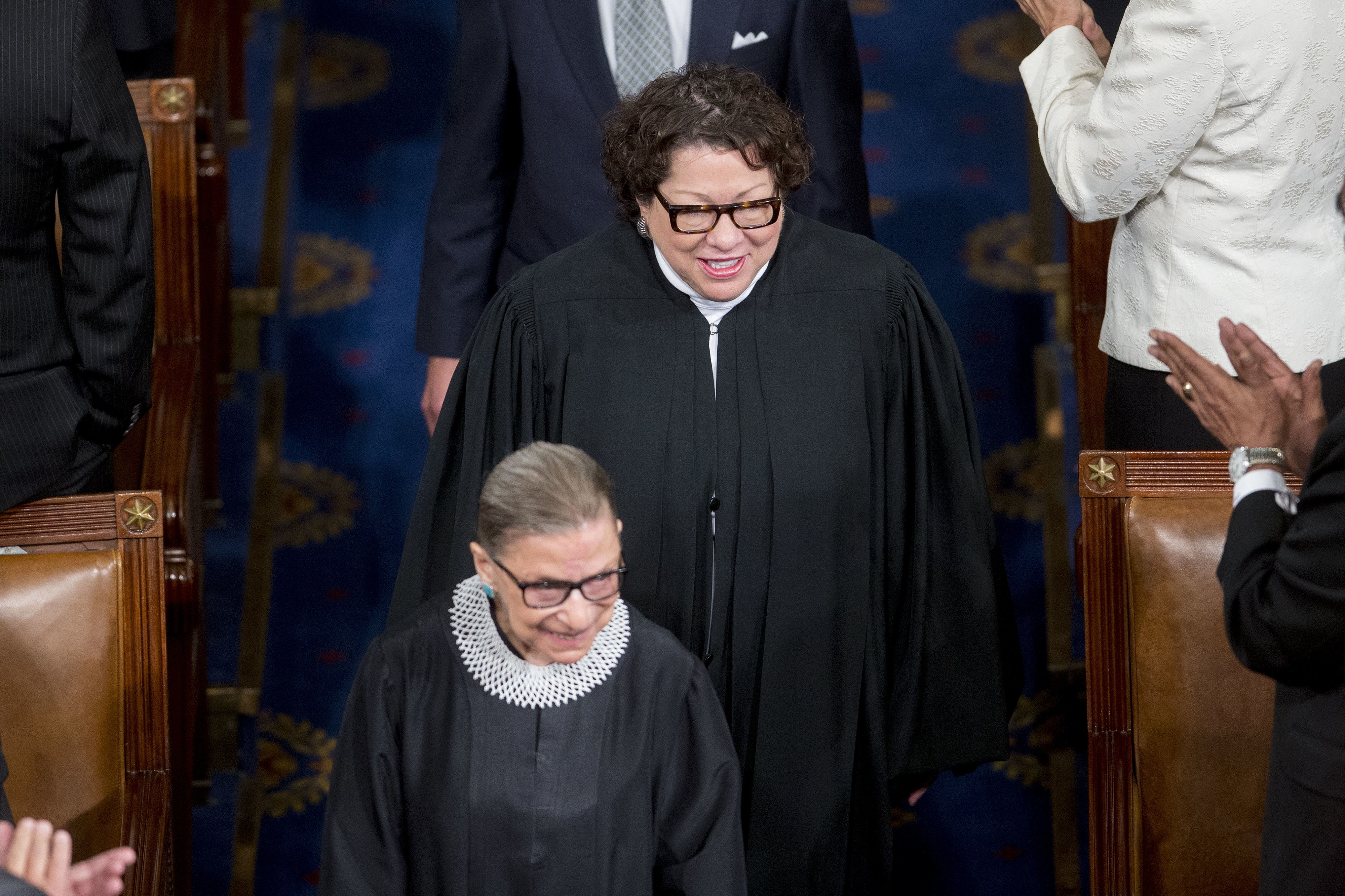
Two Supreme Court Justices—Ruth Bader Ginsburg and Sonia Sotomayor—opposed the White House’s request and did not want to allow the ban to go into effect. As the administration prepares to once again appeal their case, the Supreme Court called on these lower courts to promptly decide on the case so a final ruling could be issued before the Court’s current term ends next June.


Source link

Categories
Health

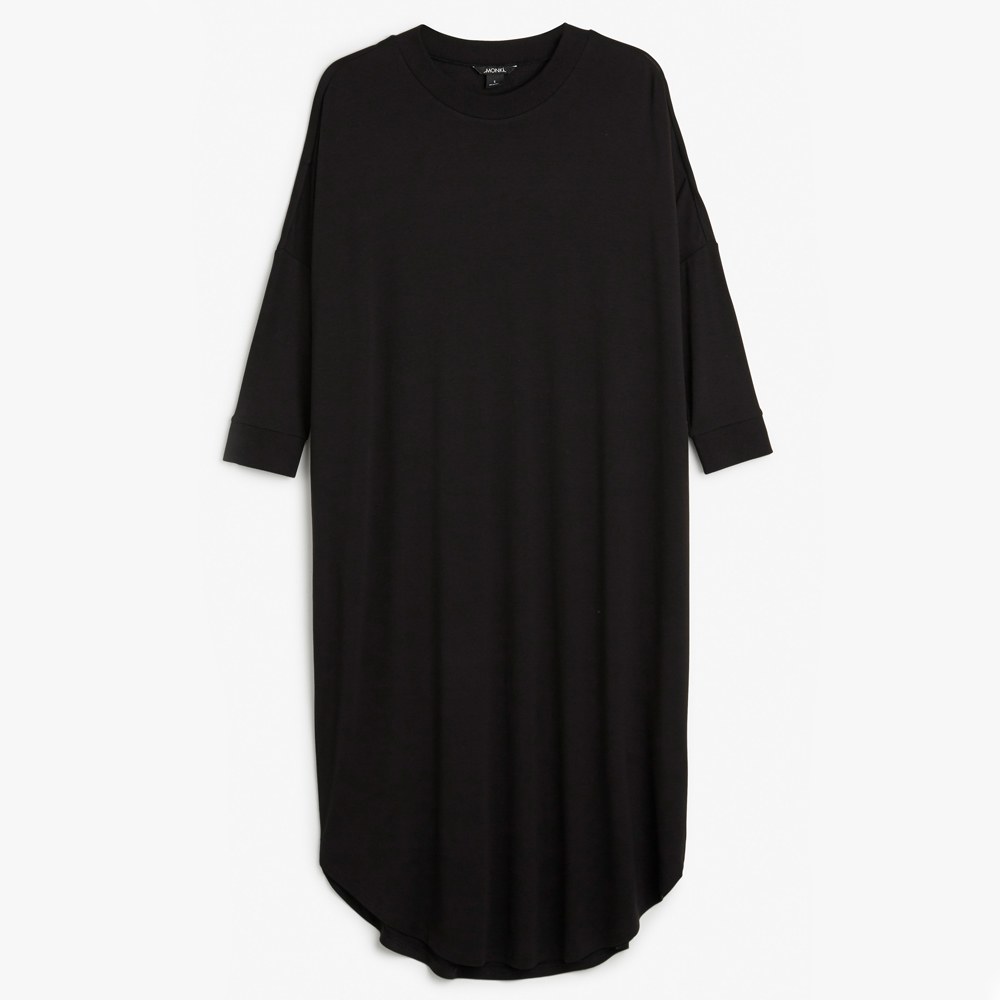
This $35 Monki Dress Has Changed the Way I Dress For Travel


Last winter, when my closet rotation hit its annual mid-February rut, one of my best friends happened to be visiting me in Berlin. She’s my style muse: the girl who can pull off Topshop‘s weirdest jeans and has those elusively perfect bangs that walk the line between quirky and chic. With her as my stylist (she had already talked me into an oversize sweater layered over my favorite DVF shorts and tights, something I’d never have tried alone) we set out on Mission: Wardrobe Refresh.

Our first stop was Monki, an H&M-owned company with outposts all over Europe and Asia that’s known for its minimalist-hipster vibe—and, pleasingly, run mostly by women. I’m at the point in my life when I’d rather buy a few nicer pieces than lots of disposable, fast-fashion-y ones—so I was skeptical when we first walked in. Fast-forward to 20 minutes later, and I have an armful of clothing and am heading downstairs.

But then, one magical dress caught my eye: It was midi-length, oversized, and black. It had what looked like three-quarter sleeves and a high neck. It was perfect. Oh, and it was $35.

See, after I’m done being your friendly Glamour weekend editor, I spend my weekdays writing about travel. This means I’m usually going on two trips a month or more—all of this travel, all of this packing, and yet I was still searching for that perfect day-of-travel uniform, one decision less to make on a day full of decisions and logistics and thinking. This dress, I knew, was it.

PHOTO: Kerry Traenk

Monki’s $35 wonder ticks all the right boxes: It’s made of cotton with just the right amount of synthetic to give it some swing and prevent wrinkles; you can dress it up with nice shoes and whatever cool necklace strikes your fancy (I love a long gold tassel) or down with sneakers and an Army jacket; it’s light enough for arrivals in warmer destinations but still thin enough to layer the bejeezus out of it in colder climes. Hell, you don’t even need to wear a bra with it, if you’re so inclined.

There are other major perks. The dress is long enough that I don’t have to worry about mooning fellow passengers as I climb the steps up to the plane from the tarmac. The modest cut works when I have an arrival or layover in more conservative countries. And, once I land again in Berlin at the end of my travels, the minimalist ~ aesthetic ~ means I can step off the plane and take the subway home without screaming “I’VE BEEN IN MALLORCA.” Plus, because it’s a proper dress—versus the oversize-sweatshirt-and-legging ensemble I used to wear to travel—it goes a long way toward making me feel like less of a schlub when I fly, and more of a person when I finally land again.

The genre of “travel clothes” gets a bad rap, some of which is deserved: There are plenty of pieces made out of questionably shiny, clingy material (why?) whose only talent is not wrinkling; capsule collections designed for the jet-set tend to offer a range of bland, expensive clothing that makes someone look like they’re traveling—i.e. the one thing tourists don’t want. Plus, shopping for purpose-built “travel clothes” just adds an extra step to the already daunting prospect of travel (You mean to tell me I have to buy special clothes just to fly 10 hours?), something that right now is more important than it’s ever been. Instead, I seek out normal clothing—clothing that looks like something I’d wear to a normal social engagement, that I feel good in. Clothing like my Monki dress.

I’m on my second one now. The Spring 2017 update features more of a crewneck and a hemline that swoops up like a nightshirt on the sides of my legs. It’s just as breezy and effortless—and, I’m actually wearing it as I type this at Abu Dhabi’s airport en route to Sydney. (Did I mention it’s $35?)

There’s a catch, though: There aren’t any Monki stores in the U.S., nor does the retailer currently ship there. However, ASOS does carry some of their pieces, so you can still shop the brand. (At $56, this midi dress is a little more expensive than my magical Monki one, but it shares most of its best qualities.)

Ten hours of flight time more until I’m in Oz, cocooned in this Rick Astley of dresses, I know it’s never gonna give me up, and it’s never gonna let me down.

Related Stories:

This $75 Bra Is the Best Thing to Ever Happen to My Boobs

This Neely & Chloe Bag Is a Compliments Magnet

This Japanese Peel Gel Leaves My Skin So Smooth, It’s Crazy


Source link

Categories
Canada Ft Mac

Tips for Vacationing in Fort MacMurray

  • Choose your travel method carefully. It is possible to fly into the local airport, drive in using your own vehicle, or take advantage of another transportation method instead. Consider where you want to end up and then determine the best way to get there.
  • Vacationing in Fort MacMurray can be a wonderful experience when you plan ahead, but it is essential to be prepared for the remoteness of the area. Plan on outdoor activities while you are here.
  • If you plan on hiking, camping, or other outdoor activities make sure that you pack appropriately. Research the typical temperature and climate for Fort MacMurray during the month and season that you plan to take your vacation. This will help you decide on the right types and amounts of clothing and accessories to bring with you.
  • If you forgot to pack something or you find out you are missing needed items there are stores and shops in Fort MacMurray that can provide what you need.
  • Be prepared for the native wildlife and insects in the area. If you are camping outdoors always tie any food up so that wild animals are not attracted.
  • If outdoor activities are not your preference there are plenty of indoor activities and attractions that you can visit. There are fun things to see and do for all ages, you just need to do your homework so you know what your options are while vacationing in Fort MacMurray. This will help you make the best choices during your trip.