Categories
Health

PTSD After Sexual Assault: ‘I Had to Practice Saying I was Raped. Now I Have to Practice Saying I Have PTSD’


Trigger warning: This post contains descriptions of sexual trauma.

I got a UTI two to three times a month when I was being repeatedly raped. I went to a doctor, and they asked if I was bathing enough, and then prescribed a preventative antibiotic to take before I had sex. Though my body was clearly rebelling against what was happening, no one listened to it—including me. The doctor didn’t ask if my sexually active relationship was consensual or not, and I didn’t have the language to tell them otherwise.

In the years since, I’ve practiced saying the word rape. It happened to me more than once and by someone I know—details I haven’t quite worked out how to relay in one sentence. Again, saying I was raped at all took practice.

Now, years later, I’m physically far away from my abuser but my body still doesn’t feel safe, which often results in panic attacks during or after sex. Without warning, I can’t breathe, think, or override my physical reactions of crying and hyperventilation. My skin crawls until I wrap it up tight, usually in a sweatshirt or blanket. Sometimes my vision goes, or my ears ring. The worst of the episode can last anywhere from three to five minutes; the residual feelings of urgency and shame usually continue all night, often into the following day.

Sometimes I avoid sex for weeks or even months afterward. Other times I seek it out, subconsciously hoping, I’m sure, for a way to release the trauma my body still holds. I wear heavier clothes. The assaults are a constant, aching presence in the back of my mind, as if I’ve forgotten to lock my front door, turn off the oven, or set my alarm. I think about rape when I drink. Sometimes I drink too much because of it. When I’m feeling up to the challenge, I practice looking at my body in the mirror and naming each part—arm, leg, torso—as something that belongs to me, a technique some therapists recommend.

Three months ago, I sat in my therapist’s office recapping an almost idyllic Fourth of July weekend: a trip to upstate New York, farm-to-table meals—oh, and a panic attack that left me sick and hyperventilating in the bathroom for an hour. “I think EMDR could really help you,” she said.

EMDR stands for eye movement desensitization and reprocessing therapy. What it looked like in my case was holding a buzzer in each hand, their alternating vibrations ping-ponging between my palms as my therapist prompted me to close my eyes and conjure certain memories. She asked me to notice how I felt—physically and emotionally—when remembering those moments.

The session lasted 90 minutes. Afterward I was disoriented and raw. I couldn’t bring myself to do it again.

A few weeks later, I had lunch with a friend who told me, without so much as a flinch or a nervous blink, that she had PTSD, or post-traumatic stress disorder. She too was in the midst of EMDR therapy—a treatment that’s shown promise for those living with PTSD. When I thought of the condition, I thought of veterans and the survivors of violent crime, people who’d had knives held to their throats, guns to their backs. People who certainly weren’t me.

“Do I have PTSD?” I asked my therapist in our next session. She pulled out her DSM-5, a manual that defines and classifies mental disorders, with the caveat that diagnosis is an inexact science; then she read off the criteria for PTSD. There are eight, five of which have between two and seven subcriteria. I met each of the main criteria and all of the subs except for three.

In that moment, I realized I’ve had imposter syndrome about my own mental health; somehow the years I spent in a body that at any moment might betray me didn’t feel like enough evidence to warrant a serious diagnosis. In a twisted way, my panic attacks and struggling for intimacy with myself and partners for years didn’t feel significant enough to qualify for PTSD. Why did I need the DSM-5 to tell me what my body had known all along?
Source link

Categories
Health

In Refugee Settlements in Uganda, Survivors of Sexual Assault Grapple with How to Raise Children Born of Rape


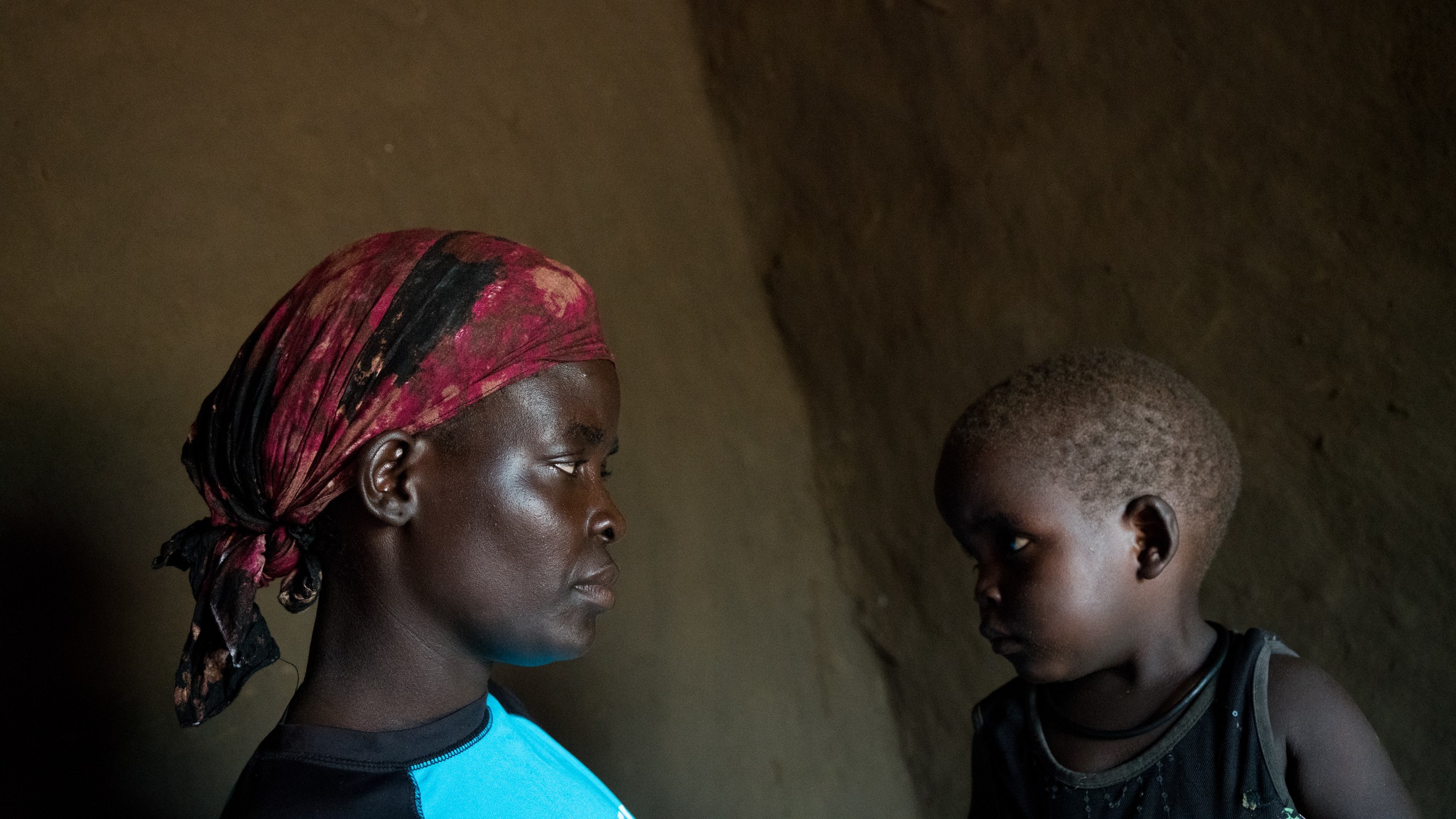
The war came to the Equatoria Region, where Diria lived, in 2016. That area sits at the bottom tip of South Sudan, and Diria resided in a village called Lasu Payam. When the fighting broke out, she, her four children, her sister-in-law, and some other women in the community hired two vehicles to drive them to the Ugandan border. Diria sat with about seven other people, including her sister-in-law. Her children were in the car ahead. She recalls to Glamour that the group had been driving for three days, inching past checkpoints, when soldiers blocked the path around Mugo Payam, about 50 miles from Uganda, directing their guns at the vehicle transporting her. It was early afternoon.

The soldiers’ faces were covered. They told everyone to get out of the car. Then the men were taken. Diria hasn’t seen them since. The soldiers separated the women into two groups. As she remembers it, the soldiers took the women to the bush and hit them with their guns. Diria still has back pain from the abuse. She heard shouting in Arabic, commands directed toward her to lie down. All the women were gang raped. Her sister-in-law, killed. After Diria had been sexually violated by five men, there was a cascade of shooting and the soldiers ran. Diria and three other women struggled back to the roadside and saw the driver of their car, shot. They managed to wave down a driver in another car headed for the border who let them hitch a ride. It took another two days to cross into Uganda.

In Keri, the transit center where refugees stay for days or weeks for processing before getting settled in one of 11 areas allocated to South Sudanese refugees in Uganda, Diria started throwing up. She went to the health center and took a pregnancy test. It was positive. The doctor offered to sell her a pill that he said would make the baby “go away” for 200,000 Ugandan Shillings (about $54), but she couldn’t afford that price. She tried drinking two cups of herbs she mixed together, hoping the cocktail would make her bleed. Nothing happened. She told her husband. He beat her. He went back to South Sudan. Now, he’s blocked her from calling him. Twice she almost hung herself. Then, she figured that after giving birth, she’d kill the child.

But when Abraham was born, he went to her to nurse. After he drank from her breast, she says couldn’t bring herself to kill him. Three months later he started to smile. That’s when she says she started to love him. During the first of three interviews with Glamour, Abraham toddles over to his mother and throws himself in her lap, face down, little arms splayed across her thighs. She looks down and the corners of her mouth tick up; her face is thick with affection. At church she holds him close throughout the entire service.


Source link

Categories
Health

1 in 16 Women Report Their First Experience With Sexual Intercourse Was Rape, Per New Study


A new study of government data has revealed a heartbreaking and maddening statistic about women and sexual assault. Per PBS, new research published in the Journal of the American Medical Association this week notes that for one in 16 women, their first experience with sexual intercourse was forced with rape or coercion.

That number is shocking, but how did the researchers arrive at it? According to PBS, the Centers for Disease Control and Prevention questioned a sample of 13,310 women, ages 18 to 44 about marriage, divorce, family life, reproductive health, and more between 2011 and 2017. (It should be noted that men were not asked about their first time and women with no history of vaginal intercourse and girls 17 or younger were not included in this sample.)

Still, a horrific 6.5 percent of the women questioned said their first time having sex was non-consensual. If that number is representative, it would mean about 3.3 million women in America are in a similar position. The average age of the women at the time of these assaults was about 15.6, with seven percent of the women telling researchers they were younger than 10 at the time of the assault, 29 percent saying they were between the ages of 11 and 14, and 39 percent saying the event happened between the ages of 15 and 17.

“Quite honestly, that’s the tip of the iceberg,” Laura Hawks, the co-author on the report and a research fellow at Harvard Medical School, said, noting that if the sample had included girls or women older than 45 the number might be even higher.

As women know all too well, the effects of sexual assault are real and can last a lifetime. Thirty percent of women whose first experience of sex was rape or assault reported an unwanted pregnancy later on, compared to 18 percent of women who said they made a choice to have sex for the first time. Women forced into sex also were slightly more likely to have had abortion and problems ovulating or menstruating.

One of the reasons for the study, according to Hawks, is to inform physicians about caring for patients who may have experienced a trauma. “Any physical exam can be traumatizing for someone who has encountered physical or sexual violence in the past,” she said. Patients should be able to grant permission before being asked tough questions and physicians should be sensitive in performing genital exams.

While these numbers are tough to read, studies like this one will hopefully prove vital in helping society recognize how pervasive violence against women truly is and inspire more medical professionals and people in general to believe their stories.


Source link

Categories
Health

People Are Praising Netflix’s ‘Unbelievable’ for Starting Important Discussions About Sexual Assault


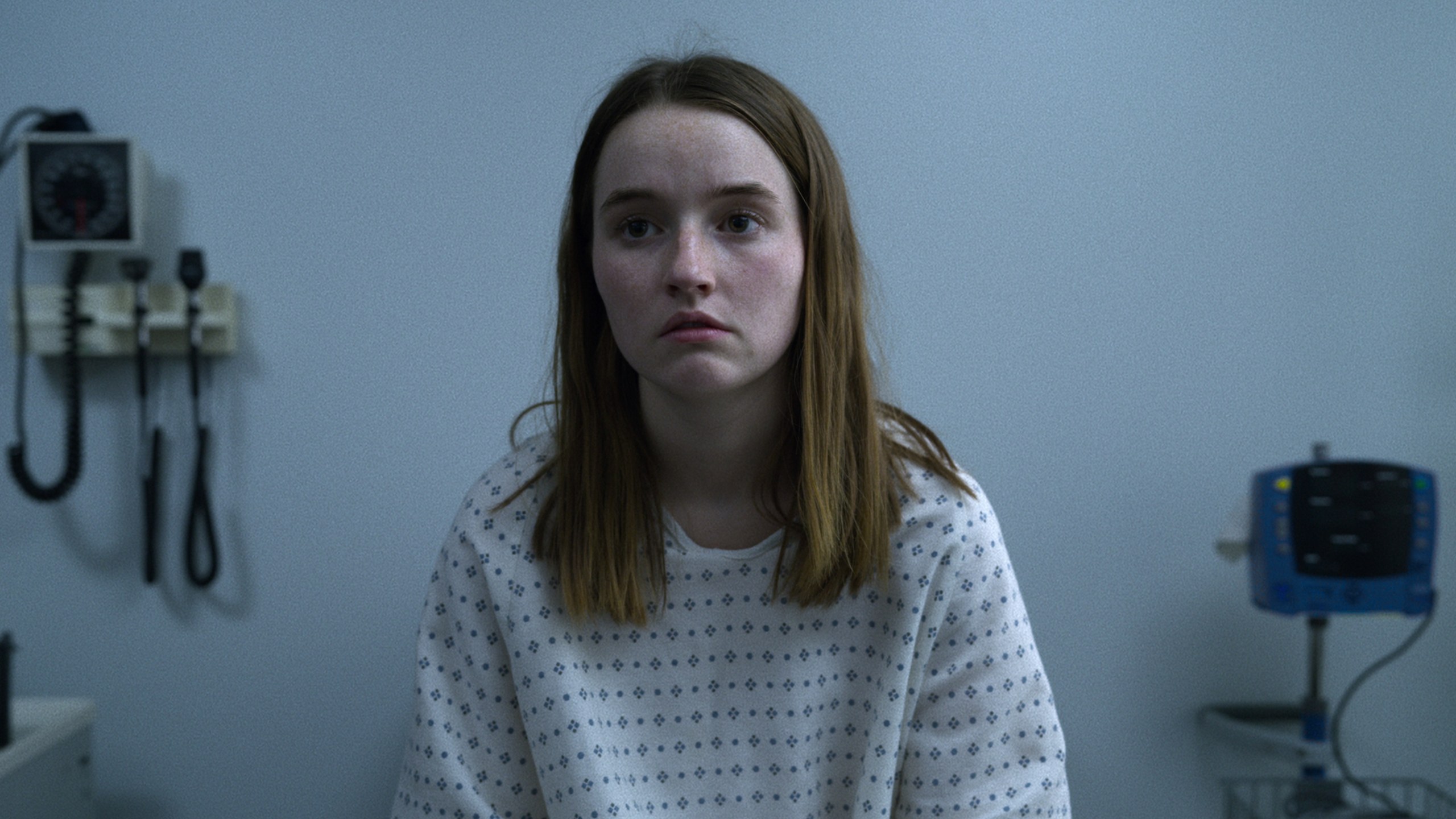
It seems like everyone is watching—and talking about—Netflix‘s Unbelievable. The series, based on a true story, centers on Marie (Kaitlyn Dever), a former foster teen who reports to local authorities that she was raped. But the officers, all men, don’t believe her story, citing inconsistencies in her statements. After several conversations, the cops essentially strong-arm Marie into saying she made the entire thing up. Her life unravels in the aftermath: Her friends disown her, she receives a demotion at work, and the city sues her for filing a false police report. But then, three years later, two female detectives (Toni Collette and Merritt Wever) start looking into several rape cases similar to Marie’s story and deduce that the same man is committing these assaults.

The show isn’t easy to watch. It’s gritty, and graphic, and it can be triggering for people who have experienced sexual assault. But the response to it online is overwhelmingly positive: Many are praising the series for its nuanced depiction of what sexual assault survivors go through when reporting their cases. “This is literally why women struggle with admitting to being sexually assaulted because they’re forced to relive the moment 60+ times, and then poked and prodded at by our legal system,” one person wrote on Twitter.

“If you’re someone whose first response to a rape being reported is ‘but they could be faking it’ you should watch the series #Unbelievable and educate your spiteful selves,” tweeted someone else.

Other viewers are calling for female officers to handle female sexual assault cases after watching Unbelievable. The series does an excellent job at showing how empathetic Collette’s and Wever’s characters are toward the women they work with. The male officers who handle Marie’s case are cold and mechanical, and they have an obvious bias against her. “I just started watching #Unbelievable and I firmly believe that a rape victim (if female) should be interviewed by a woman detective,” one person tweeted.

Read some more reactions to Unbelievable, below.

The show is currently streaming on Netflix.


Source link

Categories
Health

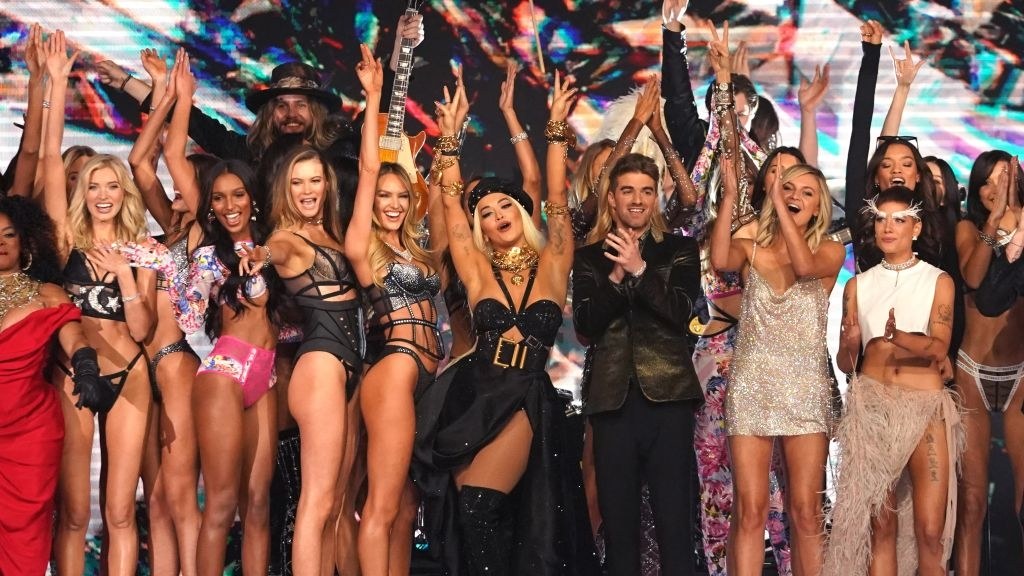
In Open Letter, More Than 100 Models Urge Victoria’s Secret to Take a Stand Against Sexual Harassment in Fashion


A new petition urging Victoria’s Secret to take a stand against acts of sexual harassment and violence has been signed by more than 100 models, many of whom have worked with the brand in the past.

In an open letter written by the Model Alliance and addressed to Victoria’s Secret CEO John Mehas, current and former runway stars call on the company to take a role in remedying sexual harassment, citing “numerous allegations of sexual assault, alleged rape, and sex trafficking of models and aspiring models,” as several photographers associated with the company have been accused of misconduct, plus the links between various L Brands executives—including company head Leslie Wexner—and convicted sex offender and former financier Jeffrey Epstein. (Sara Ziff, the founder of Model Alliance, has written about Epstein in the past.)

It has already been signed by Christy Turlington Burns, Doutzen Kroes, Milla Jovovich, Gemma Ward, Carolyn Murphy, Caitriona Balfe, Karen Elson, among others. Time’s Up has also co-signed.

“In the past few weeks, we have heard numerous allegations of sexual assault, alleged rape, and sex trafficking of models and aspiring models. While these allegations may not have been aimed at Victoria’s Secret directly, it is clear that your company has a crucial role to play in remedying the situation,” the letter reads. “From the headlines about L Brands CEO Leslie Wexner’s close friend and associate, Jeffrey Epstein, to the allegations of sexual misconduct by photographers Timur Emek, David Bellemere, and Greg Kadel, it is deeply disturbing that these men appear to have leveraged their working relationships with Victoria’s Secret to lure and abuse vulnerable girls.”

In the letter, the Model Alliance pointed to the position Victoria’s Secret holds in the industry and its platform as a means to combat abuses in the industry: “We are calling on Victoria’s Secret to take meaningful action to protect its talent and those who aspire to work with the company. Victoria’s Secret has the opportunity to be a leader, to use its power and influence to bring about the changes that are urgently needed in our industry. Every day, fashion brands, publishing companies, and agencies set the norms of what’s acceptable and what’s not in fashion. If Victoria’s Secret were to take a stand against these abuses and commit to meaningful change by joining the RESPECT Program, this would go a long way in helping our industry chart a new path forward.”


Source link

Categories
Health

HBO’s 'Share' Addresses Sexual Assault Unlike Any Movie You’ve Ever Seen


“There is just as much humanity, nuance, intelligence, and complication in the experience of a teenage girl as there is in anyone else,” Bianco says. Stories about rape, and particularly stories about young women who experience sexual violence, are often pegged as trauma films. She bristles at that label.

“I’m always hesitant to talk about the gender and politics side of the film, even though those things are really important to me. The minute you tell people that the film tells a story about a teenage girl, people either want to reduce it to ‘puff’ or ‘issues,’” she explains. In other words, something people feel burdened to see and talk about because of its topical urgency, without registering its artistic merits.

Rhianne Baretto on set with director Pippa Bianco.

SABRINA LANTOS/HBO

It’s true that Share requires a certain willingness to sit with troubling, uncomfortable subject matter. At the same time, the characters and the trajectory challenge expectations of the genre, in part by focusing on minutiae: Mandy’s interactions with her parents, coach, and teammates, attempts to be “normal” and engage with her social life, shooting hoops, the bruise slowly healing on her back.

Rhianne Baretto, the 22-year-old Brit who plays Mandy, describes it as a process of the teenager figuring out what she wants to do, what justice looks like for her, and finding the strength to pursue that choice. Through her character’s eyes, the audience is invited to consider that maybe the “right” way forward fails to give her closure. Just as resonantly, Baretto feels that the film deconstructs fraught topics like consent and culpability, while also recognizing that, even in instances of clear right and wrong, there is no black and white. “No one is completely a villain. Everyone is making decisions day to day,” she says.

For Bianco, teasing out those distinctions and revealing the commotion roiling beneath what, on the surface, looks like passivity was the point. Early on in the filmmaking process, she remembers getting the note that her lead character wasn’t “activated” enough: Films are about people making choices—that’s what pushes a plot forward.

“But, to me, there are a lot of choices that we choose to ignore,” Bianco explains. “The choice not to say something. The choice to wait. The choice to ask for privacy. There are millions of choices, all of which are active. Just to get out of bed every day—I think that’s a heroic choice.”

Elizabeth Kiefer is a New York-based writer and editor.


Source link