Categories
Health

PTSD After Sexual Assault: ‘I Had to Practice Saying I was Raped. Now I Have to Practice Saying I Have PTSD’


Trigger warning: This post contains descriptions of sexual trauma.

I got a UTI two to three times a month when I was being repeatedly raped. I went to a doctor, and they asked if I was bathing enough, and then prescribed a preventative antibiotic to take before I had sex. Though my body was clearly rebelling against what was happening, no one listened to it—including me. The doctor didn’t ask if my sexually active relationship was consensual or not, and I didn’t have the language to tell them otherwise.

In the years since, I’ve practiced saying the word rape. It happened to me more than once and by someone I know—details I haven’t quite worked out how to relay in one sentence. Again, saying I was raped at all took practice.

Now, years later, I’m physically far away from my abuser but my body still doesn’t feel safe, which often results in panic attacks during or after sex. Without warning, I can’t breathe, think, or override my physical reactions of crying and hyperventilation. My skin crawls until I wrap it up tight, usually in a sweatshirt or blanket. Sometimes my vision goes, or my ears ring. The worst of the episode can last anywhere from three to five minutes; the residual feelings of urgency and shame usually continue all night, often into the following day.

Sometimes I avoid sex for weeks or even months afterward. Other times I seek it out, subconsciously hoping, I’m sure, for a way to release the trauma my body still holds. I wear heavier clothes. The assaults are a constant, aching presence in the back of my mind, as if I’ve forgotten to lock my front door, turn off the oven, or set my alarm. I think about rape when I drink. Sometimes I drink too much because of it. When I’m feeling up to the challenge, I practice looking at my body in the mirror and naming each part—arm, leg, torso—as something that belongs to me, a technique some therapists recommend.

Three months ago, I sat in my therapist’s office recapping an almost idyllic Fourth of July weekend: a trip to upstate New York, farm-to-table meals—oh, and a panic attack that left me sick and hyperventilating in the bathroom for an hour. “I think EMDR could really help you,” she said.

EMDR stands for eye movement desensitization and reprocessing therapy. What it looked like in my case was holding a buzzer in each hand, their alternating vibrations ping-ponging between my palms as my therapist prompted me to close my eyes and conjure certain memories. She asked me to notice how I felt—physically and emotionally—when remembering those moments.

The session lasted 90 minutes. Afterward I was disoriented and raw. I couldn’t bring myself to do it again.

A few weeks later, I had lunch with a friend who told me, without so much as a flinch or a nervous blink, that she had PTSD, or post-traumatic stress disorder. She too was in the midst of EMDR therapy—a treatment that’s shown promise for those living with PTSD. When I thought of the condition, I thought of veterans and the survivors of violent crime, people who’d had knives held to their throats, guns to their backs. People who certainly weren’t me.

“Do I have PTSD?” I asked my therapist in our next session. She pulled out her DSM-5, a manual that defines and classifies mental disorders, with the caveat that diagnosis is an inexact science; then she read off the criteria for PTSD. There are eight, five of which have between two and seven subcriteria. I met each of the main criteria and all of the subs except for three.

In that moment, I realized I’ve had imposter syndrome about my own mental health; somehow the years I spent in a body that at any moment might betray me didn’t feel like enough evidence to warrant a serious diagnosis. In a twisted way, my panic attacks and struggling for intimacy with myself and partners for years didn’t feel significant enough to qualify for PTSD. Why did I need the DSM-5 to tell me what my body had known all along?


Source link

Categories
Health

Rose McGowan Says Hollywood "Blacklisted" Her After She Was Raped


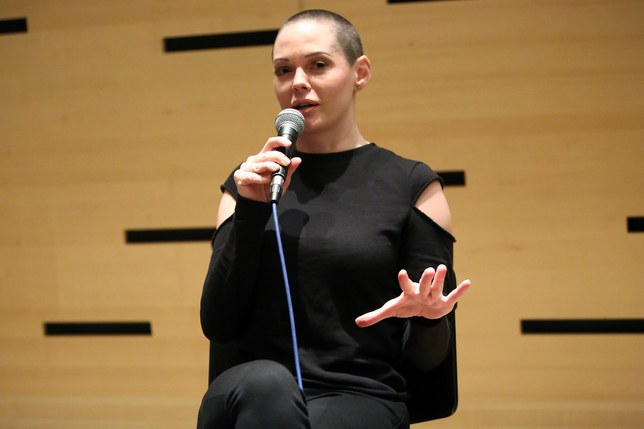
PHOTO: Monica Schipper/Getty Images

Charmed actress Rose McGowan has been outspoken on Twitter about Harvey Weinstein following the New York Times‘ bombshell investigation into his alleged sexual harassment and assaults. McGowan also used the platform recently to accuse Weinstein of raping her when she was younger. Now, in an interview published on Saturday by the Observer, she details the fallout from reporting the assault.

In the piece—the interview for which took place back in January—McGowan explains that she didn’t report the alleged assault to the police because a criminal lawyer told her that she was unlikely to win. “Also, I didn’t want his name next to mine in my obituary,” she told the Observer. “His name doesn’t deserve to be mentioned in the same breath as mine when I’m dead.”

McGowan did, however, tell the studio. On Twitter, McGowan said she went to Roy Price, the head of Amazon Studios, to report the incident but was told they couldn’t do anything because there was “no proof.” In her interview with the Observer, she elaborated: “They threatened [me] with being blacklisted,” she said. “I was blacklisted after I was raped, because I got raped, because I said something … but only like internally.”

In 1997, McGowan reached a $100,000 settlement with the Weinstein, which she cites in the interview as “an admission of guilt” on Weinstein’s part. She also claims to have had between 150 and 200 people she could subpoena to support her testimony and implied she also had physical proof. “I had three surgeries on my wrist and elbow,” she said. “I think that’s fair enough.”

McGowan also vows that she’s committed to fighting back against those who are “aiding and abetting” sex crimes in the film industry. “They blame the victim, they do all that shit,” she told the Observer. “They are bred to put fear into people and that’s what they do, they’re bred to put fear into the publishers and lawyers and they overreach it, and I’m going to do what I can and come out as hard as I can.”

In the 10 months since the interview took place, McGowan has done exactly that. Since the Weinstein scandal broke, she’s put Amazon’s studio on blast for failing to act (Price is now suspended) and called Ben Affleck a “liar” after he issued a statement claiming that the allegations against Weinstein made him “sick”. Some suspect that the suspension of McGowan’s account was the result of the latter move, though Twitter says she’d tweeted a private phone number, which constituted a violation of terms.

But after celebrities and women boycotted the social media site in solidarity with McGowan, her account was reinstated, and she resumed calling out the hypocrisy of Hollywood. Recently, she’s been throwing shots at men including Weinstein’s brother and the current head of the Weinstein Company, Bob Weinstein; Woody Allen, who has also faced allegations of sexual assault and is reportedly “sad” about what’s happening to Weinstein; and James Cordon, who joked about the scandal while hosting the amfAR Los Angeles Gala on Saturday.

Something tells us this isn’t going to be the last we hear about the gross abuse of power in Hollywood. In fact, we have McGowan’s forthcoming book Brave, which was recently bought by HarperCollins, to look forward to. She told the Observer that 85 percent of it had already been written and promised that it would address many of the incidents and issues she’s been talking about in regard to sexual assault and Hollywood. “It’s not a ‘tell all,'” she said, “It’s a ‘tell it how it is.'”

Related Stories:
Rose McGowan Accuses Harvey Weinstein of Rape in New Tweets
Rose McGowan Was Suspended From Twitter After Tweeting About Ben Affleck
These Are All the Women Who Have Accused Harvey Weinstein of Sexual Harassment and Assault


Source link