Categories
Health

Serena Williams Is Launching Her Own Fashion Line


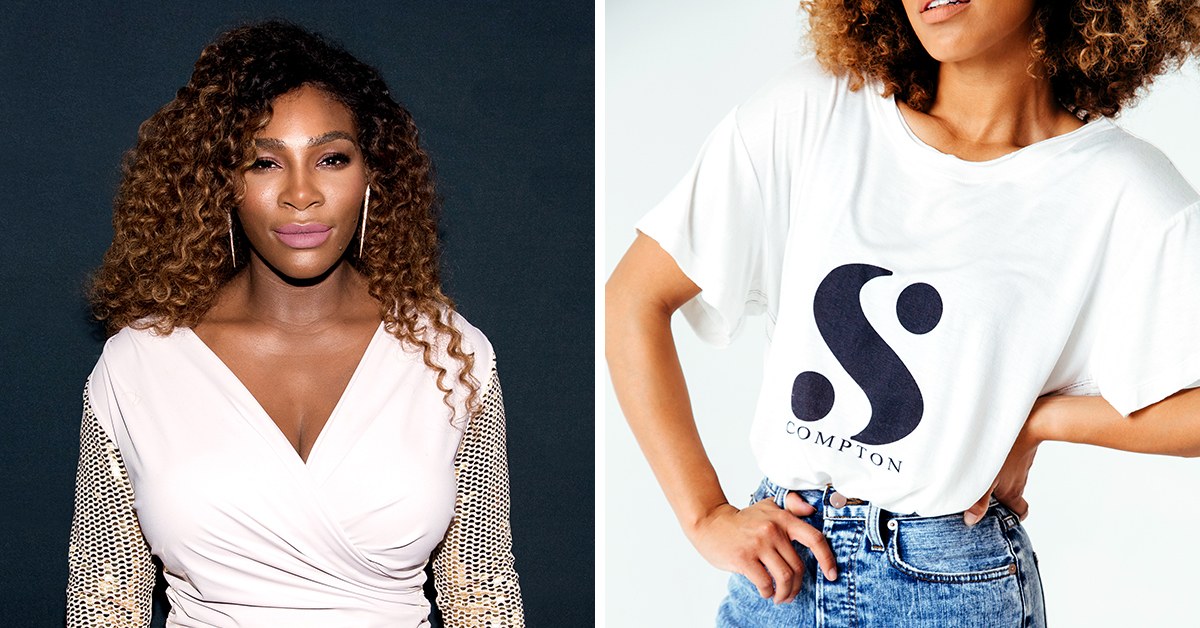
If you follow Serena Williams on social media, you know she’s been preparing for the launch of her namesake clothing line for some time now. If you’ve been keeping up with the greatest athlete of all time for longer, though, you know that she was once enrolled at the Art Institute of Fort Lauderdale for fashion design—and that she’s created collections for companies like Nike and HSN, as well as been responsible for many of her most memorable on-court outfits. (Remember that Puma catsuit? Yup—all Serena.) Now, for the first time, she’s going out on her own. And it’s crucial that her first independent fashion venture bears her name.

“I needed to call it Serena,” Williams tells Glamour. “I always said I [was] going to call it something else—I even toyed with my name spelled backwards… I need people to know that this is me and this is what you’re getting, and to not shy away from it and to be proud and have that confidence that sometimes even someone like me [doesn’t] have… I’ve designed for Nike, I’ve designed for Puma, I did that stint with HSN for a few years and we had runway shows—but I was never full creative director. So here I am, complete creative director, down to the grommets that we use on the jeans, the tags, our packaging… You can see how it plays out different than anything else I’ve done.”

Serena debuts as a 12-piece collection on its own e-commerce site—and with its own crest, which features a few of Williams’ favorite things, like tennis and her dog, Chip. It’ll follow a “drop” system, with new styles released in waves throughout the summer and into the fall. Even within this limited release, you’ll see a range of different aesthetics covered, all of which are a reflection of Williams’ own style: “I was thinking, ‘This is my boardroom look when I go to my meetings, this is what I wear in Florida or in L.A. just hanging out with my friends’… I feel like this really speaks to all different aspects of my life, and since I do so much, it covers a lot of women.”

At launch, everything in Serena is under $250. Affordability was something Williams was hyper-aware of throughout this process. “I’m Serena Williams, and I don’t want to pay $1,000 or $3,000 for an outfit—I can, and I’m not going to,” she says. Instead, she wants to offer that high quality and attention to detail that all shoppers want, at a price point that feels realistic and attainable: “There are so few people who have access to buy whatever they want, however they want. I want them to be able to buy these clothes.”

“The Serena collection is for the woman that believes in herself, that wants to be gorgeous, that already looks good and loves herself on the inside and now is showcasing that on the outside,” Williams tells us. “When I went with this, I thought, ‘I’m not going for age—I’m just going for that girl or that woman that wants to look fabulous.’ I’m 36 and I’m playing professional tennis, so for me, there’s no age. On paper, I should have been done 8 years ago, and I’ve had my best times [since], but it was like: Who says that? Why does age even come into play here?” Williams applies that same line of thinking to her clothing line, and the types of words associated it: She sprinkled empowering slogans and “S-words” throughout this and upcoming drops, that are meant to reflect and celebrate the wearer.

Throughout her career, Williams has held and balanced many titles: tennis champion, board member, design collaborator… Of all these experiences, there’s one lesson that’s stood out to her as the most valuable as she goes out on her own with this fashion line: “Investing in yourself,” she says, “and that’s what I did in this collection: I invested in myself because I believed in it and I believed in myself. I said, ‘You know what? I put it off for so many years—I’ve always done so much for other people and other companies and I want to do this for myself.’ And I think that’s the best news that I could get.”

See the first pieces from Serena below.


Source link

Categories
Health

Serena Williams Not Seeded At French Open After Giving Birth


When three-time French Open winner Serena Williams returns to Grand Slam tennis next week, the top competitor will face a mother of a battle.

After 14 months off the court to recover not just from childbirth, but from near fatal complications that kept her bedridden for six weeks, Williams will compete in the French Open, dropped from her previous rank of No. 1 down to No. 453. The decision could compel Williams to face her most serious rivals at the start of the competition, an unexpected elimination risk for the 23-time Grand Slam winner who was ranked No. 1 in the world after she won the Australian Open while pregnant in 2017. (Yes, while pregnant.)

“This year again, tournament officials will establish the list and ranking of the women’s seeds based on the WTA ranking,” the French Tennis Federation said in a statement to The Associated Press. “Consequently, [the seeds] will reflect this week’s world ranking.”

And in this week’s world ranking, Williams is No. 453.

This isn’t bad luck for Williams or a simple blameless blunder in the rules. Make no mistake: officials at the French Open have opted to overlook Williams’ circumstances, despite the protestations of even Williams’ rivals.

At the Italian Open last week, Maria Sharapova, who’s lost three Grand Slam finals to Williams, said that she’d “like to see that [rule] change.”

“It’s such an incredible effort for a woman to come back from physically, emotionally,” Sharapova said, adding that motherhood adds “another whole dimension to the travel, to the experiences, to the emotions, to the physicality of every single day.” If a woman wants to take that on, Sharapova seemed to suggest, she shouldn’t be set back for it.

Elina Svitolina, who won the Italian Open, also wanted to see Williams seeded this week. Simona Halep put it in the plainest possible terms: “It’s normal to give birth. It’s normal to have protected ranking.” This, she continued, “is more than tennis.”

In the meantime, some technical rules have been bent to accommodate her. Williams is able to compete in Paris at Roland Garros because the Women’s Tennis Association at least does have a “special ranking rule,” which allows competitors to use a previous ranking to enter up to eight tournaments within 12 months of their return from childbirth or other serious injuries. But the fact that the WTA doesn’t distinguish between genuine impairments and the birth of an infant speaks to just how much ground the tour needs to cover to meet the modern needs of its participants.

While it’s true that women have tended to retire from the sport before children, more and more of them have decided not to put off motherhood to finish competition. As USA Today notes, Kim Clijsters won three of her four majors after the birth of her first child. And Sania Mirza, who’s won three Grand Slam titles in doubles, has said she will return to the court after she delivers in October.

Since she delivered her daughter in September, Williams has “had to rebuild her body,” her coach Patrick Mouratoglou told the WTA tour website. And while she’s entered two events since then (at Indian Wells and the Miami Open), Mouratoglou explained that the French Open is the real return. “Serena will play the French Open to win it”—no matter how arduous the climb back to the top.

The draw for the French Open is set for later this week, and competition will start over the weekend. In at least one respect, Williams continues to be treated like the record breaker she is. She tweeted on Monday that she’d been tested for the second time this week, despite a standing that wouldn’t seem to demand such concerted attention.

That same afternoon, the WTA said it would reconsider its position on protected seeds for its 2019 season and added that it remains “committed to evolving with the needs of our players and are very supportive of those players returning from maternity leave to the tour.”

When Williams entered the Miami Open, James Blake, its director and a former competitor himself, said that he saw the matter as more straightforward, not a matter for as much deliberation as the WTA seems to feel it needs. “She had a kid, which we should all be celebrating, so when she comes back there should be a grace period where she can still be seeded,” he said.

Instead, he went on, “It’s a kind of punishment, which is tough.”


Source link

Categories
Health

Serena Williams on the Pressure of Motherhood: 'I’m Not Always Going to Win'


It’s 8:20 A.M., and I’m sitting with Serena Williams in her office in New York’s NoHo neighborhood. The space she shares with a tech company when she’s in town from Florida is empty, except for her glam squad in the other room. “You don’t mind if I eat breakfast while we talk?” she asks. Multi-tasking is par for the course for the 36-year-old tennis superstar—our interview had already been pushed up so she could squeeze in some court time during her jam-packed press tour.

But if anyone has the stamina for such a day, it’s Williams. This morning, she’s meeting with beauty editors to talk about Embrace, a scar-therapy dressing she’s currently promoting. Yesterday, she did a round of press for an upcoming (secret) project. And tomorrow is the premiere for her new HBO documentary, Being Serena, which chronicles her 23rd Grand Slam singles victory, her wedding, the birth of her daughter Olympia, and rebounding from the life-threatening complications during her delivery—which all happened in the space of one year.

As she wrote in an essay for CNN in February, Williams needed an emergency C-section after her daughter’s heart rate dropped. The surgery went well, but the next day, she had intense coughing caused by a pulmonary embolism (something she’d had a history of), that was so severe her C-section incision opened up again. She alerted nurses immediately and was brought back into surgery, where doctors found a large hematoma, or collection of clotting blood, which meant more operating. The ordeal left her bed-ridden for six weeks.

Now, nearly four months since she first came forward to talk about her experience, Williams is making it her personal mission to raise awareness about the startling maternal mortality rates, as well as the importance of advocating for your own health. Glamour caught up with her to talk about her activism, motherhood, and more.

Glamour: What was the most surprising response to your essay about your pregnancy complications?

Serena Williams: I got so much feedback like, “Wow, this happened to me too” and “thank you so much for speaking out about this; now I feel like I can talk about it.” A lot of people have had a less than positive experience [during pregnancy]. It was really, really shocking. It made me want to talk about it more.

Glamour: What have you been doing since to lead that charge?

SW: Well, education I think is the biggest key. I don’t have time to do too much—between a baby, tennis, and fashion, it’s a lot. But whenever there’s an opportunity to speak or write or post about it, I do. We can reach people directly by taking two minutes out of our day to post about something, you know? So for me, it’s all about educating people, and bringing awareness to the problems that we face during pregnancy, especially minority women.

Glamour: On Facebook, you drew attention to a disturbing statistic that black women are three times more likely to die from pregnancy complications than white women. How did you feel when you learned that?

SW: It’s devastating because that’s me. If I wasn’t who I am, it could have been me—and that’s not fair. Class shouldn’t separate health, and it’s so frustrating to know that [it does]. And the reason I use the word class is because I’m able to afford this opportunity to speak up and say, “No, I need help now!” and people will listen to me. But a lot of African-Americans—and people in Africa, India, or Brazil, to name a few—don’t have that opportunity. It’s completely devastating.

Glamour: Why do you think it is that women—and especially women of color—are so often dismissed when trying to raise concerns about their health?

SW: I don’t know that I have the answer to that. I think that people don’t want to listen to us. Or people think women are so strong that they don’t have to speak up about it. Or maybe it’s that men have never been pregnant, and they don’t understand what the body goes through—even though they can be there for the nine months and the time after. My husband [Reddit co-founder Alexis Ohanian] was there, but he doesn’t quite understand everything that I went through. And maybe that’s the reason why [male doctors] don’t listen to us when we speak. It’s sad.

Glamour: How are you recovering from the complications?

SW: I’m seven months out, which really isn’t a long time, now that I say it. The pain I felt was incredible. You know, [my doctors] cut me once [for the C-section]. They go deep and move your insides around. Then they had to cut me again because I had a hematoma. So I had an awful scar. I was fortunate enough to wear this Embrace adhesive—it’s a clear dressing that helps with scarring. But it’s all worth it. Olympia’s amazing, and I would do it all again, double.

Glamour: Would you have another child?

SW: Oh, yes. I always say, if I wasn’t working now I would be totally pregnant. I would be like, “What was I thinking?” But I would totally be pregnant right now.

Glamour: What’s one thing you wish you would have known about C-sections before you had one?

SW: I didn’t know I wouldn’t be able to walk. I couldn’t get out of bed. Everybody told me [I could lose feeling in my legs], so I was ready for it. But I didn’t know I actually wouldn’t be able to use my muscles to get up and go to the bathroom. My husband literally had to carry me. It was crazy. I went from being this world-class athlete to not being able to roll out of bed or move up and down. To be physically knocked down that hard was pretty rough. Thankfully, the hospital had those high toilets. It was like, well, I can’t bend down, so how am I going to sit down? I really didn’t expect that.

Glamour: What would you say is the most challenging part of being a new mom?

SW: The frustration, and a lot of people don’t talk about it. When the baby starts crying and you don’t know what to do, you get frustrated. I’ve read many articles that say to take deep breaths, and just walk away, then come back. Or to have someone else come help if you can. Because you get frustrated, and you start crying, and you can’t help it. You’re going through stuff emotionally.

That frustration level is really, really intense. Especially for me as a perfectionist, who’s always in control of everything—how I work, my decisions. When there’s nothing I can do to make it right, it’s challenging. I still deal with that sometimes. For example, she was crying the other day, and I was a mess. But, you know, it’s a day at a time.

Glamour: Why were you a mess?

SW: Because she doesn’t cry unless something is wrong, and I couldn’t figure out what was wrong. I would be around her and hold her, and she was fine. But when I walked away, she’d start crying. We couldn’t figure it out, and she literally didn’t sleep all day. It was hard for me to see her in pain. That makes me be in pain.

Glamour: What do you do when you’re feeling frustrated in those moments?

SW: Well, now it’s different. She’s older and I have more experience, so the frustration isn’t really as hard now; it’s more the pressure. I feel like I’m against a clock, and that could just be my thing because I’m an athlete. When I’m on the court and losing, I have to find a way to turn the match around. I’ve done it a million times. So now [with motherhood], I’m trying to find a way to win, so to speak. That is what my challenge is. And sometimes I have to accept that she’s going to have bad days, and I’m not always going to win, but it’s long-term. It’s different for me. I’m making my way there, and I’m learning.

Glamour: I think a lot of moms feel that pressure to be “perfect.”

SW: Yeah, you don’t have to be. But no matter what I’ve heard, and no matter how many times people have told me, “You don’t have to be perfect,” and I say, “I know that,” every time [I still feel I] have to be perfect. It’s just what us moms do, which makes me respect moms so much. My mom, and all the women out there who have done it before, I’m just like, “Wow, you guys are amazing.”

Glamour: What hopes do you have about raising a daughter in the #MeToo era?

SW: I hope that she becomes strong enough and knows enough to speak up—or at least tell me, or her dad, or her grandmother, and her aunt if anything is going wrong—and not be afraid. We have all these amazing women speaking out, and I feel like the examples these women are providing will give her the knowledge to know “this isn’t okay; that’s not normal if I’m treated this way,” and to speak out on it. That way it doesn’t affect the girl behind her or next to her.

Glamour: Do you have any worries about if she becomes an athlete, especially considering all the #MeToo stories coming out in the sporting world?

SW: I’d be concerned about who I put her with. I would have to be there a lot. But then again, it doesn’t matter if you’re there or not. Parents were there [when Larry Nassar abused gymnasts]. Parents even spoke out. So the only thing I hope is that what’s happening with this movement continues. It’s going to take a long time to create change, and hopefully people will listen. Hopefully this will help people start to listen more.

This interview has been edited for clarity and condensed.


Source link

Categories
Health

Serena Williams Offers Some Wedding Advice to Her Good Friend Meghan Markle


We’re just about three weeks away from the big royal wedding and the final details are falling into place. Kensington Palace has officially confirmed what we already assumed: Prince William will serve as best man to his little brother Prince Harry. The music for the ceremony is set. And at long last, we’re starting to hear more about who will actually be in attendance. Yesterday, Meghan Markle’s friend, actress Priyanka Chopra, confirmed that she will be there to witness the vows on May 19.

Now another of Markle’s good pals, Serena Williams, is speaking out about the royal nuptials. In an interview with Good Morning America‘s Robin Roberts, Williams played coy about whether or not she’ll be donning a fascinator to watch Markle walk down the aisle. “I don’t know,” she said. “I think it’s during one of the tournaments, so we’ll see if I can make it.” She then jokingly chastised Roberts, “Robin, don’t be asking me them questions!” (The French Open begins the Monday after the royal wedding.)

Williams did, however, have some advice for the bride-to-be: “I just think it’s so important to enjoy the moment. And eat the cake—I didn’t get to eat mine at the wedding. We were just having so much fun!” She continued, “If I could give her any advice it would just be to enjoy the preparation and enjoy the planning. It just goes so fast.”

Williams obviously knows a thing or two about planning a high-profile wedding. She married Reddit co-founder Alexis Ohanian in a lavish New Orleans ceremony last year with a French ball meets Beauty and the Beast theme. The guest list included people many would consider American royalty from Beyoncé to Kim Kardashian West. She even chose a royal-adjacent dress designer. Markle’s soon-to-be sister in law also wore Sarah Burton for Alexander McQueen when she wed Prince William seven years ago.

Fingers crossed we see Serena across the pond in a few weeks.


Source link

Categories
Health

Serena Williams' Childbirth Experience Should Be a Wake-up Call About the Medical Treatment Black Women Are Getting


When I read about Serena Williams’ experience giving birth to her daughter in this month’s Vogue, a sense of familiarity washed over me. As an ob-gyn, I’ve cared for many women who have had complex pregnancies and deliveries. I’ve performed emergency C-sections and treated postpartum complications, like the blood clots she experienced. As a mother, it also brought back memories of my own pregnancy and delivery, which was complicated by high blood pressure and preeclampsia. Thankfully, my postpartum course was much less complicated than Williams’ was, but, like many women, I had a pregnancy that wasn’t straightforward. And while reading her story, I couldn’t help but think of how often our own stories—specifically, black women’s stories—don’t end well.

In the United States between 700 and 1,200 women die from complications associated with pregnancy or childbirth every year, and another 60,000 almost die. We have one of the worst maternal mortality rates in the developed world. And it’s getting worse: Between 1990 and 2013 our maternal mortality rate has more than doubled. The reasons aren’t completely clear. Some researchers say the increase is simply because we now have a more accurate and standard way to tally deaths associated with pregnancy and childbirth. Others attribute the increase to the fact that more women are delaying pregnancy until later in life, and later-in-life pregnancies can carry greater risks to the mother. Still, it’s worth noting that whatever the cause of the spike, overall the risk of death because of pregnancy is still fairly low. Most women go on to have uncomplicated pregnancies and deliveries.

But black women are the exception. According to the Centers for Disease Control (CDC), we are three times more likely to die due to pregnancy-related complications than women of other races, something Williams even drew attention to in a recent Facebook post.

This is not new information. Health care providers, researchers, and others in the medical community have known about these disparities for years. In the past they were most often ascribed to the generalized “poorer health” of black women. It is true that black women are more likely to have medical problems—like heart disease, diabetes, and high blood pressure—than women of other races. But do these differences exist solely because of the “poorer health” of black women?

Many researchers now believe that it is racism—not race— that is the problem. For example, even when we take medical history into account, black women are two to three times more like to die from pregnancy-related complications than white women with the same condition. And while maternal mortality rates are certainly greater for poor women than wealthier women, poverty alone can’t explain these disparities either. An analysis of maternal deaths in New York City found that black women who had at least a college degree still had greater mortality rates than white women who had not graduated high school.

In a country where we spend $111 billion per year on maternity care, how is it possible that the color of your skin can determine whether having a baby is a death sentence?

One theory looks at the way stress impacts black women’s health. Experiences of oppression are not unique to black women, of course, but the intersection of certain oppression—like racism, gender discrimination, and economic inequity—is unique to the experience of black women in the United States, and it can have a profound impact on health. This phenomenon is called “weathering,” a term coined by Arline Geronimus, a research professor at the University of Michigan’s Population Studies Center, and it describes the increased wear and tear that poverty, racial discrimination, and political marginalization have on the biology of black women. According to Geronimous, black women experience “accelerated aging,” which accounts for some disparities in health outcomes—including maternal mortality. In other words, the emotional engagement it takes just to function in the world begins to take a toll on physical health.

This phenomenon is exacerbated by the inherent bias—implicit or explicit—in our health care system. Historically, black women have not had the same access to health care services as white women. We are more likely to lack insurance and deliver our babies at underresourced and underperforming hospitals. As Williams described in her birth story, black women’s complaints are also more likely to be ignored or dismissed by medical providers. Studies have found that a patient’s race and ethnicity does have an impact on a physician’s decision making, and that doctors tend to perceive black patients more negatively than white patients. This has a direct impact on the quality of care. One study found that, even when access to care and insurance coverage are the same, people of color still receive a lower quality of health care..

The bottom line is, black women are dying wholly preventable deaths. Part of my job as a health care provider is to understand how these factors intersect to impact my patients and their health. And something like maternal mortality can’t be understood outside of a historical, social, and political context. Considering the intersection of oppressions allows us to seek solutions that challenge the status quo. Advocates, policy groups, and research organizations like the Black Mamas Matter Alliance and the National Birth Equity Collaborative are working to ensure that these solutions don’t further perpetuate inequities.

Delivering your baby should not be a death sentence. Serena Williams lived to tell her story. Many women don’t.

Jamila Perritt, M.D., M.P.H., F.A.C.O.G., is a fellowship-trained, board-certified obstetrician and gynecologist with a background in family planning and reproductive health. She provides community-based care focusing on the intersection of sexual health, reproductive rights, and social justice. Dr. Perritt works as a clinical provider in Washington, D.C., and the surrounding areas and as a reproductive health care consultant collaborating with organizations to provide ongoing support and subject matter expertise on sexual and reproductive health, family planning, and reproductive justice. You can follow her on Twitter @ReproRightsDoc.


Source link

Categories
Health

Serena Williams Got Extremely Personal About the Scary Circumstances of Her Daughter's Birth


In the cover story for the new issue of Vogue, tennis star Serena Williams revealed “everything went bad” both during and after her emergency C-section delivery of her daughter Alexis Olympia Ohanian Jr. She recounted how she found herself short of breath, thought it might be a clot based on her medical history, and had to advocate for herself to finally get the CT test and blood thinner she believed she needed. Her suspicions were quickly confirmed as a pulmonary embolism was discovered and removed. After that scare, over the next few days the clots made her cough so much that her C-section stitches broke open and the blood thinner she was taking caused hemorrhaging at the C-section site, causing a large hematoma to flood her abdomen. That’s some scary stuff for anyone—greatest athlete of our time or not—to go through.

Williams is now opening up about the experience even further, posting an extremely personal Facebook post (complete with a new, adorable video of Olympia) yesterday.”I didn’t expect that sharing our family’s story of Olympia’s birth and all of complications after giving birth would start such an outpouring of discussion from women — especially black women — who have faced similar complications and women whose problems go unaddressed.” She goes on to say that, per the CDC, black women are more than three times more likely to die from pregnancy or childbirth-related complications than white women. (According to the CDC, between 2011 and 2013, the pregnancy/mortality ratios were 12.7 deaths per 100,000 live births for white women and 43.5 deaths per 100,000 live births for black women.)

“We have a lot of work to do as a nation and I hope my story can inspire a conversation that gets us to close this gap,” Williams wrote. To be sure, her story already has inspired women to come forward, which you can see just in the comments on her post so far. One woman named Chaunta Stevens wrote: “During my first pregnancy I developed toxemia and preeclampsia. I was in my 31st week of pregnancy with extreme swelling in my hands, legs and feet. I told my OB during my visit that I didn’t feel well and that the swelling was getting worse. She reassured me that that was normal, nothing to worry about and sent me home,” she said. “The next day my husband took me to the ER and I was immediately admitted due stroke-range high blood pressure and high protein in my urine. I was transferred for a emergency C-section due to placenta detachment. My daughter was born 9 weeks early at 2 lbs 4 oz.” Stories like these remind us how important it is to advocate for yourself in every patient-doctor situation, and Williams’ post spreads even more awareness.

Perhaps Williams said it best herself: “Let me be clear: EVERY mother, regardless of race, or background deserves to have a healthy pregnancy and childbirth. I personally want all women of all colors to have the best experience they can have. We can help others. Our voices are our power.”

You can read Williams full Facebook post below:


Source link