Categories
Health

Sara Blakely Worked at Disney World, Sold Fax Machines, and Did Stand Up Comedy All Before She Founded Spanx


But it was very, very hard to keep my spirits, and mindset, in the right place. I would listen to motivational tapes all the time in my car—from people like Brian Tracy, Zig Ziglar, and Wayne Dyer—that would help me get the courage to step back into the next office building. I was getting escorted out of buildings by security, I was having people rip up my business card in my face a couple times a week. It was really intense. But it was laying the groundwork for Spanx. I didn’t know it at the time, but it was really laying the blueprint for me to be able to invent something the way that I did. Because while trying to get something made with no expertise, no background in it, and not knowing a single contact in the industry—I heard the word “no” a lot. But I was so trained to not let that stop me, that I think that’s really part of why Spanx exists.

Own your desire for success.

Two years before I cut the feet out of my pantyhose to solve an undergarment issue [the initial inspiration for Spanx] I had literally written down in my journal, after one really bad day of selling fax machines, “I’m going to invent a product that I can sell to millions of people that will make them feel good.” I asked the universe to deliver the idea to me. And for two years after that I still sold fax machines. Then one day I cut the feet out of my pantyhose, and thought, “Maybe this is my big idea.” So that’s how that happened. I just thought, “Okay, this might be my idea that I asked for. I’m going to explore this idea.”

Then I told myself, “This is crazy, Sara.” I mean, there are billion-dollar companies where people sit around all day thinking up new products. There must be a reason they didn’t think of this one. If it’s such a good idea, why doesn’t it already exist? I played a lot of mental tag with myself; going back and forth between, “You should give this a go.” Then, “No, you’re crazy, don’t bother.” But I continued to fight through the negative self-talk and the self-doubt. And I think so much of that was listening to people talk about how to control your own mindset. But that doesn’t mean I never have moments of doubt. I’m 20 years into my Spanx journey. I still have those thoughts.

Believe in yourself, even if nobody else does.

When I started my company, I’d reach out to hosiery mills—which were all run by men—asking them to manufacture Spanx. I called them all on the phone at first, and they all pretty much gave me the run around. So I took a week off of work and drove around to all these manufacturing plants that were all mostly concentrated in North Carolina. I had my lucky red backpack from college with me, and I would walk in, and they would always ask me the same three questions. They would always say, “And you are?” And I would say, “Sara Blakely.” And they’d say, “And you’re with?” And I’d say, “Sara Blakely.” And then they’d say, “You’re financially backed by?” And I’d say, “Sara Blakely.”

Some of them would just escort me out and say, “We’re not interested.” But the way that I handled it was that I used very definitive, confident language. If you’re only given 30 seconds or a minute to try to make your pitch, you need to also figure out how you can make it about who you’re presenting your idea to, and what’s in it for them. So I did that all along the way of my journey. I would say, “I’ve invented a product that’s going to definitively change the way women wear clothes. It’s going to end up becoming an enormous program for you. You have to give me the chance for this to happen. I have total confidence that you’ll end up getting a great amount of business from making this decision.”

This interview has been edited and condensed.

Samantha Leach is the associate culture editor at Glamour. Follow her on Twitter and Instagram @_sleach.



Source link

Categories
Health

Heather McMahan Is Building Her Comedy Empire One Aperol Spritz at a Time


Kelsey Crane also had tickets in Atlanta and coordinated her outfit around McMahan. “One of Heather’s favorite stores is Old Navy,” Crane explains. “She often talks about how she’s an Old Navy girl and how they should sponsor her because they’re the perfect fit for her ‘thick neck and thin ankles,’ so me and my friends wore Old Navy graphic tees.” She adds that they “popped some White Claw” before the show, in McMahan’s honor.

So, yes, McMahan’s brand is strong. So strong, in fact, that Old Navy recently came calling with an invitation to visit their headquarters in the Bay Area. “They told me they got such crazy messages from my followers,” McMahan says. “Like, ‘She’s your number one fan, why isn’t she on every billboard?’ They felt as if they had to bring me in, or someone was going to burn the place down. I feel like Ariana Grande.”

It’s a far distance from where McMahan was a few years ago. After the loss of her father to cancer in December 2015, she left Los Angeles and her fledgling acting career—think credits in made-for-TV movies like Bride to Maybe and Merry Ex-Mas—behind to move in with her mother, Robin, in Atlanta. It was supposed to be a temporary living arrangement to help her mom and sister, Ashley, adjust and grieve, but it lasted until this past summer when McMahan moved to New York with her fiancé, Jeff Daniels. (No, not that Jeff Daniels—hers is an engineer.)

“When I moved home, I was in 100% survival mode,” McMahan tells me. “I had a wonderful relationship with my dad. He was the love of my life.”

She says she went through “a deep depression” for about a year following his death—something that intensified her career frustrations. “I’d spent the last nine years going on auditions for roles I wasn’t right for, driving across L.A. traffic from Hollywood to Santa Monica at 5 p.m. on a Friday for a role you know they already gave to someone else,” she explains. “Your soul leaves your body at one point.”

Thinking she was done with comedy and acting forever, McMahan applied for a flight attendant position with Delta Airlines. But they said…no. So she took the rejection as a sign: Stick with what you’re good at. “I’m a liability and probably would have been sent to HR on the first day anyway,” she jokes. Now? They’re a sponsor.


Source link

Categories
Health

For Caroline Hirsch, Running a Comedy Empire Requires a Lot of Coffee


Overnight, Carolines had national attention. Hirsch started booking more then-unknown talent, like Seinfeld, Sandra Bernhard, and Billy Crystal. She found other ways to bring people in, too, convincing editors at The Daily News and The New York Post to come write about this burgeoning comedy scene. Business was booming; within a few years, the club had outgrown its Chelsea space. They moved to a new venue in the South Street Seaport in 1987. But in 1992, after outgrowing even that space, Carolines moved into its current Times Square location.

Hirsch describes her role at the time as…”everything.”

“I’d be on the phone with the agencies, I’d be paying the bills, writing checks…I did everything,” she says. “It was the best way to learn. We didn’t even have Google then. [People say,] ‘Oh my God, how did you live without Google?’ You just had to figure it out.”

Hirsch with Jerry Seinfeld.Courtesy of Caroline Hirsch

When I ask Hirsch if there was anyone to guide her or offer advice, she gives an adamant no. “I had no mentor. I’ll tell you right now, there was never a mentor,” she says. “Never, OK? Never. No one helped. No one really helped. I had to figure it out on my own.”

She’s not so much resentful as proud. And forget not having a mentor to show her the ropes—Hirsch also was without female peers. She tells me she could count on one hand the women she worked with during that time, though she didn’t realize how unique she was in the moment. “We were just onto something so new,” she explains. “I never went through this industry thinking, ‘Oh, poor me—the woman.’ I just took it for granted that I could do whatever the guys did. And I’d do it better.”

Now, almost four decades later, Hirsch has tracked the ebbs and flows in the business, surviving each new trend and turn of tide. When Comedy Central launched in 1991, for example, it transformed the business. “[Channels like Comedy Central and Ha!] were just getting developed when they saw what was really happening at Carolines, because we had so many people come in,” Hirsch says. “They used to always be there looking at the talent.”

And in 2019, Carolines on Broadway continues to be an incubator for new talent, booking with a sixth sense for what will resonate outside the traditional stand-up act—YouTube stars, podcast hosts, influencers like Jonathan Van Ness and the like. Even in that diverse roster, Hirsch insists that the best talent has one thing in common.


Source link

Categories
Health

Isn't It Romantic Director and Screenwriters Talk Romantic Comedy Tropes


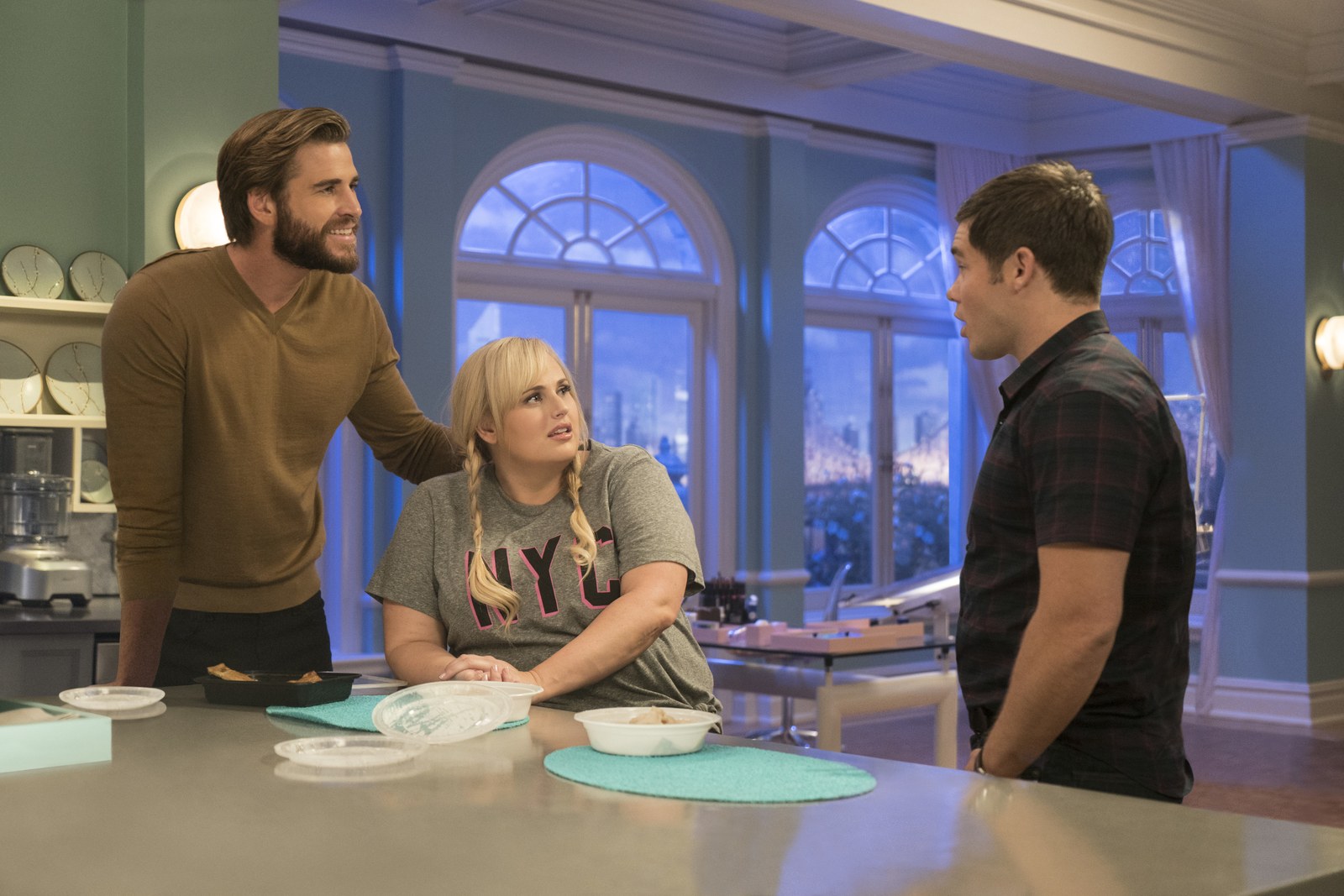
Isn’t It Romantic, the highly anticipated rom-com parody starring Rebel Wilson, Priyanka Chopra, and Liam Hemsworth, hits theaters today. It centers on Natalie (Wilson), a woman who finds herself trapped inside a romantic comedy—and all the cringe-y tropes that come with it. You know exactly what we’re talking about: In this alternate universe, Natalie has an apartment far too expensive for a twenty-something, a gay best friend who is there just to help move the plot along, and a love interest so hot nothing else matters.

But don’t mistake Isn’t It Romantic for the rom-coms of 2003. The brains behind this movie are acutely aware these tropes exist—that’s why they included them. The director (Todd Strauss-Schulson) and screenwriters (Erin Cardillo, Dana Fox, and Katie Silberman) actually subvert stereotypes in Isn’t It Romantic and, as a result, bring the genre into 2019.

Of course, this required some research, but Strauss-Schulson, Cardillo, Fox, and Silberman soon became experts in romantic-comedy tropes. Below, they tell us which ones they enjoy—and which ones they were most excited to poke fun at—in Isn’t It Romantic.

Todd Strauss-Schulson, director:

Before I got on set to direct Isn’t it Romantic, I watched 80 romantic comedies in a row. I went a little insane, but my heart grew more and more tender by the day. Obviously, I’d seen romantic comedies before, but I wanted to become an expert. The idea was to crack the code and see what story and visual tropes were used over and over again.

I wanted to break the rom-com genome and isolate the textures and tropes so I could rebuild them into something modern and fresh for our movie. I found a lot of weird stuff beyond the well-known “gay best friend who has no purpose in life but to care for the main character” and “trying on clothes montage” tropes. For instance, did you know there is a lot of shellfish eaten in romantic comedies? It’s true, but why? Maybe because shellfish is an aphrodisiac? Who knows, but it’s in a lot of ’em.

One of the most consistent visual tropes—and when I say consistent, I mean I was straight up spooked when I kept seeing it repeat in every movie—was half-moon windows. Like this:

Michael Parmelee/Warner Bros. Pictures

Everywhere I turned, there they were. In the offices of Bridget Jones, Working Girl, and What Women Want. At a restaurant in Picture Perfect. Front and center in the apartments in When Harry Met Sally and Made of Honor.

[embedded content]

So I did a little deep dive, and I found two interesting potential answers. First, half-moon windows are also referred to as lunettes, and Merriam-Webster says there is some evidence of the word being used for a “little moon.” (Though that meaning is now obsolete.) The moon is often associated with having a deep connection with women, and so it makes sense they would be subliminally placed all over this particular genre.

In tarot, arches symbolize beginnings, initiations, and ceremonies of renewal. Walking through an archway represents the sloughing off of the old and moving into a new phase of life. That sounds a lot like a rom-com plot to me! These characters are opening up to love, getting out of their comfort zone…and maybe even getting married.

Moons have cycles—and so do genres. Rom-coms are coming back, and we hope Isn’t It Romantic becomes one of your new favorites.

A straight line

Erin Cardillo, screenwriter:

My favorite rom-com trope is The Realize and Run. As in, when you realize you want to spend the rest of your life with somebody, you want the rest of your life to start as soon as possible. (Thank you, Harry. See: Nora Ephron.) Back before cell phones existed, this trope made sense. You suddenly realize you’re in love with somebody—after being a dingbat about it for the better part of the movie—but you can’t call them to tell them because landlines are stupid. Plus, they aren’t home. In fact, your somebody is probably at the airport having just passed through security, ready to board that flight to “I’m never coming back, and you can’t track me down.” Or, in most cases, they are in a nondenominational church about to marry the wrong person and they’re totally against annulment.

[embedded content]

So you must run. Fast! Cars are just as stupid as phones. Luckily, you don’t have a bad back—or if you do, it was designed that way for comedic effect. Nevertheless, you can run, and you are capable of traversing whatever absurd obstacles are in your path. You have to do this! This is the closest thing to an action sequence the audience is going to get in most rom-coms, and it’s essential to get them reinvested in your happy ending before your big, perfect “I love you” speech. A speech that, while often flawed and totally clichéd, is, after your epic run, still pretty freakin’ satisfying.


Source link

Categories
Health

2 Dope Queens' Phoebe Robinson and Jessica Williams Are Changing Comedy in the Best Way Possible


Maybe you noticed there’s a big cultural shift happening in comedy right now? New, more diverse talent is rising up and gaining influence, while established male comedians like Louis C.K. and T.J. Miller are taking career hits after sexual misconduct allegations come to light. Of course, the same men then launch their comeback tours in a matter of months—Rome wasn’t built in a day, I guess—but the point here is that the new guard is now in a better position to call them out and shine a light on the bullshit.

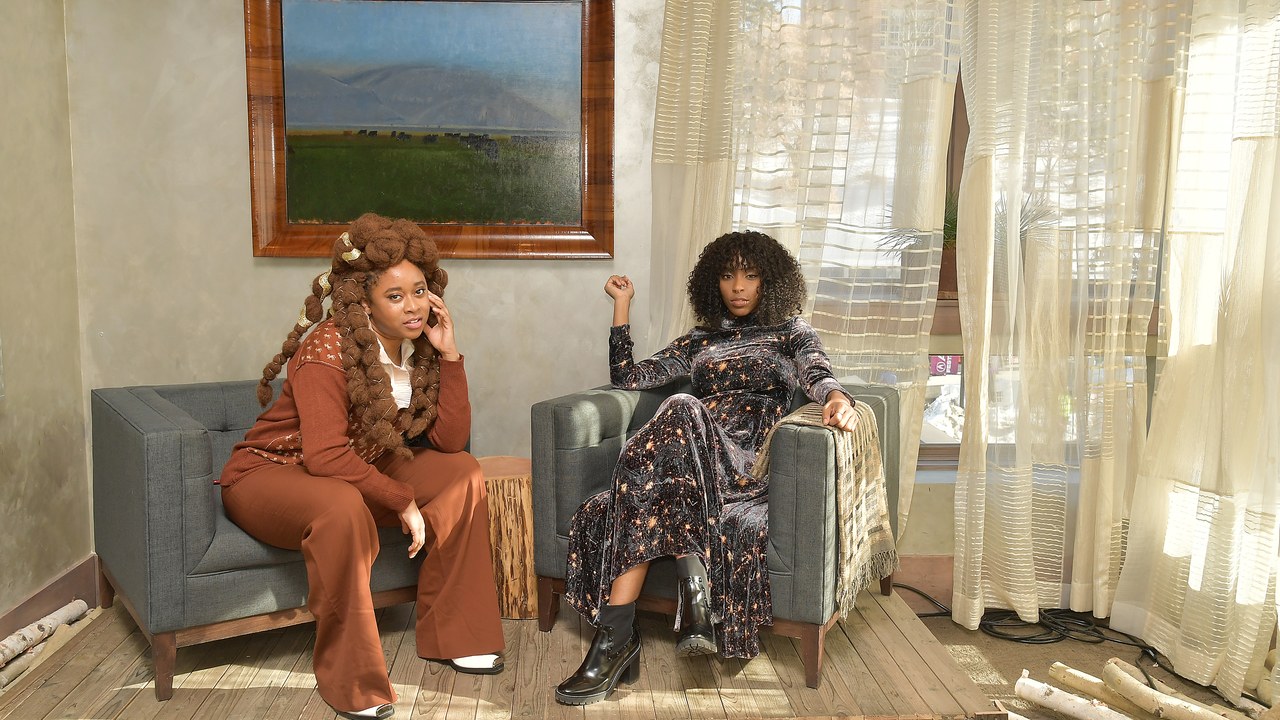
An example of this happened just last week, after Phoebe Robinson shared on Instagram that she left a New York comedy club when she learned a comedian accused of sexual misconduct was added to the lineup with her. “It’s weird because stand-up comedy is sort of all over the place,” Robinson, a comedian and co-host with Jessica Williams of the 2 Dope Queens podcast and HBO special, told Glamour at a Sundance event. “The rules that might apply at other workplaces don’t really apply there for whatever reason.”

She says she was excited to do the show—but when the comic accused of sexual misconduct dropped in, she thought, “Oh, this guy’s bad news.”

So, “I just left,” she says. “I just really don’t want to be on the same stage as these predators, as these abusers. I think it’s really disgusting and terrible that other comics are being forced into that position. It sucks that audience members have to be like, do I get up and leave now? Like, I didn’t pay to see this person perform.”

The reaction to her Instagram post, she says, has been nice so far. “I think there’s always going to be that faction of like, ‘Just get over it!’ Or, ‘You’re just jealous that this guy’s famous.’ And I’m like, ‘No, it’s bigger than comedy.’ I just don’t want to do a show with an alleged rapist. I just don’t.”

Robinson hopes that as more queer people, people of color, and women gain power more people will come around to her perspective. Her co-star Williams echoes this, telling Glamour, “I want to see more stories from people different from a cis, straight, white male. I want to see more stories of people of color and queer people. I really want new, innovative stories.”

The culture shift might not be happening as fast as we’d like, but Robinson and Williams are doing their part to keep pushing. “Whatever I can do in my power, I will,” Robinson says. “I really do want to figure out a way that all of us comics can come to some sort of agreement, where we can really make some active change. Right now, the thing that I can do is just walk out.”

2 Dope Queens returns to HBO for a second series of four hour-long specials on February 8.

Anna Moeslein is a senior editor at Glamour. Follow her on Instagram and Twitter @annamoeslein.


Source link

Categories
Health

People Are Not OK With Louis C.K.'s Return to Comedy After #MeToo Allegations


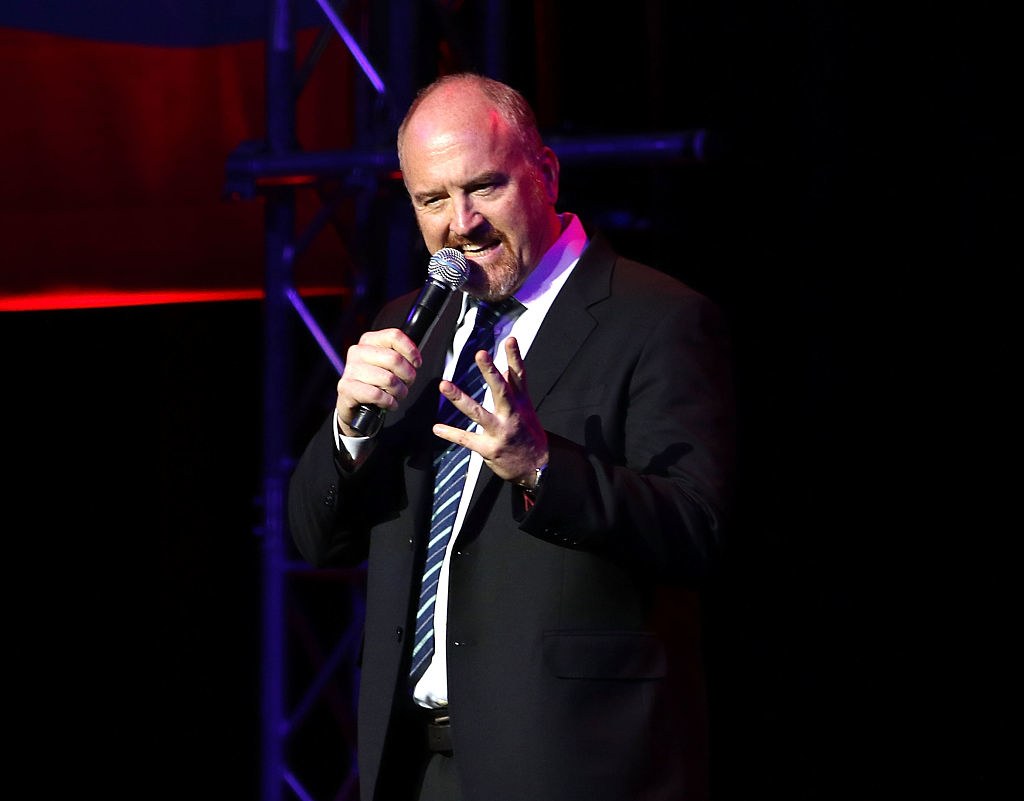
Less than one year after he was accused of sexual misconduct by multiple women, comedian Louis C.K. returned to stand-up during an unannounced set at New York City’s Comedy Cellar on Sunday night.

The comedian is far from the first man accused of misconduct to return to work in the months following the rise of the #MeToo movement, but his reemergence is provoking some strong opinions from Twitter users. After news of his performance circulated the Internet, many people—including comedians and comedy writers—quickly pointed out that not enough time had passed since the allegations against him first came to light. Others questioned what work C.K. had done to recognize the full impact of his actions. As comedian Melinda Hill put it, “Louis CK is spearheading the #MeTooSoon movement.”

According to The New York Times, the audience had a different reaction. C.K. was welcomed with an ovation before his surprise set. He was “very relaxed” before launching into a 15-minute set full of “typical Louis C.K. stuff,” Cellar owner Noam Dworman told the Times. (At least one audience member called the club to object the set, Dworman told the paper.)

“It sounded just like he was trying to work out some new material, almost like any time of the last 10 years he would come in at the beginning of a new act,” Dworman said.

C.K., who is among dozens of high-profile men accused of misconduct since October, acknowledged that stories of his lewd behavior were true last November. Several accusations had been made public in The New York Times, including an alleged incident in which C.K. exposed himself and masturbated in front of women without their consent.

He eventually lost a production deal with FX Networks and canceled a film he’d written called I Love You, Daddy. He has remained largely away from the spotlight and had not performed since issuing his apology.

“These stories are true,” he wrote in a statement, which ended with a promise to take time off to reflect. “I have spent my long and lucky career talking and saying anything I want. I will now step back and take a long time to listen.”

That break, Twitter reveals, wasn’t long enough.

The conversation around C.K. also comes at a time when several of the men accused of sexual assault or misconduct have started to make their way back into the public eye.

Earlier this week Page Six reported that Matt Lauer told fans he’ll “be back on TV,” and comedian Aziz Ansari, who one woman accused of escalating a sexual exchange, also quietly returned to the scene. These scenarios have ignited a conversation about how men atone for inappropriate behavior.

For some, C.K. is a particularly complex figure due to his leadership position in the comedy world. He has been hailed as someone who helped propel female comedians to fame, but many of the women who accused him of inappropriate behavior told the Times that it was this same reputation that kept them from speaking up for fear of career repercussions.

“Louis C.K. being ‘banished’ from stand-up comedy wasn’t some kind of petty punishment, it was a fucking workplace safety issue,” comedian Bris Farley wrote on Twitter.

“One of my fondest memories is singing my song about loving Louis CK right before he did a drop-in. The idea of him doing a drop-in now feels awful,” comedian Allie Goertz shared. “I believe people can grow and change, but this urgency to bring him (and others) back SO soon just sends such a bad message.”

MORE: If We Want Men to Be a Part of #MeToo, We Have to Stop Gendering the Movement


Source link