Your mom will always say she loves whatever you gift her. (She has been since she unwrapped that three-legged ceramic dog.) But that doesn’t mean you get to be lazy. Given everything your mom’s done for you, this is the time to go all in on a holiday gift that’s equal parts thoughtful, stylish, and useful.
Tayla Parx has come a long way since she played Little Inez in 2007’s Hairspray at 12 years old. She transitioned from acting to songwriting when she was 19—and now, at age 25, she already has credits for powerhouses like Jennifer Lopez, Fifth Harmony, Janelle Monáe, and Christina Aguilera on her well-stocked résumé.
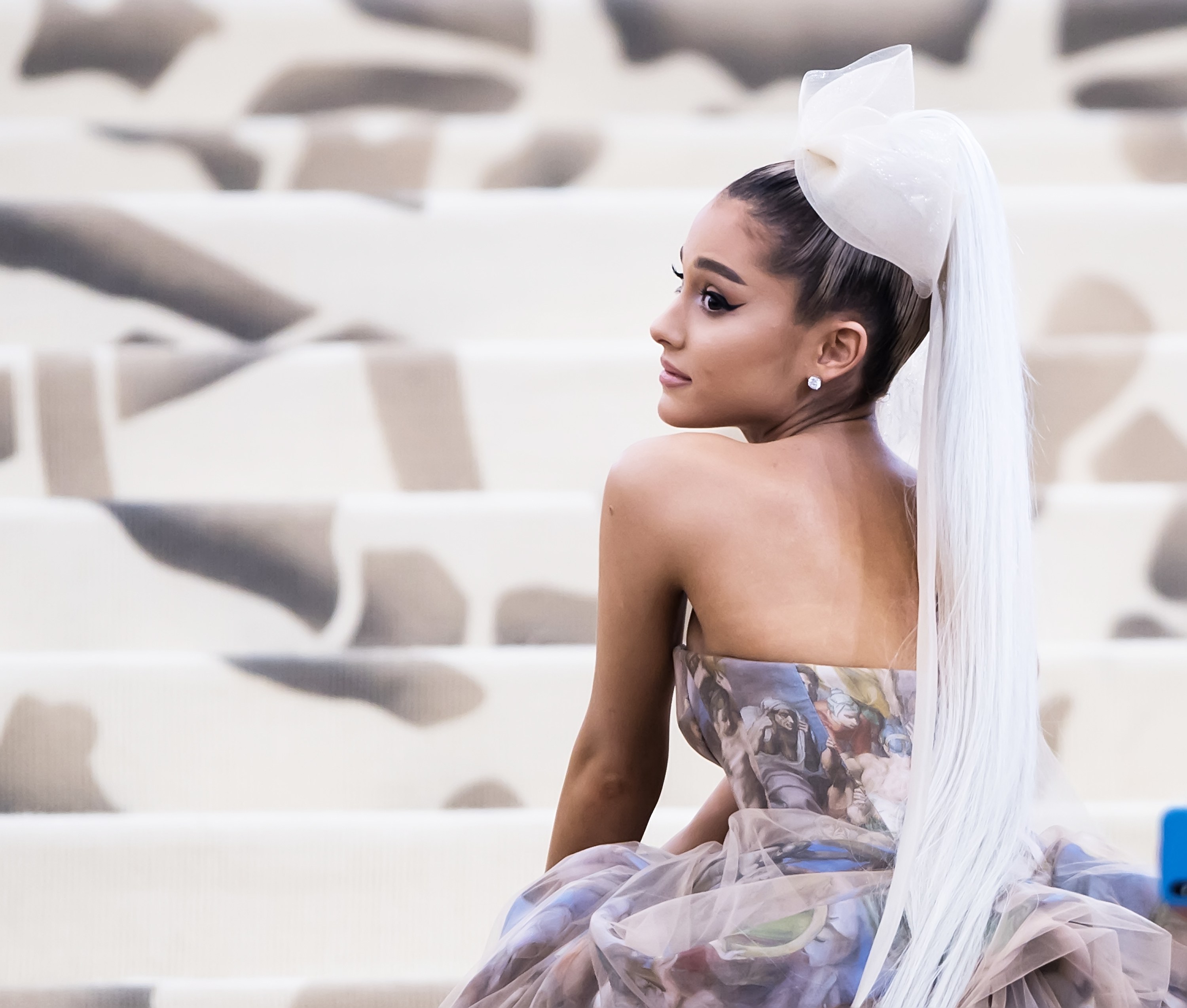
But 2018 has been an especially busy year for the artist. Three songs she’s had a hand in—”High Hopes” by Panic! At the Disco, “Love Lies” by Khalid featuring Normani, and “Thank U, Next” by Ariana Grande—all went to the Billboard Top 10. Grande’s “Thank U, Next”—heard of it?—hit number one.
It’s an impressive accomplishment…but Parx is ready for more. That includes hopefully seeing her own name on the charts with the release of her upcoming album, We Need to Talk. It seems likely to happen, given that Parx ended this year with some high-profile gigs, including being featured in Grande’s First Wives Club–inspired Ellen performance.
So between studio sessions (with some major talent), Parx took time to chat with Glamour about her big year—and what to expect next. Read on.
Glamour: So I was shocked when I realized you played Little Inez in Hairspray. You totally stole that movie.
Tayla Parx: It’s so funny to me when people still make that connection after all these years. I like that throughout my career there are so many different plot twists for people to discover along the way. It makes the journey so much more fun.
Glamour: You’ve had a whirlwind year. Did you think 2018 would be such a defining year?
TP: To be honest, I had no idea that 2018 would be so critical in taking everything to the next level. I’ve always kept my head down, done my work, and allowed life to land where it does. But I can definitely say I’ve been writing around 200 songs a year for the last few years, getting in the rooms with people who push me creatively, and really taking the time to learn and evolve as a creative. The motivation to keep going throughout all of the ups and downs comes from this weird competition with myself. Once I accomplish one of my goals, I’m on to the next. It’s exciting to invite other people in my world and have them along for the ride.
Glamour: One of those accomplishments was “Thank U, Next.” What was your favorite part about working on it?
TP: The fact that I was able to share the entire experience with my friends makes this my favorite. Having a good time in the studio with Ariana, Victoria Monét, Social House, and Tommy Brown was everything—especially because we are all sharing our first number one on this particular Billboard chart. To win with your friends is much more rewarding.
Glamour: In the spirit of “Thank U, Next,” is there anything you’re leaving behind in 2018?
TP: All of my exes! [Laughs.] I have a bad habit of going backward. Maybe it’s an attempt to fix where I know where we went wrong. Typical Virgo. Nonetheless, sometimes it’s better to take what you’ve learned and say, “Thank you…but next!” Dating is all about finding out what you’re willing and not willing to put up with for the future love of your life. I’m enjoying learning my idea of love.
Glamour: Have you caught yourself using “Thank you, next” in your day-to-day conversations?
TP: I can’t hear the words thank you without hearing the word next right after. It’s the most hilarious thing ever. I see a new funny meme every day!
Glamour: Do you go into a songwriting session any differently when the song is for you or someone else?
TP: I like knowing who I’m writing for so that I can cater to them specifically. There’s nothing worse than a writer who forces their on emotions onto an artist. When I’m working on my own songs, I do the complete opposite. I make a conscious decision to go into the studio and have fun with no boundaries. The freedom to do whatever I want is what allows me to create something different than I do for every artist I write with.
Glamour: Do you ever write a song for another artist but then go, “Wait, I want that for me.”
TP: I haven’t had that feeling quite yet. I waited until stepping into my complete artist mode until I was undoubtedly clear on my message, my sound, and my look as an artist. It’ll continuously evolve, but it really helps to have that strong sense of self so that I never look back and regret giving big chunks of me away. There’s music that’s Taylamade, where I allow little pieces of me to live with others, and then there’s Tayla Parx’s music, where you get me with no limitations.
PHOTO: Andres Norwood
Glamour: You worked on Janelle Monáe’s Dirty Computer. Many of the songs comment on her reaction to the world as she sees it, in terms of LGBTQ+, racial, and women’s rights. Do you hope to make similar commentary with your album?
TP: Of course. To have the freedom to push those boundaries musically was beneficial in me having the confidence to also claim my own sexuality and project my ideas—and help others do it as well. My album doesn’t say he/she throughout the entire thing. That started because I have a song on my TaylaMade mixtape called “Mama Ain’t Raise No Bitch.” I’d have so many men coming up to me saying that was their favorite song. I initially thought it would just be a female anthem. It just confirmed the idea that lyrics and melody could reach even the people you don’t intentionally target, because emotions don’t work that way realistically. Everyone loves and hurts. Let’s keep the conversation open for listeners to interpret it for themselves.
Glamour: Is there a dream collaboration you’d love to achieve in 2019?
TP: Right now I’ve been focused on Sam Smith, Dua Lipa, Rosalia, and some really cool movie soundtracks. Every year I try to work with artists I haven’t experienced, so through the rest of the year I’ll be continuously compiling artists that I truly believe in. For me, it’s all about pushing each other creatively.
Glamour: What else do you want to see in the new year?
TP: Twenty-nineteen is all about evolving as a creative for me. I’m very excited to be releasing my following up to TaylaMade mixtape. My album We Need to Talk will be another way for listeners to continue to get to know me, and I’m looking forward to that. You’ll also see me back on the screens next year. All 2019 will be focused on being unapologetically me.
We all know (and love) the celebrities that aren’t afraid to keep it real by giving us glimpses of just how relatable they are: There’s Rihanna, who once dodged a bouquet at a friend’s wedding, and there’s also Chrissy Teigen, who was once filmed using a spatula to try to save some spilled breast milk. And once in a while, just like us when we’re hungry, celebrities will say things they don’t mean. Exhibit A: Ariana Grande’s most recent series of tweets.
In a since-deleted tweet from Saturday, December 1, the singer declared that “true love doesn’t exist,” and claimed she doesn’t want a “next.” The “next,” of course, is a reference to the artist’s most recent single, “Thank U, Next,” which dropped in early November following her split from SNL cast member Pete Davidson—and her tweet came one day after she dropped her music video, which broke YouTube and Vevo’s record for most views within 24 hours. Fans were concerned about Grande, until she broke her silence with a bold statement: She was just hungry.
The singer hopped on Twitter again later in the day Saturday to add to her earlier declaration. She said: “true love might exist i was just hungry.”
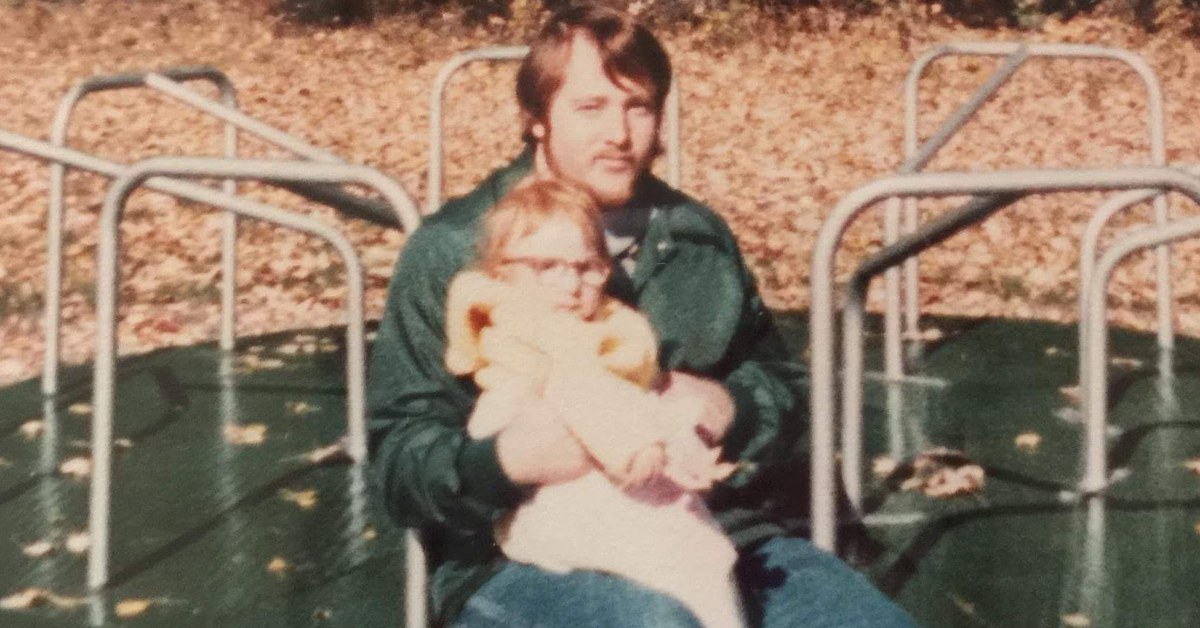
At 21, I thought I knew exactly who I was: Daughter, sister, friend, student, woman with a disability. I was halfway through college and felt like a butterfly excitedly fluttering it its cocoon, just itching to break free and fly. Then, on a regular Monday morning—15 years ago this year—my father died from suicide.
Just like that, my whole life changed. My father’s death was sudden, unexpected, devastating—but above all, it was confusing. For the first time in my life, I felt lost.
Didn’t the universe know this wasn’t supposed to be my life? The suicide of a loved one leaves you in limbo with no way out—full of unfinished business and unsaid words that you’ll never get the chance to say. It’s the ultimate in cruelty—suicide keeps taking things long after the person has died. You’re forever reminded that there should have been more. More birthdays. More family road trips. More memories. More time. More. More. More.
As my family grieved, I felt out of place. Twenty-one is a weird in-between age—I felt on the cusp of adulthood but still wanted the guidance and reassurance of my parents. There were grief books for widows and grief books for children and teenagers, but no one really talked about what it’s like to lose a parent when you’re in your early 20s. Unlike “widow” or “child,” there was really no label that quite described the sense of loss I carried.
No grief book could tell me what it would feel like to see reminders of my father: birthdays, holidays, little girls holding their dad’s hand. Even worse, there was no way to prepare myself for what it would feel like to graduate from college and not pick out my dad’s smiling face from the crowd as I accepted my diploma. When a loved one commits suicide, they’re both everywhere and nowhere.
The most distressing and concerning thing about being left in the aftermath of a loved one’s suicide, I came to realize, is that it decimates your sense of identity. I was no stranger to feeling different—growing up with a physical disability, I was used to feeling different from my peers—but my father’s death brought with it an entirely new sense of isolation. I suddenly felt like a stranger in my own life, isolated from the person I used to be.
A loved one’s suicide doesn’t just leave you mourning for their life, it also leaves you mourning for your own.
That’s the thing no one tells you about dealing with a loved one’s suicide: It doesn’t just leave you mourning for their life, it also leaves you mourning for your own. A part of me died that day too. It took me a long time to realize in the aftermath of suicide, you have to grieve not just for your loved one, but for yourself, too.
I found myself again in subtle ways, little by little. A decade in therapy helped me deal with the effects of my father’s death. Blogging about my journey also helped. But what has made the biggest difference in my well-being is letting myself lean into my grief instead of running from it.
We’ve been conditioned to believe that grief is a bad word and something to be avoided. We even like to tell people how to grieve, when to grieve and, perhaps most importantly, when to stop grieving and just move on. But the more I talked and wrote about my grief, the more I realized that grief isn’t the enemy. Everyone’s grief is different—it’s as unique and individual as the losses we experience—but owning my grief, finally helped me find some relief for all my anxiety and sadness. Grief is not out to get you—it can actually be there to help you.
I like to think my 21-year-old self is still with me, tucked inside my heart, maybe even right next to the spot where my grief resides. I think there’s a place for all three of us—my grief, the girl I used to be, and the woman I am today—to coexist. All three make up the fabric of who I’ve become and in a way, they’re all linked. You can’t really have one without the other two. There’s a certain beauty in that.
When I remember that, I can tell the 21-year-old girl trying to piece together her life in the fallout of suicide that everything is going to be okay. I can spread my wings and my grief and I can finally get the chance to fly.
Melissa Blake is a freelance writer and blogger covering disability rights and women’s issues. She has written for The New York Times, CNN and Glamour, among others.
Since Universal Standard was founded in 2015, its goal has been to create a more inclusive approach to fashion. That began with sizing—its first collection came in sizes 10 through 28—but also with projects that spoke to other gaps in the market: It helped J.Crew expand its sizing across the board; it collaborated with actress Danielle Brooks; it brought attention to the lack of plus-size jewelry options out there. But its latest launch might be its more revolutionary: a line of T-shirts available in sizes 00 through 40.
“This was always a north star,” Alexandra Waldman, cofounder of Universal Standard, tells Glamour of Foundation, a capsule of seven shirts made for layering and its most exhaustive size offering yet. “We started 10 to 28, which were both outside of the traditional ‘plus size,’ because we wanted to plant our flag there. Then we went 6 to 32. Now we’re going 00 to 40 because we want to show the world that it’s possible to make beautiful clothes for everyone and it’s not just the privilege that single-digit-size girls get to have.”
“We knew Foundation was going to start at 00, but we didn’t know how high up we could go,” Waldman explains. “It made so much sense once we understood the lay of the land and how many people are going without.” Universal Standard landed on 40 because of their “intuition” and out of a desire to address “the forgotten within the forgotten,” like shoppers above a size 32. To develop its product, the brand uses a micrograding technique, “which is to change the grading between each size rather than use a formula to grade across. We pay a lot of attention to detail, to make sure it looks native to each body size,” in addition to measuring samples on models of every size, according to Waldman.
The name of this capsule is derived from makeup foundation, because “it goes from least coverage to most coverage, the way foundation does—you have a bandeau, a cami, then you have a short-sleeve T-shirt, a long-sleeve [T-shirt], then you have a turtleneck, a crewneck, and a V-neck included. We wanted to make things that were so incredibly comfortable you could wear them on their own or you could wear them underneath as a layer.”
Even before Foundation launched, an image from its lookbook went viral: It featured La’Shaunae Steward wearing one of Universal Standard’s tanks, which many praised as a depiction of plus-size bodies you don’t typically see in fashion photography. “We wanted to show someone who we thought was exceptional and beautiful and strong and deserved representation,” says Waldman. (The model shared the photo on Instagram, writing: “[A] shoot that was so special and important to me. [Being] a model that people constantly look over or being a curve model that [isn’t] conventionally attractive or ‘fat in all the right places’ and always finding myself only posting angles [I] felt were more appealing. [T]his angle shows everything [I] fought being insecure about and shows every part of me that people told me would have to be smaller in order to be accepted.”)
The response to the lookbook—which included “a lot of ‘this brought me to tears,’ a lot of ‘thank you,’ a lot of ‘I feel seen by a fashion brand,'” per Waldman—was incredibly moving for the founders: “A few times we would read them and we were brought almost to tears, because they were such emotional responses.” And there’s only more to come—Waldman promises, “This is the beginning of the entire collection’s moving to 00 through 40.”
See Universal Standard’s groundbreaking size-inclusive collection ahead.
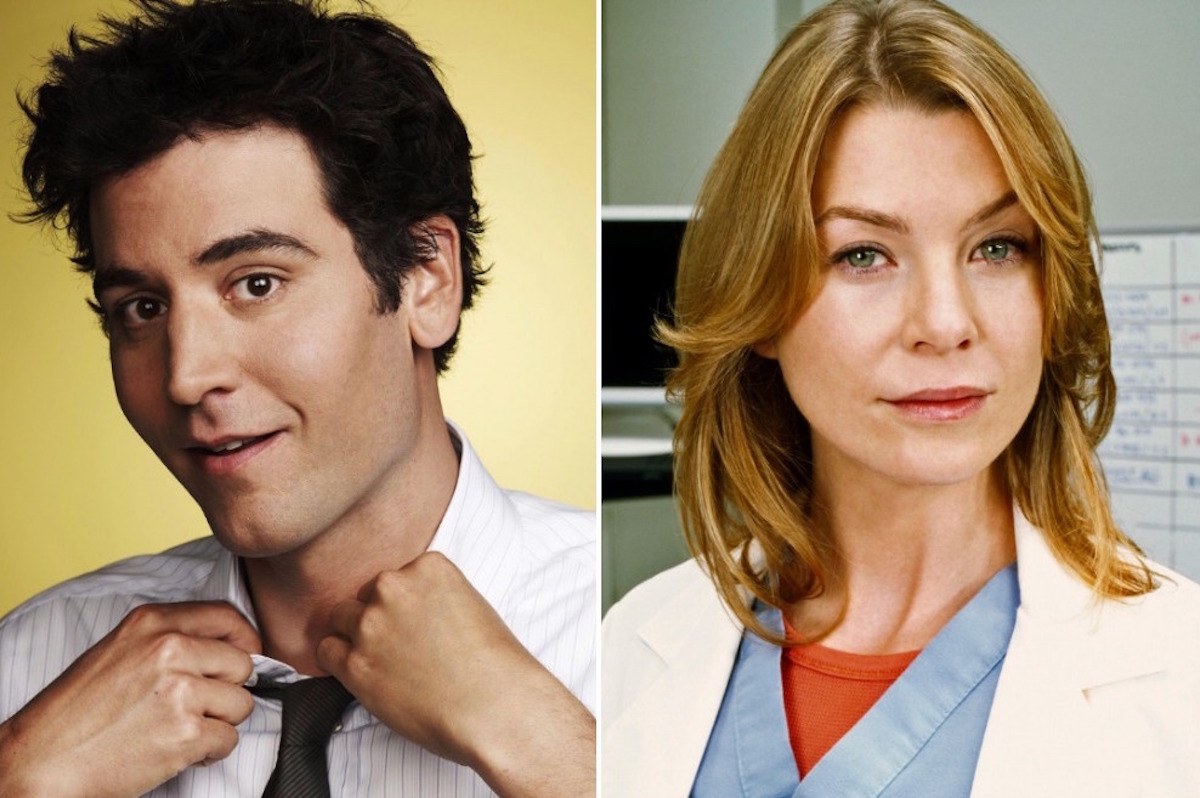
McDreamy is officially so 2015. As first reported by People, Josh Radnor—perhaps best known for playing Ted Mosby How I Met Your Mother—has joined Grey’s Anatomy as a new love interest for Ellen Pompeo’s character, Meredith Grey.
Details of his role are being kept under wraps, but ABC was nice enough to give us a few clues about his arrival: He and Meredith get set up on a “hot” blind date by friends in an episode that will air October 11. The network hasn’t specified whether or not Radnor will be sticking around for more than one episode, so we’ll just have to wait and see.
Radnor, as you probably know, spent nine seasons as the beleaguered architect and college professor Ted Mosby on HIMYM, in which his quest to find his children’s “mother” was recounted years later to his children. He has since headlined the period drama Mercy Street and the musical drama Rise, but both were met with quick cancellations.
As for Pompeo, she’s hinted in a recent interview that when her current Grey’s contract expires—at the conclusion of season 16—she might leave the show to explore other career opportunities. “I’m clearly not prepared right now to make any kind of formal announcement about what my future is on the show, but I am really feeling like we have told the majority of the stories we can tell. It’s about time that I mix it up. I’m definitely looking for a change,” she explained. “I think I’ve had an amazing training. I’ve had a master class in producing these last 14 years. I know every aspect of making a television show. Producing and directing is where I’m challenged and where I’m learning. It’s more interesting to me because it’s a skill I haven’t mastered yet.”
[embedded content]
While sad, we can’t wait to see what she does next, should she indeed choose to leave. And in the meantime, we’re looking forward to her latest coupling.