Categories
Health

I Marie Kondo’d My Love Life


Ever since The Life-Changing Magic of Tidying Up hit bookstores in the U.S. in 2014, Marie Kondo has become a cultural phenom, her tactics shaping the way Americans evaluate their possessions and their hoarding habits. But when I first picked up Kondo’s tiny green hardcover, I thought, I’m a relatively organized person. What could I possibly learn from this book?

As it turns out: a lot—just not about my closet.

Kondo imagined her book would strike a chord with hoarders of past things, but it made me realize I was hoarding past loves. I’m a girl who’s spent more than a decade unconsciously filing away every failed relationship in the small chance that maybe one day the stars would align, I’d bump into an ex at a coffee shop, and we’d ride off into the sunset (or more realistically, on the R train) in some deleted scene from Love Actually. But as I turned the pages of Kondo’s book, I realized that holding on to these ghosts of boyfriends past was doing more harm than good—assembling a warped romantic matrix in my brain that was becoming increasingly difficult to escape. So as I finished the last chapter, knee-deep in my third bowl of Phish Food, I knew there was only one thing left to do.

I had to Marie Kondo my love life.

The KonMari method is based in the idea that you should surround yourself only with items that bring you joy; anything that doesn’t, you chuck. That’s not to say the process is an easy one. Anyone who’s watched Netflix’s Tidying Up With Marie Kondo or tried the KonMari method will tell you: Tossing something that once held sentimental value is hard. “It is human nature to resist throwing something away even when we know that we should,” Kondo explains, as if trying to make us all feel better about that feeling of inertia. “When you come across something that you cannot part with, think carefully about its true purpose in your life. You’ll be surprised at how many of the things you possess have already fulfilled their role.” Taking a long, hard look at my love life, it was clear just how many of my past relationships had “already fulfilled their role.” So I started adapting Kondo’s methods to help me emotionally declutter and achieve the ultimate dating nirvana.

Lesson one: Know when to let go. The first rule of the KonMari method is worth reiterating: If something brings you joy, keep it. If not, out it goes. She argues that when we can’t get rid of something, there are two reasons—“an attachment to the past or a fear for the future,” she writes. “If you come across something that does not spark joy but that you just can’t bring yourself to throw away, stop a moment and ask yourself, ‘Am I having trouble getting rid of this because of an attachment to the past or because of a fear for the future?’…. As you do so, you’ll begin to see…a pattern that falls into one of three categories: attachment to the past, desire for stability in the future, or a combination of both.” This hit me like a slap in the face. I‘ve done my fair share of holding on to a relationship simply because I was afraid to let go—or more frankly, afraid of the instability that would bring. I stayed with my college boyfriend after he’d cheated on me. I let a fling in my midtwenties drag on for years because he made me feel loved and important. I’m not proud to admit any of that, but it’s true. For much of my adult life, I got into the nasty habit of romanticizing my relationships, looking at them through rose-colored glasses until they morphed into flowery semblances of the truth. Like a fairy tale.

There’s a scene in the film (500) Days of Summer when a hopelessly in-love Joseph Gordon-Levitt swings by a party his crush is throwing and from there, a split screen shows two ways the next scene plays out—one titled “perception,” the other “reality.” (Spoiler: He gets the girl in one; in the other, he spends the entire party sulking in a corner.) So often I’d analyze my relationships through the lens of hopeful idealism, seeing what I wanted to see, not what was there. But just as Joseph Gordon-Levitt’s character ultimately learns, perception isn’t reality. Falling in love with the idea of someone isn’t the same as falling in love with someone, and it certainly doesn’t save you from heartbreak. If they don’t genuinely bring you joy, cut them loose.

Lesson two: Nostalgia is a bitch. In the past, the second any of my relationships ended or a Bumble date stopped messaging me back, my mind would go into hyperdrive, pulling every cheesy romantic memory into a sappy Hallmark highlight reel. When my last boyfriend and I broke up, I spent hours poring over old texts and Facebook messages, reliving our best moments in a desperate attempt to see when the cracks first started forming. (Tip: Don’t do this. It will only land you in a hopeless loop of DM convos with your lurking ex at 2:00 A.M. Not a place you want to be.) Kondo says feelings of nostalgia can and will derail the decluttering progress. Realize, instead, that your items (or in this case, relationships) have a shelf life. They brought you joy at one point, but they don’t anymore. So move on. And start getting friendly with the Instagram “block” button while you’re at it.

Lesson three: Trust your intuition. Kondo explains that judgment can be either intuitive or rational, and surprisingly, it’s our rational side that tends to make it impossible for us to let go. “Although intuitively we know that an object has no attraction for us,” she says, “our reason raises all kinds of arguments for not discarding it, such as ‘I might need it later’ or ‘It’s a waste to get rid of it.’” Going with my gut helped me weed out the relationships I instinctively knew weren’t going anywhere. Like that Hinge date who loved The Lumineers. (Just because he knows all the words to “Ophelia” does not necessarily make him The One; they have a very large fan base.) Doing this allows you to tap into a deeper understanding of who you are and what you want so you can find a partner that fulfills you—and feel more confident in your partnership once you do.

Lesson four: Practice gratitude and empathy. As odd as it sounds, Kondo wants you to consider your items’ “feelings” as you move through the tidying process. Before tossing any of your belongings, you must thank them for their service. On the flip side, if you’re keeping them, be considerate of how and where they’re kept in your home. This conscious organization supposedly leaves you with a greater sense of peace. The same goes for relationships. If you want a partner to have a permanent home in your life, act like it. If they bring you joy, tell them. It’s straightforward, really: Treat your person with the respect and care you want them to give you. If you’re letting them go, be grateful for what you learned from the relationship and tactfully move on.

Lesson five: Accept the pain. A key aspect of the KonMari method is making conscious decisions about who and what surrounds you. But being honest with yourself about how you acquire things—or relationships—can be both humbling and embarrassing. Says Kondo, “It forces us to confront our imperfections and inadequacies and the foolish choices we made in the past.” It’s not easy to look at yourself critically or to acknowledge your flaws. Going through this dating decluttering process, I realized that fear had been a major catalyst for so many of the decisions I’d made. He’s losing interest? Break up with him first. Things going well? Pull away to see if he’ll hang on. My fear of abandonment was so great that I overcompensated by trying to control the uncontrollable. But it was only when I started recognizing these patterns that I was able to start practicing healthier ones, like communicating openly and honestly about whether my trust was being tested, whether the relationship was moving at the right pace, and whether, at the end of the day, I felt valued and appreciated.

Applying Kondo’s words to my love life felt a lot like an emotional gut renovation. My past relationships had, in one way or another, kept me locked in a damaging romantic continuum where my focus was on what could be rather than what was there, right in front of me, in the day to day. Letting go of the people who didn’t bring me joy allowed me to make room for the things and the people who do. Today dating feels easier, largely because I’m grateful: grateful for what I’ve had in the past, grateful for what I have now, grateful for what’s to come. Marie Kondo’s methods can sound kooky. But I challenge you to rid your romantic closet of all your what-ifs so you’re left only with what is—what is bringing you joy.


Source link

Categories
Health

Five Fashion Duos on Mixing Love and Work


We’re often cautioned that mixing love and business is a bad idea—working with those closest to you can jeopardize not only your relationships but whatever you want to achieve, you’re told. Welcome to 2019, when there’s plenty of proof that that’s not always the case: Some of the most exciting work in fashion right now is coming from real-life couples, siblings, or even best friends who have joined forces to create something new.

These personal-professional partnerships go far beyond the designer-muse dynamic. There are codesigners working in lockstep to bring their vision to life. There are duos who divvy up the business and the creative roles. There are pairs who eschew formal titles altogether. And these duos say that the hard work of building a viable company is that much more fulfilling because it’s coming from such a meaningful partnership.

From siblings turned business partners to married couples turned coworkers, meet five fashion duos who create with more than trends in mind: With their own relationships as their guide, they’re working from the heart.

Premme trench coat, $99, top, $44, pants, $84; crop top, $59, pants, $72, sizes 12–30, premme.us. Corey Moranis earrings, $113, rings, $50, $58, bracelet, $108, collar, $133, coreymoranis.com. Keane earring (on Gregg), $275, keanenewyork.com.

Premme, the plus-size apparel collection by Gabi Gregg and Nicolette Mason, celebrated its first birthday in November 2018. But the friendship behind it goes back much further—10 years, to be exact.

Gregg and Mason first connected on an online plus-size fashion message board. “Nicolette was really my first friend who had a similar body type to me and loved fashion as much as I did,” Gregg says. The two became some of the most prominent voices in the size-inclusive fashion space. They launched Premme to fill a void that existed since their message board days: stylish pieces that actually accentuate—and celebrate—curvy bodies.

Both women have been plus-size for “their entire lives,” says Mason, which gives them insight that some brands simply don’t have: “You have to really know the experience of living in this body to design for it thoughtfully. It’s taking all that frustration and turning it into a labor of love.” Getting Premme off the ground has been just that, but the two were never worried that going into business together would affect their decade-long bond.

Mason and Gregg agree that, at the heart of it all, preserving a friendship in a business setting is a matter of dividing and conquering responsibilities—and of knowing when to take a break from each other.

“As we grow, as we’ve gotten a lot busier, it’s been really important for us to define our roles a little bit more,” Mason says. “So Gabi takes the lead on product and content, and I take the lead on marketing and branding and experience.”

“We’re obviously really close,” Gregg adds. “We spend every day together. But we also have separate lives and separate identities, even though sometimes it feels like we’re sharing one brain. We joke about it, but we’re basically married.”

Rebecca Henry and Akua Shabaka of House of Aama wearing their designs

House of Aama jumper, $250, dress, $700, houseofaama.com. Lizzie Fortunato cuffs, $115–$195 each, hoops, $90, charms, $60, $35, lizziefortunato.com. Cornelia James gloves, $107, corneliajames.com. Brother Vellies bag, $135, brothervellies.com. Berkshire socks, $6, eberkshire.com. Suzanne Rae ankle-strap d’Orsay heels in yellow, $495, and pink peep-toe shoes, $465, needsupply.com.

Rebecca Henry was a New York City lawyer when her daughter Akua Shabaka came to her asking for help making her own clothes on Henry’s sewing machine. That would be their first “collaboration,” one that would set the wheels in motion for a full collection of vintage-inspired made-to-order clothing called House of Aama.

Henry is still a practicing lawyer—only now she coruns House of Aama with Shabaka, who’s enrolled at the Parsons School of Design. “[Fashion is] an outlet and a vehicle for both of us” outside of school and work, says Henry.

The collection goes beyond their mother-daughter bond to reflect the family’s roots in southern Louisiana through turn-of-the-century silhouettes and upcycled fabrics. “We built the whole collection around that lineage and that history,” Henry says. “We consider ourselves storytellers.”

Shabaka says House of Aama has a “bigger focus” beyond clothes: “[We’re] trying to tell the black experience from various lenses and putting that in a modern context. From our lineage we’re able to explore those topics even more.”

Telling the story of their family through fashion has had its challenges—the two admit they’ve butted heads while getting House of Aama off the ground, a result of the parent-child hierarchy. “It’s not always easy,” Henry says, “Because we’re mother and daughter. But at the end of the day, we’re family, so we’re going to figure out a way to make it work.”

Brian Murphy and Jessie Randall pose together in a studio

Rebecca Taylor dress, $395, rebeccataylor.com. Loeffler Randall tote, $350, shoes, $395, loefflerrandall.com. On Murphy: COS shirt, $89, cosstores.com. A.P.C. pants, $340, apc-us.com.

Jessie Randall and Brian Murphy got married in 2003. They met while both were working in advertising. It wasn’t until two years after their wedding, though, that they decided to share a household and a business, with the launch of Loeffler Randall.

“We had always worked together anyway, so it was just a really natural thing for us,” Randall says.”We had a wedding back before there was Pinterest and all these things, and we did almost everything custom. It was very stressful. We honestly felt after the wedding, If we could do this, we can do anything!”

With Randall leading the creative and Murphy handling back-of-house business—a divide that speaks to their strengths, they say—the pair have won a CFDA award and expanded their offerings from just footwear to accessories. Still, there mission is about more than enviable shoes and handbags. “We are laser-focused on two priorities in our life: our business and our children,” Murphy says. Every effort they put into their brand is a lesson for their three kids, Randall adds: “My greatest wish for them is to find something they’re passionate about to dedicate their time to, and hopefully, they see that in us.”

Randall even foresees the brand becoming a multigenerational operation: “Our daughter is very into fashion. We would love for her to take over the business someday.”

Becca McCharenTran and Christine Tran pose together

Chromat bodysuit, $325, chromat.co; crop top, $180, nordstrom.com. Anna Kikue for Chromat hoops, $310, chromat.co.

Chromat has become as beloved for its swimsuits as for its inclusive manifesto. What’s perhaps less known is that its famous runway shows and campaigns are the result of the power-couple collaboration between Becca McCharen-Tran, the brand’s founder and creative director, and her wife, Christine, who leads production design for the brand’s Fashion Week events.

The pair have been a couple for five years and married two years ago. They’ve been collaborators throughout their relationship, but neither expected the other would have such a profound influence on her work.

“I never thought when I was dating that I was also looking for a CEO in my life,” says Becca. “But Christine’s definitely become a business adviser as well as a wife.”

Adds Christine: “We definitely complement each other in our thought process. We’re each other’s sounding board.”

Part of their special balance comes from Christine’s professional experience outside of fashion: She’s a founding member of Discwoman, a New York City music collective and agency. “Music and fashion, there’s so much overlap and understanding of the creative process through a different medium, so we both get it when we have deadlines and when we have events,” Becca says. “We really understand the time and effort that goes into creating and making creative projects come to life. It’s nice that we speak the same language in that sense.”

Proof that their collaboration is powerful? Ahead of Chromat’s spring 2019 show, Christine suggested producing a slogan tee that read “Sample Size” and styling it with Becca’s signature neon swimsuits on the size-diverse models. It became the most talked-about moment from New York Fashion Week.

Danielle Snyder and Jodie Snyder pose together in vintage dresses

Dannijo vintage dresses, heart earrings, $145, necklaces, $120 and $145, bracelets, $80–$245, dannijo.com, and teardrop earrings, $215, freepeople.com. Priscavera long-sleeve shirt, $178, priscavera.com. Mansur Gavriel T-shirt, $395, mansurgavriel.com. Subject’s own gold Cartier bracelets.

“A lot of people say, ‘Ugh, I can’t imagine working with my sister,'” says Jodie Snyder Morel. But she and sister Danielle are now 10 years into their jewelry and apparel line, Dannijo. Working together can get intense, they admit, but as siblings who’ve been practically inseparable since childhood, they consider it a blessing.

“There’s a lot of passion, a lot of history, and your lives are intertwined,” Danielle says. “So while you’re at work, everything that happened outside of work [and] that energy sort of carries itself over into your days at the office together…. It’s one of the greatest gifts in the world to be able to work with someone that you love so much.”

When they designed their first-ever collection, the Snyders’ parents gave them a piece of advice that they still think about today. “They were like, ‘Your sister comes first,'” Jodie says. “They just wanted to make sure that it didn’t harm our relationship.” How are they faring, a decade later? “It obviously has its positives and negatives,” Jodie says, “but in some ways it brings you closer because you experience every part of life together.”

They do keep a few rules: Keep competition out of the equation (a lesson passed down from their mother) and cultivate your own interests outside of work. Danielle recently launched a podcast, No Filter With Danielle Snyder, while Jodie flexes a passion for interior design away from the office. In other words, says Danielle, “You also have to preserve being your own person.”


Source link

Categories
Health

Lifetime's New True Crime Movie *Love You to Death* Is Unlike Anything You've Ever Seen


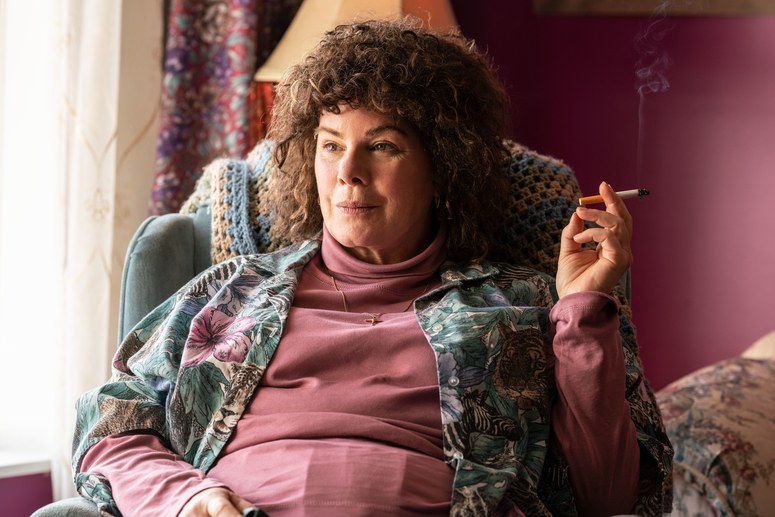
Lifetime has never shied away from dark, twisted, real-life stories, and this Saturday’s Love You to Death is no exception. The film—which stars Oscar winner Marcia Gay Harden and Emily Skeggs—tells the disturbing events that led to the murder of a seemingly perfect mother caring for her sick daughter. Harden plays Camile, a single mom suffering from Munchausen Syndrome by Proxy, a mental illness in which a person acts as if an individual they’re taking care of has a physical or mental illness when the person is not really sick.

Harden had never heard of the syndrome but was totally captivated by the story, comparing it to a car wreck you can’t look away from. In fact, neither could Hulu, which airs a similar telling of the story later this spring with their limited series, The Act.

Whichever story you watch though, Harden and Skeggs hope the focus remains on mental health. “We can make assumptions about people with mental illness, we can make assumptions about other people’s families, but we don’t know,” Harden says. Here, she and Skeggs explain what it was like to immerse themselves into their respective roles, and the lessons they took away from it.

Glamour: How did you both get involved with this film?

Marcia Gay Harden: Emily’s friends were casting her before this even started shooting.

Emily Skeggs: Yeah, I’m a true crime junkie, so I had friends who said, ‘You need to watch this documentary, and also, you need to play this girl when it’s a movie.’ I had one friend who messaged me while I was in negotiations, and I was like, ‘Just hang tight, just wait two weeks and I’ll tell you something!’ So I was excited to dive into it.

MGH: For me it was a no brainer. I love Lifetime and the direction that Lifetime is going. I had never heard of Munchausen Syndrome by Proxy or this story, but when I read it, it was like a car wrecks—you couldn’t look away. It was liberating to play this character. It’s fun to transform, but it was a lower, darker place to go, and a place that was full of so much sadness and darkness and pain. It’s the juice of being an actor, for sure.

ED ARAQUEL/Lifetime

ES: It made me think about perspective and love in a really different way and question a lot of things. You see these kinds of cases and think, I know what’s going on here, or I know exactly what I would have done if I was in their shoes. It made me really question things.

How much research did you do into what actually happened?

ES: And happens. And I really believe the only reason we really know about this case is because it ended in a murder and ended in violence. I think there are a lot of people living with this syndrome and doctors don’t know how to deal with it. There’s no protocol for it and no system in place to help people with this syndrome or to help doctors help people. It’s really fascinating.

MGH: Emily said this earlier, and it’s true: people who are sick like this don’t think they’re sick. People who are racist don’t think they’re racist. People who do crimes against humanity usually don’t think they are. So there’s not this awareness. I would love to have read a journal of Camille’s, but she wasn’t the type of person who would do that. That doesn’t exist. So she’s doing what she thinks she needs to do for her survival. And she would have taken it further. That’s what is scary. I think she would have taken it to the point of mentally incapacitating her so that all the world would know she’s mentally disabled and now I need to care for her for the rest of her life. It’s such an interesting story because in a terrible way, [Esme] breaks free. But I’m subjugating all of the person to a life to never knowing who she is as a human being. But I love that it’s a very current story.


Source link

Categories
Health

Here's What Penn Badgley Has to Say to Everyone in Love With His *You* Character


Warning: Minor You spoilers ahead.

One of the most bizarre things to come from Netflix’s hit series You is the amount of people attracted to Penn Badgley’s character, Joe, who, if you’re unfamiliar, is both a stalker and a murderer. The show, which originally aired on Lifetime but has found a new home on Netflix, hinges on Joe’s creepy, obsessive tendencies. He’s a bookstore clerk who develops a Fatal Attraction–level interest in an aspiring writer named Beck (Elizabeth Lail). Joe begins tracking Beck on the Internet to learn more about her, which leads to burglary, manipulation, and ultimately murder. Yup: Joe literally kills the people in Beck’s life who he believes are a threat to their relationship. He’s not a redeemable character by any means, but droves of fans are into him because he’s…hot?

It’s a head-scratching situation that even Badgley chimed in on via Twitter. “Said this already but @PennBadgley is breaking my heart once again as Joe. What is it about him?” one person tweeted, to which the actor responded, “He’s a murderer.” One fan even asked Badgley to “kidnap” them. His response? “No thx.”

Below, check out just a few people who are, for some reason, all aboard the Joe train.

In a new interview with Today, Badgley offers a little more insight into why people are attracted to Joe. On his now-viral tweets responding to people’s thirst, he says, “That was partly disingenuous on my part because the whole point is [Joe’s] meant to garner a conflicted reaction…. I was doing that on Twitter very tongue-in-cheek.”

As for why fans are latching onto Joe, though, Badgley has a more cerebral analysis. “I don’t see him as a portrayal of a real person, I see him as a representation of the part of us that identifies with him,” he says. “The part of us that is a troll; that part of us that is victim blaming; the part of us that is privileged and blind. We’re meant to identify with him.”

Watch his full interview for yourself, below.

[embedded content]

For the record: It’s probably not wise to swoon over Dan Humphrey on Gossip Girl or Joe from You. Badgley’s character from John Tucker Must Die, however, is someone I support 100 percent.

Related Stories:

Penn Badgley Is Way Creepier Than Dan Humphrey on His New Show You

People Are Just Now Discovering You on Netflix, and They’re Flipping Out

If This You Fan Theory Is True, It Would Change Everything


Source link

Categories
Health

Best Romantic Comedies: Relationship Movies About Love and Dating


Whether you’re single, in a new relationship, divorced, or something in between, there’s a perfect movie to watch during every stage of your love life. While we can’t promise that watching these romantic movies will help you solve any relationship (or lack thereof) problems you might have, we can tell you that you’ll be able to relate to at least one of these love stories. So see our picks for the best romantic movies, below, and enjoy.

PS: Of course, not all romantic movies are winners. See our list of 15 rom-coms that probably never should have been made right here.


Source link

Categories
Health

The Most Comfortable Bra in the World Is Incredibly Plain—But I Love It Anyway


Over the course of adulthood, I’ve worn three different bra band sizes and over six cup sizes. This isn’t a unique experience, but it’s one that has made be grow to hate bras. I think this stems mostly from having not found one that fit me properly or comfortably. I also grew up playing sports and loved the support and ease of a sports bra—something I never get from a “real” everyday bra. And though I can appreciate beautiful lace and intricate craftsmanship as much as the next person, more traditional lingerie just wouldn’t do it for me.

Eventually, I did what most experts tell you to do: get a professional bra fitting. The person doing it explained how life changes, from pregnancy or weight gain or loss (even as little as five pounds), could translate to a difference in your sizing. I, someone who has been buying the same bra size that I wore in college since I graduated, clearly needed an update—and was even shocked when she told me I should wear a 34F. That meant that I needed support for my big bust, but also must be comfortable at all times. (I can’t think straight when I’m wearing something remotely bothersome, and have been known to change into the slippers given to models on the sets of photoshoots in order to think more clearly. So, yes, it’s important.)

The bra fitter recommended getting fitted professionally every six months to a year, to ensure the most accurate sizing. But, to be honest, I could hardly see myself keeping up with that schedule—or adding anything to the adulting list, which includes doctor check-ups, teeth cleanings, vet visits… I could maybe deal with my bra not fitting quite right.

Then, I remembered a sample I had tried a few months before that. True & Co. had just debuted its True Body bras, which is meant to “look damn near invisible under clothes,” and had sent me a handful to try out. Because they’re made with this stretchy, nylon-elastane fabric and measured in sizes XS through XL (and with options for full cups, too, if you want more support), I figured this could be a good solve for my reluctance towards a biannual bra size check-up.

PHOTO: Kayla Varley/Courtesy of True & Co.

First impression: They’re not the most aesthetically pleasing bras on the block. They’re pretty plain—almost like the training bras you got when you were just hitting puberty. But when I put it on, I get the incredibly supportive comfort of my best sports bra, only without the dreaded uniboob look.

The material is super soft, but doesn’t stretch out throughout the day. Plus, as someone who dislikes any sort of underwire or padding, I liked that these came with removable pads, so you have the choice of wearing your bra with or without them. (I even keep the padding in most of the time, since I like the oh-so-subtle shape it gives me. This bra has truly changed me.)

The True Body bra comes in a range of styles: scoopneck, racerback, underwire, triangle. The V-neck is my go-to—I wear it almost everyday now, either in black or beige.

PHOTO: Courtesy of True & Co.

It’s gotten to the point where, if I can’t find it in my drawer, which is full of other bras, in the morning when I’m getting dressed, I’ll have a bit of a panic. That’s how I know I can’t live without it.

You can shop True & Co.’s True Body collection here.

All products featured on Glamour are independently selected by our editors. However, when you buy something through our retail links, we may earn an affiliate commission.

Related Stories:

My Husband and I Argue Over Who Gets to Wear This Upton Belt

The Black Leggings I Never Hesitate to Wear As Pants

This Puffer Jacket Is a ‘Fashion Coat’ That Actually Keeps You Warm


Source link