Categories
Health

Lena Dunham and Jack Antonoff Have Broken Up After Five Years of Dating


Lena Dunham and longtime boyfriend Jack Antonoff have ended their five-year relationship, reps for both confirmed to People. Though the breakup was reportedly “amicable,” E! News sources say the couple actually called it off in December and have kept it quiet until now.

There’s no bad blood, however. “It was mutual,” the source claims. “Jack and Lena were growing apart and it just made sense for them to end their relationship where it was.”

The pair, who began dating in 2012 after meeting on a blind date, made their last public appearance as a couple nearly a year ago at a Grammys pre-party. And though they were rarely seen in public together, their affection for one another was always evident. In October, Dunham wrote an essay about her love for Antonoff for Variety to celebrate his entry in the publication’s “New Power of New York” list.

“It’s safe to say that before Jack my life was full of far fewer sights. He showed me the importance of making political statements using your public platform,” she wrote. “He showed me the joy of collaboration. He showed me the magic of his home state of New Jersey and turned the butt of my snotty New Yorker jokes into a glimmering fantasyland. I know he does the same for all the artists he produces for, the fans who come to his shows and the recipients of his love. I try and share nicely.”

For his part, Antonoff told Vulture in 2014 that he felt an instant connection to the actress, activist, and director. “I told Lena everything about my whole life, because when you really like someone, you want them to know everything about you,” he said.

Dunham and Antonoff last appeared on social media together in October, when Dunham shared a photo of the two hugging with the caption, “Since I dyed my hair blue he sings a song about how I am a troll looking for some trolls snacks and troll friends and he’s not wrong.”

Related Content:

Lena Dunham Responds to Speculation That She and Jack Antonoff Got Married

Lena Dunham Has a ‘Smurf’ Blue Pixie Cut Now

Lena Dunham Is Tired of Talking About Whether Her Endometriosis Will Keep Her from Having Kids


Source link

Categories
Health

Lena Waithe: 'Why We Can't Keep Telling Stories About a Singular Black Experience'


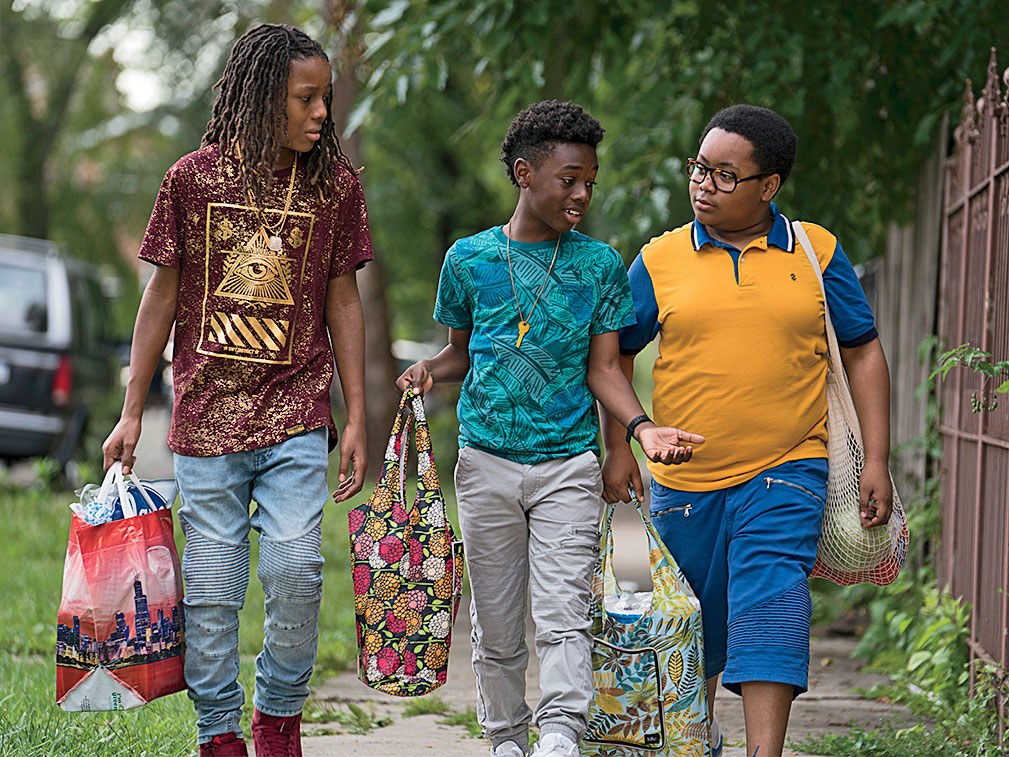
Writer and actor Lena Waithe believes in honest storytelling. (See her deeply personal coming out episode on Netflix’s Master of None—yeah, she won an Emmy for it). Now, with The Chi she’s turning the camera towards her hometown, Chicago.

Back in 2015 I was seeing all these news reports and profiles coming out about the gun violence and the shootings in my city, Chicago—and many were by journalists who have never broken bread with the people who live there. I remember thinking, I know these stories, and not all black people in Chicago are a monolith. We don’t all walk the same, talk the same, or think the same. We have different dreams and goals and hopes. I’m a black writer who was born in Chicago.

If it’s not my responsibility to tell our story, whose is it? I felt the same way about the “Thanksgiving” episode of Master of None, which was based on my own personal coming-out experience. I wanted to be honest to my memory of what happened: the humor and the missteps. For people to embrace a queer black girl’s story the way they did says a lot about where we are in society. We’re a lot further than we think. But for that reason, we can’t keep telling stories about a single black experience.

PHOTO: Parrish Lewis

The Chi, my new series for Showtime, is about being black and human and trying to survive on the South Side of Chicago. For me, growing up was all about hustle, grind, and fighting for what you want. There weren’t drive-by shootings and sirens every night. I know that might have been some people’s experience, but that wasn’t my perception at all. My grandmother was part of the Great Migration. She left the South and came to this city looking for a better way of life. I have that history in my blood and in my bones. My sister and I grew up in the same house that my mother grew up in. Mom always had two jobs. We earned everything we had. These are the people I had in mind when I created my characters. I named them after people in my family and kids I grew up with.

I wanted these characters to be three-dimensional and shown in an honest light—sometimes negative, sometimes positive. I wanted to explore why people, particularly young black people, make the decisions they make and what their lives look like before they step out the door and onto the street corner. I’m from Chicago, but so are Chance the Rapper, Sam Cooke, Donny Hathaway, Kanye West, and Jennifer Hudson. It’s where Oprah found her voice and where Barack Obama decided to start his political career. Where I’m from is something I never want to forget—whether that means wearing Jordans or my Bulls T-shirt or sticking my chest out and holding my head high like my grandmother taught me. It’s a legacy I carry with me like a backpack. —as told to Simone Kitchens

Lena Waithe, 33, is an Emmy-winning writer and actor. Her new series The Chi premieres on Showtime this month.


Source link

Categories
Health

Lena Dunham Defended a 'Girls' Writer Accused of Raping a 17-Year-Old Girl


Actress Aurora Perrineau has filed a police report accusing Girls writer and producer Murray Miller of raping her in 2012, when she was 17 years old, according to a report by The Wrap published on Friday. After the news broke, Girls co-showrunners Lena Dunham and Jenni Konner released a statement defending Miller, explaining that they believe Perrineau’s allegations are false.

According to Miller’s attorney Don Walerstein, Perrineau’s lawyers contacted Miller several weeks ago asking for monetary damages for the alleged assault—something Perrineau’s mother denies. According to the Hollywood Reporter, Walerstein released a statement saying, “Mr. Miller categorically and vehemently denies Ms. Perrineau’s outrageous claims,” adding that Miller’s legal team has “overwhelming evidence directly contradicting these false and offensive claims.”

On Friday night, Denham and Konner sent a statement to The Hollywood Reporter denying Perrineau’s claims and saying they stand with Miller:

“During the windfall of deeply necessary accusations over the last few months in Hollywood, we have been thrilled to see so many women’s voices heard and dark experiences in this industry justified. It’s a hugely important time of change and, like every feminist in Hollywood and beyond, we celebrate. But during every time of change there are also incidences of the culture, in its enthusiasm and zeal, taking down the wrong targets. We believe, having worked closely with him for more than half a decade, that this is the case with Murray Miller. While our first instinct is to listen to every woman’s story, our insider knowledge of Murray’s situation makes us confident that sadly this accusation is one of the 3 percent of assault cases that are misreported every year. It is a true shame to add to that number, as outside of Hollywood women still struggle to be believed. We stand by Murray and this is all we’ll be saying about this issue.”

Dunham also tweeted what seems to be an indirect message of support for Murray, saying, “I believe in a lot of things but the first tenet of my politics is to hold up the people who have held me up, who have filled my world with love.”

The Girls creator has received quite a bit of backlash since releasing her statement. People are accusing her of hypocrisy, citing a tweet from August in which she stated, “Things women do lie about: what they ate for lunch. Things women don’t lie about: rape.”

According to Walerstein, “Mr. Miller looks forward to sharing all evidence and information with any and all authorities seeking the truth in this matter.”

Perrineau told The Wrap she’s unable to comment further about the alleged assault while the LAPD investigates.

Related Stories:


Source link

Categories
Health

Lena Dunham Is Tired of Talking About Whether Her Endometriosis Will Keep Her from Having Kids


There are certain questions we know are impolite to ask at parties: “Why did you get divorced?” “How much money do you make?” “How often do you have sex?” I’ve learned the hard way that “Can you have children?” is not one of them. Ever since I went public as suffering from endometriosis (a condition in which the uterine lining grows outside the uterus, creating pain and sometimes infertility), I’ve had virtual strangers asking whether I’m fertile, if I plan to freeze my eggs, and how I feel about adoption. These aren’t bad people—these are people who, in any other situation, would observe decorum at its finest. And yet they have suggested egg-freezing doctors, told me what countries it is or isn’t a good idea to adopt from, and pried about my feelings about my possibly faulty uterus.

It’s true I have been loud and proud about having endo, but the leap to fertility concern confounds me. I talk about my illness to normalize it for other women, not to invite dialogue about every aspect of my private life, including my desires around motherhood. So what makes otherwise Emily Post–level-polite people tell me their opinions on my most personal choices? I think we’ve been trained, through not so subtle cultural cues, that a woman’s body and her fertility are everybody’s property (chillest example: touching a pregnant woman’s tummy; worst: the global gag rule).

These egg-freezing enthusiasts and fertility warriors are missing the boat in another way: Endometriosis is not a fertility death sentence. One in 10 women has the condition. Lots of those women have lots of kids. Others have too much scar tissue to conceive. But the lack of education on women’s health in America has people (a) assuming my uterus is Joshua Tree–level barren or (b) telling me they’ve heard pregnancy will help my endo symptoms. Neither is true. Neither is entirely untrue because everyone is different, and I don’t know yet; I’ve been on a path of discovery with my health. Besides, women mother under so many circumstances, in sickness and health, biologically or otherwise—which is why it never fails to shock me how binary this party conversation is. Can she or can’t she? Which is it?

People are also more than happy to share their own tales: egg freezing gone awry; a friend of a friend whose adopted child turned out to be the Bad Seed, hence would I consider a surrogate, an egg donor, or maybe a Siamese cat? And while I’m sure their intentions are pure, the questions are predicated on some wildly inaccurate assumptions. For starters, there’s the idea that every woman wants to be a mother. I do happen to want that (there are pictures of me at age three in a princess gown pretending to breastfeed my stuffed animals—motherhood is something I’ve always craved), but plenty of women—and men and ­people—are satisfied by creating a family in less traditional ways. Whether it’s bonding with a teenager who needs your influence or becoming the caretaker of someone who has reached old age, family and mothering take as many forms as I have eggs in my body, i.e., a whole bunch. Yet for many, motherhood is seen as the pinnacle of a woman’s life—and I (sometimes) get the sense that concern about whether I can pop children out supersedes any sense of empathy about how my symptoms are affecting my life on a daily basis. Hey, if you’re gonna ask about my eggs, you might as well grill me on whether intercourse is painful. (The answer: Sometimes. Mostly. Working on it.)

The second assumption, less bald but buried in most of this dialogue, is that there’s something inauthentic about adoption as a means to motherhood, that biology (even if it’s just my boyfriend’s sperm and some college student’s egg) trumps all. Those overeager cocktail companions have told me about friends of friends whose adoptions went awry, who got babies with fetal alcohol syndrome or attachment issues or the desire to wield sharp objects. Somehow these stories come more readily than the millions of tales of families made whole by this age-old act. Or this, the craziest sentence I’ve heard: “But what if you just don’t connect with it?” Sorry: I am obsessed (OBSESSED) with my poodles, and as far as I can recall, I didn’t give birth to them, so imagine how I might feel about any human handed over to my care? Careening, stunning, powerful, passionate love is my guess. So if you want to dismiss that—along with the millions of families for whom adoption is a solution and a privilege—go right ahead. Adoption should be seen as a gift, not a second choice. As my best friend Jenni always says, “Adoption makes me believe in God.”

Amid all this nonsense, I have some friends, like Jenni, who get it right. They do that by listening. By never assuming. As my beautiful friend Zoe said when I told her my fertility was up in the air: “How does that make you feel, and how can I help?”

But from strangers there is also the clear sense that if I am infertile, then I must be looking for comfort. They remind me that many women go through this, that I’m not alone, that (this makes me the craziest) where there’s a will—and disposable income—there’s a way. Team: You can stop reassuring me now. While many women do struggle with self-esteem around fertility, that’s never been my particular anxiety. Am I afraid that I’m a professional impostor and a total bitch? Yes. Do I feel like half a woman because my uterus and ovaries have misbehaved so thoroughly? Heck, naw. To those who assume I am filled with fertility fears, reassess your one-size-fits-all take on women and the mother­hood drive. And for the women struggling harder with this issue than I am? I understand. You are in wonderful company. You are not your organs. Your femininity, your contribution to society, and your status as a bad bitch are already established and not dependent on your ability to bring life into the world. I’m not dismissing the beauty of birth, but I am embracing the beauty of triumphing over struggle, finding new ways to create family.

The final-straw question I get is this: “And how’s Jack taking it?” I sense fear in these words: not mine, but other women’s, about how my boyfriend will feel if carrying a fetus isn’t in my future. Strangers seem to want to help me hold on to him via any means, as if we’re living in The Handmaid’s Tale and I’m the scorned wife in a teal frock (rather chic, actually). If you’re curious, our talks about this topic have been long, sweet, and intimate. They’ve shown me his generosity, his depths, and his capacity for thinking in new, progressive ways. They’ve taught me how funny he is (“Your womb is a bit of a construction site at the moment; let’s shelve this convo”) and how tender (“I will love whoever our child is”). He and I will encounter many issues—I hope we can surmount them all, because he’s the best I’ve met—but none of them will be because I can’t “give” him a child. I know I’ll give myself a child in whatever way works for my body and for our lives, but moreover I’ll give all of myself to that child. When the time is right.

And it probably won’t be because of something someone said to me over appetizers.

Lena Dunham is a writer, director, and creator of Girls.


Source link
Categories
Health

Lena Dunham Penned a Powerful Response to the Explosive Harvey Weinstein Sexual Harassment Allegations


The New York Times‘ explosive report revealing decades of alleged sexual harassment by film producer-mogul Harvey Weinstein set the Internet—and general public—on fire Thursday. Women took to Twitter to share their own stories of sexual harassment, and public figures quickly acted to distance themselves from him after it broke—including numerous prominent Democratic politicians, who gave away Weinstein’s political contributions to charities. (If you haven’t read the Times investigation yet, grab yourself a cup of coffee and get to it.)

The day the story broke, Lena Dunham joined the many strong female voices on Twitter, voicing her support for the women coming forward with allegations against him. “The woman who chose to speak about their experience of harassment by Harvey Weinstein deserve our awe. It’s not fun or easy. It’s brave,” she wrote. The next day, she issued a powerful statement on Instagram, going a little deeper into her thoughts on the now-on-indefinite-leave producer’s behavior—and how very widespread the issue is in Hollywood.

“Yesterday an essential piece of reporting in The New York Times came out, detailing many years of sexual harassment by Harvey Weinstein toward a range of women,” she wrote. “Not only was the report horrifying, it made clear how hard it is to come forward and the complicity of so many. Unfortunately this is not an isolated incident. This needs to end, and it’s high time Hollywood shone a light on itself and made real changes in the behavior we accept from those in power. If you agree (and I think you do) I hope you’ll share the story. By lifting these women up, we change this age old story for them and for everyone.”

In the meantime, she has a suggestion for what Weinstein’s post-Times report course of action should have been:

Related Stories:
An Explosive Report Alleges Decades of Sexual Harassment by Hollywood Powerhouse Harvey Weinstein
Democratic Senators Give Away Donations From Harvey Weinstein Over Harassment Allegations
After Harvey Weinstein Allegations, Women Share Stories of Sexual Harassment on Twitter,


Source link

Categories
Health

Lena Waithe Becomes the First Black Woman to Win for Comedy Writing at the 2017 Emmy Awards


Lena Waithe just made Emmy Awards history by becoming the first Black woman to win for Outstanding Writing in a Comedy Series for Master of None. (She was also the first Black woman ever nominated in this category.) This was a monumental moment for television history, and it wasn’t lost on the celebrities in the audience: Nearly everyone stood up and clapped for Waithe as she walked up to accept her prize.

Waithe’s acceptance speech was emotional; she took time to thank the slew of people in front of and behind the camera on Master of None. However, Waithe really won over the crowd toward the end of her speech when she gave an impassioned message to the LGBTQIA+ community.

“I see each and everyone one of you,” she said. “The things that make us different: those are our superpowers. Everyday when you walked out the door, put on your imaginary cape and go out there and conquer the world—because the world would not be as beautiful as it is if we weren’t in it.”

Watch that part of her speech in the video, below:

Waithe’s contribution to Master of None is perhaps best encapsulated in the Thanksgiving episode from the most recent season, where her character’s mom finally says that she’s happy for her. (Waithe plays Denise, a queer woman, on Master of None.)

“It’s such a pivotal moment for women, particularly women of color, who may be struggling with what it’s like to have a gay child,” Waithe said. The grabbing of the hand, the looking in the eyes and saying, ‘I’m happy with the way you turned out,’ instead of this long speech of ‘It’s OK that you’re gay,’ is a moment of acknowledgment. For a lot of queer people, that’s all we could ever want.”

For more of our 2017 Emmy Awards coverage, click here.

Related Stories:

Master of None Writer and Star Lena Waithe Had the Best Response to Making Emmy History


Source link