Categories
Health

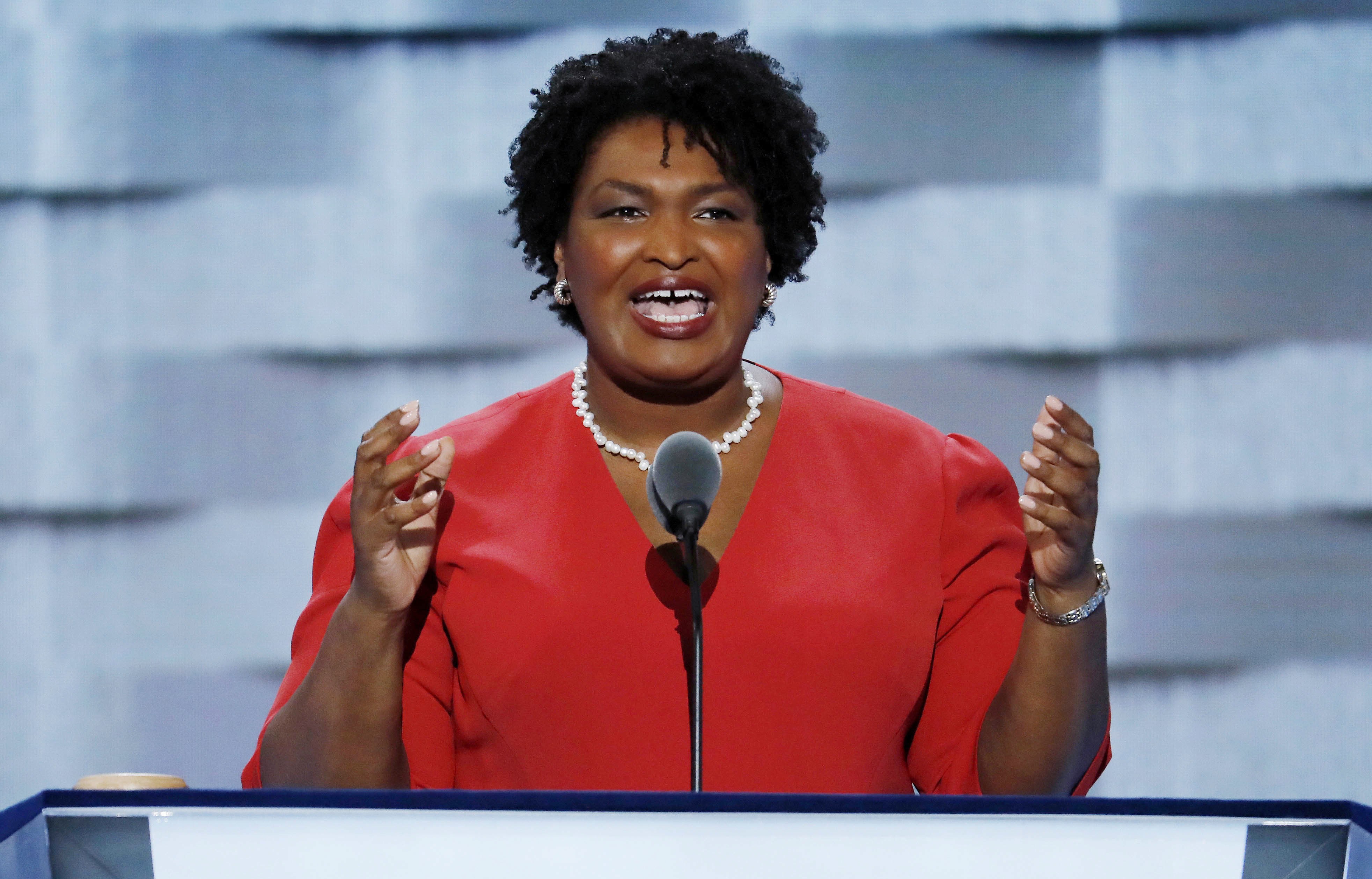
Stacey Abrams Promises She'll Be Back: "I Do Indeed Intend to Run for Office Again"


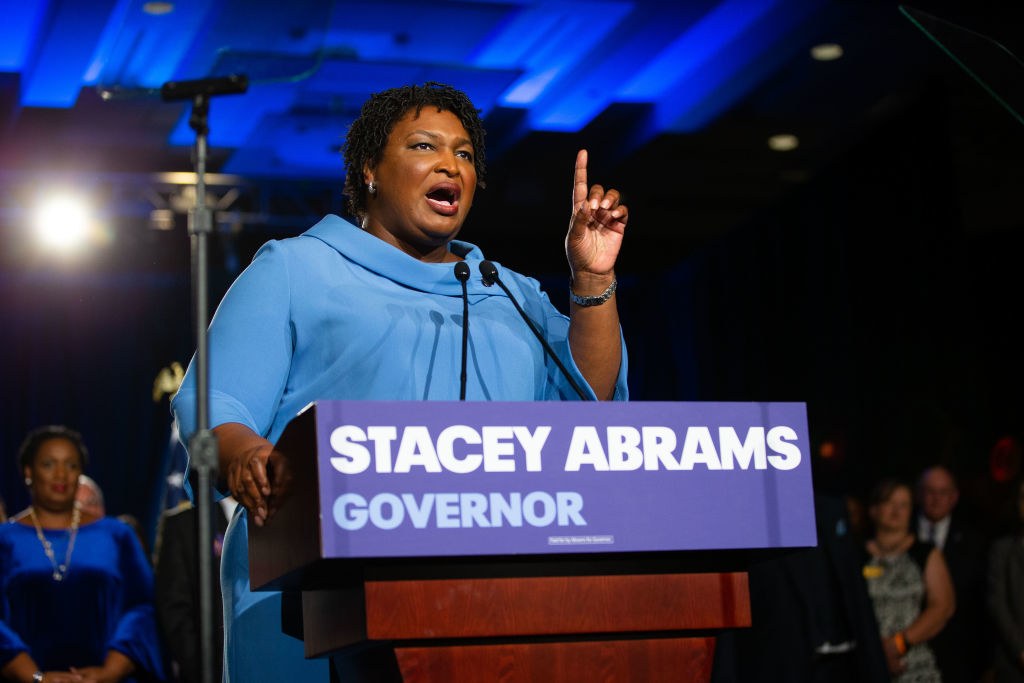
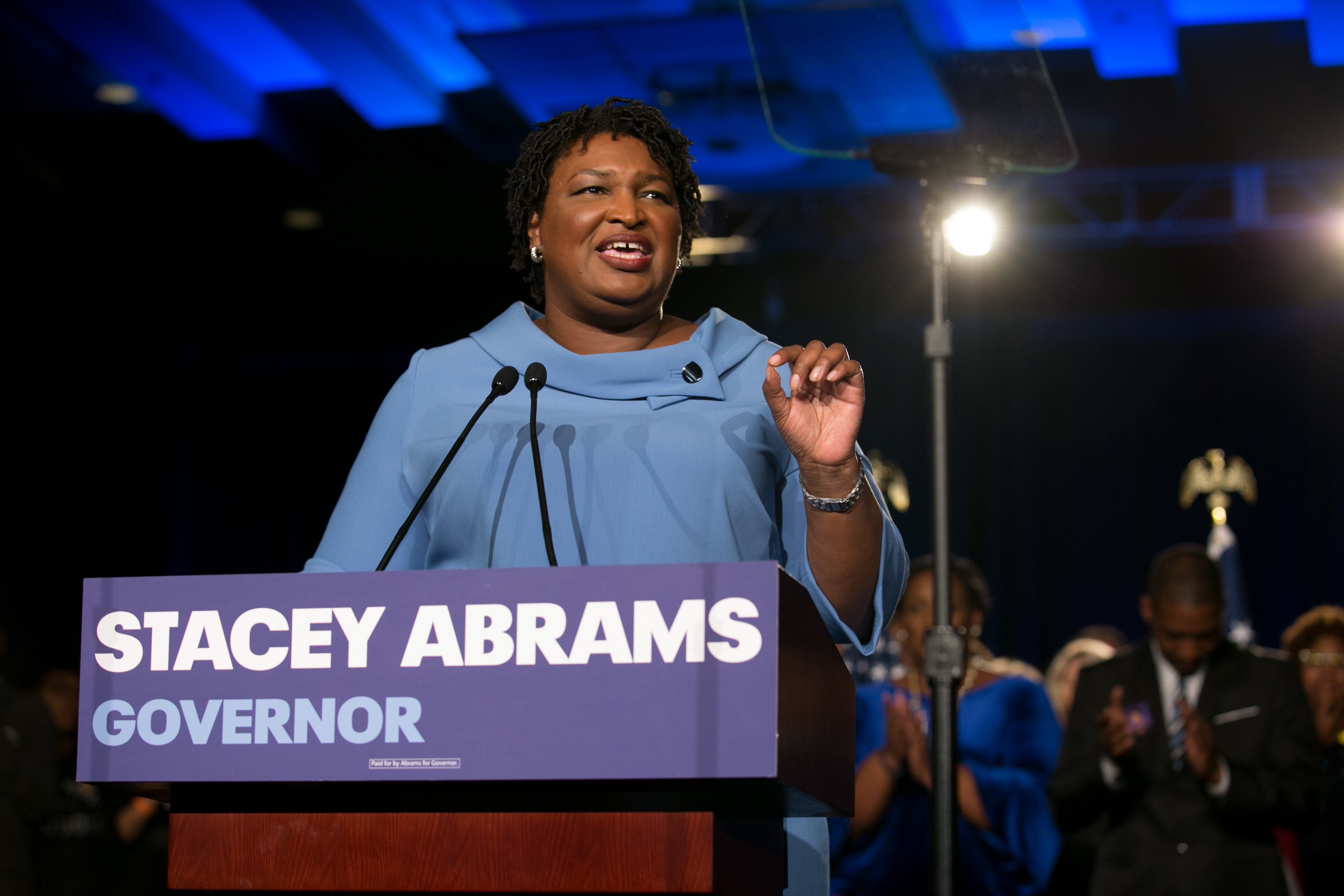
Just two days after ending her Georgia campaign to become the first black female governor in the United States, Stacey Abrams indicated that her political ambitions are far from over. The Democratic candidate said in an interview with CNN’s State Of The Union that although she wants to take a break following her highly contested gubernatorial race in Georgia, she still plans to run for office some day.

“I’m going to spend the next year as a private citizen, but I do indeed intend to run for office again,” Abrams said. “I’m not sure for what, and I am not exactly certain when. I need to take a nap, but once I do, I’m planning to get back into the ring.”

Following the midterm elections earlier this month, Abrams had refused to concede the nail-biter of a race to her opponent, Republican Brian Kemp, saying that she wanted to wait until every single vote had been counted. After an intensely publicized 10-day standoff, she finally recognized Kemp as governor-elect but used a fiery speech to call out voter suppression tactics and said she would be filing a federal lawsuit challenging the election’s “gross mismanagement.”

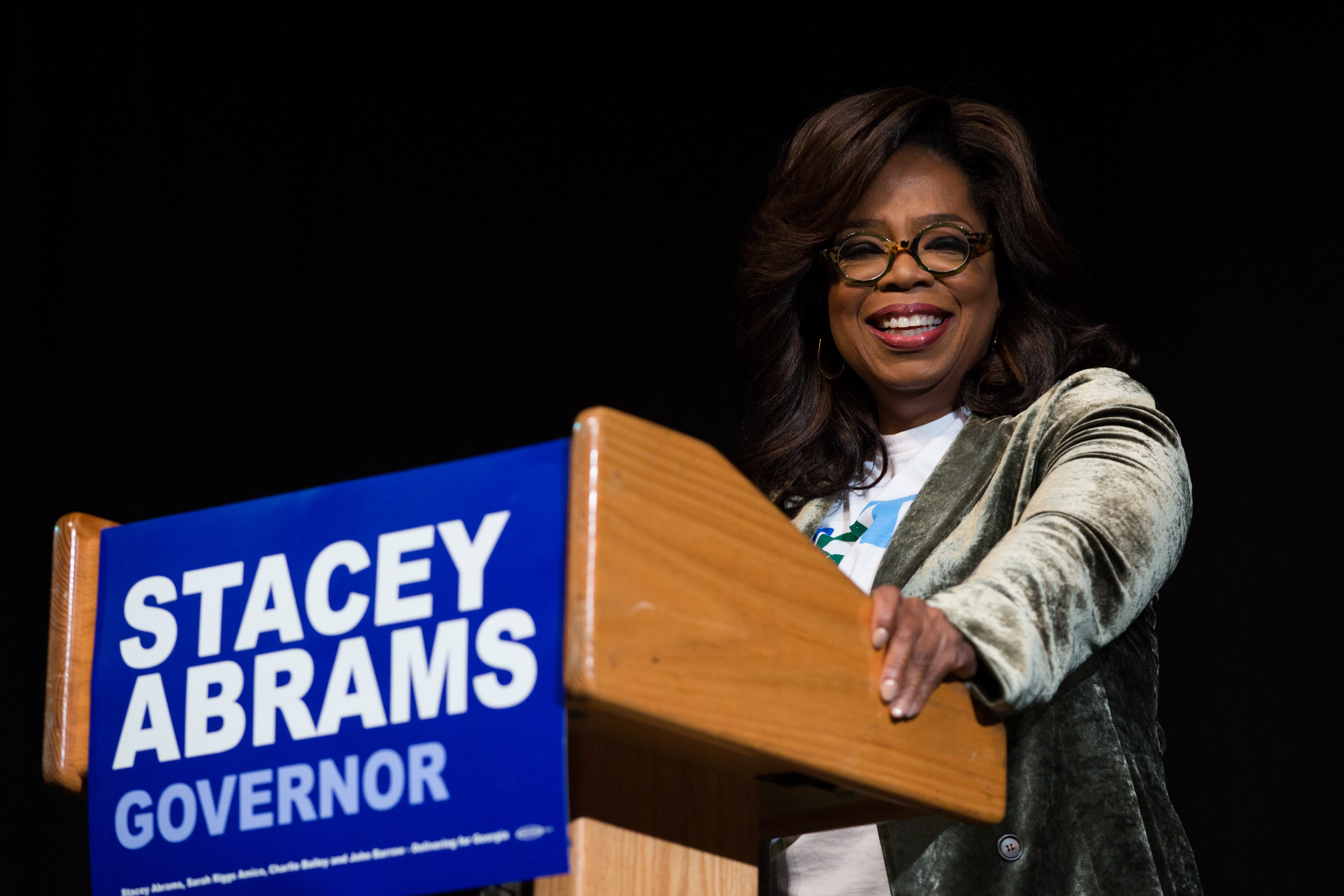
Abrams’ campaign had been embraced by many high-profile celebrities, including Michael B. Jordan, Uzo Aduba, Rashida Jones, and even Oprah, who helped rack up support by going door-to-door in Georgia—and fired back at a racist robocall that had targeted her and Abrams by urging voters to make their voices heard in the face of ugly political tactics.

“I acknowledge that former Secretary of State Brian Kemp will be certified as the victor in the 2018 gubernatorial election,” Abrams said Friday in a speech announcing the end of her bid. “But to watch an elected official who claims to represent the people in this state baldly pin his hopes for election on suppression of the people’s democratic right to vote has been truly appalling.”

Related Stories:

Stacey Abrams Is the American Dream. She’s Also $200,000 in Debt

With Georgia Democratic Primary Win, Stacey Abrams Is One Step Closer to Becoming the First Black Woman Governor

Oprah Winfrey Fires Back at Racist Robocall Targeting Stacey Abrams


Source link

Categories
Health

Democrat Stacey Abrams Ends Bid For Georgia Governor


UPDATE 11/16/18: Democrat Stacey Abrams ended her campaign to become the next governor of Georgia Friday, which would have made her the first black woman in American history to lead a state. After a 10-day standoff, Abrams recognized in a fiery speech that Republican Brian Kemp will assume the position.

“I acknowledge that former Secretary of State Brian Kemp will be certified as the victor in the 2018 gubernatorial election,” Abrams said. “But to watch an elected official who claims to represent the people in this state baldly pin his hopes for election on suppression of the people’s democratic right to vote has been truly appalling.”

Abrams also made it clear her speech wasn’t one of concession, saying she plans to file a federal lawsuit to challenge the “gross mismanagement” of Georgia elections.

“In the coming days, we will be filing a major federal lawsuit against the state of Georgia for the gross mismanagement of this election and to protect future elections.”

Abrams made the announcement late Friday afternoon, which—according to reports—was the earliest state officials could certify the results after a court-ordered review of absentee, provisional and other uncounted ballots.


11/ 7/18: The fight isn’t over yet for Stacey Abrams, who is refusing to step down in her quest to become the first black woman governor of Georgia. On Election Night the Democratic nominee announced in a fiery speech that she would not concede the race until every single vote is counted, a rallying call that concluded a night of voting challenges for Georgia residents.

“There are voices remaining to be heard,” she told the crowd of supporters early Wednesday morning. “We believe our chance for a stronger Georgia is just within reach.”

Abrams, the former minority leader of the Georgia General Assembly and the first black woman to lead in the House of Representatives, is up against the Republican candidate, Brian Kemp. Kemp, who is currently Georgia’s sitting Secretary of State, was endorsed by President Donald Trump during the campaign. Over the summer Trump said Kemp was “tough on crime, strong on the border and illegal immigration.”

Here’s where things get a little tricky. Right now Abrams has about 48.7 percent of the vote, with 1,907,212 votes. Kemp currently has the lead with 50.4 percent and 1,971,831 votes, according to the Associated Press. This means less than 65,000 votes separate the two candidates. And those numbers really could mean something as Georgia has an odd law that states a gubernatorial candidate must win a majority of votes (more than 50 percent) to win the election. If neither candidate takes home a majority, it triggers a run-off election. Both parties would meet again for a December 4 vote. It would mark the first general election race for governor to require a runoff, according to the Atlanta Journal-Constitution.

Abrams’ campaign team believes there are at least 97,000 early votes and mail-in ballots that have not been tallied, AP reports. The team believes she needs just 25,000 of those votes to be in her favor to trigger a runoff. However, Kemp disagrees.

“There are votes left to count, but…make no mistake, the math is on our side to win this election,” he said Tuesday evening, according to the AP. Still, Abrams is willing to wait.

Kemp famously played into the President’s racist rhetoric with a primary campaign ad where he said he’d “round up illegals and bring them back myself.” He ran on a platform that included increasing teacher pay, capping state spending, lowering health care premiums, and ending sanctuary cities. Abrams focused her platform on strengthening environmental protections, supporting a pathway to citizenship for immigrants, opposing further abortion restrictions, the decriminalization of marijuana in Georgia, universal background checks, and supporting educational scholarship funding for all.

Abrams was well-aware that she wasn’t liked by everyone on the campaign trail, but chose to focus her attention on empowering sideline supporters instead.

“My approach is this,” Abrams shared with Rolling Stone about her campaign. “I’m not going to spend a disproportionate share of our resources trying to convert Republican-leaning voters when we can invest in lifting up the voices of those who share our values. Because here’s the thing: I think our values are the right ones. And I think these values that are shared actually are going to be victorious on their own.”

Abrams also had some serious star power supporting her campaign. Just prior to the election, Oprah Winfrey flew to Georgia to campaign for Abrams, even going door-to-door to garner more support for the candidate.

“Nobody paid for me to come here. Nobody even asked for me to come here. I paid for myself and I approve this message,” Oprah shared during a campaign rally for Abrams.

If Abrams gets her way, and every vote is tallied, it looks like Oprah may have to return to the Peach State soon.

Related Content:

Stacey Abrams Has to Beat Donald Trump’s Guy to Become America’s First Black Woman Governor

Oprah Winfrey Fires Back at Racist Robocall Targeting Stacey Abrams

Stacey Abrams Is the American Dream. She’s Also $200,000 in Debt.


Source link

Categories
Health

Oprah Winfrey Fires Back at Racist Robocall Targeting Stacey Abrams


Oprah Winfrey has taken the midterm cycle into her own hands this year, rolling up her sleeves and knocking on doors to get voters to the polls. She surprised some lucky Georgians earlier in the week by canvassing for Stacey Abrams, who could become America’s first black female governor if she beats out Republican candidate Brian Kemp.

However, just after Winfrey gave Abrams a boost, a racist robocall went out to voters in Georgia. In the recording, a male voice pretends to be Winfrey and makes several racial slurs. But Winfrey quickly responded: She went on Instagram and clapped back, letting the world know that nothing was going to stop her from encouraging people to make their voices heard.

“I heard people making racist robocalls in my name against Stacey Abrams, who I am 100 percent for in Georgia,” she said. “I just want to say: Jesus don’t like ugly. And we know what to do about that. Vote.”

In the video, Winfrey wears a shirt with bright letters that spell the word vote. She captioned the post, “The antidote to Hate… VOTE your love!”

The call seems to have been funded by theroadtopower.com, a white supremacist group that recently also targeted Florida candidate Andrew Gillum. In it, the Oprah impersonator refers to Abrams as a “poor man’s Aunt Jemima” and says she will trick white women “especially fat ones” to vote for her. A recording of the call was posted widely on social media and lambasted for its offensive, racist language. It has also been condemned by several politicians and celebrities.

Still, the call wasn’t going to get in Winfrey way. She’s still making sure voters know how important turnout is, especially because today is Election Day. Winfrey has been such a powerful organizer that many people believed she could be a candidate in 2020. While she’s said she won’t be running, she’s shown she still a forced to be reckoned with in the political arena.

MORE: In a Record-Breaking Election Year for Women, Here Are the Races to Watch


Source link

Categories
Health

Stacey Abrams Has to Beat Donald Trump's Guy to Become America's First Black Woman Governor


It’s on.

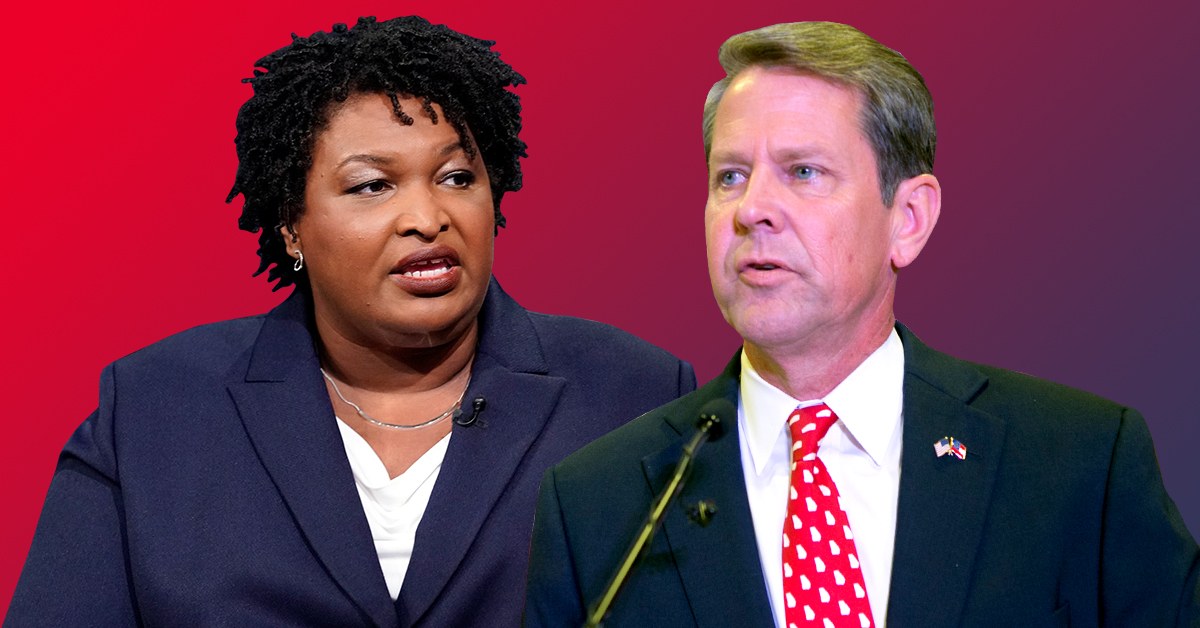
Democrat Stacey Abrams has an opponent in her quest to become Georgia’s next governor. The Yale-trained attorney will take on Republican Brian Kemp in the race, drawing the eyes of the nation to a pivotal November contest between a progressive black woman and a pro-Trump conservative man.

Abrams is campaigning to become the first black woman governor in U.S. history. A businesswoman and writer, she was the first female leader of her state’s General Assembly. On the other side is Kemp, who is currently Georgia’s sitting secretary of state and a former state senator. President Donald Trump endorsed him as “tough on crime, strong on the border and illegal immigration”—helping him defeat Lieutenant Governor Casey Cagle in Tuesday’s Republican primary for governor to become his party’s nominee.

Now Abrams and Kemp will duke it out to succeed Republican Governor Nathan Deal, who can’t run again because of term limits. Their showdown highlights a coast-to-coast midterm battle between Republicans who embrace Trump’s economic and social agenda and the Democrats who passionately reject it.

Abrams got her shot at Georgia’s highest office after the backing of A-list supporters and strong fund-raising helped her win a May Democratic primary showdown against a somewhat more moderate white candidate, Stacey Evans.

But with an opponent who is a Trump favorite in the other corner, how will Abrams fare? Audrey Haynes, University of Georgia associate professor of political science, says she has a tough fight ahead of her.

She expects the possibility of an Abrams win will energize Democrats, including black women voters, who have been key players in many of this cycle’s highest-profile elections, especially at a time when America has just six sitting female governors and not a single state with a black chief executive.

But Georgia went for Trump over Hillary Clinton in the 2016 presidential election, and has yet to join the ranks of swing states that neither Republicans nor Democrats can consider a lock. (In fact, Georgia has not elected a Democratic governor since 1998.)

That same excitement could also emerge among Republican voters who want to use the midterms as a show of support for Trump and his chosen candidates, including people like Kemp, whose campaign featured an ad in which he proudly proclaimed himself a “politically incorrect conservative” who’d even use his “big truck” to “round up criminal illegals” personally.

[embedded content]

A Brian Kemp for Governor ad

Bring it on, says Abrams, who’s running on a platform that emphasizes criminal justice reform and economic opportunity and who tweeted that she’d be proud to join the ranks of Democrats Trump has campaigned against.

Kemp, meanwhile, tweeted his thanks to Trump and said he looks forward to working with his former rival Cagle “to defeat Stacey Abrams and her radical, left-wing backers!” He promises to be a governor who will defend the rights of gun owners, fight crime, and cut government regulations.

Come November “I would predict that turnout will be high. People are passionate,” Haynes told Glamour via email. “I suspect that President Trump will make an appearance, and I am sure that the Abrams campaign would love to see him go off script and deliver a message that they can use to motivate their voters, particularly women, to turn out.”

Individually, “Kemp has shown that he can campaign, stay on message, build bridges to his intra-party opponents, and stump well. Abrams is a very good communicator, can raise money, stay on message, and can campaign as well. Both come into the general election with some baggage that will be the content of a multitude of negative ads from a host of super PACs and such,” Haynes told Glamour.

For Abrams, that baggage includes her admission of racking up significant personal debt. Kemp’s critics, meanwhile, say his political ambitions have been financed by some of the same people whose businesses he oversees as secretary of state.

“In the end, this will be a contest of ideas—whose do you like better—and one’s existing partisanship may have already decided that in a very polarized political environment,” Haynes said. “It will be a contest of organization, who can mobilize, and it will be a contest of endurance [as to] who can campaign to the very end. Those of us who study politics are watching to see what will happen.”

And with the nation’s eyes laser-focused on a race that could go down in the history books, they won’t be alone.


Source link

Categories
Health

With Georgia Democratic Primary Win, Stacey Abrams Is One Step Closer to Becoming the First Black Woman Governor


Georgia Democrats handed Stacey Abrams a landmark win in Tuesday’s primary, propelling her to a shot at becoming America’s first black woman governor.

The contest between Abrams and Stacey Evans was bound to make history no matter who won: no woman has ever been the Democratic nominee for Georgia’s top job.

Right now, women run the state houses of Alabama, Iowa, New Mexico, Oklahoma, Oregon and Rhode Island. There are currently no sitting black governors at all.

Abrams declared victory in a 9 p.m. Facebook post, saying her win belonged to “everyone who believed that a little Black girl who sometimes had to go without lights or running water – who grew up to become the first woman to lead in the Georgia General Assembly – could become the first woman gubernatorial nominee from either party in Georgia’s history.”

Georgia’s “Stacey vs. Stacey” showdown came in a midterm year that’s drawn a record number of female candidates, although many face steep challenges to ultimately winning office.

The high-profile race played out in a traditionally Republican southern state where voters must choose a successor to term-limited Republican Gov. Nathan Deal. Democrats are hoping to make inroads in the Peach State, where Donald Trump convincingly defeated Hillary Clinton by about 51 percent to 46 percent in the 2016 presidential election.

Abrams attracted endorsements from Clinton and other marquee Democrats in the leadup to her decisive primary win over Evans. Whether she can defeat the GOP nominee to break the next glass ceiling isn’t yet clear.

As put to Glamour Tuesday by University of Georgia associate professor of political science Audrey Haynes, Democrats in the South tend to run moderates who “can appeal to pragmatic voters who may straddle the two major political parties, or generally, appeal to more educated white Republican voters who are fiscal conservatives [and] law-and-order oriented, but not as invested in the culture war.”

That battle plan, Haynes said, has been in part based on who historically shows up at the polls in past midterm election cycles. “Republican voters consistently turn out; minority voters less so. But that may be changing, particularly when you have a candidate who is visibly identifiable as a member of a minority group,” she said. “If Abrams wins by turning out large numbers of minority voters across the state, that will be a game-changer. But there are questions about her appeal to that more moderate voter.”

Analysts have taken specific note of the role black women have played in recent elections. Their participation in the 2012 presidential vote outstripped that of other groups, and they overwhelmingly supported Hillary Clinton in 2016 while white women split between Clinton and Trump. African-American women also had a significant role in the victory of Alabama Democrat Doug Jones in a widely watched 2017 special election for U.S. Senate.

A SurveyUSA poll conducted this month found that in a hypothetical November matchup for governor, Republican Lt. Gov. Casey Cagle led Abrams 46 percent to 41 percent, with 14 percent of likely voters undecided.

Abrams ran as a Yale-educated lawyer, businesswoman, novelist and veteran of the Georgia House of Representatives. Having experienced discrimination in her own life, as well as struggling with personal debt, she said as governor she’d champion “a vision for Georgia where equality fosters prosperity, and where everyone has the opportunity to succeed – not just survive.”

Evans, meanwhile, said the challenges of her life, including an impoverished childhood, had fueled and informed her achievements. She worked her way through college, supplementing scholarships with jobs as a telemarketer and waitress, before going on to law school, a career as an attorney, and election to the Georgia House.

The two women, both in their 40s, shared many of the same Democratic planks during a campaign that at times exposed racial tensions.

In a notable campaign flashpoint, Evans accused Abrams of having shorted the disadvantaged while a legislator by buying into a Republican-led deal that slashed scholarship funding. Per the Washington Post, Abrams countered that the program she supported “preserved money for pre-kindergarten programs and staved off even tougher academic requirements she says Republicans wanted for all four-year award recipients.”

According to an NBC News analysis, television and radio ad spending on the Democratic primary ran into the millions: The Evans for GA Governor group plunged $1.5 million into the race. Abrams for GA Governor spent $475,000, but other pro-Abrams groups, such as BlackPAC and PowerPAC, threw in more than $2 million.

Darrell West, vice president and director of governance studies at the Brookings Institution, said the primary highlighted alternative Democratic approaches to the electorate for women running in a heated 2018 cycle. Abrams, he said, “focused on an appeal to progressive voters and people of color” in hopes of riding a “wave of anti-Trump sentiment into the general election.” By contrast, West said an Evans win could have been interpreted as the primary electorate betting “a moderate Democrat has a better shot at beating a male Republican in the general election.”

Jeanne Zaino, a political science professor at Iona College, said while gender will unavoidably be an issue in a November vote that pits a Democratic woman against a Republican man, “what also matters is their ability to appeal to voters on the ground and address issues of concern to Georgian voters, as well as the all-important issues of fundraising and turnout.”

Zaino noted that “among Democrats across the nation, in the special elections we’ve seen so far that turnout has been rivaling presidential election years.”

Given the state’s traditional Republican leanings, she cautioned, “It may be too early to call Georgia a swing state or talk about a ‘blue wave’ sweeping Georgia.”


Source link

Categories
Health

Stacey Abrams Is the American Dream. She's Also $200,000 In Debt.


Stacey Abrams is a woman who has always kept irons in the fire. She’s an Ivy League educated lawyer—Yale class of ‘99—and the writer of eight romance novels, all published under the pen name Selena Montgomery. She’s a business consultant and the co-founder of a beverage company that focuses on infants and toddlers. She’s the former Minority Leader of the Georgia General Assembly and the first Black woman to lead in the House of Representatives, where she served for a decade. Oh—and she’s currently running for governor of the Peach State. Suffice to say: She’s got a lot going on.

Yet, despite all the bona fides, boundary breaking, and her rising star status in state government, Abrams is far from immune to a problem that plagues a lot of people in America: crushing debt. In an essay she wrote for Fortune this week, the gubernatorial candidate opened up about the $50,000 in deferred taxes she owes the IRS as well as the more than $170,000 in credit card and student loan debt she’s trying to pay off.

“I am in debt, but I am not alone,” she wrote. “Debt is a millstone that weighs down more than three-quarters of Americans.” It’s also an issue that especially affects women, who hold an estimated two-thirds of student loan debt in the U.S., as well as 63% of credit card debt. But, as Abrams went on: “It should not—and cannot—be a disqualification for ambition.”

In her case: It hasn’t been. But that doesn’t mean that it hasn’t been hard, and even sometimes humiliating. Glamour spoke to Abrams about making the choice to go out on a financial limb—and why even if it’s cost her, it’s been well worth it.

GLAMOUR: Debt is fairly normalized in our culture. But I think it’s hard for people to wrap their heads around $200,000. Can you explain how that came to be?

SA: I’ve always been very cognizant of how much time I’ve spent in my head weighing whether I can take chances or opportunities because of money, and sometimes because of my mistakes with money. I learned financial literacy by racking up credit card and student loan debt. I managed to pay off the credit card when I started practicing law in 1999.

But five years later I was back in debt again because my parents had the catastrophic experience of Hurricane Katrina, which wiped out the community in which they served as ministers. I became their primary source of income. A year later, they adopted my niece because my brother and his girlfriend weren’t able to care for their child, and that has also been my financial responsibility for the past 15 years. In order to pay for that, I had to defer my taxes. What I decided is: I can defer taxes. But I can’t defer cancer treatment for my parent, I can’t defer healthcare insurance, I can’t defer food and shelter for my niece.

Do you feel like there is a gendered element to those expectations that goes beyond family loyalty?

Women are often called upon to be the backbone. Not just in the moral and emotional way, but in a very real financial way. It’s often daughters who take in aging parents; it’s the moms and grandmas who take in children who need support. That’s not to diminish the role that men play, but for women—especially in Western culture—there’s an expectation that we’re responsible. When you layer that with the wealth gap and the income gap, we’re expected to do more but we know that we make less, and we have to cover more. And it winds up having a crippling effect of women’s access to power.

Can you also talk to me about how debt has affected you emotionally?

It’s been the constant conversation for me for the last 20 years. Every time I wanted to make a decision. Every time I wanted to make a leap. Deciding to run for office, I had to think about what that would mean for all of the people who rely on me—partly because I had to hope that I could continue to make up the difference. For me, the ‘side hustle’ has been a necessity. I’ve always had more obligations, and so I’ve had to find multiple ways to meet those responsibilities. I made the choice that I don’t want me niece or my parents to have to struggle and worry. They aren’t living anywhere near the lap of luxury. But I wanted to have them the stability of knowing that they didn’t have to struggle again, and always. So if that means taking on two responsibilities or doing another job: So be it.

Plus, I want wealth. I want more than income. People of color, women, people from marginalized communities—we’re not encouraged to seek wealth. I want to get to the place where my children, if I have them, do not have the same anxiety I had. I want them to have the freedom to risk and to fail, which you never have if you don’t have access to wealth.

Women seeking wealth is so often thought of as ‘greedy’ in a way that isn’t true for men, yet we also shame people for being poor. How have you witnessed that stigma?

When I started the New Georgia Project, I raised more than $3.5 million dollars in under seven months, which is a pretty hefty lift. I also managed a project that led to the registration of 86,000 people and we hired almost 800 people to make it happen. Yet, I have been dinged, several times, for the salary I was being paid, of $177,000. The implicit question is: Why didn’t you do it for less—or for free? I can’t imagine that any man at the head of a nonprofit, who achieved what we achieved, and raised the kind of money that we raised, would be asked that question.

There is this underlying question of how dare I seek or accept a salary of that level. And it’s tied to that sense that women should just do because it must be done—that it’s somehow ignoble to accept compensation. Or even worse, that there’s some avarice associated with wanting to be compensated for our work—and yet we’re also supposed to have that largesse in every other aspect of our lives.

What’s the financial advice you wish you would have been given earlier on in your own life?

That credit scores last forever. When I finished law school and had to start paying down credit card bills, I remember realizing that a $300 I’d spent on a television had wound up costing me $1000. I didn’t understand interest rates. I didn’t understand that Discover was not being nice to me when they just let me pay $15 a month. Because when you come from a lack of wealth and a lack of economic mobility, you don’t always know that no one is being nice to you.

You wrote that you’re on a repayment plan with the IRS. But right now you’re on a full-time campaign—what does that mean for your finances?

When you see someone running full-time for office, someone has to pay for their mortgage and their insurance. I’m a single woman. I don’t have a spouse who is supporting me. I do not have current employment. I wrote a book and luckily that income has supported my campaign. But I had to resign from my company. I resigned from the legislature. I haven’t had a steady paycheck in quite a while. If you’re running for office, you’re literally forfeiting your income to run.

The upside is, if you win, there will be a salary. But you do it because you want to help people. I want to be the person who delivers for families like my own a way out of this. I want to be the governor who says: I’ve been where you are. I’ve grappled with these issues issues; I have a brother who has struggled with addiction and mental illness; I know what it’s like to not know if you can afford to be treated for cancer, because had to help my father pay for cancer treatments. I know what it means to not go to the dentist because you don’t know if you can afford the bill, and then it turns into something else. I’ve been down there myself. But what that means is that I know the way out.

*This interview has been lightly edited for length and clarity.

Stacey Abrams is the author of Minority Leader: How to Lead from the Outside and Make Real Change, which debuted April 24, 2018. She is currently running for governor of Georgia.


Source link