
Categories
Health

Facialist Georgia Louise Vassanelli on Her $14,026 Beauty Routine


I have five different creams that I switch between because sometimes I want a fluid, and sometimes I want a richer cream. Right now, I’m using my Bespoke Cream by Georgia Louise ($350). I recently launched a machine in my spa where we analyze your skin and create a bespoke skin care cream. I use either my Vital Finishing Serum ($150) or the Genaissance de La Mer the Serum Essence ($665) to finish, and then I will use SPF. I love La Mer the Broad Spectrum SPF 50 Daily ($95). I use my Rose Water mist ($120) during the day to rehydrate my skin. I like to have it in my handbag—I just like the way it feels and smells.

My Nighttime Skin Care Additions: $2,183

Three months on and three months off, I’ll use a retinol. The Environ South Africa line has retinols that are really gentle. I’ll do that at night with a vitamin C like Lara Devgan Platinum Vitamin C+ Luminous Night Serum ($145). The finishing serum is always La Mer the Concentrate.

Three times a week, I do my Sleeping Beauty Oil ($120) and gua sha with my Butterfly Stone or my Cryo Freeze Tools. I then wash my face and apply Pulse+GLO Ion Enhancer ($165), which is an electric sheet mask, for 20 minutes. The other two times a week, I use my GLOLite LED Mask ($950) for 10 to 20 minutes. Once I finish, I’ll put on either my Bespoke Cream or the La Mer Moisturizing Soft Cream ($180) and Eye Concentrate. The other thing I use is my Environ Gold Roller ($298) five times a week. It takes one minute, and I’ve been doing it for so many years now to push the product further into my skin and induce collagen. On Sunday mornings, I use the NuFace Facial Toning Device ($325), which is my favorite at-home microcurrent.

My Daytime Makeup: $431

I’m more about skin care than makeup. I try not to use any coverage unless I have an event, but my new obsession is Gucci Westman’s blush sticks. I love the Westman Atelier Baby Cheeks in Dou Dou ($50) and Poppet ($50) to just get a little bit of color. If I’m going out after work, I can just literally accentuate my cheeks and I’m good to go. I use Trish McEvoy Lash Curling Mascara ($32) because it doesn’t transfer or smudge, and then I’ll use Charlotte Tilbury Feline Flick Liquid Eyeliner ($30). For me, it’s about more the eyes. During the day, I always use the La Mer Lip Balm ($65). I’m really obsessed over Lara Devgan’s Platinum Lip Plump ($50)—it just swells up your lips and gives them a rosy color. I also love Dior Addict Lip Maximizer ($34). For events, I’m obsessed with La Mer the Luminous Lifting Cushion Foundation ($120). It goes on so well and gives such lovely coverage, like a sheer look. It’s great to travel with.

My Nighttime Makeup: $118

I love the Westman Atelier Face Trace Contour Stick in Biscuit ($48) for my cheeks, and I’ll always do a bright red shade of Chanel Rouge Coco Lipstick ($38) to bring a bit of color to my skin. For concealer, I’m really loving Charlotte Tilbury’s Magic Away ($32).

My Bi-Annual Haircut: $1,360

I’m really lazy with my hair. I see Chris McMillan for my cuts ($680). I was introduced to him by Jennifer Aniston, and I see him when I’m in L.A. every four to six months. I have long hair that’s in good condition because I let it dry naturally. I don’t use a blow-dryer. Whenever I see him, he gives me bangs. He’ll always try and re-style me, but I just like my hair simple and clean. It’s expensive, but so worth it.

My Styling Extras: $130

I love Amika: 3D Volume Thickening Shampoo and Conditioner ($20 each). I use them to give my hair some thickness and some more luster. My new obsession is Deborah Pagani; she’s come up with these beautiful hair accessories, like pins. I typically do my hair in a French twist or a bun, so I like to do that with one of her Large Sleek Hair Pins ($90).

My Essential Treatments: $2,960

I go to L.A. every month now and when I’m there, I get a Japanese massage ($140) at Hideko Spa near Brentwood. It’s truly amazing. I have a weekly massage ($200 per session) that I get at home because I bend over so much with my job—I need it. My personal masseuse is amazing, but he doesn’t want to be named because he’s so booked up.

My Wellness Routine: $3,900

I’m a diabetic and also have Hashimoto’s disease, so I’m very careful when it comes to my wellbeing. I see Daniela Turley, who’s a naturopath. She makes me tinctures to boost my immune system, liver, and kidneys. I also go to Rahav Wellness, which is under the care of Dr. Miriam Rahav. She’s a functional medicine doctor who tests my blood, makes me easy programs of supplements, and offers holistic treatments ($500 per appointment, three times a year) for my morning and nighttime regimens.

I also do pilates at Equinox two times a week ($2,400 membership per year). It’s a great way to sculpt and tone your body and a workout that I really enjoy. In the spring and summer, I walk to work every day for 20 minutes. I love the freedom.


Source link

Categories
Health

People Think Netflix's New Show Ginny & Georgia Will Be the Next Gilmore Girls


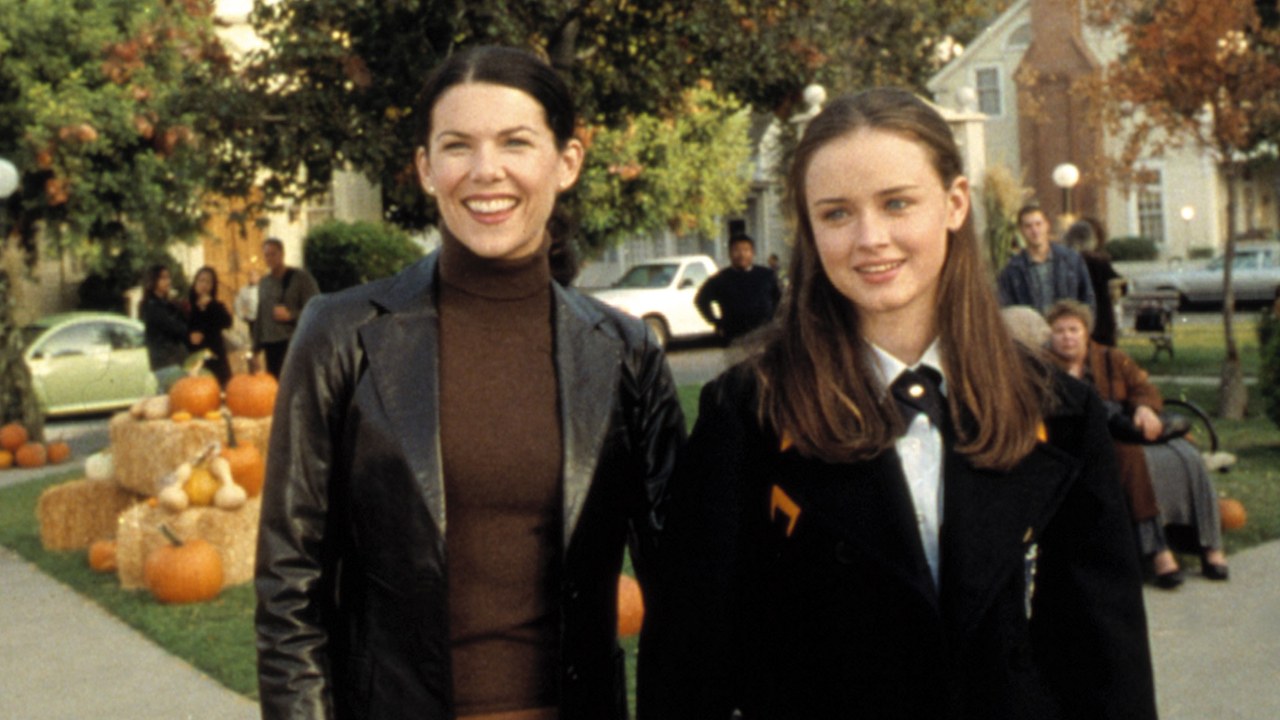
Have you been missing the quick, clever, pop culture-tinged mother-daughter banter of the Gilmore Girls as much as we have? Well, it sounds like Netflix may have just found a suitable replacement for Lorelai (Lauren Graham) and Rory (Alexis Bledel): Ginny & Georgia.

Deadline reports that the streaming platform has ordered 10 episodes of a show called Ginny & Georgia, and it seems to have a lot of Gilmore Girls DNA, which makes us excited.

Here’s the gist on the story: It’s about 15-year-old Ginny Miller (Antonia Gentry) and her 30-year-old mother, Georgia (Brianne Howy). We’re already seeing the resemblance here, but Deadline also notes that the awkward teen often feels more mature than her mother, who is described as “irresistible and dynamic.” Sound familiar?

Not as familiar as the show’s next plot point: According to Deadline, Georgia, keen on giving Ginny a more stable life, relocates their family to a gorgeous New England town. It’s there where they navigate a new prestigious school and romances, both for mother and daughter.

So let’s recap: We have a great mother-daughter duo who aren’t super far apart in age (like the Gilmores), a New England setting (ahem, Stars Hollow), and a prestigious school (like Chilton). There’s even a local farm-to-table restaurant owner who sounds an awful lot like Luke. There are some differences, of course, including a younger brother for Ginny. But the parallels are undeniable. We bet Ginny and Georgia are big coffee fans, too.

People online are already having strong reactions to the show. “Soooo gilmore girls but with a twist?,” one Twitter user wrote. Another said, “Sounds like Gilmore girls but edgier.”

Ginny & Georgia is currently in production. We’ll have to wait until the show debuts in 2020 to find out how similar it actually is to Gilmore Girls, but color us intrigued.


Source link

Categories
Health

Democrat Stacey Abrams Ends Bid For Georgia Governor


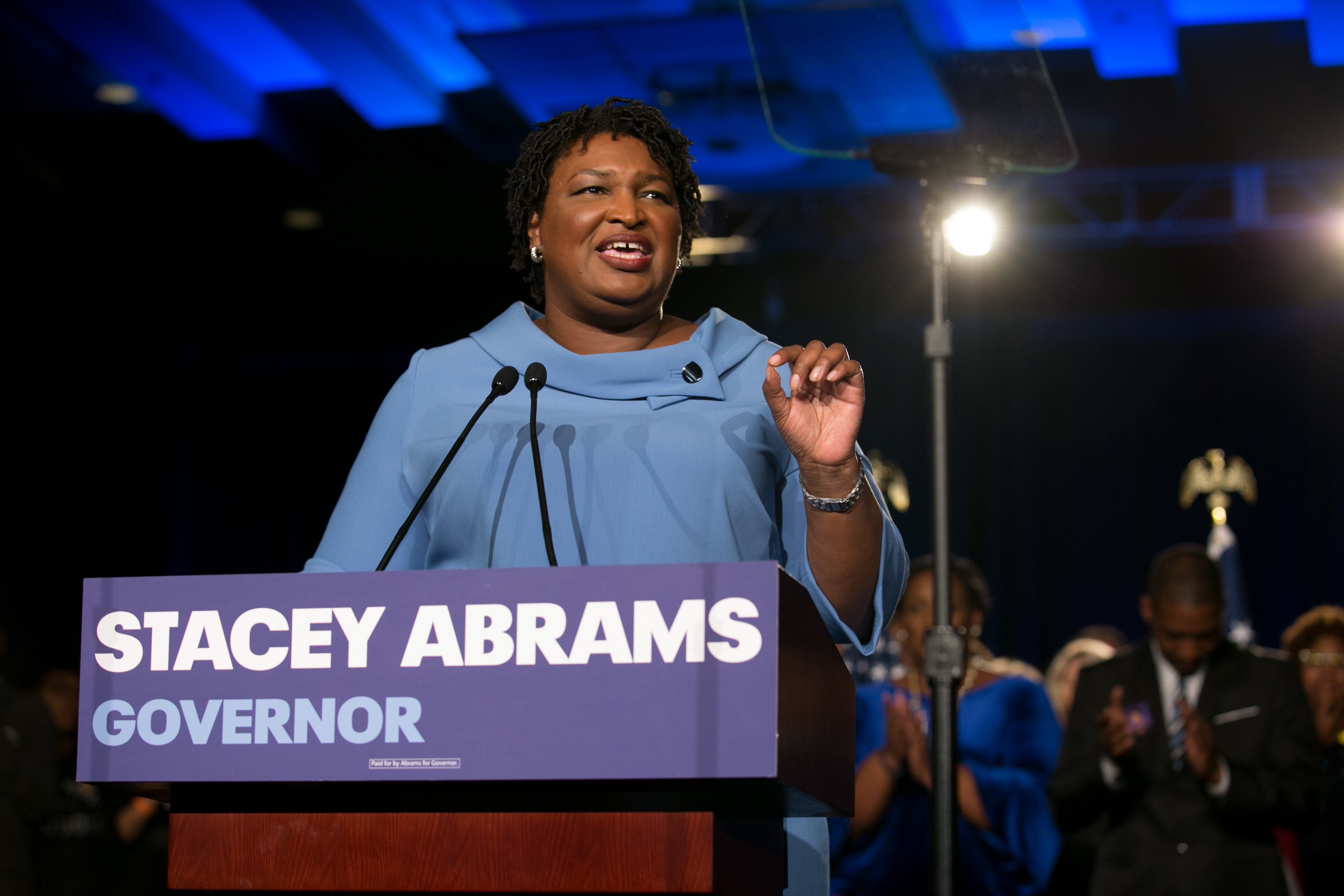
UPDATE 11/16/18: Democrat Stacey Abrams ended her campaign to become the next governor of Georgia Friday, which would have made her the first black woman in American history to lead a state. After a 10-day standoff, Abrams recognized in a fiery speech that Republican Brian Kemp will assume the position.

“I acknowledge that former Secretary of State Brian Kemp will be certified as the victor in the 2018 gubernatorial election,” Abrams said. “But to watch an elected official who claims to represent the people in this state baldly pin his hopes for election on suppression of the people’s democratic right to vote has been truly appalling.”

Abrams also made it clear her speech wasn’t one of concession, saying she plans to file a federal lawsuit to challenge the “gross mismanagement” of Georgia elections.

“In the coming days, we will be filing a major federal lawsuit against the state of Georgia for the gross mismanagement of this election and to protect future elections.”

Abrams made the announcement late Friday afternoon, which—according to reports—was the earliest state officials could certify the results after a court-ordered review of absentee, provisional and other uncounted ballots.


11/ 7/18: The fight isn’t over yet for Stacey Abrams, who is refusing to step down in her quest to become the first black woman governor of Georgia. On Election Night the Democratic nominee announced in a fiery speech that she would not concede the race until every single vote is counted, a rallying call that concluded a night of voting challenges for Georgia residents.

“There are voices remaining to be heard,” she told the crowd of supporters early Wednesday morning. “We believe our chance for a stronger Georgia is just within reach.”

Abrams, the former minority leader of the Georgia General Assembly and the first black woman to lead in the House of Representatives, is up against the Republican candidate, Brian Kemp. Kemp, who is currently Georgia’s sitting Secretary of State, was endorsed by President Donald Trump during the campaign. Over the summer Trump said Kemp was “tough on crime, strong on the border and illegal immigration.”

Here’s where things get a little tricky. Right now Abrams has about 48.7 percent of the vote, with 1,907,212 votes. Kemp currently has the lead with 50.4 percent and 1,971,831 votes, according to the Associated Press. This means less than 65,000 votes separate the two candidates. And those numbers really could mean something as Georgia has an odd law that states a gubernatorial candidate must win a majority of votes (more than 50 percent) to win the election. If neither candidate takes home a majority, it triggers a run-off election. Both parties would meet again for a December 4 vote. It would mark the first general election race for governor to require a runoff, according to the Atlanta Journal-Constitution.

Abrams’ campaign team believes there are at least 97,000 early votes and mail-in ballots that have not been tallied, AP reports. The team believes she needs just 25,000 of those votes to be in her favor to trigger a runoff. However, Kemp disagrees.

“There are votes left to count, but…make no mistake, the math is on our side to win this election,” he said Tuesday evening, according to the AP. Still, Abrams is willing to wait.

Kemp famously played into the President’s racist rhetoric with a primary campaign ad where he said he’d “round up illegals and bring them back myself.” He ran on a platform that included increasing teacher pay, capping state spending, lowering health care premiums, and ending sanctuary cities. Abrams focused her platform on strengthening environmental protections, supporting a pathway to citizenship for immigrants, opposing further abortion restrictions, the decriminalization of marijuana in Georgia, universal background checks, and supporting educational scholarship funding for all.

Abrams was well-aware that she wasn’t liked by everyone on the campaign trail, but chose to focus her attention on empowering sideline supporters instead.

“My approach is this,” Abrams shared with Rolling Stone about her campaign. “I’m not going to spend a disproportionate share of our resources trying to convert Republican-leaning voters when we can invest in lifting up the voices of those who share our values. Because here’s the thing: I think our values are the right ones. And I think these values that are shared actually are going to be victorious on their own.”

Abrams also had some serious star power supporting her campaign. Just prior to the election, Oprah Winfrey flew to Georgia to campaign for Abrams, even going door-to-door to garner more support for the candidate.

“Nobody paid for me to come here. Nobody even asked for me to come here. I paid for myself and I approve this message,” Oprah shared during a campaign rally for Abrams.

If Abrams gets her way, and every vote is tallied, it looks like Oprah may have to return to the Peach State soon.

Related Content:

Stacey Abrams Has to Beat Donald Trump’s Guy to Become America’s First Black Woman Governor

Oprah Winfrey Fires Back at Racist Robocall Targeting Stacey Abrams

Stacey Abrams Is the American Dream. She’s Also $200,000 in Debt.


Source link

Categories
Health

With Georgia Democratic Primary Win, Stacey Abrams Is One Step Closer to Becoming the First Black Woman Governor


Georgia Democrats handed Stacey Abrams a landmark win in Tuesday’s primary, propelling her to a shot at becoming America’s first black woman governor.

The contest between Abrams and Stacey Evans was bound to make history no matter who won: no woman has ever been the Democratic nominee for Georgia’s top job.

Right now, women run the state houses of Alabama, Iowa, New Mexico, Oklahoma, Oregon and Rhode Island. There are currently no sitting black governors at all.

Abrams declared victory in a 9 p.m. Facebook post, saying her win belonged to “everyone who believed that a little Black girl who sometimes had to go without lights or running water – who grew up to become the first woman to lead in the Georgia General Assembly – could become the first woman gubernatorial nominee from either party in Georgia’s history.”

Georgia’s “Stacey vs. Stacey” showdown came in a midterm year that’s drawn a record number of female candidates, although many face steep challenges to ultimately winning office.

The high-profile race played out in a traditionally Republican southern state where voters must choose a successor to term-limited Republican Gov. Nathan Deal. Democrats are hoping to make inroads in the Peach State, where Donald Trump convincingly defeated Hillary Clinton by about 51 percent to 46 percent in the 2016 presidential election.

Abrams attracted endorsements from Clinton and other marquee Democrats in the leadup to her decisive primary win over Evans. Whether she can defeat the GOP nominee to break the next glass ceiling isn’t yet clear.

As put to Glamour Tuesday by University of Georgia associate professor of political science Audrey Haynes, Democrats in the South tend to run moderates who “can appeal to pragmatic voters who may straddle the two major political parties, or generally, appeal to more educated white Republican voters who are fiscal conservatives [and] law-and-order oriented, but not as invested in the culture war.”

That battle plan, Haynes said, has been in part based on who historically shows up at the polls in past midterm election cycles. “Republican voters consistently turn out; minority voters less so. But that may be changing, particularly when you have a candidate who is visibly identifiable as a member of a minority group,” she said. “If Abrams wins by turning out large numbers of minority voters across the state, that will be a game-changer. But there are questions about her appeal to that more moderate voter.”

Analysts have taken specific note of the role black women have played in recent elections. Their participation in the 2012 presidential vote outstripped that of other groups, and they overwhelmingly supported Hillary Clinton in 2016 while white women split between Clinton and Trump. African-American women also had a significant role in the victory of Alabama Democrat Doug Jones in a widely watched 2017 special election for U.S. Senate.

A SurveyUSA poll conducted this month found that in a hypothetical November matchup for governor, Republican Lt. Gov. Casey Cagle led Abrams 46 percent to 41 percent, with 14 percent of likely voters undecided.

Abrams ran as a Yale-educated lawyer, businesswoman, novelist and veteran of the Georgia House of Representatives. Having experienced discrimination in her own life, as well as struggling with personal debt, she said as governor she’d champion “a vision for Georgia where equality fosters prosperity, and where everyone has the opportunity to succeed – not just survive.”

Evans, meanwhile, said the challenges of her life, including an impoverished childhood, had fueled and informed her achievements. She worked her way through college, supplementing scholarships with jobs as a telemarketer and waitress, before going on to law school, a career as an attorney, and election to the Georgia House.

The two women, both in their 40s, shared many of the same Democratic planks during a campaign that at times exposed racial tensions.

In a notable campaign flashpoint, Evans accused Abrams of having shorted the disadvantaged while a legislator by buying into a Republican-led deal that slashed scholarship funding. Per the Washington Post, Abrams countered that the program she supported “preserved money for pre-kindergarten programs and staved off even tougher academic requirements she says Republicans wanted for all four-year award recipients.”

According to an NBC News analysis, television and radio ad spending on the Democratic primary ran into the millions: The Evans for GA Governor group plunged $1.5 million into the race. Abrams for GA Governor spent $475,000, but other pro-Abrams groups, such as BlackPAC and PowerPAC, threw in more than $2 million.

Darrell West, vice president and director of governance studies at the Brookings Institution, said the primary highlighted alternative Democratic approaches to the electorate for women running in a heated 2018 cycle. Abrams, he said, “focused on an appeal to progressive voters and people of color” in hopes of riding a “wave of anti-Trump sentiment into the general election.” By contrast, West said an Evans win could have been interpreted as the primary electorate betting “a moderate Democrat has a better shot at beating a male Republican in the general election.”

Jeanne Zaino, a political science professor at Iona College, said while gender will unavoidably be an issue in a November vote that pits a Democratic woman against a Republican man, “what also matters is their ability to appeal to voters on the ground and address issues of concern to Georgian voters, as well as the all-important issues of fundraising and turnout.”

Zaino noted that “among Democrats across the nation, in the special elections we’ve seen so far that turnout has been rivaling presidential election years.”

Given the state’s traditional Republican leanings, she cautioned, “It may be too early to call Georgia a swing state or talk about a ‘blue wave’ sweeping Georgia.”


Source link