Categories
Health

Arie Luyendyk Jr. Says His 'Bachelor' Experience Was 'Super Unfair'


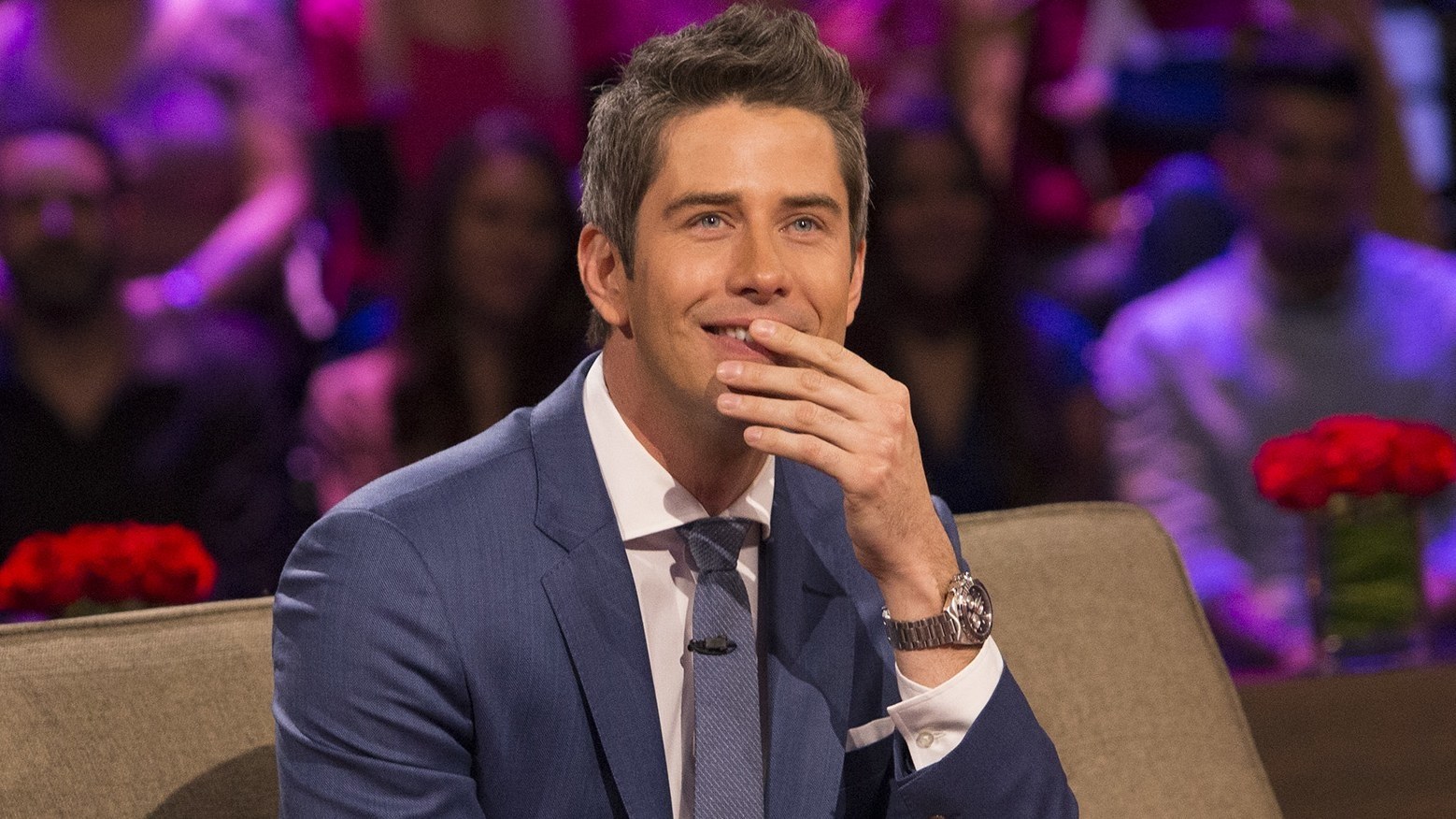
Arie Luyendyk Jr. Arie Luyendyk Jr. Arie Luyendyk Jr. Say his name three times, and welp, he’s still here. The Bachelor contestant of season 22, who earned—yes, earned—the scorn of millions following his shocking season-finale engagement-calling-off with who sure seemed like the Chosen Woman, Becca K.—and tells the show’s host about the breakup before he does the damn thing—only to then pivot to Lauren B. and propose to her.

You just don’t do that! And definitely not while the cameras are rolling for a 40-minute breakup! Even a Minnesota lawmaker tried to ban him from the state, and Minnesotans are so nice!

Keep in mind, the cameras during this scene were not required. (Gotta say, though, we sort of called this one from the beginning.)

We correctly labeled him as everyone’s ex-boyfriend—but just as The Bachelorette prepares to resume, as it has done and will do for centuries, on this blessed Memorial Day Monday, the man has snagged himself a GQ profile so he can explain things ~ in his own words ~.

You bet we wanted to read it. Here are the best bits from the profile, penned by Rebecca Nelson:

On Arie knowing he’d just stepped in it.

“Arie knew his actions would be ‘wildly unpopular,’ he tells me in between bites of an egg white omelet. Of course he knew. But he had to do it. He’d made the wrong decision, and his heart was elsewhere. What he can’t understand is why more people don’t see that he was just trying to do the right thing for everyone. Really, wasn’t that the brave thing to do? To admit you made a mistake and follow your heart to make it right?”

No. Not while there are cameras rolling.

On falling for Lauren B. while the cameras weren’t rolling.

“On the show, viewers didn’t see much of Arie and Lauren’s relationship, or for that matter, much of Lauren’s personality… That, Arie tells me, was all part of the producers’ storyline, and a product of selective editing. They painted her as the ‘pretty, quiet one,’ not the sweet, funny woman she actually is. It didn’t help that she was cripplingly camera-shy, virtually shutting down in front of the crew. To make her feel more comfortable, Arie asked the producers to film their interactions from farther away, or from behind, so they wouldn’t be as intrusive. It was during stolen moments, away from the cameras, that he says he fell for her.”

Even more happened, apparently, while the cameras weren’t rolling: They talked about Important Things Couples Need to Talk About, like career goals and family. (Nelson even interviewed his dad, who says he’s never seen his son “in love like this before.”) Also, Lauren B. seems really nice from Nelson’s account.

On Arie’s memory retention.

“He tends to remember critical moments in their relationship by what she was wearing, like when he dreamily recalls that she was ‘wearing all white’ on the night of their first kiss.”

But sometimes life’s most important moments happen when you’re wearing an oversized T-shirt and leggings with a gaping hole on the inner-thigh seam, right? (…Right?)

On how—brace yourself—he decided to end things with Becca.

Apparently he’d just had his final date with Becca, which ended at 3 A.M., and he got woken up at 7 A.M. Like all of us, Arie does not make his best decisions during ungodly hours.

“Even the morning he proposed, he was feeling conflicted. But there was a production schedule to adhere to—there were all the cameras, the crew, all the people who had flown down to Peru. The whole point of the show, what he’d hoped for at the outset, was an engagement. That 3-carat Neil Lane ring was burning a hole in his pocket.

So he proposed to Becca.

‘I felt like I was trying to be logical. I tried to think like, “Okay, I know who Becca is, and she’s a great person,”‘ he tells me over brunch. ‘In the moment, I felt like I was making the right choice.'”

On sliding into Lauren’s DMs.

“But he was haunted by the thought that he’d let his soulmate slip away. On New Years’ Eve, he DMed Lauren on Instagram—production wouldn’t give him her phone number—and asked if they could talk. He called her the next day. ‘As soon as I heard her voice,’ he tells me, ‘I knew that I had to end things with Becca.'”

According to Nelson, Arie went to the producers, who he claims were the ones who pitched bringing in the cameras. He says they told him that the viewers seeing him follow his heart and go back to Lauren B. would support him because he “did it for love.”

On betrayal, two times.

“You’ve got to understand, he tells me, these people were my friends. He’d just spent months with the crew. He trusted them. But now? He feels ‘100 percent’ betrayed.

Take the breakup with Becca, billed by the show as ‘the first completely unedited scene in reality television history.’ In the excruciating 40 minutes that aired, Becca repeatedly asks Arie to leave the house where—before he dumped her—they were supposed to be having a romantic getaway. Painfully, he sticks around, even knocking on the bathroom door as she cries to ask if she’s okay.”

On what actually went down.

“‘It was completely edited,’ Arie says. ‘I was told to stay on that couch. I tried to leave, and then production was like, “You need to go back inside. She’s finally calming down. I feel like you owe it to her to have this conversation.” So then I went back in the house.’

Really? You tried to leave and they wouldn’t let you?

‘Yeah. I left, came back. I stepped away from the couch, I went back to the couch.’ But they kept talking him into staying. ‘They cut out, obviously, production talking to me from 10 feet away,’ he says, and calling it unedited ‘was super unfair to me.’ (A spokesman for Warner Bros., which handles production for The Bachelor, declined to comment.)”

Of course, as Nelson points out, the Bachelor producers have so much footage that they can practically craft the storyline of the show however they want—it’s very, very creative nonfiction.

But.

But.

But then he wonders why people aren’t thanking him.

On people being ungrateful.

“So, he argues, why aren’t more people thanking him?” If he hadn’t filmed it, he argues, Becca would have “had to face uncomfortable questions about why they broke up on…After the Final Rose.” And she wouldn’t have been the next Bachelorette!

On the entire damn mess.

“‘I think if you look back at it now, it was positive for everyone. Everyone ended up getting closure and also an opportunity to be with the person that they were really meant to be with’—he with Lauren, and Becca with one of the twenty-odd suitors who will be vying for her affections come May 28. ‘I don’t understand why I’m the fall guy for filming the breakup on a television show which we all signed up to be on.'”

On overarching lessons.

“Maybe in a year or two or ten, Arie will recognize his role in the dumpster fire that was his season of The Bachelor. But he doesn’t deserve the entirety of our outrage. Like so many Bachelor villains before him, he was engineered by the show, warped and edited to fit neatly into a role. With every new season, viewers demand more: more sobbing, more heartbreak, more shocking twists. That thirst for drama essentially demanded that, at some point, an Arie would emerge. Arie may be the most hated man in America, but we created him.

And, anyway, what does he care? ‘The fact is, I’m really happy with Lauren,’ Arie says. ‘So for me, it was all worth it.'”

K.

Read the fantastic piece in all of its exceptional entirety here.

Related Stories

Arie Luyendyk Jr. Is Your Next ‘Bachelor,’ and Honestly Who Asked for This?

Even Kareem Abdul-Jabbar Agrees That Arie Luyendyk Jr. Is the Worst Bachelor
Arie Isn’t ‘The Bachelor’—He’s Your Ex-Boyfriend


Source link

Categories
Health

Serena Williams' Childbirth Experience Should Be a Wake-up Call About the Medical Treatment Black Women Are Getting


When I read about Serena Williams’ experience giving birth to her daughter in this month’s Vogue, a sense of familiarity washed over me. As an ob-gyn, I’ve cared for many women who have had complex pregnancies and deliveries. I’ve performed emergency C-sections and treated postpartum complications, like the blood clots she experienced. As a mother, it also brought back memories of my own pregnancy and delivery, which was complicated by high blood pressure and preeclampsia. Thankfully, my postpartum course was much less complicated than Williams’ was, but, like many women, I had a pregnancy that wasn’t straightforward. And while reading her story, I couldn’t help but think of how often our own stories—specifically, black women’s stories—don’t end well.

In the United States between 700 and 1,200 women die from complications associated with pregnancy or childbirth every year, and another 60,000 almost die. We have one of the worst maternal mortality rates in the developed world. And it’s getting worse: Between 1990 and 2013 our maternal mortality rate has more than doubled. The reasons aren’t completely clear. Some researchers say the increase is simply because we now have a more accurate and standard way to tally deaths associated with pregnancy and childbirth. Others attribute the increase to the fact that more women are delaying pregnancy until later in life, and later-in-life pregnancies can carry greater risks to the mother. Still, it’s worth noting that whatever the cause of the spike, overall the risk of death because of pregnancy is still fairly low. Most women go on to have uncomplicated pregnancies and deliveries.

But black women are the exception. According to the Centers for Disease Control (CDC), we are three times more likely to die due to pregnancy-related complications than women of other races, something Williams even drew attention to in a recent Facebook post.

This is not new information. Health care providers, researchers, and others in the medical community have known about these disparities for years. In the past they were most often ascribed to the generalized “poorer health” of black women. It is true that black women are more likely to have medical problems—like heart disease, diabetes, and high blood pressure—than women of other races. But do these differences exist solely because of the “poorer health” of black women?

Many researchers now believe that it is racism—not race— that is the problem. For example, even when we take medical history into account, black women are two to three times more like to die from pregnancy-related complications than white women with the same condition. And while maternal mortality rates are certainly greater for poor women than wealthier women, poverty alone can’t explain these disparities either. An analysis of maternal deaths in New York City found that black women who had at least a college degree still had greater mortality rates than white women who had not graduated high school.

In a country where we spend $111 billion per year on maternity care, how is it possible that the color of your skin can determine whether having a baby is a death sentence?

One theory looks at the way stress impacts black women’s health. Experiences of oppression are not unique to black women, of course, but the intersection of certain oppression—like racism, gender discrimination, and economic inequity—is unique to the experience of black women in the United States, and it can have a profound impact on health. This phenomenon is called “weathering,” a term coined by Arline Geronimus, a research professor at the University of Michigan’s Population Studies Center, and it describes the increased wear and tear that poverty, racial discrimination, and political marginalization have on the biology of black women. According to Geronimous, black women experience “accelerated aging,” which accounts for some disparities in health outcomes—including maternal mortality. In other words, the emotional engagement it takes just to function in the world begins to take a toll on physical health.

This phenomenon is exacerbated by the inherent bias—implicit or explicit—in our health care system. Historically, black women have not had the same access to health care services as white women. We are more likely to lack insurance and deliver our babies at underresourced and underperforming hospitals. As Williams described in her birth story, black women’s complaints are also more likely to be ignored or dismissed by medical providers. Studies have found that a patient’s race and ethnicity does have an impact on a physician’s decision making, and that doctors tend to perceive black patients more negatively than white patients. This has a direct impact on the quality of care. One study found that, even when access to care and insurance coverage are the same, people of color still receive a lower quality of health care..

The bottom line is, black women are dying wholly preventable deaths. Part of my job as a health care provider is to understand how these factors intersect to impact my patients and their health. And something like maternal mortality can’t be understood outside of a historical, social, and political context. Considering the intersection of oppressions allows us to seek solutions that challenge the status quo. Advocates, policy groups, and research organizations like the Black Mamas Matter Alliance and the National Birth Equity Collaborative are working to ensure that these solutions don’t further perpetuate inequities.

Delivering your baby should not be a death sentence. Serena Williams lived to tell her story. Many women don’t.

Jamila Perritt, M.D., M.P.H., F.A.C.O.G., is a fellowship-trained, board-certified obstetrician and gynecologist with a background in family planning and reproductive health. She provides community-based care focusing on the intersection of sexual health, reproductive rights, and social justice. Dr. Perritt works as a clinical provider in Washington, D.C., and the surrounding areas and as a reproductive health care consultant collaborating with organizations to provide ongoing support and subject matter expertise on sexual and reproductive health, family planning, and reproductive justice. You can follow her on Twitter @ReproRightsDoc.


Source link

Categories
Health

How Frankie Shaw Turned Her Twenty-Something Single Mom Experience Into Hit Comedy 'SMILF'


Frankie Shaw’s new Showtime comedy SMILF about a twenty-something single mother is raw, gritty, and real because—guess what—she’s been through it all. For Shaw, the memory of getting pregnant at 24 with her then-boyfriend Mark Webber is fresh. The two were in Philadelphia shooting his directorial debut film, Explicit Ills, in which she had a role. “I took a pregnancy test, and I remember walking around being like, ‘What am I going to do?’ ” says Shaw, who had only just begun to pursue an acting career. “I got on a train to Boston to see my aunts in Southie. One of my aunts said, ‘Frankie, you have the love, but babies need stability. You need to get a regular job and move back home.’”

Shaw, refusing to give up on her dream, did the opposite: “I decided to keep the baby and move to L.A. by myself when I was 11 weeks pregnant.” She left Webber (“It wasn’t working for various reasons”) and found a roommate from a rental listing. “I show up, and I was like, ‘Hey, I’m pregnant!’ She definitely wasn’t expecting her roommate to be pregnant. I ended up not staying there for long.” And was Shaw ready to be a mother? “No,” she says. “But I knew that if I just kept going, I would be able to make a life for me and my son.”

She got to work, hustling to land anything to keep her and Isaac afloat. “It’s not like I could couch-hop with a baby,” she says. “You can’t be this rambling artist in your twenties if you have a child. I had to be more focused.” Shaw juggled auditions with assistant work and SAT and AP test tutoring gigs for extra cash. “Isaac came with me to everything I did those first few years,” she says. “I remember even bringing him to yoga.” Luckily her mother (who had raised Shaw on her own) came out to L.A. to help with child care. Shaw also tried to keep some semblance of a young life: She dated a little. “I remember right before one guy kissed me good night, he was like, ‘I just want you to know, I’m cool with the kid thing.’ I was like, ‘Uh, thanks?’” To her, Isaac wasn’t something to be cool with: “It was like, ‘Oh, you would be lucky to be in Isaac’s life.’ ”

PHOTO: Danielle Levitt

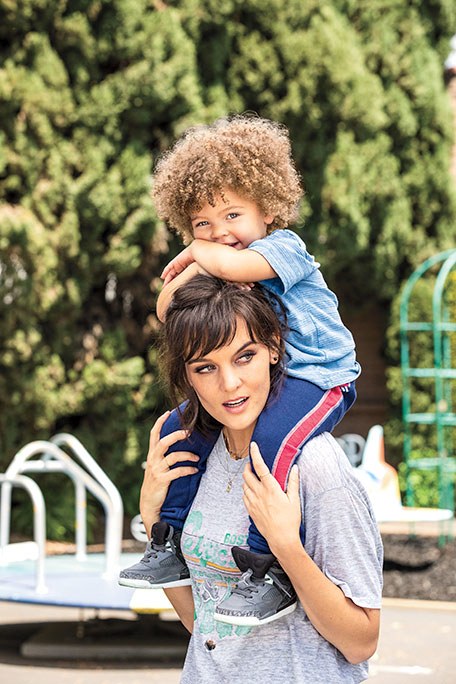
Shaw, with her onscreen son, on Showtime’s SMILF

Eventually she landed a role in ABC’s series Mixology in 2013, which—despite being canceled after one season—earned her enough cash to direct a few shorts she had written on the side. “That is when things started to change,” she says. Writing and directing gave her a way out of endless auditions, and a chance to use writing skills she’d honed as an English student at Barnard. “I thought that if I wrote a pilot, I could get staffed [in a writers’ room] and have a regular job.”

So Shaw camped out in coffee shops with Isaac, writing a show about a young mom—“nonpretty and real to my life.” She called it SMILF (“single mother I’d like to…”—you get it) and spent $3,000 of her own money to make it. Shaw submitted a scene to the 2015 Sundance Film Festival on a whim and won the Short Film Jury Award: U.S. Fiction. Then Showtime snapped up the idea and started developing it with her as a TV show.

On the advice of Jill Soloway, Shaw fought to direct. “We met at a barbecue—we were both single moms with kids named Isaac,” she says. “Jill, who is like a mentor to me, said, ‘Do not let them take directing from you.’” Part of Shaw’s vision includes hiring other female directors, exclusively, to help helm season one.

SMILF, she says, is “really about a young woman figuring out how to make her life work while she has a kid. And even if she didn’t have a kid, she would be faced with many of the same issues.” Issues relating to ambition and sexuality that every twenty-­something faces—all while seeing your body transform before your eyes or navigating the complexities of coparenting with an ex.

And the show is a family affair for Shaw. In addition to costar Rosie O’Donnell and guest star Connie Britton, Isaac’s father plays a sober priest in the show. (Of their relationship now, she says: “We’re coparenting; there’s always been love there.”) And her husband, Zach Strauss, is a writer for the series—the two met in 2013 and married in 2016. Isaac, 9, shows up now and again too, as Britton’s son, and he couldn’t be prouder of his mom. “He likes to tease Zach about the fact that I’m his boss,” says Shaw.

Her hope is that SMILF can accurately capture what it’s like to be a single mom. “You’re responsible for this young life,” she says. “Every thought—where they are, how they’re doing, their well-being—is about them. It’s a constant.” Offscreen, she hopes her story will set an example for her son, her own constant. “I want him to know: Do what you love. Just do what you love. I hope that message will get ingrained in him.”


Source link

Categories
Health

Meryl Streep Shares the Story of Her Own Experience With Violence


During the last six weeks, we’ve heard stories from dozens of empowered women, finally sharing their experiences with sexual assault and harassment at the hands of powerful men. But as Meryl Streep reminded us in a recent speech at an award ceremony for the Committee to Protect Journalists, that kind of threat is only one of the dangers women still face.

The Oscar-winner said there had never been a more dangerous time to be a female investigative journalist. “We do recognize the special cocktail of venom and ridicule which is always tinged with sexual threat that’s served up online for women—any woman in any profession—that stands up to tell the truth. I revere the people who do this because I am not a naturally brave person,” she said.

“But I do know something about real terror—the two times in my life when I was threatened and dealt with real physical violence, I learned something about life that I wouldn’t have known otherwise and I was lucky because my instincts served me well,” Streep said, according to The Daily Beast. “In one instance, I played dead and waited until the blows stopped—watching like people say you do from about 50 feet above from where I was beaten. And in the second instance, someone else was being abused and I just went completely nuts and went after this man. Ask Cher—she was there. And the thug ran away, it was a miracle.”

Streep and Cher both acted (and received Oscar nominations for their work) in the 1983 drama Silkwood. Cher had previously revealed that she and Streep once “saved a girl from a large mugger in New York City.”

She went on to explain how experiencing these moments of violence had changed her “on a cellular level,” saying women have been conditioned to be on “hyper alert,” to anticipate the violence so many generations of women have had to endure.

Streep also thanked the journalists who are making sure stories about women dealing with harassment and violence are not being silenced, saying, “You are the enemy of the people, yeah! Just the bad people. And I, on behalf of a grateful nation, thank you.”

Related: How Bad Does a Movie Have to Be for Meryl Streep to Not Get an Oscar Nomination? I Watched 23 to Find Out


Source link