Categories
Health

2018 Emmys: Producer and Director Glenn Weiss Proposes to His Girlfriend During Acceptance Speech


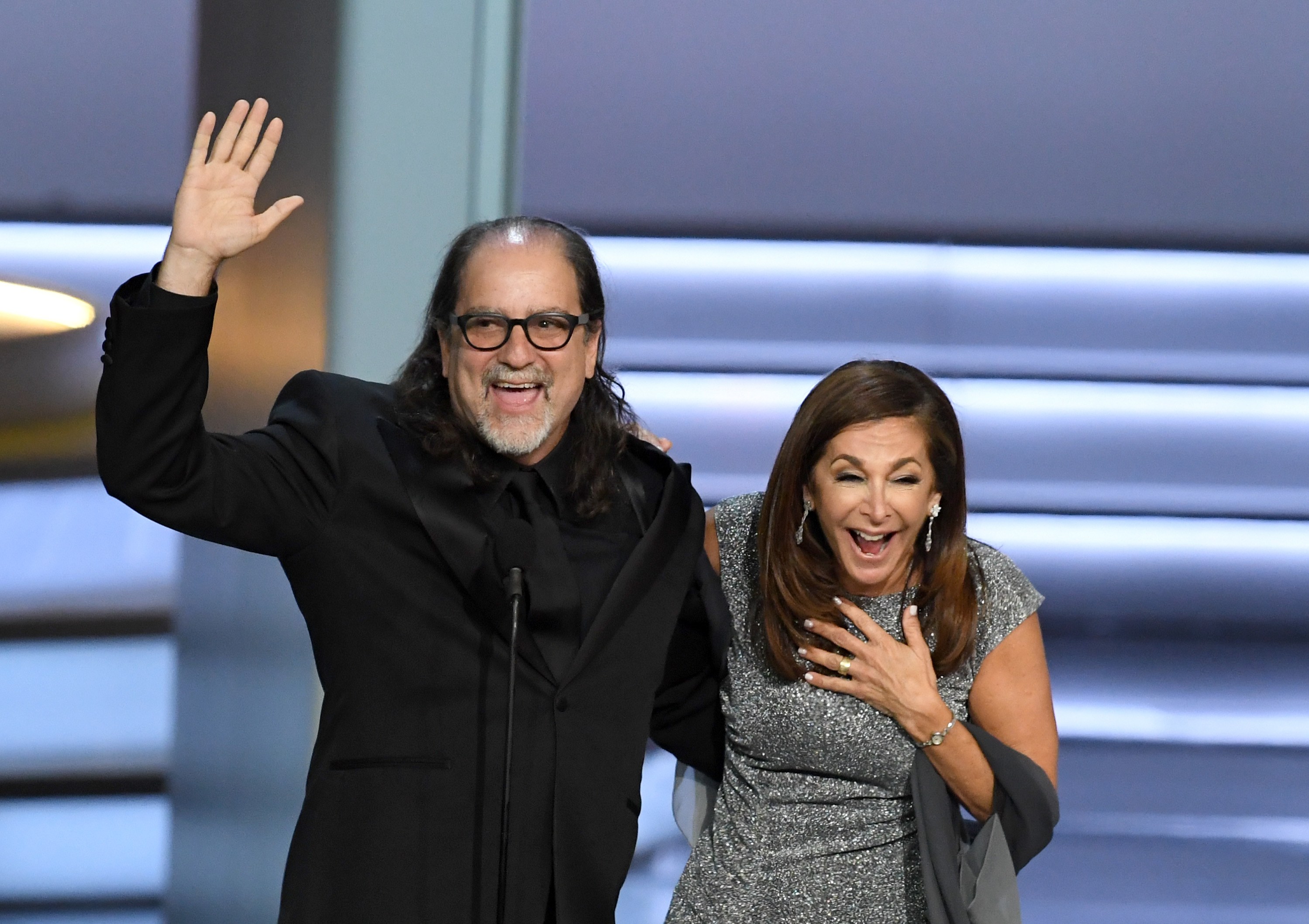
Producer and director Glenn Weiss arrived at Monday night’s 2018 Emmys with a few statuettes already under his belt, but he ended the ceremony with one more Emmy and a brand-new fiancée. About halfway through the show, Weiss was awarded the trophy for Outstanding Directing for a Variety Special for his position as the director of this year’s Academy Awards. Though his acceptance speech started out fairly run-of-the-mill, it soon took a shocking, heartwarming turn.

After doling out a few thank-yous, Weiss began speaking of his late mother, whom he said would’ve been proud of his big win. “Part of my heart is broken I don’t think it will ever be repaired. But she’s in me and she always will be. Mom always believed in finding the sunshine in things and she adored my girlfriend Jan. Jan, you are the sunshine in my life. And Mom was right, don’t ever let go of your sunshine,” he said, before becoming visibly nervous.

“You wonder why I don’t like to ‘call you my girlfriend?’ Because I want to call you my wife,” Weiss told a shocked Jan Svendsen, who was sitting in the audience. The crowd, predictably, went wild.

Weiss then pulled an heirloom ring from his suit pocket as Svendsen made her way up to the stage. “This is the ring that my dad put on my mom’s finger 67 years ago. And to my sisters and brothers: I didn’t swipe it, Dad knows I have it, OK?” he joked. “Jan, I want to put this ring that my mom wore on your finger in front of all these people and in front of my mom and your parents watching from above. Will you marry me?”

With tears in both of their eyes, Svendsen accepted Weiss’s proposal and gave him a huge kiss onstage. And that is what we call a Hollywood ending.


Source link

Categories
Health

'Black Panther' Director Ryan Coogler Is Down to Make a Movie About the Women of Wakanda


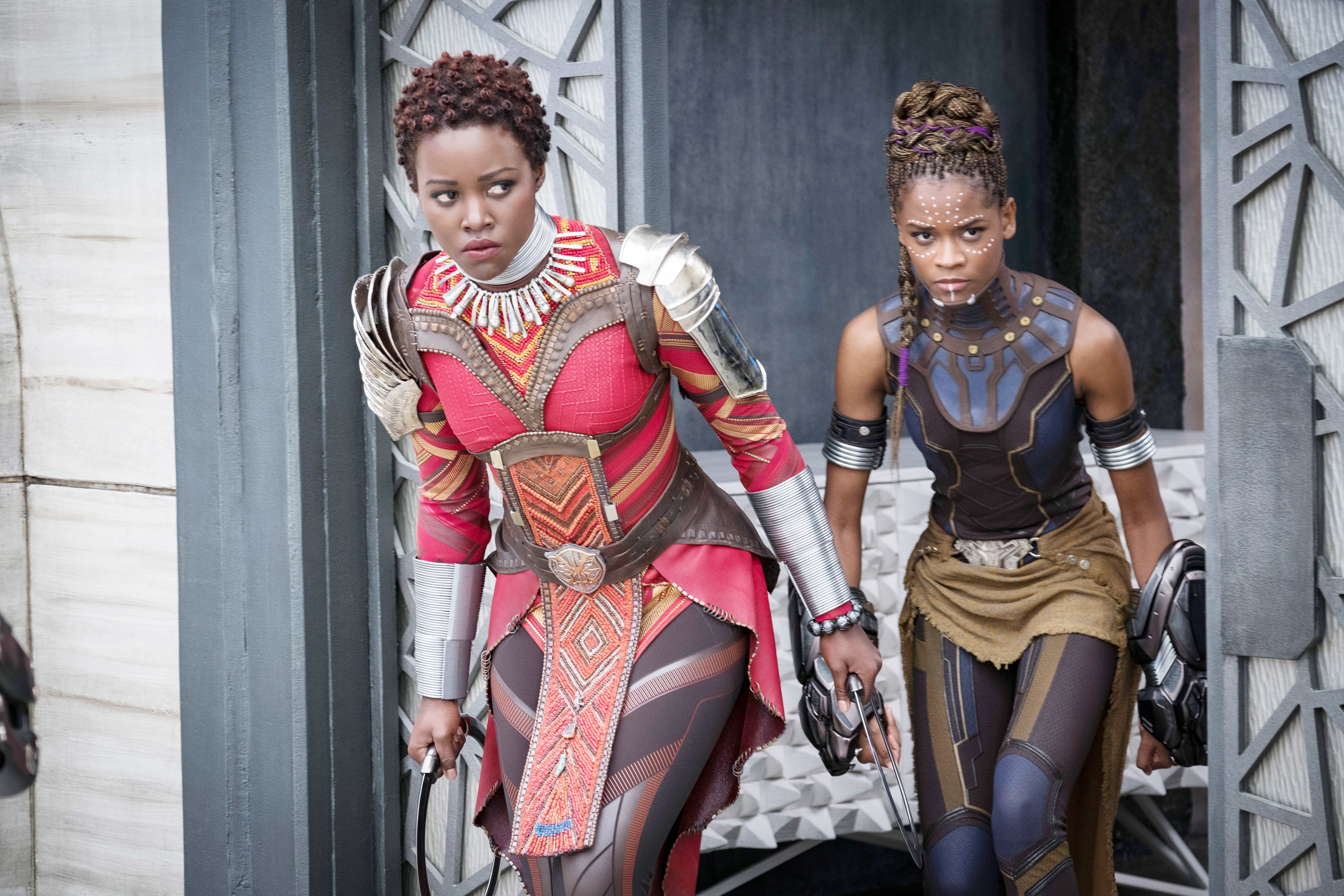
Black Panther director Ryan Coogler just co-signed the movie of our dreams: At a panel during the Cannes Film Festival on Thursday, he was asked if he’d be open to making a spinoff featuring the women of Wakanda. He was instantly into the idea—and made our hearts soar.

“Oh man,” Variety reports Coogler saying. “That would be amazing if the opportunity came up. They did it in the comic-book version.”

Someone please make this opportunity happen right now. As it’s been widely reported, Black Panther is the highest-grossing superhero film of all time, after it made more than $1.2 billion globally. A woman-centered spinoff would undoubtedly continue to crush records. Plus, it would give us another opportunity to root for the movie’s out-of-this-world female stars, who include Oscar winner and real-life saint Lupita Nyong’o, Danai Gurira, and Letitia Wright.

“We have these actresses who could easily carry their own movie,” Coogler said at the panel. “Some of them have before!”

Wright—who plays Shuri, the bad-ass and brilliant younger sister of King T’Challa—signaled she was all about the idea by adorably tweeting, “Ready big bro.”

The question of a spinoff came up at the panel when moderator Elvis Mitchell asked Coogler if the women of “Black Panther” were as important as the men. In addition to Shuri, the film features incredible female characters, like Nakia and Okoye. Coogler answered, “I think that you could argue that they’re more important in Wakanda. There’s a whole section of the film where T’Challa is out of the movie and you’re just following the women, and that’s one of my favorite parts of the movie. I didn’t expect that!”

A sequel does seem to be in the works, although we’re not sure which characters it would highlight. Marvel Studios chief Kevin Feige said an interview with Entertainment Weekly that although he had “nothing specific to reveal,” another journey into Wakanda would come. We’re just crossing our fingers it focuses on Shuri and the rest of the power women—we’d be first in line for tickets.

Related Stories:
‘Black Panther’ Is Officially the Highest-Grossing Superhero Movie of All Time in the U.S.
Lupita Nyong’o Paid for 600 Kids to See ‘Black Panther’ Because She’s the Absolute Best
Lupita Nyong’o Celebrated the Box Office Win for ‘Black Panther’ With a Tribute to Chadwick Boseman


Source link

Categories
Health

The Harley Quinn Movie Will Reportedly Have a History-Making Director in Cathy Yan


Harley Quinn may have been officially named the most popular Halloween costume of 2016 and also helped earn Suicide Squad its Oscar for Best Makeup and Hairstyling, but soon enough, the antihero will be making history in an even more impressive way. Deadline reports this week that the powers that be behind the upcoming standalone Harley Quinn movie have finally chosen a director—and the choice is a pretty big deal for the DC Comics universe.

According to Deadline, though negotiations haven’t yet been finalized, Warner Bros. and DC Entertainment have officially tapped Cathy Yan to direct the film. It’s notable that Yan has only directed one feature-length movie in her career: the low-budget indie film Dead Pigs, which won the World Cinema Dramatic Award for Ensemble Acting at the Sundance Film Festival earlier this year, and which Yan also wrote. Yan will be just the second woman to direct a DC comic book film, after Wonder Woman‘s Patty Jenkins and will be the first-ever Asian woman to helm a superhero film (she was born in China and raised in Hong Kong and Washington, D.C., according to The Hollywood Reporter). Per Deadline, Yan’s hiring was partly motivated by Harley Quinn actor Margot Robbie’s own “firm” desire to have a female director for the Suicide Squad spinoff, which she’ll be co-producing.

Warner Bros. and DC settled on the script for the project nearly two years ago. The film will be based on Birds of Prey, a series of comic books that revolves around the titular group of female superheroes, which through the years has included Batgirl, Black Canary, and the Huntress, among others; TheWrap reported in November 2016 that the Birds of Prey script was being written by Christina Hodson. This won’t be Hodson’s first foray into the DC Universe: Earlier this month, Deadline confirmed that she had taken over scriptwriting duties for the upcoming solo Batgirl film after Joss Whedon quit the project in February.

Since the release of Suicide Squad, Warner Bros. and DC have been in talks to create a whole host of films featuring Harley Quinn, the supervillain alter ego of psychologist Dr. Harleen Quinzel. Not only is a Suicide Squad sequel reportedly in the works, but there have also been reports of a Harley Quinn vs The Joker film pitting Harley against her on-and-off boyfriend, as well as one based on another, more nefarious girl group in the DC Universe, the Gotham City Sirens. Though the status of those films is currently unknown, at least we know the Birds of Prey will be flying onto screens sooner rather than later.


Source link

Categories
Health

Céline Just Announced Hedi Slimane As Its Next Creative Director


When we learned that Céline’s hugely influential creative director, Phoebe Philo, would be leaving the brand after 10 years back in December, her replacement was a mystery. But it was finally announced on Sunday morning that Hedi Slimane, formerly creative director of Dior Homme and Saint Laurent, will take over as the artistic, creative and image director. He will oversee women’s fashion, leather goods, and accessories—and introduce menswear to the brand. Philo’s final collection will be shown in March, and Slimane’s first presentation of men’s and women’s clothing will take place in September.

“I am enchanted; what a great choice,” Karl Lagerfeld told WWD of Slimane’s hire. “It will be great.”

Slimane, 49, started his fashion career at Yves Saint Laurent before he was hired by LVMH in 2000 to create Dior Homme, where he was known for his sharp tailoring. Seven years later he made his way back to YSL and rebranded it as Saint Laurent, where he was criticized for featuring a shockingly thin model in a Spring/Summer ’15 British advertisement. (The ad was banned for being “irresponsible.”)

While at Saint Laurent, Slimane introduced his rock-and-roll style to the brand. “At Saint Laurent, Mr. Slimane became famous for collections seemingly aimed at the young and the fretless, including the musicians, models, and hangers-on he met in Los Angeles, where he made his home and where he relocated the Saint Laurent studio, The New York Times wrote in an article Sunday announcing Slimane’s hire.

Under Philo, who was named British Fashion Council’s Designer of the Year in 2005 and 2010, and the CFDA’s International Designer of the Year in 2011, Céline was known for making beautiful, androgynous clothing and leather goods for working women—though Slimane’s new direction might shift the aesthetic even more toward the millennial demographic. He’s moving fast, too: According to WWD, “the first freestanding Céline men’s boutiques are to open as early as 2019.”

According to the New York Times, Slimane will work from Los Angeles, like he did when he oversaw Saint Laurent. There will also be a studio and atelier in Paris, but Philo’s London studio will close.

Related Stories:
Céline’s Phoebe Philo Is Stepping Down as Creative Director
13 Genius Outfit Tricks to Steal From Celebrities This Winter
6 Details That’ll Make Your Outfit Look More Expensive


Source link

Categories
Health

This Chart Breaks Down the Lack of Female Best Director Honorees at the Critics' Choice Awards Since 1995


The Critics’ Choice Awards provided an extremely fast follow-up to the Golden Globes, an event where Time’s Up dominated and women’s representation—especially in categories like directing—were hot topics of conversation. The Thursday evening award ceremony, however, lacked a lot of the punch of Sunday evening’s epic kick-off. Gone were the Time’s Up pins and speeches about women’s empowerment—with a few noteworthy exceptions like Gal Godot’s “See Her” award, featuring a rousing introduction by Wonder Woman director (and 2017 Glamour Woman of the Year) Patty Jenkins. There were some uncomfortable moments, like Elisabeth Moss getting played off after accepting her award for The Handmaid’s Tale.

For this award season, we’re eschewing some of the standard fare of previous years—consistent “Best Dressed” round-ups, for example—to focus on spotlighting the ways women are changing Hollywood, from record-breaking awards to the characters redefining how woman are portrayed on-screen. We’re also digging into the data behind key categories at all the major award shows. Just how often do women get nominated? And how often do they win? And are we getting better at being truly representative of the people watching TV and film?

Our reasoning is simple: we believe that better representation—both in front of and behind the camera—means healthier workplaces, and better storytelling.

In the case of the Critics’ Choice Awards, categories like directing are just as lacking when it comes to women as its peers. (The Golden Globes, for example, didn’t nominate a single female director this year, and a woman hasn’t won in this category since 1984.) We break down the honorees since 1995 in this chart. (Note that in some years, there was only a winner that was honored—no nominees—and that years correspond to the year in which film hit screens.) While Greta Gerwig was nominated for Ladybird, the 2017 winner in this category was Guillermo Del Toro. The only female Critics’ Choice Award winner for Best Director since 1995 was Kathryn Bigelow, for The Hurt Locker.

In addition, we looked at the recent data—from 2009-2017—across a variety of gender-neutral categories like Editing and Best Original Screenplay, and found that here, too, women are woefully underrepresented. Categories like Editing, Adapted Screenplay, and Director have had only one winner who identifies a female since 2009; there have been zero female winners for Original Screenplay in that time.

You can filter the results by clicking on any of the categories at the top, and you can also hover over any of the individual squares to see the nominee—male (in gray) or female (in peach)—and the work for which they were nominated.

To be sure, this data is just a limited window into women’s representation in the overall business—and also doesn’t factor in the inequality that women of color, for example, face—but even this limited window offers a stark portrait of how far we have to go. The good news, at least, is that we’re speaking up and getting loud. Change is sure to follow.

Graphic: Condé Nast Data Visualization

MORE FROM HOLLYWOOD’S BIGGEST SEASON:


Source link

Categories
Health

This Staggering Graphic Will Remind You That the Golden Globes Haven't Honored a Female Director in 25+ Years


In the wake of a year in which Harvey Weinstein and #MeToo dominated the entertainment headlines, this year’s overall awards season has—rightly—centered more on change in Hollywood than any red carpet predictions or accolade-worthy performances. This year, the spotlight is on worthy initiatives like Time’s Up, an ambitious initiative backed by 300 powerful women in entertainment with the goal of ending systemic inequality and harassment in the workplace.

And here’s the thing: One of the most meaningful ways to combat systemic inequality—and harassment, for that matter—is to ensure that all workplaces have a better gender balance. Most importantly, that women are visible in leadership positions and recognized for their achievements.

In the entertainment industry, for example, that means taking a hard look at areas like directing, where women are particularly underrepresented. Even in 2017—a year that saw Patty Jenkins crush box office records with Wonder Woman—just 11 percent of the directors of Hollywood’s top-grossing films were women. Looking ahead to the Golden Globes as an early indicator of how we’re honoring these female directors’ achievements, we see more bad news: Not a single female director was nominated for a Golden Globe award this year, despite heavy praise for Dee Rees’ work on Mudbound and Greta Gerwig’s first directing work with Ladybird. (Gerwig received a nomination for Best Screenplay.)

In the 75-year history of the Golden Globes, a woman has been given an award for Best Director exactly once: Barbra Streisand won for Yentl in 1984. Worthy women have since been nominated—including Ava DuVernay and Kathryn Bigelow—but none have won. (The Academy Awards haven’t fared better: Kathryn Bigelow is the only woman to have won—for Hurt Locker in 2010—in nearly 90 years.)

We looked at the data on female Golden Globe nominees in four clearly gender-neutral categories over the past 25 years and found that in categories like Best Screenplay and Best Score, women (meaning nominees who identify as female) are staggeringly underrepresented. Take a look at the data, below. You can filter the results to “Best Directing” or “Best Original Score” by clicking on any of the categories at the top, and you can also hover over any of the individual squares to see the nominee—male (in gray) or female (in peach)—and the work for which they were nominated.

In 2005, there were zero nominations for women in these four categories, full stop. In the Best Original Score category, men have outpaced women 143 to 7 over the past 25 years. Overall, female nominees represent just 12 percent of the overall nominees in these categories over the past 25 years. Twelve percent!

In the October 2017 issue of Glamour, cover star Reese Witherspoon elaborated on the problem female directors face: “It’s definitely easier for a male director with a few flops under his belt to get another job directing; that’s not the case for women. Shouldn’t female filmmakers get as many shots as men do? Or how about a shot, period? Women directors, writers, and producers still face considerable challenges just getting hired in the first place. Only about one in four people working in those roles in TV are women; in film it’s even worse—17 percent.”

The statistics inspired Witherspoon to start her own production company, and they also inspired us to launch the #NewView film competition to showcase how young female filmmakers see the world. (Watch the incredible winning films here!)

For this award season, we’re eschewing some of the standard fare of previous years—consistent “Best Dressed” round-ups, for example—to focus on spotlighting the ways women are changing Hollywood, from record-breaking awards to the characters redefining how woman are portrayed on-screen. (TV, for example, finally seems to be getting mothers right. Or at least more right.)

We’ll also keep digging into the data behind key categories at all the major award shows. Just how often do women get nominated? And how often do they win? And are we getting better at being truly representative of the people watching TV and film?

To be sure, this data is just a limited window into women’s representation in the overall business—and also doesn’t factor in the inequality that women of color, for example, face—but even this limited window offers a stark portrait of how far we have to go. The good news, at least, is that we’re speaking up and getting loud. Change is sure to follow.

Graphic: Condé Nast Data Visualization

MORE GOLDEN GLOBES:


Source link