Categories
Health

Isn't It Romantic Director and Screenwriters Talk Romantic Comedy Tropes


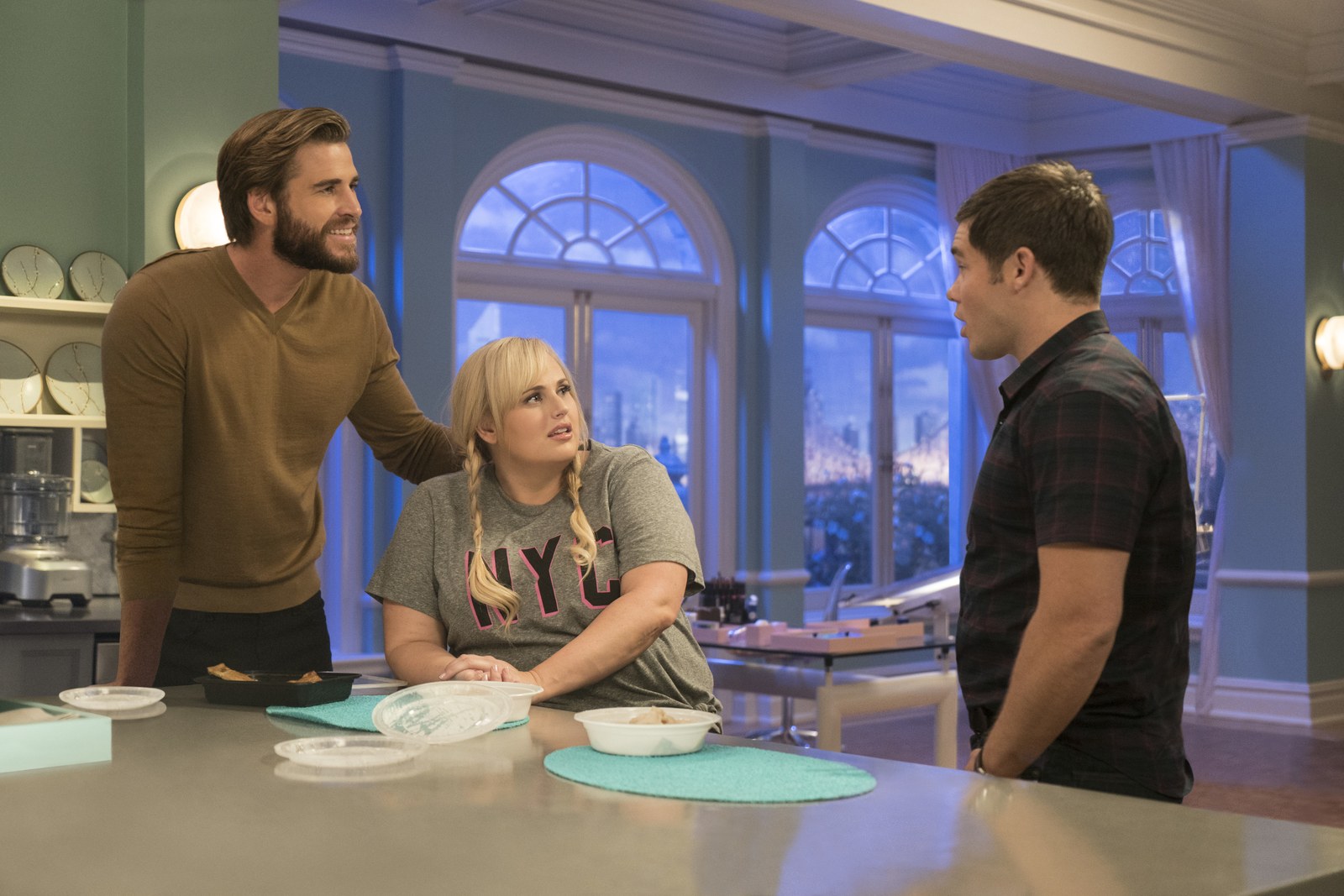
Isn’t It Romantic, the highly anticipated rom-com parody starring Rebel Wilson, Priyanka Chopra, and Liam Hemsworth, hits theaters today. It centers on Natalie (Wilson), a woman who finds herself trapped inside a romantic comedy—and all the cringe-y tropes that come with it. You know exactly what we’re talking about: In this alternate universe, Natalie has an apartment far too expensive for a twenty-something, a gay best friend who is there just to help move the plot along, and a love interest so hot nothing else matters.

But don’t mistake Isn’t It Romantic for the rom-coms of 2003. The brains behind this movie are acutely aware these tropes exist—that’s why they included them. The director (Todd Strauss-Schulson) and screenwriters (Erin Cardillo, Dana Fox, and Katie Silberman) actually subvert stereotypes in Isn’t It Romantic and, as a result, bring the genre into 2019.

Of course, this required some research, but Strauss-Schulson, Cardillo, Fox, and Silberman soon became experts in romantic-comedy tropes. Below, they tell us which ones they enjoy—and which ones they were most excited to poke fun at—in Isn’t It Romantic.

Todd Strauss-Schulson, director:

Before I got on set to direct Isn’t it Romantic, I watched 80 romantic comedies in a row. I went a little insane, but my heart grew more and more tender by the day. Obviously, I’d seen romantic comedies before, but I wanted to become an expert. The idea was to crack the code and see what story and visual tropes were used over and over again.

I wanted to break the rom-com genome and isolate the textures and tropes so I could rebuild them into something modern and fresh for our movie. I found a lot of weird stuff beyond the well-known “gay best friend who has no purpose in life but to care for the main character” and “trying on clothes montage” tropes. For instance, did you know there is a lot of shellfish eaten in romantic comedies? It’s true, but why? Maybe because shellfish is an aphrodisiac? Who knows, but it’s in a lot of ’em.

One of the most consistent visual tropes—and when I say consistent, I mean I was straight up spooked when I kept seeing it repeat in every movie—was half-moon windows. Like this:

Michael Parmelee/Warner Bros. Pictures

Everywhere I turned, there they were. In the offices of Bridget Jones, Working Girl, and What Women Want. At a restaurant in Picture Perfect. Front and center in the apartments in When Harry Met Sally and Made of Honor.

[embedded content]

So I did a little deep dive, and I found two interesting potential answers. First, half-moon windows are also referred to as lunettes, and Merriam-Webster says there is some evidence of the word being used for a “little moon.” (Though that meaning is now obsolete.) The moon is often associated with having a deep connection with women, and so it makes sense they would be subliminally placed all over this particular genre.

In tarot, arches symbolize beginnings, initiations, and ceremonies of renewal. Walking through an archway represents the sloughing off of the old and moving into a new phase of life. That sounds a lot like a rom-com plot to me! These characters are opening up to love, getting out of their comfort zone…and maybe even getting married.

Moons have cycles—and so do genres. Rom-coms are coming back, and we hope Isn’t It Romantic becomes one of your new favorites.

A straight line

Erin Cardillo, screenwriter:

My favorite rom-com trope is The Realize and Run. As in, when you realize you want to spend the rest of your life with somebody, you want the rest of your life to start as soon as possible. (Thank you, Harry. See: Nora Ephron.) Back before cell phones existed, this trope made sense. You suddenly realize you’re in love with somebody—after being a dingbat about it for the better part of the movie—but you can’t call them to tell them because landlines are stupid. Plus, they aren’t home. In fact, your somebody is probably at the airport having just passed through security, ready to board that flight to “I’m never coming back, and you can’t track me down.” Or, in most cases, they are in a nondenominational church about to marry the wrong person and they’re totally against annulment.

[embedded content]

So you must run. Fast! Cars are just as stupid as phones. Luckily, you don’t have a bad back—or if you do, it was designed that way for comedic effect. Nevertheless, you can run, and you are capable of traversing whatever absurd obstacles are in your path. You have to do this! This is the closest thing to an action sequence the audience is going to get in most rom-coms, and it’s essential to get them reinvested in your happy ending before your big, perfect “I love you” speech. A speech that, while often flawed and totally clichéd, is, after your epic run, still pretty freakin’ satisfying.


Source link

Categories
Health

I'm Tired of Male Screenwriters Using Rape as a Convenient Backstory for Women


“I don’t really do films set in the modern day because the female characters nearly always get raped,” Keira Knightley told Variety earlier this week. In the interview, the actress was asked if production companies are backing more female-dominated stories, to which she declared that it’s slowly getting better. “I’m suddenly being sent scripts with present-day women who aren’t raped in the first five pages and aren’t simply there to be the loving girlfriend or wife.” It’s a somber day when one of Hollywood’s leading movie stars has sworn off making new movies because rape is such a pervasive storyline in our cultural landscape.

Good for Keira—we need more stars to speak out about the problems surrounding women’s stories—but honestly, this isn’t a new one. Whether it’s used to drive a heroine’s revenge story or provide us with an understanding of her character, rape as a backstory is a common entertainment trope. These stories are usually meant to be cathartic and powerful, but let’s count the other ways a woman can be seen as multidimensional besides surviving a trauma she didn’t ask for. To me, the constant defaulting to rape narratives feels insulting and misogynistic.

Most times, I’m sure it’s not intentional or even a conscious decision—but it’s not surprising that male screenwriters are the main purveyor of this trope. Of course, many of our most cherished female characters have been written by men. We celebrate these characters because of their valiant displays of badassery, but look deeper at their motivations. The Kill Bill movies, written and directed by Quentin Tarantino, are amongst the most famous rape-revenge films. For many, Beatrix Kiddo is one of the best woman-behaving-badly characters of all time. But when I reconcile Beatrix with similar narratives about intractable women, the unoriginality of it all is shocking.

Beatrix isn’t the only character looking for revenge: In Dick Wolf’s Law & Order: SVU, Mariska Hargitay’s Detective Olivia Benson pursues a career imprisoning sexual predators, having been a child born from her mother’s rape. Martin McDonagh’s Three Billboards Outside Ebbing Missouri stars Frances McDormand on a ruthless trek for retribution against her daughter’s rapist and murderer. It was largely suggested that Furiosa, the heroine of George Miller’s Mad Max: Fury Road was sexually enslaved to Immortan Joe, like the other female protagonists in the film. The list drags on.

“Many male-written movies or TV shows are packed with frivolous and
careless displays of sexual assault.”

Outside of revenge, rape is often used to justify why a female character is so hardened or brawny, as if it’s impossible to imagine a woman being emboldened and traditionally masculine without having survived an assault. Michelle Dockery plays the jaded and thick-skinned Alice Fletcher in Scott Frank’s 2017 mini-series Godless. It’s not enough for her to be an independent ranch owner and strong-willed, protective mother—her chilliness had to be justified by a history of sexual abuse. See: Game of Thrones‘ Khaleesi rising to power after being raped and abused multiple times.

Aggressive and uncooperative female characters are often given the same treatment, like Thirteen’s rebellious Evie, who was raped by her uncle. As are successful women, like the merciless Claire Underwood of Beau Willimon’s House of Cards, who was raped in college. Her assault is used as a device to justify why she seeks to advance her career. Then there’s the prosperous Gabrielle Solis from Marc Cherry’s Desperate Housewives, who was raped by her stepfather.

In contrast, male heroes and protagonists who share personality traits with characters like Khaleesi or Beatrix Kiddo need less explaining to justify their behavior. Many male criminals, spies, thieves, and con artists are often driven by something as simple as love. For example, in Steven Soderbergh’s Ocean’s Eleven, Danny Ocean seeks revenge against a wealthy casino owner, Terry Benedict, because Benedict married Ocean’s ex-wife. A lifetime of enduring painful abuse didn’t create his affinity toward crime—love did.

The psyches of characters like James Bond, Bruce Wayne, Han Solo, John McClane, or Walter White are explained by the death of their parents. Daddy and abandonment issues are extremely common explanations for male superheroes, Superman, Thor, and Tony Stark. Sometimes, men are motivated by betrayal, like Ethan Hunt from Brian De Palma’s Mission: Impossible or the eponymous Jason Bourne. Male characters are often hard and tough, but for a woman to be illustrated the same way, unfortunately, the sexual assault explainer comes into play quite often.

“We need complicated, multitudinous, bull-headed female characters—now
more than ever.”

Keira Knightley is right. Rape is often exploited in film and television, and many male-written movies or TV shows are packed with frivolous and careless displays of sexual assault. David Fincher’s The Girl With the Dragon Tattoo has been criticized as making a spectacle of rape. The highly decorated Darren Aronofsky has directed three films with rape or assault scenes (Black Swan, Requiem for a Dream, and mother!), a tendency that leans heavily toward creepiness or fetish. No doubt, women write these stories too, like Melissa Rosenberg, who created Jessica Jones for Netflix. But often, female-written stories about sexual assault offer an vastly different and important perspective. In Jessica Jones, the titular hero hunts for vengeance against her sexual abuser, but the show’s innate female perspective allowed for a nuanced portrayal of sexual assault and has thus been hailed by women as helpful or “getting it right.”

Many writers do their female protagonists justice, and rape-revenge stories can be mollifying to watch, especially for survivors of assault. But film and TV characters are a reflection of real-life women, and there are an infinite amount of motivations, methodologies, and histories that produce interesting, complicated women. I know, because I know these women, and so do you. I’m not calling for an end to these types of narratives; in this post-Weinstein world, it’s important to continue having important dialogues on sexual assault. But I am requesting a larger breadth of female characters, and a variety of backstories and motivations for them. We need complicated, multitudinous, bull-headed female characters—now more than ever.


Source link