Categories
Health

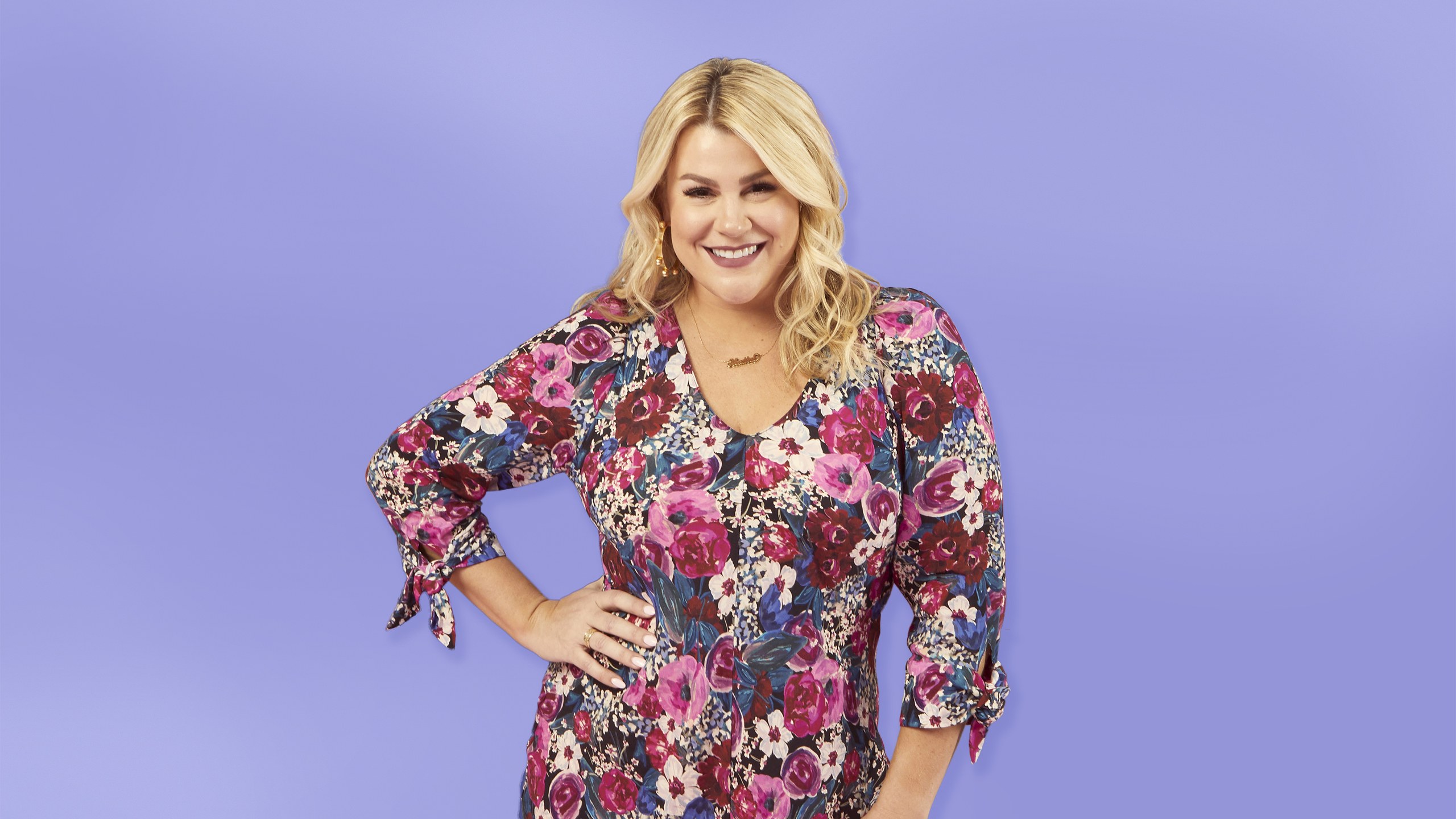
Heather McMahan Is Building Her Comedy Empire One Aperol Spritz at a Time


Kelsey Crane also had tickets in Atlanta and coordinated her outfit around McMahan. “One of Heather’s favorite stores is Old Navy,” Crane explains. “She often talks about how she’s an Old Navy girl and how they should sponsor her because they’re the perfect fit for her ‘thick neck and thin ankles,’ so me and my friends wore Old Navy graphic tees.” She adds that they “popped some White Claw” before the show, in McMahan’s honor.

So, yes, McMahan’s brand is strong. So strong, in fact, that Old Navy recently came calling with an invitation to visit their headquarters in the Bay Area. “They told me they got such crazy messages from my followers,” McMahan says. “Like, ‘She’s your number one fan, why isn’t she on every billboard?’ They felt as if they had to bring me in, or someone was going to burn the place down. I feel like Ariana Grande.”

It’s a far distance from where McMahan was a few years ago. After the loss of her father to cancer in December 2015, she left Los Angeles and her fledgling acting career—think credits in made-for-TV movies like Bride to Maybe and Merry Ex-Mas—behind to move in with her mother, Robin, in Atlanta. It was supposed to be a temporary living arrangement to help her mom and sister, Ashley, adjust and grieve, but it lasted until this past summer when McMahan moved to New York with her fiancé, Jeff Daniels. (No, not that Jeff Daniels—hers is an engineer.)

“When I moved home, I was in 100% survival mode,” McMahan tells me. “I had a wonderful relationship with my dad. He was the love of my life.”

She says she went through “a deep depression” for about a year following his death—something that intensified her career frustrations. “I’d spent the last nine years going on auditions for roles I wasn’t right for, driving across L.A. traffic from Hollywood to Santa Monica at 5 p.m. on a Friday for a role you know they already gave to someone else,” she explains. “Your soul leaves your body at one point.”

Thinking she was done with comedy and acting forever, McMahan applied for a flight attendant position with Delta Airlines. But they said…no. So she took the rejection as a sign: Stick with what you’re good at. “I’m a liability and probably would have been sent to HR on the first day anyway,” she jokes. Now? They’re a sponsor.


Source link

Categories
Health

Heather Heyer's Cousin Asks Why It Took the Death of a White Woman for People to Talk About Racism


PHOTO: Chip Somodevilla/Getty Images

At a memorial service for her daughter Heather Heyer—the 32-year-old woman who was killed earlier this month while protesting a white supremacist rally in Charlottesville, Virginia—her mother Susan Bro made clear that the best way to remember her daughter was to take “righteous action.”

“I’d rather have my child, but by golly, if I’ve got to give her up, we’re going to make it count,” she told the crowd at Heyer’s memorial service last week.

Already, Bro and other members of Heyer’s families are putting these words into actions and taking a stand against injustice and racism. Last week, Bro said she’s refused to speak with Donald Trump following a press conference in which he equated counter-protesters like Heyer to the neo-Nazis, white supremacists, and alt-right groups that had flocked to the Virginia city to keep a Confederate monument from being taken down. And over the weekend, Heyers cousin Diana Ratcliff wrote a powerful op-ed for CNN examining her family’s white privilege in the context of what happened in Charlottesville—and questioning why it took the death of a white woman to open many American’s eyes the country’s ongoing racial conflict that millions have experienced their entire lives.

“We never had to worry someone wouldn’t hire us because of the way we look,” Ratcliff wrote. “We never have to worry that our children might become victims of someone else’s prejudice. We’ve never been told we can’t live in a certain neighborhood or attend a certain school because of the color of our skin. Until last week, we had no idea what it feels like to lose someone to hate.”

Ratcliff then reflected on the poignant memorial service but recounted the one thing that struck her the most. “The moment that will forever be burnt in my memory was when a speaker asked the uncomfortable question,” she said. “While she hailed Heather’s courage, she asked something to this effect: ‘Why does a white woman have to get killed for you all to become outraged?’ All I could think was, ‘Heather is sitting in heaven right now, shaking her head in agreement.'”

“Why is it that the death of a white woman at the hands of a white supremacist group has finally gotten the attention of white folk? Why have we been turning our heads the other way for so long?” she added. “How many black families, Latino families, Asian families, Native-American families before us have been left broken from this ugly vein of hatred in our country? Too many. And to my non-white brothers and sisters, I am so sorry that many of us weren’t paying attention before Charlottesville.”

She continued, speaking critically of those who refuse to acknowledge racism and have grown complacent, saying:

“How did America go from a black President to white supremacist
neo-Nazis marching in the street? That is the question we need to be
asking ourselves. And if we take a long hard look at ourselves, we’ll
find out that it’s because we went into denial. We elected a black
person, we made friends with some minorities, and we patted ourselves
on our backs, saying, ‘Well done self, we have eliminated racism.’
Clearly, we have not. It’s been lurking in the shadows, waiting in the
spaces of the words we say and the words we don’t say. The actions we
take and the actions we don’t take.”

Ratcliff then condemned the idea of this tragedy being a result of violence “on many sides.”

“The majority of the counter-protesters were concerned residents of Charlottesville, not a fringe political group,” she wrote. “The so-called “alt-right,” or the white nationalists, have no place in America, and they don’t deserve a place on our political spectrum. There is no space at the political table for them. There is no common ground, and there is no compromise.”

But as a Ratcliff concluded her op-ed she reinforced the same message that Heyer’s mother relayed to the nation: That the country should look to what happened in Charlottesville as a call to action.

“If there is one positive I have taken away from the loss of Heather, it is that it isn’t the length of your life that is important, it’s what you do with your life that matters,” Ratcliff said. “If you truly believe all lives are equally important, then make your life matter.”


Source link

Categories
Health

Heather Heyer's Mother Remembers Her: 'They Tried to Kill My Child to Shut Her Up'


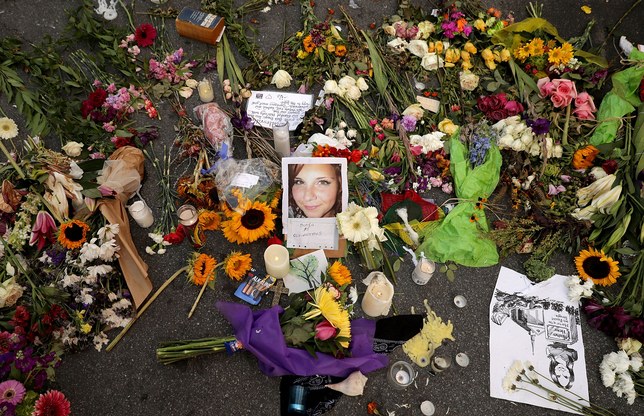
On Wednesday morning, family, friends, and other supporters gathered at the Paramount Theater in Charlottesville, Virginia, to mourn Heather Heyer, the woman who was killed on Saturday after a car plowed into a group of people who had gathered to protest a white supremacist rally.

As those who knew Heyer best gathered to grieve her sudden, tragic loss, they recounted a young woman who was compassionate, outspoken, and always trying to do what she believed was right. And no one made this more clear than Heyer’s own parents.

“She was hard not to love,” said her father Mark Heyer. “Heather’s passion extended to her ideas, her thoughts…She could tell if someone wasn’t being straight—and she’d call you on it.”

“She loved people. She wanted equality,” he continued. “And in this issue on the day of her passing, she wanted to put down hate. And for my part, we just need to stop all this stuff and forgive each other.”

Heyer’s mother Susan Bro also took the stage and began describing her relationship with her daughter. The two would talk frequently—about everything: life, work, and, of course, politics—and Bro made clear that her daughter had a “big and large” personality and a true dedication to changing the world.

“They tried to kill my child to shut her up. Well, guess what? You just magnified her,” Bro said to rapturous applause.

As Bro has seen how much of an impact her daughter’s death has had both in Charlottesville and throughout the U.S., she called on people to continue her legacy and “find a way to make a difference in the world.”

Bro was candid: She made clear that some people will feel apprehension about being as bold and outspoken as her daughter was and did not sugarcoat the fact that people will clash with one another while fighting for their beliefs—”We’re not going to sit around and shake hands and go ‘Kumbaya,’ she said. But she urged people to stop channeling their anger and fear into hate and violence, and instead to channel it into “righteous action.”

“I’d rather have my child, but by golly, if I’ve got to give her up, we’re going to make it count,” she said.


Source link