Categories
Health

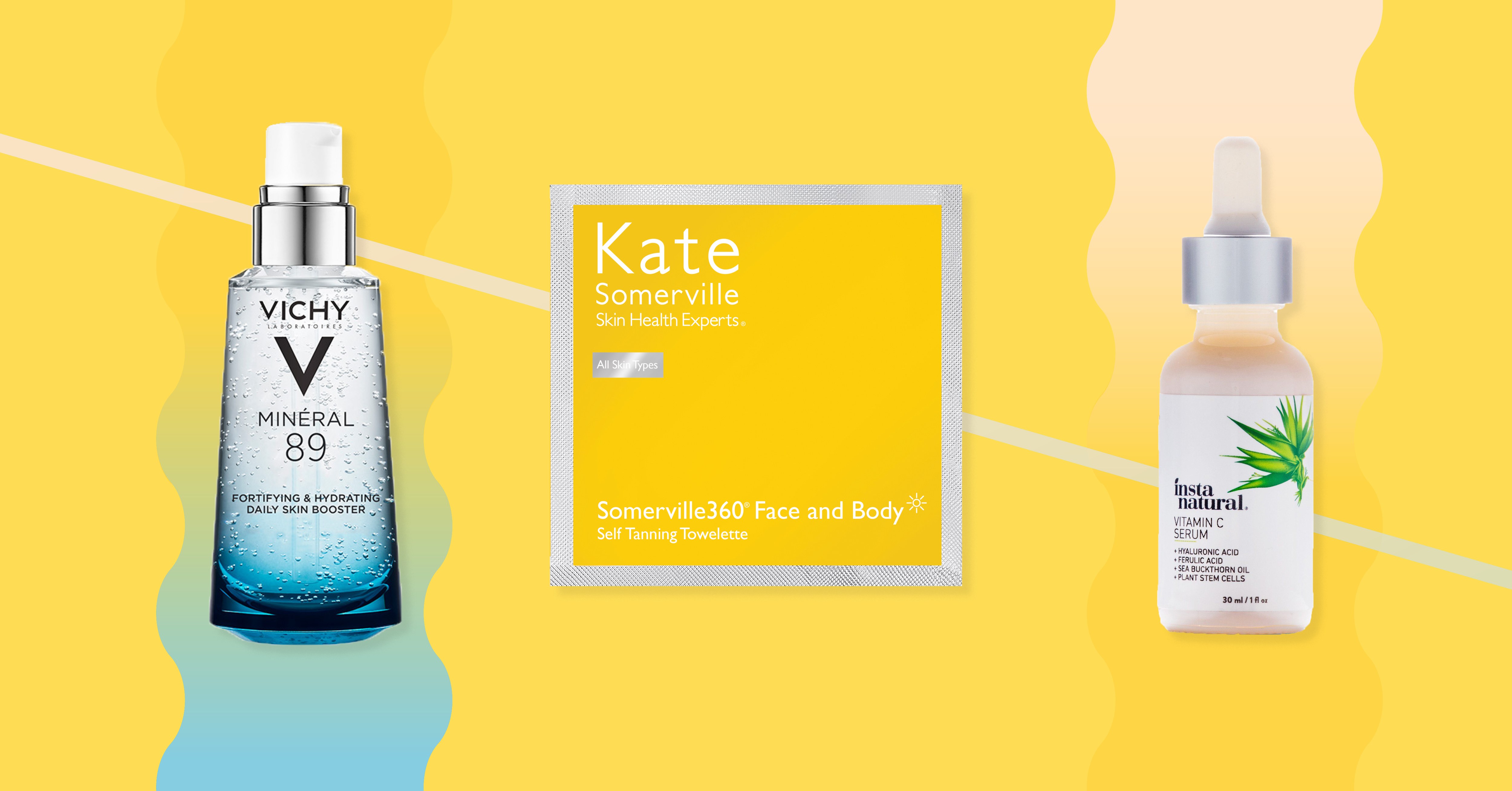
Amazon Prime Day 2018: The Best Deals on Skin Care


If you’ve been counting down the hours to Amazon Prime Day 2018, it’s time to get your credit card ready. The deals are upon us and they are good. In fact, analysts are predicting that Amazon could rake more than $3 billion (yes, with a “B”) in sales from Prime Day alone this year. To put that in perspective: shoppers spent $5 billion total on Black Friday in 2017. So, yeah, Amazon Prime Day is no joke.

While there are hundreds of discounts on makeup, hair care, and beauty tools, the skin care deals are what you won’t want to miss with this one. The bargains span across brands both big (like Clarisonic) and indie (InstaNatural, DHC), so you’re sure to find everything you need to fill out your top shelf. The sale runs from July 16 at 3 P.M. (ET) to July 17 at midnight, and don’t forget that you have to be an Amazon Prime member to shop. The good news is that the retailer is letting anyone who isn’t already sign up during the sale. Below, we’ve tracked down the deals worth becoming one for.


Source link

Categories
Health

Melania Trump Wears Jacket That Says ‘I Really Don't Care, Do U?’ Before Border Visit


On Thursday, First Lady Melania Trump flew to Texas, making an unannounced visit to the Upbring New Hope Children’s Shelter, which is housing several children who were separated from their parents at the U.S. border. Though meant as a gesture of good will, the purpose of the trip would soon become eclipsed after people got a look at the jacket she wore to board her plane in Maryland.

At the Andrews Air Force Base, Trump was photographed getting out of her car and onto the jet wearing a green military-style jacket with lettering scrawled across the back in white. Daily Mail was the first outlet to decipher the slogan as reading, “I really don’t care, do u?,” and attributing the style to a jacket that was once sold at fast-fashion retailer Zara.

PHOTO: Andrew Harnik

Melania Trump

PHOTO: Andrew Harnik

Melania Trump

PHOTO: Andrew Harnik

This would later be reported by journalists following FLOTUS’ visit.

Though the jacket is no longer available on Zara’s website, it reportedly retailed for $39.

FLOTUS changed her outerwear on the flight—she was wearing a light pink cargo jacket when she landed in Texas—but the damage had already been done: Once images of Mrs. Trump hit the internet, people took to social media to share their outrage at the optics of what most likely is a glaringly tone-deaf fashion decision.

In response to the backlash, Stephanie Grisham, the First Lady’s communications director, shared with the White House pool reporters via email: “It’s a jacket. There was no hidden message.” She also added that she hoped the media would instead focus on Trump’s visit, rather than her outfits, “Much like her high heels last year.”

The heels Grisham is referring to were the sky-high stilettos Trump wore when she accompanied her husband to see the aftermath of Hurricane Harvey in Texas—then, too, people believed her decision to wear high-end designer shoes with an impractical heel was rather insensitive (not to mention, inappropriate for a disaster zone).

Still, even with this statement, many were not convinced of the fact that there was no message to be gleaned from the First Lady’s wardrobing choice.

As to what she hoped to accomplish on her visit to Texas, Girsham shared with pool reporters that Trump “…wants to see what’s happening for herself and she wants to lend her support, executive order or not. The executive order certainly is helping pave the way a little bit, but there’s still a lot to be done.”

Related Content:
Melania Trump Gets Mocked For Wearing Stilettos to Houston After Hurricane Harvey

At the Border, Parents Seeking Asylum Are Willing to Risk Separation Than Go Back to Danger

Twitter Has Strong Feelings About TIME’s Powerful ‘Welcome to America’ Cover Amid Border Crisis


Source link

Categories
Health

Logan Browning Beauty Interview: Skin Care, Curls, and More


Logan Browning is having a major moment right now. The breakout actress just wrapped up the second season of her hit Netflix series Dear White People and is slated to star in the upcoming horror-thriller The Perfection (alongside Girls alum Allison Williams). Over the last year, she’s also become the picture of red carpet perfection owning her ever-evolving style and natural curls. We chatted with the skin-obsessed, Atlanta-born star about everything—from multi-masking to her bouncy curl secret to the sisterhood that Time’s Up has created in Hollywood. Here are the highlights:

Glamour: You’re all about skin. What aspect of it are you the most focused on?

Logan Browning: I have sensitive, acne-prone, stress-me-out skin. I get up in the morning and run to the mirror to be like, OK, we’re good. Then, before I even leave work, I take off my makeup with Bioderma Micellar Water. And I use masks as cleansers when my skin acts up—they calm my business down. Also, I notice a huge difference in my skin when I’m taking zinc, omega-3, and turmeric.

Glamour: Who are your beauty crushes?

LB: My favorite thing to google is “young Zoë Kravitz,” to see her on the carpet with her parents. Now you can see that she’s really homed in on who she is as a beauty icon—someone who is strong and sexy and always keeps you on your toes.

Glamour: It’s impossible not to discuss your amazing hair. Some intel, please.

LB: I am a DevaCurl hag. As a curly girl, it took me a long time to find what works. In the shower I detangle section by section. I use their No Poo-Original, Heaven in Hair, and mix B’Leave-In with Arc Angel Gel. I twist it up in a towel turban and let it air-dry because I like my hair to be really big. Then there’s a lot of shaking and pulling.

Glamour: After years of it straight, why did you start wearing your hair natural?

LB: I thought that straight hair made me pretty. And [when I was] growing up in the South, getting my hair done once a week was a thing. By college, I had never seen it curly. I was curious. I don’t even know how to explain the feeling that I get from being a curly girl. There’s a whole new personality.

Glamour: What would you tell your 13-year-old self?

LB: Actually, I would really want to hear from her, have her remind me of what she wanted and what her dreams were.

Glamour: As a woman in Hollywood, how has Time’s Up shifted your industry view?

LB: I realize how much I have hidden from myself: the times I’ve been uncomfortable, the times people have been inappropriate toward me or when I felt powerless. Now everyone is genuinely encouraging and empowering each other—I feel like I have a big sister who has my back.


Source link

Categories
Health

Skin Care Saved Me From Years of Cystic Acne


The beauty—and absurdity—of the internet lies in its ability to rile people up in such a way that the drama of the day can be reduced to one tweet with no context. One I saw last night: “Black Mirror: Skin Care” and I knew exactly what the author was referring to. A story published on The Outline Tuesday called The Skin Care Con, in which writer Krithika Varagur took a guns-blazing yet remarkably unresearched approach to tearing down what she calls “New Skincare,” a hobby seemingly adopted by desperate millennial women who will do anything because it’s cool and self-satiating, not because it’s helpful or useful. “A scam,” is what Varagur calls it.

I’m not here to refute the core of her argument—Cheryl Wischhover over at Racked.com did that, and did it very well—but I feel compelled to insert myself into this conversation not only because of my experience covering beauty at various points in my career, but also because skin care, in many ways, has changed the way I present myself to the world, which wasn’t always easy.

After reading The Outline story a few times, I’ll admit I don’t disagree with every point Varagur makes, though I think her frustration is misguided. I have certainly rolled my eyes at the It-girl mentality that surrounds skin care as it stands in 2018, and have felt disappointed when a roster of frequently regurgitated products by girls with cool clothes, cool hair, and cool jobs do nothing for me. I’ve also gotten angry at natural skin care brands who make irresponsible claims backed up by nothing but earnest testimony—such as the promise that garden-variety oils and esters can cure cystic acne. It cannot. Some oils might help keep chronic breakouts at bay, but cystic acne is the beast unto which my own obsession with skin care was born.

After having regular adolescent skin—smatterings of red pimples and an oily T-zone—I found myself at age 15 faced with a rapid, violent outbreak of cystic acne that included quarter-sized nodules under-the-skin, and red, inflamed lesions on both cheeks that hurt to the touch. After several rounds of Tetracyclines, I was placed on Isotretinoin—a.k.a. Accutane. Two pills daily for six months. I’ll spare you the details of the peeling skin, the bone-dry lip and eyes, and what it was like being a teenager having to sign paperwork pledging she won’t get pregnant because of the severe birth defects the drug can cause—all while her male doctor looks on. This was before iPledge.

I was grateful to be on Accutane—painful acne was a misery—but at that age, outward appearance dictates a lot, and I wasn’t comfortable with mine.

I was deeply distraught. I was grateful to be on Accutane—painful acne was a misery—but at that age, outward appearance dictates a lot, and I wasn’t comfortable with mine. I decided my best recourse was to start wearing makeup—dense, matte, full-coverage foundation to mask what wasn’t really able to be masked. But, at 15, I had no idea how to buy or use makeup so, traumatized, I made a trip to the drugstore and grabbed the first bottle of Revlon ColorStay foundation I saw, not bothering to check the shade. It looked white, and I was white. That’s how it works, right? I also quickly realized that if you wear as much makeup as I was, you have to remove this makeup at night; my first experience with routine daily washing. My cleanser of choice back then was bar soap, Cetaphil or Yardley, and—because Accutane sucks all the moisture out of your skin—I also leaned on attainable moisturizers like Lubriderm, often mixed with SPF 30, because light is not your friend on Accutane. Voila, cocktailing.


In six months, my cysts had mostly subsided and I’d familiarized myself with the nightly routine of washing my face to remove my makeup, though I never strayed from Cetaphil for fear of my acne returning; never mind it was knocked out of me by high doses of Vitamin A.

In college, my face looked better, but not great—I still habitually wore a ton of makeup to cover the indents and light scarring my acne had left behind. It was there, though, in the dorm bathroom, that I discovered a gateway rainbow of drugstore face wash, each claiming they did different things; each I’d never tried thanks to an adolescence filled with caution. The gold of Neutrogena Oil Free Acne Wash, the sky-blue gel of Clean & Clear, the peach of St. Ives Apricot scrub. I’d try whatever my friends had in their shower caddies, while staring into the mirror and talking—mostly about parties and our bitchy RA, but I remember those communal nights and mornings well.


After college—early 2000s—my acne was mostly gone but I was faced with a new affliction—circular dry facial patches that would flare up whenever they felt like it, and were resistant to derm-prescribed hydrocortisone, to Vaseline, to straight-up olive oil. Patches that were so flaky, I couldn’t wear foundation without looking like a had a polka-dotted face. It was then I discovered the beauty of a website called Makeup Alley, a gen-one digital community of impassioned beauty fanatics who swapped reviews, tips, and stories. It was on that site, practically still in beta, that I discovered some people swear that two uncoated Aspirin melted by lukewarm water with a little honey can help heal dry, inflamed patches, and you know what? That worked for me. It was also around this time I starting gently dipping my makeup sponges into iced coffee before applying foundation, swearing that the caffeine woke up my skin. I believe we now call these hacks.


In the decade-plus I’ve been covering women’s lifestyle, I’ve tried thousands of products and over the years have graduated from hoarding lipsticks and bronzers to hoarding serums, moisturizers, exfoliants, and balms. It’s become a passion because I see results. In this space, I find I’m able to think analytically and critically about what actually works for me, not just what looks good or is flattering. There’s some work involved, and I find that satisfying—especially now that my skin and my hormones have settled into a place that allows me to experiment with different formulas according to problems I’m trying to fix.

There’s also an abundance of science as far as skin care goes—despite Varagur’s opinion that it’s “chiefly about buying things, and displaying them for others to see.” The trick, of course, is doing your science homework, which I know—based on some conversations I’ve had with women around the Glamour office—isn’t always easy.

Chemical violence is not seeking out things that have been proven effective to look and feel better. Chemical violence is slathering deodorant on your face as a primer because you saw it on YouTube.

“If I’m being honest, I really don’t know the science behind half of the products I use and why they’re ‘good for me,’ our social media director Madeline said, adding that she’s often as guilty as the people mentioned in The Outline story who know little about the powerful ingredients they’re using but slather them on anyway. Usually because a certain product is permeating their feed. “It’s not clear how those ingredients will interact with each other or how they’ll impact my skin,” she said.

It took me a long time to resist the urge to buy whatever cream I felt like at Sephora or to rip open every expensive treatment I see in the beauty closet at work. During the last year or so, I’ve been much more attuned to what I’m putting in—and on—my body for many reasons, and I’ve committed to taking the time to learn. I have a steady dermatologist, which I hadn’t had since my Accutane days, and I email her questions if I have them. I Google. I ask friends who are beauty editors. I read packaging, not just look at it. For my own health, I’ve chosen to educate myself about why products are able make the promises they do.

I now know exactly what acids—AHA, BHA, glycolic, lactic, malic, citric, salicylic—do, and which ones work for me. I know humectants and Hyaluronic acid are essential for my lifelong dry skin. I know how to apply retinols responsibly. I know the rejuvenating power of a vitamin C serum, because—feeling overwhelmed by the bottles on my bedside table—I asked my dermatologist to suggest one non-negotiable product during my last visit.

Varagur mentions a few of the above ingredients, but assigns them blame, writing, “At the core of the New Skincare is chemical violence.” Nope. Chemical violence is not seeking out things that have been proven effective to look and feel better. It is not being curious about Biologique p50—which comes with a mass of printed instructions—or wanting to try out Glossier’s new chemical exfoliator. Chemical violence is slathering deodorant on your face as a primer because you saw it on YouTube. It’s dousing your face with Pepto Bismol because a supermodel thinks it works. It’s ordering Juvederm online and injecting it at home.


I do not find self worth in the “enormous quantity” of products I use, despite Varagur’s argument. In fact, it’s just the opposite. There’s nothing better than finding a core few that work in tandem to produce results. Today, my routine is face wash (Skinceuticals Gentle Cleanser), toner (Bioderma Sensibio), a morning serum (Skinceuticals CE Ferulic), moisturizer (I swap between M61’s Hydraboost Cream and Desert Essence’s Revitalizing Oils), an eye cream (Red Earth), and a twice-weekly retinol (A60, which my sister brought me from Paris). I also have a weekly rotation of treatments to target different areas of concern (Dr. Brandt’s Oxygen Facial Flash Recovery Mask for dullness, Drunk Elephant’s T.L.C. Sukari BabyFacial for clogged pores and sandpaper texture are two I keep coming back to).

Avoiding your gaze, hiding behind my hair, and being a slave to pan stick are things I’d like to avoid, if possible. I like to look good, too.

But considering the volume of innovative brands and breakthroughs, I’ll always want to try new things, so I might switch or eliminate as I go—and that might mean spending a little more money sometimes. For example, I recently swapped my Holy Grail Clarisonic—which my skin was becoming resistant to—for the NuSkin Lumispa, and I unequivocally noticed a difference in tone, hydration, and clarity in literal days. Buying a new tool wasn’t the equivalent of eating my feelings, so to speak, but rather an actionable thing I did to fix my enlarged pores and dull skin after a good amount of research.

“Before you start a militant skincare regimen, it’s instructive to think about why you want one,” Varagur instructs.

Probably because I hid from the world in high school, and I have important things to accomplish daily that need my full confidence. Avoiding your gaze, hiding behind my hair, and being a slave to pan stick are things I’d like to avoid, if possible. I like to look good, too.

I’m in my mid-to-late 30s and look younger than I am—much younger, I’ve been told. Yes, that could be because of my 5’1″ frame, but I like to think it’s because of my skin’s tone and elasticity. I’m not saying this to boast—I was not blessed with good skin at birth. I treated it with one of the heaviest medications you can find, and ever since I’ve tended to it, and not because anyone told me to, or because I’m chasing some bullshit ideal dictated by Instagram.

“Real, flawed women have real, flawed skin—it’s fine,” Varagur writes. Yeah, we know. I don’t think any skin care-obsessed women I’ve met flips out over a blemish or a breakout. If anything, they’re able to identify the cause—a new ingredient, a bad-eating week, PMS. And that ability to understand and take action, to me, is the definition of perfect skin.

Perrie Samotin is Glamour‘s Digital Deputy Editor


Source link
Categories
Health

While the Internet Was Focused on the Shutdown, the HHS Paved the Way for Health Care Discrimination


Last week, news of a potential government shutdown kept the Internet’s metaphorical ear to the ground—a “Will they or won’t they?” question for 2018’s rather trying political times. But amid all the hubbub that overtook much of the news cycle during the latter part of the week, something flew under the radar when it might not have otherwise: a major change in the Department of Health and Human Services that could have a huge impact on women and those who identify as LGBTQ+.

On Thursday, the HHS Department announced that they were adding a unit called the “Division of Conscience and Religious Freedom,” which, yes, does sound like something out of a dystopian paperback. It’s essentially the Trump administration’s way of protecting health care workers who, because of their religious or moral beliefs, would prefer not to treat certain patients.

The division was created by Roger Severino, who is the director for the HHS’s Office for Civil Rights and a former expert in “religious liberty, marriage, and life issues” at the conservative Heritage Foundation. This has been his thing for a while: consider 2016, when he coauthored an article for the foundation that undermines the concept of gender identity and literally contains a sentence that implies identifying as transgender is a mental health issue (“They effectively require controversial procedures, such as ‘sex-reassignment’ surgery, that respected medical professionals argue have not been proven to be effective in treating serious mental health conditions.”)

His remarks on the Department of Conscience and Religious Freedom’s unveiling present something of a 1984 “War is peace” paradox: “Never forget that religious freedom is a primary freedom, that it is a civil right that deserves enforcement and respect,” he said during a ceremony to announce the new division. Unfortunately, the U.S. seems to be the only developed nation still yet to agree on whether access to health care is a civil right as well.

Much like many of the Trump administration’s policies, the division’s creation rolls back an Obama administration policy stipulating that health care workers were required to treat all patients, even those with whom they disagreed on moral or religious grounds. Prior to installing this division of the HHS, says acting HHS Secretary Eric Hargan: “[The government] hounded religious hospitals and the men and women who staff them, forcing them to provide and refer for services that violate their consciences.”

Two of the most likely examples of these possible patients would be women needing or wanting an abortion and transgender people.

“This administration has taken a very expansive view of religious liberty,” Louis Melling, the deputy legal director of the ACLU said. “It understands religious liberty to override anti-discrimination principles.”

She gave examples to NPR of cases of care refusal, including a fertilization specialist who didn’t want to help a lesbian couple, a nurse who wouldn’t provide care to a woman who’d just had an abortion, and a pediatrician who wouldn’t examine the child of two lesbians.

However, according to NPR, the Division of Conscience and Religious Freedom seems “primarily aimed” at abortion: It found that the division mentioned a seven-year-old federal regulation “guiding the enforcement conscience protections” more than 30 times.

On the department’s homepage under a heading titled “Civil Rights,” government text reads, “HHS ensures that people have equal access and opportunities to participate in certain health care and human services programs without unlawful discrimination.” Melling added that, of course, under federal law, gender discrimination is banned. However, it’s not clear whether Trump’s administration—not exactly the wokest—”includes gender identity and sexual orientation in the definition of gender,” according to NPR.

One thing’s for sure, though. Severino certainly doesn’t, according to that 2016 co-authored article: “Gender identity and sexual orientation, unlike race or sex, are changeable, self-reported, and entirely self-defined characteristics. Government should not grant special privileges on such bases when legal recognition of a group as a ‘protected class’ is, with few exceptions, reserved for groups with objectively identifiable immutable characteristics.”

And welcome to 2018. Or 1918.

Related Stories:
–The Trump Administration Just Quietly Cut $214 Million From Teen Birth Control Programs
–A Female Judge Just Blocked Trump’s Attempt to Rescind the Birth Control Mandate
–Trump Reportedly Banned the Words ‘Transgender’ and ‘Diversity’ in CDC Documents


Source link

Categories
Health

Best Deals From Ulta's 2018 Skin Care Sale


Wander down any skin care aisle, and it feels a lot like a wonderland of beautifully backlit promises. Bright, glowing skin, invisible pores, and a total absence of zits, right this way. The only downside is skin care can be hit-or-miss—and when any given cream comes with an expensive price tag, it’s high-risk, high-reward. That’s the case most of the year, but from Sunday, January 7, to Saturday, January 27, Ulta’s Love Your Skin sale is cutting us a break. With up to 50 percent off some of Ulta’s best skin care (and its generous dollar-for-dollar loyalty program still in play), we narrowed down the best deals worth knowing from each day. Mark your calendar.


Source link