Categories
Health

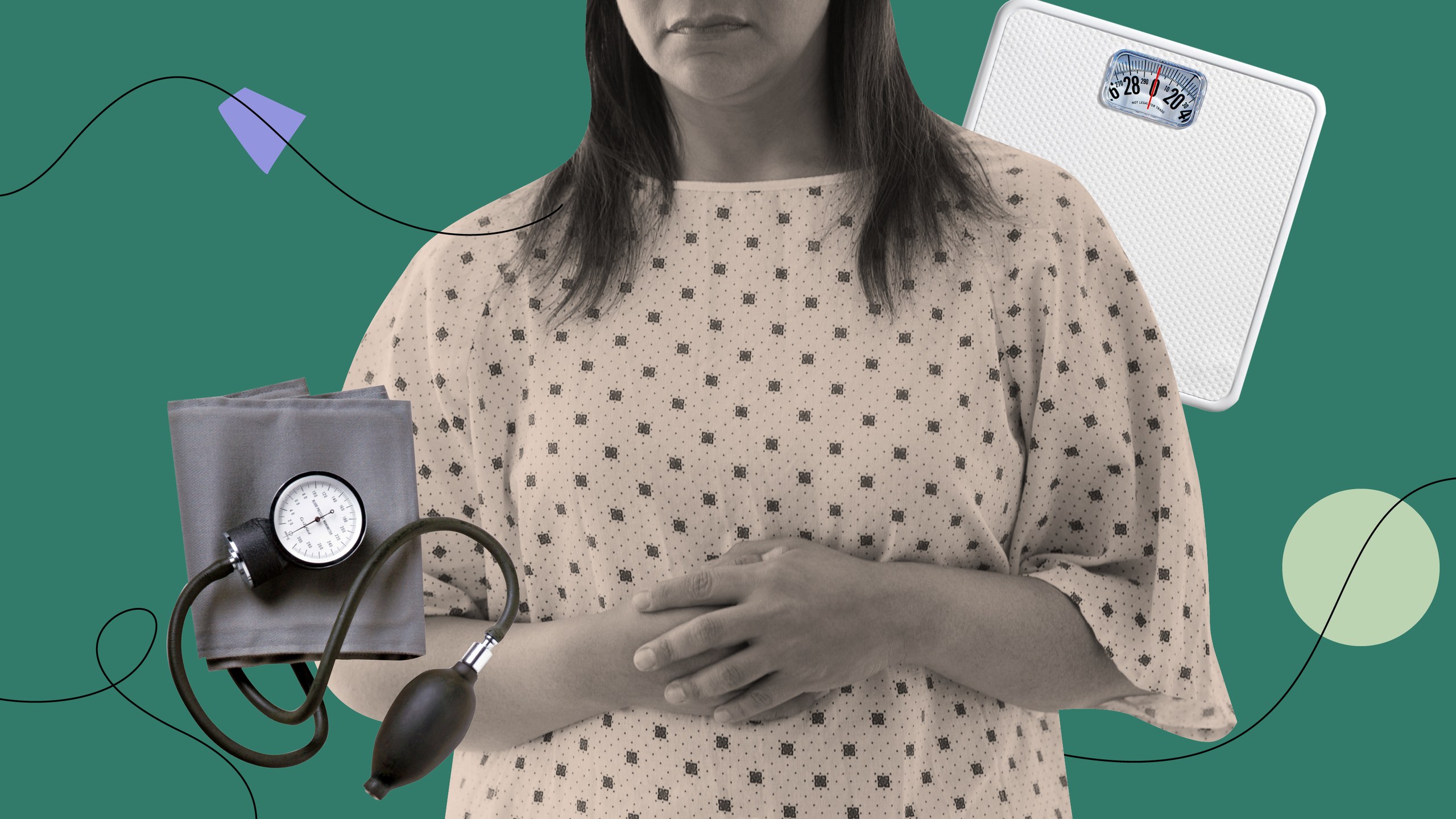
Weight Stigma Is Real—It Almost Caused Doctors to Miss My Cancer


My five-month-old baby girl was shrieking into my left ear when the oncologist sat down. Our friends had come with me to watch her in the lobby during my appointment, but she was having none of it. So we all piled into the exam room and heard him say the words: “You have bone marrow cancer.”

Everyone was staring at me. The baby was screaming hysterically. All I could think was, Let’s get on with it; this kid needs a bottle.

The first trimester of my pregnancy had been pretty uneventful, but during my second trimester, my blood pressure started creeping up. On a visit to the hospital to have it monitored, doctors found elevated levels of protein in my urine—often a sign of preeclampsia. But something didn’t quite add up. My high-risk OB told me she didn’t like how much protein they’d found. She wanted me on bedrest at home for the duration of the pregnancy. No going to work, no major chores, and constant monitoring. Ideally, she said, the protein in my urine would go away within a few days of having the baby, which is how preeclampsia usually resolves itself, but we had to make sure. She recommended I visit a kidney specialist as soon as my pregnancy was over.

On bedrest, I did a lot of puzzles and pretended I was going to knit a blanket. I was induced at 37 weeks (i.e., eight and a half months), and the baby arrived, no problem. She was tiny, strong, and stunning. We named her Rose. A few days later, the high-risk OB called to remind me to follow up with a kidney doctor. “To check on that protein,” she said.

We were getting used to a new normal at home. The dog was licking Rose nonstop, I was regularly peeing my pants before I could make it to the bathroom, and nobody was sleeping. At some point amidst the chaos, I logged onto my insurance website and found a kidney doctor who was covered by my plan. After lab work, I sat down with my doctor to go over my test results. The protein was still there.

We sat for a moment. “Can you start dieting and exercising?” she asked. “Try to lose some weight.”

Huh? I’d been through dozens of medical appointments throughout nine months of pregnancy, and no one had mentioned my weight. But I didn’t want to argue with her—she was the expert. “Okay, yeah. I can do that,” I said.

“Take the baby out for walks, eat less salt, nothing from a box, eat plants,” she instructed. She didn’t have to explain it to me. As a 38-year-old woman, I was painfully well-versed in how to lose weight. From the media to my own family, the world constantly encouraged me to stay obsessed with my size, and like literally every other American woman I knew, I’d spent a lifetime consumed by how I looked, and haunted by the number on the scale. It was inescapable.

I didn’t want to sound defensive, so I didn’t tell her that I already knew all about weight loss, or that I’d lost 115 pounds with diet and exercise at an earlier time in my life when my body image had been an emotional burden for me. I didn’t tell her that I lost that weight for vanity and to please my family, not for health reasons. I didn’t tell her my weight had never actually been a health issue for me, because I didn’t think she’d believe me. And I didn’t tell her that the idea of losing weight to fix this current problem sounded like a bunch of bullshit.

I didn’t tell her any of that because that’s not the kind of thing a doctor prescribing weight loss wants to hear. So I just played along. “And if I lose weight, the protein will go away?” I asked. “Yes. Lose weight, the protein will go away. Come back four months from now.”


Source link

Categories
Health

Ruth Bader Ginsburg Was Treated for Pancreatic Cancer. People on Social Media Are Offering to Donate Organs


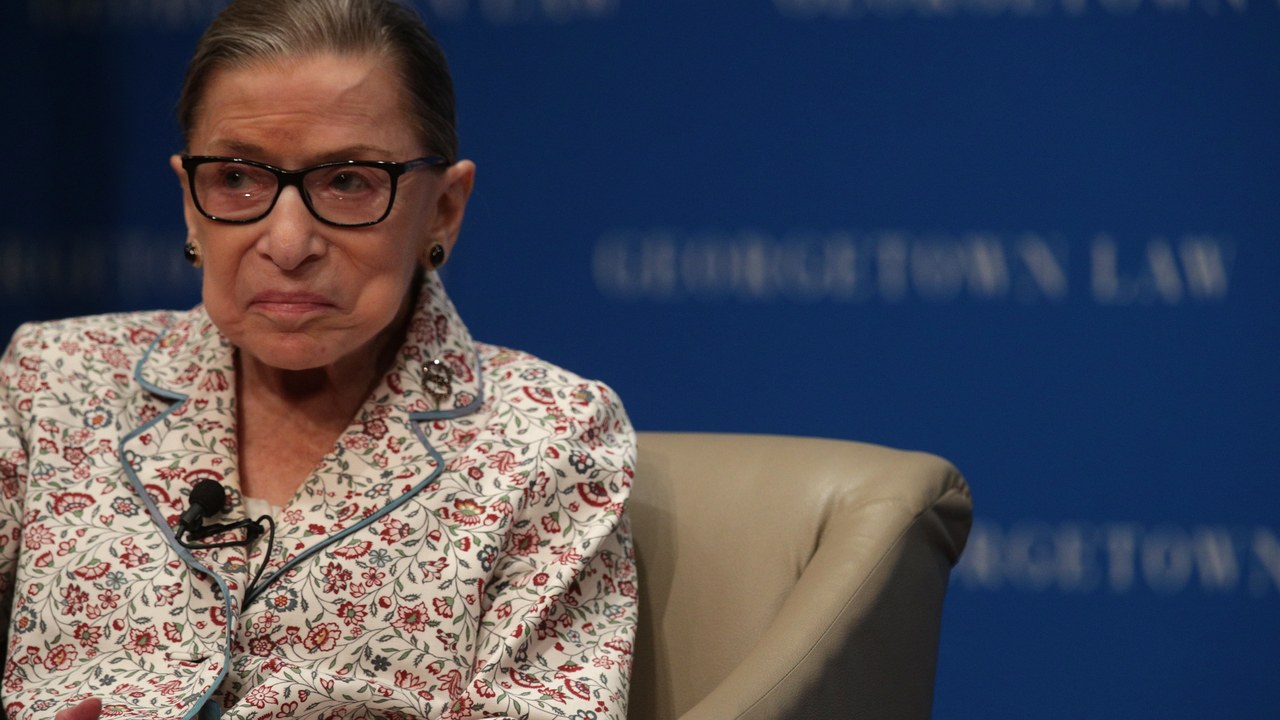
The Supreme Court has announced that Justice Ruth Bader Ginsburg was treated for pancreatic cancer this summer, spending three weeks at Memorial Sloan Kettering Cancer Center for radiation.

In a statement crafted to calm the hearts and minds of frantic progressives, the court was explicit: “The tumor was treated definitively and there is no evidence of disease elsewhere in the body.”

Still, fans of the icon, who is 86 and sometimes known as #NotoriousRBG, did not appear soothed on social media. Within minutes of the release, Twitter exploded with well-wishes, appeals to various deities, and a not insignificant number of offers to donate organs.

This is after all Justice Ginsburg’s fourth cancer diagnosis. In 1999, she was operated on to treat colon cancer. In 2009, she was treated for pancreatic cancer, still in its earliest stages. And last December, two cancerous nodules were removed from her left lung.

In its statement, the court explained that Justice Ginsburg started her out-patient treatment for a localized cancerous tumor on her pancreas on August 5. But this is Ruth Bader Ginsburg, whose workout routines are the stuff of legends and who, it was reported, continued to work on her caseload from her hospital bed last winter, so she does not appeared to have much slowed down. In its announcement, the court noted that “the Justice tolerated treatment well. She cancelled her annual summer visit to Santa Fe, but has otherwise maintained an active schedule.” The court also assured nervous citizens that “Justice Ginsburg will continue to have periodic blood tests and scans. No further treatment is needed at this time.”

Below, read the full statement from the Supreme Court and then the much less even-keeled reactions from RBG stans, who are prepared to go under the knife for a legend.

RBG, get well soon.


Source link

Categories
Health

I Wasn't Ready To Think About My Fertility—Then I Got Brain Cancer


The conversation on fertility—whether you’re thinking about kids in the near future or not—is still plagued by anxiety-inducing messages that keep women up at night picturing a ticking biological clock. Women deserve better—no fear mongering, just facts. So Glamour took the pulse of what women do and don’t know about their reproductive health to bring you the Modern State of Fertility.


My roommate came with me to my first IVF class. We took our seats between a couple and a woman there on her own. She had a folder full of information; her eagerness apparent in the tapping of her foot, her informed questions, her careful note taking. The couple held hands and smiled. Under the table, I texted the friend who’d be picking me up for the next doctor’s appointment. I’ll be late. People have lots of questions.

I had no questions, and little interest in being in the class at all. It was required to attend by the clinic I was working with—a clinic I hadn’t researched or purposefully chosen, the clinic I had ended up with because it was affiliated with the team of doctors treating my newly diagnosed brain cancer.

After months of brain fog, memory problems, and word finding issues I’d assumed were related to the stress of grad school, an MRI revealed a tumor in my brain—anaplastic astrocytoma grade 3, to be exact, in the same class as highly terminal glioblastoma. One craniotomy, ICU stay, and pathology report later, I found myself staring blankly as a doctor explained that the chemo I needed would likely destroy my chance of getting pregnant someday, should I ever want to do so.

Fertility was far from my mind. I was 27, busy pursuing my Masters in social work, hanging out with my friends and my girlfriend, and dreaming about being financially stable enough to get my first dog. The doctor suggested I look into fertility preservation as soon as possible. “You want to give yourself the chance,” he said, “just in case.” Suddenly I was on what my doctors called the fertility “fast track”—my appointments, medications, even my enrollment in the IVF info sessions expedited to get ahead of the vigorous regimen of radiation and chemotherapy I was about to endure.

I wanted more than just a chance at motherhood; having children has always been a dream. For as long as I can remember I’ve pictured starting a family one day—just one day very far in the future. Adding to the ambiguity, I’m in a queer, same-sex relationship and I hadn’t even begun to think about how my partner and I might go about having kids. We weren’t even certain we’d even end up together. We’ve been dating for almost two years, and while it seems likely that we are heading in the direction of marriage at some point, we are definitely not ready to have kids together. We’d barely talked about moving in together or whether she’d come to Thanksgiving next year, let alone whether we’d want to conceive biologically, adopt, or foster. We were, and are, at the beginning of considering a life together—a time that should be filled with the glow of possibility, the freedom to dream without commitment.

Navigating the line between what we’d decide together, and what was up to me, became a new challenge in our relationship. We went together to appointments, but she let me do the talking and the decision making. She told me it was my body, my future, and she’d be there beside me no matter what I did. I was grateful, but mourned a world in which we’d have had the time to know what we’d wanted together, to be able to fully have her on my team.


Source link

Categories
Health

Ruth Bader Ginsburg Has Been Released from the Hospital Following Lung Cancer Surgery


In what may be the best Christmas gift ever, Supreme Court Justice Ruth Bader Ginsburg has reportedly been discharged from the hospital following surgery to remove lung cancer.

In an email to CNN, Kathy Arberg, a public information officer for the Supreme Court, told reporters that Justice Ginsburg had been released from the hospital on Christmas Day and is now “recuperating at home,” following the announcement on December 21 that she would be undergoing surgery for lung cancer.

RBG has had a rough winter. Last month, a bad fall left the Supreme Court Justice hospitalized with three broken ribs, and it was during this time that doctors first discovered two cancerous nodules on her left lung. To remove them, Justice Ginsburg “underwent a pulmonary lobectomy” at Memorial Sloan Kettering Cancer Center in New York this week, according to an official statement from the Supreme Court.

According to RBG’s surgeon, the nodules removed during surgery were found to be malignant, but “scans performed before surgery indicated no evidence of disease elsewhere in the body.” Her surgeon confirmed RBG appears to be in the clear and “no further treatment is planned.”

In reaction to her the surgery, Twitter has seen an outpouring of support for the Supreme Court Justice over the past week, with fans hilariously praising Justice Ginsburg’s “brass ovaries” and wishing her a speedy recovery.

Previously, Justice Ginsburg has said she plans to serve on the Supreme Court for at least another five years. And while her recent repeated trips to the hospital have some worried she may not be able to hold out for that long, Ginsburg appears to be tackling business with her usual moxie, just this week voting against President Trump’s proposed immigrant asylum restrictions bill from her hospital bed.

Luckily, the Justices are not scheduled to return to office for official business until January 4, which gives Justice Ginsburg some extra time to recover.

Related Content:

The Notorious RBG Got the Epic Rap Tribute She Deserves on SNL

Watch Ruth Bader Ginsburg Get Sworn In to the Supreme Court for Her 25th Anniversary

How Many Women Does It Take to Change a Congress?


Source link

Categories
Health

Supreme Court Justice Ruth Bader Ginsburg Undergoes Surgery for Lung Cancer


The Supreme Court issued a statement announcing that Justice Ruth Bader Ginsburg underwent surgery today (December 21) for lung cancer in New York City.

Just last month, Ginsburg was briefly hospitalized for broken ribs suffered during a fall. According to the Supreme Court’s statement, the nodules were discovered. “Justice Ruth Bader Ginsburg underwent a pulmonary lobectomy today at Memorial Sloan Kettering Cancer Center in New York City. Two nodules in the lower lobe of her left lung were discovered incidentally during tests performed at George Washington University Hospital to diagnose and treat rib fractures sustained in a fall on November 7,” it reads.

The good news is that doctors believe that they were able to remove all of the cancer and that it has not spread. “According to the thoracic surgeon, Valerie W. Rusch, MD, FACS, both nodules removed during surgery were found to be malignant on initial pathology evaluation,” the statement continues. “Post-surgery, there was no evidence of any remaining disease. Scans performed before surgery indicated no evidence of disease elsewhere in the body. Currently, no further treatment is planned. Justice Ginsburg is resting comfortably and is expected to remain in the hospital for a few days. Updates will be provided as they become available.”

This is not the first time Ginsburg has battled cancer. In 1999, she had surgery for colorectal cancer and then in 2009 she was treated for the early stages of pancreatic cancer. “I said I will do this job as long as I can do it full steam,” Ginsburg said on Sunday (December 16) at a screening of On the Basis of Sex, the movie based on her early work as a lawyer.

Social media users were quick to send their support and wishes of a speedy recovery to the woman affectionately called the Notorious RBG.

This story will be updated with new information as it is available.


Source link

Categories
Health

Serena Williams Just Dropped a Music Video for Breast Cancer Awareness Month


In honor of Breast Cancer Awareness month, tennis legend Serena Williams proved she was the G.O.A.T. once more by posting a special message to Instagram—and it’s in the form of a music video she’s actually singing in.

In the video, supported by Breast Cancer Network Australia, Williams performs a cover of the Diviynls’ classic hit “I Touch Myself.”

“This Breast Cancer Awareness Month I’ve recorded a version of The Divinyls global hit ‘I Touch Myself’ to remind women to self-check regularly,” Williams wrote on Instagram. “Yes, this put me out of my comfort zone, but I wanted to do it because it’s an issue that affects all women of all colors, all around the world. Early detection is key – it saves so many lives. I just hope this helps to remind women of that.”

Watch the video for yourself, below:

According to Williams, the music video is part of the I Touch Myself Project, which was created in 2014 as a tribute to Divinyls lead singer Chrissy Amphlett, who, according to the project’s website, “gave us her hit song to remind women to put their health first.” Amphlett died of breast cancer in 2013 while concurrently battling multiple sclerosis.

Beyond dropping a music video, it’s been a whirlwind month for Williams, who recently lost the U.S. Open to Naomi Osaka. During the match there was controversy with the presiding umpire, who made calls many saw as unfair and sexist against Williams.

“I’m gonna continue to fight for women,” Williams said after the game. “The fact that I have to go through this is just an example for the next person that has emotions and wants to express themselves, and they want to be a strong woman. And they’re gonna be allowed to do that because of today. Maybe it didn’t work out for me, but it’s gonna work out for the next person.”

Related Stories:

Serena Williams on Texting With Royal Bestie Meghan Markle: “We’ve Been Relying on Each Other a Lot Lately”

Serena Williams and Alexis Ohanian’s Latest Text Exchange Is One for the Books

Naomi Osaka Reveals What She Was Thinking During the Serena Williams U.S. Open Moment


Source link