Categories
Health

Miss Americana's Director Says Her Female Crew Wasn't Taken Seriously While Filming Taylor Swift


LW: I thought that was so moving and brilliant, and I loved Taylor’s response to her, too. I thought what Nikki Glaser was saying made so much sense. She said, “This is Psych 101; I was projecting because I was struggling with an eating disorder at the time.” I thought that was a really brave and incredible thing to say. That made me think about if there’s ever been a time where I’ve made fun of someone, I was probably projecting my own insecurities on them as well, you know? We did notice when we were looking at that archival material that a lot of that stuff was coming from other women.

God, I almost tear up like thinking about some of the notes I’ve gotten from teenagers about how they look in the mirror and they hate their body and they hate the way they look. But now that they’ve seen that Taylor has struggled with some of these same things too, and she’s gotten through it and she’s stronger and happier as a result, and that inspires them to keep going. It’s just so moving.

What was the most unexpected thing about filming Taylor?

LW: The contrast between the extraordinary elements of her life and the ordinary elements. [There are] the very big and massive, spectacular, glittery times, but then these very mundane, normal moments. I really love the scene where she’s eating a burrito. I know people have really responded to this scene, and I think it’s because it’s just her putting a chip in a burrito for crunch. There’s something so great about when you get to a point when you’re filming someone and they can relax enough to eat lunch and shoot the shit with their friends in front of you.

When you can film the boring stuff and you have that comfort level with someone, then you know you have access. You know, at that point. It’s weird, but that was like a breakthrough moment for me because it feels like the camera isn’t there.

When did that moment come? How long had you been filming her before you felt like you broke through to that point?

LW: At least a few months. But I will say that the first interview we did was the first interview she’d done in three years, and we did that audio-only. I think that was the moment when we really got to know each other and when I really started to see what the story of the film was, that first audio-only interview. It was just me and her, in a room for hours with a recorder.

Did any of that audio make it into the film?

LW: Oh yeah. When she talks about the sexual assault trial, that’s from the audio interview.

Did Swift see the film at different points in the editing process, or did she not see it until it was finished?

LW: I wanted her to see it before it was finished because there’s stuff in here—like her talking about an eating disorder—that I think is really important for her to be comfortable with that kind of stuff going out into the world. It was great because when we showed her the first cut, she loved it immediately. She was never like, ‘No, I don’t want to go there.’ There was no off-limits area other than anything that would compromise her security.

Taylor’s feedback was great. It wasn’t like, ‘Oh no, we can’t do this.’ It was feedback from another storyteller. She’s such an extraordinary storyteller. So it made sense to me.

Netflix

Before I let you go, I have to ask: When InStyle asked you about a potential engagement ring you said, “I’ll have to watch the scene again.” Did you watch the scene again?

LW: I was confused by what that person was talking about. They said it’s the scene in the car where she was talking about her eating disorder, that there were flash frames of a ring. And I was like, I don’t remember that. There was definitely nothing like that there. I know that people on the internet are freaking out about this later scene where she’s wearing a ring. I don’t know anything about…I think she just wears a lot of rings. I think people are overreacting to it a little bit. As far as I could see she’s constantly just wearing lots of rings! [Laughs]
Source link

Categories
Health

Gossip Girl Writer Reveals Dan Humphrey Wasn't the Original Gossip Girl


Good morning, Upper East Siders! Gossip Girl here, and have we got a scoop for you. While it was revealed in the finale of the popular CW show that the one and only Dan Humphrey, AKA Lonely Boy, AKA a writer who somehow managed to get his work placed in both The New Yorker and Vanity Fair during the show despite never really actually writing, was the brains behind Gossip Girl. However, according to the show’s writer and executive producer Joshua Safran, Dan wasn’t the original choice for the titular character who chronicles the lives of Manhattan’s elite: it was Nate Archibald!

BuzzFeed reports that Safran stopped by the Vulture Festival to talk both the original show and the upcoming HBO reboot, and he spilled the beans about how Dan ended up as GG.

“I like to joke that Dan was Gossip Girl because I had left the show by then. Dan was not my intended Gossip Girl, so honestly, you’d have to ask someone else,” he said. “But I understand why Dan was Gossip Girl. I just had my heart set on Nate.” And apparently, before Nate, he thought Serena’s brother Eric van der Woodsen should have been Gossip Girl, which makes a lot of sense when you think about it. (We, like Blair, thought it was Dorota.)

“We worked hard to kind of lay in tiny seeds about it being Eric, and then the NY Post wrote an article saying that Gossip Girl was Eric so we were like, ‘We gotta scratch that,'” Safran revealed. “Then one of the writers realized that Nate had never sent a tip in to Gossip Girl, which is true at least through the end of season five. Nate never sent in a tip in through all of those episodes, which is when we’re like, ‘Oh, well then he’s Gossip Girl.'” Imagine if Nate had been able to incorporate Gossip Girl into his newspaper, the Spectator!

Safran is returning for the GG reboot, and while we don’t know when the show will premiere, we do know that it’s set about 12-13 years after the finale, so in “real time,” and will feature high schoolers at Constance Billard Academy, Serena and Blair’s alma mater. The original cast won’t be in the new show (we think), save for Kristen Bell as narrator, and the cast will be more diverse than the ’00s version.

That’s about all we know so far, so until it hits our TV screens, we’ll be busy rewatching the original series for the hundredth time and imagining what life would have been like had sweet, golden boy Nate been unmasked as Gossip Girl. XOXO!

Let us slide into your DMs. Sign up for the Teen Vogue daily email.

Want more from Teen Vogue? Check this out: Gossip Girl Reboot Will Star People of Color and Feature “Queer Content”


Source link

Categories
Health

I Wasn't Ready To Think About My Fertility—Then I Got Brain Cancer


The conversation on fertility—whether you’re thinking about kids in the near future or not—is still plagued by anxiety-inducing messages that keep women up at night picturing a ticking biological clock. Women deserve better—no fear mongering, just facts. So Glamour took the pulse of what women do and don’t know about their reproductive health to bring you the Modern State of Fertility.


My roommate came with me to my first IVF class. We took our seats between a couple and a woman there on her own. She had a folder full of information; her eagerness apparent in the tapping of her foot, her informed questions, her careful note taking. The couple held hands and smiled. Under the table, I texted the friend who’d be picking me up for the next doctor’s appointment. I’ll be late. People have lots of questions.

I had no questions, and little interest in being in the class at all. It was required to attend by the clinic I was working with—a clinic I hadn’t researched or purposefully chosen, the clinic I had ended up with because it was affiliated with the team of doctors treating my newly diagnosed brain cancer.

After months of brain fog, memory problems, and word finding issues I’d assumed were related to the stress of grad school, an MRI revealed a tumor in my brain—anaplastic astrocytoma grade 3, to be exact, in the same class as highly terminal glioblastoma. One craniotomy, ICU stay, and pathology report later, I found myself staring blankly as a doctor explained that the chemo I needed would likely destroy my chance of getting pregnant someday, should I ever want to do so.

Fertility was far from my mind. I was 27, busy pursuing my Masters in social work, hanging out with my friends and my girlfriend, and dreaming about being financially stable enough to get my first dog. The doctor suggested I look into fertility preservation as soon as possible. “You want to give yourself the chance,” he said, “just in case.” Suddenly I was on what my doctors called the fertility “fast track”—my appointments, medications, even my enrollment in the IVF info sessions expedited to get ahead of the vigorous regimen of radiation and chemotherapy I was about to endure.

I wanted more than just a chance at motherhood; having children has always been a dream. For as long as I can remember I’ve pictured starting a family one day—just one day very far in the future. Adding to the ambiguity, I’m in a queer, same-sex relationship and I hadn’t even begun to think about how my partner and I might go about having kids. We weren’t even certain we’d even end up together. We’ve been dating for almost two years, and while it seems likely that we are heading in the direction of marriage at some point, we are definitely not ready to have kids together. We’d barely talked about moving in together or whether she’d come to Thanksgiving next year, let alone whether we’d want to conceive biologically, adopt, or foster. We were, and are, at the beginning of considering a life together—a time that should be filled with the glow of possibility, the freedom to dream without commitment.

Navigating the line between what we’d decide together, and what was up to me, became a new challenge in our relationship. We went together to appointments, but she let me do the talking and the decision making. She told me it was my body, my future, and she’d be there beside me no matter what I did. I was grateful, but mourned a world in which we’d have had the time to know what we’d wanted together, to be able to fully have her on my team.


Source link

Categories
Health

Sophie Turner Wasn't Allowed to Wash Her Hair While Filming Game of Thrones


The hair sagas of the women of Westeros continue as Sophie Turner just revealed that she wasn’t allowed to wash her hair while filming certain seasons of Game of Thrones. And all this after the natural blond spent years alternating colors between her born-with-it shade and Sansa Stark’s eye-catching red.

During an interview with InStyle, the actress spilled her “dirty” secret. After being asked about how the men on the show were famously forbidden from washing their hair so it looked more in-character, Turner revealed this fun fact: “For the first few seasons I was allowed to wash my hair because I was an aristocratic young girl, but towards season 5 they started asking me to not wash my hair and it was really disgusting. Now I wear I wig so I can wash my hair whenever I want, which is nice. But yes, for a couple of years I was living with pretty greasy hair.”

That sounds less than fun, but honestly it’s not the worst thing that’s happened to her poor head. “A few years ago I was trying to go back from red to blond, and it destroyed my hair to the point that I had to use a wig for Game of Thrones,” she told Glamour in November. “They wouldn’t let me dye it back red or my hair would’ve fallen out.”

Apparently, being on the biggest show is the world is a real detriment to the beauty routines of its female stars including Turner’s co-star Emilia Clarke, who chopped her hair short after damage inflicted while filming. “My hair was, like, dying!” she said last fall after chopping it into a pixie. “So I’ve cut it a little bit shorter. It’s almost the shortest it’s been. I’m honestly trying to grow out the blond, because it’s just killed my hair, and I miss having nice hair.”

Thankfully they’ve have adapted quite nicely—courtesy of some serious masking tips. “The biggest thing [to keeping my hair healthy] is WellaPlex,” Turner told Glamour. “It’s a hair mask that you put on, leave in for 10 minutes, and then wash out. It repairs the bonds in your hair so that it doesn’t just feel strong and healthy, it actually is stronger and healthier afterward. I use it every week, because with the job I have, it’s a lot of dyeing, straightening, curling, and heat damage. I’ll put in on after showering, watch a bit of Keeping Up With the Kardashians, and then I go back and wash it off.”

And it definitely looks like it’s paying off.

Related Stories:
Sophie Turner on GoT Wigs, Fenty Highlighter, and What She Texts Joe Jonas
Sophie Turner Says Fans Might Be ‘Disappointed’ by Game of Thrones’ Series Finale
Game of Thrones Fans Think Jon Snow’s Statue in the Season 8 Trailer Reveals a Huge Clue


Source link

Categories
Health

Hillary Clinton Says Her Husband's Affair with Monica Lewinsky Wasn't an 'Abuse of Power'


In the year since the Harvey Weinstein story broke and the #MeToo movement took center stage, many women (and men) have spent time reflecting on events of the past and how they might be perceived if they happened today. We saw this most recently during the Brett Kavanaugh nomination hearings, when Christine Blasey Ford’s testimony drew obvious comparisons to Anita Hill‘s during the Clarence Thomas hearings back in 1991.

Another public figure who has been subjected to this reassessment is former President Bill Clinton, who, when asked about #MeToo this summer, said he doesn’t “agree with everything.” Now his wife, Hillary Clinton, has weighed in on the matter. On CBS’ Sunday Morning, Clinton was asked about her husband’s relationship with former White House intern, Monica Lewinsky, more than 20 years ago, and whether it should have led to his resignation. Her answer: “Absolutely not.”

But it is the follow-up to the initial question that many see as problematic.

“It wasn’t an abuse of power?” asks CBS News’ Tony Dokoupil. “No,” says Clinton. Dokoupil continues, “There are people who look at the incidents of the 90s and they say, ‘A president of the United States cannot have a consensual relationship with an intern; the power imbalance is too great.'” Clinton interjects, “Who was an adult.”

“Let me ask you this,” she continues, “where’s the investigation of the current incumbent, against whom numerous allegations have been made, and which he dismisses, denies, and ridicules? So, there was an investigation [of President Clinton], and it, as I believe, came out in the right place.”

Let’s break this down: She is indeed correct about the allegations against President Donald Trump, but what Clinton says in defense of her husband is so deeply disappointing for those who understand how power works. To argue that because Lewinsky was an adult at the time there could be no power imbalance is just wrong and negates the workplace harassment experiences of women of every age.

It saddens me that the Clintons don’t seem to have evolved their points-of-view on the matter since the ’90s, as so many others have in the wake of #MeToo. In that June 2018 interview where Bill Clinton said he had questions about the movement, he also took a defensive (and questionable) stand. “Nobody believes that I got out of that for free. I left the White House $16 million in debt,” he said. “But you typically have ignored gaping facts in describing this. And I bet you don’t even know that. This was litigated 20 years ago, and two thirds of the American people sided with me.”

Lewinsky herself has done some re-thinking about the relationship. “Now, at 44, I’m beginning (just beginning) to consider the implications of the power differentials that were so vast between a president and a White House intern,” she wrote in a Vanity Fair essay in February. “I’m beginning to entertain the notion that in such a circumstance the idea of consent might well be rendered moot. (Although power imbalances—and the ability to abuse them—do exist even when the sex has been consensual.)”

“He was my boss. He was the most powerful man on the planet,” she continued. “He was 27 years my senior, with enough life experience to know better. He was, at the time, at the pinnacle of his career, while I was in my first job out of college.”

Social media users quickly called Clinton out for her failure to recognize the power dynamic between Lewinsky and her husband.

We cannot make necessary progress if we refuse to look at our collective past and learn from it—as hard as it may be to face. That’s true for everyone, even Hillary Clinton.

MORE: This One Quote From Bill Clinton’s Latest Interview Says a Lot About His Feelings on #MeToo and Monica Lewinsky


Source link

Categories
Health

Gisele Bündchen Cried Before Her First Major Runway Show—and It Wasn't Out of Happiness


Gisele Bündchen has walked down 600-plus runways throughout her 20-year career as a model. But in her new memoir, Lessons: My Path to a Meaningful Life, she reveals that her first major fashion show was far from a positive experience. In fact, she broke down crying before stepping on the runway.

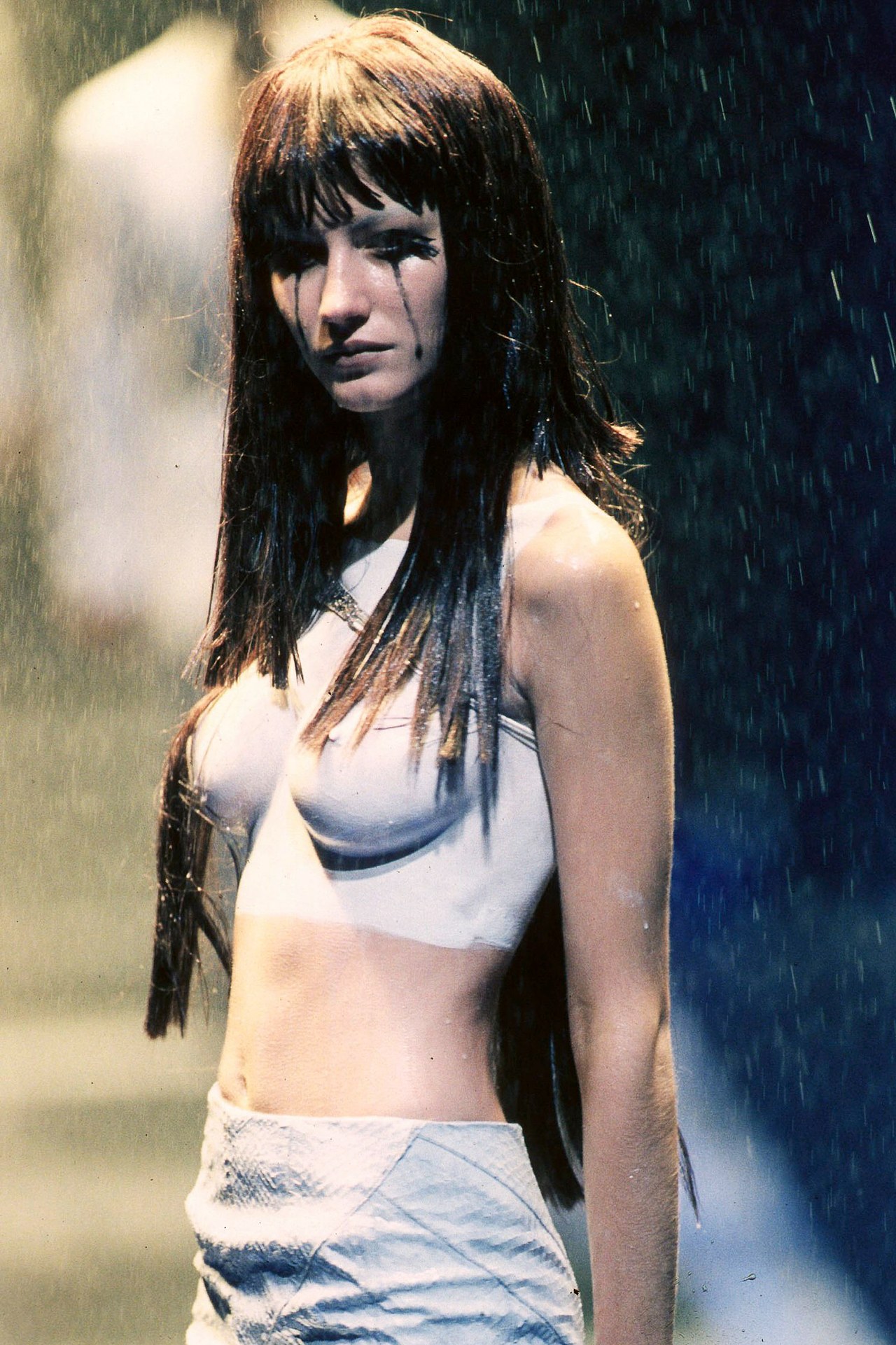
Bündchen recalls being set to appear in an Alexander McQueen show in 1998—her first ever international gig, according to Cosmopolitan—and “couldn’t believe” that she had been chosen. But that excitement would melt away when she saw her look for the first time, the day of: a skirt—and nothing else.

“Where’s the top?” Bündchen remembers asking someone, who informed her that there wasn’t one. The model then started to cry, as she was afraid that coming down the runway topless would disappoint her family. “I was a good girl. I was a tomboy. I was someone whose big breasts had embarrassed her since she’d hit puberty,” she writes, per Cosmopolitan. “I was a girl gripped by the fear that my family would feel so embarrassed they would never speak to me again. I was terrified.”

Thankfully, someone backstage had her back: “As soon as Val, the makeup artist, saw the situation, she said she would paint a top on me using white makeup… Val told me how beautiful it looked and said that the runway was so dark nobody would know,” Bündchen recalls. Because the show took place in the rain, “no one could tell what was rain and what was tears.”

PHOTO: Victor VIRGILE/Getty Images

Bündchen writes that her family never saw the photos from the show. And according to Cosmopolitan, she credits that Alexander McQueen show as one of the most important jumping-off points of her career. Still, she’s not the only model to speak out about the pressure of going topless, especially when you’re starting out: Kate Moss recently opened up about a similar experience at a photoshoot, saying, “There was pressure… I worked with a woman photographer called Corinne Day, and she always liked me with no top on. And I did not like it at all when I first started.”

In the wake of the #MeToo, the fashion industry has been taking steps to protect models in these types of situations, through programs and even legislation, to give support and offer them resources.

Related Stories:

The Model Alliance’s New Program Aims to Hold the Fashion Industry Accountable in the Age of #MeToo

Gisele Bündchen Says She Once Considered Suicide After Severe Panic Attacks

Watch Gisele Bündchen Completely Lose It Over the Patriots’ Super Bowl Win


Source link