Categories
Health

Nike Is Dropping a Shoe Designed Specifically for Doctors and Nurses


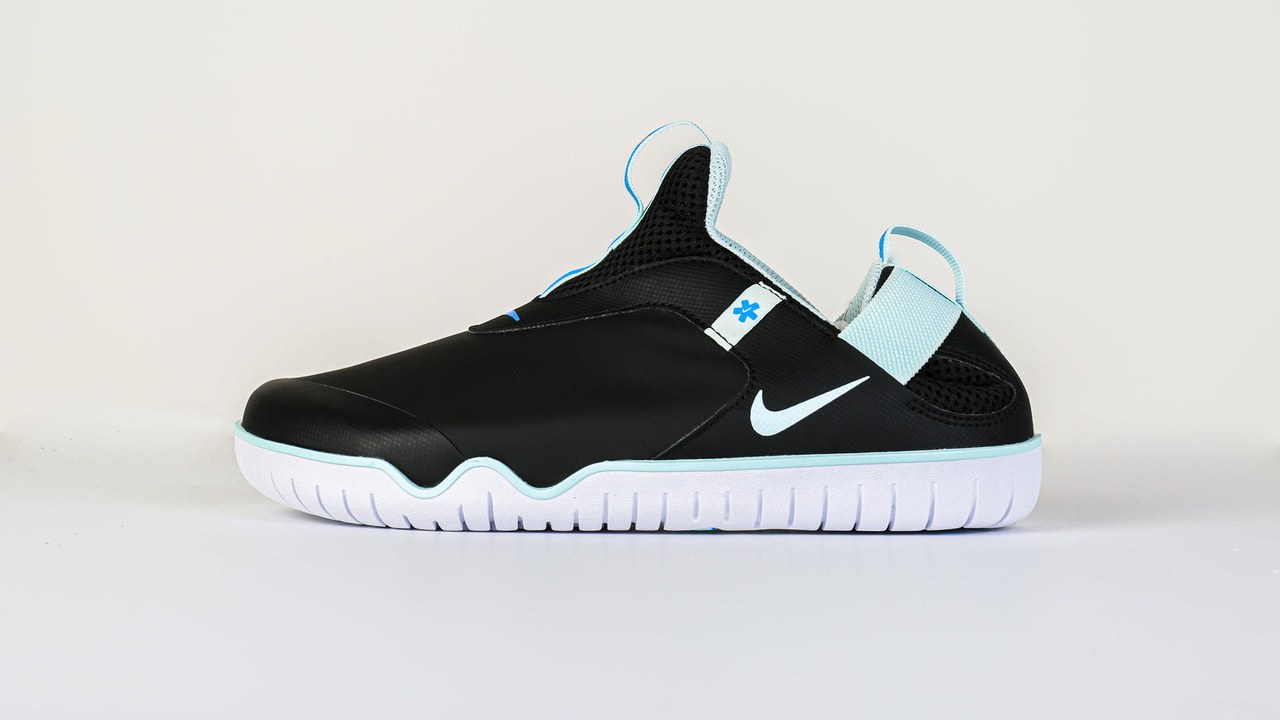
Typically, when a new pair of Nike shoes is announced, there’s a big name athlete like Serena Williams or LeBron James attached. But the company’s latest design is not necessarily fitness focused, but instead targeted at “everyday heroes” like doctors, nurses, and home health aides.

According to a company press release, nurses walk an average of four to five miles and sit for only one hour during a 12-hour shift. That’s a serious amount of work for shoes to live up to. Enter the Nike Air Zoom Plus, which was created for men and women who spend a lot of time on their feet at work. “The fit, cushioning, and traction systems work together to secure the foot in all hospital conditions,” the company says.

The Nike shoes, which were tested at the OHSU Doernbecher Children’s Hospital in Portland, Oregon, are designed to be easy to take on and off, but also “comfortable for long stretches of standing and versatile enough to support the hurried movements required in emergency situations.” The sneaker is inspired by a clog (a popular footwear choice for people in the medical field, as you may have noticed at your last checkup). The Air Zoom plus is a less clunky alternative that’s also boosted with Nike’s Zoom Air heel technology typically reserved for the brand’s most high-performing athletic shoes.

The shoe pros that they are, Nike also thought about the special conditions one encounters in a hospital environment that you wouldn’t on, say, a basketball or tennis court. Since workers may encounter spills, they added a coated toe box to the shoe. Because hospital floors are smooth and can be slick, there’s a special traction pattern on the sole. And of course, they look great. Even if you don’t work in a hospital, they sound pretty fantastic—especially if your job also requires you to spend a lot of time on your feet.

The release sends a powerful message: Nurses and doctors deserve to be just as well taken care of as the world’s top athletes.

Source link

Categories
Health

Weight Stigma Is Real—It Almost Caused Doctors to Miss My Cancer


My five-month-old baby girl was shrieking into my left ear when the oncologist sat down. Our friends had come with me to watch her in the lobby during my appointment, but she was having none of it. So we all piled into the exam room and heard him say the words: “You have bone marrow cancer.”

Everyone was staring at me. The baby was screaming hysterically. All I could think was, Let’s get on with it; this kid needs a bottle.

The first trimester of my pregnancy had been pretty uneventful, but during my second trimester, my blood pressure started creeping up. On a visit to the hospital to have it monitored, doctors found elevated levels of protein in my urine—often a sign of preeclampsia. But something didn’t quite add up. My high-risk OB told me she didn’t like how much protein they’d found. She wanted me on bedrest at home for the duration of the pregnancy. No going to work, no major chores, and constant monitoring. Ideally, she said, the protein in my urine would go away within a few days of having the baby, which is how preeclampsia usually resolves itself, but we had to make sure. She recommended I visit a kidney specialist as soon as my pregnancy was over.

On bedrest, I did a lot of puzzles and pretended I was going to knit a blanket. I was induced at 37 weeks (i.e., eight and a half months), and the baby arrived, no problem. She was tiny, strong, and stunning. We named her Rose. A few days later, the high-risk OB called to remind me to follow up with a kidney doctor. “To check on that protein,” she said.

We were getting used to a new normal at home. The dog was licking Rose nonstop, I was regularly peeing my pants before I could make it to the bathroom, and nobody was sleeping. At some point amidst the chaos, I logged onto my insurance website and found a kidney doctor who was covered by my plan. After lab work, I sat down with my doctor to go over my test results. The protein was still there.

We sat for a moment. “Can you start dieting and exercising?” she asked. “Try to lose some weight.”

Huh? I’d been through dozens of medical appointments throughout nine months of pregnancy, and no one had mentioned my weight. But I didn’t want to argue with her—she was the expert. “Okay, yeah. I can do that,” I said.

“Take the baby out for walks, eat less salt, nothing from a box, eat plants,” she instructed. She didn’t have to explain it to me. As a 38-year-old woman, I was painfully well-versed in how to lose weight. From the media to my own family, the world constantly encouraged me to stay obsessed with my size, and like literally every other American woman I knew, I’d spent a lifetime consumed by how I looked, and haunted by the number on the scale. It was inescapable.

I didn’t want to sound defensive, so I didn’t tell her that I already knew all about weight loss, or that I’d lost 115 pounds with diet and exercise at an earlier time in my life when my body image had been an emotional burden for me. I didn’t tell her that I lost that weight for vanity and to please my family, not for health reasons. I didn’t tell her my weight had never actually been a health issue for me, because I didn’t think she’d believe me. And I didn’t tell her that the idea of losing weight to fix this current problem sounded like a bunch of bullshit.

I didn’t tell her any of that because that’s not the kind of thing a doctor prescribing weight loss wants to hear. So I just played along. “And if I lose weight, the protein will go away?” I asked. “Yes. Lose weight, the protein will go away. Come back four months from now.”


Source link

Categories
Health

‘I Gained 90 Pounds in A Year—And Doctors Have No Idea Why’


Hannah is a 22-year-old former athlete and student in Spokane, WA. Nearly four years ago, she gained nearly 100 pounds in the course of one year. Soon after, she began suffering from severe GI issues, brain fog and chronic pain. She’s seen more than six types of specialists and no one has been able to diagnose her medical illness. In the essay below, she reveals the journey that led her to join the cast of Chasing the Cure, a new show which aims to crowdsource a diagnosis for patients like Hannah who are suffering from an illness without answers. Watch Hannah’s story air on August 8 on TNT and TBS.


It all started my junior year of high school. I was an athlete on our soccer, basketball and golf teams when I began gaining mysterious weight. I’d been as active as I’d ever been, but the number on the scale steadily creeped upward. But when I went to see my doctor, they weren’t concerned. I was a “growing woman” and putting on weight would be my new normal, they told me. I kept training and playing on my teams, but the weight kept adding up. By the time I was a senior and ready to graduate, I’d gained 90 pounds.

The prior year, I was a size two weighing 120 pounds with six pack abs. Something was up. The weight gain itself wasn’t what concerned me—I loved my body and all it could do—but as an athlete, I was also deeply in tune with my body. I knew something was really wrong but no one, including my doctor seemed to take my concerns seriously. Without a sense of medical urgency, I continued preparing for college as normal. I had earned a golf scholarship, which meant before joining the team, I’d need a full physical. At this point, my primary care doctor had started some testing and found out my right thyroid was enlarged, but as I had no other symptoms besides the weight gain, I was cleared to join the team.

But from there, my health spiraled out of control. I soon developed GI issues so extreme I was forced to drop out of school. I had to use the bathroom constantly—more than 20 times a day—and it made attending class embarrassing. It got so bad, I would have panic attacks thinking about whether or not I’d have access to a bathroom. I started isolating myself at home.

I felt like my body was no longer my own, my resentment towards my doctors growing by the day. This was definitely not a normal part of being a “growing woman.” I trusted them to help me, to figure out what was going on with my health, and I was told it’s normal. Gaining 90 pounds in a year and having to drop out of college due to illness is not normal. It’s nowhere close to a standard part of becoming a woman.

It’s been four years since I first started having symptoms and I still have no answers. I’ve seen endocrinologists, cardiologists, rheumatologists, gastroenterologists, and orthopedics. I’ve had colonoscopies and more blood tests than I can count. I’ve been told, This is a weight issue. Lose the weight and everything will be okay. Eat celery—that will do it. It’s just anxiety and depression. I used to trust my doctors, but now each visit is heartbreaking because I already know they won’t know what to do.

My mother and grandmother are the ones who’ve kept pushing for solutions and answers. I was very active in trying to find a diagnosis for the first two years, but at some point, it weighs you down. The constant pain, the doctors who might know and then don’t, the tests, the research—it’s a lot. I badly want a diagnosis. I wish I was living life like a normal 22-year-old, but I’m not. Going to the movies, walking around downtown, being active, I’d be doing all sorts of activities if I weren’t shrouded in pain. My entire life is different simply because doctors didn’t know how to help me.


Source link