Categories
Health

The Brett Kavanaugh Hearings Could Change Sexual Assault Reporting—but How?


Christine Blasey Ford’s decision to publicly accuse Supreme Court nominee Brett Kavanaugh of sexual assault irrevocably changed her life. If her claims, which the judge adamantly denies, help keep him off the bench, her decision may also change the course of American history.

America was watching when the California college professor testified about Kavanaugh before the Senate Judiciary Committee on Thursday. Among those who may have watched extra closely: Women still privately weighing whether to speak out against their own assailants.

Ford’s challenge to Kavanaugh has energized talk of a new era of empowerment for accusers. But there are still fears that what she’s experienced since coming forward—and the final Senate verdict on Kavanaugh, which has now been delayed pending a brief FBI inquiry—could convince some women to stay silent.

“There’s a very, very high cost to the accuser when they report,” says Professor Linda Martín Alcoff of the Graduate Center and Hunter College of the City University of New York—whether emotional, financial, or professional. Before taking the risk, women consider what they’ve seen happen to both public figures and people they know: “They’re guessing what the cost will be—and they’re making reasonable guesses that the cost is going to be high,” she says.

Even with that, Martín Alcoff says the outcome of the Ford-Kavanaugh confrontation will affect attitudes toward reporting sexual assault “for years to come” because it is unique. Specifically, it’s what she calls a “best-case scenario” for an accuser.

First, she says, Ford’s accusation is being taken seriously—something not every accuser can count on. She has the benefit of a legal team on her side. Ford has also been able to produce evidence to support her claim that Kavanaugh assaulted her at a party in 1982, including polygraph test results and health records.

Despite those advantages, Martín Alcoff says, Ford still got enough threats after she went public to compel her to flee her home.

And though Ford’s claims come after the rise of movements like #MeToo and #TimesUp, Martín Alcoff, also the author of Rape & Resistance, says Ford’s case may face some of the same procedural hurdles—and skeptical attitudes—Anita Hill confronted in 1991 when she alleged in groundbreaking testimony that then-SCOTUS nominee Clarence Thomas had sexually harassed her.

Thomas was confirmed by the Senate, 52 to 48. He still sits on the high court today.

If Ford’s testimony does help tip the Senate away from confirming Kavanaugh, it’s likely she’ll be cheered in other circles: His rejection might be hailed as vindication for assault survivors—particularly those who dare to challenge the powerful. (Separately, those who call Kavanaugh a threat to abortion rights wouldn’t mind if he tanked; President Donald Trump’s foes might love to see his nominee implode, particularly in a hot election year.)

Ford certainly appears to have more public support (and Kavanaugh less) than was the case in the Hill-Thomas showdown. Hill was castigated for her testimony, but on Monday, women (and men) hit the street to show their faith in Ford; in a second accuser, Deborah Ramirez, whose claims Kavanaugh also denies; and to telegraph a message to survivors: We Believe You.

That profession of faith got even louder on Thursday, when Ford supporters (and, in fairness, some detractors) descended on Washington to bear witness as Ford testified before Judiciary.

“These actions reinforce to victims that they have no voice [and] will not be believed … the chilling effect will last for years to come.”

Celebrities have come forth in force to signal-boost that message—including by sharing their own stories of #WhyIDidntReport and applying pressure to other public figures, like Ivanka Trump. Also, as the organization RAINN (Rape, Abuse, & Incest National Network) noted, calls to the National Sexual Assault Hotline have jumped since Ford spoke out—the kind of uptick often seen when misconduct stories make headlines.

Ford has already paid a price for accusing Kavanaugh of having drunkenly groped her—and covering her mouth when she resisted—whether in the threats she’s fielded or the critiques of her integrity and motives, including some from the president himself.

On the flip side, Kavanaugh’s wife, Ashley, has also reportedly received violent, threatening messages at work. The judge’s supporters (and the judge himself) say he has been unfairly forced to defend his reputation against unsubstantiated accusations.

Martín Alcoff says many of her students have told her of “being stalked, and harassed, and threatened” by someone they accused—and his pals.

Social media may broaden the public debate about sexual misconduct, but for accusers in high-profile cases, Martín Alcoff says, it also means “you have to fear retaliation not just from the person’s friends,” but faceless “hashtag activists” who may know neither accuser nor accused. Their mobilization may show something bigger at play than this or any one case: “It seems like really what they want is to push back the growing power the victims, generally women, are gaining in the public sphere,” she says.

Despite the court of public (and social media) opinion, only the full Senate decides if Kavanaugh gets that lifetime SCOTUS seat or not.

The Senate considers the judiciary committee’s recommendation, but isn’t bound to agree with it. Still, the panel’s willingness to move to the recommendation stage so quickly concerned Ruth Glenn, president of the National Coalition Against Domestic Violence, who told Glamour earlier this week that “the disregard and disdain with which Dr. Ford and Ms. Ramirez [have] been treated will have a real effect on victims reporting their assaults.

“These actions reinforce to victims that they have no voice [and] will not be believed,” she says. “They will continue to be stigmatized and traumatized, not just today, but the chilling effect will last for years to come.”

Overall, Martín Alcoff says the vitriol surrounding the Kavanaugh confirmation “will certainly demoralize future accusers, both because of the fact that these accusers have had to actually put their [lives] in danger, and because of the flippant way their accusations have been dismissed without investigation.”

Still, she says, “I feel confident victims will continue to speak out. The accusers have had support from coast to coast, with their supporters willing to share the abuse and get arrested. It’s a sad moment, but all the more inspiring since women are not backing down.”


Celeste Katz is senior political reporter for Glamour. Send news tips, questions, and comments to celeste_katz@condenast.com.

MORE: A Tale of Two Cities: A Snapshot of Washington D.C. on the Historic Kavanaugh-Ford Hearing Day
Source link

Categories
Health

Watch Sexual Assault Survivors Confront Sen. Jeff Flake After He Confirms Kavanaugh Vote


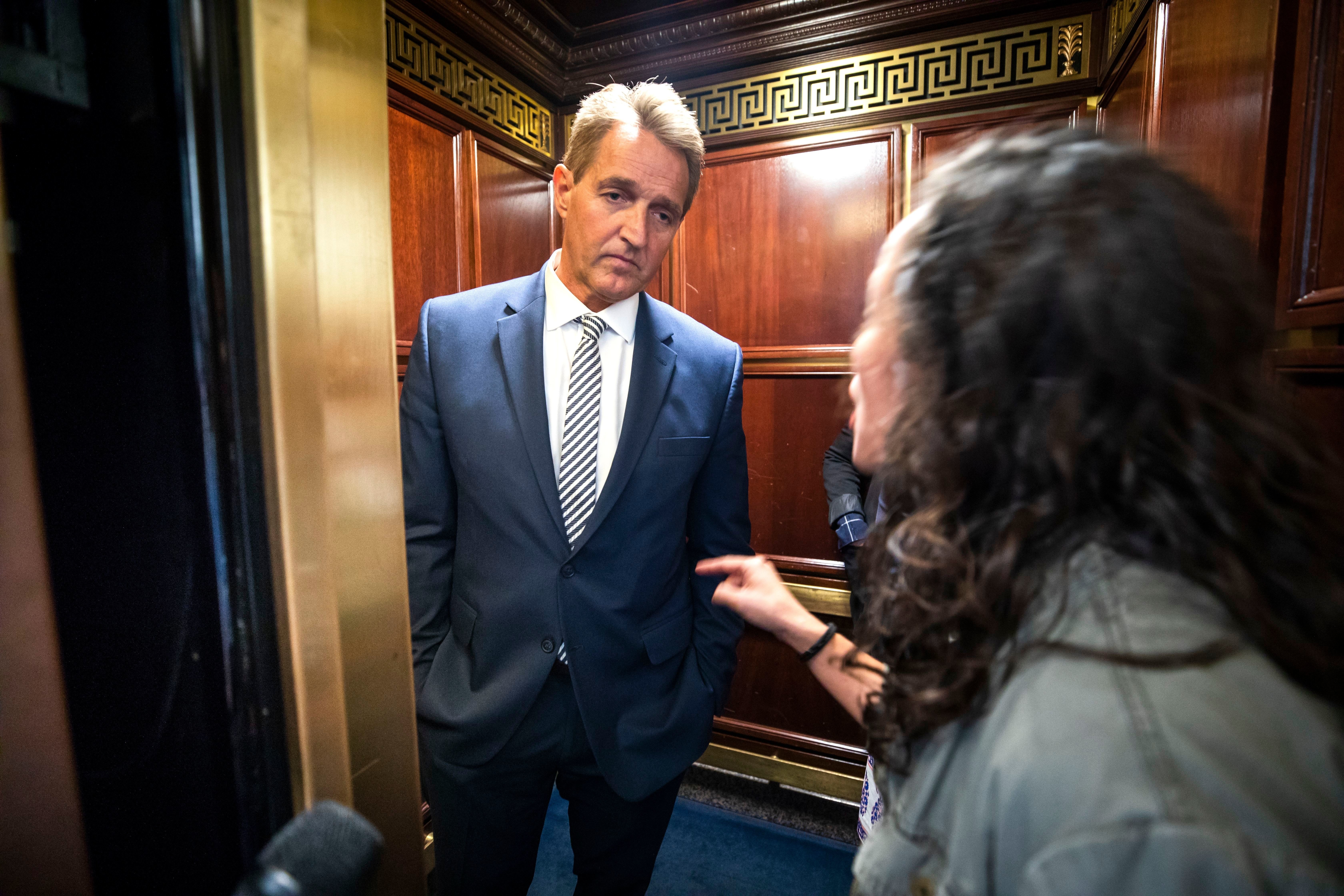
Sexual assault survivors confronted Senator Jeff Flake (R-Ariz.) and shared their experiences of abuse on Capitol Hill Friday morning, just moments after he announced his plans to back Judge Brett Kavanaugh in Friday’s Senate Judiciary Committee vote.

The Committee’s vote to move Kavanaugh’s nomination forward was scheduled less than 24 hours after the country heard tense and emotional testimony from both Kavanaugh and Christine Blasey Ford, the woman who has accused him of sexual assaulting her in 1982. While Flake, a key Republican swing vote, had indicated that he was undecided about Kavanaugh, he released a statement sharing his intentions to bring the embattled nominee closer to the Supreme Court. A short time later, a group of protesters followed Flake to an elevator and let him know what message he was sending to women and to survivors of assault.

“I was sexually assaulted and nobody believed me,” one woman told him through tears. “I didn’t tell anyone, and you’re telling all women that they don’t matter, that they should just stay quiet because if they tell you what happened to them, you’re going to ignore them. That’s what happened to me, and that’s what you’re telling all women in America, that they don’t matter, that they just keep it to themselves.”

Flake remained silent during the exchange, looking down at the ground. The woman continued, urging him, “Don’t look away from me. You’re telling me that my assault doesn’t matter… That’s what you’re telling me when you vote for him.”

“Senator Flake, do you think that Brett Kavanaugh is telling the truth?,” another woman asked.

Eventually, a reporter asks Flake if he wants to respond to the protesters’ concerns. Flake says simple, “No, I need to go to the hearing. I just issued a statement, I’ll be saying more as well.”

In his statement, Flake said that he hadn’t seen enough evidence that corroborated Ford’s story.

“Yesterday, we heard compelling testimony from Dr. Ford, as well as a persuasive response from Judge Kavanaugh. I wish that I could express the confidence that some of my colleagues have conveyed about what either did or did not happen in the early 1980s, but I left the hearing yesterday with as much doubt as certainty,” he said.

His vote is expected to round out support in the Judiciary Committee. After Friday’s vote, Kavanaugh’s nomination will continue to move through a full Senate vote. Republican leaders have said they will push to confirm Kavanaugh by early next week.

Related Stories:

During Christine Blasey Ford’s Testimony, Contempt for Women Was on Full Display

A Tale of Two Cities: A Snapshot of Washington D.C. on the Historic Kavanaugh-Ford Hearing Day


Source link

Categories
Health

Elizabeth Warren Has a Powerful Message for Sexual Assault Survivors Watching the Kavanaugh Hearing


Senator Elizabeth Warren (D—Mass.) on Thursday spoke with Glamour exclusively about the historic Senate hearing involving Supreme Court nominee Brett Kavanaugh and the Republican push to move forward with his confirmation, calling it “fundamentally wrong.”

At the Hart Senate Office building, where Kavanaugh’s accuser Christine Blasey Ford was also testifying, Warren stood alongside Ford’s supporters, telling Glamour that she was, “here with people of conscience who believe that when a woman comes forward that she has a right to be listened to, and there needs to be a full investigation.”

“The fact that Republicans want to go forward treating this woman and other women who have come forward as if their claims don’t matter is an insult to every single woman in this country,” she said. “It is fundamentally wrong.”

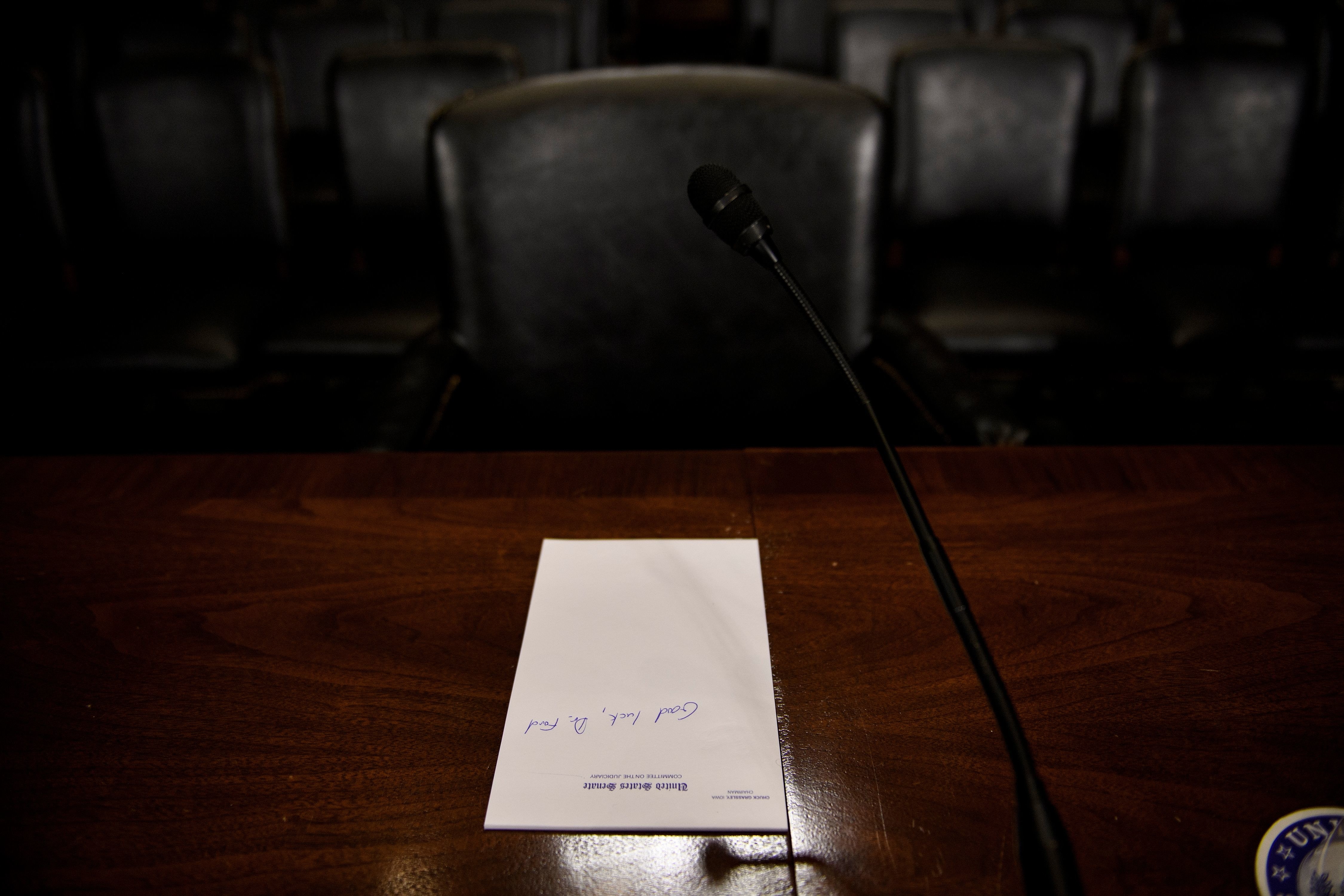
Ford appeared in front of the Senate Judiciary Committee on Thursday morning to give her testimony of an event that she says occurred more than 30 years ago, when Kavanaugh allegedly pinned her to a bed, attempted to take her clothes off and covered her mouth with his hand as she screamed.

“I believed he was going to rape me. It was hard for me to breathe and I believed that Brett was going to accidentally kill me,” she told the committee.

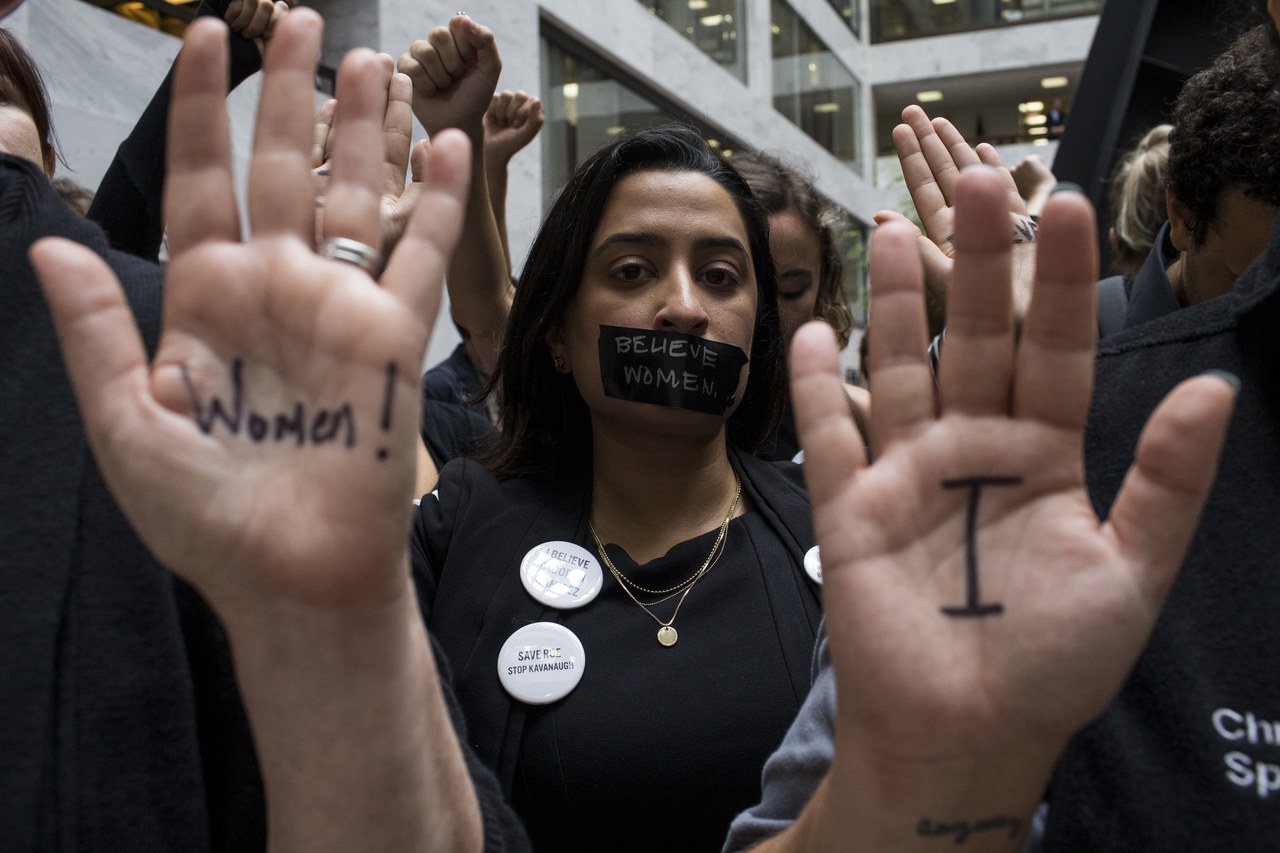
As she spoke, people supportive of Ford gathered outside in the atrium of the Hart Senate Office building. Many listened to the simulcast of the professor’s testimony on their cell phones, at times looking anguished or openly crying. Some silently held their fists in the air; others wore strips of tape over their mouths.

PHOTO: Zach Gibson

When asked if she believed that Kavanaugh would still be confirmed despite multiple women accusing him of sexual assault, Warren said, “I don’t know. I truly don’t know. But I do know that people across this country are paying attention, and that this is not alright.”

She also went on to criticize her Republican colleagues, saying, “this is a moral question.”

“The fact that [Republicans] want to ram this through and not have an investigation, that [Senator] Mitch McConnell goes in front of his big donors and says I’m going to ram this thing through, it’s not right. That treats every woman with disrespect. It treats everyone who has been a victim of sexual assault with disrespect. It treats human beings as if their claims are meaningless and that powerful men can do whatever they want to do. And it’s just not right.”

You can watch the Christine Blasey Ford’s testimony in front of the Senate Judiciary Committee, here.


Source link

Categories
Health

Christine Blasey Ford's Testimony Is a Detailed Account of Brett Kavanaugh's Alleged Assault


Christine Blasey Ford, a professor, mother, and former childhood acquaintance of Supreme Court nominee Brett Kavanaugh, will testify in front of the Senate Judiciary Committee on Thursday. There, she will recount her side of the story for Senators, and the world at large, sharing in great detail the night she says Kavanaugh assaulted her.

Ford’s prepared opening remarks were released Wednesday, in which she shared just how deeply the alleged event from 1982 affected the rest of her life.

“I am here today not because I want to be. I am terrified. I am here because I believe it is my civic duty to tell you what happened to me while Brett Kavanaugh and I were in high school,” Ford wrote. She explained how she and Kavanaugh attended nearby schools—hers an all-girls academy and his an all-boys. Their social circles intersected. As she recounted, they weren’t quite friends but knew of one another well enough. But, in the summer of 1982 their worlds would collide, and for Ford, Kavanaugh would from then on become an ever-present figure in her memory.

“One evening that summer, after a day of swimming at the club, I attended a small gathering at a house in the Chevy Chase/Bethesda area. There were four boys I remember being there: Brett Kavanaugh, Mark Judge, P.J. Smyth, and one other boy whose name I cannot recall,” she wrote. When Blasey Ford walked in, Kavanaugh and Judge were already visibly drunk. She had only one beer throughout the night.

When she made her way up the stairs to the second floor of the house to use the bathroom, that’s when Blasey Ford said the attack began.

“I was pushed from behind into a bedroom. I couldn’t see who pushed me. Brett and Mark came into the bedroom and locked the door behind them. There was music already playing in the bedroom. It was turned up louder by either Brettor Mark once we were in the room,” she wrote. “I was pushed onto the bed and Brett got on top of me. He began running his hands over my body and grinding his hips into me. I yelled, hoping someone downstairs might hear me, and tried to get away from him, but his weight was heavy. “

From there, she alleges that Kavanaugh attempted to take off her clothes, but had trouble due to his intoxication and the fact that she was wearing a one-piece bathing suit.

“I believed he was going to rape me. I tried to yell for help. When I did, Brett put his hand over my mouth to stop me from screaming. This was what terrified me the most, and has had the most lasting impact on my life. It was hardfor me to breathe, and I thought that Brett was accidentally going to kill me,” she said.

During the assault, she writes, Judge jumped on the bed, which made all three of them tumble over. That, Ford wrote, was the moment she escaped. From there, she ran into the bathroom and locked the door until the boys left. She then ran down the stairs and out the door. As she explained, she has thought of that event frequently as it was “seared into my memory and have haunted me episodically as an adult.”

In the remarks, Ford explained how she tried every avenue available to her to warn the committee about Kavanaugh and her allegations against him. She first called and met with Congresswoman Anna Eshoo and her staff, and finally sent a letter to Senator Dianne Feinstein. Feinstein promised to keep the letter confidential, but it soon leaked, prompting Ford to tell her story herself, which she did to the Washington Post earlier this month.

Her testimony, along with the answers to questioning will be heard in full on Thursday. They will also be heard alongside Kavanaugh’s own testimony. The conservative judge released his prepared remarks, which read in part, “There has been a frenzy to come up with something — anything, no matter how far-fetched or odious — that will block a vote on my nomination,” adding he unequivocally denies the claims brought by Ford.

However, she won’t be the last woman he has to answer for. Since Ford came forward, two more women have joined in with their own accusations against him. On Wednesday, Julie Swetnick, a woman who also knew Kavanaugh in high school, alleged that Kavanaugh and Judge were both present at a party where she was drugged and “gang raped.” A third accuser, Deborah Ramirez, is a former Yale University classmate of Kavanaugh’s. As she explained to The New Yorker, Kavanaugh exposed himself to her at a party in college and “thrust his penis in her face,” causing her to “touch it without her consent as she pushed him away.”

Still, none of these accusations against Kavanaugh will stop him from pursuing the highest court in the land. As he will tell the committee tomorrow, “The efforts to destroy my good name will not drive me out.”

Related Content:
The #BelieveSurvivors Walkout Had Women—and Men—Protesting Brett Kavanaugh

A Third Woman Has Come Forward with Allegations About Brett Kavanaugh
Brett Kavanaugh’s Latest Defense Against Sexual Assault Allegations? Virginity


Source link

Categories
Health

Christine Blasey Ford Forced From Home and Receiving Death Threats After Publicly Accusing Brett Kavanaugh of Sexual Assault


Christine Blasey Ford. Over the past few days, you’ve likely heard her name on the news and across social media platforms. You might know that she’s a 51-year-old research psychologist and professor in California, and you’ve almost certainly heard her allegation that Supreme Court nominee Brett Kavanaugh sexually assaulted her at a party when they were both in high school. He has categorically denied her allegations, which you also may have heard.

If you’re paying attention, you’ll realize a familiar narrative emerged this week, one that tends to create an invisible line between those who believe Blasey Ford’s claims and those who attribute her coming forward as a partisan way to derail the confirmation of Donald Trump’s second SCOTUS nominee. Immediately following Ford’s decision to go public, however reluctant, doubts were raised about the veracity of the story and the motives behind it. Excuses were made about Kavanaugh’s behavior—even if he did it, he was just 17. Boys will be boys, they said. I know how honest he is, one Sen. Orrin Hatch said in defense.

In the week that the public has come to know her name, and the disturbing claims of sexual assault she unearthed, never once was Blasey Ford afforded the same benefit of the doubt. Not even now, in the age of #MeToo. In fact, a good amount of commentary about the woman who says Kavanaugh drunkenly groped her in 1982 (and placed his hand over her mouth when she tried to scream) is negative. Violent and threatening, even. This rhetoric isn’t exclusive to those on the right who hope to seat another conservative justice. A quick look at Twitter reveals that many civilians are having a difficult time recognizing the credibility of her claim—yet somehow buy into Kavanaugh’s version of the story with ease. Essentially, the situation is a boiled-down version of what it means to be a woman: the burden lies on you to prove your worth and your truth.

In this way, Ford is being re-victimized in reliving her trauma. But something else is happening as well, something insidious and dangerous. According to reports, Ford says she’s been forced from her home and is receiving death threats. In a letter to Senator Chuck Grassley (R-Iowa), the chair of the Senate Judiciary Committee, her lawyers wrote: “In the 36 hours since her name became public, Dr. Ford has received a stunning amount of support from her community and from fellow citizens across our country. At the same time, however, her worst fears have materialized. She has been the target of vicious harassment and even death threats. As a result of these kind of threats, her family was forced to relocate out of their home. Her email has been hacked, and she has been impersonated online.”

On Friday morning, the President of the United States doubled down on his support of Kavanaugh by attempting to discredit Ford even further, questioning why she didn’t report the incident when it occurred. “I have no doubt that, if the attack on Dr. Ford was as bad as she says, charges would have been immediately filed with local Law Enforcement Authorities by either her or her loving parents,” Donald Trump tweeted. “I ask that she bring those filings forward so that we can learn date, time, and place!”

The irony? While Ford is the one actually under the attack of credible death threats and violent vitriol, Kavanaugh is the person with all the protections of the government. If that’s not infuriating enough, you’re not paying attention.

But if there’s one thing that we can take from the threats against Ford, it’s a reminder that women don’t come forward for fame. No one asks for death threats. And every woman knows what’s at stake when they make the decision to speak out. Sometimes, it’s a sacrifice and a total upending of life as they knew it. According to the National Sexual Violence Resource Center, 63 percent of sexual assaults are not reported to police, and the way Ford’s situation is playing out, it’s not hard to deduce why.

To further the point, survivors are now courageously sharing their #WhyIDidntReport stories on social media.

Here are some other ways in which the treatment of Ford reinforces why women choose to remain silent with their pain.

Kavanaugh supporters claim Ford must be in it for the attention.

Frankly, this sort of nonsense is what should make you want to scream the loudest. The woman has been forced out of her own home and is living in fear for herself and her family. By her own lawyers words, she had no desire to become a public figure. “Dr. Ford sought to tell her story, in confidence, so that lawmakers would have a fuller understanding of Brett Kavanaugh’s character and history,” their letter to Grassley reads. “Only after the details of her experience were leaked did Dr. Ford make the reluctant decision to come forward publicly.”

I can think of exactly zero people in my life who would ask for that kind of attention, and yet it’s usually the first response by detractors when a woman comes forward about a powerful or famous man’s alleged bad behavior.

Ford is being treated dismissively by many of the leaders of our government.

Here’s one example: By refusing to call her by name, Senator Lindsey Graham (R-S.C.) is dismissing the courage it took for Ford to come forward, and essentially erasing her experience.

“They’ve had tons of time to do this. This has been a drive-by shooting when it comes to Kavanaugh,” Graham said. “I’ll listen to the lady, but we’re going to bring this to a close.”

The lady. As Anita Hill said in her New York Times op-ed, “Finally, refer to Christine Blasey Ford by her name. She was once anonymous, but no longer is. Dr. Blasey is not simply ‘Judge Kavanaugh’s accuser.’ Dr. Blasey is a human being with a life of her own. She deserves the respect of being addressed and treated as a whole person.”

Isn’t that the least these men could do?

Ford is being re-victimized.

Ford’s request that the FBI conduct a thorough investigation of her allegations is being twisted as some sort of stalling tactic or evidence that she isn’t telling the truth by her detractors. That, to me, is completely irrational. She is literally asking that professionals dig deeper into her story, not running from it. And she is hoping that the relevant information would be provided to the committee before she sits down to answer their inquiries under oath.

“While Dr. Ford’s life was being turned upside down, you and your staff scheduled a public hearing for her to testify at the same table as Judge Kavanaugh in front of two dozen U.S. Senators on national television to relive this traumatic and harrowing incident,” her lawyers’ letter to Grassley notes. “The hearing was scheduled for six short days from today and would include interrogation by Senators who appear to have made up their minds that she is ‘mistaken’ and ‘mixed up.’ While no sexual assault survivor should be subjected to such an ordeal, Dr. Ford wants to cooperate with the Committee and with law enforcement officials.”

Every time Ford’s character and motives are called into question, she is victimized again. It’s no wonder that Psychology Today cites “fear of consequences” as a reason that women don’t report sexual harassment and assault.

I know I’m not alone in expressing how thankful I am that Ford was brave enough to come forward, but also so desperately sorry that this predictable outcome is the reality she now faces. I am fearful about the repercussions of this situation and the way it has been handled for women all across the country. Ford’s situation is a classic case of the kind of victim-shaming that is so common in these moments. Hers is playing out on the national news, but it could just as easily be happening in your own community, no matter how big or small.

I am incredibly terrified about what it means to have (another) alleged sexual abuser or harasser on the highest court in the land, deciding on cases that affect our bodies. But I am also scared of the message this sends to young women about what happens when you bravely tell your story, whether it’s about a powerful public figure or a guy in your high school.

We’ve seen a transformational year since last October, when Tarana Burke’s #MeToo campaign went viral in the wake of Harvey Weinstein allegations. Women were supported. Women were believed. But to see a case of this magnitude be ignored and discredited by those deciding who gets to sit on the Supreme Court, well, that’s just a reminder that there is no progress without some backlash. We must continue to fight.

Related Stories:

Read This Before Asking Why Christine Blasey Ford Waited to Tell Her Brett Kavanaugh Story

In the Age of #MeToo, Will Christine Blasey Ford’s Experience Be the Same as Anita Hill’s?


Source link

Categories
Health

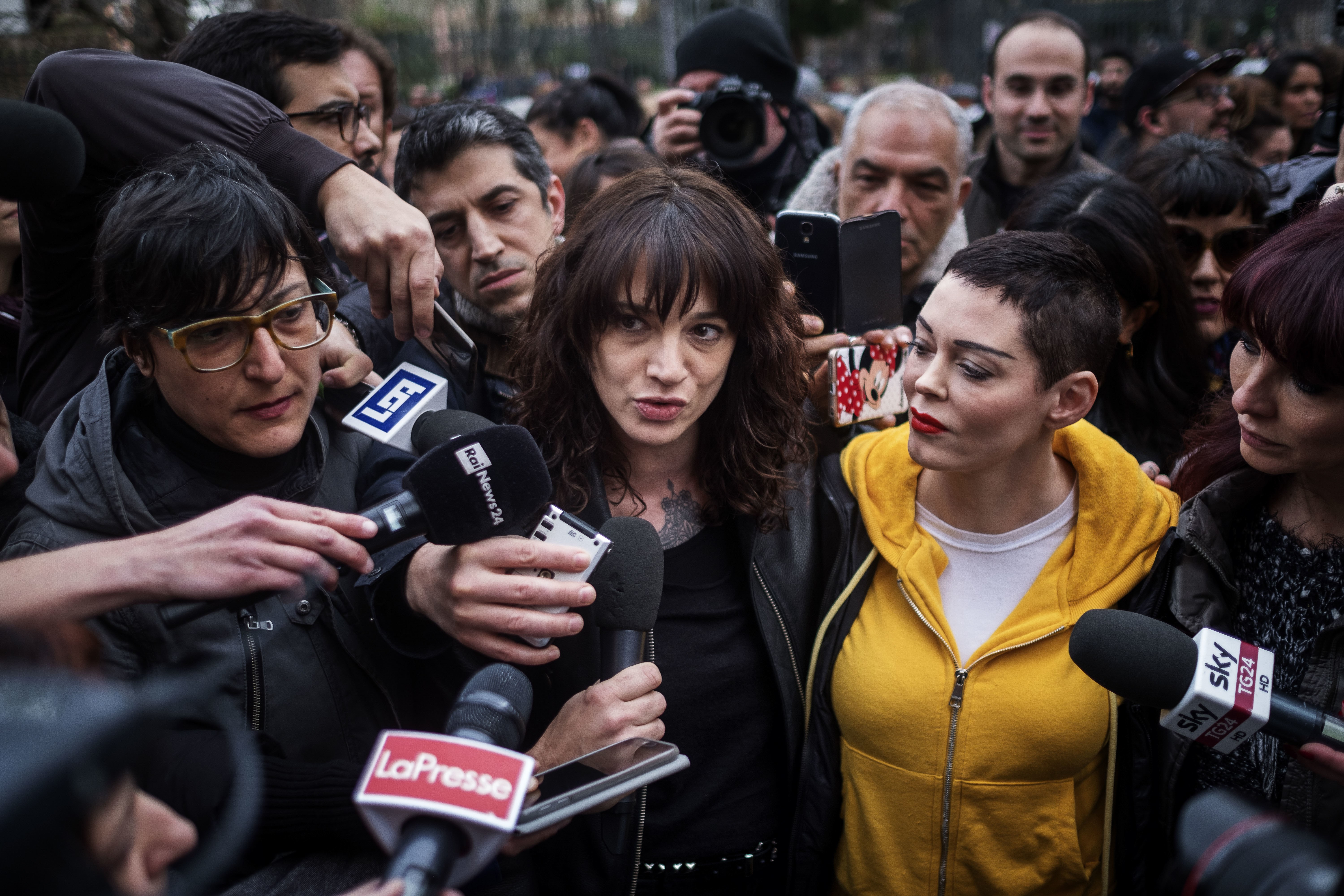
Rose McGowan Speaks Out About Asia Argento Sexual Assault Allegations


A week after a New York Times report detailed allegations of sexual assault against Italian actress and #MeToo activist Asia Argento, outspoken friend and fellow activist Rose McGowan has shared her thoughts—and a message to Argento—with the public.

In a lengthy statement released by McGowan and published on multiple websites, the actress says of Argento, “be the person you wish Harvey could have been,” in response to her denial of the allegations.

According to the Times, Argento—who was one of the first women to publicly accuse producer Harvey Weinstein of sexual assault—secretly agreed to pay $380,000 to a young male actor named Jimmy Bennett who accused her of sexual misconduct in 2013. She has since denied the report, calling it “absolutely false.” The two had acted together in the 2004 movie, The Heart Is Deceitful Above All Things, playing mother and son.

When the report initially broke, McGowan simply tweeted, “I got to know Asia Argento ten months ago. Our commonality is the shared pain of being assaulted by Harvey Weinstein. My heart is broken. I will continue my work on behalf of victims everywhere.”

But on Monday, McGowan’s statement revealed much more. According to the statement, McGowan’s partner, Rain Dove, says Argento admitted to sleeping with Bennett in a text exchange that has since been turned over to authorities. The statement comes after entertainment website TMZ published screenshots of what they said to be a text conversation between Argento and a friend.

“I know that coming to me with those messages must have been hard for Rain because of that so I commend them for their bravery,” she continues in the statement.

McGowan maintains that she is still an ally to victims of abuse and that she, herself, has been humbled by the Argento allegations.

“To the people who have checked in with me to see if I’m alright—the answer is thank you and Yes. I’ll be fine. It’s sad to lose a friend connection, but what’s even more sad is what happened to Jimmy Bennet [sic],” the statement read.

“Whether or not the extortion case is true—it wasn’t fair and it wasn’t right. It is the type of thing I fight against alongside so many. The reason I haven’t released a statement is because I’ve frankly been extremely humbled by this event…. I had to take a step back and realize that in my own activism while I fight hard with passion—I need to evolve. In the past I have been occasionally angry. As a victim I was justified in fiery feelings. But I know that those accused are the friends, parents, and family members of other people,” the statement reads. “There absolutely should be no leeway or tolerance for sexual assault. Hard stop. NONE. Victims also shouldn’t be told how they should react or what they should say about their abusers. However as allies to the victim and voyeurs of an event we should find a better way to balance support of the victim with due process for the accused. I’ve never claimed to be perfect. This week especially has made me come to terms with the fact that we all have a lot of growing to do, including myself.”

McGowan also addresses Argento directly. “Asia you were my friend. I loved you. You’ve spent and risked a lot to stand with the MeToo movement. I really hope you find your way through this process to rehabilitation and betterment,” she writes.

“Anyone can be be better—I hope you can be, too. Do the right thing. Be honest. Be fair. Let justice stay its course.”

Read the full statement here.

MORE: If We Want Men to Be a Part of #MeToo, We Have to Stop Gendering the Movement


Source link