Categories
Health

Hospitals Billed Sexual Assault Survivors for Rape Kits. Now They're Paying the Price.


The cost of rape may be incalculable—but this wasn’t supposed to be part of it.

New York hospitals illegally billed survivors for hundreds of forensic rape examinations, a new investigation by state Attorney General Barbara Underwood finds.

In a deal first shared with Glamour, seven hospitals have signed a settlement with Underwood’s office to pay back sexual assault survivors who were charged for their rape exams and to set up new policies to keep it from happening again.

“Survivors of sexual assault have already gone through unfathomable trauma; to then subject them to illegal bills and collection calls is unconscionable,” Underwood said in a statement provided to Glamour. “Hospitals have a fundamental responsibility to comply with New York law. My office will continue to do everything in our power to protect survivors and their rights.”

The seven hospitals in the settlement, according to the attorney general: Brookdale University Hospital Medical Center, Columbia University, Montefiore Nyack Hospital, NewYork-Presbyterian Brooklyn Methodist Hospital, NewYork-Presbyterian Columbia University Irving Medical Center, Richmond University Medical Center, and St. Barnabas Hospital.

Settlement documents reviewed by Glamour said the hospitals didn’t admit or deny breaking the law, but that they agreed to repay patients who were improperly billed and also to adopt written policies that make clear survivors are not to receive bills for rape exams.

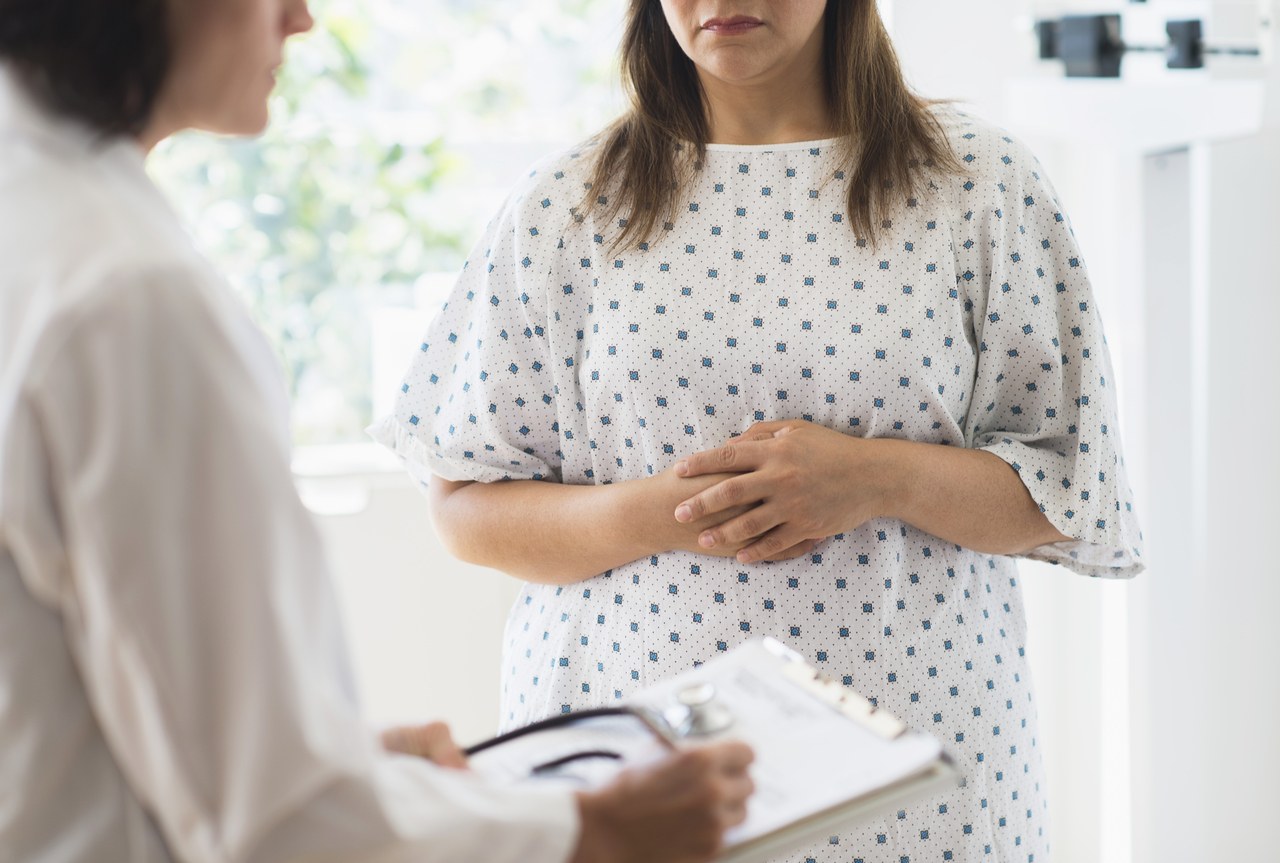
PHOTO: Tetra Images

“Survivors of sexual assault have already gone through unfathomable trauma; to then subject them to illegal bills and collection calls is unconscionable,” says New York Attorney General Barbara Underwood.

New York law says hospitals that provide services to sexual assault survivors—including forensic exams, commonly called rape kits—are supposed to send bills directly to the state’s Office of Victim Services (unless a patient chooses otherwise).

That system is supposed to protect survivors’ privacy by making it less likely that a relative or employer might learn they sought medical help. The added layer of confidentiality ideally encourages more people to agree to undergo the exams—which means more physical evidence that can help police find attackers.

But the new investigation found that in the case of these hospitals, that process went awry.

Instead, at least 200 forensic rape examinations conducted by the health care providers were billed to patients or their insurance companies. Amounts ranged from approximately $46 to $3,000, an Underwood aide said. The hospitals also repeatedly failed to inform survivors about their billing options, according to the settlements. In some cases, the bills were sent to collection agencies whose job it was to chase down the outstanding balance.

54279831

PHOTO: Deborah Jaffe

Forensic rape examinations at seven hospitals got wrongly billed to patients or their insurers, Underwood’s office says.

Last year the New York attorney general’s office settled with Brooklyn Hospital after an investigation that started when a patient came forward to say she had been billed—not once, but seven times—for care associated with a sexual assault case.

Underwood is the first woman to serve as New York attorney general. She took over the state’s top law enforcement job on an interim basis earlier this year after Eric Schneiderman resigned amid a flurry of accusations of abusing women, which he publicly contested. In this year’s midterm elections, New Yorkers elected Letitia James to become the first black woman in state history to fill the role. James will take office in January.

It remains to be seen whether the New York settlement will encourage fresh investigations or changes in hospital and clinic rape-kit billing elsewhere, but the problem is not new, with past controversies reported from Arkansas to Alaska.

For now, Underwood’s office encourages anyone with questions about their New York hospital billing to contact its health care bureau at 800-428-9071.

Celeste Katz is senior political reporter for Glamour. Send news tips, questions, and comments to celeste_katz@condenast.com.



Source link

Categories
Health

Department of Education Releases New Guidelines for Sexual Assault on Campus


“You know you are not on trial,” said Senator Kamala Harris (D–Calif.). “You are not on trial.” It was September, and Sen. Harris was addressing Christine Blasey Ford, who’d come before the Senate Judiciary Committee to testify against then nominee (now Supreme Court Justice) Brett Kavanaugh.

It had already been a heartbreaking few hours—few weeks, really. So much of it blurs together, like a horror movie. But I’ll never forget the relief and pain I saw on Blasey Ford’s face when Sen. Harris reminded us all that holding people to account should never mean putting a survivor on trial. Just as the Senate Judiciary Committee shifted so much of the burden, shame, and scrutiny onto Blasey Ford, systems that are supposed to be created to help survivors seek justice often instead shift a massive burden to the survivor. Doing so keeps survivors from reporting and can retraumatize them in the process.

That’s just one reason I’m raising the alarm about the new regulation on Title IX that Secretary of Education Betsy DeVos released last week. If it becomes law, these rules could force millions of student survivors of sexual assault and harassment to endure the same kind of cruel process Blasey Ford did. It’s a sham procedure, not to mention one that puts the survivor on trial and gives the benefit of the doubt to the perpetrator, instead of seeking the truth.

Schools would not be required to investigate assaults that take place in several off-campus locations, shutting out the thousands of survivors who are assaulted at parties, bars, or online.

While Kavanaugh apologists waved off the accusations of misconduct against him, suggesting that violence committed in high school is either somehow irrelevant or outside the jurisdiction of the Senate committee, the new regulation intends to give schools similar latitude, claiming that these institutions should not be responsible for investigating and intervening in many instances of sexual violence that affect their students.

According to the regulation, schools would not be required to investigate assaults that take place in several off-campus locations, shutting out the thousands of survivors who are assaulted at parties, bars, or online. Schools would now be required to investigate only complaints made to individuals who are empowered “to institute corrective measures” like a Title IX coordinator. What does that mean? In short, that schools would have zero obligation to start the formal complaint process if claims of assault are raised with coaches or resident advisers. If it’s hard to picture what an impact that could have, let me put it like this: Under the new rule, Michigan State University may not have been required to intervene in the case of Larry Nassar, because reports of his sexual abuse were made to coaches and athletic trainers. Further, the definition of sexual harassment that schools can now investigate is so limited and narrow that survivors could have to endure severe and repeated harassment before their treatment would “count” toward a Title IX complaint.

This proposed regulation from the Department of Education has been written in a manner that could prevent survivors from reporting their assaults and let schools avoid investigating Title IX complaints (and the bad press and expense that comes with it). Make no mistake: This will not make campuses safer, nor will it end sexual violence. What it will do is cause a huge decrease in reports of sexual violence at schools.

If it takes effect, this rule could make reporting and investigation procedures for survivors cruel, degrading, and difficult to access, in the hopes perhaps that survivors will give up on reporting if the process retraumatizes or marginalizes them enough.

Moreover, the regulation would disproportionately affect students of color, LGBTQ students, students living with disabilities, and low-income students by creating additional traumatic barriers to healing and justice. And in a flagrant misapplication of Title IX, which was implemented to protect and expand opportunities for women in education, the rule allows named harassers to claim sex discrimination if the school opens an investigation into their conduct.

It’s not enough to claim that we “support survivors” if we don’t commit to policies and proposed action that would do just that.

Thanks to the Me Too movement, we’ve all become more attuned to the needs of survivors, and millions of us are committed to ending sexual violence. We have made believing survivors (and seeking justice) a powerful moral imperative for all. But I fear that people in power—like school administrators, senators, and DeVos herself—continue to pay lip service to the importance of taking survivors seriously, while simultaneously making it almost impossible for them to be heard. It’s not enough to claim that we “support survivors” if we don’t commit to policies and proposed action that would do just that.

Everyone who was disturbed by the treatment of Blasey Ford before the Senate should be concerned now. This regulation will make schools more dangerous and, at the height of the Me Too movement, could take us backward.

While these provisions are horrific, this rule is not a foregone conclusion. Unlike our senators who ignored their moral and democratic duties to heed our calls to believe survivors, the Department of Education is obligated to listen to our critique of its rule through the notice-and-comment process. This rule can be stopped if all of us who were outraged on behalf of Blasey Ford submitted a comment that expressed our opposition to this regulation. Submitting a comment that the federal government will “count” must meet certain requirements—but End Rape on Campus and Know Your IX have built tools to ensure that your voice can be heard. Learn more at HandsOffIX.org.


Jess Davidson is a survivor of sexual assault, and the executive director of End Rape on Campus, a national nonprofit dedicated to ending campus sexual assault through direct support, education, and policy reform.


Source link

Categories
Health

For Some Sexual Assault Survivors, Justice Looks Like a Sit-Down With Their Assailant


In the year since the #MeToo movement took center stage, one thing is clear: Consent can still be a hard concept to grasp. What is consent? Is there a double standard that comes with it? And when an encounter is not consensual, what’s the best path to accountability and healing? In a recent VICE on HBO episode, correspondent and producer Isobel Yeung (pictured above) explores the conversations around sexual assault. A survivor herself, the episode is a harrowing look at the long-term effects of assault for the victim…and the assailant.

Highlighting one of the most polarizing ways to hold the accused accountable, Yeung takes viewers through an emotional “restorative justice” session between a survivor and her alleged assailant. Sitting face-to-face, the two discuss the alleged assault—a revealing and powerful inside look at how both parties have processed the incident—and what justice looks like for the victim. Of course, for many victims, restorative justice isn’t enough justice. But, as Yeung states in the episode, this avenue isn’t a solution for all. “But at least it’s providing the beginning of a way forward.”

Here, Yeung describes what watching that session was like, the complexities of consent and the path to redemption and healing for survivors.


If one thing is clear after the tumultuous Kavanaugh-Ford hearings last month, it’s that trauma from sexual assault is real, lasting and deep. As millions of Americans listened to Dr. Christine Blasey Ford’s brutal, heartfelt testimony, many survivors were triggered to think back to their own, harrowing experiences. Hundreds felt compelled to recount their stories to colleagues, friends, family members, the Sexual Assault Hotline, and even C-SPAN.

Many of these stories emerged from women who for so long had resolved not to speak about their sexual encounters in public or even with those closest to them. Anxiety, self-blame, shame and fear are among the reasons that individuals stay silent.

That was the case for me. When I was 18, a man who I considered my close friend forced himself upon me. I didn’t understand what was happening until I looked around to see him with his clothes off, pushing my head towards his genitals. The details of that night are hazy and have long been a deep source of embarrassment to me, resulting in a resolution not to discuss it with anyone or to allow it to define my life.

At the time, I dismissed the criminal justice system as a means to any solution, knowing that I would have to explain, justify and relive that night in a public arena. I also had very little faith in justice effectively being served, which reflects thousands of other survivors, too. According to the non-profit RAINN, only 6 out of 1,000 rape cases result in successful convictions, meaning survivors are left fearing not only the humiliation of court proceedings, but also the high likelihood of their offender walking free.

Yet in this extraordinary moment of cultural reckoning, our lack of real options for addressing such experiences should not be ignored. How can we move on with accountability, healing and closure? And what should these look like? As part of our VICE on HBO documentary ‘Consent,’ we wanted to break through the heated political debates raging on both sides of this issue and search for solutions.

[embedded content]

What we found was that the most compelling alternative to the legal system is a relatively new technique known as restorative justice. The concept is simple: to facilitate a dialogue between perpetrator and survivor, allowing both sides to talk openly.

In California, we met a woman named Alexis and a man named James (not his real name). Back when they were college roommates, they had been drinking heavily one night and wound up having sex. In the decade since then, James has maintained that this was merely a drunken incident while Alexis believes it to be rape. Alexis reached out to James several months ago to let him know that legal action was off the table, but that she wanted to talk. We watched as the two of them arrived in a dimly lit warehouse for one of a series of highly orchestrated sessions that professor and restorative justice facilitator Alissa Ackerman had arranged. For two excruciatingly uncomfortable hours in which they sat directly facing one another, they recounted their memories of that night almost 10 years ago.

Alexis broke down as she recalled flashes of James letting himself into her room and climbing on top of her. But she spoke more of how that one incident had impacted every facet of her physical and mental life. She felt disbelieved and outcast from their friendship group, eventually dropping out of college. She’s suffered from years of severe depression and at one point attempted to take her own life. Even now, she continues to suffer from profound PTSD, which has only been made worse by the inescapable news in recent months, weeks and days.

James also sobbed as he grappled to come to terms with his own behavior and how he had inflicted so much hurt. With the encouragement of Professor Ackerman he eventually stuttered, “It was rape… That’s not easy to say, both because I know what it’s done to you and I know, you know… there’s a flash of fear every time I associate with it.”

It was tense and uneasy to be a witness to this and I was mesmerized by the level of honesty, humanity and vulnerability in the room. It ended with the two of them standing up and hugging. It all seemed like a visible relief for Alexis, who was eager to continue the sessions on a regular basis. “This is a justice process that puts the survivor in the driver’s seat,” she told me. “We’re not really moving the needle at all until men start doing it, and your words have the potential to reach any other men and show that there’s a path to taking responsibility.”

There’s limited data on the long term benefits of restorative justice, but initial studies suggest participant satisfaction and a lower recidivism rate. Of course, that won’t be the case for everyone. In some cases, it is too soft an approach and is seen as excusing criminals or even giving them a platform, while risking re-traumatization for survivors.

Despite that, interest is steadily growing. In this nauseating time of very public anger, denial and partisan noise, it’s refreshing to think of an alternative reality where accountability is palpable. What James and Alexis proved was that in some of the darkest corners of ourselves, there could still be a chance for redemption, healing and repair.


Isobel Yeung is a VICE correspondent and producer. You can watch the full “Consent” VICE on HBO special report, here.

MORE: Your Best Consent Ever: How You Both Can Get the Sex You Want


Source link

Categories
Health

Brett Kavanaugh's Name Is Now Being Used As A Resource For Sexual Assault Survivors


Brett Kavanaugh’s controversial ascent to the Supreme Court has been difficult for many women, particularly those who have endured sexual assault. But any survivors who are struggling in the wake of the confirmation now have one new and unexpected resource to turn to: Brettkavanaugh.com.

According to reports, the website launched the same day Kavanaugh was sworn in through the efforts of Fix The Court, a non-partisan organization that advocates for increased transparency and honesty within the Supreme Court. The site consists of a simple landing page that includes multiple links to different groups specializing in helping sexual assault victims, and they include the National Sexual Violence Resource Center, End Rape On Campus, and the Rape, Abuse & Incest National Network.

“The start of Brett Kavanaugh’s tenure on the Supreme Court may look like a victory for one interest group or another,” the website reads. “But, more importantly, it is putting a national focus on the issue of sexual assault – and how we as a country can and should do more to prevent it and to support those who have experienced it. This past month, thousands of survivors came forward to tell their stories. We applaud your bravery. We believe you.”

In a statement on its website, Fix The Court executive director Gabe Roth explained that three years ago, he bought a handful of URLs that related to possible Supreme Court nominees. One of these was BrettKavanaugh.com. He also secured BrettKavanaugh.org and BrettKavanaugh.org, which now redirect back to the Brett Kavanaugh landing page.

“I believe Dr. Ford. I believe Prof. Hill. I also believe that asking for forgiveness is a sign of maturity and strength, not weakness,” Roth wrote.

Roth also referred to a divisive public ceremony that the White House held for Kavanaugh on Monday, during which President Donald Trump apologized on behalf of the nation for “pain and suffering” that the new justice been forced to endure” after several women, including Christine Blasey Ford, accused him of sexual misconduct.

“Watching last night’s White House event and listening to the President again cast doubt on veracity of Dr. Ford’s claims, while not hearing a word of contrition from the newest justice, was difficult for many Americans who have experienced sexual misconduct firsthand,” Roth said in his statement. “Fix the Court stands with you. We believe you, and we support you. And if you seek additional resources, you can go to BrettKavanaugh.com.”


Source link

Categories
Health

Amandla Stenberg Opens Up About Her Own Sexual Assault in the Wake of the Kavanaugh Hearings


Last week, the world watched as Dr. Christine Blasey Ford stood in front of the Senate Judiciary Committee to publicly allege that Brett Kavanaugh, the conservative D.C. judge whom President Donald Trump had nominated to the Supreme Court, had drunkenly groped her at a party, attempted to forcibly remove her clothes, and covered her mouth when she attempted to scream. Dr. Ford’s affecting, emotional account of the alleged assault immediately ignited a rippling #MeToo effect across the country, as women from Busy Phillips to Ellen Degeneres began sharing their own traumatic sexual assault experiences—feeling emboldened to do so after hearing Dr. Ford’s powerful testimony.

Actor and activist Amandla Stenberg chose to open up about her sexual assault in an op-ed for Teen Vogue published Saturday. In the powerfully penned piece, the Hate U Give star wrote about her own experiences with sexual assault and explains she felt compelled to go public with her own story after watching the Kavanaugh hearings and listening to Dr. Ford’s testimony.

“As I live-streamed Dr. Christine Blasey Ford’s testimony in a hotel room and a humid drizzle painted the windows an opaque gray, I found myself relying heavily on the tool of my breath… My breath was the tool I relied on when I ended up in a foreign country on a three-hour train ride to find an emergency contraceptive,” she wrote. “The night before, what started as a consensual experience had turned forceful. Painful things had been done to my body that made me feel broken and disposable. I was unable to consent to them, and was silenced verbally and physically when I protested.”

The actress goes on to describe the emotional weight she carried after this traumatic experience, feeling at times guilty, as though what happened to her had somehow been her fault. “I was sitting in that soup of guilt and shame that often follows an unwarranted sexual experience,” she said. “My body hurt and my mind was on a one-track loop, dissecting all the things that I was culpable for, that must have led me to my predicament.”

Stenberg explains that her assaulter was someone who was “respected” by her peers, stating: “It seemed to me that often the trade-off of being invited into spaces by these sorts of cis straight men and getting their approval was the acceptance that what I had to contribute was the value of my body as a woman. Implicit within that was the notion that, because my body served such a transactional purpose, it was no longer just my property. That was a form of social currency I was familiar with and, honestly, at times accepted.”

An often-debated topic throughout the Kavanaugh hearings revolved around the question of whether or not Dr. Ford should have come forward with the sexual assault allegation sooner. But as Stenberg points out in her essay, doing so immediately throws assault survivors into “a battle where you’ve been appointed defender of your own legitimacy.” She goes on: “You are given the responsibility of, after having just been subjected to devastating trauma, navigating impossible protocols, lest you be charged as the culprit in your own attack. You’re damned if you do and damned if you don’t. Damned to subject yourself to physical and public scrutiny, more vulnerability and social repercussions, or damned to allow the residual feelings to fester inside. Either way, you sacrifice comfort and safety within your own body, and sometimes it’s easier to just keep that pain to yourself and hope it goes away. And that is understandable and OK. We should not be condemned for being unsure of how to move through pain.”

Ultimately, it was watching Dr. Ford’s testimony that pushed the actress to “move through discomfort that [she’d] buried” and speak out: “Although these tipping points are chaotic, disorienting, infuriating, and often heartbreaking, I like to believe that real change begins with the eruption of truth.”

Read her full essay here.

If you or someone you know has been sexually assaulted, you can seek help by calling the National Sexual Assault Hotline at 800-656-HOPE (4673). For more resources on sexual assault, visit RAINN and the National Sexual Violence Resource Center.

Related Content:

Elizabeth Warren Has a Powerful Message for Sexual Assault Survivors Watching the Kavanaugh Hearing

Busy Philipps Opens Up About Being Raped at 14: ‘I’m Scared to Post This’

Here Are the Senate Women at the Center of the Brett Kavanaugh Debate


Source link

Categories
Health

Watch These Sexual Assault Survivors Confront Republican Senators at the Airport


While the FBI continues its investigation into the sexual assault allegations against Supreme Court nominee Brett Kavanaugh, more women are coming forward to share their personal stories in hopes of swaying the opinions of senators who will eventually vote on whether or not to confirm the conservative judge.

But one group of women isn’t waiting until the vote for a change of heart. Over the weekend The Center for Popular Democracy (CPD) organized their staff and volunteers to speak candidly with senators returning to Washington, D.C., at Ronald Reagan Washington National Airport. And as it turns out, some of those senators were left speechless.

“We were saying, ‘Look us in the eyes, actually have a conversation with us,'” the group’s president and co–executive director Jennifer Epps-Addison told Bustle about confronting the men. She told the outlet that the group spent the weekend studying photos of both Democratic and Republican senators so they could recognize them on sight.

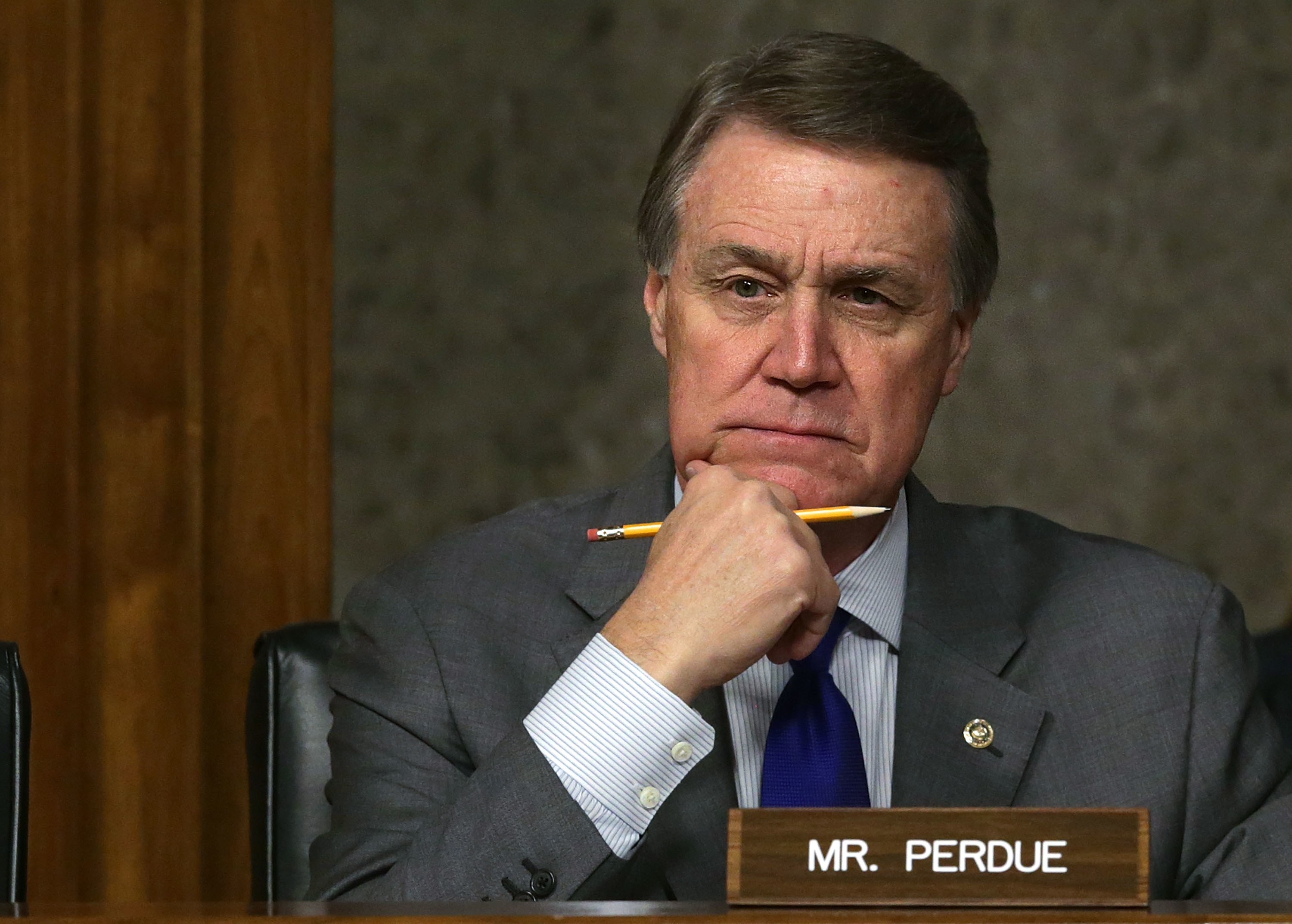
On Monday Senator David Perdue (R–Ga.) was approached by Epps-Addison, Patti Serrano, and Arizona State Representative Isela Blanc as he made his way through the terminal.

After complaining about being touched, he ducks into a men’s bathroom to avoid the women.

[embedded content]

“How can you not talk to women who have been assaulted?” Epps-Adison asks. “How can you ignore our pleas?” Blanc continues, “You represent not just your state’s choice, but every American in this country, and every person that is vulnerable. This is a legacy, and a moment in history that will not be forgotten.”

“He [Perdue] really is demonstrating what women across the country are saying: It’s not only that you are not listening to us, but you are overtly hostile to us when we say that we want the full rights and dignity that everybody in this country deserves,” Epps-Anderson said in her interview with Bustle.

Senate Majority leader Mitch McConnell also found himself on the receiving end of public criticism and questions. “Do you want the Republican party to be the party that is known for supporting rape and sexual assault?” a woman asks.

This isn’t the first time we’ve seen women confront senators in the past week. Many believe that the decision by Senator Jeff Flake (R–Ariz.) to call for the delayed vote and a limited investigation came in part because of a confrontation in an elevator by two brave sexual assault survivors, Ana Maria Archila and Maria Gallagher.

“I was sexually assaulted and nobody believed me,” one said to Flake. “I didn’t tell anyone, and you’re telling all women that they don’t matter, that they should just stay quiet because if they tell you what happened to them, you’re going to ignore them. That’s what happened to me, and that’s what you’re telling all women in America, that they don’t matter, that they just keep it to themselves.”

The vote on whether or not Kavanaugh gets a seat on the Supreme Court bench is scheduled to take place at the end of this week.

MORE: Time’s Up Picks WNBA’s Lisa Borders as Its First-Ever President and CEO


Source link