The Internet can’t stop buzzing about Ashley Benson and Cara Delevingne‘s relationship. The two actors confirmed to the world that they’re an item in June, when Delevingne posted a video of the couple kissing. (Benson commented on the post with three simple hearts.)
Now, it appears they have taken the next step in the celebrity relationship timeline: tattoos. In a new Instagram post promoting her collaboration with eyewear brand Prive Revaux, Ashley Benson’s newest ink was on full display, and it sure looks like it’s a tribute to Cara Delevingne. As you can see in the Instagram post, below, Benson has the letters “C” and “D” tattooed on her side, near her armpit. “So excited to share this with you guys ? My new collection with @priverevaux is here. Link in bio,” she wrote in the caption.
Fans quickly spotted the initials. “C.D magaaadd♥️?,” one person wrote. Another posted, “I spy caras initials!?.”
Photographed by Nicholas Maggio for Privé Revaux
This isn’t the first time Benson has seemingly paid tribute to Delevingne. Last August, she posted a photo on Instagram wearing a necklace with Delevingne’s initial (“C”) and her own (“A”).
Though the couple seems super happy together, they’ve still had to deal with some drama and apparent homophobia. “Ashley I know you are here,” one stranger wrote on Benson’s Instagram back in April. “I’m serious, you need to stay away from that devil and never go back. I’m sure many strong, handsome, religious man [sic] would take you back in a heartbeat. You are not like this. You aren’t gay. You love men, and you need one.”
Benson didn’t take this comment lying down, of course. She shut down the troll with a simple, pointed statement: “You need to mind your own business. Stop making things up.” Say it louder for the people in the back, Ash.
People have been semi-certain for a while that Cara Delevingne and Ashley Benson are dating, but the two officially confirmed the rumors on Friday night (June 14) via—what else?—an Instagram. They reportedly met on the set of the film Her Smell, which was released in April, and have since been snapped kissing in London. Benson’s also been spotted wearing a necklace with “A” and “C” on it and spent Delevingne’s birthday with her. But despite a comment in September by Benson on a ‘gram of Delevingne’s, which seemed to confirm the two were dating (Benson later said she was hacked), there’s been no official word on their status until now.
The Instagram was posted to Delevingne’s account, and it’s basically them making out. Delevingne captioned the ‘gram: “#PRIDE ?❤️??❤️?” and tagged Benson in it.
Benson left a comment of her own: three hearts, which makes it about as official as possible.
Instagram/@caradelevigne
The couple’s proud Instagram comes in the wake of a homophobic comment left on a ‘gram of Benson’s by a troll in late April. “Ashley I know you are here,” they wrote, according to BuzzFeed. “I’m serious, you need to stay away from that devil and never go back. I’m sure many strong, handsome, religious man [sic] would take you back in a heartbeat. You are not like this. You aren’t gay. You love men, and you need one.”
Benson and Delevingne promptly clapped back, of course: “You need to mind your own business,” Benson wrote, according to Buzzfeed. “Stop making things up.”
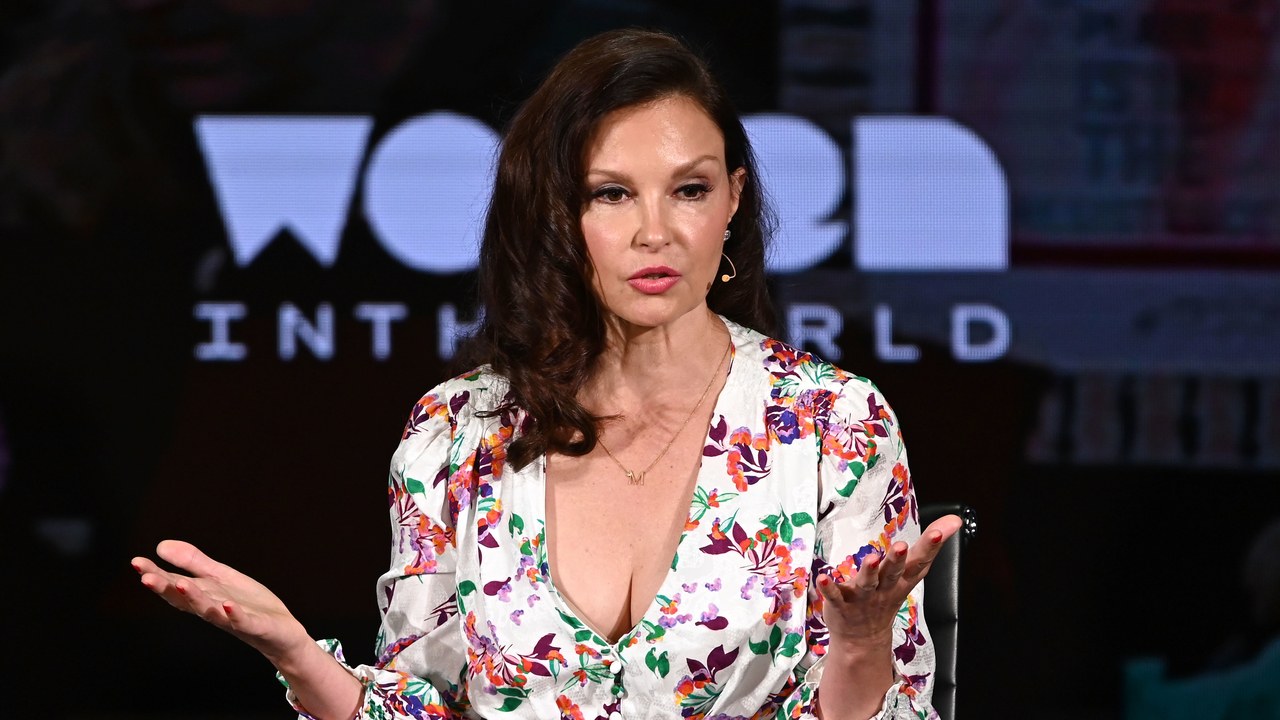
Ashley Judd may have begun her career as an actress, but over the years she has become an outspoken public advocate and activist for women’s rights around the world. She was one of the first women to go on the record with her allegations against Harvey Weinstein, has spoken passionately at the Women’s March, and is well-known for her global humanitarian work.
This week, Judd spoke at the Women in the World Summit about another cause close to her heart: abortion rights. The conversation between Judd and moderator Katie Couric turned to Georgia’s controversial “heartbeat bill” which, if passed, would prohibit abortions after a heartbeat is detected which is typically five to six weeks into a woman’s pregnancy. At that point, many women don’t yet realize they’re pregnant.
“As everyone knows, and I’m very open about it, I’m a three-time rape survivor. And one of the times I was raped, there was conception,” Judd said, per People. “And I’m very thankful I was able to access safe and legal abortion. Because the rapist, who is a Kentuckian…has paternity rights in Kentucky and Tennessee. I would’ve had to co-parent with my rapist.” (Judd resides in Tennessee.)
“So having safe access to abortion was personally important to me and, as I said earlier, democracy starts with our skin. We’re not supposed to regulate what we choose to do with our insides,” she continued.
People notes that it is unclear whether the rape that Judd speaks of resulted in a conviction because that could have nullified parental rights for the man, but Judd’s point is clear nonetheless. And it’s yet another chilling reminder of what is at stake for women when it comes to passing anti-choice legislation. There can be lifelong consequences to legislating what women can and cannot do with their own bodies.
Judd, along with other high-profile people in Hollywood like Alyssa Milano and Mandy Moore, have circulated a petition that promises to pull production from the state if the bill is signed into law.
There could be a serious economic impact for the state if Hollywood productions stop filming there though it’s still unclear at this point whether Georgia Governor Brian Kemp will sign the bill into law—in which case it will surely be challenged in the courts. He has until May 12 to make that decision.
Actress Ashley Judd was one of the first women to publicly speak out against former movie mogul Harvey Weinstein and in May of last year she filed a lawsuit against him alleging that her career was damaged by lies he spread about her in Hollywood after she spurned his sexual advances.
On January 9, a federal judge in California dismissed a portion of her suit, stating that her sexual harassment allegations did not fall within a specific legal statute. According to the New York Times, Judge Philip Gutierrez’s order was clear in saying that he was not ruling as to whether or not Judd as sexually harassed “in the colloquial sense of the term” but that the law could not be applied because she did not have a “specific business arrangement” with Weinstein at the time, which is a legal requirement.
So basically, the judge is not saying that Judd’s claim that Weinstein appeared in a bathrobe during a business meeting and asked her to let him massage her and watch him shower didn’t happen, just that it’s not sexual harassment under the California law because recent changes to the statue mandate that sexual harassment only applies if there is a specific business relationship between the parties. (The judge also did not state that it did happen.) That sounds like a pretty messed up law to me, especially given that Judd says the meeting was indeed about business.
Weinstein has continued to deny Judd’s accusations. “We have said from the beginning that this claim was unjustified, and we are pleased that the court saw it as we did,” Phyllis Kupferstein, one of Weinstein’s lawyers, said in a statement. “We believe that we will ultimately prevail on her remaining claims.”
Despite the recent setback, Judd is continuing with the rest of her case. “Nothing about today’s ruling changes that Ms. Judd’s case is moving forward on multiple claims,” Theodore J. Boutrous Jr., her lead attorney, said in a statement to the Times.
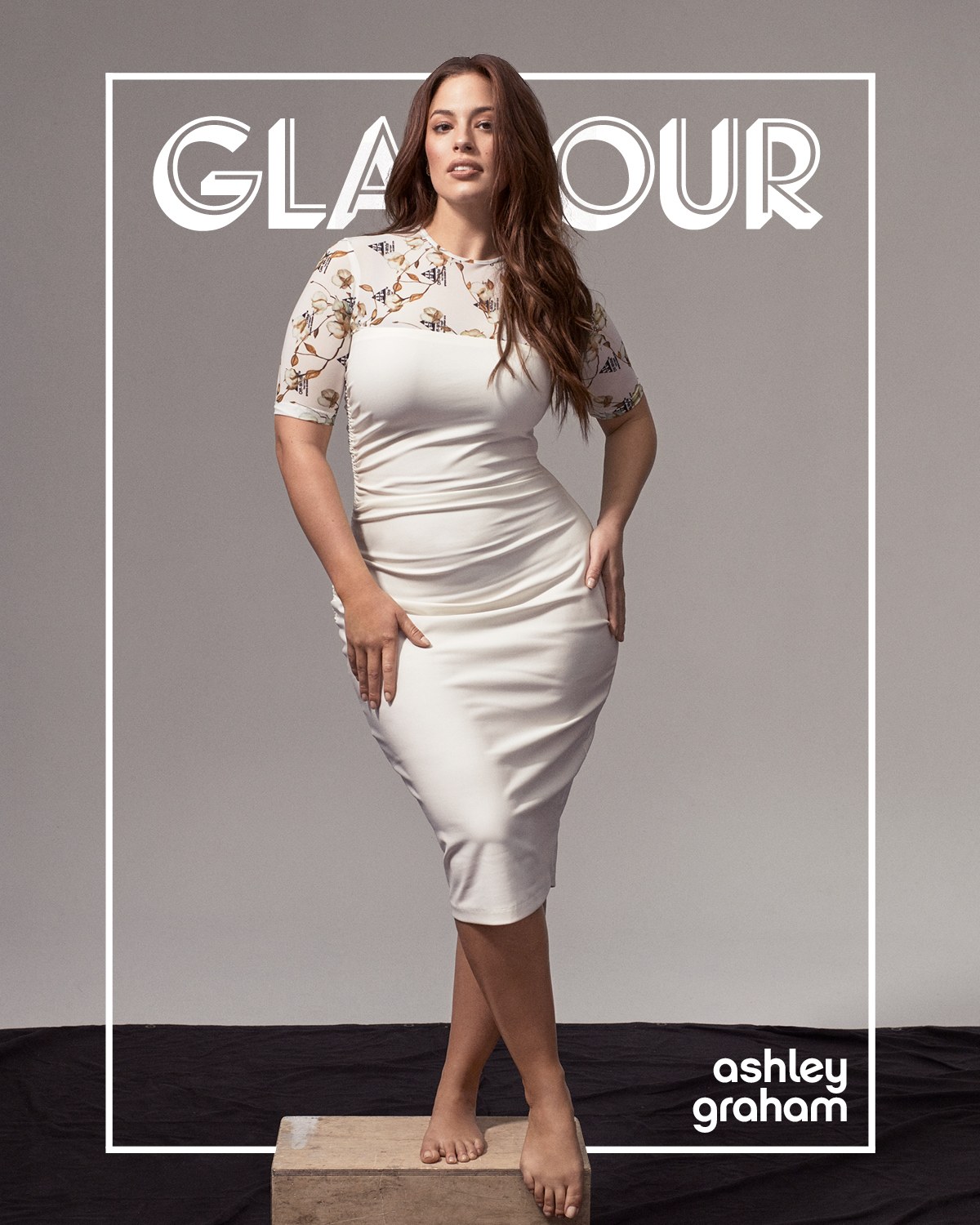
Glamour digital cover star Ashley Graham has achieved icon status when it comes to fashion and beauty, which is why her looks are frequently mimicked by fans across the world. It’s no surprise, then, that there are dozens of Graham-inspired makeup tutorials on YouTube. Naturally, we asked the Revlon ambassador and body-positivity activist to stop by our offices and watch some of these videos herself—and her reactions were the best.
“She looks fantastic, I love this look on her,” Graham says to one vlogger who reimagined Graham’s makeup moment from the 2018 Vanity Fair Oscars party. “You could go grocery shopping in that look, too. You made it your own, and it’s beautiful.”
“When you’re the first of something, you are always going to have to answer the hard questions,” Graham told Glamour in her recent digital cover story. “…People are going to be confused by you because you’re the new kid in town. But if you ask me, I’m not the new kid in town—this body’s been around for centuries, and now I’ve just been given a voice.”
“I always say there’s been a victory every year in my career,” Ashley Graham tells me, the day after her 31st birthday, having just wrapped a photo shoot. “Whether it was the first time I was in Vogue, or the first time that Lane Bryant put me in a national campaign and it went viral because the networks said it was too racy…. There was just always something.”
When Graham fronted that magazine in a purple string bikini, she became the first curvy model to do so—another victory. At that point she had already been in the industry for 16 years, but it still served as a sort of introduction to the Ashley Graham we know now: outspoken, passionate, and sexy. “SI is a company that doesn’t want a pretty girl, they want a personality,” she says. “Someone who’s got something going on, someone with a voice. And I had that.”
Not only was Graham given a bigger platform, but the conversation about size inclusivity in fashion also got a major signal boost. Every photo shoot, partnership, and appearance following it allowed the Nebraska native to continue to push long-standing industry conventions about what models look like. She’s done it onstage, in her book, and now with a podcast.
Graham launched Pretty Big Deal in early October with a jam-packed lineup. (Kim Kardashian West was her very first guest.) She talks to people from a variety of fields—from fashion (Halima Aden) to acting (Gabrielle Union) to social media (Lilly Singh)—about everything: career, relationships, personal style, religion, tokenism, race…. Sometimes the conversation can get difficult, but that’s something that’s rooted in Graham’s own approach to learning.
“I think everybody in today’s day and age is curious, right? There are so many different people that don’t want to be labeled, or they want to be labeled…. There are so many different backgrounds, and people are assuming this and assuming that,” she says. “What I’ve always done—especially when I first got married and I was more involved in black conversation—[is say], ‘Oh, I didn’t know that.’ You don’t know it because you don’t ask questions.” (Graham’s husband, director Justin Ervin, is black, and she credits him for a lot of her education when it comes to race and privilege.)
Graham wanted to ask those questions—the ones that can feel awkward in casual company, but get to something bigger—to help foster this curiosity, empathy, and understanding. After all, she’s been that person for many when it comes to talking about size inclusivity and body diversity in fashion, even before the Sports Illustrated cover came out. Graham’s been pushing to have these conversations for almost two decades.
Now people are listening.
Graham is well aware that she’s not the first plus-size supermodel ever. She is, however, the first curvy model to achieve certain firsts in the industry: first on the cover of the Sports Illustrated swimsuit issue, first to walk the Michael Kors runway, first to appear on the cover of American Vogue.
“When you’re the first of something, you are always going to have to answer the hard questions,” she says. People aren’t going to like you. People are going to hate you. People are going to be confused by you because you’re the new kid in town. But if you ask me, I’m not the new kid in town—this body’s been around for centuries and now I’ve just been given a voice.”
This is something that comes up in her book as well as on the podcast: Her curviness is something that’s been an ideal in communities of color for much longer than she’s been in the fashion business. “Because I’m white and because of white privilege, I’ve been given a platform,” Graham acknowledges. “But we can’t erase all the women who came before me.” Nor those that are her contemporaries: “Now, I can also talk about the Marquita Prings, the Precious Lees, the Paloma [Elsessers]…. The list goes on and on, so why aren’t we talking about them as well?”
She continues, “I’ve had this conversation with some of my white friends, and it’s hard for them to understand what that means—the only reason I understand is because of the hard conversations that I’ve had with my husband. He’s the one who really opened my eyes to that and made me understand.”
Graham says she’s still learning. “I’ve been married to Justin for eight years now, and there are still moments where I’m like, Oh God, did I just say the wrong thing?” When that happens, though, it’s about looking for the “teachable” opportunity—much as she tries to do in her conversations on the podcast.
Having these kinds of difficult conversations at home can be hard enough, but Graham opens herself up to have them publicly too—on the air, on social media, on any platform she can. This is nothing new to her: She’s been doing this throughout her career, even with the gatekeepers of the fashion industry who, for many years, kept models like her on the sidelines.
But now that she’s in the room with so many of these stakeholders, she’ll “just bring it up naturally. Unapologetically.” For example: In February 2018, Graham was asked to be the first plus-size model to walk the Michael Kors runway during New York Fashion Week. As she tells it, she was slated to wear a gray dress with a floor-length coat, but she had a better idea. “I said to Michael, ‘Why don’t we put that cropped one, and then you’ll see my body?’ And he was like, ‘Fabulous.’ He heard me loud and clear.”
Veronica Beard dress, $595, shopbop.com. SJP by Sarah Jessica Parker heels, $325, SJP by Sarah Jessica Parker Pop-Up Shop, NYC.
In some ways, this unapologetic nudge has yielded results: She’s noticed how she can borrow samples right off the runway, including the Prabal Gurung sample she plucked from the designer’s Spring 2019 runway for a Vogue fashion conference. She was excited—proud, even—to borrow the ribbed, neon piece. But that feeling went sour fast, as commenters started speculating that the model had lost weight, with people writing on her Instagram: “Why did you lose weight? Your forms were nice,” and “You’re so tiny now…I’m so jealous.”
“It sucked that everybody had to go in on me like, ‘Oh, you lost so much weight.’ If these people actually knew me—which, you know, they don’t and maybe never will—they would know that my body just hasn’t changed,” she says. “To be completely honest, I’ve gained weight in the last five years, not lost weight. If you actually look at my IMG Polaroids from when I first signed with them to now, you can tell I’m thicker. I mean, it’s just age. Geez. Whatever!”
It’s not like Graham hasn’t heard this before—she wrote a piece for Lenny Letter back in 2016 (at the height of the Sports Illustrated cover buzz), the gist being: “I’m never going to be big enough, I’m never going to be small enough; I’m always going to be too loud, I’m always going to be too quiet; I’m never going to be good enough for anyone. So I might as well just stay in my own lane and be great enough for me.” It’s been a journey getting to this point—early in her career, she would sweat the comments and worry about how she came across on social media, but now? “I don’t care. It’s like I have this shield of armor over me.”
Still, she’ll read the comments. (She’s human, after all.) And sometimes, it hurts. (Again, human.)
“There will be one or two every once in a while, where it’ll sting,” Graham admits. “I’ll be like, Why did they say that? That is so rude. Did their mother and father just not teach them that if you have nothing good to say don’t say it at all?” But again, Graham sees the teachable moment here: “You know, sometimes I write them back—like, one guy said to me, ‘Oh, you look pregnant,’ and I wrote back, ‘Oh no, honey, that’s just fat.’
You may have heard about Graham’s vision boards—it’s a tradition she and husband have, of putting together a list of goals they want to achieve in the near future. When we awarded her a GlamourWoman of the Year Award in 2016, she told us about what was on it back then: a beauty campaign (check), a book (check), and “maybe a talk show” (check).
“God works in mysterious ways,” she says. “The first year I had put Sports Illustrated on my vision board, I got the ad in Sports Illustrated, for Swimsuits for All, so I was like, ‘OK, God, I see you.’” When Graham makes her vision boards, she focuses on goals that aren’t necessarily in process but that she knows are achievable: “It’s things that you want and are already chasing after in your own life. I’ll pray and ask God for so many things, but I’m not just sitting on my couch waiting for them to happen—I’m out there fighting and hustling and being proactive about my prayers.”
Graham admits that it’s been a minute since she’s updated her vision board because 2018 took care of itself: The launch of Pretty Big Deal was special for her—not because she’d always wanted her own podcast empire, but because she’s dreamt of having her voice be heard. “As a model, I think it’s our duty to not just be a pretty face in the world, but to actually speak up and use our platform in a bigger way,” she says. I know it’s not going to last forever, and it’s not something that I’m necessarily going to want to do forever, so what else is it out there that I want to achieve?
“Something that I’ve really learned in the podcast world is that your voice is never too small,” she continues. “In some cases, I’ve felt like my voice was so small, but it’s not. Your voice can be so loud and so heard. You just have to step up on whatever platform you have and scream it from the rooftops—like, ‘This is something I want to learn,’ Tthis is something I know,’ ‘This is something that I want to help other people with’—and don’t be afraid. Don’t be afraid at all to speak up.”