Categories
Health

The Best Face Wash for Acne Isn't What You'd Expect


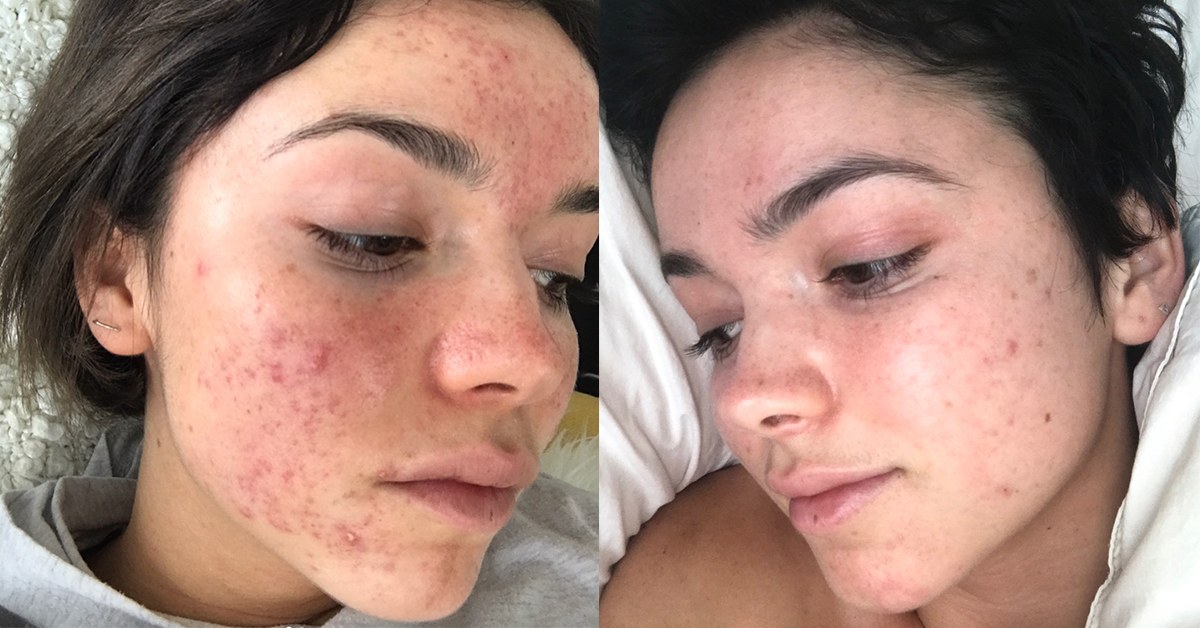
Salicylic acid, retinol, charcoal—people who have acne like myself can rattle off a laundry list of ingredients that are formulated to prevent and treat pimples. I’ve not only memorized them, I’ve tried them all. And after almost a decade of testing, I like to think my anti-blemish regimen is a finely tuned machine.

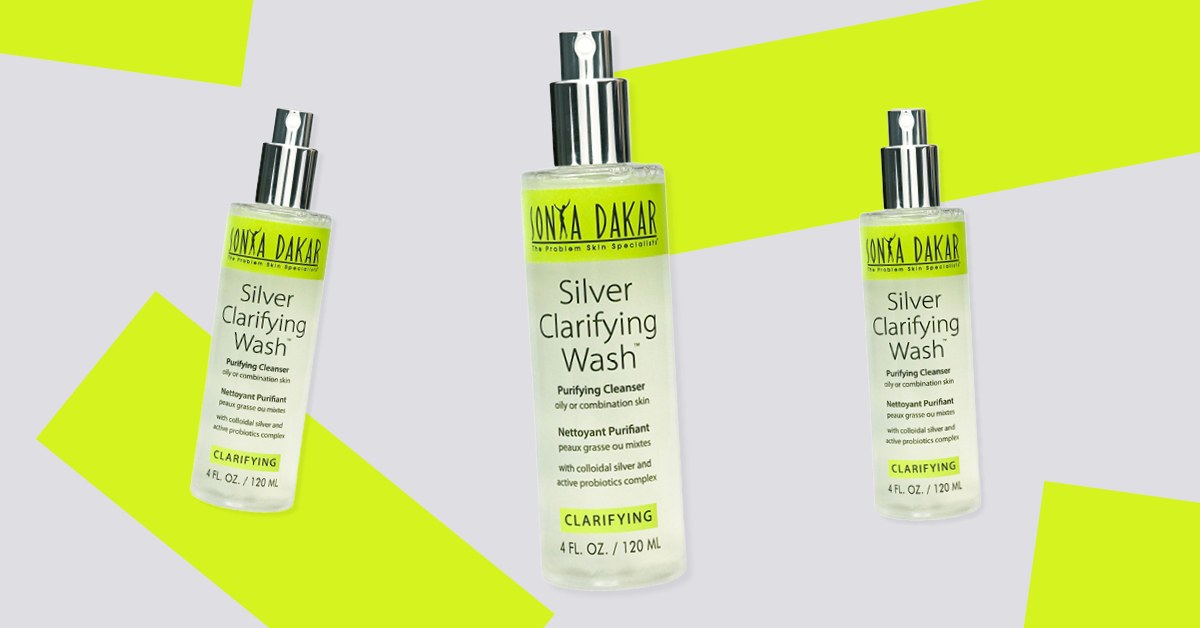
One of the cornerstones of this routine is not a sci-fi gadget or a cream made from the tears of endangered catfish, but rather a humble face wash. That would be the Silver Clarifying Wash from Beverly Hills’ celebrity facialist Sonya Dakar—it blows all other cleansers out of the water.

At this point I’m guessing your marketing B.S. barometer is through the roof. Bougie products with “precious metals” are just another way for brands to charge more money for something that would be pretty basic otherwise, no? You are absolutely right to be wary, especially when a face wash comes with a price tag over $50. I’ve fallen victim to the “magical anti-aging gold flakes” spiel before. But put that healthy skepticism on pause for a moment while I walk you through this one.

The Silver Clarifying Wash checks all of the acne-fighting ingredient boxes: It’s got a salicylic acid complex to clear pores and a probiotics blend to balance out good and bad bacteria on your skin. There’s also some rosemary and sage in there to calm redness. But what makes it truly special is the inclusion of its namesake ingredient. The silver ions found in this wash have some serious antiseptic powers.

Where an antibacterial product kills off acne-causing bacteria, an antiseptic will prohibit the growth of that bacteria in the first place. So cleansing with the Silver Clarifying Wash means I’m not only erasing away the day’s dirt, oils, and dead-skin buildup, but also setting my skin up for fewer breakouts in the future.

I find the mistake that a lot of people with acne make is trying to use a cleanser that’s too harsh for your skin. I get it: You want to physically feel like everything gross on your face is being blasted into oblivion, where it can’t hurt your skin. The problem with that is while the bad stuff goes, so does the good, leaving you with stripped-dry, irritated skin that’s now even more susceptible to pimples.

This cleanser relies on those silver ions, a gentle acid complex, and probiotics to dissolve all of the gunk and grime without disrupting your skin’s delicate oil balance. You feel clean, but there won’t be that dry, tight, itchy feeling. I also love how this wash fits into my usual breakout-busting routine as it doesn’t disrupt or react with any of the more potent treatments I use.

So while it may seem like a gimmick, take it from one cynic to another: This stuff works like a charm.

Sonya Dakar Silver Clarifying Wash, $59, amazon.com

Related Stories:
Why You’re Still Breaking Out in Your 20s and 30s
7 Skin Care Ingredients You’re Not Using But Should
This Gentle Serum Is Perfect for People Too Scared to Try Retinol


Source link

Categories
Health

How to Get Rid of Back Acne: The Best Bacne Treatment to Try


Despite their lofty claims, few skin care products actually give instant results. This you know, especially if you’ve ever had a zit and needed it gone yesterday. So when I stepped out of the shower a few weeks ago and spotted some angry-looking bacne on the backs of my shoulders, I was prepared for a slog. I surveyed my bathroom counter, I slapped on a chemical exfoliant I’d brought home to test (Paula’s Choice Skin Perfecting 8% AHA Gel, which is technically for your face), and I headed to work ready to deep-dive into Makeup Alley and skin care Reddit for a better game plan.

Yet in an honest twist of fate, the constellation of red spots on my back was gone the next morning. It was like a zitty fairytale. I’m a die-hard fanatic for Paula’s Choice, but the one-day turnaround was surprising nonetheless. Curious about whether there’s any science to slapping the stuff for your face onto your back, I reached out to dermatologist Joshua Zeichner, M.D., for some answers.

While acne on your face and body are similar and trace back to the same factors (sweat, dirt, oil), Zeichner, director of cosmetic and clinical research in the Department of Dermatology at Mount Sinai Hospital, says that treating bacne is difficult because of the sheer surface area you need to cover, plus the regular exposure to things like dirty bra straps. So if the skin on your body is constantly breaking out, Zeichner says beta hydroxy acids (BHAs) like salicylic acid and benzoyl peroxide are the move. If it’s more rare and some days you just wake up with a red shoulder scourge, an AHA like the Paula’s Choice Gel clears your skin without the aftermath of dry, itchy skin.

Real beauty goes beyond the surface—and so do we. Sign up for our newsletter to get honest reviews, personal essays, and more every day.

The Gel is a glycolic acid, which I’ll admit was a gamble. Alpha hydroxy acids (AHAs) are excellent for brightening your skin and creating that lit-from-within effect, but there’s a reason dermatologists warn to only use them at night, or with a powerful sunscreen. They increase your skin’s photosensitivity, which means they make you more susceptible to sunburn. But my shirt covered my shoulders, so I squirted a few pumps of the gel into my hands, smothered it onto the parts of my back that I could reach (graceful as ever), and continued on my way. The Gel’s combination of green tea, aloe, and glycolic acid flattened out my raised acne, and there were only a few faint red marks where they’d been. Ever since, as soon as I’ve seen a pimply shoulder situation start to arise, I’ve slathered it on and gotten the same results.

As luck (and seasonal weather changes) would have it, the discovery coincided with friends messaging me about the best back acne treatment. (There’s nothing like warm weather sweat, not-washed-enough bra straps, and shoulder-baring outfits to make you suddenly aware of the skin on your back.) Finally I have a great answer.

Paula’s Choice Skin Perfecting 8% AHA Gel, $29, dermstore.com

Related Stories:
How to Deal With Every Summer Skin Issue, From Sunburns to Bug Bites
8 Women of Color on Their Go-To Products for Hyperpigmentation
This Millennial Blue Face Mask Shrinks Whiteheads Overnight


Source link

Categories
Health

'Bachelor' Star Bekah Martinez Shares How She Got Rid of Her Acne


Bekah Martinez isn’t one to keep her secrets to herself. The 23-year-old former Bachelor contestant—who has already gotten brutally honest about the real cost of being on the reality TV show—has also been quite vocal about her struggles with acne. After years of trying different medications and treatments, Martinez says she’s finally found the cure that cleared up her complexion: gut-healthy foods.

“Real talk: my skin used to look like this for YEARS, and now (thank god) if you swipe left it looks like this!” Martinez wrote on her Instagram account. She said she’s tried Accutane, numerous popular acne-clearing products, and birth control—along with going vegan, drinking more water, and using coconut oil, all advice anyone who’s ever had acne has probably be given at some point—and likely to no avail. Adult acne is actually on the rise for women in their twenties and thirties, which is why many are now leading the charge around “acne positivity” on social media to help combat the shame and stigma surrounding it.

“I could go on and on about all the things that DIDN’T cure my acne,” Bekah added. “Only recently did I discover it came down to my gut health, which I’ll be sharing a hell of a lot more about in the next few weeks. No, it’s not plexus or any other supplement, it’s real raw food that you have to incorporate into your diet on a regular basis.”

The before-and-after photos she posted along with it have already gotten 25,000 likes and counting. Clearly, they’re resonating. Her comments section is flooded with responses like, “I love to see post like this—my skin is so bad right now” and “Please post more about this, I could really use the tips!”

While she hasn’t shared what those exact items are yet (Glamour reached out and will update this post when we’ve heard back), it’s possible that Bekah is referencing fermented foods like kefir and sauerkraut. These foods contain probiotics, aka gut-friendly bacteria, which some experts—like Moon Juice founder Amanda Chantal Bacon and Whitney Bowe, M.D., a dermatologist and the author of the new book The Beauty of Dirty Skin—swear by for their stomach- and liver-detoxifying effects. These, in turn, help support glowing skin.

“Eating fermented foods have been shown to improve gut health and restore a healthy microbiome in your G.I. tract,” says Dr. Joshua Zeichner, Director of Clinical and Cosmetic Dermatology at Mount Sinai Hospital. “There’s a definite association between gut health and your skin, so by feeding your gut probiotic-rich foods like kimchi, you’re helping to reduce internal and external inflammation—including the kind that causes acne.”

And it doesn’t take a lifetime to see results. Zeichner says a few weeks, while Lauren Slayton, R.D., and founder of Foodtrainers in New York, says that depending on your current gut health, you can see a clearer complexion in as little as a week. “But it’s not like you can be a sugaraholic, have some kimchi after dinner, and then expect to glow,” she adds.

Martinez, for her part, says she wanted to share her struggles with trial-and-error treatments because too many women feel like they’re by themselves in the process. She ended her post with an endearing note to her followers: “None of this content is or will be sponsored in any way. I just want to help as many people as possible find the solution to their acne or feel beautiful in the meantime. If you’re in the middle of the struggle, I feel you. I see you. I hear you. You are NOT alone, and I know a lot of the time it feels that way. I know how frustrating and demoralizing it can be. I know how it can take all your confidence and crush it to the point where you don’t want to leave the house. You’re not alone, and your acne does not define you. Rise above it and smile anyway—that’s what people will notice first.”

Related Stories:
Bekah Martinez on What The Bachelor Really Costs
17 Photos That Prove Becca’s Season of The Bachelorette Is Going to Be Lit
The ‘Acne Positivity’ Movement Is Taking Back the Shame From Breakouts


Source link

Categories
Health

Skin Care Saved Me From Years of Cystic Acne


The beauty—and absurdity—of the internet lies in its ability to rile people up in such a way that the drama of the day can be reduced to one tweet with no context. One I saw last night: “Black Mirror: Skin Care” and I knew exactly what the author was referring to. A story published on The Outline Tuesday called The Skin Care Con, in which writer Krithika Varagur took a guns-blazing yet remarkably unresearched approach to tearing down what she calls “New Skincare,” a hobby seemingly adopted by desperate millennial women who will do anything because it’s cool and self-satiating, not because it’s helpful or useful. “A scam,” is what Varagur calls it.

I’m not here to refute the core of her argument—Cheryl Wischhover over at Racked.com did that, and did it very well—but I feel compelled to insert myself into this conversation not only because of my experience covering beauty at various points in my career, but also because skin care, in many ways, has changed the way I present myself to the world, which wasn’t always easy.

After reading The Outline story a few times, I’ll admit I don’t disagree with every point Varagur makes, though I think her frustration is misguided. I have certainly rolled my eyes at the It-girl mentality that surrounds skin care as it stands in 2018, and have felt disappointed when a roster of frequently regurgitated products by girls with cool clothes, cool hair, and cool jobs do nothing for me. I’ve also gotten angry at natural skin care brands who make irresponsible claims backed up by nothing but earnest testimony—such as the promise that garden-variety oils and esters can cure cystic acne. It cannot. Some oils might help keep chronic breakouts at bay, but cystic acne is the beast unto which my own obsession with skin care was born.

After having regular adolescent skin—smatterings of red pimples and an oily T-zone—I found myself at age 15 faced with a rapid, violent outbreak of cystic acne that included quarter-sized nodules under-the-skin, and red, inflamed lesions on both cheeks that hurt to the touch. After several rounds of Tetracyclines, I was placed on Isotretinoin—a.k.a. Accutane. Two pills daily for six months. I’ll spare you the details of the peeling skin, the bone-dry lip and eyes, and what it was like being a teenager having to sign paperwork pledging she won’t get pregnant because of the severe birth defects the drug can cause—all while her male doctor looks on. This was before iPledge.

I was grateful to be on Accutane—painful acne was a misery—but at that age, outward appearance dictates a lot, and I wasn’t comfortable with mine.

I was deeply distraught. I was grateful to be on Accutane—painful acne was a misery—but at that age, outward appearance dictates a lot, and I wasn’t comfortable with mine. I decided my best recourse was to start wearing makeup—dense, matte, full-coverage foundation to mask what wasn’t really able to be masked. But, at 15, I had no idea how to buy or use makeup so, traumatized, I made a trip to the drugstore and grabbed the first bottle of Revlon ColorStay foundation I saw, not bothering to check the shade. It looked white, and I was white. That’s how it works, right? I also quickly realized that if you wear as much makeup as I was, you have to remove this makeup at night; my first experience with routine daily washing. My cleanser of choice back then was bar soap, Cetaphil or Yardley, and—because Accutane sucks all the moisture out of your skin—I also leaned on attainable moisturizers like Lubriderm, often mixed with SPF 30, because light is not your friend on Accutane. Voila, cocktailing.


In six months, my cysts had mostly subsided and I’d familiarized myself with the nightly routine of washing my face to remove my makeup, though I never strayed from Cetaphil for fear of my acne returning; never mind it was knocked out of me by high doses of Vitamin A.

In college, my face looked better, but not great—I still habitually wore a ton of makeup to cover the indents and light scarring my acne had left behind. It was there, though, in the dorm bathroom, that I discovered a gateway rainbow of drugstore face wash, each claiming they did different things; each I’d never tried thanks to an adolescence filled with caution. The gold of Neutrogena Oil Free Acne Wash, the sky-blue gel of Clean & Clear, the peach of St. Ives Apricot scrub. I’d try whatever my friends had in their shower caddies, while staring into the mirror and talking—mostly about parties and our bitchy RA, but I remember those communal nights and mornings well.


After college—early 2000s—my acne was mostly gone but I was faced with a new affliction—circular dry facial patches that would flare up whenever they felt like it, and were resistant to derm-prescribed hydrocortisone, to Vaseline, to straight-up olive oil. Patches that were so flaky, I couldn’t wear foundation without looking like a had a polka-dotted face. It was then I discovered the beauty of a website called Makeup Alley, a gen-one digital community of impassioned beauty fanatics who swapped reviews, tips, and stories. It was on that site, practically still in beta, that I discovered some people swear that two uncoated Aspirin melted by lukewarm water with a little honey can help heal dry, inflamed patches, and you know what? That worked for me. It was also around this time I starting gently dipping my makeup sponges into iced coffee before applying foundation, swearing that the caffeine woke up my skin. I believe we now call these hacks.


In the decade-plus I’ve been covering women’s lifestyle, I’ve tried thousands of products and over the years have graduated from hoarding lipsticks and bronzers to hoarding serums, moisturizers, exfoliants, and balms. It’s become a passion because I see results. In this space, I find I’m able to think analytically and critically about what actually works for me, not just what looks good or is flattering. There’s some work involved, and I find that satisfying—especially now that my skin and my hormones have settled into a place that allows me to experiment with different formulas according to problems I’m trying to fix.

There’s also an abundance of science as far as skin care goes—despite Varagur’s opinion that it’s “chiefly about buying things, and displaying them for others to see.” The trick, of course, is doing your science homework, which I know—based on some conversations I’ve had with women around the Glamour office—isn’t always easy.

Chemical violence is not seeking out things that have been proven effective to look and feel better. Chemical violence is slathering deodorant on your face as a primer because you saw it on YouTube.

“If I’m being honest, I really don’t know the science behind half of the products I use and why they’re ‘good for me,’ our social media director Madeline said, adding that she’s often as guilty as the people mentioned in The Outline story who know little about the powerful ingredients they’re using but slather them on anyway. Usually because a certain product is permeating their feed. “It’s not clear how those ingredients will interact with each other or how they’ll impact my skin,” she said.

It took me a long time to resist the urge to buy whatever cream I felt like at Sephora or to rip open every expensive treatment I see in the beauty closet at work. During the last year or so, I’ve been much more attuned to what I’m putting in—and on—my body for many reasons, and I’ve committed to taking the time to learn. I have a steady dermatologist, which I hadn’t had since my Accutane days, and I email her questions if I have them. I Google. I ask friends who are beauty editors. I read packaging, not just look at it. For my own health, I’ve chosen to educate myself about why products are able make the promises they do.

I now know exactly what acids—AHA, BHA, glycolic, lactic, malic, citric, salicylic—do, and which ones work for me. I know humectants and Hyaluronic acid are essential for my lifelong dry skin. I know how to apply retinols responsibly. I know the rejuvenating power of a vitamin C serum, because—feeling overwhelmed by the bottles on my bedside table—I asked my dermatologist to suggest one non-negotiable product during my last visit.

Varagur mentions a few of the above ingredients, but assigns them blame, writing, “At the core of the New Skincare is chemical violence.” Nope. Chemical violence is not seeking out things that have been proven effective to look and feel better. It is not being curious about Biologique p50—which comes with a mass of printed instructions—or wanting to try out Glossier’s new chemical exfoliator. Chemical violence is slathering deodorant on your face as a primer because you saw it on YouTube. It’s dousing your face with Pepto Bismol because a supermodel thinks it works. It’s ordering Juvederm online and injecting it at home.


I do not find self worth in the “enormous quantity” of products I use, despite Varagur’s argument. In fact, it’s just the opposite. There’s nothing better than finding a core few that work in tandem to produce results. Today, my routine is face wash (Skinceuticals Gentle Cleanser), toner (Bioderma Sensibio), a morning serum (Skinceuticals CE Ferulic), moisturizer (I swap between M61’s Hydraboost Cream and Desert Essence’s Revitalizing Oils), an eye cream (Red Earth), and a twice-weekly retinol (A60, which my sister brought me from Paris). I also have a weekly rotation of treatments to target different areas of concern (Dr. Brandt’s Oxygen Facial Flash Recovery Mask for dullness, Drunk Elephant’s T.L.C. Sukari BabyFacial for clogged pores and sandpaper texture are two I keep coming back to).

Avoiding your gaze, hiding behind my hair, and being a slave to pan stick are things I’d like to avoid, if possible. I like to look good, too.

But considering the volume of innovative brands and breakthroughs, I’ll always want to try new things, so I might switch or eliminate as I go—and that might mean spending a little more money sometimes. For example, I recently swapped my Holy Grail Clarisonic—which my skin was becoming resistant to—for the NuSkin Lumispa, and I unequivocally noticed a difference in tone, hydration, and clarity in literal days. Buying a new tool wasn’t the equivalent of eating my feelings, so to speak, but rather an actionable thing I did to fix my enlarged pores and dull skin after a good amount of research.

“Before you start a militant skincare regimen, it’s instructive to think about why you want one,” Varagur instructs.

Probably because I hid from the world in high school, and I have important things to accomplish daily that need my full confidence. Avoiding your gaze, hiding behind my hair, and being a slave to pan stick are things I’d like to avoid, if possible. I like to look good, too.

I’m in my mid-to-late 30s and look younger than I am—much younger, I’ve been told. Yes, that could be because of my 5’1″ frame, but I like to think it’s because of my skin’s tone and elasticity. I’m not saying this to boast—I was not blessed with good skin at birth. I treated it with one of the heaviest medications you can find, and ever since I’ve tended to it, and not because anyone told me to, or because I’m chasing some bullshit ideal dictated by Instagram.

“Real, flawed women have real, flawed skin—it’s fine,” Varagur writes. Yeah, we know. I don’t think any skin care-obsessed women I’ve met flips out over a blemish or a breakout. If anything, they’re able to identify the cause—a new ingredient, a bad-eating week, PMS. And that ability to understand and take action, to me, is the definition of perfect skin.

Perrie Samotin is Glamour‘s Digital Deputy Editor


Source link
Categories
Health

Kendall Jenner Shuts Down Comments About Her Acne at the Golden Globes


Plenty of us get breakouts. Adult acne is actually on the rise in women ages 20 to 40. But few of us, god forbid, have to stand on a red carpet with it like Kendall Jenner did at last night’s Golden Globes—where, even despite the evening’s central theme around women’s empowerment, people didn’t hold back from picking apart the model’s appearance. (Check out Twitter and you’ll see people sharing thoughts on everything from her acne to her lips to her attendance at large.)

Jenner, for her part, usually stays above petty comments on social media. But she actually had a pretty great response to a fan who tweeted her in solidarity about her acne. The fan wrote, “Ok but @KendallJenner showing up and strutting her acne while looking like a gorgeous star is what every girl needs to understand.” Kendall’s reply? “Never let that shit stop you! ?✨” Yeah, people were here for it.

PHOTO: Frazer Harrison/Getty Images

Kylie Jenner On the Golden Globes Red Carpet

PHOTO: George Pimentel/WireImage/Getty Images

Back in January 2017, the last time fans criticized her for getting “facial reconstruction” when really she’d done her makeup differently, Kendall called it “exhausting,” and said it ultimately made her think the world was rooting against her. “I feel like people just want me to lose,” she said. “People forget that they’re talking about real people who have real feelings and actually live their everyday lives (for the most part) just like everyone else.”

What we should be talking about instead? Time’s Up.

Related Stories:
Emma Stone’s Golden Globes Makeup Had a Hidden Feminist Message
None of the Male Winners at the Golden Globes Talked About Time’s Up or #MeToo
For the First Time, Women Visibly Owned the Golden Globes Red Carpet


Source link

Categories
Health

The Best Face Masks for Dry Skin, Acne, Redness, and More


Of all the beauty products we love (and hoard), face masks rank high up these among our favorites. Just try to name one skin care item that pairs as well with a glass of wine, bubble bath, or the latest episode of Riverdale. (You can’t. They rule.) That said, you can’t swatch a face mask in Sephora—though spot testing at home is always recommended—so it’s best to know how your skin will react before you start binge-masking. To make things easier on your face and your wallet, we’ve rounded up the masks that Glamour editors actually swear by, based on our biggest skin concerns. Read up on the best face masks for oily, dry, redness and acne-prone, and combination skin, then go forth and reap their rewards.


Source link