Categories
Health

How to Get Rid of Blackheads: 8 Dermatologist-Approved Tips


Along with why you got bangs and J.Lo’s skin care routine, how to get rid of blackheads is one of the great mysteries of life. Fine—maybe it’s not a mystery so much as a challenge. You can try and dig them out, but you risk traumatizing your skin in a way that makes a blackhead in question seem like NBD (think scarring or hyperpigmentation). Fortunately, there’s some middle ground in both removing and preventing blackheads. We called in the experts to get the scoop.

First, it helps to know what causes blackheads. (As Sun Tzu says, know thy enemy.) “Blackheads form when the opening of a pore on your skin becomes clogged with sebum,” says Deanne Mraz Robinson, M.D., a dermatologist in Westport, CT. “Dead skin cells and oils collect in the pore. And if the pore isn’t covered by skin, exposure to air causes it to turn black as it oxidizes.” Hence, blackhead.

Learning how to get rid of blackheads can be a game-changer, since they can stick around when left unchecked. “Some blackheads can persist for days, weeks, or even months if not extracted, while your body usually clears small whiteheads within a week to 10 days,” says dermatologist Laurel Geraghty. These tweaks to your skin care routine can help.

1. Wash With a Gentle Cleanser

Resist the temptation to launch a scrubby assault on your blackheads. In fact, your best bet is to use a mild cleanser. “It will not overly strip your skin of moisture, which actually can trigger the overproduction of sebum and further exacerbate the problem,” says Robinson. She’s a fan of those that contain glycolic acid, which clears out pores. Try SkinCeuticals LHA Cleanser Gel, which, she says, “marries glycolic acid and salicylic acid with glycerin and sorbitol, which act as humectants and help your skin retain moisture.” Win-win.

2. If You Must Squeeze, Never Use Your Nails

If you’re DIY-ing the extraction, “the key is to be gentle,” says Geraghty. “Every day, I see patients who pick, scratch and extract spots on their skin, and this puts them at risk of permanent scarring.”

Here’s a primer: Start with completely clean hands and remember not to place your fingers too close to the blackhead. “Widen them out a bit so that the blackhead will be extracted easier from a deeper level within your skin,” says celebrity esthetician Renée Rouleau. While squeezing, relocate your fingers to make it easier and to avoid creating marks. “For example, position fingers at 3 o’clock and 9 o’clock, and then 5 o’clock and 10 o’clock, then 2 o’clock and 7 o’clock,” she says. Do not use your nails, lest you risk puncturing your skin.

3. Exfoliate Regularly

For exfoliation, opt for acids. “I much prefer a chemical exfoliant to a physical one, which means turning to chemical peels and alpha-hydroxy acids versus a scrub,” says Robinson. “They can cause microtears in your skin.”

Specifically, she likes salicylic acid, which can dive deep into your pore and the dissolve the sebum that’s causing the clog. “It essentially keeps pores open and clean,” she says. We love BeautyRx Skincare Dermstick for Pores, since you can use it to exfoliate smaller, blackhead-prone areas like your nose.

And if you’re wondering about pore-clearing devices, proceed with caution. While they’re largely safe, “some of the at-home vacuum-based tools can actually cause other problems, ranging from temporary bruising to long-term broken capillaries,” says Robinson.

4. Use a Pore Strip

An oldie but a goodie, these help get rid of blackheads in the most basic way: by plucking it out. “It’s essentially putting a band-aid on your nose,” says Robinson. “So if your skin has been adequately prepped with warm water and the pore is open, the suction from removing the strip will lift the trapped debris to the surface.” That said, they’re not really treating the blackheads; they’re just removing the uppermost (and visible) portion. Bioré Charcoal Deep Cleansing Pore Strips pairs its clearing power with charcoal, which has detoxifying properties.

5. Make Sure to Moisturize

Even though oil is a contributor to blackheads, avoiding it will only backfire. In fact, keeping your skin’s oil levels balanced (versus nonexistent) is key to minimizing blackheads. While some heavy oils, such as avocado oil, can clog pores, a lack of it causes skin to produce more—which leads to, you guessed it, more breakouts.


Source link

Categories
Health

How to Get Rid of Dark Circles Under Eyes – The 4 Best Ways


So lately I’ve been considering something quick and cosmetic. Something at the derm’s office. Something like Botox or maybe a filler. I’ve never really been for or against them; I thought I’d maybe try them someday. Then my husband mentioned casually one day that he had tried Brotox (a version of the wrinkle relaxer marketed to men). I looked closer at his face. His brow furrow crease was gone, and I was jealous.

Which is why I find myself one day in Grand Central Terminal, catching a train to Norwalk, Connecticut, to see my sister-in-law Deanne Mraz Robinson, M.D., FAAD, of the Connecticut Dermatology Group. (She was also chief resident of dermatology at Yale.) If I’m going for this, I want to be in her hands.

“To help you look more awake, there are a couple of things we can do,” Deanne says as I recline in a comfy chair in her office. “Soften these lines that form on the side of and between your eyes when you smile with a bit of Botox”—which relaxes muscles and smooths out lines—“here, here, and here, and in between the eyebrows.” (Yes, please!) “And blend the lines under them, the tear troughs, with filler.” For me, she picks Belotero Balance, a dermal filler that unfolds wrinkles and plumps the skin.

I’m nervous and excited. I have no fear of needles, but I’m worried about looking, well, weird, in that waxy, plastic, Hollywood-red-carpet way. The injections take 10 minutes, and it’ll be two weeks before the filler all settles in. At first my face does feel odd. When I laugh, my face feels a little stuck, which makes me laugh even harder. But in exactly 14 days, the funny sensations end. The crease between my brows barely remains—same with the wrinkles around my eyes when I smile. People are noticing (“You look amaaazing,” says one colleague), but more important, I feel better. I get why people spend all this money (sessions start at $450) and make it a regular thing. And I have no guilt—I am a feminist and I think modern feminism means you have the choice to age how you like. My joy is completely unapologetic. Who knows? Maybe by the time my first visit wears off, I might actually be getting some real sleep.

Method #4

Actual Sleep—Eight Whole Hours Of It!

Tester #4: Cristina Mueller

“Are you feeling OK? Do you have allergies?” This is Mary, the lovely woman who runs the shop where I take my dry cleaning. I swear, a kinder, more considerate person doesn’t exist in the world, so if she’s commenting on my bloodshot eyes and haggard face, you know the issue is real. The issue on the day in question isn’t allergies; it’s simply a lack of sleep. I’m a chronically tired mother of a three-year-old, and I average six to seven hours a night—sometimes dipping down to five, with an occasional 2:00 A.M. screaming interlude, followed by a half hour spent scrunched into a four-foot-long toddler bed, reassuring the worried party that, no, there is no wolf lurking in the corner. What I’m saying is: Those six hours do not qualify as beauty sleep.

So when the instructions for this assignment came my way—get significantly more sleep for a week or more—it took about 0.5 seconds to agree to it. My goal: a minimum of eight hours every night, and if I got less, I had to integrate a nap the next day, no excuses.

I got to work immediately.

Week one: I loved those damn naps. I realize that’s akin to saying I liked eating the ice cream or I enjoyed breathing the oxygen. I also realize that naps are easy for me because I work from home—not every woman can just, like, curl up under her desk mid afternoon. But seriously: Naps work. A one-hour nap was eerily similar to getting one of those big-night-out facials. I swear you could see the rest in my face for a few hours after. But by week two, when I’d started to pay off my sleep debt, I was dealing with the vexing consequence of naps: I’d been exhausted for so long that I’d forgotten what well-rested people do to go to sleep, and getting my brain to turn off at 10:00 P.M. felt like a Jedi mind trick I couldn’t master. Keeping the naps to an hour helped, as did nighttime aromatherapy. I’d dab H. Gillerman Organics Sleep Remedy essential oil blend on a tissue and take 10 deep breaths: The zoning-out effect was pretty much immediate.

And after a couple of weeks on my rigorous napping schedule, my skin was good: I was bright-eyed (really); my sporadic hormonal breakouts faded away; random little red bits and inflammation calmed down. Mary noticed (“You must be feeling better!”). But, to be honest, I felt kind of invincible—my eyes, my skin, my mood, the whole package. Because you want the ultimate, most effective tip of all time for how to look less tired? Ready for it? Here it is: Be less tired.


Source link

Categories
Health

Nothing Gets Rid of Ingrown Hairs Like This Genius Treamtent


I’ve been insecure about the way my body looks in a bathing suit for a long time. But after over a decade of skipping out on beach trips, wearing T-shirts by the pool, and dramatically dodging out of every photo, it’s finally not the reason behind my summertime, swimsuit-impending dread. To have made this peace with myself, and my ever-fluctuating size, is something I never thought I’d be able to do. So to have made it here is surely cause for celebration. The only thing proving to stand in the way? My bikini line.

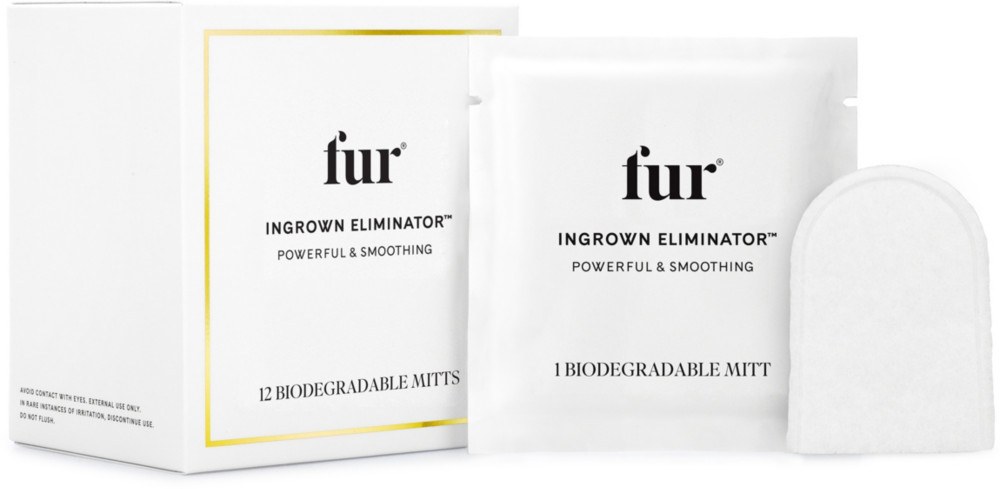
Whether I shave or get a wax (or, for whatever reason, attempt to DIY my wax at home), I can’t seem to get around the teeny razor bumps and subsequent ingrown hairs that always seem to pop up along the line of my underwear. I’ve used all of the pre- and post-shave lotions and moisturizers, kept the shower steaming hot, and made it a habit to exfoliate with a warm cloth and body scrub after any hair removal; and yet, still no relief. Truthfully, I’d began to accept that these ugly bumps and marks would just about always be a part of both my and my bikini line’s lives—and then I was introduced to the Fur Ingrown Eliminator ($18).

Launched as an Ulta exclusive, the product comes in packs of 12 individually packaged biodegradable mitts soaked in a powerful serum formulated with calming and soothing ingredients like witch hazel, aloe, and clary sage essential oil. Using it couldn’t be easier, either. You simply slip the mitt on your finger (I prefer using my ring finger for the most control), and massage the area you’re looking to treat. While I clearly use it to treat my pubic area, Fur encourages you to use the mitts wherever you’re prone to redness and ingrowns, including your underarms, brows, lip, and chin.

I began seeing serious results on my bikini line after one full week of daily use, right after I get out of the shower, regardless of whether I shaved or not. Both dermatologically and gynecologically tested, the mitts are quick to soothe irritation and have made even the most stubborn of my ingrown bumps significantly smaller—though I have faith that after more use, they’ll help me eradicate them completely for that Sports Illustrated–level clear skin.

It’s comical that after everything I’ve tried, the solution is a product that’s so simple in theory; but I’m glad to have found it. More than that, I’m glad to have found a brand that doesn’t feel the need to tiptoe around the pubic and body hair conversation and is instead spearheading a shiny, new wellness category. As Fur says, whether you think the bush is back or skin is in, it’s nice to have options. And for that, my long-awaited return to the beach is full of thanks.

Tanisha Pina is a writer in New York City. Follow her @tanishapina on Instagram.

Ulta

Fur Ingrown Eliminator Mitts

Buy Now


Source link

Categories
Health

How to Get Rid of a Pimple Fast: 12 Dos & Don'ts of Fighting Acne


There’s nothing like a big angry zit to light a fire under your skin care regimen. Whether it’s chronic picking, trolling Instagram for a cure-all spot treatment, or frantically Googling “how to get rid of a pimple fast,” a breakout always feels like a call to do something. (And of course, the breakout always happens the day before a party where you know you’ll run into two exes and five frenemies.)

If you’re looking for a strategy to make an acne flareup calm down this second, we’ve got you. We talked to top dermatologists to find out exactly what to do when acne strikes and you’re in a major hurry to get rid of it. Read on for the do’s and don’ts of calming the inflammation and healing the irritated skin on the double.

1. Do ice the zit.

If you’ve got a swollen pimple on your face that’s causing pain, reach for an ice cube. Wrap it in a thin cloth and sit it on the offending spot for three to four minutes. Repeat throughout the day to relieve pain and temporarily reduce swelling.

2. Do apply a paste made of crushed aspirin.

Aspirin contains salicylic acid, which is a top-shelf acne fighter by all accounts. Applying a paste made of aspirin immediately removes excess oil and dead skin. In other words, it helps to unclog and dry out your angry pore, while simultaneously reducing swelling and redness. It’s one of the home remedies that dermatologists recommend, and it even helps reduce pain at the application site. To make an aspirin paste, crush an aspirin with a spoon and swirl it with a few drop of water, creating a paste. Then, apply it directly to the pimple.

3. Don’t pick your face.

We know you’ve heard this, and we also know you’re dying to do it. But according to Josh Zeichner, M.D., director of Cosmetic and Clinical Research in Dermatology at Mt. Sinai, picking tends to cause more harm than good. It can cause what Dr. Zeichner terms “trauma” (!) on your skin, which in turn leads to “inflammation, infection, and potentially a scar.” Translation: It’ll take that annoying spot twice as long to disappear. So hands off.

4. Don’t overdry the affected area.

It’s not the chemical you use, it’s the amount you use, says Neal Schultz, M.D., a Manhattan derm. “People think if a little salicylic or glycolic acid is good, more is better,” he says. “It gets to the point that the active ingredient irritates the skin, making it scaly and flaky and red.” To prevent irritation, try a lower concentration of active ingredient once you’ve already broken out. Dr. Zeichner recommends checking your label for a concentration of benzoyl peroxide around 2.5 percent. One that really works: Paula’s Choice Clear Regular Strength Daily Skin Clearing Treatment ($17).

5. Do tone down on toner.

When you have a, shall we say, disturbance in the force, any astringents can “disrupt the skin barrier and cause inflammation and irritation,” says Dr. Zeichner. Unless you have very oily skin, skip the zit itself when you’re doing this step in your skin care routine. (And in that case, a gentle toner like Avene’s Eau Thermale, $20, is your best bet.)

6. Do use makeup with salicylic acid.

Slathering makeup over a breakout seems like a necessary evil: You want to hide the offender in question, obviously, but it can feel like you’re also suffocating it. But certain formulas can actually address pimples while providing coverage. “Salicylic acid is a common acne ingredient that is useful in preventing or treating pimples and can be found in several makeup brands,” says Rachel Nazarian, M.D., a dermatologist at Schweiger Dermatology. Clinique Acne Solutions Liquid Makeup ($29) is a classic for a reason, though ELF Cosmetics Acne-Fighting Foundation ($6) makes for a great budget pick. For touch-ups, try a concealer with it, too, like It Cosmetics Bye Bye Breakout Full-Coverage Concealer ($28).

7. Don’t wear makeup with pore-clogging ingredients.

For all the salicylic acid out there, there are certain ingredients to steer clear of. “People who suffer from acne should avoid makeup that contains mineral oil or lanolin,” Dr. Nazarian says. “These ingredients are comedogenic, meaning they have a high likelihood of clogging pores and triggering acne.” Check the labels to make sure your complexion products don’t contain either.

8. Do layer your beauty products properly.

No surprise if your instinct is to simply cover your pimple with as much concealer as you can get your hands on. But to zap a zit, it’s better if you take a few steps first. “Starting with a clean face, apply a thin layer of oil-free moisturizer [try Neutrogena Oil-Free Daily Moisturizer, $8, and then small amount of acne medication to your entire face,” says Dr. Nazarian. She’s a fan of gels with adapalene, since they regulate skin cells to prevent clogging of pores. Her favorite is ProactivMD Adapalene Gel 0.1% ($36), which, she notes, “can be applied very nicely under makeup.”

9. Don’t lose track of your trigger foods.

Is chocolate your enemy? Are late-night McDonald’s runs getting the better of your skin? These so-called trigger foods don’t affect everyone, but Dr. Schultz warns that you should keep tabs on whether certain foods tend to correspond with sudden onset breakouts. (For example, there’s been a recent connection between skim milk and acne.) The hard part, of course, is avoiding whatever it is that’s making your skin spazz.

10. Do resist the urge to squeeze.

“It’s never a good idea to squeeze a pimple,” says Elizabeth Tanzi, M.D., founder and director of Capital Laser and Skin Care and assistant clinical professor at George Washington University Medical Center. What is okay? Drawing out a big pimple once the whitehead is poking through your skin. Dr. Tanzi recommends using a washcloth with hot—“but not scalding”—water, to excavate the puss before applying your spot treatment.

11. Don’t believe every DIY hack you see.

While it’s tempting to mix up a cure-all witches’ brew of whatever drying agents you have in the house, Dr. Tanzi says she sees a lot of irritation from DIY skin care products. Even toothpaste isn’t the remedy it was when we were teens. According to Dr. Zeichner, triclosan (the ingredient in toothpaste that has antimicrobial properties) is rarely used these days. But if you are in a pinch and need to DIY it, here are some tips that are actually legit—and derm-approved.

12. Don’t opt for a stronger cleanser.

Swapping your usual face wash for something harsher seems like an obvious fix. Not quite. Your cleanser needs to be gentle so topical products can penetrate your skin, says Dr. Schultz. It’s best to stick to your regular skin care routine with a hydrating cleanser, like CeraVe Hydrating Face Cleanser ($15), until the breakout disappears, then see a dermatologist if you think you’re in need of a full-time acne cleanser.

For more advice on treating acne, don’t miss:
The Best Face Serums for Acne, According to Derms
The Totally and Completely Unfair Reason You’re Still Breaking Out in Your 20s and 30s
The Best Ways to Treat Every Single Type of Acne Imaginable
This Genius Concealer Hack Will Keep Pimples Hidden All Day Long


Source link

Categories
Health

I Got Rid of All My Old Underwear and It Was Lifechanging


A few weeks before Thanksgiving last year, I was on a panel for a lingerie brand where we were talking about who our underthings were for. Namely, when we slipped on a pair of sexy underwear, did we do it for ourselves, or did we do it for the person who might be lucky enough to slip it off? I argued that it wasn’t an either/or issue—it could be a both/and. “I feel sexy when I know that someone wants to rip my panties off,” I argued to a room full of gals grasping gin cocktails.

Then the next morning, I rolled out of bed, took a shower, and opened my underwear drawer to start getting ready—and I was horrified by what was looking back at me. My bras were ratty and stretched out. My underwear were old and full of holes. It was a bleak scene. This was the panty drawer that, according to what I’d told a room full of women the previous evening, was my source of strength and sexiness. And it was a f*cking mess.

Now, looking back at the year I had in 2018, and the lack of sex I had in said year (it was the driest of spells, my friends), it’s not surprising that my panty drawer looked like a post-apocalyptic relic. I worked through a series of hard knocks and bad dates. I lost my job in the beginning of the year, so instead of focusing on dating and caring for myself, I focused on getting my career back on track. Because of my professional pitfalls, I felt like a loser and a failure. And that’s not exactly the hottest feeling in the world, so my dating life suffered. I was in survival mode, not siren mode. My clothing, both visible and not, took a hit as a result.

But that was then. And in the cold light of day, I realized that I needed a change. I wanted my sexy back, and I was going to start with my underwear drawer. But instead of just relying on the same stretch cotton I typically did, I was going to finally indulge in some lacy underthings. (My fun fact is that, in the years before this panty overhaul, I’d just go commando on dates where I thought that sex was a possibility. Yes, even in a dress. I know.)

To me, lingerie was always the ultimate indulgence. It was one of those things that I’d dreamed of owning when I was broke and living off pasta in college. “When I make it, I want to invest in some amazing lingerie,” I’d tell my friends. “That’s how I know that I’m successful.” Until then, I relied on bargain bin panties and bras at a heavy discount. Were they cute? Absolutely not. But economic? Of course. My Depression-era grandmother would be proud of those panty purchases.

Tossing out the old undies felt like I was cutting ties with a part of myself that no longer served me

One of the benefits of the tough 2018 I’d was that I started making good money as a freelancer—more, in fact, than I’d made in my previous full-time jobs. I hadn’t exactly “made it” per se, but I did have a little extra income to splurge on some bras and panties. That, coupled with the insane Black Friday sales that came up a few weeks later, and I was able to do a complete overhaul for a grand total of less than $300. I shopped around, but got the most stuff from Savage x Fenty, because their sizing was amazing and their deals—like three-packs for $30—were fabulous. (Leave it to Rihanna to do lingerie right.)

Every time a package arrived, it felt like it was Christmas morning. I’d open them up, lay my bounty on my bed, and do a little fashion show for myself in the mirror of my bedroom. The transformation I felt was instant, and it was incredible. Slipping on the new underthings, for me, was like popping on Wonder Woman’s arm cuffs. I felt invincible and confident, regardless of what I was wearing on top of the underwear. Underneath, I had super powers.

Tossing out the old undies felt like I was cutting ties with a part of myself that no longer served me. I was saying goodbye to the sad, schlubby gal who spent her days in leggings and cried because she didn’t know how she was going to pay her bills. I’d replaced her with a newer, more confident person who felt good in her skin. My underwear, surprisingly, was the foundation of that transformation. I’d slip it on in the morning and look at myself in the mirror with nothing but my panties on. I felt good about the way I looked, which made me want to take that energy into the rest of my day. I started dressing in clothing, not loungewear, and I started feeling better about the way I looked. And all it took was a new wardrobe of underwear. Who knew?

Since then, I’ve become a big proponent of the lingerie overhaul. I know it’s a luxury that seems incredibly unnecessary for a lot of women. I get it. I used to order packs of underwear off of Amazon and call it a day. But I cannot stress the beauty of doing something that solely for you. They don’t have to be frilly and lacy with mesh or bows—just something you feel excited to put on each morning the same way you do with a favorite dress or pair of boots. For me, that’s sheer lace bra and G-string. If someone else gets to see them? Well, that’s great too.

Maria Del Russo is a sex and relationship writer in Brooklyn, NY. Her first book, Simple Acts of Love, will be out this summer.


Source link

Categories
Health

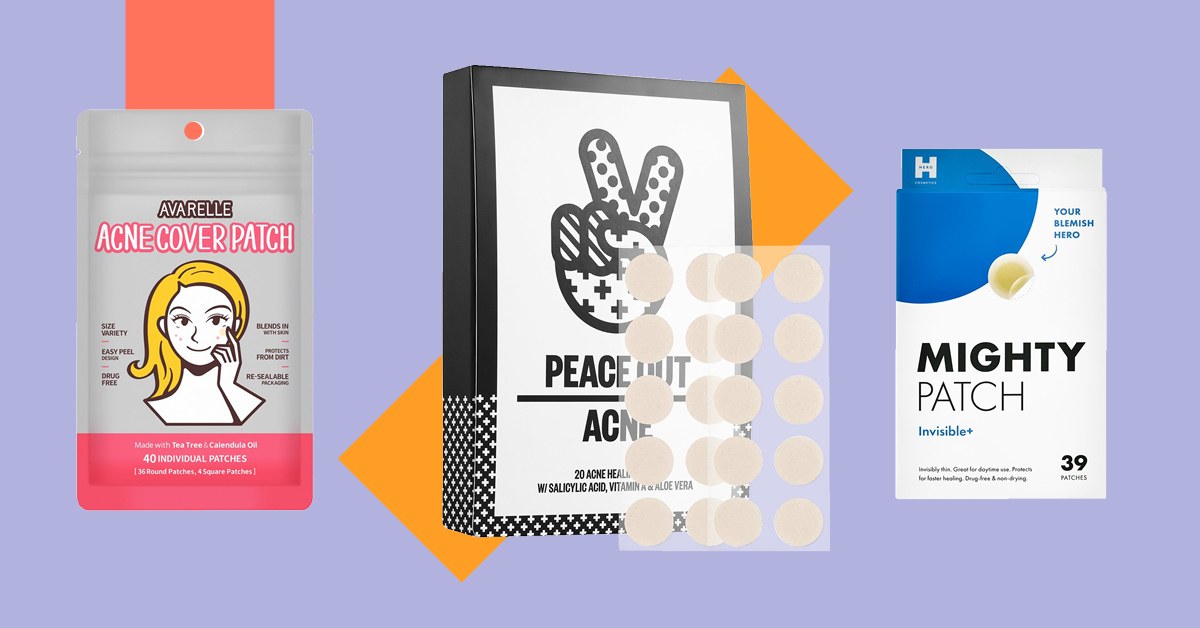
The 8 Best Acne Patches to Get Rid of Pimples Overnight


Although I’ve spent a better part of my career writing about my skin care, I first became obsessed when I started getting hormonal breakouts at 14. I’ve burned through tubes of benzoyl peroxide and salicylic acid gels—burning a few acne scars into my face in the process—and bottles of acne-relieving toners, all in an attempt to control the monthly cyst or two.

But because these products were so harsh on my sensitive skin—and did nothing for those under-the-skin monsters—I was forced to experiment. I spent more and more time scouring online for the best acne treatments out there. And that’s when I discovered acne patches late one night on an Amazon crawl, the medication-free pimple stickers that completely changed my complexion and perspective. Specifically, it was the reviewers who sold me on the NexCare Acne Absorbing Covers ($5, amazon.com), as they were heralded as particularly efficacious at treating cystic, hormonal acne that doesn’t normally respond to spot treatments—exactly the kind of zit that becomes my monthly nemesis and the kind that should never, ever be squeezed.

The instructions were simple: Clean the area, apply the patch, then wait. Once its color turns from clear to white, you take it off. NexCare recommends you leave the sticker on for several hours, but say they work best while you sleep. So I washed my face one night, slapped two on and hit the sack. The next morning, the stickers were white, as promised. You could literally see that they had worked like sponges to suck out the oil and gunk, leaving both zits far less inflamed with one practically disappearing. It was like magic, but not.

When I asked Joshua Zeichner, MD, the director of cosmetic and clinical dermatology at Mount Sinai Hospital in New York City, about acne patches, he explained that the majority of them (including my beloved NexCare patches) are made of hydrocolloid, and quite similar to topical wound treatments. “Hydrocolloid dressings are used in medicine for their ability to enhance wound healing—they can stick to the skin, form a protective seal over a wound, and absorb excess fluid,” he says. “These same properties make them useful for treating conditions like acne. Think of a pimple as a skin wound of sorts. Applying the hydrocolloid bandage over it can help protect and calm the inflamed skin, allowing it to heal.”

From then, I became an acne patch evangelist, preaching their incredible prowess to literally anyone who would listen. And although the NexCare stickers were my first love, I’ve since found a slew of different brands that have completely changed my skin care game. I don’t use over-drying lotions anymore, and the patches literally work overnight on about half of my pimples, maybe a few days for the big mamas.

Ready to try them yourself? Regardless of how big or angry your zit is, these are the eight different acne patches I’ve personally tested and will sing the gospel of.


Source link