Categories
Health

How to Wash a Face Mask


Now that we’re all using face masks to help stop the spread of the coronavirus people are asking the next logical question: how to wash a face mask?

With the ongoing threat of COVID-19, staying home and practicing social distancing is still the best way to stop the spread. But if you have to go out, the Centers for Disease Control and Prevention recommends covering your face with a mask. Thankfully, many brands and folks who know how to sew are rushing to produce reusable cloth masks to save vital PPE for our healthcare workers. For advice on how to wash a face mask and make sure you keep it clean, we asked the experts to weigh in.

1. Wash it daily.

“Masks should be washed after each use,” says says Dr. Purvi Parikh, M.D., an allergist and immunologist and member of Physicians for Patient Protection. “For example, if you’re going to the grocery store, it should be washed upon returning home and before going out next.” Ideally, you should toss your mask into your washing machine or laundry after each use, says Deirdre Jones, the designer behind Rendall Co., who is launching a line of cloth masks on April 13.

2. Use warm water.

When washing a face mask, you want to be sure to kill any germs, so temperature matters. “Use a warm setting to remove bacteria without weakening the fabric,” says Jones. Your regular laundry detergent is fine. “Using these practices will keep your mask clean and also are gentle enough to ensure the fabric will look good and stay in great condition for longer,” Jones says.

3. Be careful how you dry.

“If your mask has elastic loops, you should air dry so that these loops do not get damaged. If you have cloth ties, these can be dried on a regular cycle in the dryer,” says Parikh.

4. Hand wash if you have to.

If you don’t have access to a washing machine, the sink will do. “You can hand wash a fabric mask just like you may already hand wash delicates. I would suggest using Woolite or another hand wash detergent,” Jones says. Regular old soap works too. First, “wet the mask and rub vigorously with soap so you have a lather,” says Jones. Parikh then recommends soaking the mask in hot water and soap for 30 minutes to ensure you’ve killed all bacteria. Then rinse, and line dry or dry on a sanitized surface, Jones says.

5. Consider buying a spare mask.

Ideally, you should be washing your mask every time you wear it, says Jones. So it might be helpful to have one or two spares you can keep in rotation. If you don’t, but don’t want to do a whole load of laundry each day, hand washing your mask in the sink after each outing works too.

6. How to wash a paper mask.

Paper masks aren’t meant to be worn multiple times—they’re very difficult to sanitize. “We do not recommend sanitizing paper masks,” says Parikh. “If you have a limited supply, we recommend placing the mask in a safe, isolated place, such as a paper bag for three to five days and then reusing.”


Source link

Categories
Health

I Tried the 60-Second Face Wash Challenge, and It Changed My Skin


when taking a slower and more methodical approach to cleansing. (Jegasothy notes preservatives in cleansers also commonly cause irritation, and may have been the culprit.) So to give the 60-second face wash challenge a real try, I made the switch to low-surfactant formulas for a month, opting for concentrations of around 5%. I also made sure to follow Jegasothy’s instructions and spend the full amount of time at the sink. Because, as she puts it, if you don’t use these gentle cleansers longer, you might not be giving them enough time to truly do their job.

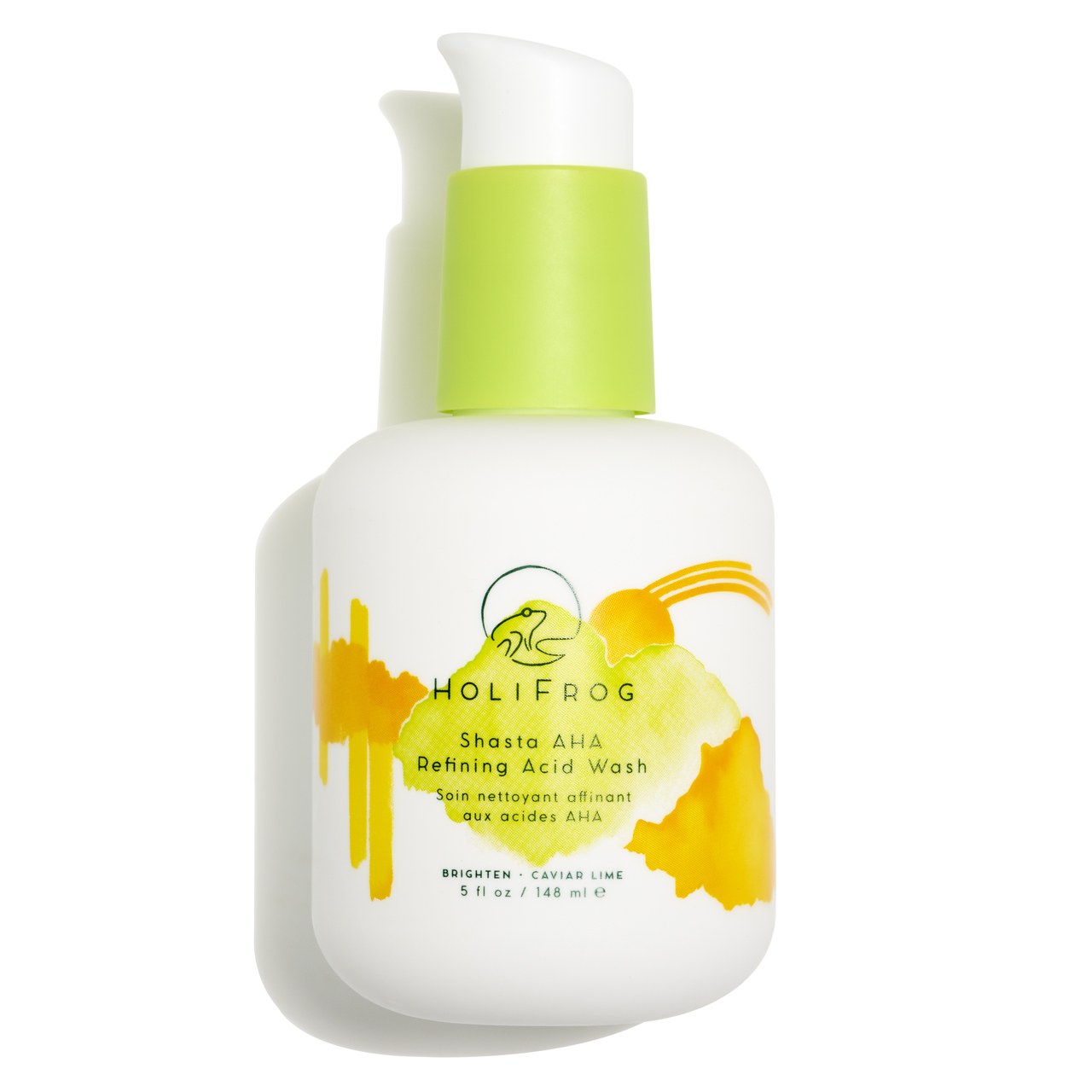
With that in mind, I tested out my new crop of cleansers, making sure to give each a full 60 seconds to work their magic, and came up with a newfound obsession for gentle face washes. I loved the Holifrog Shasta AHA Refining Acid Wash, which houses a party pack of exfoliating acids—the combination closely replicates the cleansing action of higher surfactants, but is gentle enough that it doesn’t irritate your skin. When I wanted to switch things up with a solid cleanser, I reached for the Arcona Kiwi Cream Bar, which swaps out sulfates for saponins (plant-derived surfactants that create foaming action). The result is a gentle cleanser that works up a more traditional lather, but doesn’t strip your skin. A solid choice for acne: the Kinship Naked Papaya Gentle Enzyme Face Cleanser. The creamy gel combines papaya enzyme and probiotics to exfoliate and support a healthy microbiome.

Holifrog Shasta AHA Refining Acid Wash

Holifrog Shasta AHA Refining Acid Wash

$38

Buy Now

Arcona Kiwi Cream Bar Facial Cleanser

Arcona Kiwi Cream Bar Facial Cleanser

$40

Buy Now

Kinship Naked Papaya Gentle Enzyme Face Cleanser

Kinship Naked Papaya Gentle Enzyme Face Cleanser

$20

Buy Now

I also found oil cleansers to be particularly clutch for 60-second washing because you don’t have to spend too much time scanning ingredients labels—most of them naturally contain very low or no surfactants. I had the best luck with Monastery Rose Cleansing Oil, which is free of surfactants, emulsifiers, alcohols, salts, and water. The ritualistic experience is a good bet for dry skin. After massaging it in for a minute, wipe everything off with a damp cloth—no splashing of your face (and countertops) required. Cleansing balms work similarly, and I had no problem eating up 60 seconds with Ranavat Botanics Luminous Ceremony Cream Cleanser, a luxurious cream-balm hybrid. It smells faintly of fresh-cut flowers and feels amazing when you massage it in. Although the hero ingredient is manjistha, an Ayurvedic herb meant to clear blemished skin, the formula still manages to feel intensely moisturizing.

Monastery Rose Cleansing Oil

Monastery Rose Cleansing Oil

$43

Buy Now

Ranavat Botanics Luminous Ceremony Cream Cleanser

Ranavat Botanics Luminous Ceremony Cream Cleanser

$42

Buy Now

One month after my cleanser overhaul, I was treated to a spectacularly unforeseen outcome: My monthly cystic zit never surfaced. Even better: Another 30 days of slow and gentle cleansing yielded the same result. Jegasothy points to increased surface blood flow and circulation as a key benefit of extended cleansing, while Robinson says that a longer wash with lower-surfactant cleanser is “absolutely” more advantageous. “There’s less stripping,” he explains. I’m chalking up the Great Zit Disappearance of 2019—and my newfound glow—to the new habit. While both experts said they couldn’t pinpoint my skin’s sudden clarity to this specific change, I’m with the internet on this one: The 60-second challenge is gold.

Erika Stalder is a freelance beauty writer in Los Angeles. Follow her on Instagram @erikaxstalder.


Source link

Categories
Health

Why Your Hair Hurts When You Don’t Wash It


Ever notice how your hair hurts when you haven’t washed it in a few days? It’s not just you—greasy hair pain is a thing, according to dermatologists, and there’s a legit scientific reason for it.

Listen, we’ve all gone a few too many days between shampoos. Even with the miracle that is dry shampoo, scheduling regular full washes can sometimes fall to the bottom of the to-do list. Gross? Sure. True? Definitely. (Hey, washing and styling is time consuming.) Of course, when you don’t have time to wash your hair, you can end up with a scalp full of grease. And unfortunately, that’s not all you can get from skipping washings.

If you don’t wash your hair for awhile, oils that your scalp produces naturally accumulate around your hair shaft, promoting the overgrowth of yeast on your scalp, explains Joshua Zeichner, M.D., a New York City-based board-certified dermatologist and director of cosmetic and clinical research in dermatology at Mount Sinai Medical Center. This can lead to skin inflammation which causes redness, itchiness, and scaliness. “In some patients, inflammation may manifest most with an ache,” he says. Translation: Your hair hurts.

Before you freak out and run to the shower, getting what sounds like a yeast infection on your head doesn’t mean you’re a dirty person (even if you are a little lax on the hair-washing front). That yeast that grows on your scalp is malassezia yeast, which lives on everyone’s bodies, Zeichner explains. When levels of the yeast rise, like when you don’t wash your hair for a few days, your body is more likely to react, causing the itchiness or discomfort, says Cynthia Bailey, M.D., a diplomat of the American Board of Dermatology and president and CEO of Advanced Skin Care and Dermatology Inc.,

There can be other factors at play with greasy scalp pain, too—namely the fact that you also tend to put your hair up when it’s oily, and that can also feel uncomfortable, Bailey says.

Luckily, there’s help—maybe not shockingly, it involves washing your hair.

If you’re having scalp pain due to greasiness, you want to try to reduce yeast levels with an antifungal drugstore shampoo, like Nizoral 1 percent shampoo, Zeichner says, adding that a tar extract-based shampoo like Neutrogena T-Gel, can continue to reduce inflammation. “Remember that while these shampoos may wash hair, they should really be used as scalp treatments,” he says. That means you should apply them only to your scalp, let them sit there, and lather for the length of time that it takes to sing the alphabet. Then, wash them off and clean your hair with your regular shampoo.

That should help clear up any scalp pain, but if it persists, it’s time to see your dermatologist—it could be a sign of another scalp condition, Bailey says.


Source link

Categories
Health

We Tested Kylie Jenner’s Face Wash to See How Well It Works


Staffer: Bella Cacciatore, beauty associate

Makeup level: Medium coverage foundation, mascara

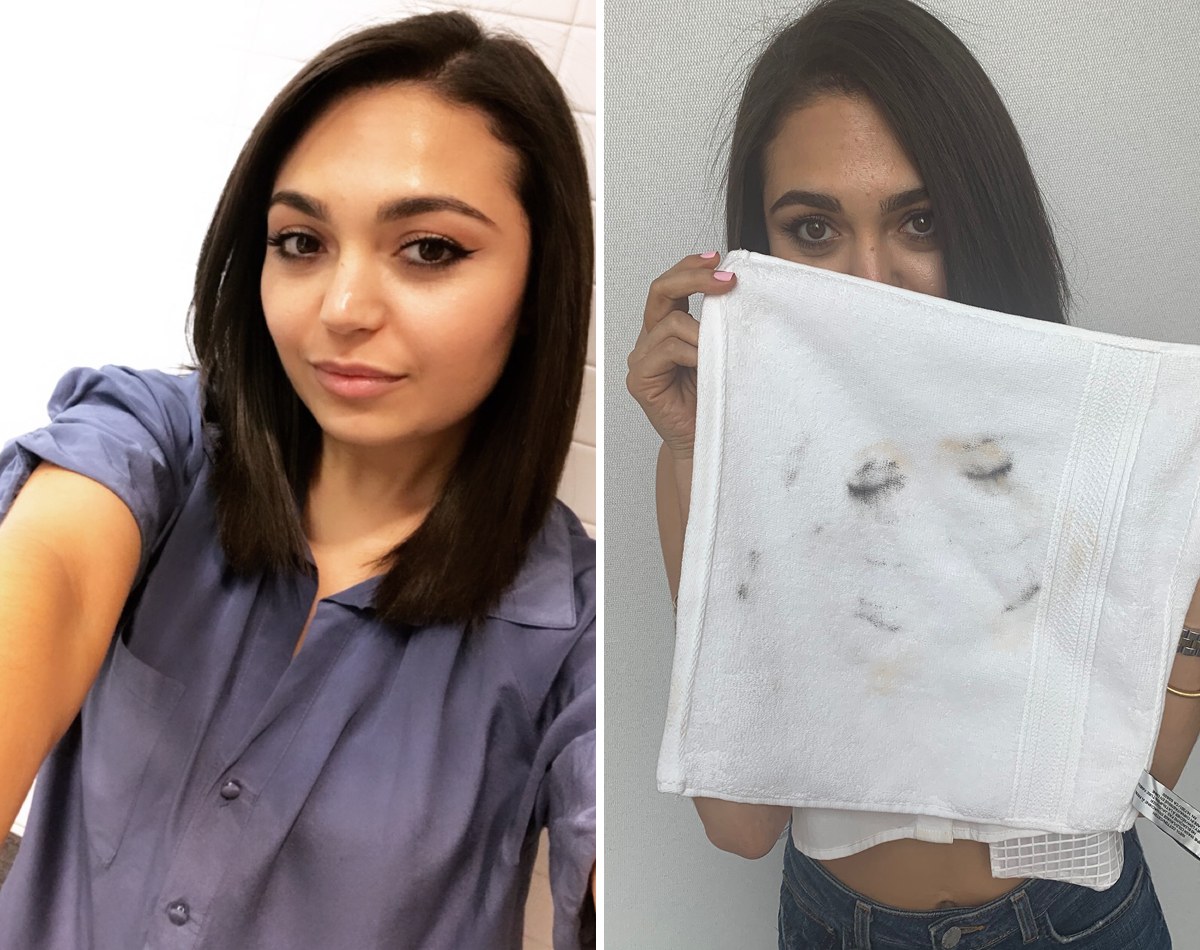
Results: At first I was appalled by Kylie’s video, but the more I thought about it, it made sense that she would have makeup all over her towel. She really did have only a few seconds to show the product in action, and even when I double-cleanse, I often have foundation left on my own towel. The foaming cleanser broke down a good amount of my foundation, most of what was on my towel was mascara, which it had a harder time removing. I personally found the wash a bit too drying for my skin, but if I were to use this, I would definitely use an oil or balm first, to really break down all my makeup. It’s more of a second step in double cleanse kind of cleanser—and I prefer oil removers to makeup wipes, which aren’t as environmentally friendly.

Azadeh Valanejad

Staffer: Azadeh Valanejad, social video editor

Makeup level: Full coverage foundation, mascara, liquid eyeliner

Results: The Kylie Skin Foaming Face Wash definitely exceeded my expectations. It was extremely gentle but powerful—it completely wiped off my full coverage foundation. Plus, it smelled really good. Although it was drying for the others, it felt great on my skin. Just remember the fact of the matter is that it’s a basic, no-frills cleanser—not an eye makeup remover.

The Consensus

So did Jenner deserve the criticism? Yes and no. While the time constraints play a huge factor in the video, she probably should have known that people are more educated than ever when it comes to skin care, and the Internet has no problem calling out celeb fails. Still, the Foaming Face Wash does its job when used correctly—even better so when paired with makeup wipes. Maybe just launch an oil cleanser next, Kylie?


Source link

Categories
Health

Sophie Turner Wasn't Allowed to Wash Her Hair While Filming Game of Thrones


The hair sagas of the women of Westeros continue as Sophie Turner just revealed that she wasn’t allowed to wash her hair while filming certain seasons of Game of Thrones. And all this after the natural blond spent years alternating colors between her born-with-it shade and Sansa Stark’s eye-catching red.

During an interview with InStyle, the actress spilled her “dirty” secret. After being asked about how the men on the show were famously forbidden from washing their hair so it looked more in-character, Turner revealed this fun fact: “For the first few seasons I was allowed to wash my hair because I was an aristocratic young girl, but towards season 5 they started asking me to not wash my hair and it was really disgusting. Now I wear I wig so I can wash my hair whenever I want, which is nice. But yes, for a couple of years I was living with pretty greasy hair.”

That sounds less than fun, but honestly it’s not the worst thing that’s happened to her poor head. “A few years ago I was trying to go back from red to blond, and it destroyed my hair to the point that I had to use a wig for Game of Thrones,” she told Glamour in November. “They wouldn’t let me dye it back red or my hair would’ve fallen out.”

Apparently, being on the biggest show is the world is a real detriment to the beauty routines of its female stars including Turner’s co-star Emilia Clarke, who chopped her hair short after damage inflicted while filming. “My hair was, like, dying!” she said last fall after chopping it into a pixie. “So I’ve cut it a little bit shorter. It’s almost the shortest it’s been. I’m honestly trying to grow out the blond, because it’s just killed my hair, and I miss having nice hair.”

Thankfully they’ve have adapted quite nicely—courtesy of some serious masking tips. “The biggest thing [to keeping my hair healthy] is WellaPlex,” Turner told Glamour. “It’s a hair mask that you put on, leave in for 10 minutes, and then wash out. It repairs the bonds in your hair so that it doesn’t just feel strong and healthy, it actually is stronger and healthier afterward. I use it every week, because with the job I have, it’s a lot of dyeing, straightening, curling, and heat damage. I’ll put in on after showering, watch a bit of Keeping Up With the Kardashians, and then I go back and wash it off.”

And it definitely looks like it’s paying off.

Related Stories:
Sophie Turner on GoT Wigs, Fenty Highlighter, and What She Texts Joe Jonas
Sophie Turner Says Fans Might Be ‘Disappointed’ by Game of Thrones’ Series Finale
Game of Thrones Fans Think Jon Snow’s Statue in the Season 8 Trailer Reveals a Huge Clue


Source link

Categories
Health

The Best Face Wash for Acne Isn't What You'd Expect


Salicylic acid, retinol, charcoal—people who have acne like myself can rattle off a laundry list of ingredients that are formulated to prevent and treat pimples. I’ve not only memorized them, I’ve tried them all. And after almost a decade of testing, I like to think my anti-blemish regimen is a finely tuned machine.

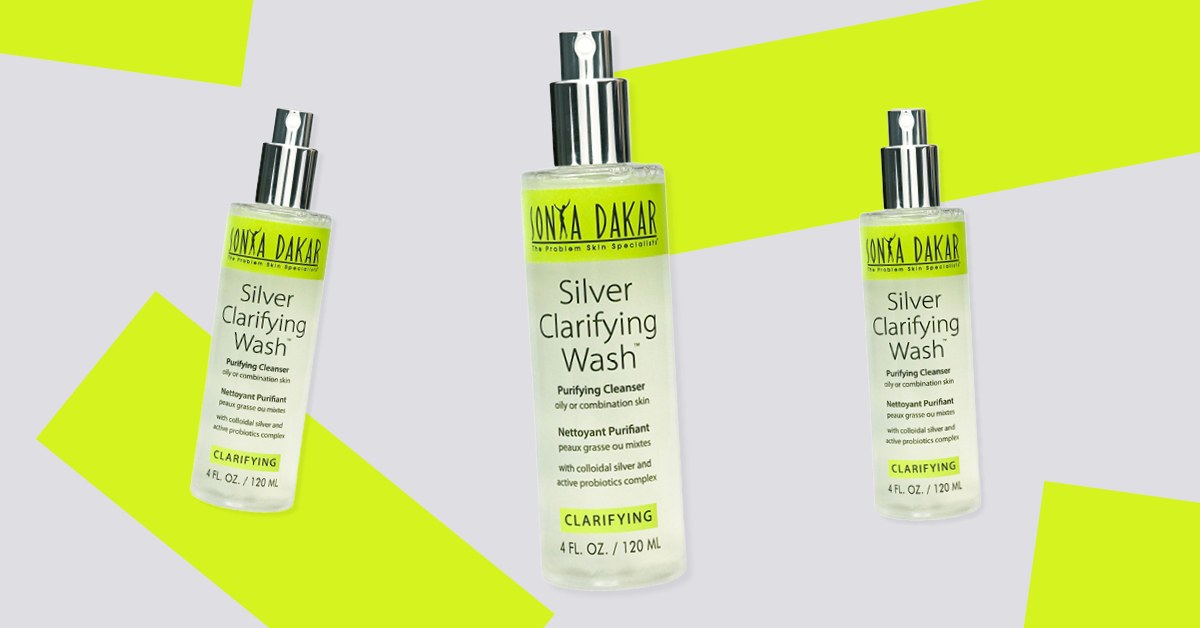
One of the cornerstones of this routine is not a sci-fi gadget or a cream made from the tears of endangered catfish, but rather a humble face wash. That would be the Silver Clarifying Wash from Beverly Hills’ celebrity facialist Sonya Dakar—it blows all other cleansers out of the water.

At this point I’m guessing your marketing B.S. barometer is through the roof. Bougie products with “precious metals” are just another way for brands to charge more money for something that would be pretty basic otherwise, no? You are absolutely right to be wary, especially when a face wash comes with a price tag over $50. I’ve fallen victim to the “magical anti-aging gold flakes” spiel before. But put that healthy skepticism on pause for a moment while I walk you through this one.

The Silver Clarifying Wash checks all of the acne-fighting ingredient boxes: It’s got a salicylic acid complex to clear pores and a probiotics blend to balance out good and bad bacteria on your skin. There’s also some rosemary and sage in there to calm redness. But what makes it truly special is the inclusion of its namesake ingredient. The silver ions found in this wash have some serious antiseptic powers.

Where an antibacterial product kills off acne-causing bacteria, an antiseptic will prohibit the growth of that bacteria in the first place. So cleansing with the Silver Clarifying Wash means I’m not only erasing away the day’s dirt, oils, and dead-skin buildup, but also setting my skin up for fewer breakouts in the future.

I find the mistake that a lot of people with acne make is trying to use a cleanser that’s too harsh for your skin. I get it: You want to physically feel like everything gross on your face is being blasted into oblivion, where it can’t hurt your skin. The problem with that is while the bad stuff goes, so does the good, leaving you with stripped-dry, irritated skin that’s now even more susceptible to pimples.

This cleanser relies on those silver ions, a gentle acid complex, and probiotics to dissolve all of the gunk and grime without disrupting your skin’s delicate oil balance. You feel clean, but there won’t be that dry, tight, itchy feeling. I also love how this wash fits into my usual breakout-busting routine as it doesn’t disrupt or react with any of the more potent treatments I use.

So while it may seem like a gimmick, take it from one cynic to another: This stuff works like a charm.

Sonya Dakar Silver Clarifying Wash, $59, amazon.com

Related Stories:
Why You’re Still Breaking Out in Your 20s and 30s
7 Skin Care Ingredients You’re Not Using But Should
This Gentle Serum Is Perfect for People Too Scared to Try Retinol


Source link