Categories
Health

Body Hair Removal: Every Option and Which Works Best for You


Body hair removal is as much of a personal choice as any other beauty treatment. We can’t deny that for many, there’s been a lengthy history of societal pressure to remove it—but as the conversation around how we present ourselves progresses, it’s a good time to remind yourself that the decision is ultimately your own. If you want to leave it alone, then feel free to let it grow. Alternately, if you’d like to remove your body hair, there’s a long list of options currently available.

So, if you’re curious to explore them, we’re bringing you all the relevant information. We spoke to dermatologists, trichologists, and beauty experts to demystify how each process works and the pros and cons of each. Below, our detailed guide to six different types of body hair removal you can choose from.

How It Works: Even if you haven’t tried this one before, you’re likely familiar with the process. Hot wax is applied to your skin, grabs on to the roots of your hair, cools down and then gets pulled off. In order for it to be done effectively, you need to have at least a few millimeters of hair growth above your skin so the wax can properly attach. Your aesthetician may also trim your hair before waxing; when your hair is too long, it can cause extra pain as it comes off (speaking from personal experience).

“This actually removes the organ responsible for hair growth, the follicle or root, out from underneath the skin,” says Dominic Burg, M.D., chief scientist for Evolis Professional. “It not only removes your hair, but also damages the cells and apparatus needed to grow a new hair in its place, so new hairs come in finer and less substantial, more so with repeated waxing.”

Pros and Cons: Waxing can be done on any hair type and is relatively affordable depending on whether you do it at home or which salon you go to. At home, most kits will run you $5 to $30, while salons typically charge $30 to $90 (Brazilians are more expensive than basic bikini waxes since they’re more involved).

Dr. Burg also notes that it’s quick, reduces growth over regular sessions and can remove large areas of hair. On the flipside, “it can cause inflammation and irritation to your skin,” says dermatologist Joshua Zeichner, M.D.. Those with sensitive skin types should try a patch test first and it might be a good idea to apply gentle, anti-inflammatory creams to the treated areas afterward. Want more advice from pro waxers? Click here.

How It Works: Here’s a quick hair biology lesson: All of your hair goes through cycles of growth (anagen), regression, rest (telogen), and fall. “The hair on your body has a short growth phase and a medium-long resting phase,” explains Dr. Burg. “Each type of hair has its own cycle and you can surmise what this is by looking at the length, thickness and growth rate. Leg hair has a medium growth phase and a long resting phase of around six months, whereas pubic hair has a resting phase of three months.”

Laser hair removal works best during the active growth phase, which means you will need several sessions to see semipermanent or permanent results. An intense beam of light bypasses the surface of your skin and gets absorbed by hair follicles, destroying their ability to generate new hair over time.

Pros and Cons: You’re unlikely to experience ingrown hairs with this method and while sessions can be expensive, results will also last much longer than methods like waxing or shaving. Chris Karavolas, owner of New York’s Romeo and Juliette Laser Hair Removal, estimates that clients need six sessions on average, “spaced six to eight weeks apart are needed in order to achieve permanent hair reduction.” The sessions themselves are short; underarms and bikini can be treated in five to 10 minutes, while a larger area like your full leg may take 20 to 30 minutes. While pricing will vary by geographic location, Karavolas estimates a full package (for permanent reduction) costs around $3,500 for legs, $1,000 for underarms, and $1,000 for your bikini line.


Source link

Categories
Health

Alex Rodriguez Loves Jennifer Lopez So Much, He Works Out to Her Music


Alex Rodriguez proved himself the ultimate Instagram boyfriend in 2018, taking photos of Jennifer Lopez seemingly every chance he got. Now, he’s bringing that energy into 2019, first by working out to Lopez’s music.

The baseball vet posted a video to Instagram on Wednesday (January 2) of himself and Lopez sweating it out at their local gym. Just watching this clip will elevate your heartbeat, so it’s a good thing Lopez’s song “Limitless” is playing in the background. It’ll keep you motivated to the very end—just like (I’m assuming) it did for Lopez and Rodriguez’s actual workout.

“The grind never stops,” Rodriguez captioned the video. “What are you going to make of 2019?” I’m not sure what I’ll make of 2019 yet, but I know I will do it set to Jennifer Lopez’s severely under-appreciated discography.

Check out Rodriguez’s video for yourself, below:

So what other J.Lo-inspired workouts will A-Rod do this year? Burpees set to “Love Don’t Cost a Thing?” Weight training while blasting “Waiting for Tonight” (or “Weighting for Tonight”)? A half marathon listening to nothing but “Dance Again” on a loop? The possibilities are, well, limitless.

“Jennifer has given so much to me and my kids over the last two years,” Rodriguez told People magazine in December about his relationship with Lopez. “Her best quality is undoubtedly her generosity. I see it every day and my kids see it as well.”

Lopez returned the favor, telling People about Rodriguez, “Everything feels healthy and different. We bring something to each other’s lives that is profound, good and healthy.”

Now go buy “Limitless” on iTunes. It’s a bop!

Related Stories:

10 Times Alex Rodriguez Was Jennifer Lopez’s Biggest Fan

Alex Rodriguez Found a Photo of Jennifer Lopez He Had Autographed 20 Years Ago, and It’s a National Treasure

Jennifer Lopez and A-Rod Are Making Coordinated Athleisure a Thing


Source link

Categories
Health

This Black Primer Works Like Magic on Your Skin


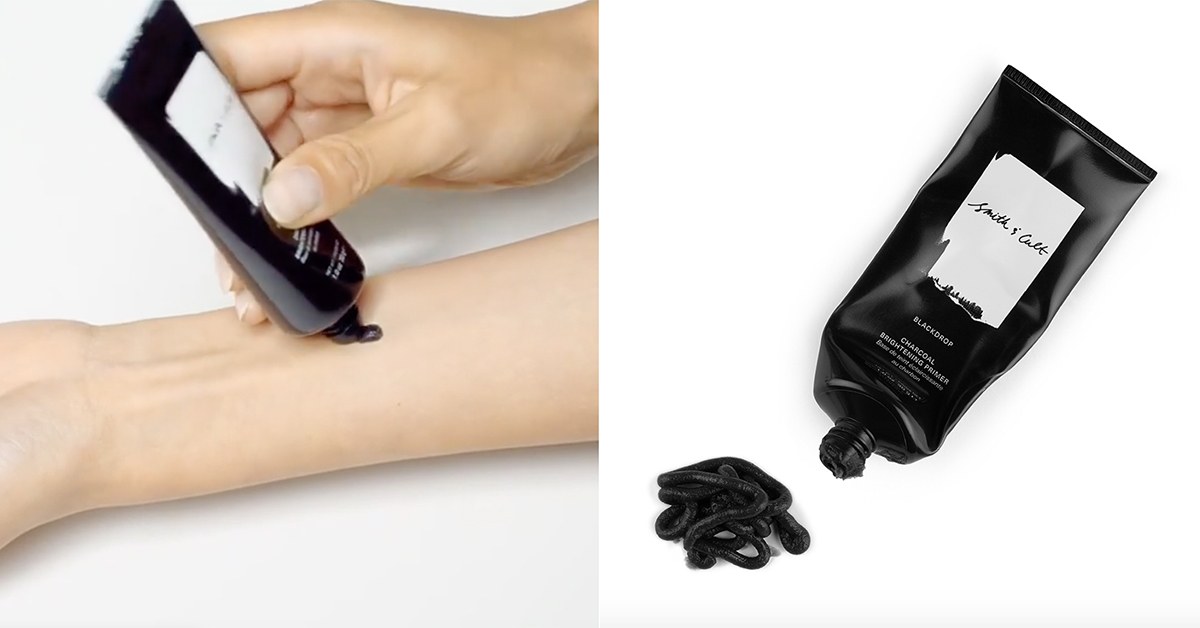
People have been chucking add-ons into primers since they came onto the beauty scene. Sunscreen, moisturizers, and all manner of shimmery particles and glow-inducing pigments are old news. Charcoal, though? Where primers are historically the one thing I refuse to make room for in my routine (most just don’t make enough of a difference, IMO), Smith & Cult’s Blackdrop—a new charcoal-infused primer—grabbed my attention. I was struck by the color alone; any product that runs the risk of making you look like a coal-smudged Tiny Tim has to have a reason that warrants the color, I thought. Lo and behold, it’s hobbled its way into my heart.

I have a track record of falling for gimmicky, yet delightful products. I know that, and I’m not ashamed. I’ve always been this way: It was love at first infomercial, from French twist hair rollers to electric, handheld hair braiders (the nightmare memory never fades). The brand says that Blackdrop gets its color from the formula’s mix of mattifying bamboo charcoal powder and smoothing black pearl, while Vitamin E hydrates and phytoplankton extract wards off pollution. That reads like most other primers’ marketing copy, but the color’s audacity pulled me in. I wasn’t disappointed: A dollop of Blackdrop looks nothing like any face product I’ve tried.

Let me be clear, though, it doesn’t look appealing at first squeeze. A blob comes out opaque and black, and it stays that way until you rub it in—and that’s when the feeling of velvety softness hits your skin. Softening primers already exist, but most deliver that baby-smooth effect with a hearty dose of silicones. Some people don’t love that, because many silicones can pill up with your other face products (and there’s nothing more rude than putting on a face product that not only doesn’t do its job, but gets in the way of others). To that end, Blackdrop is silicone-free. Ten seconds in and the color is gone, but the softness remains.

I wouldn’t necessarily say my skin feels moisturized (this hasn’t replaced my go-to cream), but a sense of tackiness sticks around for a few more seconds, which gives me time to buff foundation over its added grip. And there the pigment stays. I don’t have immensely oily skin, so my foundation’s routine disappearing act has frustrated me for years. By the end of the day, my jawline acne scarring is always loud and proud (and sure, that meant I had to learn to accept it). But with the help of Blackdrop, I never would’ve had to take the personal growth journey; my foundation stays put for hours. My one qualm-but-not-really is it makes my foundation read slightly powdery if I get two inches from the mirror and take a close look. Yet no one else does that, and from a more-normal foot away, the same effect looks airbrushed, without interfering with my #nofilter authentic Instagram brand.

The other noticeable advantage? Despite the advice of every dermatologist I’ve ever met, I’m a chronic face-toucher (there may be some link to my foundation’s disappearing act, but studies are inconclusive). With this spectacular black goo, nothing travels—even when I make a phone call, or press the primer’s shiny black tube against my face to test it infomercial-style. I can think of no higher compliment.

Smith & Cult’s Blackdrop Charcoal Brightening Primer, $32, ulta.com

Related Stories:
5 Women Try the Summer Fridays Overtime Face Mask
The Best Setting Powders Glamour Editors Have Ever Tried
I Tried Rituel de Fille’s Viral Black ‘Anti Highlighter,’ and It Looked Awesome in So Many Ways


Source link

Categories
Health

A 'Scandal' and 'How to Get Away With Murder' Crossover Episode Is in the Works


Scandal and How to Get Away With Murder have a lot in common. For one, they’re both created by Shonda Rhimes, but the similarities run deeper than that. Each show centers on a woman of color who’s the head of some large, high-stress entity. On Scandal, for example, Kerry Washington plays Olivia Pope, the owner and operator of a crisis communications firm. Meanwhile, Viola Davis leads How to Get Away With Murder as Annalise Keating, who runs a law firm of sorts from her own home. In each episode Pope’s and Davis’ companies take on a new client and case—and all the drama that comes with it. Of course, the shows have slightly deviated from their original formats, but there’s no denying they share DNA. They’re far more similar to each other than Rhimes’ other long-running show, Grey’s Anatomy, which takes place predominantly in a hospital.

So it’s no surprise that fans have been campaigning for a Scandal and HTGAWM crossover episode for quite some time—and they’re finally getting their wish. Deadline reports that ABC is plotting a special that will combine these two Shondaland worlds for the first time ever. Do you hear that? That’s the sound of 2,000 red wine bottles popping open in celebration.

ABC hasn’t commented on Deadline’s report, but Washington seemed to confirmed the news on Instagram. She posted a photo of herself, seemingly in Olivia Pope garb, on the set of HTGAWM. “Hey Ms @violadavis ❤️ check it out. This spot look familiar?! Where are you?” she wrote. Check it out for yourself, below:

Both shows return on January 18—and it’s Scandal‘s last season, so that means this crossover episode is coming sooner than you think. (If it exists, at least. Please let it exist!)

Related Stories:

Scandal Is Great Again—Here’s How to Keep It That Way

10 Annoying Things About Scandal Only Real Fans Will Admit

This Scandal Tribute Will Bring Out Your Inner Gladiator


Source link

Categories
Health

There's a Type of Therapy Where You Walk with Your Therapist, and It Works


When Megan Treby, 41, an art teacher who lives near Washington, D.C., first started seeing her therapist, Jen Udler of Positive Strides Therapy for her anxiety, Udler suggested that the two of them might conduct their sessions while taking walks to help release excess energy. Udler specializes in a type of therapy called “movement therapy” (in other words, walking while talking) that she thought might be helpful for Treby. The pair began meeting for sessions on a walking trail in Fallsgrove Park in Rockville, Maryland. During their sessions, Udler didn’t take notes. It wasn’t even completely private—they were in a public space, after all. But the benefits of walking side-by-side instead of sitting face-to-face are pretty profound: it really seems to make talking about difficult issues easier for people.

There’s actually research to back this type of therapy up—one study found that people with anxious tendencies felt more pleasantly about another person they were interacting with if they weren’t making eye contact. Treby noticed this effect, and also that moving through her surroundings on her walks with Udler gave them fodder for their sessions. The two walked on a path with dashed white lines, which Udler used as a metaphor for breaking up tasks little by little on the road to transformation. Over time, Treby started to her Udler’s voice in her head. Megan: think of something else. Megan: identify what you’re afraid of. Megan: is that reality or is that the anxiety talking?

Physical movement has traditionally been seen as something done outside of and in addition to talk therapy. But combining them is proving to work way better for some people. “When I have clients that prefer to sit in an office, they take a longer time to make progress,” says Clay Cockrell, a movement therapy practitioner and founder of Walk and Talk Therapy in New York City. Progress, according to Cockrell, means developing problem-solving tools and learning to make different choices outside the patterns that a patient is trying to break. “[With therapy,] there’s this very stereotypical image of Freud and a couch in people’s minds, which many find intimidating and not at all appealing,” says Amanda Stemen, a clinical social worker based in Los Angeles. “We need to broaden the understanding of what therapy actually is and all the methods in which healing and growth can occur.”

Angela*, 55, used the walk-and-talk method to get through her sadness and feelings of depression after her sons left for college. Her walking sessions were often four miles long. “It’s good to not lock in because you’re missing someone,” she says.

The addition of movement also allows therapists to observe breath, pace, gait, and posture and incorporate that information as part of their therapeutic process. For example, Stemen might notice a client walking heavily and ask them about it. “There’s usually a parallel between what they’re doing physically between how they operate their emotional life,” says Stemen.

It’s not that walking alone has some magic power to evaporate anxiety or remove sadness. Walking and talking with a counselor is just a new way of approaching mental health goals, and it can be especially for people who have had trouble finding therapy styles that work for them in the past. Through movement therapy, “I was able to see that my thoughts were just automatic negative thoughts and a product of my anxiety —not truths,” says Treby. “The simple act of walking forward literally made my mind move forward.”

*name has been changed


Source link

Categories
Health

Alyssa Milano Had to Explain How Rape Culture Works to Matt Damon


Once upon a time last week, actor Matt Damon made a couple of remarks about the Weinstein scandal—and the other once-powerful men who also have fallen due to sexual misconduct allegations in Weinstein’s wake. What he said in that interview with ABC News didn’t go over well: The Internet dragged him for tone-deaf comments about Hollywood’s casting couch problem and attempting to draw lines between various degrees of misconduct, seemingly in a way that suggested one should be considered more excusable than others. (Hint: None of them are excusable.) Luckily, Alyssa Milano was on hand on Twitter to give him a lesson in what exactly rape culture is and why his comments were off the mark.

He started off OK: “I think we’re in this watershed moment. I think it’s great. I think it’s wonderful that women are feeling empowered to tell their stories, and it’s totally necessary …”

Three sentences after he opened his mouth, though, it all went careening downhill: “I do believe that there’s a spectrum of behavior, right? And we’re going to have to figure—you know, there’s a difference between, you know, patting someone on the butt and rape or child molestation, right? Both of those behaviors need to be confronted and eradicated without question, but they shouldn’t be conflated, right? You know, we see somebody like Al Franken, right? I personally would have preferred if they had an Ethics Committee investigation, you know what I mean? It’s like at what point—you know, we’re so energized to kind of get retribution, I think.”

Well, yes. After living under patriarchal oppression for the better part of the last forever and having our bodies continually treated as commodities, there is a certain energy about finally being able to speak up about it—and actually be heard.

“And we live in this culture of outrage and injury, and, you know, that we’re going to have to correct enough to kind of go, ‘Wait a minute. None of us came here perfect,'” Damon continued. “You know what I mean? … The Louis C.K. thing, I don’t know all the details. I don’t do deep dives on this, but I did see his statement, which kind of, which [was] arresting to me. When he came out and said, ‘I did this. I did these things. These women are all telling the truth.’ And I just remember thinking, ‘Well, that’s the sign of somebody who — well, we can work with that’ … Like, when I’m raising my kids, this constant personal responsibility is as important as anything else they learn before they go off in the world.

And the fear for me is that right now, we’re in this moment where at the moment — and I hope it doesn’t stay this way — the clearer signal to men and to younger people is, deny it. Because if you take responsibility for what you did, your life’s going to get ruined.”

Later, by the way, Damon goes on to give a hypothetical example of what would happen if someone falsely (he makes sure to specify this) accused him of sexual harassment. His plans? Lawyer up, and get a settlement on the table.

“I mean, look, as I said, all of that behavior needs to be confronted, but there is a continuum,” Damon continues. “And on this end of the continuum where you have rape and child molestation or whatever, you know, that’s prison. Right? And that’s what needs to happen. OK? And then we can talk about rehabilitation and everything else. That’s criminal behavior, and it needs to be dealt with that way. The other stuff is just kind of shameful and gross.”

What Damon leaves out, obviously, is the “shameful and gross” things he’s referring to have the demonstrated potential to destroy women’s careers. Women don’t escape unscathed from the actions of these men, whether they are attacked or manage to fend off the harassment and assault. Damon putting them on a scale completely negates and ignores the damaging, lasting, and real fallout women experience.

Milano, who has been vocal in the #MeToo movement, called him out in a series of tweets that explained how rape culture works. It was an act of emotional and mental labor that was undoubtedly draining but definitely necessary.

“Dear Matt Damon,” she wrote. “It’s the micro that makes the macro. We are in a ‘culture of outrage’ because the magnitude of rage is, in fact, overtly outrageous. And it is righteous. I have been a victim of each component of the sexual assault spectrum of which you speak. They all hurt. And they are all connected to a patriarchy intertwined with normalized, accepted–even welcomed– misogyny.

We are not outraged because someone grabbed our asses in a picture. We are outraged because we were made to feel this was normal. We are outraged because we have been gaslighted. We are outraged because we were silenced for so long.

There are different stages of cancer. Some more treatable than others. But it’s still cancer. Sexual harassment, misconduct, assault and violence is a systemic disease. The tumor is being cut out right now with no anesthesia. Please send flowers. #MeToo”

Of course, it would be really nice if it were a woman—such as say, Milano—doing the highly visible interview with ABC News as a leader in the #MeToo movement, rather than another male Hollywood figure. Instead, Milano, a victim of sexual misconduct herself, had to do mental and emotional labor to correct Damon’s problematic thoughts. Exhausting.

Related Stories:
MeToo: Thousands of Women Share Stories of Sexual Harassment and Assault on Twitter
Post-Weinstein, These Are the Powerful Men Facing Sexual Harassment Allegations


Source link