Categories
Health

13 Times Women In Sports Fought for Equality


Even so, glaring equality gaps persist: At the 2014 and 2018 Winter Games, men had three separate ski jump events, while women only had one. “It’s like, ‘Here, we’ll give you a little piece,’ and then, ‘Go away, leave us alone,'” Lindsey Van, a now-retired American ski jumper who helped lead the discrimination lawsuit, told the Chicago Tribune in 2018. “I still think that it’s an old boys’ club.” According to 2022 Beijing Games website, there will be a new mixed team event in ski jumping; there is no mention of any new women’s-only competitions.

Olympic Runners Speak Out About Poor Industry Maternity Policies

Last spring, several Olympians-slash-mothers—including Alysia Montaño, Allyson Felix, and Kara Goucher—spoke out about the sporting industry’s lack of support for women athletes both during and after pregnancy. “The sports industry allows for men to have a full career,” Montaño said in an op-ed video for the Times last May. “When a woman decides to have a baby, it pushes women out at their prime.” The women specifically called out Nike, Asics, The United States Olympic Committee, and U.S.A. Track & Field. “I asked Nike to contractually guarantee that I wouldn’t be punished if I didn’t perform at my best in the months surrounding childbirth,” Felix wrote in an op-ed for the Times published in May. “I wanted to set a new standard.”

Three months after the allegations, Nike (who Felix said had previously denied her asks) announced a new maternity policy for all sponsored athletes that guarantees pay and bonuses for 18 months surrounding pregnancy. Three other athletic apparel companies adopted maternity protections for sponsored athletes as well, according to the New York Times.

Mary Cain Calls for More Women in Power

Last November, former teen phenom runner Mary Cain waged allegations of emotional and physical abuse against Nike’s Oregon Project. In a powerful op-ed video by the New York Times, titled “I Was the Fastest Girl in America—Until I Joined Nike,” Cain described how the all-male staff of the elite training team, helmed by coach Alberto Salazar, constantly pressured her to lose weight. While running with the team, Cain said she didn’t get her period for three years, broke five bones, started to cut herself, and had suicidal thoughts. And when the young athlete shared her self-harming habits with Salazar and the team’s sport psychologist? The men “pretty much told me they just wanted to go to bed,” Cain said.

Cain called on more women to assume leadership roles in the sporting world. “We need more women in power,” Cain said in the video. “Part of me wonders if I’d worked with more female psychologists, nutritionists, and even coaches, where I’d be today. I got caught in a system designed by and for men which destroys the bodies of young girls. Rather than force young girls to fend for themselves, we have to protect them.”

After the video went viral, eight other athletes with Nike’s Oregon Project quickly backed up Cain’s claims with some sharing their own stories of mistreatment. Salazar denied the claims, and Nike announced it would investigate the allegations. Meanwhile, the video’s ripple effect continued: In December, hundreds of Nike employees protested the company’s support of Salazar and treatment of its female employees and sponsored athletes. And in January, the U.S. Center for SafeSport placed Salazar on its “temporarily banned list,” which could result in a lifetime ban.

Serena Williams Takes Aim At Gender Inequality in Sports

Legend Serena Williams is not afraid to speak her mind and challenge the status quo. From calling the pay gap for female athletes “ludicrous” to candidly sharing the struggles of motherhood to accusing an umpire of sexism during the 2018 U.S. Open, Williams has shown that she’s willing to speak up loud and clear on issues that matter to her.

Earlier this year, Williams announced a partnership with Secret that addresses inequality in sports. “Just because I am a woman doesn’t mean I deserve less—I work just as hard,” Williams told Glamour. Through the partnership, Williams and the brand are launching a study on gender inequality in sports to pinpoint three to four areas of need. From there, they’ll distribute $1 million to hopefully create true change. “I’ve given up so much in my life and I’ve sacrificed so much. Why do I have to get paid less?” Williams said. “I feel like women in sports are fighting with that right now.” And with Williams’s influence and Secret’s backing, perhaps that fight can go one step further.

*Special thanks to [Paula D. Welch](https://vivo.ufl.edu/display/n14886) and [Bonnie J. Morris](http://www.bonniejmorris.com/) for providing invaluable insight on the history of women in sports.*

Source link

Categories
Health

Gender Equality Is 208 Years Away. Melinda Gates Wants to Change That.


It can be hard to find the words to describe just how frustrating it is that gender inequality is still so pervasive, even in the wealthiest nation on the planet. From compensation to representation, women lag so far behind men that the World Economic Forum estimates it will take more than two centuries to achieve gender equality in the United States.

Disparities between men and women have been discussed ad nauseam; it can feel like we’re out of points to make and tactics to use. But comedian Sarah Silverman is creative. Thanks to Melinda Gates and a new (hilarious) PSA, Silverman summed up her exasperation like so: “How is it that I can order a bag of dick-shaped gummy bears with same-day delivery, but I have to wait 208 years for gender equality?”

[embedded content]

It’s a good question, and one that Gates has tried to solve (in, uh, different words) for decades. Earlier this summer, she addressed the issue in an op-ed and wrote an entire book, titled The Moment of Lift, to discuss in detail some of the solutions she believes can help women get ahead. But ever the realist, Gates knows that even the most well-intentioned articles and books have a limited reach. So to inch the needle forward, she’s decided to take the fight to social media.

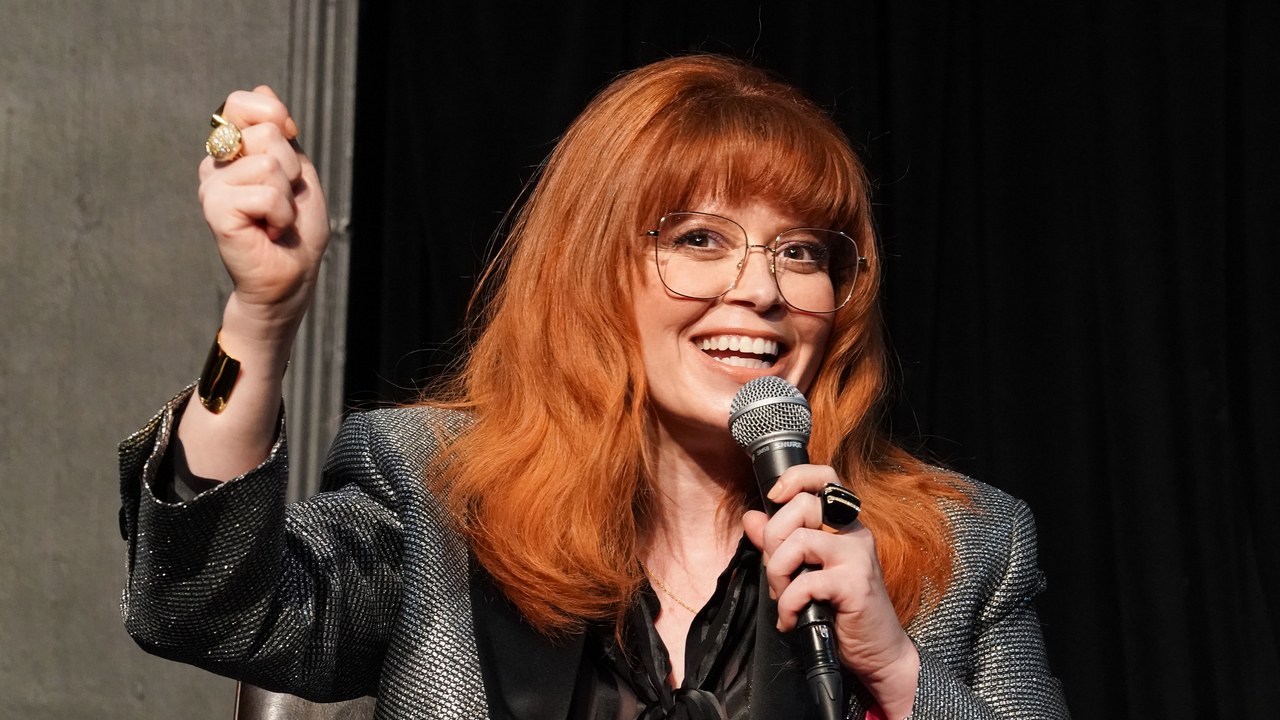
The Equality Can’t Wait campaign aims to accelerate progress when it comes to gender issues in America, building on the framework that Gates outlined in her recent book and inviting both men and women to share their stories about how crucial it is to close the gender gap. To kick it off, Gates didn’t want to release another mournful PSA. Instead, she tapped actor and director Natasha Lyonne to corral over a dozen comedians to, well, roast the problem.

In under five minutes, Silverman, with Ilana Glazer, Abbi Jacobson, Uzo Aduba, Maya Rudolph, Fred Armisen, John Mulaney, Margaret Cho, Natasha Rothwell, and more, crack jokes about how absurd it is that genuine gender balance is still several lifetimes into the future.

As Mulaney puts it, “That’s the most specific bad news I’ve ever heard!” Or as Aduba fumes, “That’s 1,456 dog years. I’m telling you, bitches never get a break.

Towards the end of the video, conversation does turn serious and it becomes clear that the reason it’s so hard to talk about sexism is because the issue is so, so vast. It’s not just unequal wages or discrimination or harassment or bias. It’s all of that. And then some. When the music turns somber, Aduba explains that two more centuries of the status quo means not a single woman alive now will ever experience a fairer, more equal world. Glazer recounts sexual harassment. Silverman reminds viewers that some elected leaders have in fact tried to turn the clock back, weaponizing their power to strip women of the rights we do have.


Source link

Categories
Health

This Women's Equality Day, Brooklyn Decker and Whitney Casey Want More Women in Fashion Tech


In a time when just about every day is a holiday for something (did you know it’s National Banana Split Day?), there are a few occasions worth taking the time to commemorate. A big one for us is August 26—otherwise known as Women’s Equality Day. It was first celebrated back in 1971, in honor of the ratification of the 19th Amendment (the one that gives women the right to vote). In the years since, it has become an opportunity to honor and recognize the accomplishments of women in a diverse range of fields and their contributions to society.

For Brooklyn Decker, a former model, actress, and tech entrepreneur, this year’s Women’s Equality Day holds special meaning. She and her longtime friend, former broadcast journalist Whitney Casey, founded the fashion start-up Finery back in March. It’s marketed as the first “closet operating system” that catalogues and styles every item you own for maximum usage, addressing the classic “so many clothes, but nothing to wear” dilemma for 10,000+ users since it launched.

Their service aims to solve everyday wardrobing issues for their customers, but Decker and Casey are just as invested in uplifting other female business owners with big ideas: Glamour caught up with the Finery founders at a recent Women’s Equality Day panel featuring female executives and entrepreneurs, hosted by Keds and LOLA. As we chatted about everything from the company’s next steps to the one clothing item that Decker should maybe cut back on, one thing was clear: If Women’s Equality Day were a holiday that came with a wishlist, Decker and Casey would ask for more leading women in fashion tech. Read on.

PHOTO: Astrid Stawiarz

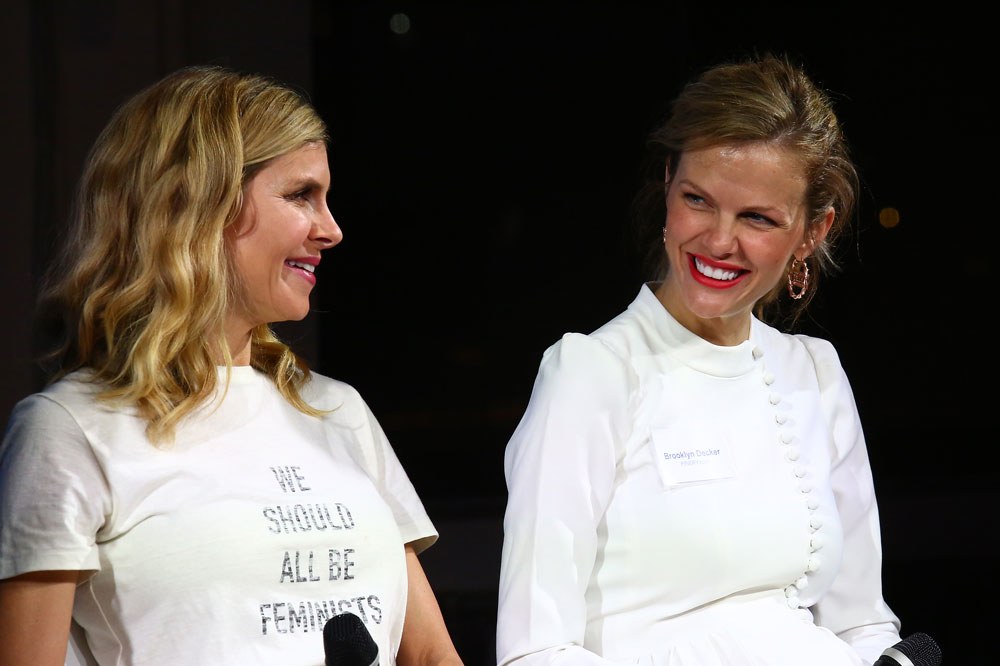
Whitney Casey, Finery CEO (left), and Brooklyn Decker, Finery CDO, at the Keds + Lola Women’s Equality Day panel.

Glamour: August 26 is Women’s Equality Day. As female entrepreneurs, why is this occasion important to you?

Brooklyn Decker: It’s important to us mostly because our company is geared towards making the lives of women run more efficiently. Every single day, day in and day out, we’re thinking: How do we make the world better for women? It’s something that’s on our minds all the time, so to have a day where it’s actually celebrated officially feels really special. And to do it with a friend just makes it really personal and special.

Whitney Casey: And we’re always saying, “it’s always hard when you want to start a company with your friend.” But I feel like women are so multidimensional that we can change that stigma [around working with friends]. This day is kind of to celebrate that, too. We’re well beyond that, we can do that—we can raise kids, we can have a business while we’re making a [gestures at Decker, who’s expecting her second child, a girl], making a female coder inside.

B.D.: Exactly! It’s very exciting.

Glamour: As we’ve seen in the news this year, it can be tough to be a woman in tech. As you were thinking about starting Finery, were there any women-led brands that inspired you?

B.D.: There are so few women in the tech space. We reached out to several for guidance when we did start, and a lot of our funders are actually females. Miroslava Duma is one of them, who is known for funding a lot of female-run technology and fashion companies. We really love The Real Real, that’s run by [Julie Wainwright]… Who else?

W.C.: Rent the Runway, [led by] Jen Hyman—she’s amazing. We’re finally getting products for us, for women, because women are making them.

B.D.: And that’s the only way it’s gonna happen.

W.C.: But we need more capital. We need more [venture capitalists] to fund female-led companies. Because right now, [most] technology is made by men. And [it’s technology] for women!

Glamour: And on that note, what has leading Finery taught the two of you about being leaders for other women?

B.D.: [Women’s Equality Day] was originated because it celebrated the right for women to vote. You look at what women have done before us and how hard they had to fight before we got here—we’re now reaping the benefits of all that they’ve done. Now, it’s our job to employ women, to provide opportunities, to use the gifts bestowed upon us, to help the generations that follow. A lot of people [at Finery] are in their early twenties, but that’s a good ten, fifteen years younger than we are. We employ a lot of women, and I think that’s one of the biggest things you can do as a female running a company.

W.C.: You have to lead by example. If you want capital to go to women, we have to put capital into women, in our own company, so that they can go make their own brands. [We have to] show them that it’s not insurmountable. You can have all of these things—and capital will be available to you—if you’re building the products of the future that prove it out. It’s exciting because there are very few frontiers that women haven’t been able to conquer, and with [the majority of tech] companies being made by men, this is exciting.

B.D.: It’s a new frontier for women.

Glamour: On that note, Finery is solving the problem of feeling like you have “nothing to wear,” even with a ton of clothes in your closet. Are there any other fashion and style problems facing women that you would like to see solved in the future?

B.D.: We have so many that we’re tackling. We want to do it all. We want [Finery] to be the first place you go to when you’re thinking about buying an item; we want [it] to be the last place you go to when you want to get rid of your item, whether it’s to resell or donate or trade. That’s what we’re building Finery to do. There are so many ways to interact with your clothing. I think the biggest obstacle is showing women what they have so that they don’t have to go and and spend extra on stuff that they already own. But we have a wishlist feature where you can collect all the things that you like online and put them into one place; we give you sales notifications; we have a calendar feature where you can pack on our site. There’s so many things we’re working to build.

W.C.: And we remind you when things need to be returned. That’s kind of a schtick with retailers—they don’t want you to know, but we say, “Hey, three days left to return, seven days left, don’t forget!”

B.D.: We’re trying to cover every sort of facet of your wardrobe and every way that you interact with it, so that it becomes second nature for you, and it’s one of those things that you don’t have to worry about.

W.C.: And in the future, you’ll be walking around thinking, “I have a connected closet, how did I not have it [before]?” Now, you don’t need to be in front of your closet—you should be able to carry it around with you. We want every woman to have [that] in the future. It’s like a playlist. You pick out your outfits, and we start making them for you.

Glamour: What did you learn about your own wardrobe while you were developing Finery? Is there one item that you have too much of?

B.D.: Overalls! I own way too many pairs of overalls. And midi skirts for Whitney—she has way too many.

W.C.: We could have answered that question for each other because we look at each other’s wardrobes all the time. And I’m like, “You should wear this, this, this, and this” in her Finery wardrobe. And she’s like, “You should not buy any more midi or over-the-knee boots.”

B.D.: Midi skirts, over-the-knee boots, and skinny jeans! It’s too much. And I wouldn’t have known that had I not seen it.

Related Stories:

This Stitch Fix Update Will Take Your Wardrobe to the Next Level

Hell Yes: This New Retailer Has Your Favorite Designers in Sizes 10-20

Uber’s New Exec Bozoma Saint John on Why Every Woman Should Embrace Fear


Source link

Categories
Health

Meghan Trainor Is Not OK With Being Used in an Anti-Marriage Equality Post


PHOTO: Jason Merritt/Getty Images

As a vote on marriage equality in Australia approaches, Facebook groups have popped up to advocate for each side. But when VoteNoAustralia, a group that’s against marriage equality, used an image of pop star Meghan Trainor in a meme they got some serious heat from the star—and the Twitterverse, Buzzfeed reports.

First, some background information on the vote: Starting on September 12, Australians who have registered to vote on this issue will receive survey forms in the mail asking, essentially, whether they are in favor of legalizing gay marriage in the country or not. Votes will be accepted until November 7.

The caption on the anti-marriage equality meme feature Meghan reads, “My vote is NO you need to let it go,” a play on the lyrics to Meghan’s song “No,” which actually goes, “My number is no/ You need to let it go,” and is about rejecting guys at the club, not denying people civil rights.

Repurposing one of Meghan’s lyrics to make a political point is so ridiculous, it’s almost funny. Almost. Advocating against marriage equality isn’t really a laughing matter, and for her part, Meghan is definitely not cool with her image being used in this manner. The singer took to Twitter to voice her support of equal marriage rights.

“I SUPPORT MARRIAGE EQUALITY! Someone in Australia is illegally using my picture for a campaign against marriage equality. So wrong. Not okay,” she wrote on Twitter in a series of three posts. “I’ve said it before, Everyone should be able to love who they want. I support equality, period. VOTE YES FOR MARRIAGE EQUALITY. LOVE IS LOVE” with a link to an Instagram post reminding Aussies to register for the vote.”

Couldn’t have said it better ourselves, Meghan. All adults should make sure they can vote, and all adults should be free to marry the person they love.

See all the posts here:

Related: Meghan Trainor Pulled Her Music Video After She Realized Her Waist Was Photoshopped


Source link