Categories
Health

American Airlines Almost Kicked a Woman Off a Plane for Wearing a Romper


American Airlines has faced some egregious controversies in the past, but this one is perhaps the most absurd: On June 30, a doctor from Texas named Tisha Rowe was ordered off a plane and allowed back on only after she agreed to cover herself with a blanket. Her offense? She was dressed in a romper.

Rowe, who is African American and Caribbean American, described the incident both on social media and in a recent interview with the New York Times, explaining that she feels her race was a factor. She told the Times that she had boarded her flight from Jamaica to Miami with her eight-year-old son when a flight attendant asked her to come to the front of the plane.

“She poses the question to me, ‘Do you have a jacket?’” Rowe explained. “I said, ‘No, I do not.’ I’ve been given no explanation as to why I was taken off the plane. So finally she says, ‘You’re not boarding the plane dressed like that.’ Then they started to give me a lecture about how when I got on the plane, I better not make a scene or be loud.”

Rowe shared photos of her outfit on Twitter. Social media users quickly agreed that there was nothing wrong with it, especially given that she was on a hot summer vacation. (As the Times points out, on the day this happened, there was a high of 94 degrees in Jamaica and a high of 89 in Miami.)

An airline policing what women wear is ludicrous, but the situation is even more frustrating in light of how ambiguous the airline’s stated conditions of carriage are. Online it includes a brief reference to dress code that read, “Dress appropriately; bare feet or offensive clothing aren’t allowed.” Rowe’s outfit contains no “offensive” or symbols, and it’s unclear what’s so inappropriate about a summer romper in the heat. Moreover, it seems enforcement of the airline’s policies is a matter left to the discretion of flight attendants, which leaves a lot of room for bias.

“Had they seen that same issue in a woman who was not a woman of color, they would not have felt empowered to take me off the plane,” Rowe told the Times. “In pop culture, especially black women with a body like mine, they’re often portrayed as video vixens. So I’ve had to deal with those stereotypes my whole life.”

Source link

Categories
Health

Alabama Woman Charged With Manslaughter—For Losing a Pregnancy After Getting Shot


Late last year Marshae Jones, a 28-year-old living in Alabama, was shot in the stomach during a dispute with 23-year-old Ebony Jemison. At the time of the shooting, Jones was five months pregnant. Although she survived, the fetus did not. And this week she found herself in court over the incident. It was there that a Jefferson County grand jury indicted her for manslaughter—of the fetus.

Jones was booked into jail on a $50,000 bond, according to authorities. The police argued that since Jones allegedly started the fight, Jemison only shot her in self-defense. And because Jones failed to get herself out of the situation, they reasoned, she’s culpable for what happened. (Police initially charged Jemison with manslaughter for the death of the fetus, but unlike in Jones’s case, she was ultimately not indicted, according to al.com.)

“The only true victim in this was the unborn baby,” Lieutenant Danny Reid of the Pleasant Grove Police Department said after the shooting in December, al.com reported. “It was the mother of the child who initiated and continued the fight which resulted in the death of her own unborn baby.”

This case comes in the midst of a heated national debate over a woman’s right to choose and whether a fetus should “count” as a person under the law. But it’s no surprise that this case is taking place in Alabama. Last month Alabama voted to pass the most severe restrictions on abortion nationwide. And 25 Republican male state senators passed a bill outlawing abortion from the moment of conception onward, without provisions for cases of even rape or incest. Doctors who perform the procedure could also be punished with life in prison. Alabama governor Kay Ivey, a Republican, then signed the bill into law. While it’s uncertain if the bill will go into effect, it sets up a direct challenge to Roe v. Wade—the apparent goal of recent state-sponsored abortion restrictions.

Alabama is also one of the 38 states that has fetal homicide laws. In other words, in cases of violence against a pregnant woman, the fetus is recognized as a victim. That means a woman can be prosecuted if it’s believed she precipitated a miscarriage.

“When a five-month pregnant woman initiates a fight and attacks another person, I believe some responsibility lies with her as to any injury to her unborn child,” Reid also added. “That child is dependent on its mother to try to keep it from harm, and she shouldn’t seek out unnecessary physical altercations.”


Source link

Categories
Health

Beyoncé’s Reaction to a Woman Chatting Up Jay-Z Is All You Need to See Today


Do you know what’s giving me all the energy I need right now? This video of Beyoncé not having it with a woman chatting up Jay-Z at a basketball game. Who needs coffee when you have Bey serving up some piping-hot shade, am I right?

OK, I’m mildly kidding. For all we know, Beyoncé isn’t being shady at all in this clip. Maybe the cameras just caught her in a moment when her face wasn’t “on.” Smiling all the time can be exhausting—even for superhuman deities like Queen B.

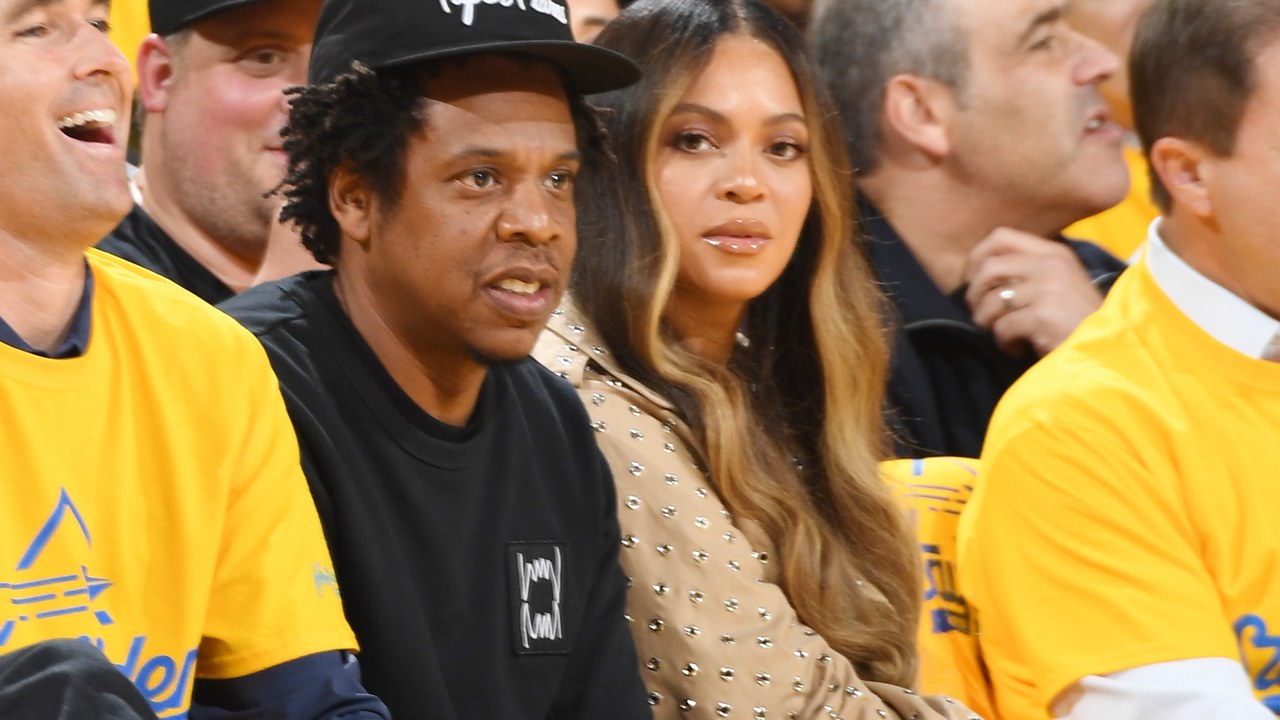
Let’s back up for a second and give some context: Beyoncé and Jay-Z attended Game Three of the NBA Finals in Oakland, California on Wednesday night (June 5) and were seated court-side, naturally. A woman, whose name we don’t know, sat to the left of Beyoncé, and at one point she leaned over her to have a discussion with Jay-Z. Bey’s face as this is happening seemingly transitions from all smiles to pure annoyance. That’s what fans on the Internet are positing, at least—but take a look at the video for yourself, below.

Whatever the case, the Twitter reactions to this moment are hilarious. “I would leave the Earth if Beyoncé looked this ready to smack me,” one fan posted, while another said, “Mood: Beyoncé dissociating at a basketball [game] while a white woman talks over her.”

Of course, there were some “Becky with the good hair” jokes. (Remember that moniker from Lemonade? It was used in the song “Sorry” to describe “the other woman” in a cheating narrative.) “This ‘Becky with the good hair’ bout to get her wig split,” one fan joked online. “Y’all Beckys really keep trying Beyoncé as if she doesn’t have a Cancer sister named Solange,” wrote someone else.

Check out more reactions to this moment for yourself, below:


Source link

Categories
Health

A Note on Linda Fairstein's 1993 Woman of the Year Award


Hi all,

We’ve heard from some you in recent days as we, and the world, have been remembering the injustice of the prosecution of Antron McCray, Kevin Richardson, Yusef Salaam, Raymond Santana, and Korey Wise. Glamour has covered the new limited series centered on their story, When They See Us, through interviews with some of its actors and with director Ava DuVernay.

Many of you have contacted us on social media to ask about the Glamour Woman of the Year award that the prosecutor in the case, Linda Fairstein, received a quarter century ago.

Unequivocally, Glamour would not bestow this honor on her today. She received the award in 1993, before the full injustices in this case were brought to light. Though the convictions were later vacated and the men received a settlement from the City of New York, the damage caused is immeasurable.

Glamour’s Women of the Year awards should reflect our culture, the values of our brand, and our audience. We remain committed to being thoughtful and purposeful about whom we choose to celebrate, and in this case, the lens of history has shown us that we got it wrong.

It’s important to hold institutions accountable, and we appreciate the commitment so many of you showed to this issue when you reached out. Glamour is, and will always be, a platform that celebrates outspoken women. So to those of you who raised this issue, thank you. We want you to know that we hear you, and we assure you that while we can’t erase the past, we will continue to learn from it.

Samantha Barry
Editor in Chief


Source link

Categories
Health

A Male Barista Shamed a Pregnant Woman for Ordering a Macchiato—and People Have Thoughts


Ask any pregnant woman and she’ll likely tell you stories of unsolicited advice they’ve received from both strangers and friends about how she should behave and the choices she makes. For some reason, some people feel incredibly emboldened to offer their (often uninformed) thoughts about everything from whether or not she’s going to breastfeed to what she puts into her body.

Take this recent example from British comedian and actress Tiffany Stevenson, who says she witnessed a coffee-shaming incident recently. “Unbelievable bit of womb bothering in Starbucks,” she tweeted. “A pregnant woman got her Caramel Macchiato and the guy behind the counter said ‘Oh, it’s for you. Do you want me to make a decaf?’” After the woman said “no thanks,” the barista reportedly pressed on, according to Stevenson’s tweet: “No I should [make it decaf] because caffeine is bad for the baby.”

The woman in line informed the barista that she has one coffee a day (more on that in a minute)—not that she needed to justify her order to begin with—after he continued to question her. Stevenson, “almost spontaneously combusting,” then piped in, telling the barista to stop, she tweeted. “Then he says ‘Oh just because it’s bad for the baby so that’s why I’m saying it’…Then he continues to try and justify policing a complete stranger for 5 minutes. He was maybe 30 years old max.”

“Are they also doing Ob/Gyn training at Starbucks these days?” Stevenson wondered.

First, let’s just state the obvious and say that it’s none of this man’s business what the pregnant woman drinks. Second, the American College of Obstetricians and Gynecologists states that moderate caffeine consumption of less than 200 mg per day—the equivalent of one to two cups of coffee—”does not appear to be a major contributing factor in miscarriage or preterm birth.”

New York-based certified childbirth educator, Fern Drillings, R.N., M.S.N. concurs, telling us that 200 mg per day (or about 12 ounces of coffee) is indeed the standard and “completely fine.” (One thing you should be mindful of, however, is caffeine in other sources like tea, chocolate, and soda, she adds. Specific caffeine levels in store-bought drinks aren’t always known, Drillings says, so when in doubt, ask or talk with your OB.)

For some pregnant women, there might actually be a benefit to a sweet, caffeinated drink like a macchiato Drillings says. “While it’s very common, especially after 36 weeks, for the baby’s movement to slow down because it’s running out of room, women can get anxious. So I tell women if you haven’t felt the baby move in a little bit, have something either cold or sweet to eat or drink. I usually say to start with a glass of cold water, then if that doesn’t work a glass of orange juice. If not, I usually say have a Frappucino because it’s got the cold, the sugar, the caffeine and that usually gets the baby going.” If that doesn’t work, talk to your doctor, she says.

This is just further evidence that we shouldn’t make assumptions about the choices women are making. Drillings also reminds us all to “consider the source” when evaluating advice about your health and rely on that of medical professionals, not baristas.

Social media users were quick to respond to Stevenson’s tweets. “SO. MANY. MEN think they know better than women….what is good for [pregnant/nursing/single/married/happy/unhappy] women. KILLS ME!!” one wrote. Another tweeted, “@Starbucks Here’s hoping this bit of #mansplaining baloney has been seriously addressed. I love that you ask me how I want my coffee but that’s where it ends.”

Stevenson tells Glamour that she is still getting replies from women saying something similar had happened to them—and from men either claiming she made up the story or telling her that the barista was just being “nice” or “concerned.” “Control of women is often framed as ‘advice or suggestion’ and I’m so bored of it,” she says. “I really thinking a proper awakening is due for know-it-all, interfering sexist men.”

Enough with trying to legislate women’s decisions about their bodies and their lives—and yes, that includes coffee intake.


Source link

Categories
Health

Judge Faces Suspension for Asking Woman in Sexual Assault Case If She 'Closed Her Legs'


New Jersey Superior Court Judge John F. Russo Jr. is facing suspension after he reportedly asked a woman seeking a restraining order if she tried to prevent her alleged sexual assault by closing her legs.

According to The New York Times, an advisory committee found that the displayed behavior that was “not only discourteous and inappropriate but also egregious given the potential for those questions to re-victimize the plaintiff.” Members collectively recommended a three-month suspension without pay, as well as courtroom demeanor training.

Russo claims he was only trying to get more information, not humiliate her. However, after reading the transcript from the woman’s initial 2016 hearing, it’s clear his line of questioning was harmful and beyond insulting.

You can read the transcript below, as reported by the New York Times:

“Do you know how to stop somebody from having intercourse with you?”
Judge Russo asked the woman.

“Yes,” she replied.

“How would you do that?” the judge asked.

The woman said she would try to physically harm the attacker and say
“no,” to which Judge Russo asked, “What else?”

The woman said she would ask the person to stop, to which Judge Russo
again asked, “What else?”

She then said she would run away.

Russo then continues onward in victim-shaming territory, asking the woman once again what she could have done to prevent herself from getting sexually assaulted—and then offering his own suggestions.

“Run away, get away,” he said. “Anything else?”

“Block your body parts?” Judge Russo added. “Close your legs? Call the
police? Did you do any of those things?”

The plaintiff had come before Russo to get a restraining order against a man whom she not only alleges raped her but, per the Times, also allegedly threatened her life and made inappropriate comments to their child. Russo ultimately denied the woman’s request for a restraining order, according to the Washington Post, adding that her answers to his re-victimizing questions played into his decision-making.

Russo was put on administrative leave in 2017; however, the judicial conduct committee recommending his suspension also accuses Russo of three more counts of courtroom misconduct pertaining to different cases.

“Judge Russo looks forward to a public hearing in which he will be able to respond to the allegations against him,” his lawyer told a local NBC station in March 2018. “We have respect for the process as well as the advisory committee on judicial conduct, and therefore won’t comment further.”


Source link