The first time I thought about shaving my legs, I was at Camp Harlam Jewish summer camp in Kunkletown, Pa. The summer was not going well. I’d signed up for a month-long session with two friends from Sunday school, and while they’d done the Jewish camp rounds before, my mom and I had gone down the packing list, folded up an abundance of Life Is Good T-shirts, and sent my sorry self off with Harry Potter and the Half-Blood Prince. The closest things I had to adulthood were two tracksuit-striped cotton Abercrombie minis, my oddly luxe Bed Bath & Beyond blanket, and a 2-in-1 Garnier shampoo. As a rule-following nerd who got sick a lot, I didn’t make friends easily, but I liked being on my own. Yet when I looked around the bunk one day and realized it was conspicuously empty in the way that tells you everyone is somewhere you’re not, I walked out and saw the flock of Lilys, Sarahs, and Emilys clustered on the steps with shaving cream, razors, and a few cups of water, shaving their legs together in the most fun-seeming hygiene ritual to ever traumatize me.
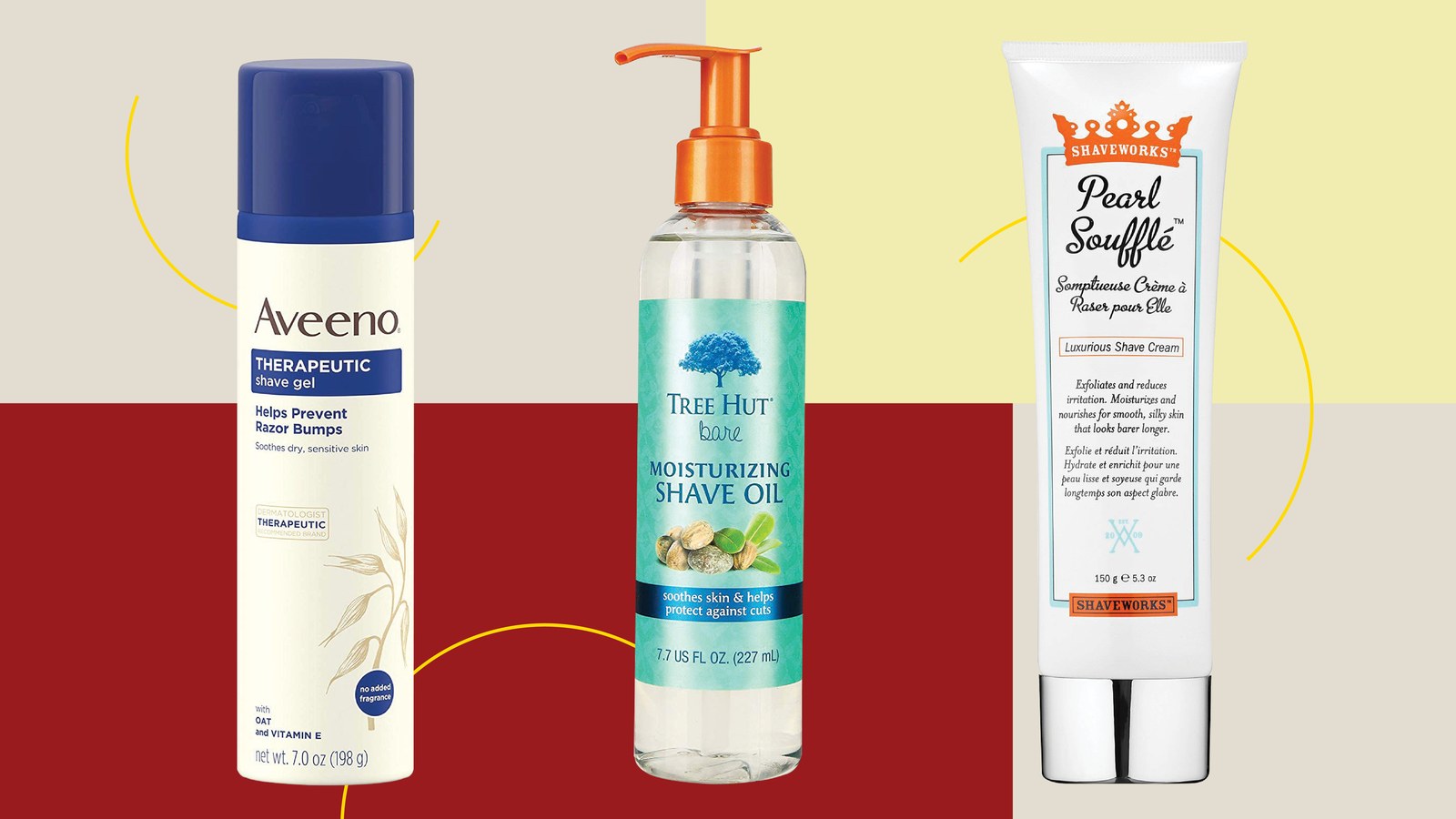
At 13, I didn’t need to shave. My body hair was downy and light, but self-consciousness got to me, and the allure of participating was the cherry on top. If everyone jumped off a bridge, I’d wear a wetsuit. Through high school and college, I kept up the jig. Shaving was an unspoken ritual that you just did—spending $8.99 for the pink razors with rounded edges and $5 for the Aveeno gel that smelled like oats—every month until you died.
For a long time I didn’t mind, since the feeling of sheets on shaved skin is so good it makes the feeling of jeans on shaved skin, the worst feeling in the world, almost worth it. But a few months ago, something shifted. It’s hard not to factor in the news, given that a woman’s right to decide what she wants to do with her own body is increasingly in jeopardy. I’d say my feelings changed thanks to that and the desire to exist only for myself—and, yup, laziness. I have exactly 12 minutes to shower in the morning, and between my priorities of hair washing, conditioning, detangling, and leaning against the wall like an upright corpse, shaving gradually stopped making the cut. And you know what? I went to the beach, I went to the gym, and I hooked up with a guy, and no one cared. And the more I started asking around, the more I realized that by and large, women have stopped giving a shit about being freshly shaven all the time.
“Honestly, it’s just not that important to me. I operate every day regardless of whether my legs are shaved or not,” says Stephanie Caballero, 28, a fourth grade teacher in Baltimore. Rachel Hock, 31, a personal assistant who lives in Boston, says she hasn’t shaved in years out of laziness. And while legal intern Ali S., 26, notes that she might feel differently if she had dark leg hair, she says she used to care more in college, but now she only shaves when she thinks of it every few months because she’s “just run out of fucks to give.”
Even within the halls of Glamour, when this story came up, editors shared they too feel less personal pressure to shave every single day than they have in the past. “I started shaving less partly because I’d gotten more comfortable in my relationship, and didn’t feel like I needed to do the Mrs. Maisel routine (i.e., waking up before dawn to put on a full face of makeup, shaving every other day, etc.) anymore,” says fashion features assistant Halie LeSavage, 23. “But when I pushed myself to think about where that comfort came from, I realized it was because I noticed more women posting on social or in ads about not removing their body hair. I figured out that it was pretty screwed up for women to only be deemed attractive if they’re hairless in some places and have luscious hair in others.” She says she’s felt the focus around body hair for her has shifted from trying to appear more “feminine,” to instead shaving just when she feels like it. “It definitely wasn’t a dramatic, ‘IDGAF anymore’ political choice—just gradually the pressure felt lessened,” says LeSavage.
Middle school is when most of the women I spoke to picked up their shaving habits for the next few decades, citing an original mix of shame, embarrassment, and wanting to fit in. There was also the exciting edge, though. Leah Jorgensen, a 34-year-old behavior technician in Madison, says that when she started shaving around age 11, it felt like the height of sophistication. In her early twenties, she was tired of it; by 31, exhausted. Jorgensen started to let her hair grow out, looking to Instagram’s body hair confidence movement to encourage her. #Longhairdontcare is, of course, taken, so as of now 5,534 hair-positive posts live under #leghairdontcare, and 10,073 under #bodyhairdontcare.
Of course, breaking free of what you’ve always considered desirable isn’t often as easy as perusing a hashtag. Imagine your friend saying “oh my God, girl, you need to shave,” or your mom using a lowered voice to gesture at your armpits and say you can borrow her razor, or a date running their hand down your leg and pulling away. Saying no to that combination of shame and horror takes some deprogramming. Cathy Hookey, an illustrator who lives in Houston, says she thinks it comes down to fully giving up the belief that “as you are” is wrong. Again: Not easy when we live in a world where a recurring TV punchline features a woman hitting it off with someone, then running to go shave in the bar bathroom.
“I was totally terrified when I stopped shaving. When I met my now-husband I was shaving,” Hookey, 32, says. “We were long-distance for a few years, and during that time, I decided that it was really important to my mental health to stop hating myself as I am—i.e., hairy. So I committed to never shaving again.” In the beginning, she says her husband was iffy about it, but in Hookey’s words, she was “adamant that no man worth my time would hate me based on some hair.” She stuck with it, and now he’s over the stigma.
Liz Rodriguez, a 22-year-old from Chicago, says she also had some nerves heading into dates with grown-out leg hair. Would they find her less feminine? Was her leg hair actually as soft as she thought it was? She says there will usually be a brief moment when she second guesses herself, but she focuses on how much she likes her leg hair. “What actually matters is how sexy you find yourself, because that shows,” she says. “And if I don’t feel sexy with a smooth, hairless body, then is a guy really gonna buy into my faux confidence?”
Celebrities’ influence has also played a role, with women like Rihanna, Paris Jackson, Bella Thorne, and Jessica Simpson posting pictures on Instagram of their leg hair. That’s an eclectic mix to be sure, which speaks to how widely this acceptance has spread and the demographics it’s transcended. Celebrities were once walking representations of aspiration, but even they’ve began pushing back against the societal pressure of shaving, and the ripple effect is immediate—both as inspiration to the multitudes of women who tweeted that shaving was “cancelled” after Rihanna posted a shot of her unshaved legs, and as validation. “Now I seriously have the screenshot of Rihanna’s post in my phone, ready to fend off any verbal attacks against my body hair,” says Rodriguez. “A gorgeous woman with tousled hair, sun kissed, and leg hairs slightly shimmering in the sun…it’s my favorite look.”
The biggest sign of the loss of its stigma, however, might be that beauty brands are now capitalizing on messaging around body-hair acceptance—even despite the fact that hair removal is still the bottom line for most shaving and personal care brands. For example, in June, razor delivery service Billie launched a campaign centered around body hair, in which the brand tapped Insta-famous, body-positive photographer, Ashley Armitage. “Maybe [seeing body hair in an ad] will be shocking at first, but eventually with exposure it’ll become normal,” Armitage tells Glamour. “We can’t be what we can’t see. I think the more representation of female body hair we get out into the world, the more people of all genders will see that this is a totally normal and natural thing.”
Meanwhile, new brands like Fur—which Emma Watson put on the map, thanks to a rave review of its pubic hair oil—are growing in interest. The brand says its Stubble Cream, a moisturizer used to soften prickly stubble, is a best-seller.
As for the more mass brands, Gillette, for its part, is trying to win back the $20 a month that women like Jorgensen used to spend on hair removal by reframing the conversation. Where shaving ads once played to women’s insecurities, strategy now revolves around marketing shaving as “self-care.” According to the brand, a survey commissioned by Procter & Gamble this February found that of women aged 18 to 54, 72 percent now shave because they like the feeling of smooth skin. And while half of the women said they still feel pressure to remove body hair, when asked if they would still remove the same amount of hair if they weren’t concerned about other people’s opinions or societal expectation, 84 percent said they would.
Still, not everyone is there yet. When Armitage first started posting photos of women’s body hair online, she says people—most predominantly men—flooded her comments about how “disgusting” it was. By showing women with legs that aren’t always hairless and smooth, she says she’s aiming to take down the double standard of women’s body hair being somehow less clean than men’s. According to reps for Billie, it’s been successful so far: the brand says since the campaign launched, it’s received thousands of positive comments from both shavers and non-shavers.
After letting my leg and armpit hair grown out for the past few months, I’m torn. I like the sense of ownership and freedom it gives me, and the edge of defiance when someone looks at it for a second too long. And yet, I miss the sense of control. Maybe I’ll get sick of it and decide to shave more regularly again. But that’s the beauty of choice: it’s my call.
Rachel Nussbaum is the beauty writer for Glamour.
Photos by Ashley Armitage