Listen, there’s absolutely no shame in enjoying movie sex scenes. None. Whether you’re into the romance-in-the-rain vibes of Rachel McAdams and Ryan Gosling in The Notebook or something a little more domineering, like Jamie Dornan and Dakota Johnson‘s relationship in the 50 Shades of Grey trilogy, there’s a little something for everyone. Plus, you may find some films you missed out on the first time around, like Angelina Jolie’s early work in Gia or Rachel McAdams and Rachel Weisz in Disobedience.
Even better, most of these movies are about way more than their super-sexy moments, so there’s no reason to fast-forward to those scenes (not that there’s anything wrong with that). But you might just enjoy the plots too.
So without further ado, here they are: the best movie sex scenes of all time. And yes, we included steamy throwbacks like Basic Instinct, Body Heat, and Fatal Attraction.
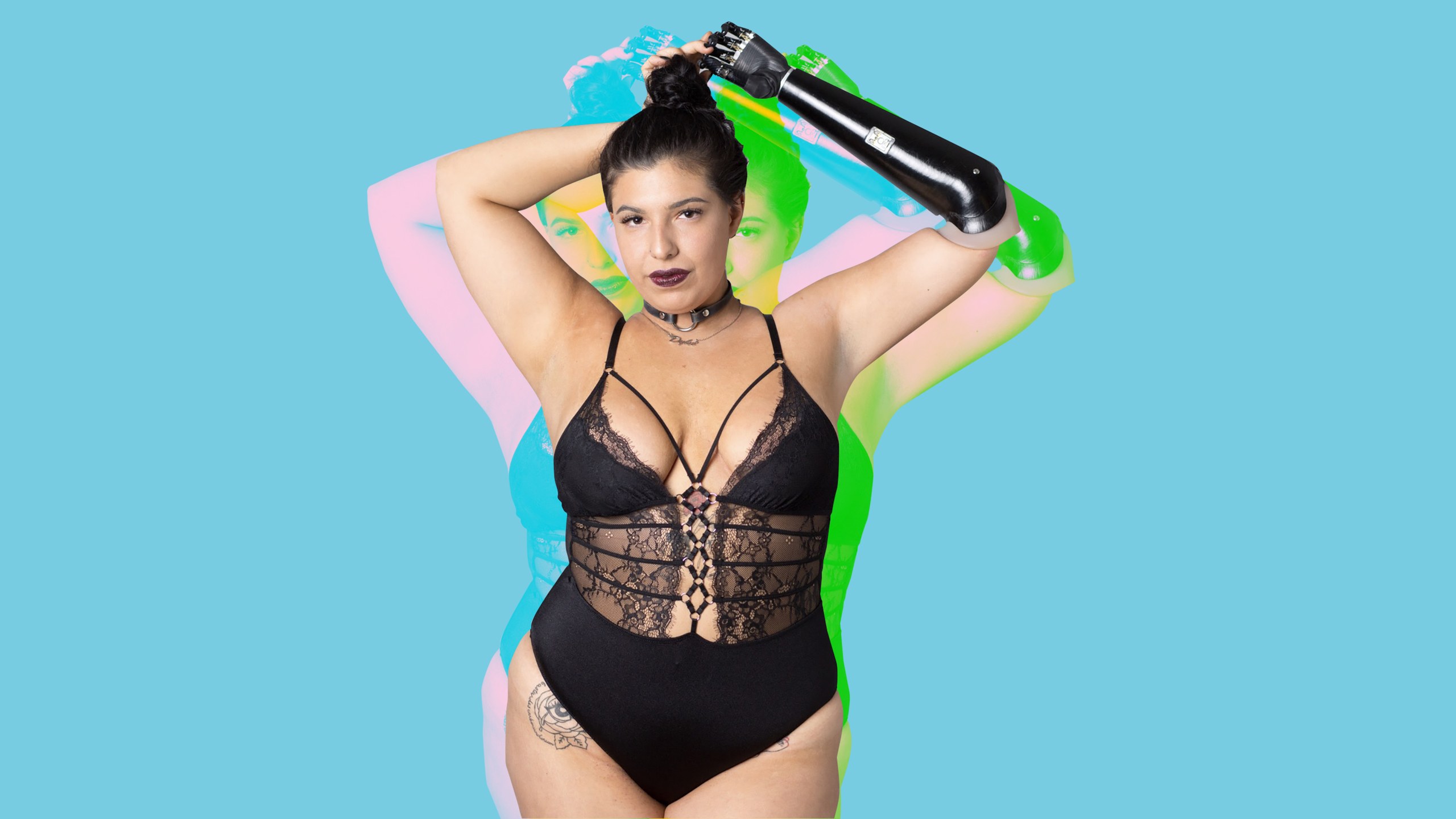
“Can you hang on? I have to take my arm off.” My 20-pound bionic arm is sexy as hell but it also makes the bed a little crowded.
I first saw the Bebionic arm—a robotic prosthetic that functions through electrodes and muscles—on an amputee actress and activist whom I met for drinks after she’d expressed interest in an article I’d written. I was born missing my left hand and went 23 years without wearing a prosthetic, but three years ago when she walked through the bar door to meet me for drinks, my eye went straight to her prosthetic—an all-white futuristic robot hand. It was the sexiest thing on Earth. An arm fit for a stormtrooper sex goddess. I had to have one.
“Bitch, where did you get that?” I couldn’t help but blurt out as our French fries and sauvignon blanc arrived at the table. It was as if I had seen her in the hottest outfit and needed to know where she got it immediately. This arm could make jeans and a T-shirt look like Agent Provocateur lingerie. I was already fantasizing about an all-black version for myself, the dark counterpart to her angelic aura.
Sex Before
I’ve never let my lack of a left arm get in the way of my sexual confidence. Feeling insecure and unsexy was never an option for me. I’ve always stood out—if people are going to stare at me for being physically different, I realized early on, I could either wither into myself or slay. I choose slaying.
The first time I had sex wasn’t particularly ceremonious. But it was hot. I knew from a young age I liked girls, and though queer sex can be hard to define, I knew something amazing was happening when my study partner slipped her hand into my panties one afternoon. We were sitting in front of my family’s computer watching YouTube videos (typical 15-year-old stuff) as she lightly ran her fingers over me. I was so blissed out I didn’t even have time to panic or analyze. The next thing I knew, we were grabbing for one another, lips and limbs entangled as an obscure video played on the desktop in the background. I ripped off my bra without giving a second thought to the shape of my breasts. I let her unbutton my pants, and she unbuttoned her own, as I couldn’t with one hand.
It was animalistic, it was magical. It was everything the movies make the first time look like. Of course it was awkward and new, and we weren’t experienced enough to make it explosive, but it wasn’t anxiety provoking. I could’ve had three hands, or a hook for a hand, or no hands, or a tentacle for arm. It didn’t matter. I was so into her, I didn’t even have the brain space to feel self-conscious, let alone intellectualize that I was a disabled person having sex for the first time.
The second time I had sex with the same girl, I got in my own head. My boobs were too pointy, I had stomach rolls, my moans sounded more guttural than porn-star. It was like I was moving backwards. All of a sudden I was hyperaware of myself, and not mine and my partner’s pleasure. She had been going down on me and I wasn’t making a sound, too busy wondering what I looked like from her POV. Still, in all my hookup anxieties, I never once thought about my arm.
For years, I had both good sex and bad sex without my arm being an issue. Then in college I met someone who made me think about it all the time.
Our sex was earth-shattering, still some of the best I’ve ever had. She told me she thought I was beautiful, but she started to make strange comments about my disability.
“If you had two arms, you’d be straight and really slutty.”
I have trouble talking about sex. It’s a very present issue in my life, and I’m currently in therapy learning how to unravel the network of shame I’ve built around sexuality. Phew, glad we got that out there.
My relationship with sex has always been rocky. In high school, I felt shameful for wanting it—with women—so I repressed any real desire I felt. Even when I started dating women in my early twenties, it wasn’t some glorious sexual liberation; I retreated even further into my sexual shell, battling my own internalized homophobia. I figured my heterosexual friends wouldn’t want to hear about my sexual encounters with other women. My sex life was a dirty little secret. I wasn’t being totally transparent with my sexual partners either when it came to what I wanted and what felt good in bed—whether it was my inability to vocalize what position I liked best, or feeling scared to say “I’m too tired tonight.” I still struggle with that.
I desperately wish I was one of those hyper-empowered, sex-positive feminists, but I’m not. I mean, that’s the end goal—but after growing up repressed and feeling utterly embarrassed about my sexual desires, I’m just not there yet. I am trying. Therapy has been helpful. So has watching women own their sexuality in pop culture.
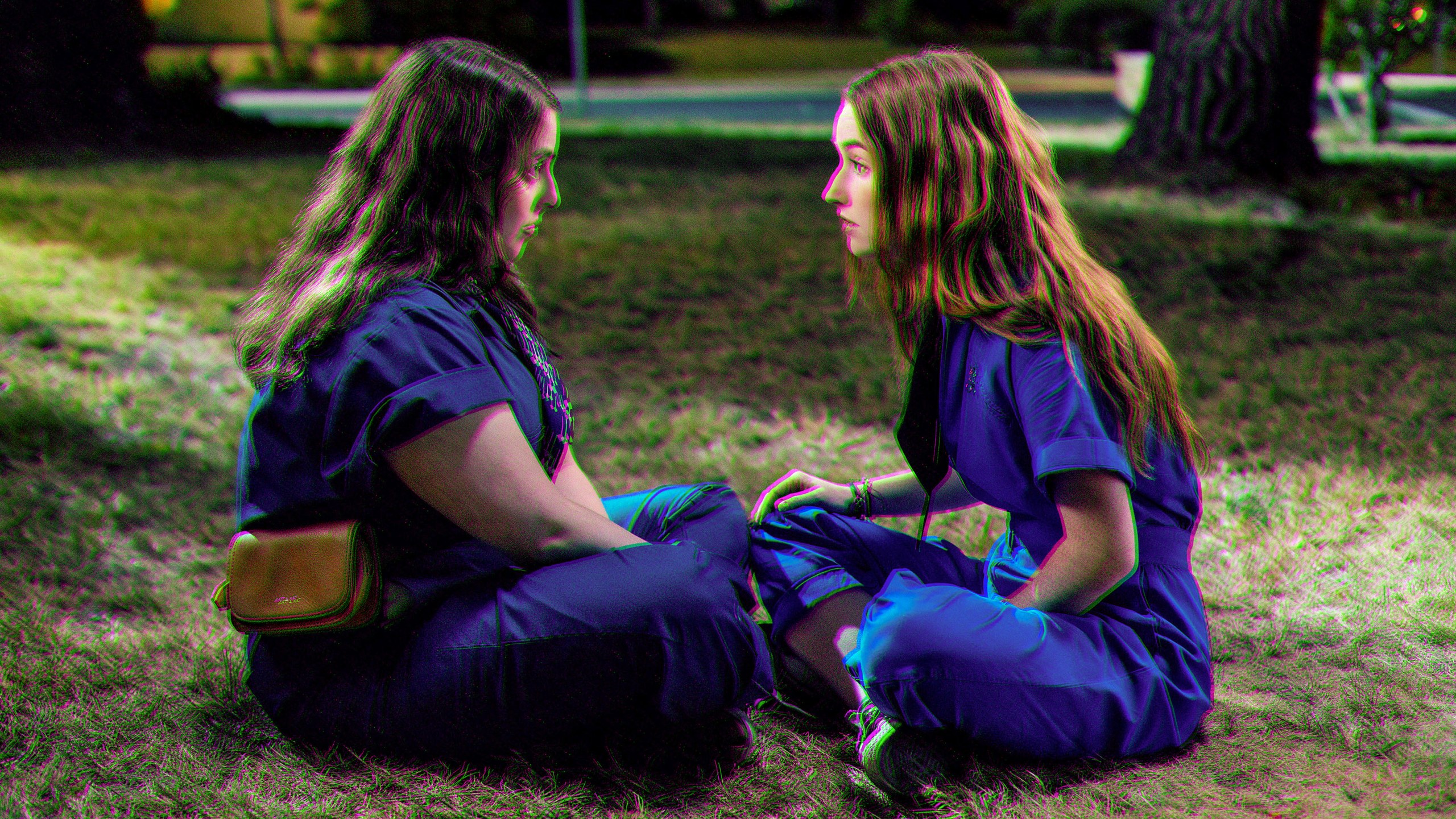
Over the past few years, a wave of female-driven movies and TV shows have started to normalize the development of female pleasure—like Pen15’scringeworthy flirtations with adolescent desire, Blockers showing teenage girls asking for oral sex, or Outlander’spioneering scenes that shifted focus from the male orgasm to the female orgasm on screen. But never have I felt so personally seen than when watching Booksmart, the teenage sex comedy directed by Olivia Wilde. In case you missed it, the Superbad-esque storyline follows out teenage lesbian, Amy (Kaitlyn Dever), grappling with her virginity and sexual firsts.
One scene stood out to me as especially cringeworthy, probably because it hit me where it hurt—smack dab in my own sexual embarrassment center. It was the moment when Amy, budding young lesbian, reveals she’s been humping her stuffed panda. Yes, masturbating with a stuffed animal.
Allow me to explain. While in her bedroom, Amy opens up to her best friend Molly (Beanie Feldstein) about her fear surrounding sleeping with a girl for the first time—she doesn’t know how to do it. Molly suggests that Amy take her hand the way she would masturbate, and simply “flip it.” Amy says, “What if I don’t use my hands?” As she suspiciously eyes a corner of her room, Molly guesses what Amy uses to masturbate, and Amy cringes, begging her to stop: “Can we just stop talking about this, please? For the love of all things!” Relatable. Finally, Amy admits, “It’s the panda, ok?!” Molly doesn’t shame her, but she does poke fun at the ridiculousness of the scenario: “Does she talk dirty to you? Tell you about how she’s endangered?”
This scene had me reliving my sexual shame all over again—because I can relate. I’ve never admitted this out loud, or written it down, or told another soul, but when I was a pre-teen…I used to masturbate by humping a vibrating pillow. It was hot pink and squishy and was meant to be a massage pillow and I stained it from…well, you get it.
This is mortifying to admit, let alone publish. But honestly, the Booksmart scene between Amy and Molly made me feel so much better about my own past. Clearly I’m not as weird and alone as I thought I was for the past decade and a half. For 15 years I’ve been carrying this well of shame about early masturbation because I was completely alone in learning how to masturbate. I had no idea what was normal—I just assumed I was some sort of freak.
For the past several weeks, whenever anyone—friends, parents, my therapist, in-laws—asks me which topics I’m working on these days at Glamour, I’ve taken a deep breath, looked them in the eye, and said: female pleasure.
There’s been a lot of awkward silences.
We’re more sex positive than ever as a culture. But we still haven’t erased some fundamental truths: women’s bodies are still policed, sex education is still lacking, and talking about sex still carries a stigma. “We have never, ever, in the entire history of the world, been enabled to bring the female lens to bear on sexuality, and the world is a poorer place for it,” says Cindy Gallop, founder of Make Love Not Porn.
“Female pleasure really is considered less of a priority,” says Jennifer Wider, M.D., women’s health expert and partner of sexual wellness brand K-Y. (The first systematic mapping of pleasure in the female brain didn’t occur until 2011—decades behind the scientific study of men’s sexual pleasure.) Cue the countless headlines about the orgasm gap—a term which sums up the chasm several studies have found between the number of orgasms women and men in heterosexual relationships have. But the gap goes beyond the bedroom. Even in an era where porn stars make political headlines, female pleasure is conspicuously absent from the conversation. Even in places where sexual wellness should be right on the top of the list of discussion topics. “When we go to the gynecologist, we’re asked, ‘Are you sexually active? Do you want birth control? And do you want to be tested for STDs?’ says Cindy Eckert, CEO of Sprout Pharmaceuticals and the woman behind female sexual desire drug Addyi. Rarely does whether or not you actually enjoy your sex life ever come up.
The stigmas surrounding women and sex—and especially good sex—run deep. So deep that the very idea of what it means to have good sex is murky, filtered by unrealistic portrayals of women on screen who who often orgasm seductively after five seconds of penetration.
The real definition of good sex is simpler, and so much more complex all at the same time. “Good sex is sex that makes you feel great,” says Gallop. “I don’t mean as in ‘Oh, you just had a phenomenal orgasm and you feel great about that.’ What I mean is literally how comfortable you feel in your sexual skin. I’m talking about feeling at one with yourself as a sexual being, feeling perfectly at ease with how you express yourself sexually, feeling accepted in every possible respect, and therefore feeling really great about sex and all its manifestations.”
Good sex, in other words, is sex that makes you feel like Beyoncé. “There is no objective, outside measure of that at all,” Gallop says. “There is no formula. There is no rule book.”
This is not about about ways to get your partner to better satisfy you in bed (though women’s magazines, including Glamour, have certainly filled the internet with countless articles on that). This is about women owning their own pleasure—partner or no partner. It’s about putting an end to the taboo that makes talking about something as intimate as your pubic hair grooming practices fair game over drinks with your friends, but talking about your favorite masturbation techniques feel cringey.
The pleasure gap and leaves women with a literal deficit. “I can’t tell you how many women I’ve seen over the years—brilliant women, successful women, women who have achieved anything and everything—who are bankrupt in their relationship to themselves and their bodies,” says Nan Wise, Ph.D., a certified sex therapist, cognitive neuroscientist who studies pleasure in the female brain, and author of the aptly named book Why Good Sex Matters. “Good sex is about enjoying the experience. Good sex is about a pleasurable connection with yourself.”
The Power of Good Sex
The ripple effects of that are powerful—like self-care on steroids. “I think as we become educated consumers of our own bodies, we become better citizens: more connected, more powerful, more empowered,” says Wise. “Who we are sexually is an absolute fundamental driver of everything to do with how we feel about ourselves, how we feel about other people, our relationships, our life, our happiness,” echoes Gallop.
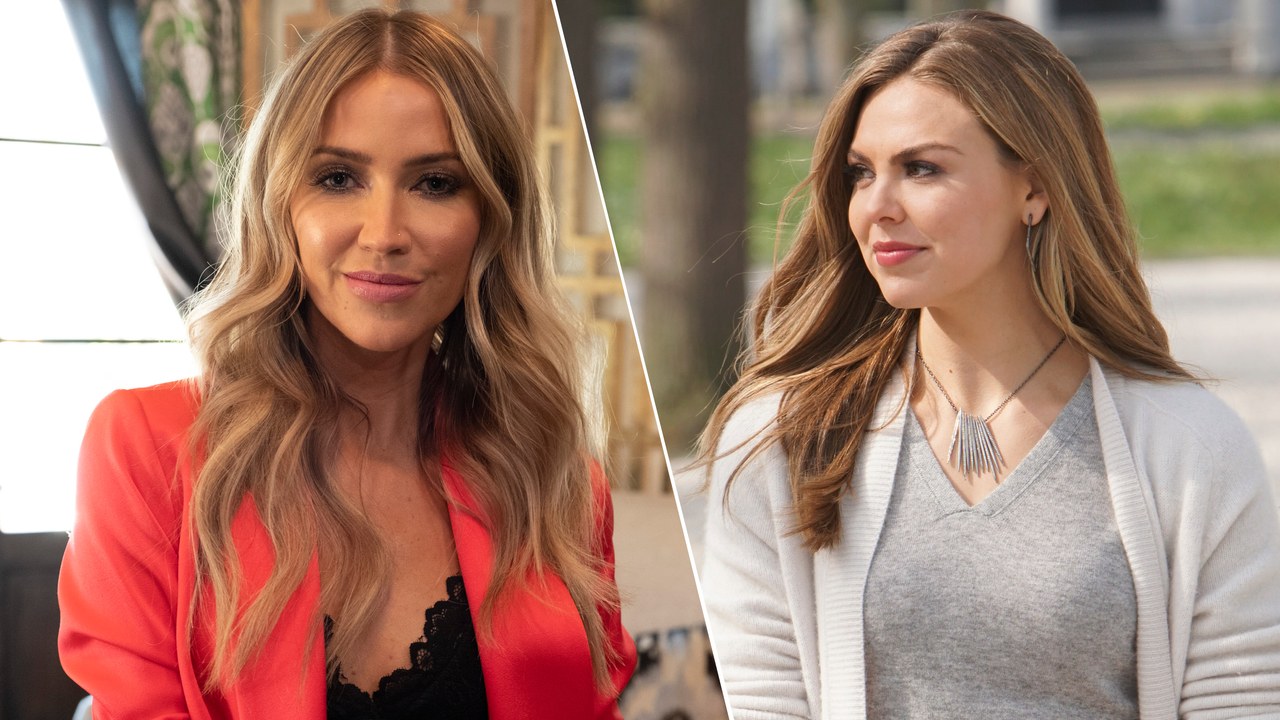
It blew my mind how awful people could be just for a choice—having sex—that millions of people make every day. And that’s why I reached out to Hannah, both privately and publicly, when I saw she was also being shamed for it. When I was going through it, I pushed a lot of people away thinking they wouldn’t understand now or ever. In hindsight, I should have leaned into my fellow Bachelorettes.
Sex on the show is such a gray area. Until Hannah’s season, nobody really talked about it even though everybody knows it happens. Even when sex isn’t happening—like on Colton’s season—people make a big deal out of that. It was all about his virginity. Now it’s all about Hannah’s sexuality. It boggles my mind.
When people criticize me for having sex on the show, I always tell myself it has nothing to do with me and everything to do with them. Some people have different beliefs and aren’t going to agree with everything you do. There’s nothing you can do to change their minds. All you can do is have your own voice and believe in your own beliefs. You can’t let people control your feelings, or you’ll live a pretty miserable life trying to change them. Women empowerment has come a long way, but it still has so far to go—the slut-shaming Hannah has experienced proves that. I think it’s important the show keeps up with the times by showing strong woman who have sex and talk about it openly.
Ironically, it was Nick Viall who really stood up for me while I was going through the worst of the slut-shaming. I’ll never forget that. He had my back, and I was grateful for his public support. I haven’t seen other Bachelors standing up to the shaming, and I’m not sure why that is. I’d like to see more men coming forward and having our back. Because it never seems to be the Bachelors getting backlash for this stuff—it’s just the women so far.
My message to any future Bachelorettes is this: Never do what you think America wants you to do. Just own who you are, because that’s the only way we’ll keep moving forward in this world. The only way you’re going to find somebody you can possibly work with is if you’re completely yourself. The hate will pass. Focus on the love and being true to who you are, and that’s how you’ll find the right person.
Now I get goosebumps when I hear people say, “Kaitlyn walked so Hannah could run.” That means so much to me. Some people have reached out and asked, “Do you hate that she’s getting so much support when you got so shamed?” The answer is no. I’m so glad to have been the first Bachelorette to make a change and really talk openly about sex. That’s not only given me what I have now, but it can give future Bachelorettes the voice they deserve.
It took me a long time, but I can finally look back on the show and be grateful for the experience. I have a voice and a platform now, and I plan to keep using it.
On the drive to Saint Augustine, Florida, where my husband and I had planned an anniversary getaway, I realized I was having a miscarriage.
The day before, I’d noticed some unusual spotting and rushed to my ob-gyn’s office. Spotting during pregnancy isn’t uncommon (about 20% of women experience it in the first trimester, according to the American Pregnancy Association) but my doctor also couldn’t detect a heartbeat. She gave me an order for two blood tests to be done exactly 48 hours apart in order to confirm if my HCG—aka the pregnancy hormone—was rising (a sign of a healthy pregnancy) or falling (a sign of a miscarriage), and sent me on my way.
As we drove from our hometown to our destination the next morning, my spotting got heavier and heavier. At that point, just six weeks into my first pregnancy after four months of trying, I didn’t need test results to tell me what was happening.
Miscarriage is heartbreakingly common—about 10-15 percent of women who know they’re pregnant, according to the March of Dimes. (Many more women are thought to miscarry before they even know they’re pregnant.) But knowing that didn’t make me stop wondering: Is there something wrong with me?
It felt—and still feels—surreal to have experienced such joy and such despair so close together. But what feels the most surreal to me still is how complicated healing from a miscarriage can be, even months later—especially when it comes to feeling like a sexual being again. Before my miscarriage, I was sexually on fire. With a surge of pregnancy hormones, I was turned on by the tiniest things and masturbated often if my husband wasn’t available. But in the days leading up to my miscarriage, my sexual frenzy started to calm down—looking back, it may have been a sign of the ebb in hormones that surrounds a miscarriage.
It’s been three months since my miscarriage, and life is mostly back to normal save for the way I feel about my body and my sexuality. I’d like to say that I am a-okay but the truth is I feel out of touch with my body—like my sexuality has disappeared, like my body has failed me. So many of our ideas about womanhood are tied to fertility—our breasts that can feed a baby, our periods that are an indicator of biological maturity, our wombs that can nurture growing life. After a miscarriage, it was hard not to feel like my womanhood had somehow failed me. It was—and still is—hard to feel feminine and sexy and desirable.
I know that motherhood is only one part of what makes me who I am—and as a feminist, I know that for many women motherhood doesn’t factor into their femininity at all. But in the haze of trauma, my femininity and womanhood and sexuality all feel muddled. I have always been a sexual person (I mean, I tried sex meditation and consider masturbation a form of self-care) and as my husband and I continue to talk about kids in our future, embracing my sexuality is even more important to me—even if it’s a little more complicated than it was before my miscarriage.
Feeling sexy again began with Beyoncé. A week into knowing about my pregnancy—a week before the miscarriage—Beyoncé’s Homecoming came out on Netflix. She opened up about her difficult pregnancy with twins Rumi and Sir and I found her admission incredibly inspiring, but what has inspired me every day since has been her previous openness about her miscarriage before Blue Ivy.