Categories
Health

Sex Education Season 3: Everything We Know So Far


When Sex Education season two dropped on Netflix in January, Twitter was just as excited as a year ago when the charming British coming-of-age story first debuted.

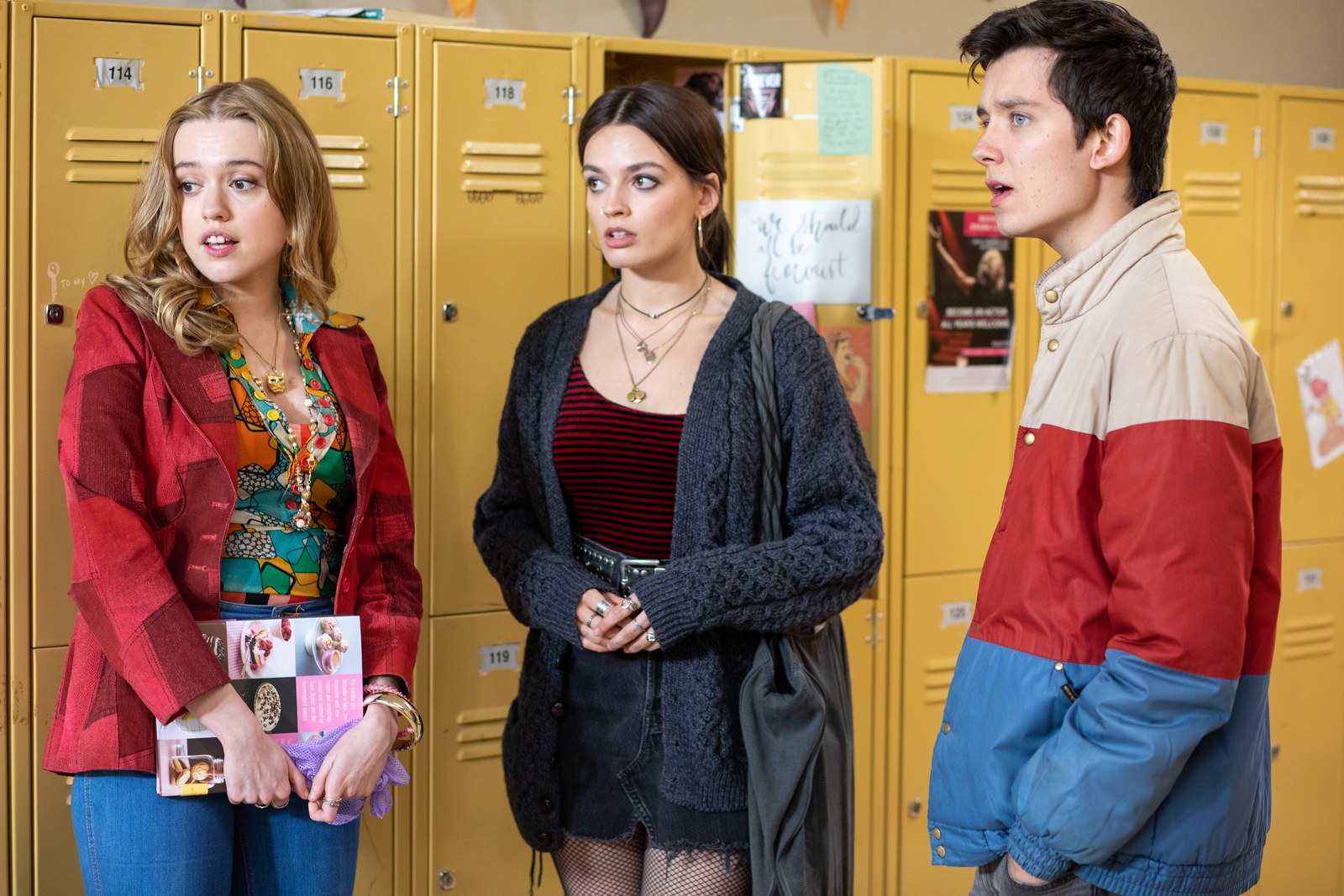
More of Gillian Anderson and Asa Butterfield’s chemistry as mother-son duo Jean and Otis Milburn is obviously always welcome, but it was some of the characters outside the sex therapists’ home that were given a chance to shine brighter this season, in particular Aimee Gibbs (Aimee Lou Wood), who goes through an achingly relatable #MeToo ordeal on a public bus that Glamour‘s Jessica Radloff describes as the series’ “most crucial” moment to watch.

Meanwhile, Maeve (Emma Mackey) and Otis’ never-ending drama goes on, Maeve makes a heartbreaking decision regarding her mom, and Adam (Connor Swindells) had a declaration for Eric (Ncuti Gatwa). One of the greatest things about Sex Education is its unflinching forays into topics often ignored on other “high school” series, which is why season three can’t come soon enough. Here’s everything we know so far.

Netflix

It’s happening. Netflix just announced with a lofty monologue from Principle Groff (Alistair Petrie).

Not a lot is revealed in the one-minute clip, but it does look like we’ll be delving further into the relationship between “cherubs” Adam and Eric. Who else can’t wait?

I’m guessing we’ll have to wait until January 2021. It stands to reason that since seasons one and two launched almost exactly one year apart in January, season three will continue the trend. At least a couple of members of the cast have other projects going on at the moment. Anderson will be taking on the role of Margaret Thatcher in The Crown season four. Emma Mackey, on the other hand, will be interrogated by Kenneth Branagh in Death on the Nile.

Fans are freaking out. Let’s just say, the folks on Twitter approve.

Unfortunately, that’s literally all we can say with confidence for now. Make sure to check back here for updates.


Source link

Categories
Health

How to Have Good Sex, According to a Neuroscientist


Dr. Nan Wise, a certified-sex therapist turned neuroscientist, knows a lot about how to have good sex. In addition to the three decades she spent helping women (and men) improve their sex lives—she made history by leading a team of researchers who studied how the brain responds to sexual stimulation and orgasm, demonstrating that the Big O is associated with big benefits for the brain and body. Her work highlights the importance of pleasure—namely, that it’s not a luxury you should expect only from really good sex, but a necessary component to wellbeing that should be prioritized.

Dr. Nan talks about all this and more in her new Glamour column, Ask Dr. Nan, and in the following excerpt from her book Why Good Sex Matters, out this month.


Look anywhere in the media or on the streets of any major city (or suburb or small town for that matter) and we appear to be wholly focused on pleasure. Invitations to enjoy sex, food, sports, spas, exotic vacations, romantic escapes, and gamified apps abound, all promising a
hit of relaxation, a high of excitement, an emotional or physical reprieve, and an answer to our aching need to destress. From this vantage point, an anthropologist visiting our planet might conclude that ours is a culture gluttonous for pleasure and sexually ravenous.

We should be feeling tons of pleasure. But are we really that turned on?

The answer, unfortunately, is no. What I observe daily in my clinical practice is that for all of this pleasure-seeking behavior, all this wanting of pleasure, very few of us seem able to fully experience the sensations or satisfaction we seek. Interspersed with these pleas or promises for pleasure is an equally consistent message: almost continual advertisements for antidepressant and antianxiety medications—one in five Americans will experience an episode of mental illness, while the rates of major depression and anxiety disorders steeply rise.

This is where my work comes in. The experience of pleasure can be described as sexual and sensual but also intellectual and fanciful, physical and emotional. The brain is not only the command center for sex, it’s also a generator of pleasure. This is why for the past twelve
years I have been working in the lab to study what happens in the brain during sex.

Like many a scientist before me, I began my research by using myself as a guinea pig for my own studies. I had spent endless hours conducting brain-imaging studies of women having orgasms in the fMRI in order to understand more about how pleasure—in the ultimate form of an orgasm—plays out in the brain, showing that an orgasm not only feels good but is good for us.

I have gleaned seven lessons from my own research and work with clients about how to have good sex and why it matters. These lessons apply to all of us who want to leave anhedonia—the inability to feel pleasure—behind and truly embrace our sexual potential.

1. Don’t judge your erotic self.

Learn to love your body, exactly as it is. This is one of the biggest lessons, mentioned by nearly all of my participants. Become curious about your sexuality and explore what turns you on. Learn to embrace your unique erotic fingerprint—your sexual style reflecting how typically think about, experience, and desire sex—whatever it is. Sex is our willingness to be sexual beings, however that shows up. Remember first and foremost that good sex is about being present.

2. Tune in.

Shift your focus inward to listen closely to what you want and what your body yearns for. What are your fantasies? How do you like to be touched? Why not explore all areas of your body that can give you pleasure? As Beverly Whipple, my beloved mentor, and world-renowned expert on sexual health recommends, become keenly aware of what pleases you across the senses beyond touch—don’t forget about sounds and tastes. Paying attention to sensations is key for pleasurable sex. If your mind wanders and starts to get into “spectatoring” mode—becoming goal-directed or self-conscious—simply notice that without judgment, letting those thoughts be exactly as they are while you bring your attention back to the senses.

3. Be patient about getting turned on.

When you want to have intercourse, don’t begin until you and/or your partner are sufficiently aroused. Allow the sex to unfold without rushing into it. Although this advice may seem simplistic, it’s hugely important to experiencing the pleasure of sex. Slow down and savor the sensations. Let them build. Enjoy the journey without concern about the destination.

4. Stay connected to your partner.

Often the best way to connect is by going beyond words. Simply do what people who are in the ecstatic state of new romantic love spend tons of time doing—eye gazing. Look into your partner’s eyes and breathe with your partner while sitting silently. See the person in front of you, the person you fell in love with. Spoon your partner, hold them, and synchronize your breath to synchronize your nervous systems. This actually works. We are like tuning forks and go into “cardiac entrainment” with lovers when we settle into the connection. Good sex is connected sex.

5. Take risks.

We often feel hesitant to speak up with partners about parts of ourselves that we think they will judge or worry that if we tell them how we truly feel we will hurt them. We tend to play it safe when in doubt. But another way to look at this is that there is a risk to not taking risks. If we don’t explore some of the scarier places with our partners, if we don’t explore the corners of our erotic selves, we tend to shut down and stagnate. And stagnation, itself, is dangerous to relationships. Sexual potential unfolds when we bring all of ourselves into the mix. We are always, always shifting and changing and growing. Taking the risk to reveal how these changes impact us, our thoughts, our fears, our feelings, even our fantasies tends to revitalize the partnership.

6. Prioritize pleasure.

Allow sex to play a larger role in your life. Seeking pleasure that feels good and is good for us—what I call healthy hedonism—is not a luxury, but a necessity for a healthy, balanced emotional brain. And sex is a potent form of healthy hedonism. Make time for sex, expand your notion of what sex is, nurture it, and explore it. It’s a journey without an end.

7. Embrace the transformative nature of sex.

Because of the blend of emotional and physical drivers of sex, any type of sexual experience or activity has the capacity to stir up all kinds of emotions. One of the most important lessons for good sex, and also good relationships, is to learn how to more fully tolerate our feelings, other people’s feelings, and our feelings about other people’s feelings. Sometimes the most challenging feelings to tolerate, believe it or not, are intense feelings of pleasure—which for some can feel scarily out of control. When we can learn to simply allow the feelings to be as they are, stay present to ourselves and to each other, the experiences we can have with and through sex can be truly healing and can revitalize our mind, body, and spirit. It is a tangible form of connection to others, a source of immune-boosting energy, and a vast reservoir for pleasure.

This essay has been condensed and adapted for Glamour from WHY GOOD SEX MATTERS by Nan Wise, Ph.D. © 2020 by Nan Wise. Reproduced by permission of Houghton Mifflin Harcourt. All rights reserved.

Nan Wise, Ph.D., is AASECT certified sex therapist, neuroscientist, certified relationship expert, and author of Why Good Sex Matters: Understanding the Neuroscience of Pleasure for a Smarter, Happier, and More Purpose-Filled Life. Follow her @AskDoctorNan.


Source link

Categories
Health

Sex Education Season Two: We've Seen Sexual Assault on TV Before—But Never Like This


She continues, “Unless it is rape, [many of us] feel like we can’t really talk about it or that we have to take it in our stride and even laugh about it. We’ve turned them into little funny anecdotes rather than actually dealing with the fact that might have traumatized us on some level.” It’s like society has given us a hierarchy of sexual assault, she explains. “If you’re somewhere near the top then it’s like, ‘Oh, that’s OK. You’re allowed to be upset by this one.’ But anything lower you feel like maybe you’re a bit of a drama queen.”

TV shows have shown sexual assault before, of course, but this Sex Education storyline is new: Rarely does a series take an incident that isn’t rape and spend so much time over the course of a season unraveling the emotional layers that follow. Aimee’s experience isn’t relegated to a one-episode arc. Instead, the whole rest of the season checks in on her well-being and healing after the incident. It sends a clear message: Whatever the circumstances, any sexual assault is traumatic.

“It’s about what happens when you suppress that trauma and you don’t deal with it,” Wood says. “And it’s about women coming together and being that support system as Maeve, Ola, and many of the others do for Aimee at the end. Sometimes you need people to give weight to your problems and to give you permission to feel the damage of something. Sometimes you just need someone to go, ‘You’re allowed to feel shit about this.'”

Sam Taylor/Netflix

The way that Aimee’s boyfriend, Steve, responds is also key. She has trouble being intimate with him—even cuddling is hard—but he never pressures her and invites her to open up when she’s ready, on her terms. That support only makes their relationship stronger, Wood says.

“Even though it’s such an unfortunate way to grow, it’s a huge turning point in her life,” she explains. “Much like what she learnt in season one by taking ownership of her body and that masturbation montage, this does the same, even though it stems from an awful situation. She becomes so much more empowered because of it…but it takes a long time.”

After season one, Wood says women would often come up to her to talk about the female orgasm and masturbation. Now, she’s ready to hear from women who have buried their own trauma. “I’m so grateful we’re telling this story,” she says. “The conversations that I’ve had with young women is just so incredible. I’ve had so many conversations, even with my friends, that I would never have had if not for this show. We never spoke about [these things]. And now we do.”

Season two of Sex Education is now streaming on Netflix. Jessica Radloff is the Glamour West Coast editor.


Source link

Categories
Health

Sex Education Season 2 Review: The Netflix Series Is Even Better


When Sex Education—Netflix’s highly binge-worthy comedy about, you guessed it, sex and relationships—premiered last year, it was such a hit that the streaming service says more than 40 million households watched it within the first four weeks. Naturally, a season two had to happen, and it finally premieres today, January 17. Yes, Sex Education is back for an eight-episode run that’s even funnier and more awkward than the last.

“There were a lot of elements for season one that we loved, but when we came into season two, we really tried to empower all the different departments across the show—from wardrobe to the script department—to be as bold as possible,” executive producer Jaime Campbell tells Glamour. “I think that’s reflected.”

Jean Milburn (Gillian Anderson)

Sam Taylor/Netflix

Campbell points to more air time for the adults as one way the show will be expanded this season. You’ll see more of Jean Milburn (Gillian Anderson) and her relationship with Jakob (Mikael Persbrandt), and Mr. and Mrs. Groff’s relationship (Alistair Petrie, Samantha Spiro) will “come under more scrutiny,” according to Campbell. That’s a good thing, the producer adds, because “in a show like this, you can often forget the adults and how incompetent they are. We’re really doubling down on their incompetence this season.”

It’s a development the younger cast is happy about, too. Patricia Allison, who plays Ola, Otis’s girlfriend, thinks it’s important to feature the sex lives of the parents. “I don’t think we get to see enough of that,” she says. “Older women who get to actually be like, ‘This is what I want.'” One example of how that plays out: Mrs. Groff, the headmaster’s wife and Adam’s mother, will start her own journey of self-discovery. “She’s in this kind of loveless marriage and feels like she doesn’t have a voice in it,” Allison says, “but then she forms a really lovely friendship with Jean and goes to a vagina workshop which allows her to explore her own sexuality.”

While we loved season one of Sex Education for shedding a light on topics that are usually glossed over on other shows (masturbation and the female orgasm, just to start), season two will go even further. “Our creator and writer, Laurie Nunn, came up with an explosive storyline that has two particular female characters intersect, and I think fans are going to absolutely love it,” Campbell says. As to which two characters Campbell is talking about, Netflix has that plot development on its do-not-spoil list, so mum’s the word for now.


Source link

Categories
Health

Sia Just Gave a Master Class in Asking Men For Casual Sex


So! You want to have sex but don’t want to ruin a friendship? Well, you’re in luck: Australian music mogul Sia has written a script to help you get what you want. Tailor it to your needs, memorize it, and before you know it, all your chandeliers will be turned into sex swings.

For the longest time, TV and movies have shown us that sex is something men get when they beg, and something that women endure in the hopes of locking down commitment. But in reality, all kinds of people want to have sex with all kinds of people. Nobody is trying to wife you up, Todd.

For many women, locking down high-quality sex in a world that expects you to doth-protest-too-much is tricky. But consider this: Say you’re an international songwriter and performer with a penchant for wigs, and you have taken a pledge to be single for the rest of your life. You just adopted a son, but you would still like to have sex with your close friend and business partner, Diplo.

That is the position Sia found herself in recently, according to a story she shared in a profile of Diplo from GQ.

Sia

Getty Images

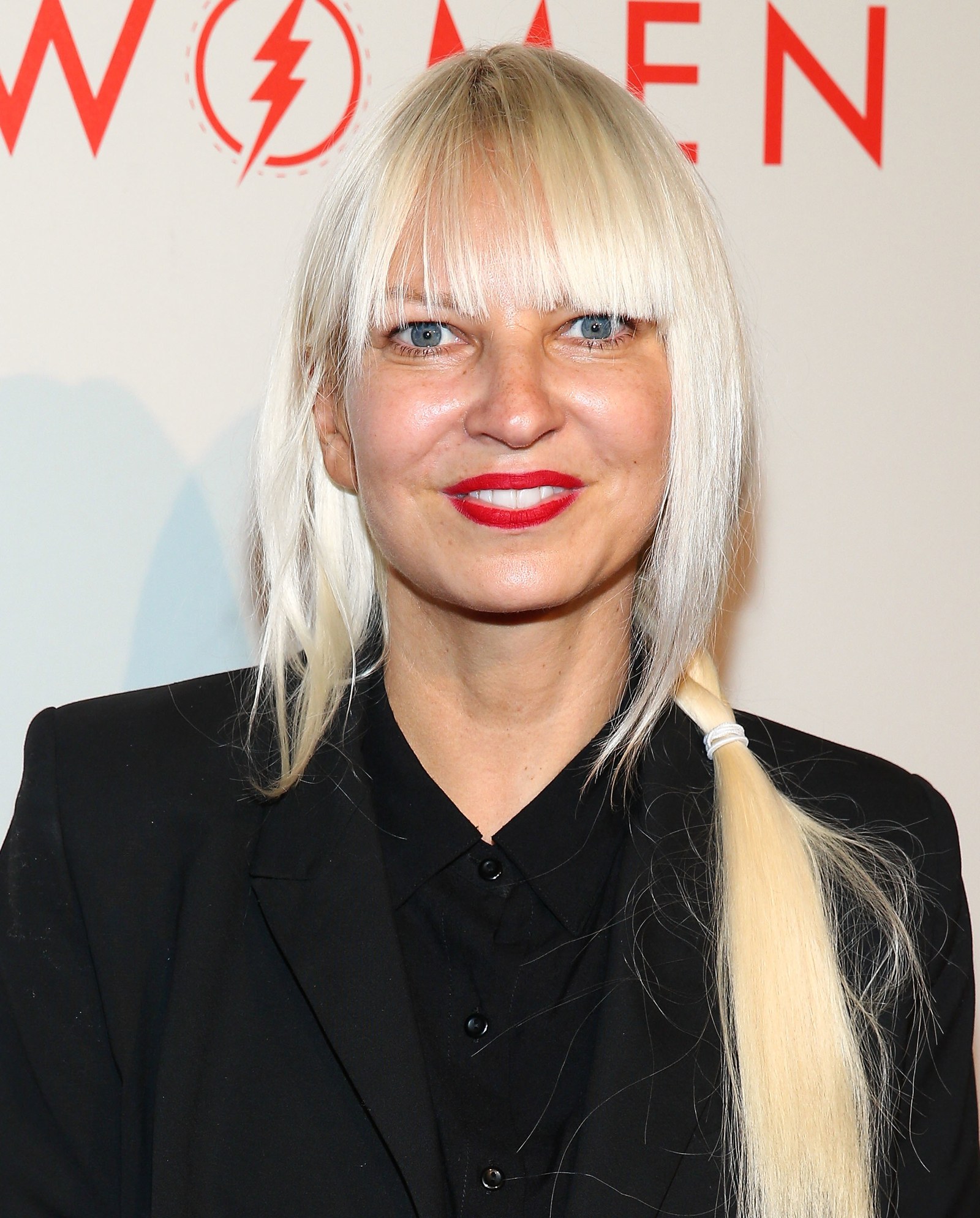
“Much of our relationship is just being spent trying not to have sex so that we wouldn’t ruin our business relationship, because he’s super-duper hot,” the hit singer-songwriter told GQ. “This year I wrote him a text, and I said, ‘Hey, listen, you’re, like, one of five people that I’m sexually attracted to, and now that I’ve decided to be single for the rest of my life and I just adopted a son, I don’t have time for a relationship.… If you’re interested in some no-strings sex, then hit me up.’ ”

Brava. There you have it: A perfect sexual proposition for a horny and litigious world. Let’s break it down:

Sia is in a tricky situation because she and Diplo work together. She made sure their hookup could be truly consensual by clarifying she wouldn’t allow it to affect their working relationship (“no-strings”) and by leaving the ball in his court (“hit me up”).

She succeeded in writing something that’s extremely direct, but not explicit. Elsewhere in the piece, Sia described Diplo as “one of the most insecure boys I’ve ever met.” Her text is a risk—but if she hadn’t written it, she would’ve risked never getting what she wanted.

Diplo attends the 2019 American Music Awards at Microsoft Theater on November 24 2019 in Los Angeles California.
Getty Images

Overall, it’s a well-crafted message: She started with a compliment and then got right to the point, laying out clear parameters of what their relationship could be. She was honest with him about her boundaries. She wasn’t pushy. She put it in writing, so that he didn’t have to respond on the spot. She was vulnerable. Hey, you heard she was a wild one (but come on, if she took you home, it’d be a home run).

There’s a lot of talk about the evils of “hookup culture”—the shallowness, the coldness, the end of romance, blah blah blah. But here’s an example of hookup culture done right: a business-text to a man in a cowboy hat, politely asking for sex and to be largely left alone.

Jenny Singer is a staff writer for Glamour. Follow her on Twitter @JeanValjenny.


Source link

Categories
Health

The Bachelor's Peter Weber Opens Up About That Windmill Sex


The holidays are winding down—but instead of getting depressed about the end of all the festivities, how about getting excited that it’s almost time for The Bachelor to return to the airwaves? Peter Weber, the airline pilot we first met on Hannah Brown’s season of The Bachelorette, will have a new group of women vying for his attention and roses starting on January 6 when the new season premieres.

But before all that: In a new interview with People, Weber opened up about his now-famous windmill sex with Brown, who will also appear on The Bachelor this season. “A whole part of my life has just been blown up in the public,” he said. “My private life is my private life is my private life, and I don’t like that it defines me.”

“I understand that it came out,” Weber continued. “And I know people have had fun with it and I guess it’s a good thing that I’ve been laid-back and easygoing about it. But there’s so much more to me than just a windmill. And I’m ready for that to be left in the past.”

Considering that Pilot Pete has signed up for another round on the reality show hoping to find love, we have a feeling his private life might not exactly stay private—but it’s understandable that he doesn’t love that a lot of people associate him only with that moment on that show. He hopes that Bachelor Nation is ready to discuss something else. “Out of respect for hopefully my future wife that I want to find, we just need to move on,” he said.

Based on the trailers for the new season, we’re guessing that won’t be a problem. And Weber says he was definitely vibing with some of the women right away. “You can’t fake chemistry,” he says. “I definitely felt an initial spark right off the bat. There were for sure a couple [women] that I felt really strongly for.”

The Bachelor returns to ABC on January 6 at 8 p.m. ET.


Source link