Categories
Health

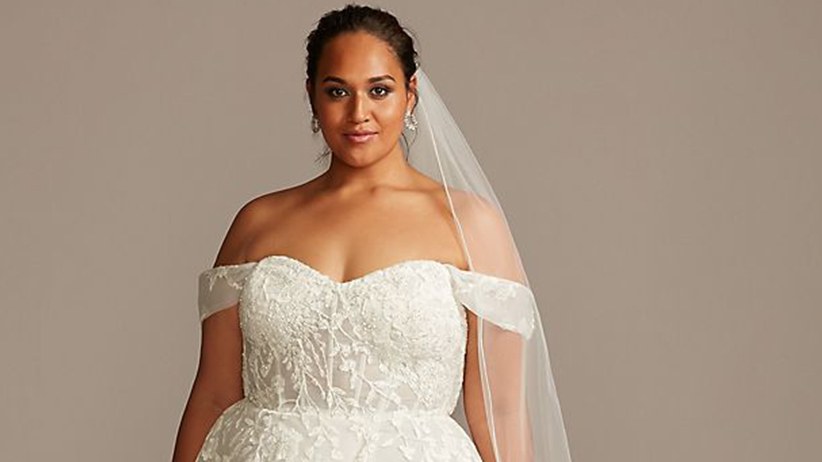
David's Bridal Will No Longer Charge More for Plus-Size Wedding Dresses


One of the largest retail chains for wedding attire is making a massive change to their pricing structure—at last.

David’s Bridal announced it will no longer charge higher prices for plus-size wedding dresses and bridesmaids’ gowns. “On average, the up charge for a plus-size wedding gown is nearly 15 percent, and we do not believe that a woman’s size should determine how much she pays,” Jim Marcum, CEO of David’s Bridal, said in a statement given to Glamour. “Since I started at David’s Bridal just over four months ago, I have made it my number one priority to serve all brides, making it our mission to remind every bride that she is beautiful.”

David’s Bridal has been size-inclusive—carrying size 0 through 30W—for some time, but now it’s also making sure the brand is treating all of its customers fairly when it comes to price, the deciding factor for so many brides-to-be. (The brand also recently announced the introduction of free returns and exchanges.)

“Going forward, all brides and bridesmaids will pay the same price for the same style, regardless of the size,” the statement added.

While equal pricing no matter size seems totally logical, it simply has not been the way the business model has worked previously. The so-called “fat tax” (or price parity) is not exclusive to the bridal industry and generally pervasive across many retail brands. (Airlines and spas have also been accused of up-charging larger customers.)

“Yes, it takes more fabric to make a larger garment versus a smaller one, which could be why some people want to put that back onto the customer, but that doesn’t seem like the right way to do things,” Chromat’s Becca McCharen-Tran told Glamour earlier this year, adding that designers can adjust wholesale margins based on the largest size they sell to offset expenses while keeping the price consistent. “If I were a designer working with leather or an expensive fabric, I would alter the margin to reflect the most expensive version. It’s offensive to charge it back to the customer.”

Hopefully more brands, bridal and otherwise, will follow suit.


Source link

Categories
Health

The Unspoken Hurdle of Getting Funding for Plus-Size Fashion Brands


At Universal Standard, Waldman and cofounder Polina Veksler are trying to carve out a new space entirely—one that does away with segregating “plus” and “straight.”

The founders bootstrapped the company from their savings at first, which Waldman says gave them a valuable degree of freedom. “It allowed us to make mistakes, allowed us to learn very quickly. It allowed us to do what perhaps was contrary to more seasoned advice.” Universal Standard’s first round of investment—$1.5 million led by Red Sea Ventures —gave it a short runway from which to start ramping up the business, after which they got to work raising their Series A.

“We wanted to work with people who we felt had our best interests at heart, who understood what we were trying to build, who understood that there was going to be trial and error for us. That primarily meant other entrepreneurs,” says Waldman. Not just any entrepreneurs, either: the $7 million round, which it closed in February 2018, was led by Imaginary, the venture capital firm founded by Net-A-Porter founder Natalie Massenet and investor Nick Brown, and joined by Red Sea Ventures, Gwyneth Paltrow, MatchesFashion’s Tom and Ruth Chapman, Toms’ Blake Mycoskie, SoulCycle’s Elizabeth Cutler, and Sweetgreen’s Jonathan Neman and Nicolas Jammet.

Elsewhere in the industry, though, Waldman says she still sees investors underestimating the potential of the space: “The biggest barrier to entry right now is the lack of knowledge and understanding on the investment side. I’ve heard of several people who were trying to move into the space being told, ‘Oh, it’s saturated now. There’s enough.’ Which is absolutely absurd. There is so much room for people who are trying to build brands with a broader spectrum of sizes.”

To combat this thinking, she says, more established brands need to keep expanding their size ranges to prove that the market is there to meet the supply—something Universal Standard is helping to do through its partnership with J.Crew (and another major brand to be announced soon, she says).

This, perhaps, could help close the gap between what’s offered to women who wear above a size 12 and those who wear a 12 or smaller. According to Liz Muñoz, CEO of the plus-size retail chain Torrid, there are about 62,000 freestanding specialty stores in the U.S. that cater to straight-size shoppers, compared to around 2,000 that sell plus sizes (600 of which are Torrid stores). Stores that carry both? It’s too new of a concept to even be on the map yet.

At the upper end of the market, the luxury online retailer 11 Honoré is throwing its weight (and venture capital) behind the effort to make broader size ranges the norm. In March 2018 the company, which serves sizes 10 to 24, secured $8 million in Series A financing led by Redpoint Ventures, bringing its total funding to $11.5 million.

Since then it has grown its designer roster to nearly 80 brands—among them Cushnie, Veda, and Tanya Taylor—and has pushed many of them to expand past “straight-adjacent sizes” (14 or 16), says Medha Agarwal, a principal at Redpoint Ventures. Doing so has required a financial commitment on both sides (on the brand’s, to produce the new sizes, and on the retailers’, to buy them), but the investments have been worth it, she says: Sizes 18 and 20 are now the top-selling sizes on the site.

As the market becomes bigger, Agarwal says, more brands will be persuaded to standardize their sizes and prices, so that plus-size shoppers don’t have to pay a premium, as they currently do with certain labels. And while most retailers vie for designer “exclusives,” 11 Honoré would be happy if more of the items the site carries weren’t bespoke, if only because that would make it possible to reorder fast-moving pieces partway through the season.


Source link

Categories
Health

12 Best Plus-Size Jumpsuits | Glamour


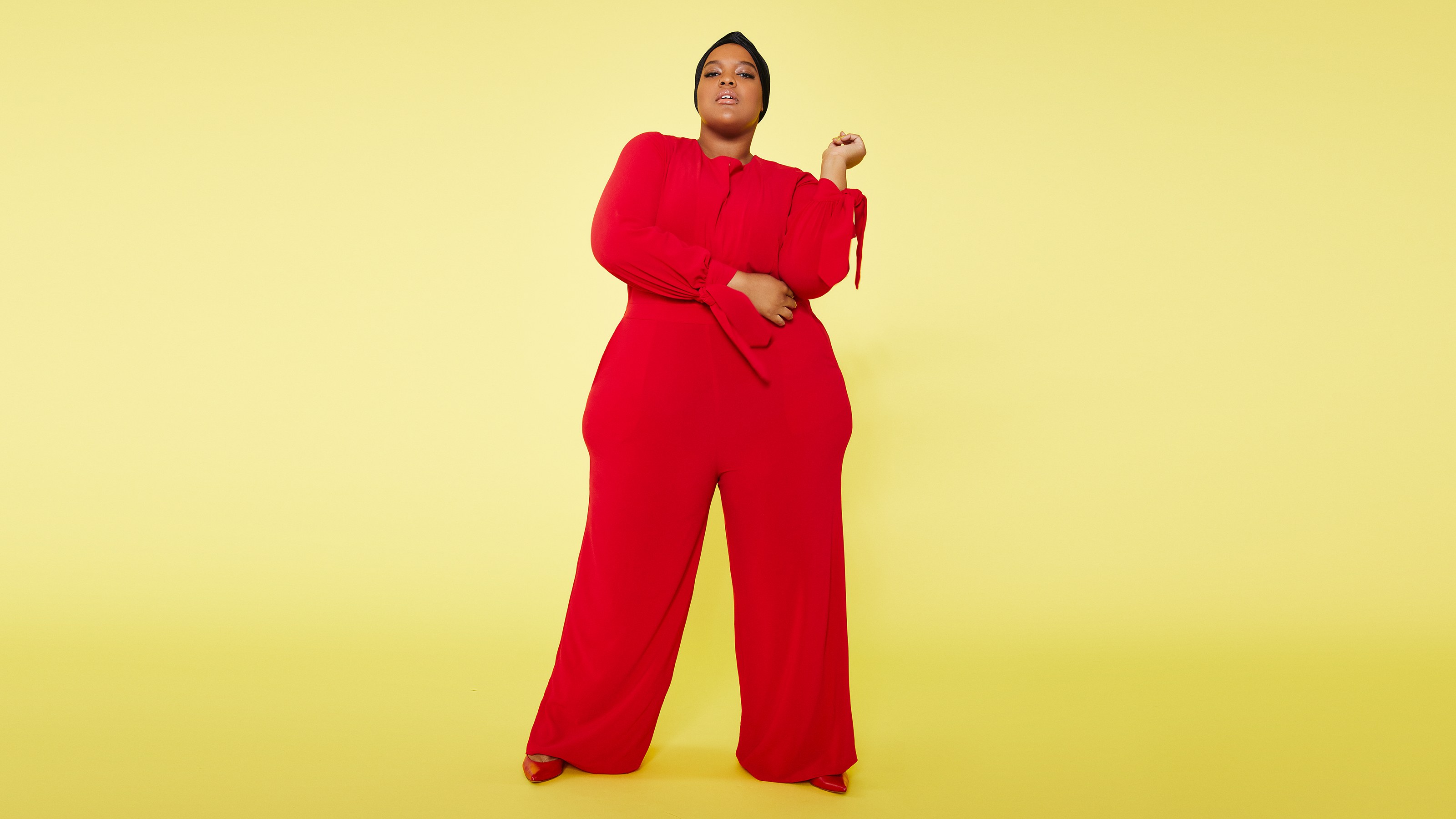
It’s ideally assumed that jumpsuits are one size fits all—not quite in the fits-everyone-unless-you’re-over-a-size-six kind of way, but more so in the garment’s ability to offer a proper head-to-toe fit that accounts for each individual’s shape, curves, and height. It’s by far one of the trickiest silhouettes to master, and yet the plus-size clothing experts ahead swear by several specific brands who get it right. These styles are favorites among editors, models, and readers for their ability to both define one’s figure and provide a looser, relaxed fit in full-length one-pieces and short playsuits alike.


Source link

Categories
Health

The Fashion Industry Has a Plus-Size Problem. These Women Want to Fix It


“I’ve been going to Fashion Week for years, and street photographers are still a big problem. They literally won’t take a picture [of plus women]. I know I look cute, but it makes you feel like you don’t belong there, or it was a mistake that you were invited to this place. Up until three or four seasons ago when brands began focusing solely on inclusive galleries, I was starting to feel like I didn’t want to go to Fashion Week anymore. People walk past you, or act like you don’t belong there. It wasn’t until designers started including one or two plus models in their shows—or really trying to make sure people know they’re inclusive—that I started getting moved me closer to the front row. It’s nice to feel included, but it’s also like, I know I’m just here as a token or a pawn. It’s somewhat more inclusive, but it almost feels like tokenism. It’s a double edged sword.” —Kelly Augustine, Owner of August Raye Boutique


Model and author

Courtesy of Leah Vernon

 
“One time I was in London during Fashion Week. I wasn’t invited to an actual show, but I was to an after party you had to RSVP for. I was there with another huge plus-size influencer in Europe, and another plus-size gal who works behind-the-scenes in the fashion industry. But when we got to the after party and pulled out our phones to show our RSVP confirmations, the woman didn’t even look. She just said, ‘Sorry, we’re not letting anyone else in. We’re at full capacity.’ People were literally walking out the door as she said it. We pushed back and asked to talk to her manager, where we had to wait five minutes for them to finally let us in. Of course, once we got into the party, it wasn’t close to capacity, and we were the only visibly plus-sized women there. Stuff like this happens too often when you’re plus size.”


“At Fashion Week, the seats are one long bench, and each ‘seat’ is a piece of 8-by-11 paper with your name on it. And one bum is supposed to go in each of those seats. I used to just move to the back row—and if you’re in fashion, you understand that sitting in the front row is a status symbol. It’s important for your publication, and it’s also important for you as a person. If you want a promotion, if you want to get poached and go work somewhere else, if you want to show that you are as important as the straight-size editor beside you, your potential new editor-in-chief needs to walk in to that show and see you beside your competition, not in the back hiding. I got to a certain point where I wouldn’t move. I remember one show where I had a quarter of my left butt cheek on the end of the bench, and I did a wall sit without a wall for the entire show. Fashion shows are only five to 10 minutes long, but still, that’s a long fucking squat. I was sweating and shaking, and in my head thinking, I’m not moving.” —Lauren Chan, founder of Henning and former fashion editor

The Fashion Industry Has a PlusSize Problem. These Women Want to Fix It

We’re sick of brands pretending they include us—when they don’t


Writer

Shammara Lawrence
Heather Hazzan

 
“Sometimes I’m invited to events, like the launch of a new collection, and there’s nothing in the line that could fit me or any other plus-size person. My fashion writing revolves around plus sizes, so why would I cover that? Even worse is when a publicist tells me how size-inclusive a brand is only to find out their clothes just go up to a size 18. Newsflash publicists and brands: it’s not! And to suggest otherwise is incredibly offensive—plus size typically starts at a 14/16, so you’re barely even dipping your toes in the plus-size market.”


Fashionista editor-in-chief

Tyler McCall
Getty Images

 
“I realize that this comes from a huge place of privilege, but gifting [is a real issue]. I’ve always been somewhere between a size 12 and a 14, so anytime brands are gifting and I’m asked for a size, I respond with a range. Some of my favorite responses are, ‘It goes up to a 10, but it’s a roomy 10,” which, cool, thank you. A ‘roomy 10’ is still not my size, and also, what a weird thing to say. I think people mean well—they’re taught that to point out any kind of difference in size is rude. I get it. I often call mediums the ‘polite large,’ because if I get random mailers from people who haven’t emailed me for my size and they send me a medium, I know they went and looked at my social. They know I’m not a small, but they were scared to send me a large. If they asked, I would’ve said I need a large, and that’s fine.”


Writer and founder of Rascal Honey

Sarah Conley
Courtesy of Sarah Conley

 
“As a size 28, I am consistently pushing the plus-size industry to include larger sizes, which feels extra ridiculous. On a weekly basis, I’m approached by brands who want to work with me and even though I am very open about my size (it’s even in my Instagram bio), I often receive confused and callous replies from brand representatives when I tell them that I’m outside of their size range.”


Source link

Categories
Health

Glamour Digital Cover: Meet Iskra Lawrence & 4 More Plus-Size Super Models


I was 25 years old when I saw Vogue Italia’s June 2011 issue. On its cover: Candice Huffine, Robyn Lawley, and Tara Lynn—three of the top plus-size models at the time—wearing black lingerie. Inside the magazine: the boudoir-style photoshoot, where model Marquita Pring was also featured. The brazen sexuality was palpable. In all my years of reading mainstream women’s magazines, I’d never seen anything like it. Four unapologetically curvy women were on the pages of Vogue, shot by Steven Meisel—the same photographer to work with Madonna, Linda Evangelista, and Kate Moss. That Meisel cover felt like an exclusive party that my size-16 self might actually get invited to.

Growing up, I was always in love with fashion yet was always made painfully aware that I didn’t have the right “look” for it. This was implied by omission. Yes, I’d seen plus-size women in ads for matronly stores at the mall or as a punchline in movies, but I’d never seen them anywhere particularly inspiring. When visibility did exist in fashion, I felt it was for provocation, like Crystal Renn’s headline-getting appearance on Jean Paul Gaultier’s 2005 runway or Karl Lagerfeld’s seemingly convenient 2009 love affair with The Gossip’s plus-size front woman Beth Ditto. The same Karl Lagerfeld who, that same year, said, “No one wants to see curvy women” on the catwalk.

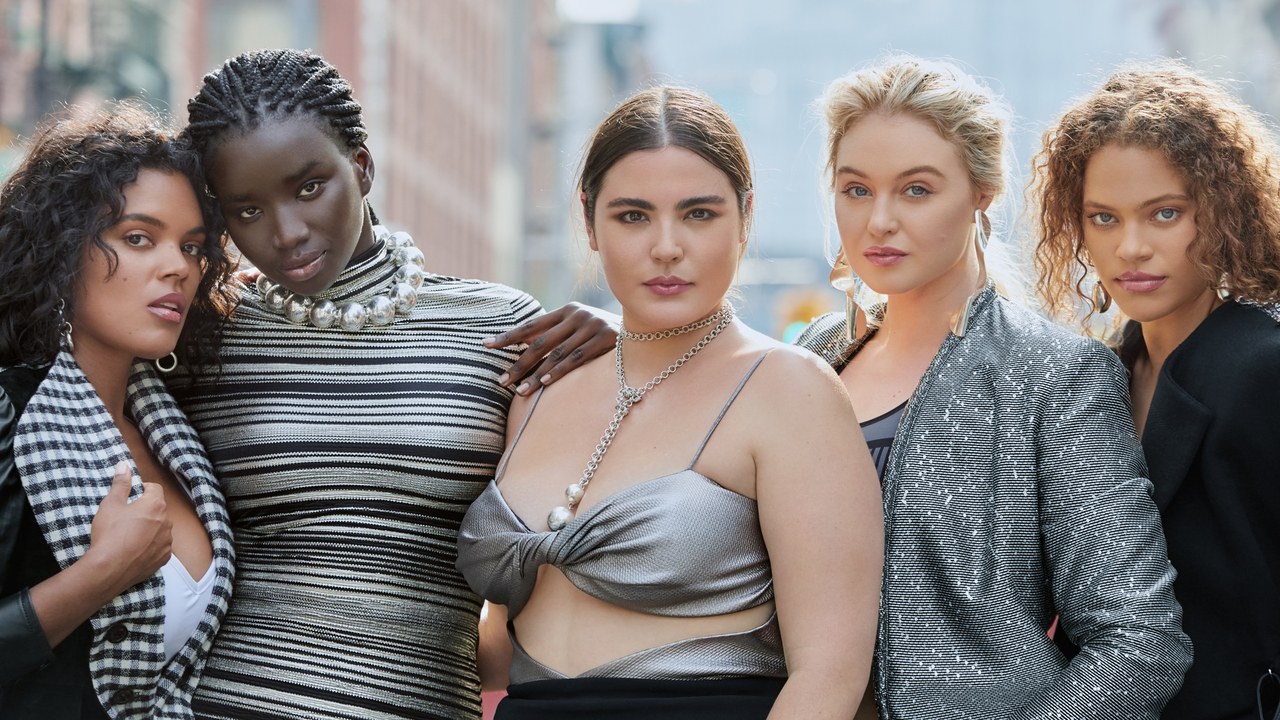
From left to right: On Iskra, Mara Hoffman dress; On Seynabou, Pleats Please by Issey Miyake dress; On Alessandra, Kalita maxi dress; On Solange, Zero Maria Cornejo dress; On Yvonne, Cushnie dress; All models are wearing Rebecca de Ravenel earrings.

Eight years later, I’ve seen progress: Ashley Graham on the cover of Vogue in 2017, a whopping 208 curve appearances clocked during the spring 2018 New York Fashion Week shows, and Lizzo becoming a bonafide style star, to name a few examples. But this progress was particularly visible when I walked on the set of a Glamour shoot and saw five remarkably striking curvy models getting ready to appear on the cover wearing the same designer clothes any other model would wear. No lingerie, no swimsuits, no shock value.

Seynabou Cissé, Iskra Lawrence, Alessandra Garcia Lorido, Yvonne Simone, and Solange van Doorn are powerful, ambitious, and of course, beautiful. But unlike the group that inspired the original supermodel phenomenon of the 1980s and 90s, the new crop are all a size 12 and above. They represent Senegal, England, and the Oneida Nation. They’re immigrants and mixed race. They’re accidental activists and eating-disorder-awareness advocates. They have professional backgrounds in tech and health sciences. Together they’re ascending not just as curve models, but as supermodels for a new age. The New Supers, if you will.


Source link

Categories
Health

A Telegraph Article Called Nike's Plus-Size Mannequins 'a Lie.' Women Are Calling BS.


Earlier this week, The Telegraph published an article on Nike’s plus-size mannequins, calling them “obese,” “gargantuan,” and “a dangerous lie.” Not surprisingly, women on social media aren’t having it.

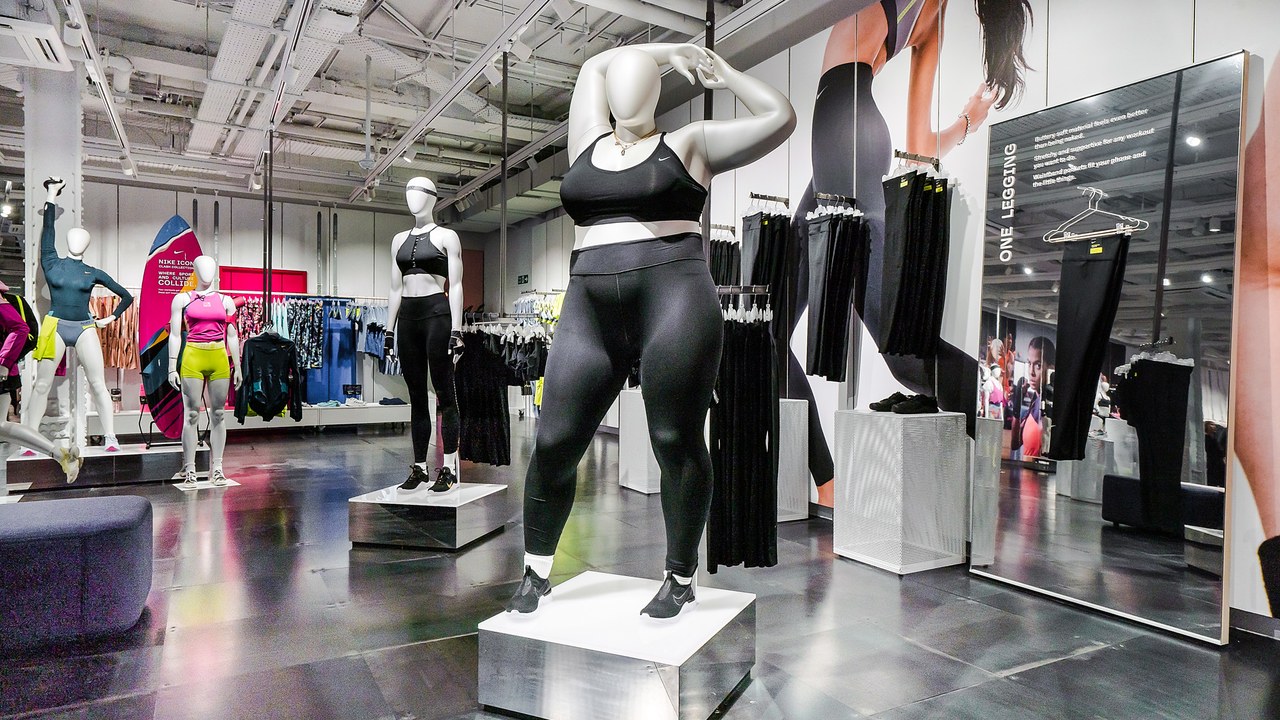
The world of sports—and workout gear, for that matter—hasn’t historically been the most size-inclusive place. Thankfully, that’s changing as major brands like Nike are stepping up to recognize the fact that women of all sizes can, and do, workout. Earlier this month Nike revamped it’s London flagship store, including plus-size models to show off the brand’s recently expanding range of sizes. (They also included para-sport models.)

It’s a powerful shift, but like any step towards progress, there are haters. The new Nike mannequin is “immense, gargantuan, vast. She heaves with fat,” writer Tanya Gold, said in her Telegraph article. “She is, in every measure, obese, and she is not readying herself for a run in her shiny Nike gear. She cannot run. She is, more likely, pre-diabetic and on her way to a hip replacement.”

This is of course bullshit. Weight is not a reliable indicator of health. Women of all weights, shapes and sizes run marathons, practice yoga, do CrossFit. They box, they swim, they play tennis, they bike, they climb mountains. Visit a gym, a spin class or the sidelines of a race and you’ll see all different kinds of bodies—all athletes, all deserving to be there.

The backlash to Gold’s article was swift, with women sharing photos and stories on social media of themselves working out, sporting plus-size gear, and delivering a resounding clapback to *The Telegraph*’s assertion that being plus-size and being an athlete are mutually exclusive. “Excluding diverse bodies is the opposite of progress,” model Iskra Lawrence wrote on Instagram. “Being skinny does not equal being healthy…I’m nearly 200lbs of ‘I will kick your a$$ in a sprint, boxing, jumping and lifting over half my body weight.'”

Here are some of the most powerful reactions to the fat-shaming article that prove women of all sizes can kick ass in the gym:

“Still want to tell me my body type can’t run?” one woman wrote.

“THIS is crazed bullying. It’s hate speech. We can’t allow people to discuss size like this. We wouldn’t allow it about race or religion in these huge publications,” actress and founder of i_weigh Jameela Jamil wrote on Instagram. “I’m disgusted and furious. Everyone at every size deserves to feel comfortable and good about themselves. And god dammit how can we shame people about their size and then try to take down mannequins for sportswear that include their size, inviting them at last into a part of the world they have been previously excluded from. So backwards, so grotesque and so disappointing.”

“As a non pre-diabetic size 18 woman who has always been big…I find that these types of rants are more of a reflection of how someone feels about themselves,” Katie Sturino, a plus-size blogger and founder of Megababe, posted on Instagram.

“As my friend and trainer @lubu22 says…you can still be thin and very unhealthy. Size does not fully determine health,” one woman wrote.

“That mannequin with the bigger body represents me, in fact my body is even bigger than that mannequin. People wonder why fate people don’t feel welcome in the fitness space – THIS IS WHY!,” one woman posted on Instagram. “I wish growing up I had seen mannequins like this and plus-size people represented in the fitness world. I find that seeing bodies like mine represented encourages me to move and take care of myself physically.”

“Tonight I swam 500m round a freezing cold reservoir and I loved it! The only thing that held me back was my wetsuit (the biggest women’s one I could get) garrotting my neck,” another woman posted. “I had the same experience trying to get clothes to fit when I was marathon training, and what makes it even more frustrating is putrid articles like this from the @telegraph (swipe right) today against @nike’s move to have realistic sized female mannequins to house their realistic sized gym wear. How are we expected to get fit and healthy if we can’t buy the clothes to bloody exercise in?”

“Why is it ok to publicly shame plus-size women who want to be more active and fit.Who want to work out, who want to wear a well known brand,” one woman wrote in an Instagram post.

“Plus girls work out every day,” another woman wrote.

“We’re told multiple types a day, every single day, that our bodies are only considered worthy if we shrink ourselves,” one woman posted. “Your body is worthy. At any size. And so is mine.”

“It is hard enough for women to find the courage and strength needed to start exercising and even harder to find clothes that fit us,” another woman wrote. “Nothing burns me up more than women tearing down other women, especially women who are trying to make a change in their lives…Your health and fitness is not dictated by your size (large or small) and it is also no one else’s business but yours.”


Source link