Categories
Health

Meghan Markle Makes Me Want to Be a ‘Ring Person’


It doesn’t take a royal expert to notice that Meghan Markle’s life—and wardrobe—has changed since becoming a Duchess. Gone are the bodycon dresses and bubble skirts she wore on her Suits press tour just two years ago. Now, it’s strictly prim bateau necklines and sensible footwear, or whatever protocol might call for. There’s one sartorial habit, though, that Markle brought with her to Kensington Palace (and soon Frogmore House): always stepping out in a perfectly-mismatched selection of stacked rings.

It’s an accessorizing technique of the Instagram age, wearing an assortment of delicate but distinct rings in a way that makes it seem like you didn’t really plan it—you just threw them on. And even with the Crown Jewels at her disposal, Markle continues to fall back on the signets and stackable bands from her pre-royalty days, from brands like Catbird and BaubleBar.

“Meghan has worn her stacking rings for many years now, long before she met Prince Harry,” Susan Courter, author of royal fashion blog What Meghan Wore and Markle style expert, tells Glamour. “I don’t ever recall Kate or another royal wearing similar rings, so it is certainly unique in regards to royal fashion.”

Whenever Markle is photographed, my eyes go straight to her hands for that very reason: No other royal seems to do this—and though it’s an easily missable detail, it feels incredibly relatable and easy to copy. (The custom Givenchy looks, not so much.)

“This is Meghan’s way of injecting some of her personal style into royal fashion,” Courter says. “I think it’s another way for her to show how you can still be yourself, keep a bit of that fashion flair she is known for and at the same time show respect for royal dressing practices, like wearing longer hemlines.”

I have to agree—and that’s what draws me to Markle’s ring collection. They’re a testament to authentic style in an environment where, as far as I can see, personal style has professional ramifications. With Markle as a guide, I’m looking to start my own collection of rings for tiny, personal touches to my wardrobe. Shop some of the jewels I’m eyeing—all under $100!—ahead.


Source link

Categories
Health

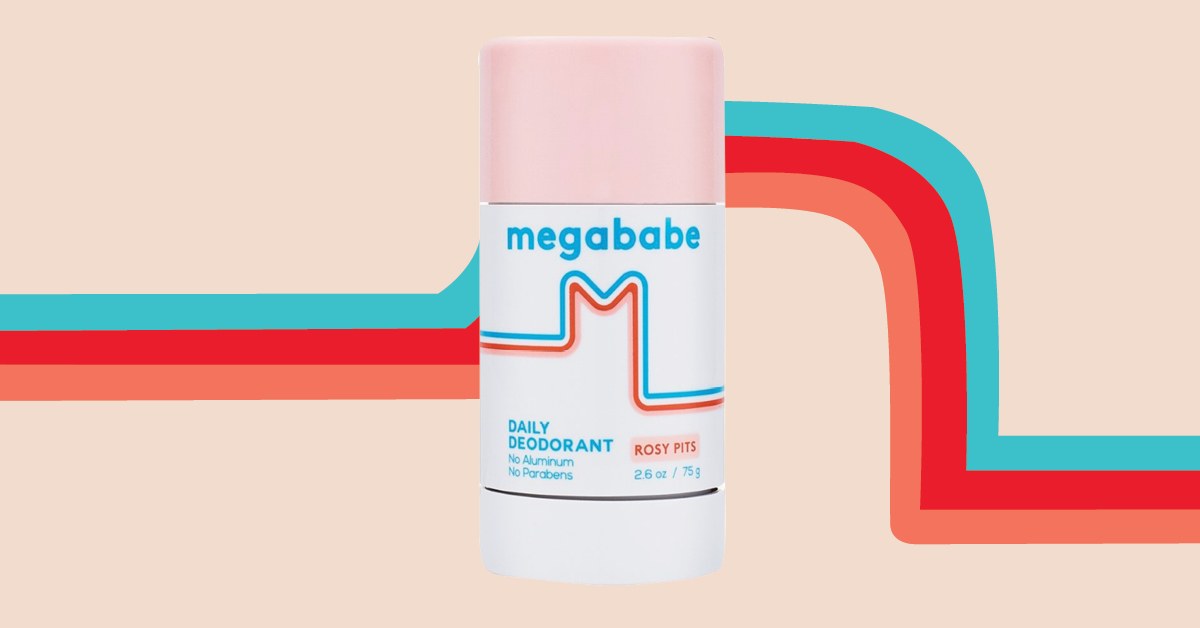
Megababe Rosy Pits Review: The Natural Deodorant With a 13,000 Person Waitlist


Thirteen thousand people are waiting for a deodorant, and you just have to hope they have a backup plan. For this is no ordinary natural deodorant: This is Megababe’s Rosy Pits, a stick that’s been out of stock since early August. As of today, it’s back. So why is everyone so thirsty?

As a sweaty person and longtime proponent of aluminum-free deodorants, I’ve tried more than my share of formulas. Most people’s eyes glaze over when I talk about why I switched to natural. They telegraph the message that that’s nice, but they’ll take the chemicals that they know work for them. And yet, maybe the tides are changing, considering so many people are waiting with bated breath to buy Megababe’s latest. Determined to find out what gives, I took Rosy Pits for a test drive.

The first point in the deodorant’s favor comes before you even unscrew the cap. It’s cute: the plastic packaging looks clean but fun, like something you’d find in a feminist boutique before it’s scooped up and stocked in Urban Outfitters (the brand is sold at Ulta, but the deo is currently exclusive to its website). Millennial pink, check; de-stigmatizing personal care products, check. The brand’s taken on other annoying problems, like chafed thighs and boob sweat, with equally cute solutions. As its fourth release, Rosy Pits doesn’t disappoint.

Upon uncapping, the only way to describe its scent is “surprisingly powerful.” It smells more like a cologne than anything: sharp and clean, a little foresty. Think of how a car commercial set in Big Sur looks, and you’re there. It reminds me of sticking my high school boyfriend’s Old Spice antiperspirant under my nose, and inhaling it for five minutes straight—there’s that quality of addictiveness.

More factually, the brand says the formula includes sage, green tea, sandalwood, and horsetail plant, which explains the fragrance. (Even though the stick is named after the rose extract also in there, it didn’t pop out to me.) That’s in addition to coconut oil, aloe leaf juice, and Vitamin E. The combination means the deo is anti-bacterial, anti-inflammatory, and anti-fungal, which neutralizes odor-causing bacteria without alcohol. On the sweat front, the brand ditched aluminum in favor of corn starch, which absorbs wetness without baking soda’s potential for skin irritation.

Simply put, it’s a good deodorant. After swiping it on for a week, I’ve realized that it’s unobtrusive yet efficient. Where I occasionally get a pleasant whiff while wearing Kopari or Schmidt’s natural deodorant, my other faves, I have to really stick my head in my armpit to pick up on Rosy Pits. New York’s a nightmare of sweat and humidity right now, and not once have I smelled like B.O. (there’s nothing like the terrible epiphany of, “What’s that horrible smell? Oh, me.”) Also crucially, I haven’t noticed any white marks on my shirts.

Priced at $18, it’s a new amount to pay for deodorant, but it’s hard to argue with the desire of a town’s-worth of people. And for something so addictively sniffable, I get it.

Megababe Rosy Pits, $18, megababebeauty.com

Related Stories:
I Finally Found a Natural Deodorant That Works, and It Smells Incredible
12 Natural Deodorants That Actually Work—Even in the Summer
Of Course Glossier Found a Way to Make a Zit Stick Cute


Source link

Categories
Health

How I Finally Gave In and Became a Sneaker Person


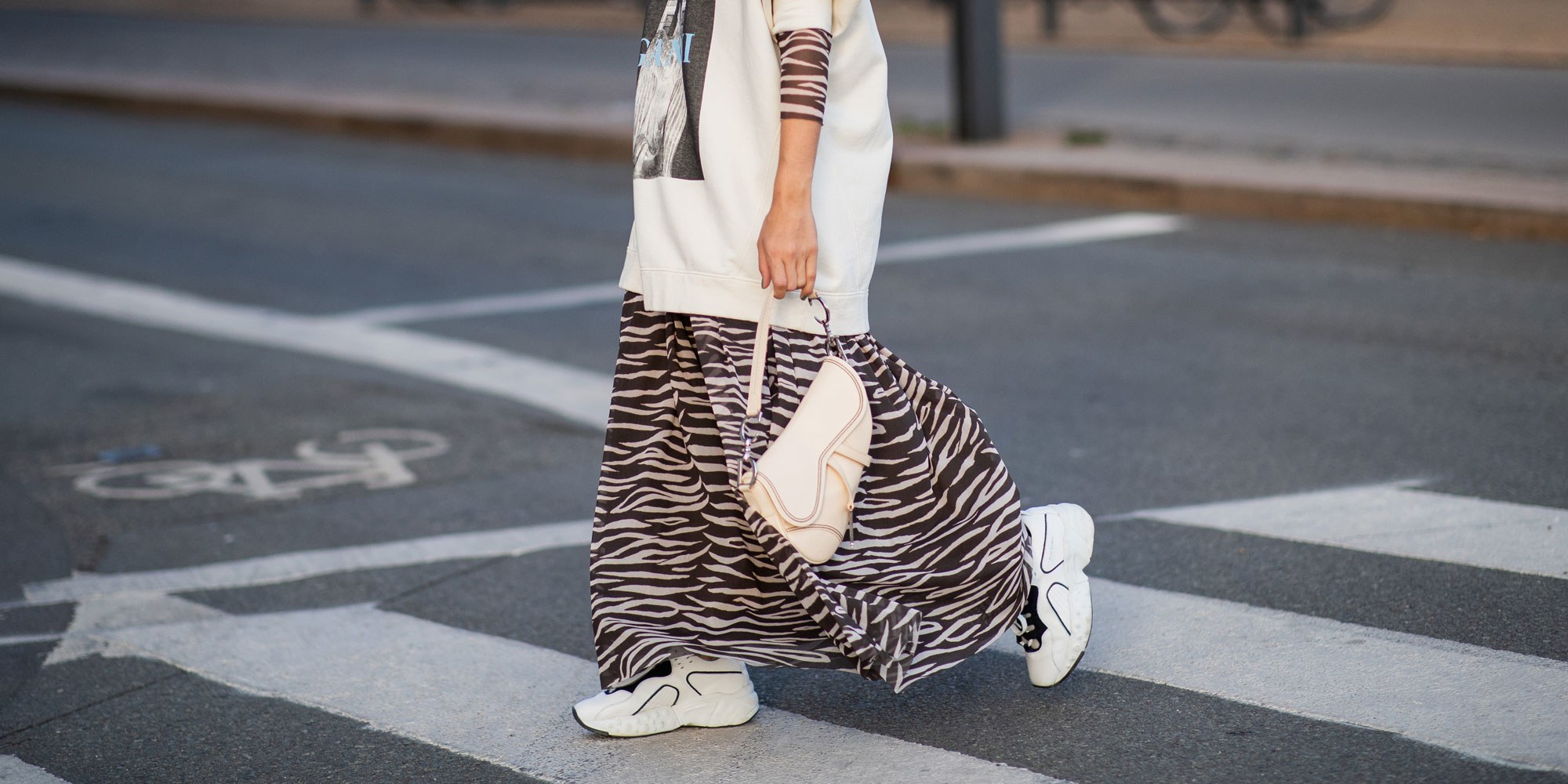
For years, I operated under the assumption that to dress well, I had to be uncomfortable. I love nipped-waist skirts, but I can’t stand how they dig in when I sit down—same for sleek dresses that require a treacherous maneuver to get on and off and tight, black jeans that leave deep tracks when I peel them off. And the shoes: ballet flats that pinch, knee-high suede boots that make me limp… Listen, I know comfortable shoes for women ostensibly exist, but those weren’t the ones I wanted to wear. In the words of Abba, pain was the name of the game to feel like who I wanted to be. Yet it’s so perverse that that’s what was required to participate in style. A few weeks ago, though, it stopped being my decision.

Life comes with addendums, and mine is a condition called hyperhidrosis. Basically, it means that when my feet aren’t housed in socks, they sweat nonstop—so slides, mules, and really any aesthetically-pleasing shoes are off the table. In the 9th grade, I committed to boots. At the time, I felt those were my fanciest closed-toe option, way more polished than sneakers. So I leaned into them, hard. That changed this year, when the medical establishment intervened once again: After eight months of chronic pain that felt like someone was always elbowing me in the lower back, my doctor limited my footwear options even further. I was to wear only sneakers with custom orthotics. Chic.

I’ve followed street style; I’ve seen the Bella Hadid meme; I know sneakers have been a “fashion” thing for a bit. Plus, they’re not only a huge part of culture, but also a booming business. They just never felt natural to me, or the femme-pretty clothing I leaned towards. Alas, I had doctor’s orders. It was basically like Jack and Rose, but me letting a pair of excruciating black velvet boots from Zara fall into the abyss.

What made matters worse was that my spinal doctor wasn’t recommending just any sneakers—I was to wear ones with built-up arch support and thick rubber siding to keep my feet and ankle stable. Clunkers. I went to a running shoe store in New York and left with a couple pairs that hurt to look at, but fit the bill. As I stood in front of my closet the next day and looked miserably at the sneakers, though, I realized: There had to be some sort of happy medium between giving up my personal style and wearing shoes that legitimately fit my needs.

I found that middle ground somewhat unexpectedly. I wore big-ass New Balance sneakers with a slinky merlot dress from & Other Stories. At first, it didn’t make sense to me—but as I sat there during my commute, looking down at my outfit, I came to the gradual realization that it wasn’t all bad. I could run away at any moment (even though I wouldn’t because: body crumbling), whether it was after a woman with fantastic hair or to collect voter signatures. It felt very Working Girl meets West Wing season one. More importantly, my feet weren’t screaming in discomfort. Though my shoes and outfit felt at odds in the beginning, together they spelled out a message: I was refusing to put myself in pain to look presentable. I would embrace comfort, keep dressing entirely the same, and hold onto who I wanted to be.

I’ve come to love passing someone wearing a chic dress or a pair of well-cut pants with big, chunky sneakers—and it doesn’t feel like they’re going to swap them with heels as soon as they get to their destination. They’re having it all, goddammit, and I am, too.


Source link

Categories
Health

Blue Ivy Is the Only Person Who Can Get Away With Telling Beyoncé to Calm Down


Bruno Mars and Ed Sheeran may have swept the 2018 Grammy Awards—for whatever reason—but the real winner of the evening was Blue Ivy, who showed up fashionably late with her famous mama, Beyoncé. The 6-year-old superstar-in-training sat between Bey and Jay Z the entire evening, delighting the Internet with hilarious expressions. Every time the camera panned to the Carter family, Miss Blue stole the show, which is quite a feat considering who her parents are.

Of all the moments from Sunday’s show, though, there’s one that’s (rightly) blowing up social media. Right after Kesha’s powerful #MeToo tribute, Camila Cabello took the stage to give a brief speech about immigrants. When she finished, Beyoncé and Jay Z gave her a warm applause, but they were interrupted by Blue, who seemingly told her parents to calm TF down.

You can see it in the video, below. As Bey and Jay Z are applauding, Blue gives them a funny look and gestures with her hands something akin to, “Alright, alright: enough applause.” It’s instantly iconic. Check it out:

So what does this mean? Is Blue actually a Fifth Harmony fan? Is she still salty about Cabello leaving the group? Is she the only person on this planet who isn’t a fan of “Havana?” Regardless, Bey and Jay did stop clapping when Blue told them to, confirming once and for all who the real head of their household is.

Here are some of the funniest reactions to Blue reprimanding her parents:

If Blue Ivy is still on the fence about Camila Cabello, I recommend she listen to “Crying in the Club.” America slept on that song, and it’s lightyears better than “Havana,” TBH.

Related Stories:

Beyoncé Went to Target With Blue Ivy, and the Internet Is Having a Field Day

Blue Ivy Carter Might Be Launching a Beauty Line, and I Don’t Think We Can Handle This

Beyoncé and Blue Ivy Shared the Sweetest (and Chicest) Mother-Daughter Memorial Day Moment


Source link

Categories
Health

Damn Right Taylor Swift Deserved Being Time's Person of the Year


“Spineless feminism” and “political passivity” are some of the phrases Taylor Swift’s critics used this week, after Time revealed “The Silence Breakers” as its Person of the Year. In the back right corner of the issue’s cover, Swift leans against a wall, joined by Ashley Judd, another familiar face. But the other women that share the cover aren’t familiar—in fact, there’s even a partial shot of a woman’s elbow, which was done intentionally to represent the anonymous women who came forward to Time. And yet, as with everything Taylor Swift touches, a social media firestorm was ignited at the proclamation that the star was a Silence Breaker.

Lots of people, including influential journalists, reviled the singer, making outrageous claims that Time only used her to sell magazines, or suggesting that Swift’s experiences with sexual harassment were somehow less important than others’. But the dissecting and ranking of people’s experiences with sexual harassment and abuse is alarming, as is the discussion of which victim “deserve” a cover spot. Any woman who has been sexually harassed or abused “deserves” that spot, and newsflash, none of these women wanted to be sexually harassed in the first place.

Knocking Taylor Swift has become a sport in America, often for reasons that are relatively harmless—her feud with the Kardashian-Wests, her dancing, her music. But, we’ve also taken to calling her out for missteps that hold more gravitas. The overwhelming issue feminists take with Swift surrounds her inaction on social issues. Yes, the pop star was silent during the 2016 election. No, she didn’t publicly use the #MeToo hashtag on Twitter to support her sisters in arms. Many felt it was her duty on both counts to stand up for women and pick a side—makes sense when you’re someone with a platform as massive as hers —but she is, first and foremost, a pop singer. Throwing her hat into the activism ring shouldn’t be required.

But the thing is, she did. Time included Taylor as a Silence Breaker because she was one. Earlier this year, DJ David Mueller sued Swift for defamation of character. Swift claimed he reached under her skirt at a public meet and greet and grabbed her ass—and there is photo evidence to support it. To prove a point that predatory men can’t get away with harassment anymore, Swift counter-sued him for a comical, petty price of one dollar. She won the case, and gave a notoriously fierce testimony, of which she commented, “I’m told it was the most amount of times the word ‘ass’ has ever been said in Colorado Federal Court.” So while her critics censured Swift for her lack of participation in the #MeToo social campaign, in this case, her actions spoke louder than words.

Plus, as if suing her harasser and winning wasn’t enough, the move itself was impactful. The Rape, Abuse & Incest National Network (RAINN) saw a 35 percent increase of phone calls in the weekend following Swift’s trial alone. She wanted to send a message to young women and men that we should stand up to predators, and it worked. She told Time, “I figured that if he would be brazen enough to assault me under these risky circumstances and high stakes, imagine what he might do to a vulnerable, young artist if given the chance.” While Swift is unfathomably privileged, she did exactly what someone with that kind of power should do: she used her it to usher in positive change, even if she chose not to follow it up with a hashtag.

And let’s not forget that last year Swift donated $250,000 to Kesha to help with her financial fees after being denied an injunction in her lawsuit against Dr. Luke, and did so quietly. This move had no impact on her career, and she had no reason to insert herself into that headline. When Swift went through with the counter-suit, she also had no reason to bolster her image. Plus, the entire lawsuit took place before the Harvey Weinstein report went public, and before the massive second wave of #MeToo (the original movement was started by Tarana Burke in 2007).

No matter how rich or famous someone is, suggesting that a woman came forward about sexual assault for attention is revolting. Being harassed or assaulted is traumatic, and the added stress of coming forward doesn’t alleviate that, it intensifies it. Research shows that reporting sexual harassment can actually worsen one’s job, psychological and health outcomes. One of the main reasons women don’t come forward is fear of a negative response or further harassment, which Taylor proved is a valid fear. The bravery it takes someone to come forward at all—let alone a woman who knew she would be crucified for “attention-seeking,” is hard to imagine. Money and privilege don’t make any person’s body public property.

Ranking which victims’ circumstances are worse or “deserving” of media attention has to stop. Regardless of your opinions on Taylor Swift as a musician or celebrity, it’s imperative we view her trauma objectively. While Swift often shies away from social issues, she hasn’t done anything wrong. No survivor owes the public his or her story, and Swift should be commended for sharing hers, end of story.

Jill Gutowitz is an LA-based writer who has written for VICE, Broadly, Teen Vogue, AwesomenessTV, Dame Magazine, and more. Follow her on Twitter @jillboard.


Source link
Categories
Health

There's a Powerful Hidden Message on Time's' 2017 Person of the Year Cover


You’ve probably seen this year’s cover of Time honoring their person of the year—or, as is the case for 2017, the people who earned this award. Women like Taylor Swift, Susan Fowler, Adama Iwu, Ashley Judd, and Isabel Pascual all among those who make up “The Silence Breakers,” the people who stood up to sexual predators and are now being recognized for “giving voice to open secrets, for moving whisper networks onto social networks, for pushing us all to stop accepting the unacceptable.”

But upon closer review of the cover image, you might have missed an elbow in the bottom right corner that doesn’t belong to any of the women pictured. And as Time national correspondent Charlotte Alter told BuzzFeed News on Wednesday, this was a deliberate—and meaningful—artistic choice: It represents the women who shared their stories anonymously.

“In the bottom left of the cover, there is an arm where you just see the elbow and you don’t see the person,” Alter said. “That’s very intentional. That’s an anonymous woman who is a hospital worker who was experiencing harassment and didn’t feel that she could come forward [publicly].”

As Alter explained, Time wanted to acknowledge that sexual misconduct spreads well beyond Hollywood and impacts women from all walks of life. She pointed to Isabel Pascual, a strawberry farmer who spoke out about the sexual harassment she faced in her job and noted that she shared her story under a pseudonym because she was afraid of retaliation.

“A huge part of this story is that, as much as the stigma around this has been removed this year because of the Me Too movement, it’s still really difficult for a lot of women to come forward,” Alter continued. “It’s important to include people who have to stay anonymous for professional reasons, who don’t have the resources to weather what would happen if they lost their job or they couldn’t support their families. So we wanted to include [these people] to really reference the risk that these women are taking by speaking out about this.”


Source link