Categories
Health

Carole Baskin of ‘Tiger King’ Deserved Better


I ate up Tiger King, Netflix’s smash hit docu-series, as if it were a family-size bag of Hot Cheetos—my mouth watering, my stomach slightly nauseous.

The seven-part series, which dropped a new bonus episode this week, has everything: Baby animals! Giant tigers! Guns! Botched hit jobs! Hot, troubled ladies! Bloody body parts! Murder mysteries! Three-way weddings! The FBI! Meth! The sudden appearance of Shaquille O’Neal!

Because of this, the characters on Tiger King feel more fabulous, more real (and more on meth) than what you’d find in almost any nondocumentary movie or show. It’s as if the creators elevated the greatest parts of reality TV and mashed them up with the most binge-able murder podcast and a kitten-themed Tumblr.

If there is a psychological urge that makes humans want to slow down when we see a car wreck on the side of the road, Tiger King is like a 32-car pileup with a Lisa Frank Trapper Keeper’s worth of tiger cubs tumbling out of blood-spattered windows. Of course we stop and gawk.

And of course we pick faves. A poll by the company Morning Consult and the Hollywood Reporter asked just under 500 Tiger King viewers whether they had favorable or unfavorable opinions about each of the main people who appeared on the show.

The poll found that the character viewed most favorably is Joe Exotic (47%). Coming in dead last is Carole Baskin at 27%. In between them is Doc Antle, with 35% of people polled saying they view him favorably. These numbers match the way the media have generally responded to Tiger King. Early coverage of the series focused on the disappearance of Carole Baskin’s husband. Stories about Doc Antle, meanwhile, noted that he attended the 2001 VMAs. When Saturday Night Live spoofed Tiger King last Saturday, Baskin was the brunt of the joke. This series covers animal abuse, domestic violence, suicide, sexual coercion, and hit jobs—but somehow there seems to only be enough space in the narrative to talk about Carole Baskin.

Look at Twitter: 960 people tweeted about her in the last hour, saying things like, “Carole Baskin is a fuckin bitch” and “fuck that bitch Carole Baskin.” #FreeJoeExotic trended for so long on Twitter that the president actually said he would look into it. As for Doc Antle, not enough people have tweeted about him in the last hour for Twitter to provide statistics.

The general attitude of fans towards the folks on Tiger King seems to be: Everyone in this show is a weirdo, so pick your fighter. And of course nobody wants the lady with the condescending smirk and the leopard-print leggings, who’s always tattling to Congress. We want the dude with the gun and the mullet who mass-produces tiger-themed lube with his face on it. This is America, and we know good entertainment when we see it.


Source link

Categories
Health

Sansa Stark Is the Real Queen We Deserved on Game of Thrones


Caution: Spoilers for Game of Thrones ahead.

Stand up, Sansa Hive—we finally have a Queen. Game of Thrones took its final bow last night, closing out its eight-year run with a final episode that left many fans scratching their heads.

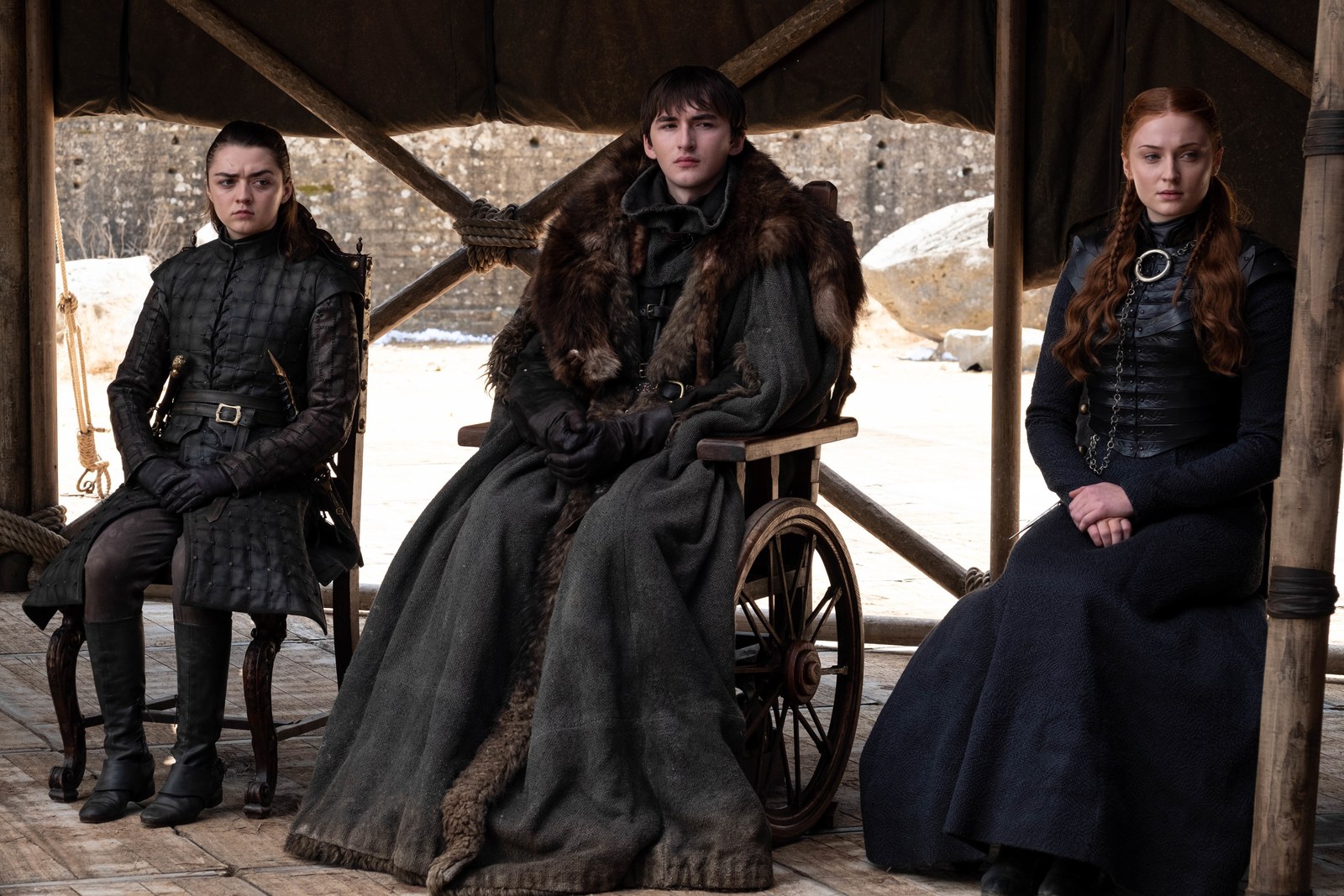
To recap: Daenerys flattened King’s Landing and was inches from taking the Throne, Jon stabbed her, Drogon burned the Iron Throne to the ground, and then a counsel of Westerosi leaders picked the first chosen King of the Seven (now Six) Kingdoms, and they landed on…Bran Stark. Despite that bizarre and underwhelming choice, there was at least one positive development from it: Sansa Stark is now the Queen of the North, something her fans—a.k.a. those of us who have our heads screwed on straight—deserved to see.

HBO

New members of the Sansa Hive aren’t welcome here—I’ve been a Sansa stan for as long as I’ve watched the show, and throughout those years, I’ve endured Game of Thrones “fans” calling Sansa whiny, weak, and spineless. For some reason, the eldest Stark sister was polarizing.

But on last night’s final episode, she proved why everyone should have been stanning this whole time. Case in point: When Tyrion first suggested that the counsel choose a king or queen and her uncle Edmure Tully embarrassed himself by standing up and pontificating about his accolades, Sansa cut him off with a command, “Uncle. Please sit.” It was the only moment in the episode that made me audibly gasp for air.

In that same scene last night, Sansa was the only member of the counsel to vote against Bran, asserting without contest that the North would recede from the Seven Kingdoms and become and independent state once again, with her ruling in Winterfell. That’s not the only savage way she called out her little brother:

Sansa’s rise to power was a slow burn; but once she grabbed it, she held on with an iron grip. Even when Lady Stark was stripped of her name, her autonomy, and everything she knew and loved, she was still—to borrow a phrase Turner herself used to describe Arya—was always “that bitch.” There was the time she bitch-slapped Robin Arryn in the face. Or when she sniped at Septa Mordane in season one with one of her greatest one-liners: “Oh wait, I just realized I don’t care.” She’s the Stark who always reminded us that “the lone wolf dies, but the pack survives,” and speaker of truths such as, “No one can protect me. No one can protect anyone.”

Sansa has been especially good at putting mediocre men in their place and making them feel mortified for even breathing around her. This season she told Tyrion, “I used to think you were the cleverest man alive.” That didn’t even sting half as badly as her takedown of Lord Baelish in season seven: “No need to seize the last word, Lord Baelish. I’ll assume it was something clever.” Sansa and Arya conspiring to kill Littlefinger at the end of last season was probably the most satisfying moment in Game of Thrones history for me—a feeling so blissful, I wish it could have been recreated in last night’s episode. But could anything really feel as rapturous as Sansa being crowned Queen? Answer: Hard no.

To the rest of the Sansa Hive, it’s been a pleasure stanning so ruthlessly alongside you. In my opinion, the Sansa Hive is the most passionate (and therefore the scariest) of all the Game of Thrones fandoms. We’re the scrappy ones, the ones who are always ready to drive our claws through your extensions and drag you by the hair.

I’ll miss our Queen’s severe wintry lewks, her cascading orange braids, and her devastating one-liners that made Ariana Grande look timid. And I want to thank Sophie Turner for bringing her wonderful energy to play Sansa (lest we forget the video of her chugging wine on the jumbotron at Madison Square Garden). Screw Bran—Sansa Stark is the Queen we’ve always deserved. Step on me, ginger legend!


Source link

Categories
Health

10 Women Who Fought for Equal Pay, and Got the Salaries They Deserved


Eighty cents. That’s how much women are paid on average for each dollar a man makes. The number alone is pathetic, and women of color are hit even harder. Black women earn 61 cents on the dollar, while Native American women take home 58 cents. For Latinx women, it sinks even lower: a mere 53 cents. Of course no one woman is in a position to change the wage gap on her own, and it takes a tremendous amount of privilege to even be in a position to fight for more. That said, there’s no satisfaction quite like watching a woman demand to be paid what she’s worth. From Ellen Pompeo to Mika Brzezinski—women are leveling up at the negotiation table and setting an example for how we should all be treated at work. Here, we celebrate their victories.


Source link

Categories
Health

Damn Right Taylor Swift Deserved Being Time's Person of the Year


“Spineless feminism” and “political passivity” are some of the phrases Taylor Swift’s critics used this week, after Time revealed “The Silence Breakers” as its Person of the Year. In the back right corner of the issue’s cover, Swift leans against a wall, joined by Ashley Judd, another familiar face. But the other women that share the cover aren’t familiar—in fact, there’s even a partial shot of a woman’s elbow, which was done intentionally to represent the anonymous women who came forward to Time. And yet, as with everything Taylor Swift touches, a social media firestorm was ignited at the proclamation that the star was a Silence Breaker.

Lots of people, including influential journalists, reviled the singer, making outrageous claims that Time only used her to sell magazines, or suggesting that Swift’s experiences with sexual harassment were somehow less important than others’. But the dissecting and ranking of people’s experiences with sexual harassment and abuse is alarming, as is the discussion of which victim “deserve” a cover spot. Any woman who has been sexually harassed or abused “deserves” that spot, and newsflash, none of these women wanted to be sexually harassed in the first place.

Knocking Taylor Swift has become a sport in America, often for reasons that are relatively harmless—her feud with the Kardashian-Wests, her dancing, her music. But, we’ve also taken to calling her out for missteps that hold more gravitas. The overwhelming issue feminists take with Swift surrounds her inaction on social issues. Yes, the pop star was silent during the 2016 election. No, she didn’t publicly use the #MeToo hashtag on Twitter to support her sisters in arms. Many felt it was her duty on both counts to stand up for women and pick a side—makes sense when you’re someone with a platform as massive as hers —but she is, first and foremost, a pop singer. Throwing her hat into the activism ring shouldn’t be required.

But the thing is, she did. Time included Taylor as a Silence Breaker because she was one. Earlier this year, DJ David Mueller sued Swift for defamation of character. Swift claimed he reached under her skirt at a public meet and greet and grabbed her ass—and there is photo evidence to support it. To prove a point that predatory men can’t get away with harassment anymore, Swift counter-sued him for a comical, petty price of one dollar. She won the case, and gave a notoriously fierce testimony, of which she commented, “I’m told it was the most amount of times the word ‘ass’ has ever been said in Colorado Federal Court.” So while her critics censured Swift for her lack of participation in the #MeToo social campaign, in this case, her actions spoke louder than words.

Plus, as if suing her harasser and winning wasn’t enough, the move itself was impactful. The Rape, Abuse & Incest National Network (RAINN) saw a 35 percent increase of phone calls in the weekend following Swift’s trial alone. She wanted to send a message to young women and men that we should stand up to predators, and it worked. She told Time, “I figured that if he would be brazen enough to assault me under these risky circumstances and high stakes, imagine what he might do to a vulnerable, young artist if given the chance.” While Swift is unfathomably privileged, she did exactly what someone with that kind of power should do: she used her it to usher in positive change, even if she chose not to follow it up with a hashtag.

And let’s not forget that last year Swift donated $250,000 to Kesha to help with her financial fees after being denied an injunction in her lawsuit against Dr. Luke, and did so quietly. This move had no impact on her career, and she had no reason to insert herself into that headline. When Swift went through with the counter-suit, she also had no reason to bolster her image. Plus, the entire lawsuit took place before the Harvey Weinstein report went public, and before the massive second wave of #MeToo (the original movement was started by Tarana Burke in 2007).

No matter how rich or famous someone is, suggesting that a woman came forward about sexual assault for attention is revolting. Being harassed or assaulted is traumatic, and the added stress of coming forward doesn’t alleviate that, it intensifies it. Research shows that reporting sexual harassment can actually worsen one’s job, psychological and health outcomes. One of the main reasons women don’t come forward is fear of a negative response or further harassment, which Taylor proved is a valid fear. The bravery it takes someone to come forward at all—let alone a woman who knew she would be crucified for “attention-seeking,” is hard to imagine. Money and privilege don’t make any person’s body public property.

Ranking which victims’ circumstances are worse or “deserving” of media attention has to stop. Regardless of your opinions on Taylor Swift as a musician or celebrity, it’s imperative we view her trauma objectively. While Swift often shies away from social issues, she hasn’t done anything wrong. No survivor owes the public his or her story, and Swift should be commended for sharing hers, end of story.

Jill Gutowitz is an LA-based writer who has written for VICE, Broadly, Teen Vogue, AwesomenessTV, Dame Magazine, and more. Follow her on Twitter @jillboard.


Source link