Categories
Health

Lizzo Is Time's Entertainer Of The Year


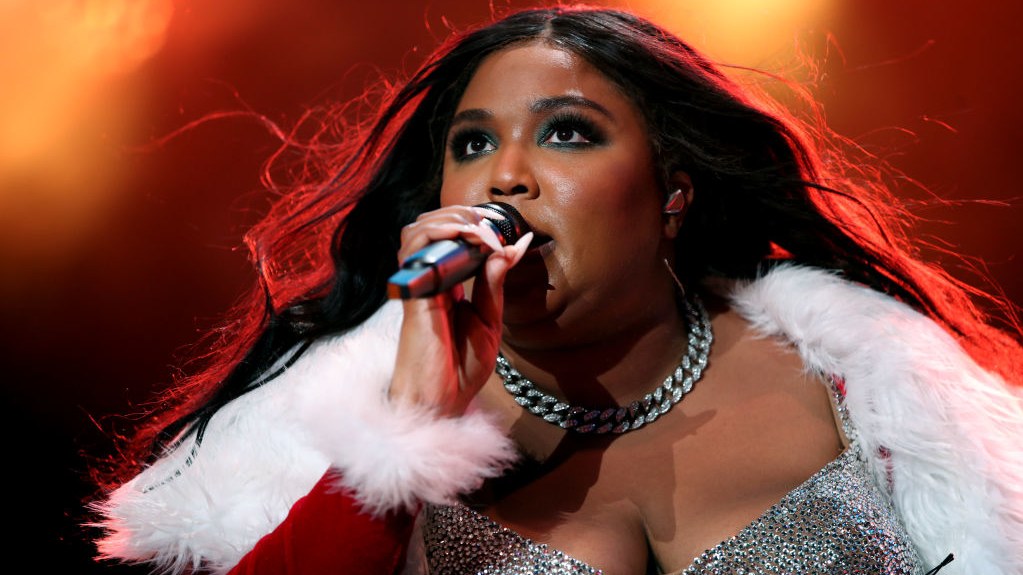
Lizzo was named Time Magazine’s Entertainer of the Year on Wednesday.

Do we even need to ask how she’s feelin’?

In the same news cycle that featured the 31-year-old singer twerking in a thong at a Lakers game and releasing a music video that literally trumpets black excellence, Lizzo earned a top spot in Time’s annual Person of the Year rankings.

Her cover image, shot by Paola Kudacki, is instantly iconic. It’s Lizzo in her truest form which I like to think is part disco ball and part deity. Her voluminous, sparkling Mary Katrantzou gown (or may we respectfully call it by its true name, sack of pure glamour?) evokes the globe, wholeness, oneness, eternity! Her arms are in the gesture Eva Peron would do if she took up yoga. Her pointed kitten heel has been flicked off, like Lizzo is Cinderella and we’re all a bunch of Prince Charming’s in hot pursuit.

The accompanying article about her, by essayist Samantha Irby, is filled with the instant-jolt-of-empowerment quotes Lizzo has a genius for tossing off. “I think it’s healthy to have a relationship with your naked body, even if no one ever sees it,” she says. “But I’ve always felt the need to share it.” In the piece, she talks about the vulnerability of experiencing fame in an especially highly scrutinized body. “I need to fall back in love with my body,” she proclaims, before adding, re: fame, “I just want to go to the farmer’s market.”

We will go to the farmer’s market with you, Lizzo. We will fetch you organic beeswax candles and fend off rabid fans with bundles of fresh leeks. We will carry your reusable tote bag.

She also tries to answer the question we’ve all been asking our therapists—where has Lizzo been all our lives? Why did she seem to appear out of nowhere, when she clearly has the star power of a major celebrity? Who has been keeping her from us?


Source link

Categories
Health

The Co-Founder of #MuteRKelly: Time's Up on R. Kelly, But the Work's Not Done Yet


Earlier this month Lifetime debuted Surviving R. Kelly, a six-part docuseries that explores the allegations of sexual assault and abuse that have surrounded the artist for decades. (He denies the accusations.) Until now the claims have had little impact on his career. But the response to the series has been enormous, with new attention on the women’s stories in the Time’s Up era. In Georgia a criminal probe has been opened to look into claims of sexual harassment and abuse. On social media, celebrities and collaborators have started to speak out. At a recent appearance protestors rallied outside. Here, the co-creator of the #MuteRKelly campaign reflects on what justice would look like and whether people are at last prepared to listen to black women and girls.


I was 14 when I heard that R. Kelly had married Aaliyah, who was his protégée. She was 15 at the time and it baffled me. I didn’t think of it as abuse. It was more, “What does a 15-year-old want with an old man?” R. Kelly was 27. To me, he was ancient. But I dismissed it. I was a kid, and I didn’t understand. I thought, “I guess this is what celebrities do.”

It just hit me then, “We’re dancing to these women’s pain.”

More rumors came up, and each time I didn’t think too much about it. I wasn’t OK with it, but I didn’t make a fuss about it either. Then [BuzzFeed] reported in 2017 that R. Kelly operated what some in the media around Georgia called “a sex cult.” After decades of accusations, it dawned on me that people knew full well what was going on, what was happening to black women, and we had made a collective decision not to take action. And I realized, I’m one of those people who is not standing stand with the victims. I had heard him on the radio. I had heard his music at barbecues, graduations, parties. It just hit me then, “We’re dancing to these women’s pain.”

Kenyette Barnes and I started #MuteRKelly in response to the news that this was happening in Georgia, where I live. I don’t know what I expected, but I wasn’t prepared for the response. We got so much hate mail. People were telling us we wanted to take a black man down, that we were believing these victims with no evidence, or that the women deserved what they said happened to them. It shocked me.

The petition that we circulated asked radio stations not to give him air time, and I figured it wouldn’t be a big deal. I thought, “OK, I’m going to send this petition to the radio stations, and it’ll be like, ‘Yep, he’s a horrible person. We’ve always known it. We’re going to stop playing him.'” That would be that. Two days of my life, and then this is taken care of for good. I was naive. It wasn’t like that at all. We were met with silence. Then we were met with ridicule.

There were a few bright spots, otherwise I’m not sure I could have kept at it. Women started to reaching out from all over, writing to us, “Oh my God, thank you so much for doing this. I’ve been doing my own personal protest against him forever.” Or, “I’ve been telling my friends that they shouldn’t support this man.” With #MuteRKelly, people started to feel like, “We have a banner to fly our flag under.”

Little by little, we have watched people come over. We’ve watched the tide turn, as people started to take a deeper look at these reports. The fact that the #MeToo movement and the Time’s Up movement exploded at the same time—that’s a factor. Because now the women who said, “I was a little uncomfortable with this, but I brushed it off” know that there’s a lot of us out there who aren’t going to be quiet.

#MeToo and Time’s Up and #MuteRKelly focus on different aspects of sexual abuse that we experience as women, but our goal is the same. We’re standing up and telling people, “We’re not going to accept this in our workplace. We’re not going to accept this from our entertainers. We’re not going to accept this in our lives and our homes. We’re not going to accept this behavior for our children. Wherever we find it, we’re going to root it out.” That’s the importance of this moment, and that’s the reason it’s so crucial that this conversation is back at the forefront of people’s minds. The difference here is that this alleged abuse affected black women and girls, a lot of them not from privileged backgrounds.

In black communities, I think when people heard about #MeToo, the reaction was, “Yes!” When we heard about Time’s Up, it was, “Yes!” When people heard about #MuteRKelly, it was like, “Hold on now…” His music is so rooted in our experience that we have an emotional connection to it—not so much to him, but to the music itself. When people hear “Step In The Name Of Love,” it brings up good memories. When they hear “I Believe I Can Fly,” they’re not thinking about Space Jam, they’re thinking about their baby’s graduation from kindergarten. It’s not OK, but I do think a lot of people didn’t want to let those good feelings go and face the reality that was behind them.

It’s hard to accept that sometimes, yes, someone is a terrible person. And our support has helped them this whole time.

So what’s changing now? Well, the docuseries Surviving R. Kelly premiered is forcing people who, until now, refused to accept these allegations start to think about who or what they want to protect. As black people, we have an inside voice and an outside voice. We’re cautious when it comes to criticizing other black people in the media. We feel and often attacked from all sides. People don’t want to contribute to that. Sometimes we can’t parse out when an attack is relevant and when it’s not—who we should support and who we shouldn’t. Part of the problem also is that as a culture in general we worship celebrities. We want to be like them. Eat what they eat. Wear what they wear. It’s hard to accept that sometimes, yes, someone is a terrible person. And our support has helped him this whole time.

Watching the show and seeing how deep the alleged abuse goes, seeing the whole timeline of it laid out, with so much corroborating evidence—from people who’ve worked for R. Kelly, from people who’ve collaborated with him, from people in the industry? It’s impossible to ignore this. It forces each of us to ask ourselves, “Why am I so invested in supporting this person who has never thought about supporting black women?”

We owe this to Dream Hampton, the executive producer of this series, and to all the women who’ve come forward and to all the legal teams that are helping these women attempt to get justice. Kenyette and I started #MuteRKelly and continued it even when we were disheartened, because we knew it could snowball and make a difference. We’re part of a nationwide movement now, but it has not been a short road. No one is getting rich off of this. No one is getting famous or making a fortune off of this. People won’t even tell their friends what their salaries are, and yet these women are on national television, telling their deepest, darkest secrets, showing us their worst pain. That deserves our respect. Now all we can hope is that action will be taken; this has been an emotional rollercoaster—for us since 2017, but for some of these women for decades.

Legal justice is important, and I’m glad to see that investigators in Georgia and Illinois want to look into this now. But for our movement, it has always been about the culture that supports a culture of abuse and breaking that culture down. If we can get R.Kelly off the radio, if he can’t book concerts, if his music is not on streaming services, that’s a success to us. That’s people telling him, “We will not support this. We will not support it from our entertainers, from our politicians, from our religious leaders, from our neighbors, from our friends.”

If nothing else happens, the fact that so many women decided to take a step forward, whether that means through the legal process or just to be open about this with their families and friends, with their children—I think that is a win that we’ve gained from this movement. The rest will just take continued effort. Time’s up, but the work’s not done yet.

Oronike Odeleye is the national co-founder of #MuteRKelly. Follow her on Twitter at @SuiteLadyOro.


Source link
Categories
Health

Twitter Has Strong Feelings About *TIME*'s 'Welcome to America' Cover Amid Border Crisis


President Donald Trump graced the latest cover of TIME magazine Thursday in what is perhaps their most harrowing visual critique of his presidency yet.

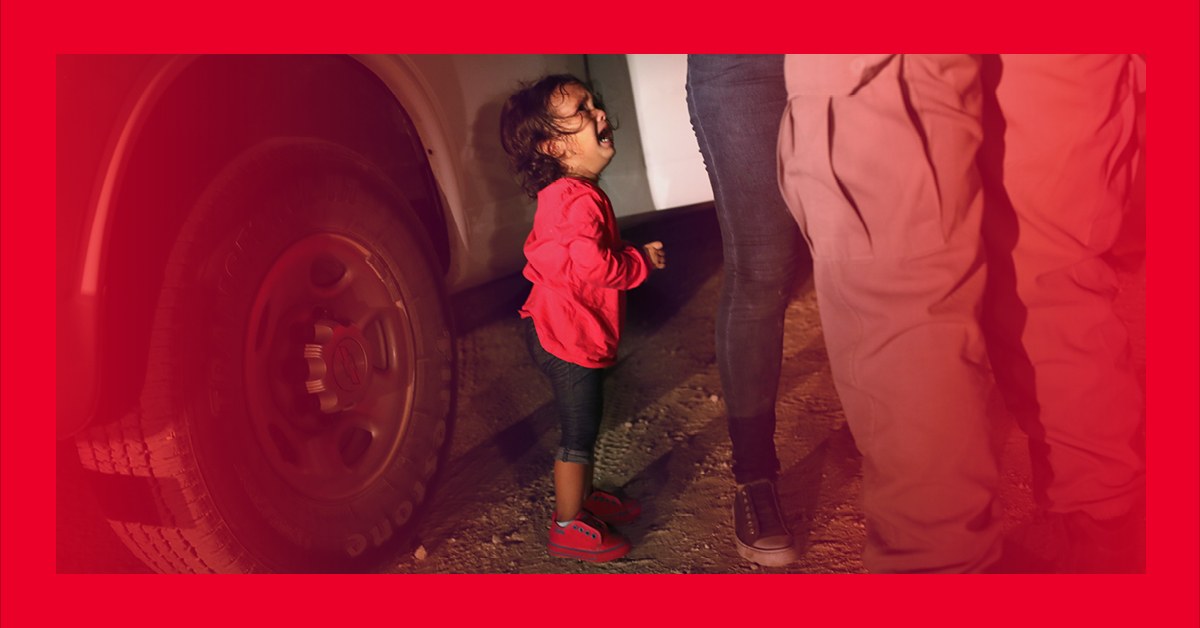
For the cover, TIME created a photo illustration of Pulitzer Prize-winning photographer John Moore’s now viral image of a two-year-old Honduran girl crying as her mother was being detained at the border. The president is seen towering over her. While Trump signed an executive order meant to end the separation of families at the border, thousands of families still remain apart and plans to reunite them are murky, Vox reports.

Moore has been photographing immigrants crossing the U.S.-Mexico border for years, but when talking about taking this particular picture he told TIME, “This one was tough for me. As soon as it was over, they were put into a van. I had to stop and take deep breaths… all I wanted to do was pick her up. But I couldn’t.” The picture has already become the most emblematic symbol of America’s immigration debate, and this TIME issue has only further ignited the conversation.

In the hours after its release, many have taken to Twitter to praise the cover, criticize President Trump, and discuss the border crisis.

POWERFUL cover from @Time.

“Welcome to America. Sadly, torturing children by snatching them from their parents – and then sending them off with strangers thousands of miles away is how Donald Trump feels powerful.”

“Hey, @realDonaldTrump, you can hang this REAL @TIME cover on your wall and take down all those fake ones. Welcome to America! #MAGA”

“Setting aside the constant currency of outrage surrounding this chapter of our history rarely does a magazine cover nail it so poignantly #Time”

“Nailed it.The actual new @TIME coverBe ashamed people, this is what we’ve come to.I hope this is retweeted all day and all over twitter every time Trump logs on.”

“Time’s new cover: ‘Welcome to America’ kid… the tiny, innocent, frightened child speaks truth to the Tangerine Tyrant’s corrupt, dictatorial power.”

You can find more information on Trump’s zero tolerance policy, here.

Related Stories:

Ivanka Trump Said She’d Fight for Women. Where Is She on the Border Crisis?

Here’s How to Help Immigrant Families Who Have Been Separated at the Border

Here Are the Facts About Trump’s ‘Zero Tolerance’ Immigration Policy


Source link

Categories
Health

2018 BAFTA Awards: Women Will Reportedly Wear Black in Support of Time's Up


Celebrities using the red carpet as a platform for protest has been a topic of conversation at every award show this season, and it appears the practice will be going global. A month after big-name Hollywood players coordinated to wear black to the Golden Globes in support of the Time’s Up initiative, women are reportedly planning a similar demonstration for the 2018 BAFTA Awards in London, according to WWD.

Sources tell the outlet that members of the British film industry want to join their American counterparts in showing solidarity for the movement, which aims to bring awareness to issues of sexual harassment and abuse. The decision was reportedly made very recently—which, like we saw with the Golden Globes, has left guests and designers “scrambling” to replace their original outfits with black ones before the event.

Think of the BAFTAs as the British Oscars—and expect to see a lot of your favorites from the award show circuit in attendance. (Nominees, who include Saoirse Ronan, Octavia Spencer, and Margot Robbie.) This year, they’ll be held on February 18 at London’s Royal Albert Hall. The show will be hosted by Absolutely Fabulous star Joanna Lumley, making her the first woman to host the BAFTAs since 2001.

The blackout plans have yet to be confirmed by either the British Academy of Film and Television Arts or any of the expected attendees. A BAFTA spokesperson told WWD this week that the event doesn’t have a dress code, and declined to comment on whether plans for female attendees to wear black to the ceremony were in the works.

At the Golden Globes in early January, almost every woman in attendance wore black (most men wore traditional black tuxedos; very few spoke about Time’s Up or sexual assault on the red carpet or in their acceptance speeches); many folks following the show at home also wore black, sharing their outfits and their experiences with sexism and sexual abuse with the hashtag #WhyWeWearBlack.

Despite criticism of the fashion-based protest from Rose McGowan and others for being superficial and not actually creating any real change, this type of manifestation has gained momentum among the Hollywood set: A similar movement took place at the Grammy Awards later in the month, where attendees wore or carried white roses in support of Time’s Up.

No such protests have been announced yet for the Oscars, though, the entertainment industry’s biggest night of all, which will take place in Los Angeles on March 4.

Related Stories:

How Designers, Stylists, and Fashion Critics Responded to the 2018 Golden Globes Blackout

At the 2018 State of the Union Address, Fashion Was a Vehicle for Quiet Protest

Celebrities at the 2018 Grammys Will Wear White Roses in Support of Time’s Up


Source link

Categories
Health

Celebrities at the 2018 Grammys Will Wear White Roses in Support of Time's Up


There will be another form of red-carpet protest at the next big awards show this season: musicians, producers, and managers at the 2018 Grammys are expected to wear white roses pinned to their outfits a way to show support for the Time’s Up movement, according toBillboard.

Led by Meg Harkins and Karen Rait, two music industry executives, guests will be encouraged to pin small white roses to the label of a suit or the side of a dress, to indicate that they stand in solidarity with the movement. The pair said they were inspired by the recent #MeToo “blackout” that occurred at the Golden Globes earlier this month, where actors and actresses exclusively wore black to raise awareness for sexual harassment and misconduct. (Many also wore—and have continued to wear—a Time’s Up pin.)

The idea for the Grammys protest fell into place just earlier this week, while Harkins and Rait were out to dinner in New York City, Billboard explains. They landed on a white rose because it’s a “practical and traditional accessory with a symbolic color.” So far, Halsey, Rhapsody, Kelly Clarkson, Cyndi Lauper, Dua Lipa, Rita Ora, and Tom Morello have confirmed that they’ll be wearing the flower, with many other musicians expected to join in over the next few days.

“It’s an important conversation politically in our country and it’s also a conversation we need to have internally with our artists and our companies,” Harkins says to Billboard about her contribution to #MeToo. “We need to say if anyone is feeling like they’re being discriminated against and they don’t feel safe in their workplace, they have people who will support them.”

Rait notes the breadth of impact musicians have in our postmodern world: “It’s only fitting that that music’s biggest night show the support for equality and safety in the workplace and that people need to be cognizant of their fellow employees.”

The 2018 Grammys will air Sunday, January 28 on CBS.

Related Stories:

Kesha’s Performance at the 2018 Grammys Will Reportedly Reflect the #MeToo Movement

The 35 Most Stunning Grammy Red-Carpet Looks of All Time

The 2018 Grammy Nominations Are Here—See the Full List


Source link

Categories
Health

None of the Male Winners at the Golden Globes Talked About Time's Up in Their Speeches


To call last night’s Golden Globes ceremony powerful would be an understatement. Just six days after some of Hollywood’s most influential women launched Time’s Up, an organization dedicated to ending gender imbalance and sexual harassment in the workplace, the entertainment industry at large gathered for the annual Globes show—and it was unlike any previous year.

The female attendees, nominees, and winners used the evening to bring more awareness to Time’s Up and sexual assault survivors. Several brought important activists as their dates for the evening. Both Eva Longoria and Debra Messing called out E!—while on E!—for not giving Catt Sadler equal pay. Nicole Kidman and Laura Dern each gave moving speeches about the women’s movement. Elisabeth Moss read a Margaret Atwood excerpt following her win. And Oprah’s speech brought the house down—and Twitter to tears.

But one group of people stayed frustratingly silent: the men. None of the male winners mentioned Time’s Up or sexual assault survivors in their speeches last night. Not even Alexander Skarsgård, who won a Best Supporting Actor award for Big Little Lies…in which he plays an abusive husband. (In his speech, Skarsgård even referred to his female BLL cast mates as “girls.” Cringe.) Neither did Sam Rockwell, who portrayed a violent cop in Three Billboards Outside of Ebbing, Missouri.

The divide between the male and female attendees last night was perhaps most apparent during James Franco’s speech for Best Actor in a Musical or Comedy for The Disaster Artist. He used the opportunity to thank what seemed like every man he’s ever known and physically pushed Tommy Wiseau—the subject of The Disaster Artist—out of the way when he joined him on stage. The night before, Franco hosted a dinner party for all the Globes Best Actor nominees. It was an actual boys’ club.

Twitter users noticed the men’s silence, too—and they weren’t happy about it.

Every man who appeared on stage last night had a chance to voice their support for women—and they missed it completely. In order for us to see real change when it comes to gender inequality and sexual harassment, we need to see loud, vocal support from both men and women. Now is not the time to be passive. Yes, it’s important that men listen and allow women to lead these conversations, but when they have an opportunity to rally behind them publicly—on live television, no less—they should take it.

There is a silver lining, though. Many of the men Glamour interviewed on the red carpet were quite outspoken about the Time’s Up movement. “I’m first and foremost a feminist,” Milo Ventimiglia from This Is Us told us. “Seeing a sea of black and knowing that we’re all speaking up for some great injustices that have happened not only in our industry but across many, many industries and many, many different businesses—it’s the time to speak up and stand up. Equality, equality, equality.”

Darren Criss added, “I feel really inspired by the amount of people who’ve turned out for the all-black. I thought there was going to be somber overtones to it, and I have been proved completely wrong. It’s more of a celebration of a communal resilience, and it’s less lamenting about things that have come to pass and more looking toward the future of what we can do together.”

If only we heard more quotes like these last night during the broadcast—when millions of people were watching. Just imagine that impact.

Related Stories:

Nicole Kidman’s Golden Globes Speech Was All About the “Power of Women”

Eva Longoria Just Doubled Down on Debra Messing’s E! Network Call-Out at the Golden Globes

Debra Messing Calls Out E! Network for Pay Inequity During the Golden Globes—While on E!


Source link