Categories
Health

I Didn't Have My First Orgasm Until I Was 28, Thanks to Chronic Pelvic Pain


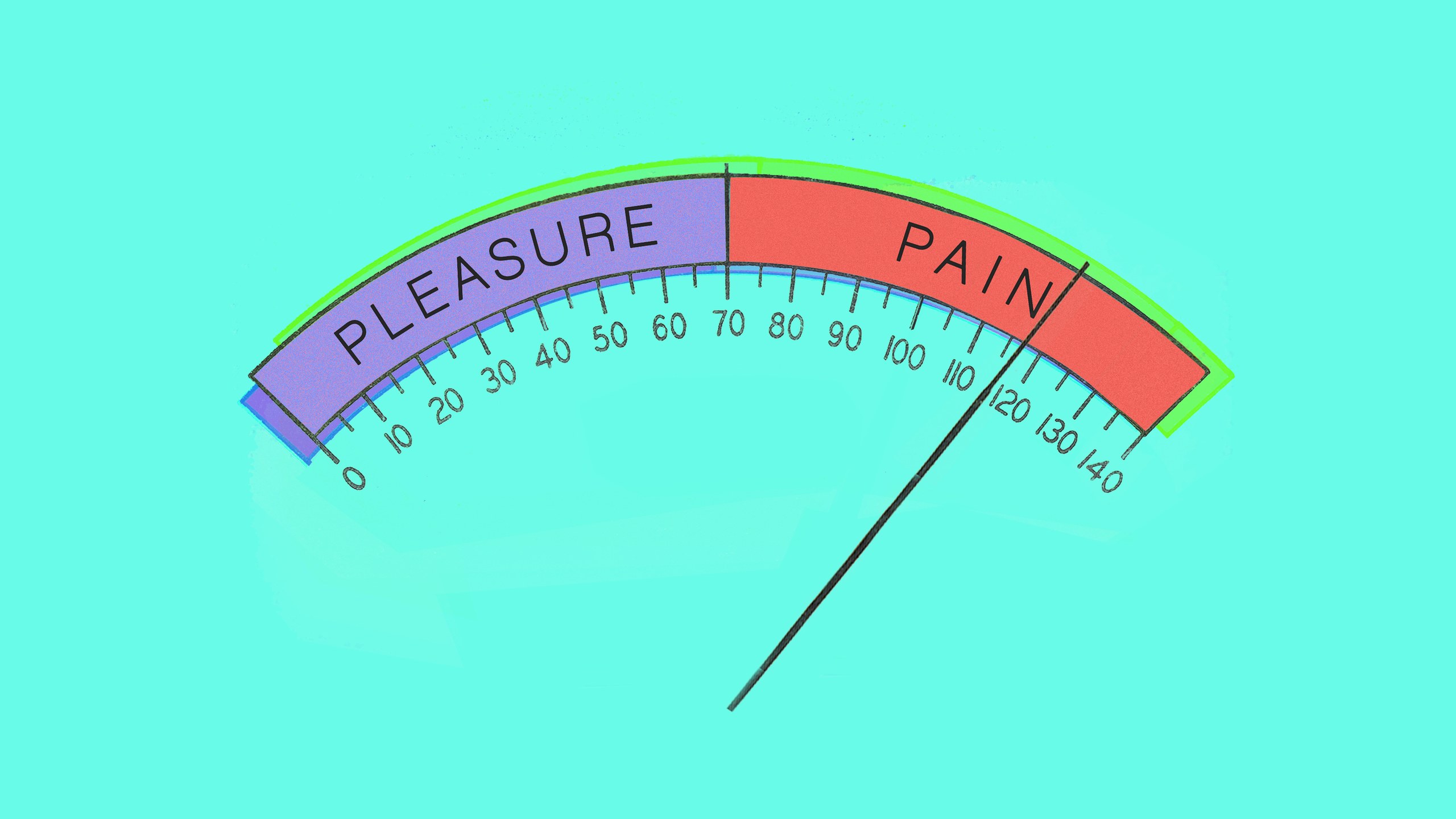
Finally, I thought, things were going to change. For once, I wasn’t anxious. I was relaxed. Ready. But as soon as he inserted his penis, I screamed so loud, I’m pretty sure I woke up all of the neighbors. I started crying uncontrollably, pushed him away, and ran to my bedroom, ashamed to admit that it hurt so much.

Addressing Pelvic Pain

One year, no sex, and lots of shame later, I started to see a talk therapist after experiencing severe anxiety and panic attacks that interfered with my daily life. I was always an anxious person, but until now I’d always been able to cope with my symptoms. Maybe anxiety really was behind my pelvic pain, and it was all in my head.

About six sessions in, I decided I trusted my therapist enough to open up about my chronic pelvic pain and fear of sex. It was the best decision. She told me this was very common, even though it’s rarely talked about. She asked me if I had ever masturbated, to which I emphatically replied, “Never.” I didn’t connect with that part of my body, except when I had to put on a pad during my period. I basically pretended I didn’t have a vagina; no way was I going to try and pleasure myself. The thought alone made me tremble with fear.

Talking about the pain and shame I felt surrounding sex helped. It wasn’t all in my head. I wasn’t the only one. But after months of talking, I was talked out. While I wasn’t as fearful, I still had immense pain. I had hit a wall. So my therapist suggested I make an appointment with a pelvic floor physical therapist. I didn’t even know these types of PTs existed. Why had no one ever mentioned this before? I immediately called and scheduled an appointment.

During our second session, the physical therapist did a pelvic exam—she didn’t use any scary speculums and went really slowly, talking me through each step. My pelvic floor muscles were shockingly tight, she explained, which was why I was likely having so much pain whenever I tried to insert anything, by myself or with a partner. Anxiety did contribute to that chronic state of tension but the solution wasn’t as simple as “learning to relax.” I needed to retrain the muscles.

We made a plan for 12 sessions of physical therapy and she sent me home with a set of dilators—smooth plastic, cylinder-shaped objects that come in a variety of graduated sizes—which are used to gently stretch the vagina. She suggested I start with the smallest dilator, about 3.5 inches long and a half-inch circumference, and use it for 15 minutes each day.

Suddenly paying so much attention to my vagina felt like a chore. Pleasure had felt like such an unreachable goal for years and when I started physical therapy, it finally felt possible. But this wasn’t fun, it was clinical. I was starting to experience less pain but pleasure was still totally foreign to me.

After a year of treatment, I could successfully insert a tampon. Yay me. But after all this work, I felt no closer to sex. No closer to the toe curling sexual pleasure I’d been hearing my friends talk about for years. Just to maintain the small but significant progress I’d made, I’d have to keep using the dilators.

Owning My Pleasure

After I’d finished physical therapy, I was having a conversation with a friend from college and mentioned my experience with dilators and how I didn’t even know what sexual pleasure was. She explained that she doesn’t typically have an orgasm when she’s with a partner—only when she is masturbating. I’d realized in talk therapy that I didn’t have a clue how to masturbate—thanks to the pain, my entire pelvic region felt off limits even to me. But for the first time I realized I didn’t necessarily need to insert anything into my vagina to get off.




Source link

Categories
Health

Is Sound Wave Therapy the Orgasm Treatment of the Future?


I haven’t been paying enough attention to my clitoris. That’s the first thought that floated into my brain as Briana Oster, M.D., a former pediatrician who now works at Revitalize Laser Care’s Denver office, talked me through a diagram of the female sexual organ as I prepared for a non-invasive med spa treatment that promised to improve my orgasms through the use of sound waves. “We’ve been focused on the top part”—the small, external bulb at the top of the vulva—she explained, pointing to an illustration. “But there’s a lot more going on.” Which brought me to my second disconcerting revelation: Have I been having sex all wrong?

Thankfully, I haven’t, you’ll be happy to know, but there’s always room for improvement. Enter Cliovana, a painless, noninvasive treatment which aims to increase arousal levels, orgasm frequency, and orgasm intensity, by stimulating the clitoris via sound waves. I had to know: Was this the future of better orgasms?

Biohacking Your Orgasm

As shocking as it may sound, the full clitoral anatomy wasn’t really known until the 1990s, and we’re still learning about it: It wasn’t until 2009 that the first 3-D image of a clitoris was created. Why’s that important? Because what many of us have long thought of as the clitoris—that external almond-sized nib Oster was talking about—is just the tip, as a fellow writer put it, of the clitoral iceberg. In fact, the clitoris extends much further, surrounding the vulva on either side like a wishbone. Meaning there are a whole bunch more nerve endings that can be aroused to stimulate orgasm than we previously thought.

Lucky for me, orgasming isn’t a routine problem, unless I’m stressed, which, I’ll admit, has been a near-constant state recently. Many women are having a different experience: A study published in the Journal of Sexual Medicine in 2014 found that just 62.9 percent of women experienced an orgasm with a familiar partner, compared to 85.1 percent of men. Researchers have dubbed this the “orgasm gap.”

At 31 years old, however, I have noticed a reduction in lubrication and that it takes longer to get aroused than it once did. When I heard that Revitalize Denver would be the first clinic in the country to offer Cliovana—I decided to give it a try. If it worked, it’d be a fun, and hopefully stimulating, early wedding present for myself and my fiancé.

At my first appointment, I settled onto the exam table, pants- and underwear-less, with a paper sheet covering my bare lower half. (A pre-appointment email recommended I “trim [my] pubic hair to facilitate better results.”) Dr. Oster had already walked me through the basics: Cliovana uses sound waves to promote the creation of new blood vessels and increase nerve sensitivity—in other words, make your whole clitoris more responsive. Patients receive the $2,000 treatment four times over a two-week period, with each appointment lasting about 10 minutes. (Full disclosure: Revitalize offered me the procedure free of charge.)

Unlike FDA-approved medications or the O-Shot, Cliovana is performed externally, and it’s solely designed to enhance female sexual satisfaction. (While the sound wave device Cliovana uses is FDA-approved, the procedure itself is what’s known as “off-label.”) “We don’t treat a condition,” said Keri Hall, Cliovana’s executive vice president of business development. “It’s for any woman who wants improved sexual satisfaction, orgasm intensity, frequency, and increased arousal levels and lubrication. It’s for any woman who feels as though she’s not completely satisfied.”

The sound wave technology behind Cliovana is relatively well-supported by science for a variety of other uses. It’s been used by urologists to break up kidney stones since the 1970s and more recently, the energy has been directed toward the penis as a potential aid for men dealing with erectile dysfunction. (So far, the clinical trials are promising.) But Cliovana is the first time this sound wave technology has been applied to women’s sexual organs. That may explain why I felt a bit like a lab rat as Oster placed a bell-shaped plastic cup over my clitoral hood, aka the part we all know about; for about three minutes, a gentle tapping ensued, meant to bring blood flow to the surface and prep the area for treatment. It was an odd sensation, but not painful or uncomfortable.


Source link

Categories
Health

Here’s Exactly How to Have Your First Orgasm If You’ve Never Had One


At long last, the world is beginning to embrace the female orgasm. Women are singing about masturbation, scientists are studying what happens to women’s brains when they orgasm, and the internet is full of advice on having better orgasms. Which is great—but all this talk can make you feel left out if you’ve never even had an orgasm yet.

You’re not alone, though. Around 5 to 10% of women say they have yet to experience the series of pelvic contractions known as orgasm. But don’t fear; simply consider yourself preorgasmic. Laurie Mintz, Ph.D., a psychotherapist, sex therapist, and author of Becoming Cliterate, says she has never worked with a preorgasmic woman who didn’t eventually learn to orgasm (except one whose libido was affected by antidepressants—even then, there’s help). The odds are in your favor.

“So many women feel broken when it comes to orgasm,” says sex therapist Vanessa Marin, who teaches women how to orgasm through her course Finishing School and her video series The Female Orgasm Revolution. “I always say that orgasm is a skill, and like any other skill, it takes time, patience, and practice to learn. Just because you haven’t yet learned that skill doesn’t mean that you won’t be able to. It would be like beating yourself up for not being fluent in Spanish, despite never having taking a Spanish class!”

The point is, if you put in the effort to learn to orgasm, you will. “Every woman is capable of orgasm,” says Marin. You just need to figure out what makes you tick. “If someone has not had an orgasm, either alone or with a partner, the most likely culprits are either that they are not getting the type of stimulation they need to orgasm or they have some kind of psychological blockage holding them back,” says Mintz. Both those things can be changed.

Here are some tips for having your first orgasm if you’ve never had one before.

1. Masturbate.

You can definitely learn to orgasm with a partner, but experts say the easiest way to start off is through masturbation. “It’s so important for us to get in touch with our own bodies and discover what we like,” says Marin.

“When alone, you can focus on just yourself and not be worried about anyone else,” Mintz agrees. To make the experience as pleasurable as possible, she recommends using a good lubricant when you masturbate.

2. Try out different hand techniques.

Every woman’s anatomy is different. No one stroke or motion will be the golden ticket for everyone, says Mintz. However, there are lots of techniques that many women find pleasurable—if you experiment with them, you’re bound to find something you like.

Try rubbing circles on your clitoral hood with one or more fingers, tapping on your clitoral hood, rubbing or caressing your labia, rubbing a figure-eight around your clitoris and vaginal opening, squeezing your outer labia together to stimulate your clitoris, and sandwiching your clitoris between two fingers and rubbing it up and down.

Once you find something you like, Marin suggests sticking with that motion for a while. “You’ve probably heard all kinds of myths about how complicated female orgasm is, so you’ll probably feel tempted to mix it up and go crazy with different types of stimulation,” she says. “But the truth is that the body needs consistency; if you keep switching it up, it will feel like starting over. Once you’ve found a specific stroke that feels decent, give that a shot for a good stretch of time.”

3. Consider a vibrator.

If your hands don’t seem to be doing the trick, a vibrator can be a very handy tool. “Many people with vulvas don’t have their first orgasm until they try a vibrator,” says Mintz. Don’t worry that using a vibrator will make it hard to orgasm with a partner down the road. It could actually get you familiar with what you need to orgasm, which will help you no matter what method you’re using.


Source link

Categories
Health

9 Tips for How to Have an Orgasm


Movies make having orgasms seem so easy, like…oops! I just had one. Oops! There goes another one! But in reality, it’s rarely that simple—in fact, if you find yourself wondering exactly how to have an orgasm, feel no shame. For many women, having an orgasm requires a perfect storm of factors: concentration, trust, lubrication, some strange faces, maybe a vibrator, and more than a little luck. But there are plenty of things you can do to help push your pleasure over the edge.

We asked real women and sex educator Jenny Block, Ph.D, to share their best tips for having an orgasm.

Research has shown that it’s naturally easier for some women to orgasm than others thanks to factors completely out of your control like the distance between your vagina and your clitoris. You can’t suddenly alter your vaginal-clitoral ratio, but you can try different positions to increase the odds you’ll have an orgasm the next time you have sex. “For me, on my back with my legs over his shoulders is like opening the front door to my G-spot,” says Sarah, 30. “Instant orgasm.”

Heard this one before? It’s that important, but many women don’t always speak up. “If your partner is just few inches above or below where you really like to be touched or if things are too fast, too slow, or just not doing it for you, say something,” says Block. “If you find it hard to talk about, try saying things like, ‘I love it when you…’ or, ‘It would really turn me on if you’d…’ or even ‘Can I show you something?'”

For many women, foreplay is a key part of the quest to have an orgasm. “It takes me longer to orgasm with penis-in-vagina intercourse, so giving me a head start before the real action gets going increases the odds of me orgasming from penetration,” says Ana, 25.

Strengthening your pelvic floor can result in better sex. “I didn’t have a vaginal orgasm until I started doing barre and Pilates regularly and then: bam! It happens almost every time,” says L.B., 34. Squeezing the walls of your vagina up and in and holding for a count of five can help you build strength—trying this during sex can even help you orgasm.

The vast majority of women don’t orgasm from penetration alone—and that’s perfectly okay. Female orgasm is more about the clitoris, according to sex researchers, so when you’re wondering how the heck to have an orgasm, don’t forget to stimulate it. Pro favorite ways to do this include penis rings, which can add clitoral stimulation during intercourse, vibrators, or good old fashioned manual stimulation. “I get off from having an orgasm via clit stimulation first while having penetrative sex, and then continuing penetration in a different position,” says Ashley, 27. “Works every time.”

It might sound obvious, but lying there passively while your partner tries to make you orgasm isn’t exactly the best recipe for success. Something as simple as “lifting your pelvis to meet your partner’s hands, mouth, or a toy might be enough to up the orgasm ante,” says Block.

You should never feel rushed when it comes to getting your orgasm—your body needs what it needs, says Block. Feeling like you’re on a schedule can be a problem particularly in hetero relationships, she says, since typically “more time is spent on what works for male partners—penetration—as opposed to what female partners really want and need: clitoral stimulation.”

It’s perfectly OK to get loud. Moaning, talking dirty, whispering, shouting—whatever is your thing, do that, says Block. “When you’re wholly involved on all fronts, it’s much easier to have an orgasm,” says Block.

Ultimately, “there is nothing better you can do than to really get your head in the game,” says Block. “Forget about work, the laundry, what you’re going to wear to that party and focus on nothing but the sensations you’re experiencing.” Easier said than done yes, but it is possible.


Source link

Categories
Health

Your Most Common Questions About the Female Orgasm, Answered


“Instead of going down this maddening distraction spiral, the best thing to do is simply acknowledge that mental distraction is the price we pay for having brains,” Marin says. “If you notice your brain starting to wander, acknowledge that you’re thinking about something different, then gently bring your attention back to the present moment.” Just call it mindfulness for sex.

A lot of women struggle with feeling unworthy of time or attention when it comes to their sexual pleasure, says Marin. But sometimes, orgasms take work, especially when you’re first learning to orgasm or having your first orgasms with a partner. That is more than okay—there’s no time limit for your orgasm.

The more practice you have (with a partner or solo), the easier orgasms will come, says Marin. But in the meantime, focus more on reminding yourself that “you deserve that time and effort,” she says.

If you don’t orgasm during intercourse, don’t sweat it—that’s totally normal. Only about a quarter of women regularly orgasm during intercourse, according to Lloyd’s analysis, and when they do, it’s probably because their clitoris is being stimulated simultaneously.

But can you learn to orgasm from penetration? “The reality is that penetration itself doesn’t create enough stimulation for the vast majority of women to reach orgasm.” Marin says. “Female orgasm is all about the clitoris, but the clitoris doesn’t get a ton of stimulation during intercourse.”

That doesn’t mean it’s not possible. “I like to make the distinction between orgasming from intercourse and orgasming during intercourse,” Marin says. “To increase your chances of orgasming during intercourse, Marin recommends touching your clitoris, having your partner touch it, using toys, or trying a position like the Coital Alignment Technique that allows for clitoral stimulation.

Many women feel vaginal orgasms are somehow “better” than clitoral orgasms, or even as if a clitoral orgasm doesn’t really “count” as much. This isn’t a real distinction, says O’Reilly; whichever feels more natural and pleasurable for you is all that matters.

In fact, it’s hard to tell if there’s really a difference between the two types of orgasms. “Orgasms do not fit neatly into categories based on a particular technique or body part,” O’Reilly explains. “The clitoral complex is not only located in close proximity to the vaginal canal, but parts of it actually surround the vagina, making it difficult to isolate the exact source of pleasure and orgasm.”

If you do orgasm through penetration, those orgasms may or may not feel different from clitoral ones. It’s possible that they will because different nerves are being stimulated, says O’Reilly. But if you only orgasm clitorally, that doesn’t mean you’re experiencing less pleasure than someone who orgasms through penetration.

Nope, but a lot of women don’t discuss it. “We teach women to be ashamed and embarrassed of female orgasm, so a lot of women don’t feel comfortable being honest about their orgasmic struggles,” Marin says. “There are so many women out there who haven’t yet orgasmed.”

First, remember that you’re in good company. And second, remember that an orgasm drought likely won’t last forever.

Suzannah Weiss is a writer and editor covering sex and wellness. Follow her @suzannahweiss.


Source link

Categories
Health

Nars Orgasm Lip Balm Does Magic for Your Face


You’ve probably heard of Nars Orgasm by now, the iconic blush that’s as close to a universally-flattering shade as the world will ever see. (The magic’s all in the rose-gold tone, which looks bad on no one. Seriously: We checked.) I’ve never tried it—not because I didn’t want to drink the kool-aid, but because I don’t wear much makeup at all. It’s not that I don’t need it. I’m just a minimalist (read: lazy).

Anyway, the runaway success of Nars Orgasm, which debuted in 1999 and is still the best-selling blush in the US, led to more Orgasm-toned riffs from the brand beyond the original, like liquid blush and satin lipstick. It’s just good business sense. But, as with the blush that started it all, none of these Orgasm-inspired follow-ups have really tempted me—until their new Orgasm Afterglow Lip Balm showed up.

Real beauty goes beyond the surface—and so do we. Sign up for Glamour’s newsletter to get honest reviews, personal essays, and more every day.

I’m aware that I have a lip balm problem. I mean, losing a good one can send me into a existential tailspin. But this particular balm is more than just a balm. It gives off the sheerest tint of gold-flecked, peachy rose, the same exact tone that made the namesake blush famous.

And you wouldn’t think that this would make that big a difference, but trust me, it does. Here’s why: While my makeup routine is more basic than a PSL-stained Ugg boot, it can veer a little too much so—like I just rolled out of bed and barely got my shoes onto the right feet. And while that’s a cool look if I don’t have plans (so, pretty often) it’s far less appropriate if I have a meeting, run into an ex-boyfriend, or find myself in a situation where it’s important that I don’t look like I’ve been dragged out from under a rock against my will.

This lip balm is the most low-effort way to look like I put in some effort. The finish is a slight sheen—not enough to be glossy, but definitely not matte—so it catches just enough light to add brightness. And the warm, rose-gold tone delivers a shade similar to my natural lip color, but with the sort of flush I imagine they’d have if I’d been kissing my boyfriend or, like, Riz Ahmed for nine hours. Plus, it’s infused with monoï oil, which is what gives it that soft, balm-y feel. Think of this lip balm as summer’s retort to the fussy, high-maintenance liquid lipstick of winters past. It makes me look just polished enough for wherever I need to be, and then I can go house a burger without having to check a reflective surface every five seconds.

Odds are that this lip balm won’t reach the same level of stardom as the blush. (Few things will, TBH.) But if you’re looking for a good, summery lip color that’ll work just as well at a weekend BBQ as it will on a date, you’ve found it.

PHOTO: Deanna Pai

Nars Orgasm Afterglow Lip Balm, $28, sephora.com

Related Stories:
10 Self-Tanners That Won’t Turn You Orange, According to Glamour.com Editors
In Defense of Cheap Shampoo
Battle of the Body Shimmers: Rihanna vs. Jennifer Lopez


Source link