Meghan Markle and Prince Harry are settling into their new lives following the media circus surrounding their decision to step back from the royal family. Now that they’ve come to an agreement with the Queen (it includes dropping their royal titles and gaining financial independence), many people are still wondering how they’re gong to make things work. But one person who isn’t stressed, according to sources, is Meghan Markle.
Exhibit A: She was photographed earlier this week smiling and hiking with Baby Archie on Vancouver Island. While the family is working on getting tighter about paparazzi and privacy, the images hint that she’s happy having some distance from the bubble that is Buckingham Palace. According to sources who spoke to Us Weekly, she’s really looking forward to going back to work and figuring out professional arrangements to support her family. “Meghan loves the idea of being the breadwinner,” the source said. “She has no plans to do another show like Suits, but Harry’s been encouraging her to do more voiceover work, writing, producing, and directing in her free time.”
A video surfaced earlier this moth of Prince Harry telling Disney CEO Bob Iger at The Lion King premiere in London that she was interested in more voiceover opportunities. Markle, who was raised in California, did tons of different jobs before her acting career took off: she interned at the Argentine embassy and she did a lot of calligraphy work. “She doesn’t come from millions,” another source told Us Weekly. “She’s worked hard to get to where she is today.”
Whatever they decide, it seems that Prince Harry is completely on board with Markle’s plans. “He’s really excited about the next chapter in their lives,” one of the sources explained. Personally, we can’t wait to see what these two do next.
She Makes Money Movesis a new podcast from Glamour and iHeartRadio. Hosted by Glamour editor in chief Samantha Barry, the podcast shares intimate, unscripted stories from women across the country along with advice from financial experts to help guide those women—and women everywhere—forward. Download a new episode every Tuesday, then visit glamour.com/money for an article like this, with more insights from that week’s expert.
The number of women-owned businesses in the United States has grown by almost 3,000% since 1972, according to the 2018 State of Women-Owned Businesses Report. Women now make up 40% of entrepreneurs—and more are becoming their own boss than ever before.
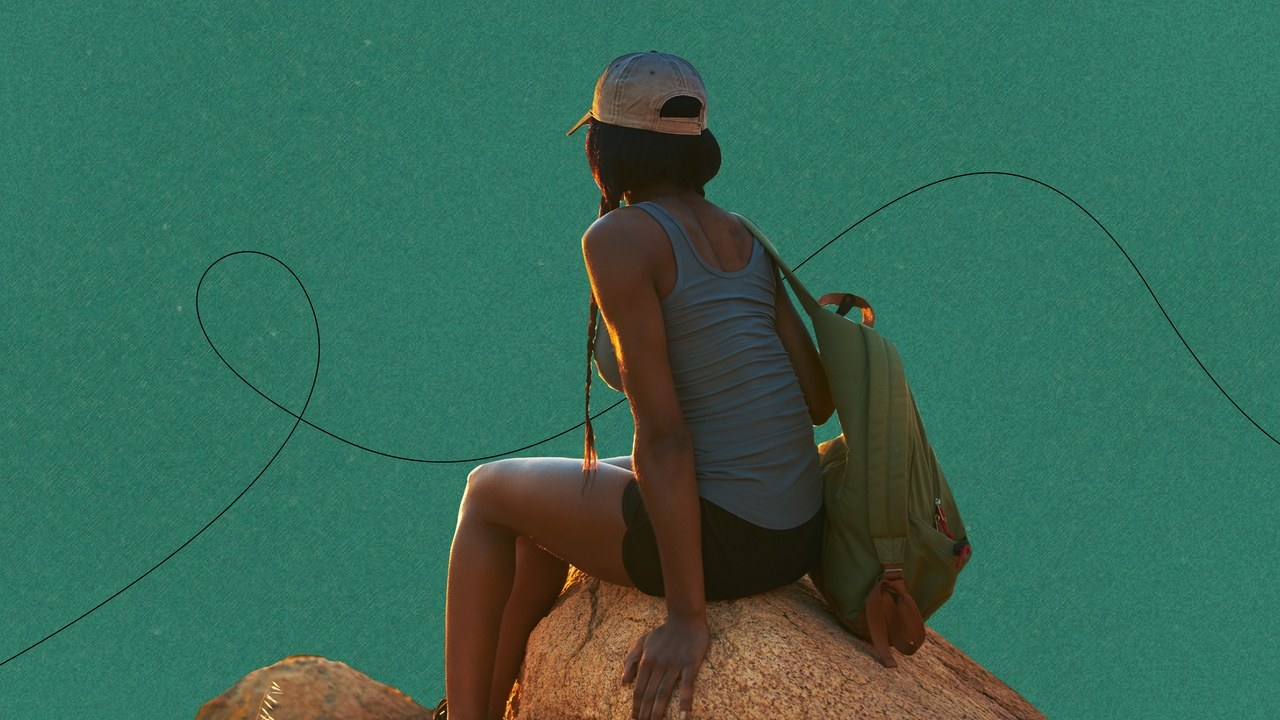
This week’s podcast guest did just that. She left her job to hike the Pacific Crest Trail, and when she finished that, she eventually opened a business inspired by the trek. While she loves her work, she’s having trouble making enough money to stay in business. To make do, she’s picked up side jobs, but would like to come up with a more rigorous business plan. So Barry welcomed Ashley Feinstein Gerstley, founder of the Fiscal Femme to the podcast. Here Feinstein Gerstley outlines how to turn your big idea into an even bigger business.
Know your numbers.
When we’re going out on our own and starting our own businesses, it’s more important than ever to know our numbers. That means knowing exactly what our personal and business expenses cost us each month and each year. When planning, try to include things that happen less regularly like annual subscriptions, doctor’s appointments, travel needs, etc. Using a budgeting spreadsheet helps to make the process simple.
Map out your future income.
When I left my corporate job to run the Fiscal Femme full-time, the business was nowhere near profitable. I was earning some income from the Fiscal Femme, so I did my best to map out/project how that could potentially grow over time. This was important so I knew how much “runway” or how many months of expenses I needed to have saved to be able to stay afloat if the business continued to lose money.
This is a lot more of an art than a science but aim to map out how you expect your revenue to look over time. This number will continually change so update your numbers as your business grows and changes—and budget accordingly.
Create your version of a “freedom fund.”
When I decided I wanted to work on the Fiscal Femme full-time, I created a spreadsheet called the “Project Freedom.” Here I tracked all of my income and expenses, and most importantly, it was a place where I tracked my total savings. Every time I saved money, I added it to the total on the spreadsheet. I never felt more motivated to decrease my expenses as when I was building up my freedom fund.
New York Fashion Week might be a pretty exclusive event with highly covetable invitations, but arguably the best shows are happening in the crosswalks, on the subway, and inside Toyota Camrys everywhere—just ask an Uber driver. Of course, we’re talking about street style.
Whether editors, models, buyers, influencers, and other Fashion Week show-goers used this an excuse to peacock in all their finery or break out the #oldcéline (or another minimalist lookalike), the breadth of outfit ideas coming out of New York right now is massive. For example, we’ve already discovered a number of new ways to style a classic trouser. And we’re convinced to give the tangerine trend a try after it spotting it on the runway and outside of the shows. For all the best ensembles to pin to your mood board, add to your shopping list, or just immediately recreate with whatever you already own, keep scrolling.
Hannah is a 22-year-old former athlete and student in Spokane, WA. Nearly four years ago, she gained nearly 100 pounds in the course of one year. Soon after, she began suffering from severe GI issues, brain fog and chronic pain. She’s seen more than six types of specialists and no one has been able to diagnose her medical illness. In the essay below, she reveals the journey that led her to join the cast of Chasing the Cure, a new show which aims to crowdsource a diagnosis for patients like Hannah who are suffering from an illness without answers. Watch Hannah’s story air on August 8 on TNT and TBS.
It all started my junior year of high school. I was an athlete on our soccer, basketball and golf teams when I began gaining mysterious weight. I’d been as active as I’d ever been, but the number on the scale steadily creeped upward. But when I went to see my doctor, they weren’t concerned. I was a “growing woman” and putting on weight would be my new normal, they told me. I kept training and playing on my teams, but the weight kept adding up. By the time I was a senior and ready to graduate, I’d gained 90 pounds.
The prior year, I was a size two weighing 120 pounds with six pack abs. Something was up. The weight gain itself wasn’t what concerned me—I loved my body and all it could do—but as an athlete, I was also deeply in tune with my body. I knew something was really wrong but no one, including my doctor seemed to take my concerns seriously. Without a sense of medical urgency, I continued preparing for college as normal. I had earned a golf scholarship, which meant before joining the team, I’d need a full physical. At this point, my primary care doctor had started some testing and found out my right thyroid was enlarged, but as I had no other symptoms besides the weight gain, I was cleared to join the team.
But from there, my health spiraled out of control. I soon developed GI issues so extreme I was forced to drop out of school. I had to use the bathroom constantly—more than 20 times a day—and it made attending class embarrassing. It got so bad, I would have panic attacks thinking about whether or not I’d have access to a bathroom. I started isolating myself at home.
I felt like my body was no longer my own, my resentment towards my doctors growing by the day. This was definitely not a normal part of being a “growing woman.” I trusted them to help me, to figure out what was going on with my health, and I was told it’s normal. Gaining 90 pounds in a year and having to drop out of college due to illness is not normal. It’s nowhere close to a standard part of becoming a woman.
It’s been four years since I first started having symptoms and I still have no answers. I’ve seen endocrinologists, cardiologists, rheumatologists, gastroenterologists, and orthopedics. I’ve had colonoscopies and more blood tests than I can count. I’ve been told, This is a weight issue. Lose the weight and everything will be okay. Eat celery—that will do it. It’s just anxiety and depression. I used to trust my doctors, but now each visit is heartbreaking because I already know they won’t know what to do.
My mother and grandmother are the ones who’ve kept pushing for solutions and answers. I was very active in trying to find a diagnosis for the first two years, but at some point, it weighs you down. The constant pain, the doctors who might know and then don’t, the tests, the research—it’s a lot. I badly want a diagnosis. I wish I was living life like a normal 22-year-old, but I’m not. Going to the movies, walking around downtown, being active, I’d be doing all sorts of activities if I weren’t shrouded in pain. My entire life is different simply because doctors didn’t know how to help me.
Generally there are two kinds of sleepers: pajama-wearers and naked-sleepers. Odds are, if you’re a pajama-wearer, you never sleep without underwear. You might not even think about why. But experts say sleeping without underwear can actually be a good thing for your vagina.
“You really should sleep without underwear if you’re prone to vaginal issues,” says Nancy Herta, M.D., an ob-gyn at Michigan State University, such as yeast infections, vaginismus and bacterial vaginosis). Why? Between discharge and sweat, your vagina is prone to moisture overnight, Dr. Herta explains. Underwear can trap that moisture, creating a breeding ground for the bad bacteria that cause those conditions.“Allowing that area to get some air helps to keep it dry and clean,” Dr. Herta says. Giving your vagina some breathing room lets it better take care of itself. Going underwear-free is an especially a good idea if you have a yeast infection right now or are very prone to them and get them often, says board-certified ob-gyn Pari Ghodsi, M.D.
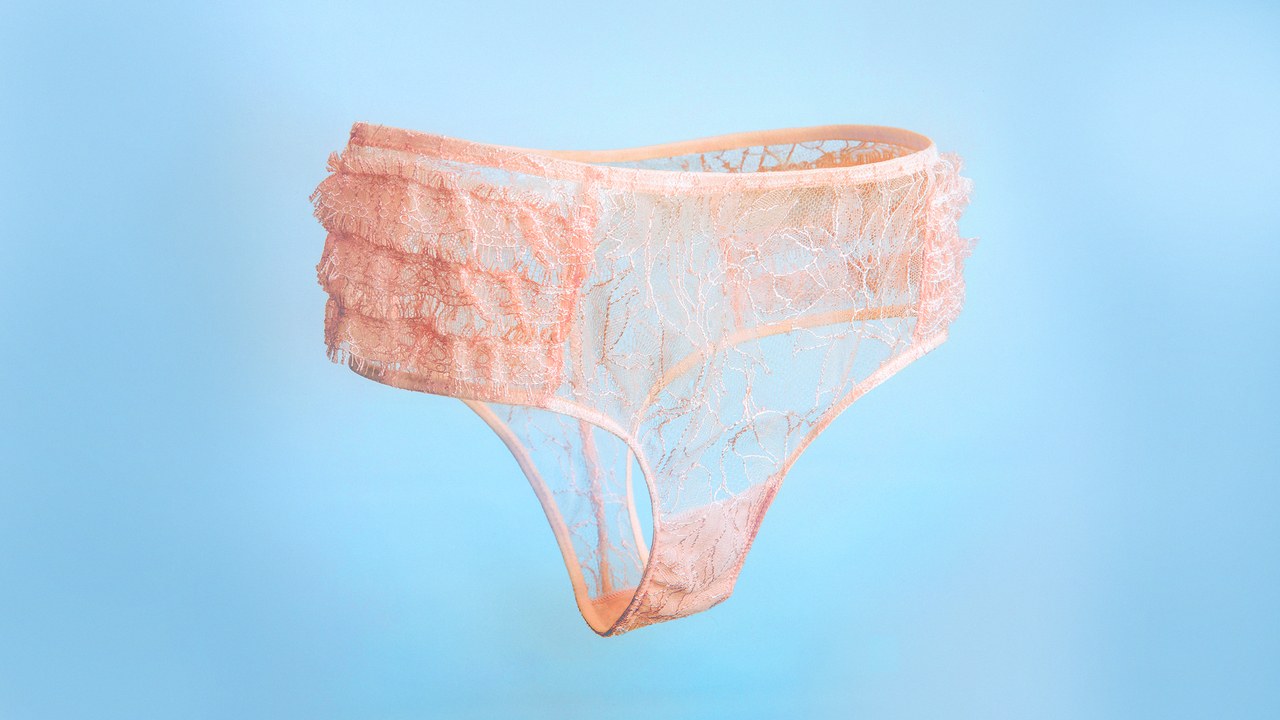
If sleeping without underwear isn’t terribly appealing to you, Dr. Herta recommends that you switch to loose-fitting cotton underwear. Cotton can help absorb some of the moisture instead of keeping it right against you, like silk or lace would. Silk and lace can also irritate the skin around your vagina, Dr. Ghodsi says, so at the very least if you’ve been wearing silk or lace underwear all day it’s a good idea to switch out of them before you go to sleep. If you can’t imagine giving up your PJs, go commando under a pair of loose-fitting cotton pajama pants.
It’s worth noting that if you find you can’t sleep without wearing underwear but you’ve never had a problem, Dr. Ghodsi says you’re probably fine to keep doing what you’ve been doing. Sweet dreams.
In fact, society is wrong about a lot more than just “periods, pee, poop, and pizza,” Agrawal said, drawing laughter from the audience. “This generation and the next is not interested in doing the things that people did 100 years ago. Not interested.” To that point, each chapter of Disrupt-Her names a common way of thinking, then explains where it came from in order to present an alternative. For the notion that “failure is embarrassing,” for instance, readers are instructed to “replace the word ‘failure’ with ‘revelation.’”
Disrupt-Her isn’t billed as a memoir, and much of it focuses on universal topics like the importance of investing one’s money, cultivating a partner’s best qualities, and decluttering one’s home. It is a rebirth, in a sense: Before its launch, Agrawal released a video-poem that begins with her crawling from a bleeding animated vagina. (A hat is conveniently waiting nearby; she puts it on.) While the public may view it as a comeback, the timeline isn’t so linear: Agrawal founded Tushy two years after she launched Thinx, then hired leadership to run it while she focused on the period underwear brand; when she left Thinx, she seamlessly transitioned over to Tushy. If Disrupt-Her answers any question about Agrawal, it’s how she wants to present herself to the world after being accused of abusive behavior in the workplace. Less contrition, more ideology.
In her emphasis on transforming anger, betrayal, and pain into empathy and gratitude, Agrawal performs an amazing alchemical act. The book creates a space in which she’s able to comment on the bad publicity—effectively getting the last word—and land on higher ground. This puts those members of the public who are reckoning with how to regard her, post-Thinx, in the difficult position of arguing against positivity, against personal growth, if they question her at all.
Someone who worked with Agrawal at the time, who only agreed to talk on the condition of anonymity, says that Agrawal knows the value of building her personal brand through this kind of storytelling. Publishing a new book in the aftermath of the Thinx allegations reinforces a narrative in which, the former staffer says, “She’s the hero.”
In February, I visited Agrawal at her home in Williamsburg, Brooklyn, a sleek space filled with colorful woven rugs and air plants. During our interview, her husband, Andrew Horn, popped in and out of the room on his way to and from errands. Their 20-month-old son, Hiro, occasionally toddled into the conversation, cheerfully making a grab at a water glass or one of the cell phones recording the conversation.
Agrawal wrote Disrupt-Her in the two-and-a-half months following Hiro’s birth in July 2017. Laid up in bed healing from her C-section, she wrote between feedings and while the baby was asleep. “I had so many thoughts around the culture of complaining, takedown culture, feminism, patriarchy, fake feminists, people who wear the feminist T-shirts and the vagina necklaces but are really mean girls on the inside,” Agrawal says. These topics appear in the book, in chapters that deal with woman-on-woman hate and gossipy media coverage—the products, Agrawal writes, of scarcity mindsets and a news business that rewards clickbait.
Agrawal says she believes in creating a culture that is progressive and supportive of people being themselves—but that doesn’t mean lowering her standards. “I demand excellence. I do,” Agrawal says. “Shouldn’t you demand it for yourself? And if I’m going to bring it out of you, that’s a good thing. If that sometimes requires tough love, like, ‘Hey, I asked for that three times, come on, you’ve got this.’ Then you go back and tell everyone, ‘She’s yelling at me!’ Like, is that yelling or just being like, ‘Come on, you’re better than this!’?”