Categories
Health

How to Launch a Startup, While on Maternity Leave


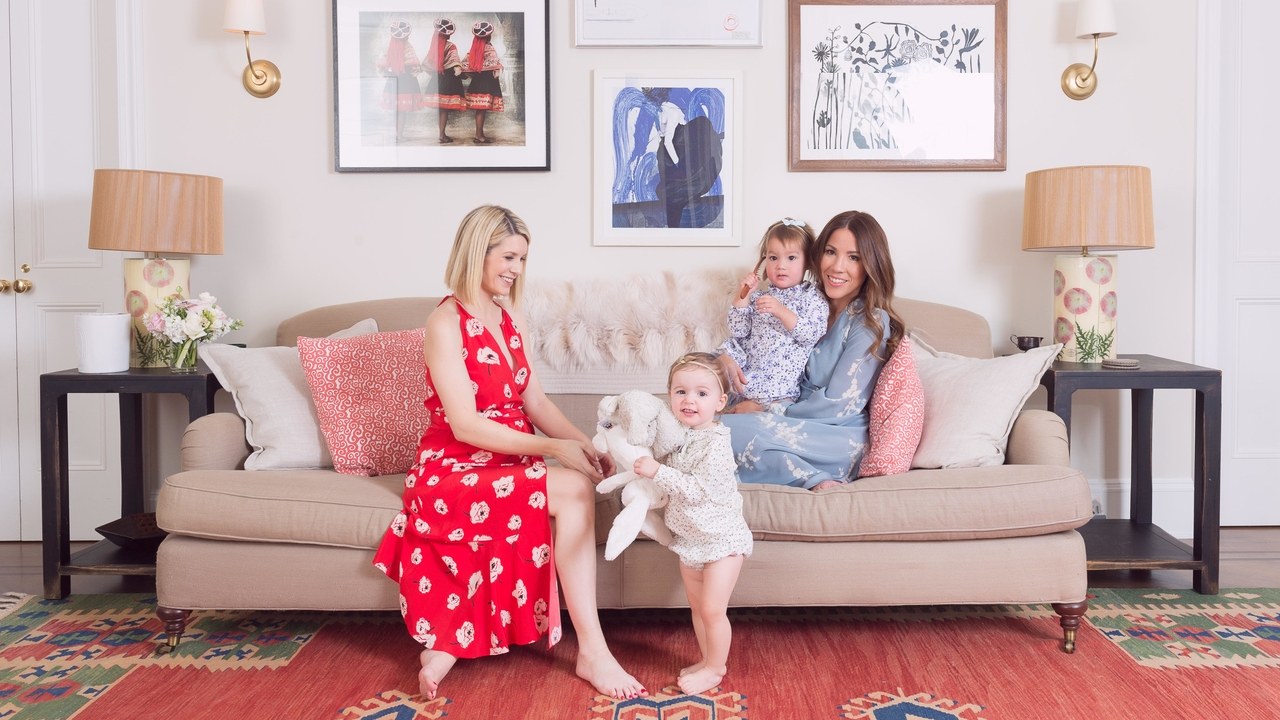
Lizzy Brockhoff and Elizabeth Shaffer had their babies within 24 hours of each other, just the latest tag-team effort for the friends and co-workers. At the time, the two both worked at e-commerce startup Jet, a business they’d joined from their previous jobs at Moda Operandi. In the lead-up to becoming first-time moms, the women quickly learned there was a lot of stuff they needed to buy ahead of their baby’s arrival.

Brockhoff and Shaffer were introduced to “baby lists,” giant excel sheets and documents moms swap with each other. The lists are essentially a product-based version of What to Expect When You’re Expecting and include women’s personalized recommendations for the goods to outfit a nursery to which strollers are worth the price tag. The lists are sourced from all over the internet and the result of thousands of soon-to-be parents’ impassioned googling, but they’re not organized. Brockhoff and Shaffer sensed an opportunity.

They came up with the idea to launch a platform that would deliver real reviews from real people for all their product needs, baby-centric or otherwise. To date, MASSE have surfaced three million goods through its app, harnessing, as Fortune put it, the purchasing power of Facebook mom groups to drive the business.

Here, the co-founders break down using their maternity leave as an early-stage incubator for the company and explain how becoming moms pushed them to take the leap and launch their company.

Sometimes you have to balance bottles with business calls

Lizzy Brockhoff: On maternity leave, we only had small chunks of times between feedings, bathings, etc. So it was all about how much we could get done between those moments. We’re inherent planners, and are project managers by trade, so we set ourselves goals along the way to chip away at things. It was a lot of Google Hangouts and planning. Then the big concern became, how would we continue to work on this when we went back to work? It was a challenging time because we were trying to do three things: our full-time jobs, build out MASSE, and then also care for our families.

Elizabeth Shaffer: We both went back to work at Jet, and were working on this on the side, so that was really a challenging period. One of the hardest things about having kids and starting a business is that you don’t have time to catch up on the weekend. Your weekends are for your kids. But a lot happens after the baby goes down to sleep. It was really all evening work. We’d both go to work during the day—we’re both fortunate to have great childcare—and then we would come home, spend time with the babies, put them down, then post-8pm, get back online. It wears you down, for sure, but we both felt like it was such a passion of ours that we pushed through—and on an emotional level it was really helpful to have each other. I’ll also give a call out to our husbands who have really been phenomenally supportive and helpful with this. I think that’s often not talked about. Husbands and fathers have a really big role to play in working mothers re-entering the workforce.

Launching a company isn’t an individual decision, it’s a family one

Brockhoff: We’ve heard this from other women and colleagues. That having that first child is a real catalyst for thinking, “Where do I really want to be spending my time?” I think having a little one propelled us a bit more because there’s such an opportunity cost to what you’re doing, so we really felt it was time to take the leap.


Source link

Categories
Health

Is the World Ready for Miki Agrawal and Her Next Big Idea – Miki Agrawal Discusses Her Bidet Startup, Tushy


In fact, society is wrong about a lot more than just “periods, pee, poop, and pizza,” Agrawal said, drawing laughter from the audience. “This generation and the next is not interested in doing the things that people did 100 years ago. Not interested.” To that point, each chapter of Disrupt-Her names a common way of thinking, then explains where it came from in order to present an alternative. For the notion that “failure is embarrassing,” for instance, readers are instructed to “replace the word ‘failure’ with ‘revelation.’”

Disrupt-Her isn’t billed as a memoir, and much of it focuses on universal topics like the importance of investing one’s money, cultivating a partner’s best qualities, and decluttering one’s home. It is a rebirth, in a sense: Before its launch, Agrawal released a video-poem that begins with her crawling from a bleeding animated vagina. (A hat is conveniently waiting nearby; she puts it on.) While the public may view it as a comeback, the timeline isn’t so linear: Agrawal founded Tushy two years after she launched Thinx, then hired leadership to run it while she focused on the period underwear brand; when she left Thinx, she seamlessly transitioned over to Tushy. If Disrupt-Her answers any question about Agrawal, it’s how she wants to present herself to the world after being accused of abusive behavior in the workplace. Less contrition, more ideology.

In her emphasis on transforming anger, betrayal, and pain into empathy and gratitude, Agrawal performs an amazing alchemical act. The book creates a space in which she’s able to comment on the bad publicity—effectively getting the last word—and land on higher ground. This puts those members of the public who are reckoning with how to regard her, post-Thinx, in the difficult position of arguing against positivity, against personal growth, if they question her at all.

Someone who worked with Agrawal at the time, who only agreed to talk on the condition of anonymity, says that Agrawal knows the value of building her personal brand through this kind of storytelling. Publishing a new book in the aftermath of the Thinx allegations reinforces a narrative in which, the former staffer says, “She’s the hero.”


In February, I visited Agrawal at her home in Williamsburg, Brooklyn, a sleek space filled with colorful woven rugs and air plants. During our interview, her husband, Andrew Horn, popped in and out of the room on his way to and from errands. Their 20-month-old son, Hiro, occasionally toddled into the conversation, cheerfully making a grab at a water glass or one of the cell phones recording the conversation.

Agrawal wrote Disrupt-Her in the two-and-a-half months following Hiro’s birth in July 2017. Laid up in bed healing from her C-section, she wrote between feedings and while the baby was asleep. “I had so many thoughts around the culture of complaining, takedown culture, feminism, patriarchy, fake feminists, people who wear the feminist T-shirts and the vagina necklaces but are really mean girls on the inside,” Agrawal says. These topics appear in the book, in chapters that deal with woman-on-woman hate and gossipy media coverage—the products, Agrawal writes, of scarcity mindsets and a news business that rewards clickbait.

Agrawal says she believes in creating a culture that is progressive and supportive of people being themselves—but that doesn’t mean lowering her standards. “I demand excellence. I do,” Agrawal says. “Shouldn’t you demand it for yourself? And if I’m going to bring it out of you, that’s a good thing. If that sometimes requires tough love, like, ‘Hey, I asked for that three times, come on, you’ve got this.’ Then you go back and tell everyone, ‘She’s yelling at me!’ Like, is that yelling or just being like, ‘Come on, you’re better than this!’?”


Source link

Categories
Health

This Female-Founded Start-Up Wants to Rebuild Puerto Rico's Fashion Industry


Auralís Herrero Lugo moved to Puerto Rico from New York City in January with a plan to rebuild the island’s ailing fashion industry. To characterize going back home after Hurricane María worsened a decade-long economic crisis as a big challenge would be an understatement—but she says those are a recurring theme in her life.

“I’m always the type of person [who is] never clear on what she’s doing, but does it anyway,” Herrero says. “People always tell me I’m crazy for wanting to come back, but I always say, ‘Why not’?”

This was actually Herrero’s third attempt to move back home, after building a fashion career in the mainland. The last time she tried to relocate, a few years ago, she was the head of a sustainable resort wear brand, Auralístudio. Her plan was to have the line be manufactured in Puerto Rico and sold in New York, but it didn’t pan out: Herrero realized local factories didn’t know how to work with designers the way she had experienced in Manhattan’s Garment District. “In New York, you take your designs and materials to the factory and have your orders back in two weeks,” she says. “In Puerto Rico, there wasn’t even a connection between designer and factory.”

Though you might not think of it as a fashion destination now, Puerto Rico has a history with clothing manufacturing, dating back to the early 20th century. By 1936, nearly 100,000 women worked as seamstresses for local factories, or led their own home delivery sewing businesses. Today, the factories that remain, according to Herrero, mostly produce large uniform orders, primarily for the military and local schools; major designers on the island, primarily based in the capital of San Juan, focus on bridal and special-occasion gowns.

That realization is what drove her third go: Herrero is the co-founder and director of Retazo, a fashion manufacturing and education platform created to bridge the gap between local designers and factories with sustainable practices in Puerto Rico. The name comes from the Spanish word for both a fabric scrap and a big challenge—fitting for this particular project.

PHOTO: Courtesy of Retazo

An image from a manufacturing workshop with local designers Agnes Anna Studio and Sally Torres Vega.

Herrero explains that the lack of resources for the ready-to-wear market in the island has created a disconnect between designers and manufacturers. “There is a big hole there,” she says. “Puerto Rico has the talent and the vision but there is no manufacturing for [ready-to-wear] designers.”

A graduate of Moore College of Art and Design, Herrero worked at Susana Monaco and G-Star early in her career. At 25, she decided to quit her job as a creative director at an established brand and launch her own venture, Auralístudio. Throughout all of this, Herrero developed a passion for circular product development and design, a sustainable practice where pieces are made with longevity and responsible material sourcing in mind. (She’s taught courses at the Fashion Institute of Technology and Parsons the New School for Design, both in New York, about this topic.)

Even as her career developed in New York, Herrero kept thinking of how her skills might translate to her native Puerto Rico, where she always envisioned moving to. So, in 2014, she created a PowerPoint presentation to develop a new project that would combine her experience both as a sustainable designer and as an educator. She visited factories on the island to see how she could create a platform that would bridge that gap between manufacturing and design. And she found three partners to help make Retazo a reality: Ruby Dávila, a fashion business specialist; Daniel Santiago, a fashion sales executive; and Ellen Christine Colón-Lugo, a New York-based milliner and educator.

In 2017, Retazo was established. It received a $5,000 grant from the Puerto Rican government that allowed Herrero to establish the company and its workshop space. With Hurricane María ravaging the island in September, though, the small team she had built decided to put Retazo on hold. “Looking at all of Puerto Rico’s problems is different when you are outside,” she says. “Once you are here, you’re swimming with everyone else and it’s scary to think about our future.” In early 2018, though, the company won another $20,000, this time from local startup accelerator Parallel18, as part of an initiative created to attract local entrepreneurs after the hurricane. Retazo officially launched to the public in July 2018.

Retazo supports factories by providing education and training programs to diversify their offerings and encourage ready-to-wear production. It then connects designers in and out of the island with local manufacturers, to bring that business back to Puerto Rico. Retazo has also partnered with the Sor Isolina Ferre Center, a community-focused non-profit on the island, to create two manufacturing labs—one in San Juan, and one in the southern town of Ponce—set to open in January 2019, which will focus on developing sustainable production practices.

Its initial goal was to attract at least 15 designers to be members by its official launch last month. At press time, the company has 41 clients (including Project Runway contestant Margarita Alvarez), dismissing skeptics on both sides who, as Herrero encountered, didn’t see the value of collaborating: “There was a lot of resistance from the factories at first because they didn’t see the value in working with small, local designers or producing smaller order,” she remembers.

PHOTO: Courtesy of Retazo

Auralís Herrero Lugo.

Herrero says it was never her plan to leave Puerto Rico. “I think it’s been more difficult to come back than it was to leave at 18,” she says. She was determined, though—and that meant finding a full-time job (as a product development director at a factory in the central town of Corozal) that would allow her to focus on building Retazo without having to worry about finances. “I will continue to work full-time until Retazo can afford me,” she says. “So, for now, this helps.”

Still, Herrero’s devotion to Retazo and her homeland keep her afloat: She says her 45-minute morning commute from San Juan to the mountains of Corozal looks straight out of a postcard. “I can’t believe I get to do this job and to live home now,” she says.


Source link