Categories
Health

Maleficent: Mistress of Evil Review: This Fairy Tale Updates the Disney Princess in Subtle, Powerful Ways


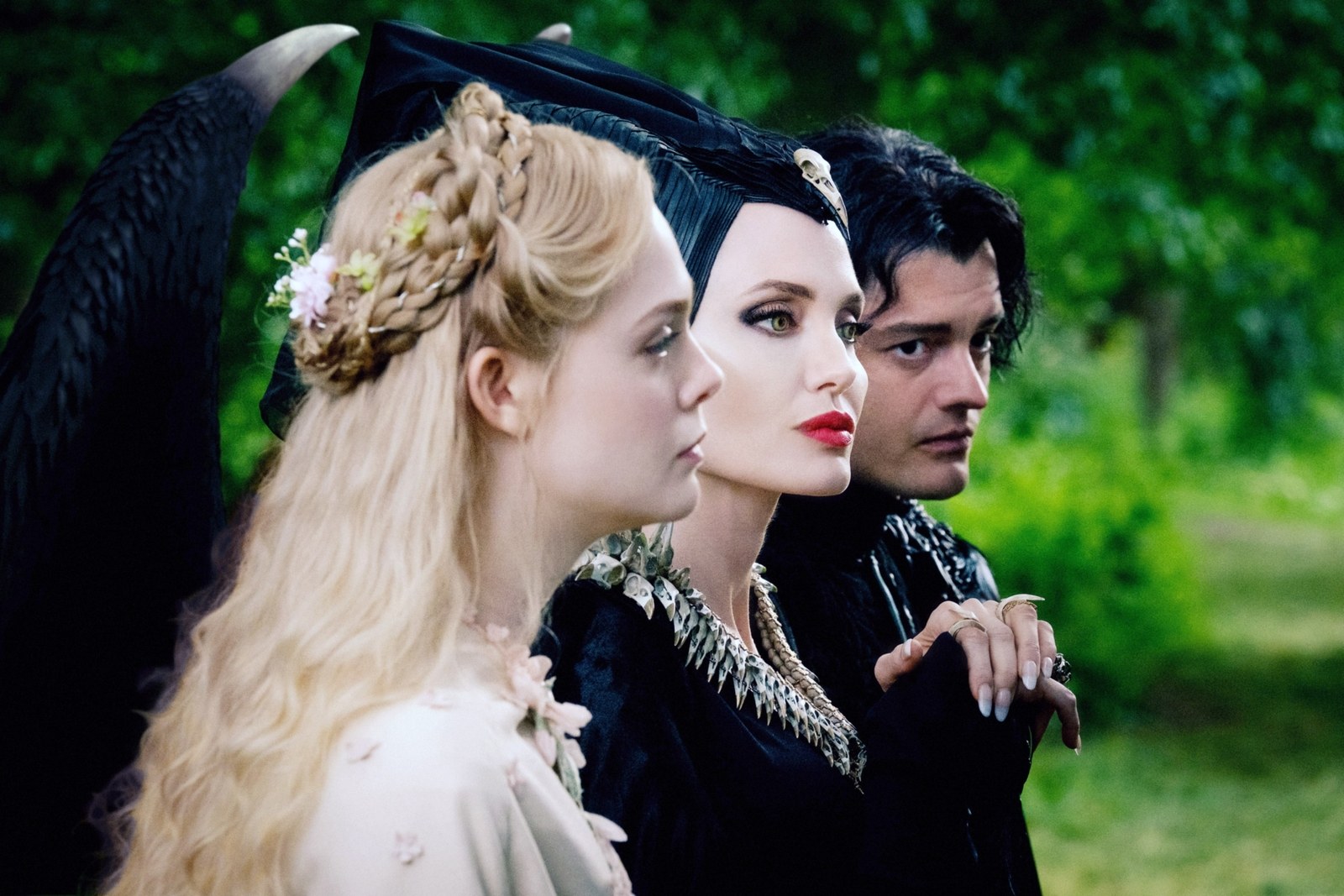
Maleficent: Mistress of Evil, Disney’s sequel to the 2014 retelling of Sleeping Beauty with Angelina Jolie that’s in theaters now, is sort of strange and dark for a fairy tale. And naturally, that’s what makes it so great. The movie covers a lot of things—motherhood, the loss of innocence, love, hate, immigration, power, magic—without losing focus. The costumes are, and I cannot stress this enough, excellent. And best of all, it honors the most enduring tropes of Disney fairy tales (spoiler: good triumphs over evil) while updating the princess narrative in subtle and powerful ways.

Just look at Aurora’s (Elle Fanning) story. She’s now 21 years old and engaged to Prince Philip. It’s hardly surprising or revolutionary that she’s marrying her first boyfriend, but we then learn they’ve been dating for five years. Five years! Compare that to the “love at first sight, married the next day” plot of, well, just pick a movie. Aurora is no sleepy princess, either. She’s the strong-willed barefoot queen of the Moors, the forest wonderland where magical creatures live, having given her previous castle to “the people.” We stan an egalitarian monarch.

Jaap Buitendijk / Walt Disney Studios Motion Pictures / courtesy Everett Collection

Of course, this will come as no surprise to those who saw the first film, a decidedly feminist reboot of Sleeping Beauty. But Linda Woolverton—the screenwriter behind both Maleficent films and basically your entire childhood (Beauty and the Beast and The Lion King, hello!)—tells me that turning a tale of problematic true love on its head was a challenge at first. While writing the first film, she struggled with making the Disney villain sympathetic. “What on Earth happened to this woman that she was that pissed off?” she asked herself. And so, “I had to give her a real reason.”

The answer: She wrote a scene in which Maleficent is drugged by a paramour and wakes to find he’s cut off her wings. “It was…nothing we ever said out loud, but it feels like a date rape,” she tells me. “It’s funny, I worked really closely with Angelina Jolie on the whole script—she was fantastic—and we never actually said date rape. It wasn’t until after that it was like, ‘Oh, huh, that’s what that is.'”

That powerful metaphor in Maleficent’s backstory wasn’t the only twist in the first film, though. You may recall that it’s actually Maleficent herself who breaks the sleeping curse by kissing Aurora on the forehead. (Turns out the unconditional true love of a mother is greater than that of a random paramour’s.) That moment was yet another instance of Woolverton realizing, after the fact, what she had written. “For the first Maleficent, I was talking [in an interview] about the moment when Maleficent wakes Aurora up and gives this speech, and I broke down,” she says. “It was so terrible. I realized that the whole movie was an apology to my daughter for getting a divorce.” She adds, “I didn’t even realize it until that moment that the whole movie was about that.”


Source link

Categories
Health

As an Adoptive Mom, I Have Complicated Feelings About The Handmaid's Tale


My daughter is the best thing to happen to me. Six years later, I’m convinced she’s the reason I went through all the rest: because I was always meant to be her mother. But our once-very open adoption has dwindled over the years, mostly because her other mama has pulled away from us. I think it’s been hard for her, watching another woman raise her child. Even though this is what she chose—even though this baby was never stolen from her like they are in Gilead—I think the pain of being separated from the child she grew and loved has slowly made seeing us something she’d rather avoid. That pain she feels juxtaposed against the joy I experience with motherhood is a dichotomy I have trouble facing.

This most recent season of The Handmaid’s Tale has brought up these gut-check moments even more. That’s not just because of Serena: We’ve also been given insight into Mrs. Mackenzie (Amy Landecker), the woman raising June’s other daughter, Hannah. We don’t know much about Mrs. Mackenzie, just that she’s also a Commander’s wife who was given Hannah after June became a Handmaid. The interaction in the season three premiere between Mrs. Mackenzie and June, who both clearly love Hannah, gutted me. Mrs. Mackenzie said things I could picture myself saying (or at least thinking).

“This has to stop,” she says to June, speaking of her continued efforts to see Hannah. “You brought our child into the world. The Commander and I bless you for that. God knows.”

“I’m her mother,” Mrs. Mackenzie continues. When June flinches at that, Mrs. Mackenzie takes a breath and says, “You’re being cruel, confusing her like this.” “I’m confusing her?” June challenges.

It’s a poignant moment: both women standing their ground. Both clearly believing they are the ones doing right by this child. And while as the audience, we can see that June is the one who’s right, I could still see myself in Mrs. Mackenzie.

It made me wonder: When it comes to my daughter’s adoption, am I the one who knows what’s best?

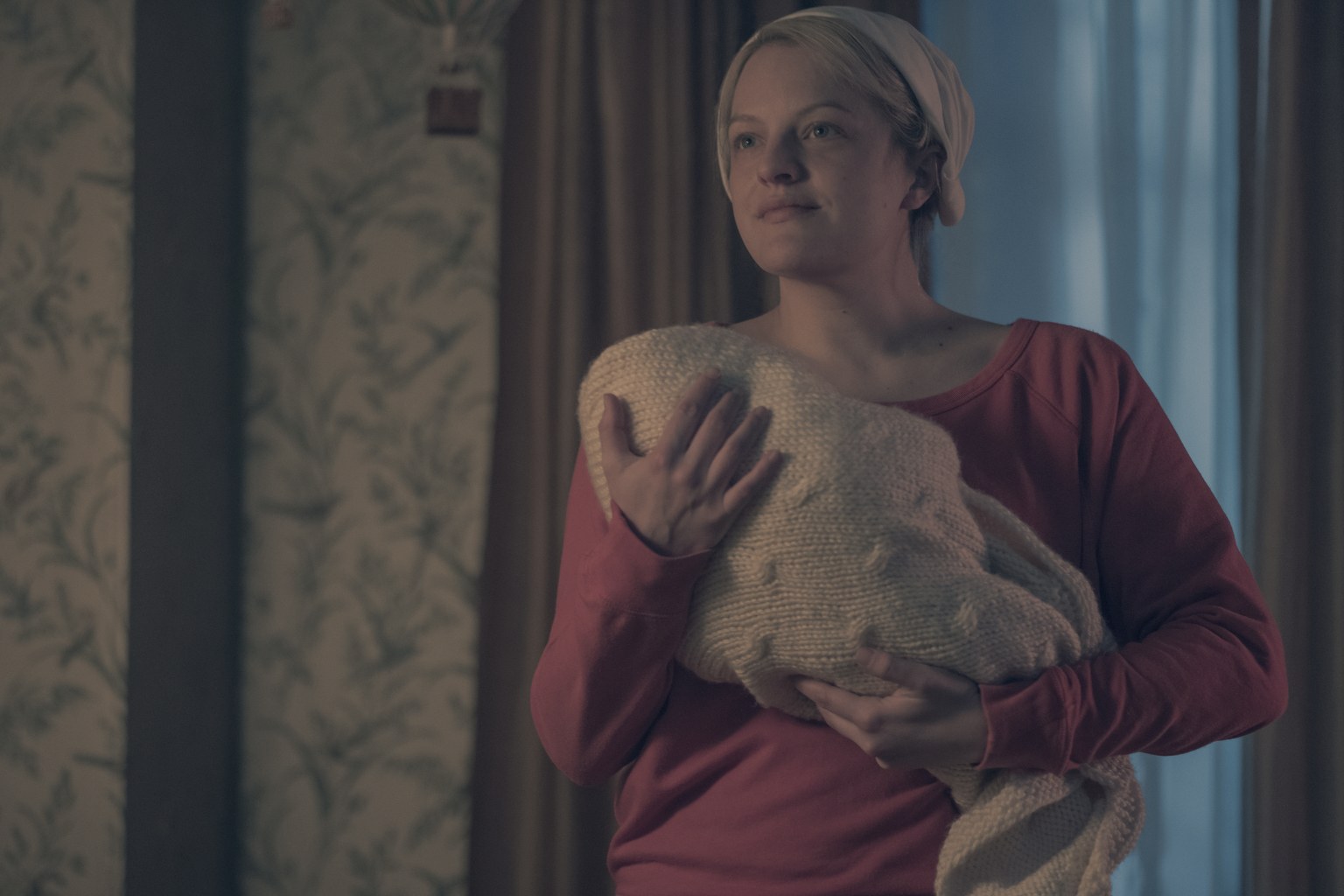
June in The Handmaid’s Tale.

George Kraychyk/Hulu

I think so. I believe so. And watching that interaction on The Handmaid’s Tale, I also believe Mrs. Mackenzie thinks the same. There’s this moment, after the two women find common ground in sharing what they know about Hannah, where June concedes. “I appreciate the home you’ve made for her,” she tells Mrs. Mackenzie. Because it is a good home. Because her little girl is clearly loved. Because it could be so much worse. My daughter’s other mother has said the same to me more than once.


Source link

Categories
Health

Is ‘The Handmaid’s Tale’ Too Violent?


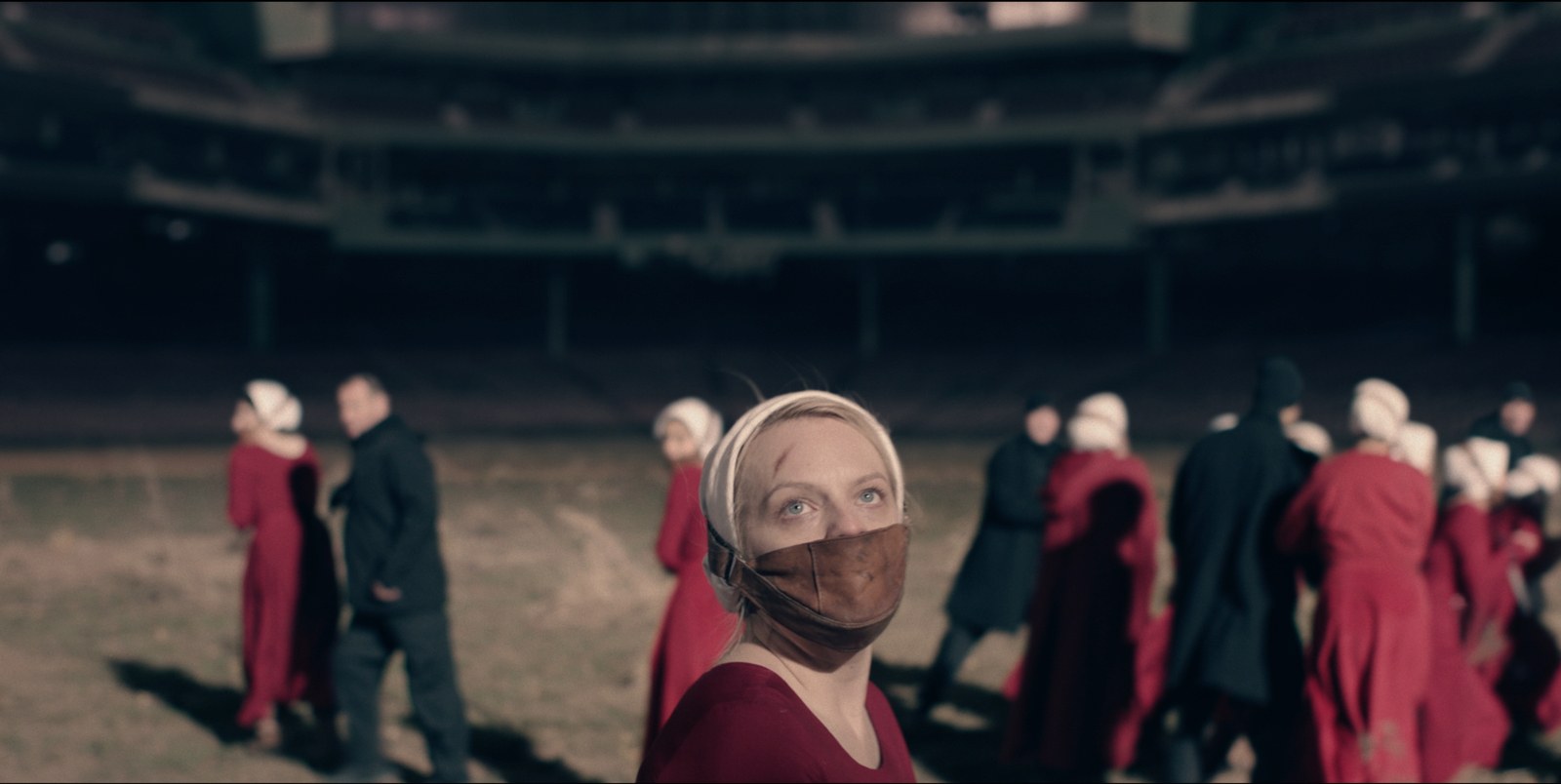
To call the opening of season two of The Handmaid’s Tale “shocking” would be an understatement. The Handmaids in June’s (Elisabeth Moss’s) city are brought to an undisclosed location, their mouths covered with restrictive harnesses. Aggressive male soldiers violently push the women from point A to point B, screaming at them to stay in line. Eventually we learn they’ve been taken to an abandoned baseball field now filled with nooses. The fear on the Handmaids’ faces is palpable. When those nooses are placed around their necks, their fear becomes absolute terror.

But it’s all a scare tactic. The Handmaids aren’t killed; Aunt Lydia (Ann Dowd) just wanted to browbeat them back into submission. (They “rebelled” against her in season one’s finale by refusing to stone Ofdaniel.) It was a reminder that Gilead’s power structure is primitive, tyrannical, and brutal—and if they “disobeyed” again, the hanging might actually happen.

The opening scene of The Handmaid’s Tale season two

Hulu

This all unfolds within the first 10 minutes of season two, and the violence only escalates from there. In one scene a Handmaid is forced to place her palm over an open stove flame. Minutes before this we see another pregnant Handmaid chained to a bed. In episode two we learn about the Colonies, a prison where infertile, “disobedient” Handmaids are forced to dig holes in toxic soil. The women are also routinely electrocuted, dismembered, and, in some cases, subjected to genital mutilation.

A lot of gruesome activity happened in season one, but it went up several notches for season two—so much so that think piece after think piece argued The Handmaid’s Tale had descended from necessary political commentary to pure “torture porn.” Many viewers agreed:

Their feelings are certainly valid. After all, season one managed to scare the hell out of everyone without the seemingly gratuitous violence. Instead the showrunners used psychological manipulation to paint a picture of this dystopian world—one where women are stripped of their rights and everyone who isn’t a white, straight, cisgender man is persecuted. A world that, when you think about it, could easily become our own if we’re not vigilant. This is what The Handmaid’s Tale aimed to convey, and it worked—without making viewers overtly squeamish.

But what if The Handmaid’s Tale wants to make its viewers squeamish? Sometimes I think it should. Some of the horrors the series highlights actually happen in the world, even now. The abortion bans taking place in the United States right now make it feel like women’s rights are slowly chipping away. So maybe a show like The Handmaid’s Tale—with all its painstaking “torture porn”—is exactly what we need to see to wake up and take action.

“I do not see it as any type of porn,” one viewer posted to Facebook about the series’ more gruesome moments. “These things are happening across the world and not seeing it does not make it go away. It is meant to make us disgusted and sick and hopefully we learn what an oppressive government is capable of. We should feel frightened by it.”

“What’s happening in The Handmaid’s Tale isn’t torture porn to every nation,” another fan wrote on Reddit. “If it’s fantasy and ‘far from happening,’ be thankful that it feels that way too, because it’s a reality in so many nations around the world that people would always turn their backs against.”

A Facebook comment about The Handmaid's Tale
Facebook
A Reddit comment about The Handmaid's Tale
Reddit
A Reddit comment about The Handmaid's Tale.
Reddit

One fan posted an entire Twitter thread about why The Handmaid’s Tale isn’t needlessly graphic:

So is The Handmaid’s Tale truly too violent, or is it simply holding a mirror to what the world is and could become? One thing is certain: If the show continues on this path of violence, it has to lead somewhere. There has to be a payoff, preferably in the form of June burning Gilead to the ground. With everything going on in the world right now, it’d be nice to see that too.


Source link

Categories
Health

A Tale of Two Cities: A Snapshot of Washington D.C. On the Historic Kavanaugh-Ford Hearing Day


One city, two worlds. Or maybe even three.

In the nation’s rain-slicked capital, fans and foes of Brett Kavanaugh spent much of Thursday fixated on the Senate confirmation hearings that could help tip his chances of becoming the next Supreme Court justice.

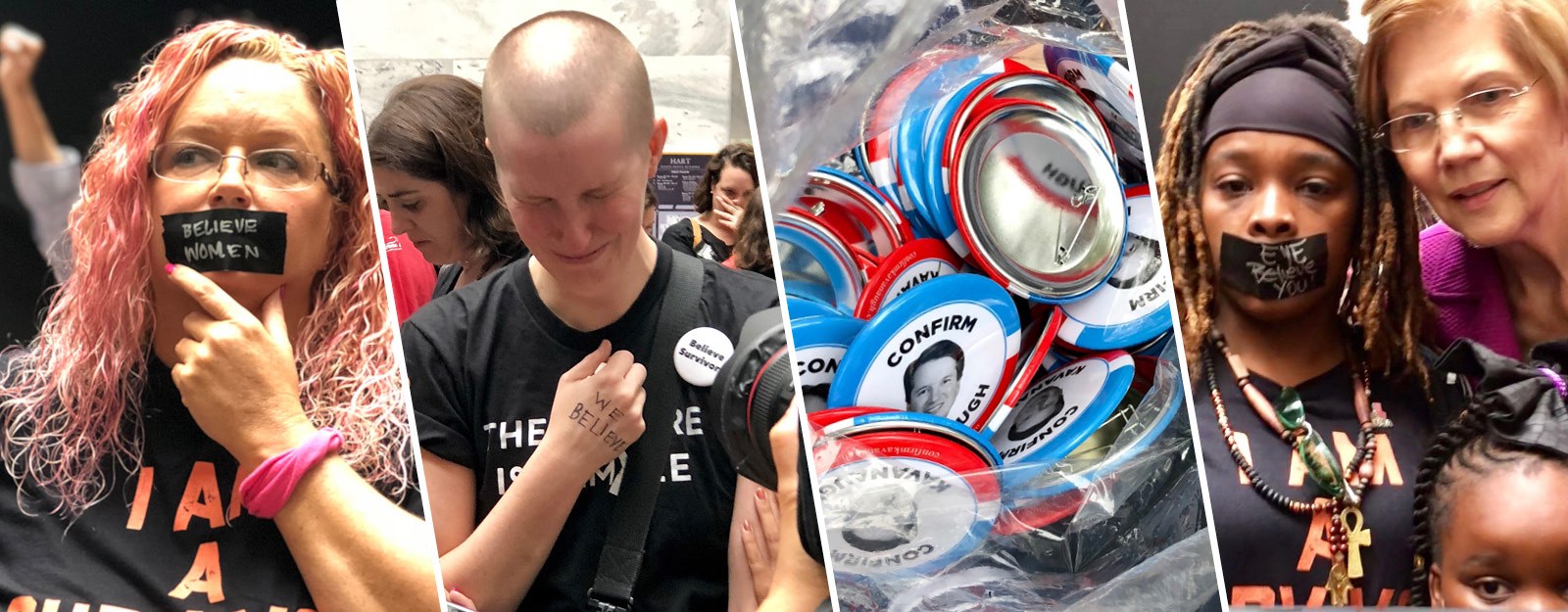
Women in parts of D.C. proudly wore red, white, and blue “Confirm Kavanaugh” pins with the judge’s smiling face at the center.

But blocks away, women in black—and sometimes in tears—empathized and identified with Christine Blasey Ford, the college professor who came to Washington to testify that a blind-drunk Kavanaugh sexually assaulted her at a high-school party in the 80’s.

And elsewhere, America’s center of power kept doing business, perhaps too busy, uninterested, or preoccupied to drop everything and glue themselves to the television screens beaming out a stunning moment in U.S. history. It’s a divide, not necessarily caused by apathy, but in many cases because the financial pressures and time demands on working people are too urgent.

Glamour traveled to Washington to get a panoramic view of those parallel worlds and match them up with the clock—which is rushing toward a decision on Kavanaugh’s fate:

8:54 A.M. – Washington artist Susan Prolman stands outside Union Station with a poster she designed that depicts a statue of Lady Justice holding her sword and scales, framed by the words, “Grab Her By the Pussy.” Prolman says she made the sign because she is “opposed to Donald Trump, our sexual ‘predator-in-chief’s’ nomination of Brett Kavanaugh to the Supreme Court.”

9:11 A.M. – A pro-Kavanaugh rally organized by groups including Independent Women’s Forum and Concerned Women for America is well underway at a grassy park near the Russell Senate Office Building.

A mixed-gender crowd listens to speakers, gathering in support of the judge while sporting “I Stand With Brett” t-shirts and waving printed “Confirm Kavanaugh” signs. One bright yellow handmade placard demands: “Stop the Con Game.”

Patrice Onwuka, 36, a senior policy analyst for IWF, tells Glamour her group takes “allegations of sexual assault very seriously. No woman should be raped or molested or touched against her will. She should be able to get justice. She should be able to get closure. She should even be able to get heard.” However, Onwuka continues, “we also take seriously the idea of due process, and the bedrock principle in our criminal justice system of the presumption of innocence.”

10:05 A.M. – C-SPAN begins broadcasting from the Senate Judiciary Committee proceedings.

10:32 A.M. – Ford is prepared to begin her testimony.

“I am here because I believe it is my civic duty to tell you what happened to me while Brett Kavanaugh and I were in high school” – Dr. Ford

10:41 A.M. – Sen. Elizabeth Warren (D-Mass.) visits Ford supporters—many publicly identifying themselves as sexual assault survivors—who are gathered in the atrium of the Hart Senate Office Building. She pauses to tell Glamour that she considers the Republican rushing of the confirmation process to be disrespectful to assault survivors.

11:15 A.M. – Joy Gerhard, 34, is comforted by women around her as she weeps while Ford’s testimony continues. Inked on her left arm is a series of dates: Those numbers, she says, represent each time she was subjected to sexual violence, starting in childhood. Gerhard tells Glamour she felt compelled to come to D.C. from her home in Seattle, as painful as the hearings are for her.

“Ever since Anita Hill testified, we know what it looks like when a woman goes in front of this committee,” Gerhard says, brushing away tears. “The fact that Dr. Ford knew what she was getting herself into, and chose to do it anyway, I… She must have a spine of steel or something, but it didn’t seem right for her to do this by herself.”

11:20 A.M. – Ford testifies during questioning that the most vivid memory she has of her alleged assault is the laughter from Brett Kavanaugh and his friend Mark Judge.

“What is the strongest memory you have, the strongest memory of the incident…something you cannot forget?” asked Senator Patrick Leahy (D–Vt.). “Indelible in the hippocampus is the laughter, the uproarious laughter between the two. And their having fun at my expense,” she replied.

12:43 P.M. – The city’s Metrobus system notifies commuters that “Due to downed wires at River Rd & Burdette Rd, buses may experience delays in both directions.”

2:00 P.M.A major conference at American University features a workshop that encourages attendees to “share experiences from leading civil society organizations using different procedures to challenge unmerited patents and/or applications as a key strategy for improving access to affordable medicines.”

2:15 P.M. – Before her testimony ends, Ford says that if she knew when Mark Judge worked at a Potomac, Md. Safeway grocery store, she could pin down the date of her alleged assault. (Ford says she ran into Judge some weeks after that 1982 assault).

“It would be helpful … to figure out when he worked there, if people are wanting more details from me about when the attack occurred. If we could find out when he worked there, then I could provide a more detailed timeline as to when the attack occurred.”

2:28 P.M. – At Cafe Bliss on 2nd Street NE, business is quiet. The orderboard announces the day’s special as a bagel, croissant, or multigrain bread with a choice of toppings for $3.99. There’s no television on; a small speaker is booming Franz Schubert’s Arpeggione Sonata, D. 821.

3:18 P.M. – Kavanaugh’s testimony has begun; he maintains his denial of the sexual assault allegations lodged against him.

“This whole two-week effort has been a calculated and orchestrated political hit, fueled with apparent pent-up anger about President Trump and the 2016 election,” he said. “Fear that has been unfairly stoked about my judicial record, revenge on behalf of the Clintons and millions of dollars in money from outside left-wing opposition groups.”

“I’ve never sexually assaulted anyone. Not in high school, not in college, not ever. Sexual assault is horrific.”

4:00 P.M. – Not far from the Hart building, The Veterans of Foreign Wars holds a ceremony to receive one of the U.S. flags that draped the cases of the remains of American servicemembers repatriated from North Korea.

4:50 P.M. – Kavanaugh questioning continues. In a display of anger, Sen. Lindsey Graham (R-S.C.), accuses committee Dems of trying to “destroy this guy’s life.”

“What you want to do is destroy this guy’s life, hold this seat open and hope you win in 2020.”

“This is not a job interview. This is hell.” – Sen. Graham

He continued: “Boy, you all want power, God, I hope you never get it,” he said. “I hope the American people can see through this sham. That you knew about it and you held it.”

The White house rushes to defend Graham.

5:38 P.M. – Rush hour traffic builds up and the District is growing darker and rainier. At a pub not far from where Kavanaugh continues to face the senators, patrons’ attention is split between reading the subtitles on coverage of the hearings, checking out the latest on Tiger Woods on ESPN, a live sports radio broadcast at the back of the room, and happy-hour chatter.

6:23 P.M. – Rachel Kinsey, 36, took a break from the accounting firm she runs and came to Washington from Woodstock, Georgia to support Ford: “She was calm, cool, and collected [and] answered questions directly,” Kinsey says of Ford, while not giving Kavanaugh that positive a review.

6:48 P.M. – The Senate Judiciary Committee hearing adjourns. Their vote on recommending Kavanaugh to the full Senate for confirmation is scheduled for Friday.


Celeste Katz is senior politics reporter for Glamour. Send news tips, questions, and comments to celeste_katz@condenast.com.


Source link

Categories
Health

The Handmaid's Tale: Max Minghella On Why You Should Still Trust Nick This Season


In The Handmaid’s Tale, the 32-year-old plays Nick, a government spy and brooding love interest to Offred (Elisabeth Moss). Season one ended with (spoiler alert!) Offred being carted off to an uncertain fate. As a big, black van is about to drive her away, Nick opens the door and whispers to her, “Just go with it. Trust me.” So why, exactly, do we root for this guy again?

GLAMOUR: Last season ended on an ambiguous note. Can we really trust Nick?

MAX MINGHELLA: Yeah. I mean, I trust Nick. I stand by him! I don’t want to give anything away, but all the characters in this show are capable of doing good and bad things, which is one of the reasons it’s so compelling to watch. I think, at the root of Nick, he’s a good person. Whether he always does the right thing is a different question.

GLAMOUR: By virtue of his gender, he’s guilty until proven innocent. Thoughts?

MM: I mean, I feel all men are guilty until proven innocent, in general. Maybe that has to do with the fact that women have been subjugated for so long, or that men can be gross in a way women rarely are. Having been a man for 32 years, I’ve always had a very cynical view of my gender. I’m relieved the rest of the world is now sharing it.

GLAMOUR: The show does such a good job of showing how complicated sex can be. For example, women can still get pleasure from sex during trying times. Has the show impacted your own views about sex?

MM: I’m a big advocate of sex, and I actually like exploring it a lot! I often find myself shooting sex scenes on the show. I don’t find them to be super straightforward. We always try and make them complicated and as dense as a heavy dialogue scene. You know, there’s no reason for them to be exploitative. One of the things I thought was so fascinating when I first read this show, almost two years ago now, was that the sex in the show was often quite perverse and disturbing and multilayered, and I thought that that was a new and exciting way to approach that subject.

PHOTO: ©Hulu/Courtesy Everett Collection

GLAMOUR: Nick is the strong silent type, which can be very appealing to many women. How are you in real life?

MM: I don’t think Nick and I are super far away from each other. I mean I do think again [our showrunner] Bruce is very clever about seeing who we are as individuals and finding ways to incorporate that into the characters, especially in season two. I think we all have um an essence, which is close to who we’re playing, which makes it a lot easier.

GLAMOUR: How has being someone who listens more and understands the power of silence served you in real life—in your dating life, in any other scenarios?

MM: I don’t know if it serves me at all. I think sometimes I wish I was much more charming than I am or better in a crowd. I often feel like I don’t know what to do in sort of a large group of people, so I think I’d like to be more fun. Nick and I could both use is a bit more lightness.

GLAMOUR: You’ve said that, growing up, you were concerned with being cool. Do you regret that?

MM: I never felt “present” in high school. I was always concerned with having as much fun as possible. And I definitely thought, That’s going to be easier to do if you’re hanging out with the right people. Like, the math club is probably going to less-good parties than the football team. I don’t think I was wrong. I had an amazing time.

GLAMOUR: What’s the biggest trouble you got yourself into back then?

MM: That’s a dangerous question! I think I did cause my parents endless anxiety. I started working when I was about 16. It’s very difficult to go back living under your parents’ roof when you’ve been living on your own, and that’s when I felt a lot of tension was, but I’m going to leave out specifics…

GLAMOUR: You’ve called yourself a pop-culture whore. Go on…

MM: It’s completely true. I’m obsessed with pop culture. I really am. I’m not, like, a great intellectual. I’m a Top 40 guy, I’m really into Riverdale. I love that it’s so clean and pop-y on the surface with something so sinister underneath.

GLAMOUR: We have to ask—your best friend, Jamie Bell, married your ex-girlfriend Kate Mara. How does that work?

MM: Nobody’s ever asked me about that. I will tell you this: It’s a beautiful part of my life. I see them every single morning, and Jamie’s son is my godson. I can understand why the optics might be very confusing, but it’s not a complicated thing for us.

The Handmaid’s Tale returns to Hulu on April 25th


Source link