Categories
Health

At 36, I Learned to Backflip Like Biles


I spent six months working on the double twist but couldn’t get further than one-and-a-half rotations. The double seemed beyond my grasp.

Meanwhile, my six-year-old daughter, Sydney, had made the gymnastics team at Hill’s Gymnastics—a fantastic club near our home, where Olympians have trained. She had a goal of her own: a roundoff back handspring without a spot. Until she mastered that skill, she would not be allowed to compete in the floor event, but she was scared. So I offered her a deal. I told her that when she found the bravery and fierceness to do her roundoff back handspring, I would find the same fierceness in myself to land a double twist.

It sounds like a brilliant parenting tactic from your friendly motivational mom. But really, I was buying myself time. My daughter still seemed pretty far away from mastering her goal, so I figured I had plenty of time to deal with my own fear. But my daughter surprised me. My challenge sparked her competitive drive, and she landed her roundoff back handspring—without a spotter—that very week. Uh-oh.

When I went to my gymnastics class that week, I reminded myself of how brave my six-year-old daughter had been. How she had set a goal for herself that seemed big and scary, and then mustered up the bravery to accomplish it. And then I went for it.

And I absolutely killed it—sticking the landing.

I did another one, and another one, and then asked a friend to record it so I could show Sydney when I got home. She was as proud of me as I was of her.

I was so excited about my Biles-esque goal, I posted it to Twitter—and it went viral. Apparently “middle aged, out-of-shape lawyer channels her inner Simone Biles” resonates for more people than I could have imagined. My back layout with a double twist currently has almost two million views.

I’m still taking my out-of-shape, overworked appellate lawyer self to class each week—and loving every minute. Now I want to improve my fitness level not out of self-consciousness with my appearance but because it’ll help me do harder and harder gymnastics skills. Plus, I know I’ll be a better tumbler than Syd for a limited period of time—she’s bound to exceed my skill level at some point—and I have to milk that for as long as I can.

After accomplishing a move I never in a million years thought I’d be able to do, I’ve set a new goal, which seems even more impossible: a double back somersault. To do a double back, you have to jump high enough into the air and complete two backflips before landing on your feet, which requires some serious athleticism. It’s daunting but I know I can do it. And I’ll even take that attitude to my professional goal: arguing a case in the Supreme Court.

Jaime Santos is a graduate of Harvard Law School and a partner in the Supreme Court and Appellate Litigation Practice at Goodwin Procter in Washington, DC. She is also a co-host of the popular Supreme Court podcast, Strict Scrutiny.
Source link

Categories
Health

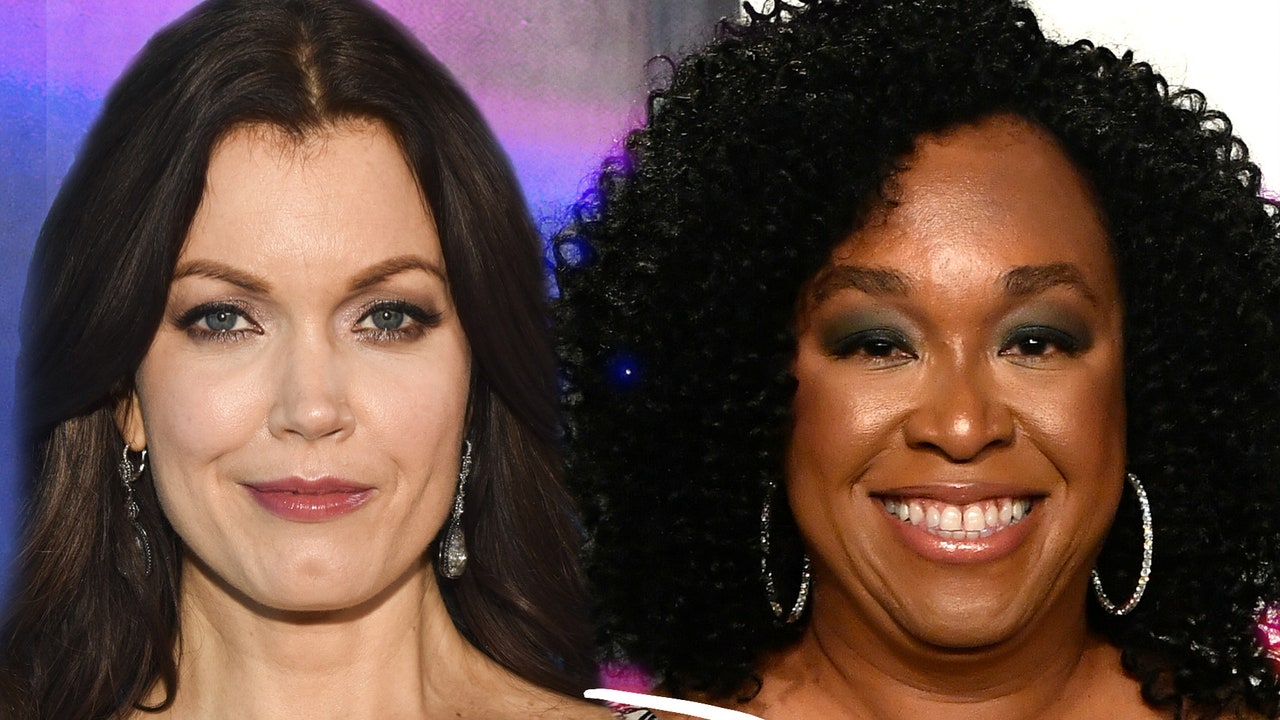
What Bellamy Young Learned About the Power of Sisterhood from Shonda Rhimes


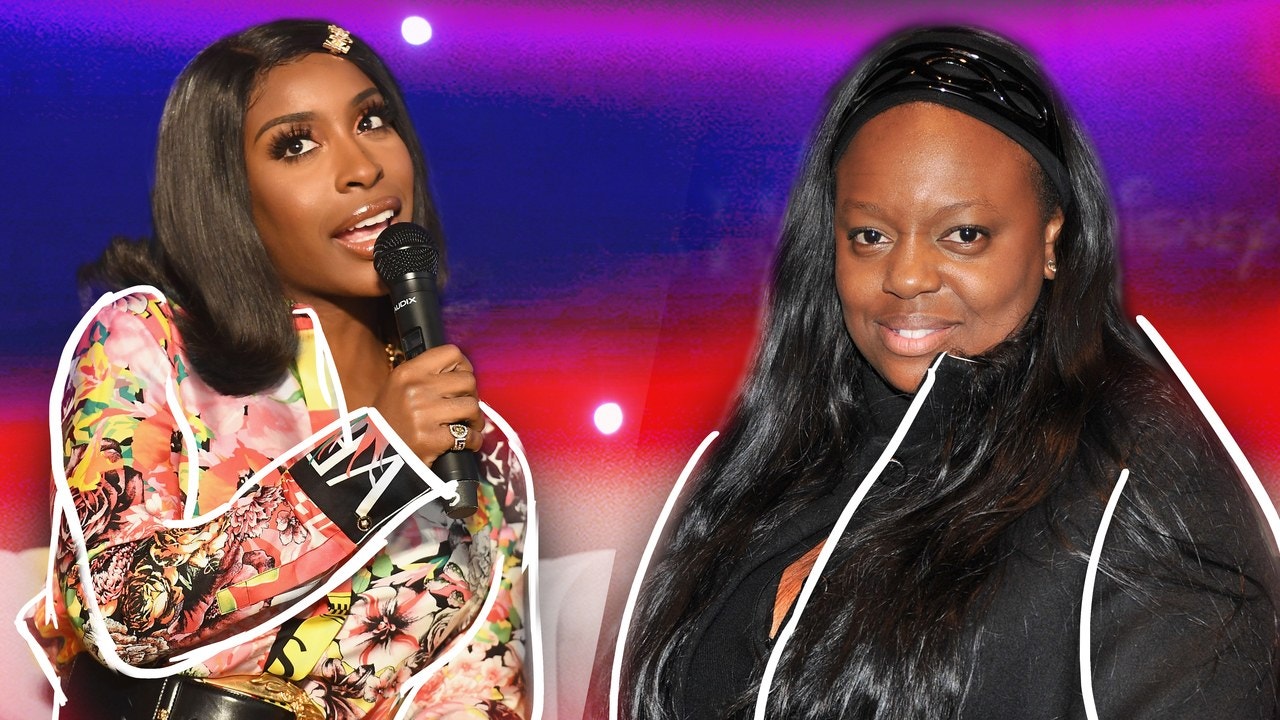
To celebrate International Women’s Day 2020, we asked women like Jackie Aina, Cecile Richards, Andrea Mitchell, Bellamy Young, and more to reflect on how other women have lifted them up—mentored them, advised them, represented them, and above all showed them what was possible. We’ll be sharing their stories here all week.

Unlike most people in the world, I have lived in a matriarchal society. I highly recommend it.

The women who lived there with me—we found our power, we found our voices and were encouraged to lift them up. And once we stepped into that light, we never turned around and said, “Oh, darkness, I missed that.” The experience changed us forever.

Let me explain: For a beautiful period of time, I had dual citizenship in two countries—the United States of America…and Shondaland.

In 2011, Shonda Rhimes cast me as Mellie Grant on Scandal. I knew that the role was a huge break, especially for a woman in her 40s. At that point, knowing what I knew about television and this business, I had just given up hope on certain kinds of opportunities. It had taken a toll on me. It’s like, “Well, I won’t be cast as that kind of character.” Or, “OK, I won’t get that kind of part.” As soon as someone posts your age online, you just know your options are narrowing.

With Scandal, I was going in to read for this tiny part. I had, I think, two lines. But Shonda Rhimes doesn’t write characters. She writes souls, and then over time, through casting, those souls reveal themselves to her. All of those details—gender, sexuality, race—come into clearer focus, which is how that small part became something so much bigger. I remember standing there, thinking how fortunate I was just to be in that room. But then I got in front of Shonda, and there’s something in how she sees you. It’s profound. It’s not overt and it’s not strange. It’s so safe and curious and accepting. She looks at you, and she doesn’t see your outfit or your hair. She sees who you are.

I got the part, obviously. And then I did seven episodes and became a series regular the next year. It was an acting job, of course. It was work. But it was also transformational for me, as a person. I got to be a different kind of woman. And I have said that to Shonda, too. I’ve told her: “I don’t know how you chose me, but I am grateful for Mellie. I am grateful that I got to be her. I am grateful that people got to know her.”

She’s a fictional character, but she—and Shonda—showed me something different was possible. When I was growing up in America in the 1980s, we were told, “You can have it all and you better pretend that it’s working.” There was no wiggle room. We weren’t supposed to show the cracks. It was a “succeed at any price, move forward, and leave everyone else in the dust” mindset. I think that’s starting to change.

But it’s still hard to be a woman in a position of power. There’s this sense that if we make one wrong move, we’re out. It wasn’t like that with Scandal or with Shonda, who taught us all to work and stretch and fall and stand and laugh and fail and sob and just be honest about what we were going through.

I hope that we passed a little of that on to the audience, to the women who saw Mellie Grant and Olivia Pope on screen and felt just a little braver in their own lives. These women were not perfect. So far from it. But when the time came, they knew how to stand up for themselves. They failed big time, but they stood their ground.


Source link

Categories
Health

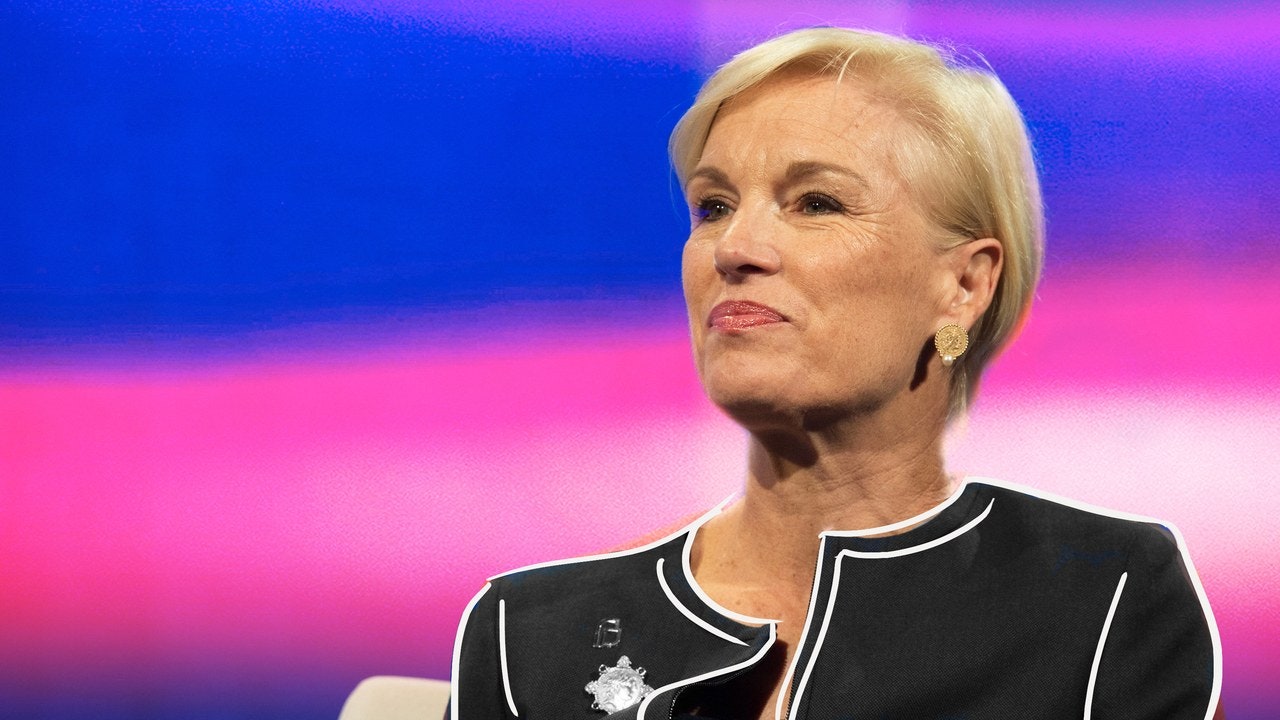
Everything Cecile Richards Knows, She Learned From Other Women


March 8 is International Women’s Day. To celebrate, we asked women like Jackie Aina, Cecile Richards, Andrea Mitchell, and more to reflect on how other women have lifted them up—mentored them, advised them, represented them, and above all showed them what was possible. We’ll be sharing their stories here all week.

After I graduated from college, I wanted to be a union organizer. And the first real job I had on the ground was in New Orleans, organizing with hotel workers. These women were making minimum wage, living in housing projects. They were often single moms or responsible for taking care of other relatives. Their jobs were physically very hard, but also emotionally very hard—working in the hospitality industry in a city like New Orleans is not that easy. And on top of all that, these women were willing to go out and try to organize a union. I still remember them. I was right out of college, and I can remember their names now—Ella Curtis, Aubrey Carr. These are women whose lives were nothing like mine, and they were the bravest, most affirmative, most life-loving women I had ever met.

I have always been attracted to people who understand that power and prestige and notoriety aren’t really worth anything unless you can share with others. A lot of those people have been women. When I started working in the labor movement, men really ran things. But if you went out into the field, you’d find these pockets of women getting organized and changing the face of labor. When I later went to work for now-Speaker Nancy Pelosi, I found in her someone who never forgot why she was in office and who always remembered the people that she was there to represent. That was important to me. With Planned Parenthood, I tried to take the same approach.

I’ve had so many opportunities in my life, but the time I spent working with nursing home workers, janitors, and healthcare workers still stands out. I was so fortunate to work with them and to learn so much from them. It’s kept me honest, I think. Working in the non-profit space, or even sometimes in the political space, I think people talk a lot about how hard their jobs are. And when I started working in those spaces, I could tell people, “Listen, until you’ve cleaned 14 rooms on a shift in a hotel, you don’t know what hard work is.” Sometimes, that’s been to my detriment. But it has always helped me check my privilege. I remind the people that I work with that we have had choices in every career decision we have made, and most women do not. Working with those women for so many years who had very few options in terms of how they could make a living and still wanted to fight for better conditions for everyone—that has just carried me for my entire life.

I spent last week in South Carolina and heard a lot of people talking about national politics. But I learned when I was an organizer and at Planned Parenthood that so much change happens on the local level. One of the last things I got to do before I left Planned Parenthood was attend a ceremonial ribbon cutting on a health center in Charleston for Planned Parenthood, and that center is right now able to provide abortion services and transgender-care services. It’s a reminder that even when the focus is on a presidential race, there are still meaningful opportunities to make a difference, whether it’s volunteering at a shelter or volunteering on a local campaign or running for school board. That’s how big things start to change.


Source link

Categories
Health

Jackie Aina Learned from the Best


As black women, we’re sometimes put into this box. We wear something or pioneer a look, and it’s considered “ghetto.” Then a little later, people decide that’s a new cool thing, and we don’t get the credit. It doesn’t come from nowhere. I love the fact that Pat does what she does and no one can tell her whether that’s “allowed” or “appropriate.” She has this power where it’s like, “Oh, well if Pat did it, then it’s cool.” People admire her because of who she is, as an authentic leader and creative person. To me, that’s the goal. And when I look at other black women who are so creative and expressive, that’s what I want for them.

What women—and black women, in particular, have shown me—is that if we lift each other up, we all benefit. There are instances where I’m like, “I can do this, but I’m going to bring other people in because I can.” Every single time, I realize again that collaboration improves the work. It can be better and more magical with others than I could make it alone.

So just think of how incredible and how fierce it would be if women collaborated with each other more; if we saw each other as allies and not as competition. I have never regretted sharing opportunities with other women, and in those times that I’ve hesitated, it’s forced me to think about the misogyny that I’ve internalized. When people say women aren’t “cool” or that women are passive aggressive—those messages feed this idea that only a handful of women deserve to succeed. And who benefits when women see each other as a threat? And don’t work together? The status quo. And men.

Working with other women has also reinforced for me how important it is to tell someone what their work means and to encourage them. There are tons of women whose names I want people to know: Sharon Chuter from UOMA Beauty, is one example. She is a fellow Nigerian and her brand is just killing it. I tell her all the time, “Girl, you’re out here killing it.” Naomi Campbell is an icon. And Karen Civil, who knows all about music and hip hop—that woman is a big deal!

But supporting other women isn’t just about business or mentorship because there are the women that I know most people will never hear about who matter just as much to me as those bigger names. I think all the time about a woman I served with when I was in the U.S. Army. I was going through a divorce and I was at work; I had started the YouTube channel, but I wasn’t on social media full-time and I just remember feeling like I was going to crash and burn. A lieutenant found me in the bathroom at March Air Reserve Base, crying my eyes out, mascara running. I was the only girl who wore makeup on base in the whole company. She was obviously superior to me, but she saw me crying and could tell that I was just having a breakdown, just going through it.

I had never met this woman before, but she was also black and there weren’t a lot of us. Plus, she was so far above me in terms of rank. But she saw me just weeping and gave me the words that forever changed my life. She said, “Whatever you’re going through right now, this is not your final destination. You are more than this. You can make it through this.” It was a turning point for me, that this stranger would look at me and know that I was destined for something better than what I was dealing with at the time. It motivated me.

For every major moment in my life, a woman has been there, rooting for me. Even if we didn’t know each other that well or I felt like I didn’t deserve it, someone has seen me and said to me, “You can do this.” When I think about celebrating other women, that’s what I remember—how each of us can be that person for another woman. It’s a responsibility, but it’s also a privilege.

March 8 is International Women’s Day. To celebrate, we asked women like Jackie Aina, Cecile Richards, Andrea Mitchell, and more to reflect on how other women have lifted them up—mentored them, advised them, represented them, and above all showed them what was possible. We’ll be sharing their stories here all week.


Source link

Categories
Health

The #1 Beauty Secret Sailor Brinkley-Cook Learned From Her Mom


Screw, marry, kill: mascara, lipstick, highlighter.

Um, screw highlighter. Because highlighter is important and I love it, but I don’t think I want to marry it. I’ll get down with some highlighter. Marry mascara because I have blond lashes, so putting on some mascara changes the game for me. I love Milk Makeup’s Kush Mascara. It feels natural and doesn’t go on too chunky, which is awesome. I hate when it feels like hairspray on your lashes. Then kill lipstick. I never wear lipstick. I’m a lip gloss gal. There are so many I like, but I love the Glossier one. It doesn’t have much color but it makes your lips look plump.

What’s your favorite emoji?

I love the yellow heart, honestly. It’s soft and not as aggressive as the red heart, but it’s like, “Love you, girl ?” or “Thank you ?.” I think it just works.

I get that. It’s not as romantic…

Yeah. I’m not like, I love you, but I’m like, love ya. It’s that vibe.

It’s amazing that a color can totally change the meaning.

Yellow heart, man.

You said you’re a drugstore girl, so this is going to be fun. You’ve got $20 and free roam of a drugstore. What do you buy?

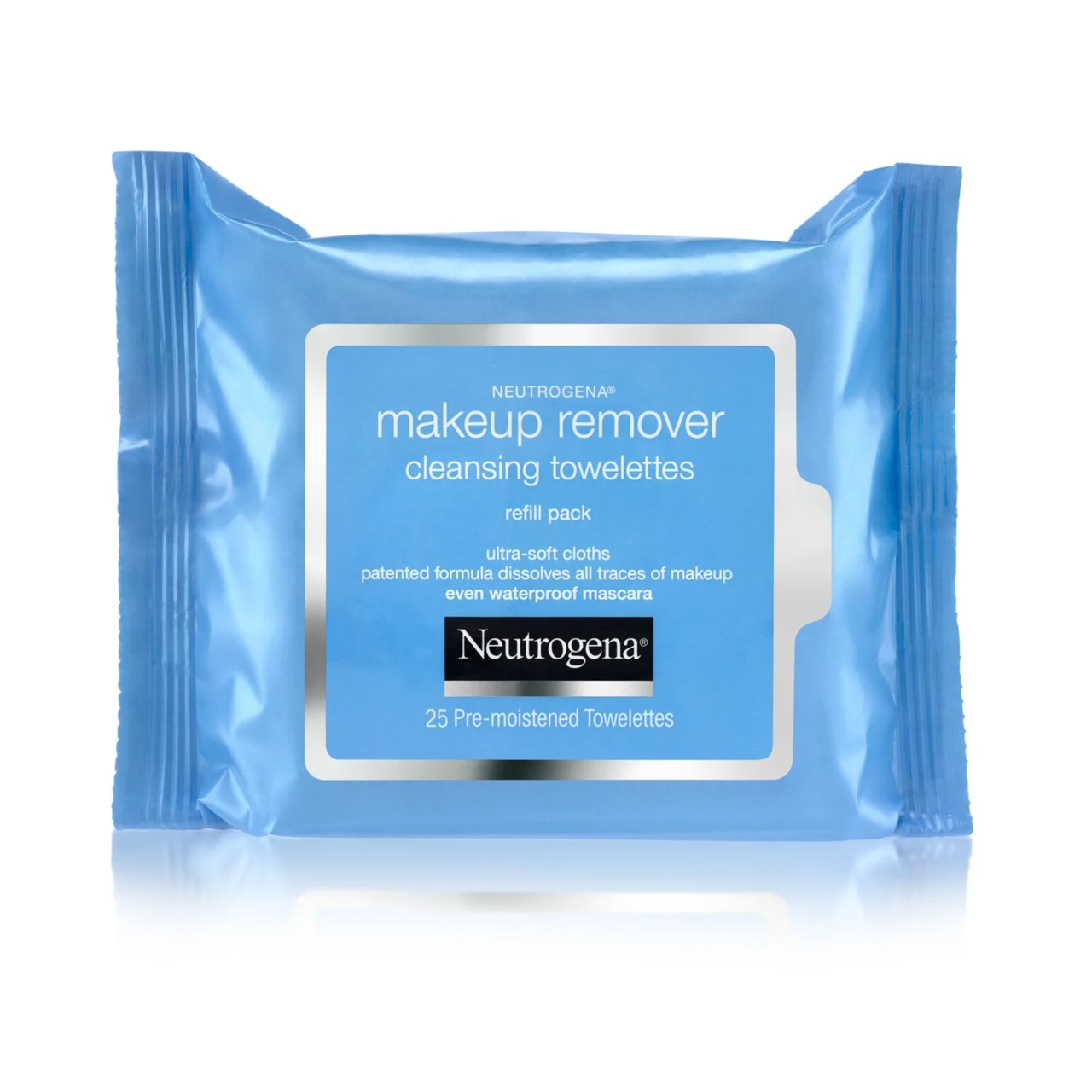
CeraVe for sure. I love its oil-free moisturizer. It has hyaluronic acid in it, which is awesome. Then I’d say some Neutrogena Makeup Wipes, some Really Red Essie Nail Polish—because why not?—and finally, Aquaphor chapstick. Literally, that’s what’s in my bag right now.

Neutrogena Makeup Remover Cleansing Towelettes

Buy Now

If you could change one thing about beauty perceptions, what would it be?

I hate that we’re all so judgmental about everyone’s beauty. I know that a part of this [Hollywood] world is about critiques and judging—and, you know, those red carpet shows that are like who wore it better? Did she rock this or did she not? But I know what it’s like to go on a red carpet and put yourself out there. To choose a dress and choose your hair and makeup, and then finally have it all come together and be like, “Oh, I feel great,” only to have people say you looked bad or say that it “didn’t work.” I think that’s annoying and lame. We should cut that out. Because if you’re going out in whatever you look like, you feel good. Most of the time you’re not leaving the house thinking, “Oh, I look terrible. I shouldn’t have worn this.”


Source link

Categories
Health

How I Stopped "Doing It For Instagram" and Learned to Love "Unlikeable" Moments


Open up your Instagram feed. What do you see? Fresh-cut peonies. A woman in the middle of her sun salutations series atop a mountain. A runner in the final stretch of a marathon. Instead of these polished moments of triumph, how great would it be to see a snap that shows someone at their worst? The moment their muscles clenched at the ten-mile mark. The split-second when the ceramic pot spins off the wheel and splats on the ground. What if people posted images of those far more frequent mess-ups and total wipeouts for all their followers to see?

We now live in a moment of aspirational dread on social media. And it’s hit our hobbies hard. Instead of just going for a run, you have to share a picture of your mile count in the health app. You can’t just macrame a wall hanging—you have to post daily progress on your stories. It seems there is little we do for the joy of doing it because we’re always trying to prove that we’re enough, by getting as many “likes” of approval as possible. This is especially true for women. We bear the brunt of the myth of perfection.

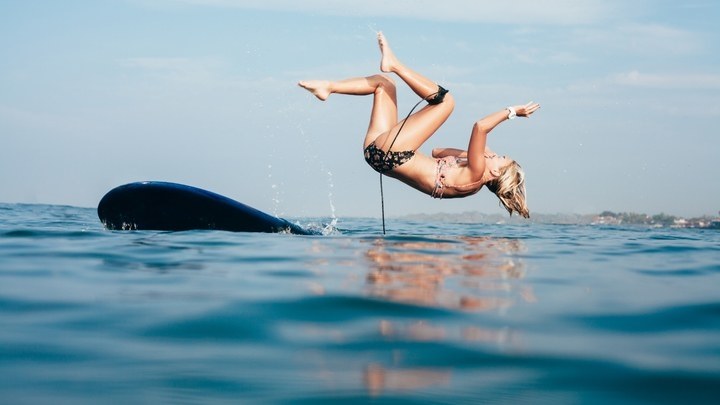
My hobby is surfing. It isn’t something I picked up during a quick trip to Baja last year. I’ve been at it for almost two decades. When I’m in the water, it’s not cute. I don’t live in a tricked-out camper van parked near a mellow beach break. Picture Blue Crush. Now picture the opposite of that.

While I can surf, I also kind of suck. I’m goofy and the opposite of cool. Sometimes I eat shit. But, oh my god, is it fun. Surfing is something I don’t have to be good at. I don’t do it for the boomerangs, or to filter the picture later. I just do it for me, and I don’t spend time worrying what I look like when I get up on that wave—or how it’ll look to other people when I show them later.

One of the best rides ever happened as I struggled to catch a wave. In the dog-eat-dog world of the lineup on the water, a moment’s hesitation tends to mean that a better surfer will score the wave you’ve missed. On this particular occasion, a surfer who witnessed my struggle paddled up behind me and called me into a swell line. He even made the effort to give me a tail push to help me catch it. He didn’t know me, and he could have taken the wave for himself, but instead helped a kook in the lineup just to be nice. I love that guy. I caught the wave and rode it to well, but that wasn’t the best part. His act of kindness was the best part. That moment won’t be recorded on video or posted and re-posted on Instagram. But the feeling of connection—even if just for a moment—has remained with me ever since.

When I finally decided to come clean about being a sucky surfer, I posted an Instagram video of me looking like the goof that I am. I’m wearing a blue, unflattering, one-piece neoprene suit that makes my less-than-lithe body look even lesser lithe. I paddle into the wave and pop up with too much effort. Even though I catch it and turn left to ride the wave’s face, my arms fly up in an effort to balance, making me look like a football referee calling a touchdown. Worse, I’m standing too far back on my board to gain any speed. Instead of a cool kick out with the flip of my hair, I just flop over. Instagram accounts that gain followers in the surf world are filled with the graceful, the talented, and the beautiful. (And there’s that van again, dammit.) But, to my surprise, when I posted myself in all my glory-lessness, thick-bodied and awkward, instead of feeling shame, I felt a kind of freedom.


Source link