Categories
Health

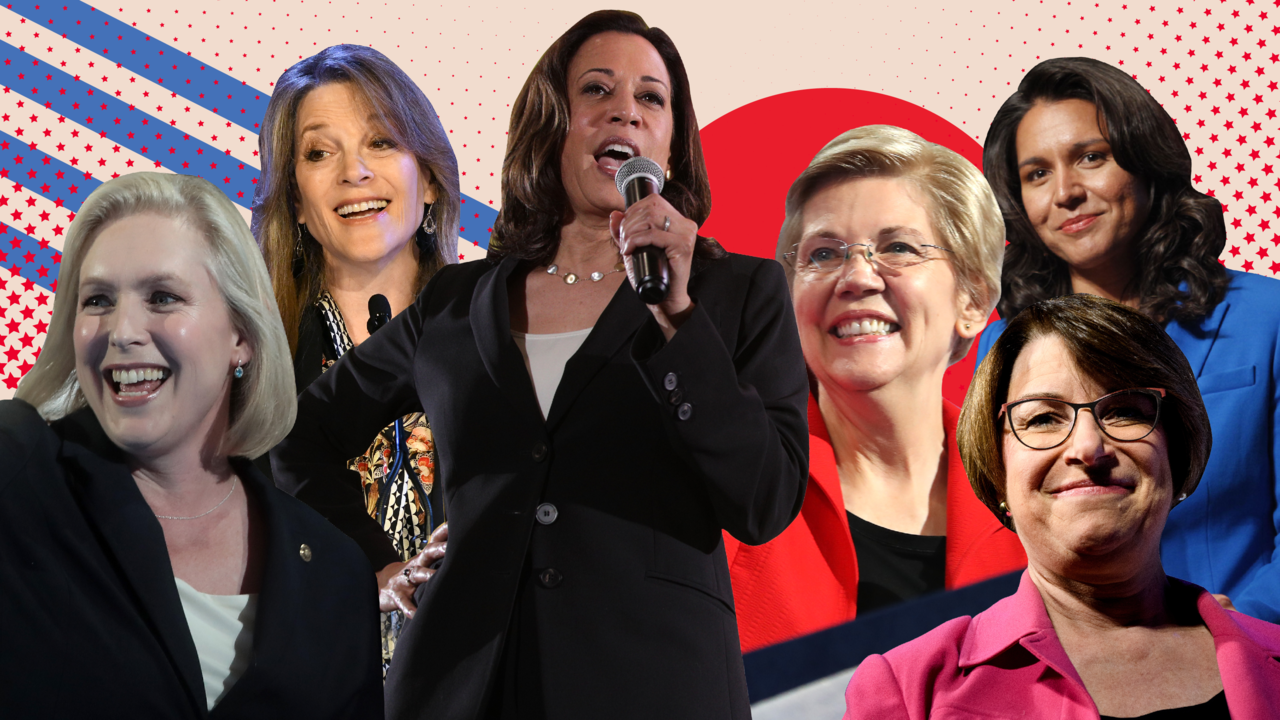
What to Expect From the Six Female Candidates Taking the Stage at the Democratic Debates


Two nights. 20 candidates. Six hopefuls who happen to be women. After months of anticipation, the Democratic debates are finally here—and are expected to be like nothing we’ve ever seen before. Taking place on June 26 and 27, from 9 p.m. to 11 p.m. EST, each night will feature 10 candidates selected at random to avoid putting all the top-tier Democrats on the same night.

First up? Tonight, Senator Elizabeth Warren (D-Mass.), who has pulled ahead in the polls in recent weeks, squares off against New York City Mayor Bill de Blasio, Congressman Tim Ryan (D-Ohio), former Secretary of Housing and Urban Development Julián Castro, Senator Cory Booker (D-N.J.), former Congressman Beto O’Rourke, Senator Amy Klobuchar (D-Minn.), Tulsi Gabbard (D-Hawaii), Governor Jay Inslee (D-Wash.), and former Congressman John Delaney. Then comes some of the heavier hitters. On Thursday, former Vice President Joe Biden, South Bend Mayor Pete Buttigieg, Senator Bernie Sanders (I-Vt.), Senator Kamala Harris (D-Calif.), Senator Kirsten Gillibrand (D-N.Y.), Andrew Yang, Marianne Williamson, John Hickenlooper, former governor of Colorado, Senator Michael Bennet (D-Colo.), and Congressman Eric Swalwell (D-Calif.) will all face off.

While the topics of the debate haven’t been announced, NBC has shared who will be asking the questions. There will be five moderators for the two nights, including Today co-anchor Savannah Guthrie, NBC Nightly News host Lester Holt, Meet the Press moderator Chuck Todd, MSNBC host Rachel Maddow and Noticias Telemundo host José Diaz-Balart.

The debates will be available to watch on NBC, MSNBC, and Telemundo and free to stream on NBCNews.com, MSNBC.com, the NBC News app, and all Telemundo digital platforms. But before you get your popcorn (and much-needed glass of wine) out to watch the debates, here’s everything you need to know about the female candidates’ strategies for the big night.

Senator Kamala Harris (D–Calif.)

When She’ll Appear: The California senator will take the stage during the second night of the debates.

What She’ll Talk About: Harris recently proposed a massive tax cut for middle-class families, known as Livable Incomes for Families Today. It’s the most robust piece of policy on her platform and would provide refundable tax credits to families, and allow them to receive their benefits on a monthly basis. Harris will definitely try to touch on it, as well as her support of “Medicare for All.”

How They’ll Attack Her: Harris hasn’t been able to shake her “tough on crime” past in her campaign so far. While serving as the first female attorney general of California, she supported some criminal justice stances that some consider conservative. For example, she enforced an anti-truancy program and fought to release fewer incarcerated people. She’s already had to defend her record since announcing her run, so if anybody criticizes Harris, this is most likely how they’ll go for the jugular.

Senator Elizabeth Warren (D–Mass.)

When She’ll Appear: Warren will take part in the first night of the debates. According to The Hill, many think Warren got the “short end of the stick” being assigned to the first night, as this prevents her from debating Biden and Sanders, her closest opponents in the polls who will both appear during night two.

What She’ll Talk About: “Warren Has a Plan for That” has become the tagline of her campaign, and that’s exactly what she’ll hit on—her policies. Some of her proposals include a new tax on Americans with a net worth of $50 million or more, and would also tax billionaires an additional 1 percent. The economy is Warren’s passion point, and she’s also likely to discuss her proposed Accountable Capitalism Act, which would redistribute trillions from American corporations’ to the middle class.

Source link

Categories
Health

Women and Minorities Outnumber White Men as Democratic House Nominees for the First Time Ever


This year has already been heralded as a year that women have made unprecedented gains when it comes to the number of female candidates leading up the November’s midterm elections.

But the surge isn’t limited to women—there have also been increased numbers of people of color and first-time candidates running. And now that wave has placed white men in the minority for one of the very few times in political history when it comes to Democratic house races, a new analysis from Politico finds.

According to the report, women in the Democratic Party have secured 180 House nominations this election cycle, up from the previous record of 120, according to Rutgers’ Center for American Women and Politics. Additionally, there are 133 nominees of color, and 158 first-time candidates (some of these categories overlap with one another).

A groundswell of women began showing interest in running for office following the 2016 presidential election, and they have made history at all levels of government. Some key records include an all-time high for female governor candidates and U.S. Senate nominees running in a single year.

To add to it all, women have been pulling off stunning wins, particularly in House primaries. Alexandria Ocasio-Cortez shocked most of the country when she beat 10-term incumbent Joe Crowley in New York’s Fourteenth District and Ayanna Pressley followed suit in Massachusetts when she defeated another 10-term incumbent, Mike Capuano, a surprise to no one watching her political career. These wins bode well for other progressive candidates who represent a buck in the political status quo.

The midterms are still weeks away, so it remains to be seen how increased diversity in the candidate pool will actually affect final races. Women and people of color make up less than 20 percent of lawmakers in the 115th Congress—and that means there’s still so much more room to make the government look reflective of the people it represents.

In a pivotal election year, Glamour is keeping track of the historic number of women running (and voting) in the midterm elections. For more on our latest midterm coverage, visit www.glamour.com/midterms.

Related Stories:

Women Continue to Make History in an Election Year That’s Already Shattering Records

I’m a Woman in a Battleground State. Here’s What Politicians Don’t Understand About Me.


Source link

Categories
Health

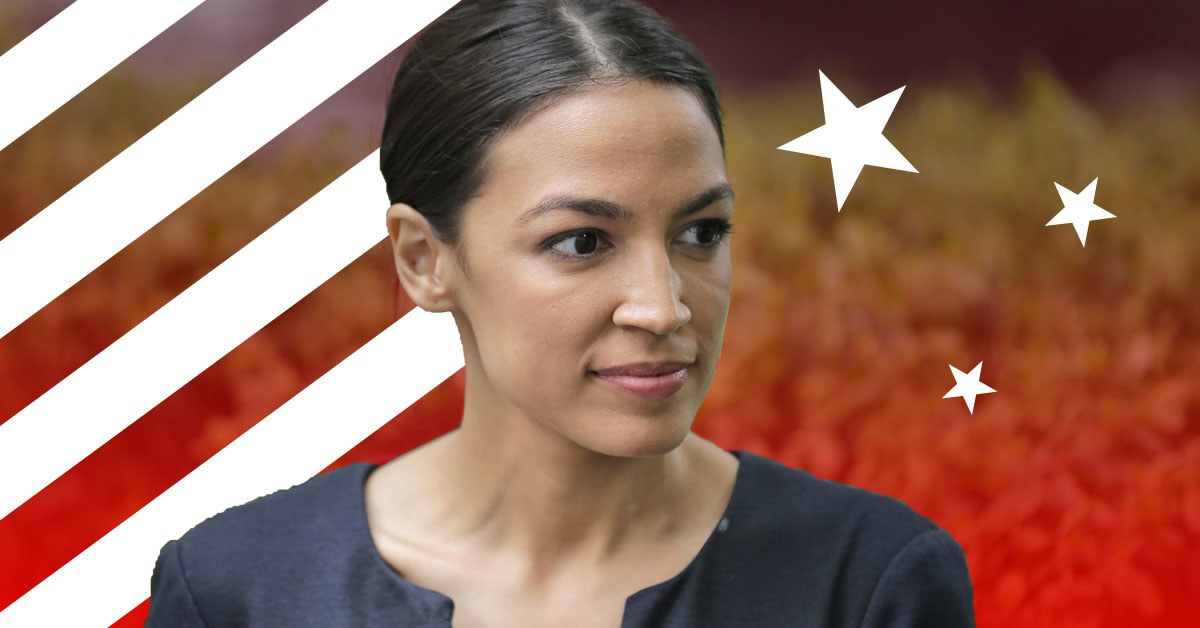
Democratic Voters Wanted Something Different. They Got Alexandria Ocasio-Cortez.


When Alexandria Ocasio-Cortez set out to topple one of the most powerful Democrats in Congress, only one thing was certain: The odds were not in her favor.

On Tuesday night, she beat those odds: The 28-year-old Latina crushed incumbent Rep. Joe Crowley in her first run for office—and his first primary challenge since 2004.

Victory in hand, Ocasio-Cortez thanked her supporters and made a prediction. “This is the start of a movement,” she tweeted.

It’s a simple statement that gives rise to a lot of questions.

It’s a big deal that Ocasio-Cortez fought her way to a win in New York’s 14th Congressional District. After all, Crowley is no back bencher. He heads the House Democratic Caucus. There’s been talk of him becoming speaker. He had money. Still, voters looked at that and resoundingly dumped Crowley in favor of a sweeping progressive vision carried by a community activist (and self-identified democratic socialist) half his age.

The Ocasio-Cortez campaign might have been a longshot, but it wasn’t a fluke: In a midterm cycle that’s generated excitement around contests that could elevate female candidates, including women of color, Ocasio-Cortez presented herself as someone not only for, but of, the people of an ethnically diverse district.

She appealed to working class voters by framing her campaign as a chance to break free of centrist compromises and snugly embrace a left-leaning platform: A universal jobs guarantee. Free public college. The end of ICE, for-profit prisons, and corporate money in politics. Her agenda bore more than a passing resemblance to the kind of planks offered by the presidential hopeful she backed in 2016, Bernie Sanders. On the socialism issue, Vogue quoted Ocasio-Cortez as saying, “When we talk about the word socialism, I think what it really means is just democratic participation in our economic dignity, and our economic, social, and racial dignity.” She is a member of Democratic Socialists of America, which describes itself online as an activism group, not a political party, and specifies, “As we are unlikely to see an immediate end to capitalism tomorrow, DSA fights for reforms today that will weaken the power of corporations and increase the power of working people.”

And up against a better-funded candidate, Ocasio-Cortez weaponized her disadvantage in campaign cash by telling voters, “We’ve got people. They’ve got money.” The strategy—and a lot of legwork—carried the day, but it also matters that Crowley represented a district that’s seen big demographic changes since he took office in 1998 and that he’d opened himself up to criticism by sending his kids to school in Virginia, not New York.

While the race involved only one district, two candidates and fewer than 30,000 voters, Christina Greer, an associate professor of political science at Fordham University, told Glamour in a phone interview that the Ocasio-Cortez win suggests Democrats haven’t resolved internal divisions exposed in 2016, when Sanders electrified young progressives by taking on the more moderate Hillary Clinton.

“I do think as far as the party is concerned, [this] particular win signals to establishment Democrats that clearly voters want change,” she said, “and it doesn’t matter how many years or decades you’ve been in office: If there’s a message that resonates with voters, we will vote you out.”

Among insurgents who think they have a winning message, “We’re seeing they’re not waiting for these folks to give up their seats,” Greer said. “They’re coming to take it.”

Tracy Sefl, a Democratic strategist who has worked with Hillary Clinton, said it’s better to interpret contests like NY-14 as showing there are more routes to office than there used to be instead holding up any one particular case as the prototype for a win.

“If there’s anything that it all means, it’s that the usual rules, the tried-and-true playbook, doesn’t apply [anymore],” she said. “That has been true since the day Trump won the election.”

Strategist and commentator Symone Sanders, who worked on the Bernie Sanders campaign, contended that what happened Tuesday night in New York and elsewhere shows the party doesn’t need to pressure candidates to soft-pedal why they’re running: “You can be a progressive person, and stand in your truth and in your values, talk about those things on the campaign trail, and if you’ve got a good ground game, you can win,” she said.

As to the idea that Crowley tanked because he “didn’t look like the district anymore, that’s just not what it is, because he has done really great work, and he should, in fact, be commended,” Sanders said. “But the fact of the matter is, there were new voters who were primed and ready for someone to speak to them, and the other candidate spoke to them. So she won.”

Some analysts saw Tuesday’s outcome as a rejection not just of Crowley, but of House Democratic Leader Nancy Pelosi and the direction of the party itself. There was some evidence to support the theory: Pelosi rushed to burnish Crowley’s legacy—and minimize his defeat—in a post-primary statement that specifically celebrated his “relentless determination to defend the inclusive America symbolized by the Statue of Liberty.”

The Democratic National Committee’s official response saluted Crowley too, but also made a point of saying Ocasio-Cortez “represents an important voice in our party and the next generation of Democratic leaders. She is an inspiration, and we know she will be a tireless fighter for working families.”

President Donald Trump made a point of mocking the Democrats as being in a general state of “turmoil.” While the president also took a personal jab at Crowley, it’s not hard to see the political utility of suggesting the opposition can’t get it together.

The Republican National Committee’s reaction to the vote, meanwhile, offered a preview of a double-edged attack designed to slime establishment Democrats as too extreme for mainstream America: “If there was any doubt that their party has moved drastically to the left, Democrats just elected a self-avowed socialist over the current Chair of the House Democratic Caucus.”

Asked by Glamour whether the optics of Ocasio-Cortez’s great night (and Crowley’s bad one) would reverberate through November, a Democratic Party aide insisted voters in NY-14 came out to make a choice about their own district, “not to send a message about a member of Congress from California, Washington, or anywhere else.”

“As much as beltway insiders may want to try to paint this as a story about Washington, D.C., it’s not — it’s a story about the Bronx and Queens.”

Related Stories:

Everything You Need to Know About Alexandria Ocasio-Cortez, the Millennial Who Beat Top Democrat Joe Crowley

Women in These 8 States Made Huge Strides in Tuesday’s Primary Elections


Source link

Categories
Health

Primary Takeaways: A Big Win for Democratic Women in Virginia and a Sexist Narrative in North Dakota


Another round of primary elections meant more big wins for women this week, notably in the commonwealth of Virginia where there are no Democratic women in Congress currently.

But Tuesday night may have changed that, come November.

Democratic women won three House primaries in Virginia last night. This is just the latest example of the party’s surging female demographic in the Trump era.

  • Democrat Jennifer Wexton, a state senator, now goes up against vulnerable incumbent Republican Rep. Barbara Comstock in VA-10.

  • Democrat Abigail Spanberger, formerly of the CIA, will challenge Tea Party sensation Dave Brat, who famously won his VA-7 seat by knocking out former House Majority Leader Eric Cantor.

  • Democrat Elaine Luria’s primary win gives her a shot at unseating GOP Rep. Scott Taylor in a VA-2 general election battle between two Navy veterans. (Another Democratic woman, Leslie Cockburn, previously locked up the VA-5 nomination at the party convention; a book she wrote with her husband years ago on US-Israeli relations has led to questions about whether she is anti-Semitic.)

Also in Virginia, former Hillary Clinton running mate, Tim Kaine, will compete for re-election to the U.S. Senate against controversial GOP nominee Corey Stewart, who’s best known for things like defending Confederate monuments and appearing with Jason Kessler, organizer of the Charlottesville white nationalist rally during which counter protester Heather Heyer was hit by a car and killed.

There’s a sexist narrative brewing in North Dakota:

In another notable win, North Dakota Democratic Senator Heidi Heitkamp will now go on to face GOP Rep. Kevin Cramer in a bid for another term. Heitkamp is already in a tense situation just based on the numbers, given that Donald Trump won her state by 36 points and she’s trying to keep her job while balancing her relationships with both her president and her party.

But there’s an added layer to the story framed around Heitkamp’s interactions with Trump—and the fact that she’s a woman. Per a Washington Post report, Cramer is upset that the president gave Heitkamp a shout-out and a handshake at the recent banking bill signing. He also accused her of being “insecure” and trying to stand as close to Trump as possible during the event.

“Have you ever watched the video? It’s obscene,” Cramer told the Post.

Taking it a (sexist) step further, he insinuated that the President’s treatment of Heitkamp is based on the fact that she is a woman. “I do think there’s a little difference in that she’s a woman,” Cramer said. “That’s probably part of it — that she’s a, you know, a female. He doesn’t want to be that aggressive, maybe. I don’t know.” Bear in mind, Trump has had no qualms getting politically aggressive with women in the past. Just ask Hillary Clinton, Elizabeth Warren, and Kirsten Gillibrand.

Or Claire McCaskill, as Heitkamp herself points out. “Well, that wouldn’t explain Claire. I think she’s a woman, right?” Heitkamp said of the Missouri Democratic Senator, whom Trump has criticized. “That theory falls apart almost immediately.”

Needless to say, this race will be an interesting one to watch over the next few months.

Here are the other primary results you might have missed from around the country:

In South Carolina, Rep. Mark Sanford conceded a close GOP primary in which Trump had endorsed his challenger, Katie Arrington. Trump hate-tweeted against Sanford while the polls were still open, reminding SC-1 voters of the weird scandal in which Sanford (then the married governor of South Carolina) went off the grid and lied about being on a hiking trip when he was really hanging with his girlfriend in Buenos Aires. Arguably, it was an ironic line of attack for a president who has been married three times and repeatedly called to task for infidelities, but the Sanford upset might also highlight the price Republicans can pay in the 2018 midterms for being critical of Trump.

Also in South Carolina, Democrat Archie Parnell won a four-way primary for the chance to go up against GOP Rep. Ralph Norman in November. This is all despite his admission that he abused his ex-wife 45 years ago in an incident she said made her fear for her life and which led to their 1974 divorce. The Democratic Party and Parnell’s campaign staff shunned him after his history came to light, but he says his SC-5 win shows people believe, “You don’t have to be defined by your worst mistake. You don’t have to be cast aside. You are not alone. You can be better. And, together, we can be better.”

In Maine, Janet Mills is currently leading in the Democratic primary for governor. Mills is the first female attorney general of Maine and, if elected governor in November, would be the first woman to hold that office. However, Maine is trying out ranked-choice voting for the first time in this race, and a winner hasn’t been called yet. (Under this setup, also known as the instant runoff system, voters pick a first choice, a second choice, and so on. If no candidate wins an outright 50% of the vote, they distribute the votes of the candidates at the bottom of the list until someone gets a majority and is declared victor.) Elsewhere, the mayor of Waterville, Maine survived a recall vote after having tweeted “Eat it” at Florida student David Hogg while sticking up for Laura Ingraham amid the ad pullouts generated by her post-Parkland remarks about guns.

In Nevada, Democratic philanthropist Susie Lee will go up against GOP businessman and repeat candidate Danny Tarkanian to fill the NV-3 House seat of Democratic Rep. Jacky Rosen, who is now her party’s nominee to topple incumbent GOP Senator Dean Heller. That could be a tough race for Heller, who is seeking re-election as a Republican in a state that went for Hillary Clinton in 2016.

And so, the march to the November mid-terms continues.


Source link

Categories
Health

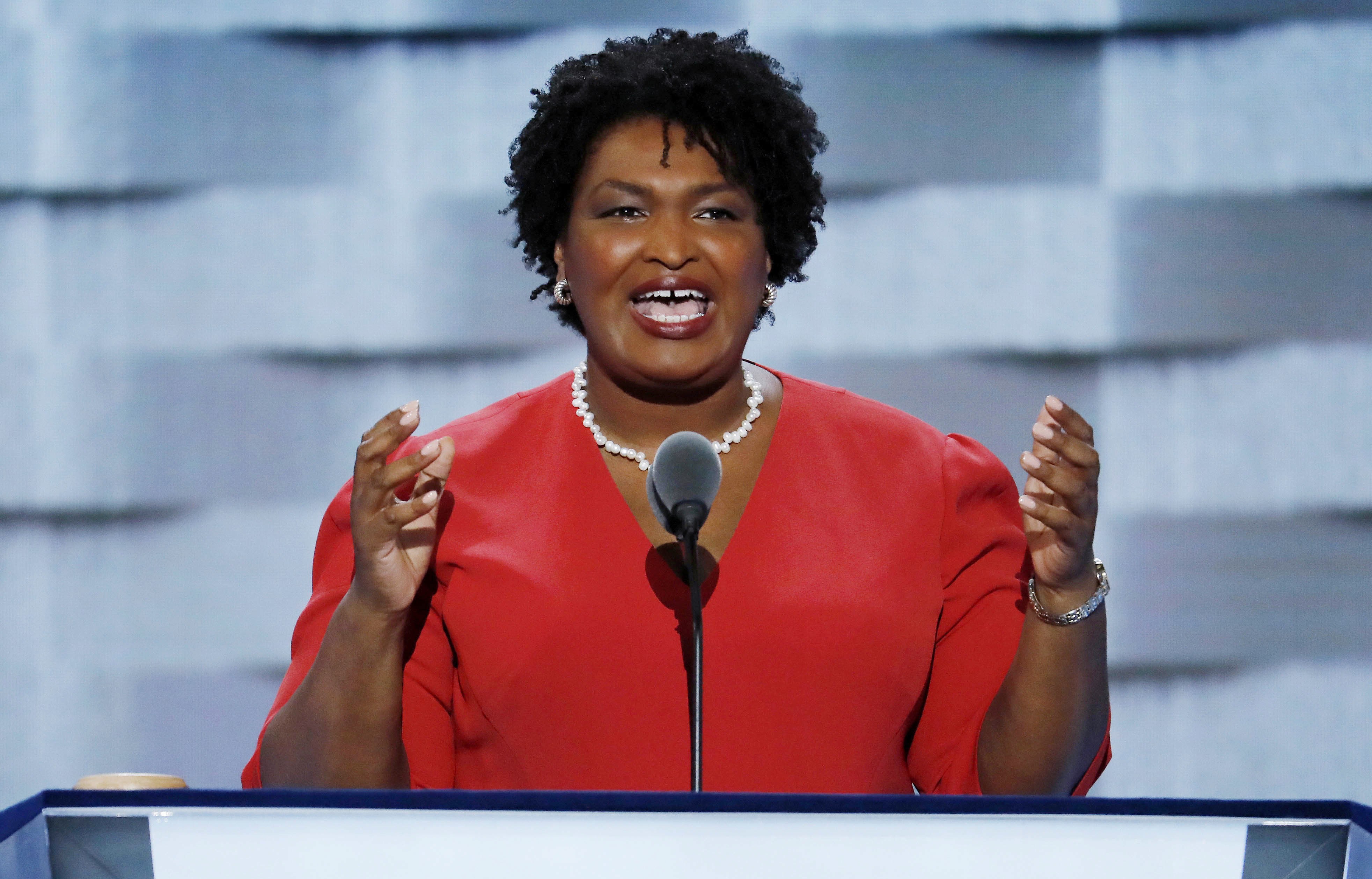
With Georgia Democratic Primary Win, Stacey Abrams Is One Step Closer to Becoming the First Black Woman Governor


Georgia Democrats handed Stacey Abrams a landmark win in Tuesday’s primary, propelling her to a shot at becoming America’s first black woman governor.

The contest between Abrams and Stacey Evans was bound to make history no matter who won: no woman has ever been the Democratic nominee for Georgia’s top job.

Right now, women run the state houses of Alabama, Iowa, New Mexico, Oklahoma, Oregon and Rhode Island. There are currently no sitting black governors at all.

Abrams declared victory in a 9 p.m. Facebook post, saying her win belonged to “everyone who believed that a little Black girl who sometimes had to go without lights or running water – who grew up to become the first woman to lead in the Georgia General Assembly – could become the first woman gubernatorial nominee from either party in Georgia’s history.”

Georgia’s “Stacey vs. Stacey” showdown came in a midterm year that’s drawn a record number of female candidates, although many face steep challenges to ultimately winning office.

The high-profile race played out in a traditionally Republican southern state where voters must choose a successor to term-limited Republican Gov. Nathan Deal. Democrats are hoping to make inroads in the Peach State, where Donald Trump convincingly defeated Hillary Clinton by about 51 percent to 46 percent in the 2016 presidential election.

Abrams attracted endorsements from Clinton and other marquee Democrats in the leadup to her decisive primary win over Evans. Whether she can defeat the GOP nominee to break the next glass ceiling isn’t yet clear.

As put to Glamour Tuesday by University of Georgia associate professor of political science Audrey Haynes, Democrats in the South tend to run moderates who “can appeal to pragmatic voters who may straddle the two major political parties, or generally, appeal to more educated white Republican voters who are fiscal conservatives [and] law-and-order oriented, but not as invested in the culture war.”

That battle plan, Haynes said, has been in part based on who historically shows up at the polls in past midterm election cycles. “Republican voters consistently turn out; minority voters less so. But that may be changing, particularly when you have a candidate who is visibly identifiable as a member of a minority group,” she said. “If Abrams wins by turning out large numbers of minority voters across the state, that will be a game-changer. But there are questions about her appeal to that more moderate voter.”

Analysts have taken specific note of the role black women have played in recent elections. Their participation in the 2012 presidential vote outstripped that of other groups, and they overwhelmingly supported Hillary Clinton in 2016 while white women split between Clinton and Trump. African-American women also had a significant role in the victory of Alabama Democrat Doug Jones in a widely watched 2017 special election for U.S. Senate.

A SurveyUSA poll conducted this month found that in a hypothetical November matchup for governor, Republican Lt. Gov. Casey Cagle led Abrams 46 percent to 41 percent, with 14 percent of likely voters undecided.

Abrams ran as a Yale-educated lawyer, businesswoman, novelist and veteran of the Georgia House of Representatives. Having experienced discrimination in her own life, as well as struggling with personal debt, she said as governor she’d champion “a vision for Georgia where equality fosters prosperity, and where everyone has the opportunity to succeed – not just survive.”

Evans, meanwhile, said the challenges of her life, including an impoverished childhood, had fueled and informed her achievements. She worked her way through college, supplementing scholarships with jobs as a telemarketer and waitress, before going on to law school, a career as an attorney, and election to the Georgia House.

The two women, both in their 40s, shared many of the same Democratic planks during a campaign that at times exposed racial tensions.

In a notable campaign flashpoint, Evans accused Abrams of having shorted the disadvantaged while a legislator by buying into a Republican-led deal that slashed scholarship funding. Per the Washington Post, Abrams countered that the program she supported “preserved money for pre-kindergarten programs and staved off even tougher academic requirements she says Republicans wanted for all four-year award recipients.”

According to an NBC News analysis, television and radio ad spending on the Democratic primary ran into the millions: The Evans for GA Governor group plunged $1.5 million into the race. Abrams for GA Governor spent $475,000, but other pro-Abrams groups, such as BlackPAC and PowerPAC, threw in more than $2 million.

Darrell West, vice president and director of governance studies at the Brookings Institution, said the primary highlighted alternative Democratic approaches to the electorate for women running in a heated 2018 cycle. Abrams, he said, “focused on an appeal to progressive voters and people of color” in hopes of riding a “wave of anti-Trump sentiment into the general election.” By contrast, West said an Evans win could have been interpreted as the primary electorate betting “a moderate Democrat has a better shot at beating a male Republican in the general election.”

Jeanne Zaino, a political science professor at Iona College, said while gender will unavoidably be an issue in a November vote that pits a Democratic woman against a Republican man, “what also matters is their ability to appeal to voters on the ground and address issues of concern to Georgian voters, as well as the all-important issues of fundraising and turnout.”

Zaino noted that “among Democrats across the nation, in the special elections we’ve seen so far that turnout has been rivaling presidential election years.”

Given the state’s traditional Republican leanings, she cautioned, “It may be too early to call Georgia a swing state or talk about a ‘blue wave’ sweeping Georgia.”


Source link

Categories
Health

Democratic Senators Give Away Donations From Harvey Weinstein Over Harassment Allegations


Multiple Democratic senators have announced plans to give Harvey Weinstein’s campaign donations to charity following a New York Times investigation revealing that the Hollywood studio executive had reached eight settlements over the course of almost three decades with women who alleged he sexual harassed them .

According to Variety, the list of senators returning Weinstein’s political contributions began with Sen. Patrick Leahy (D-Vt.), who announced on Thursday plans to donate the $2,700 to the Women’s Fund at the Vermont Community Foundation. Sens. Martin Heinrich (D-N.M.) Richard Blumenthal (D-Conn.), Elizabeth Warren (D-Mass.), Cory Booker (D-NJ), Kirsten Gillibrand (D-NY) Al Franken (D-MN), and Chuck Schumer (D-NY) have since followed suit, disavowing Weinstein and diverting his contributions to nonprofit organizations advocating for women’s rights and victims of harassment and assault.

The Democratic National Committee, which received a reported $30,890 from Weinstein, has also pledged to donate the money to women’s organizations.

“The allegations… are deeply troubling,” the DNC said in a statement, according to the Daily Beast. “The Democratic Party condemns all forms of sexual harassment and assault.”

The DNC continued: “The DNC will donate over $30,000 in contributions from Weinstein to EMILY’s List, Emerge America and Higher Heights because what we need is more women in power, not men like Trump who continue to show us that they lack respect for more than half of America.”

Weinstein also donated to multiple Hillary Clinton campaigns between 1999 and 2016; as of this writing, she has yet to release a statement on Weinstein and whether she’ll go the way of her fellow Democrats. Between his own contributions and other fundraising efforts, Weinstein donated $679,275 for former President Barack Obama’s 2012 reelection campaign. Like Clinton, Obama has so far remained silent on Weinstein.

Variety‘s report states that these contributions make up Weinstein’s 20 years’ worth of political spending, which amounts to “more than $1.4 million in total to federal candidates, parties, and political action committees since 1990.”

Weinstein’s deep ties to the party, however, extend beyond finances. Weinstein often acted as a kind of social liaison between Hollywood and D.C., arranging a meeting between former Vice President Joe Biden and actor Bradley Cooper in 2012, and bringing Malia Obama on as an intern at his company earlier this year.

These relationships have made the scandal surrounding Weinstein’s treatment of women an occasion for the Republican Party to turn the tables on politicians who decry the GOP’s anti-woman policies.

“During three-decades worth of sexual harassment allegations, Harvey Weinstein lined the pockets of Democrats to the tune of three-quarters of a million dollars,” Republican National Committee Chairwoman Ronna Romney McDaniel said in the statement. “If Democrats and the [Democratic National Committee] truly stand up for women like they say they do, then returning this dirty money should be a no brainer.”

So far, for most Democrats, it has been.


Source link