Categories
Health

Letitia James Wins Attorney General Primary In New York


New York could well be on its way to electing its first black female attorney general.

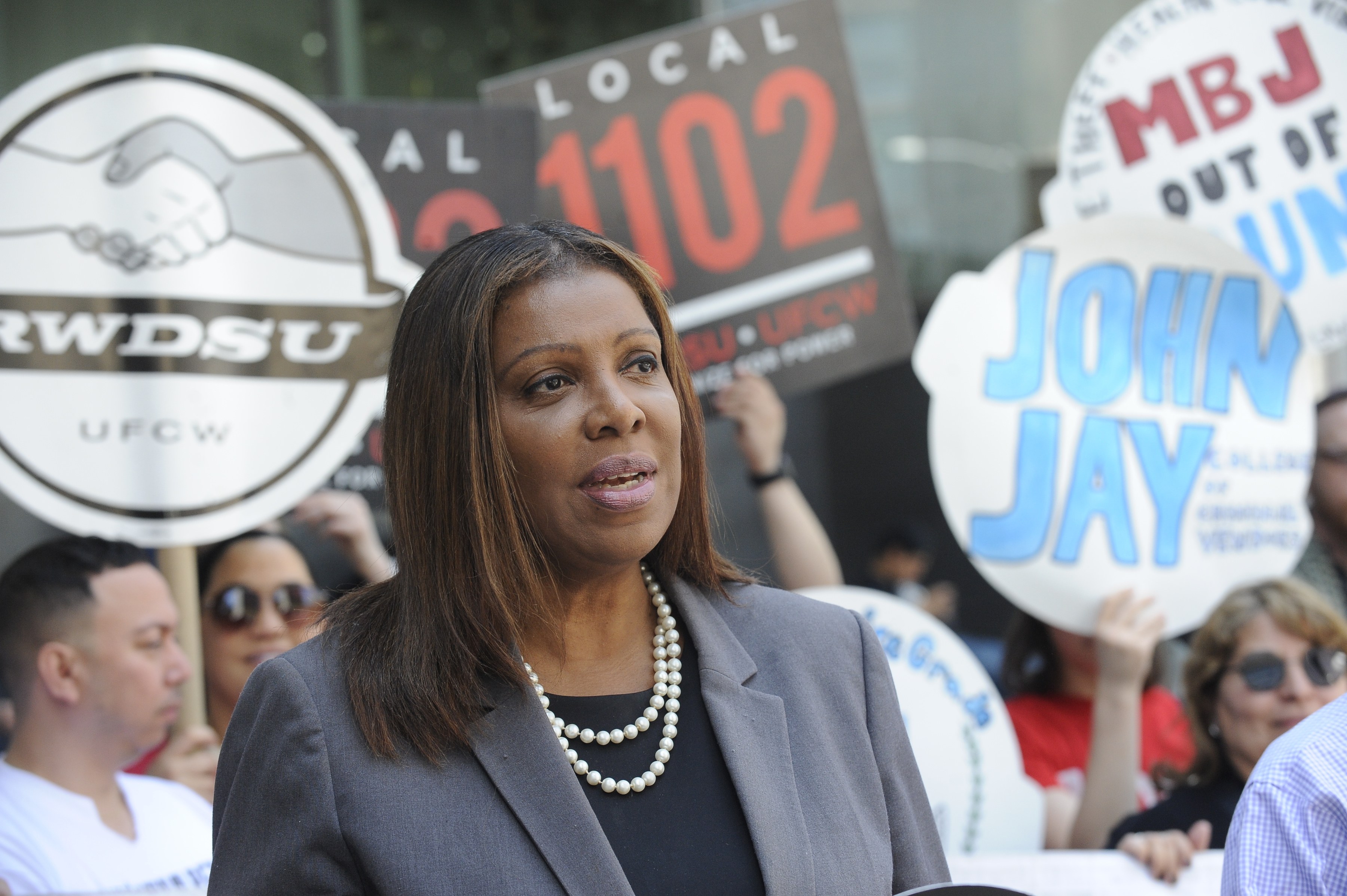
Letitia James overpowered three rivals in Thursday’s Democratic primary, likely paving the way for her to become New York’s top law enforcement officer—and the first woman of color elected statewide.

James, currently New York City public advocate, is a former Brooklyn councilwoman and public defender.

She still has to win November’s general election. But in a heavily Democratic New York, James is strongly favored to earn the post formerly held by Eric Schneiderman, who resigned in the wake of a New Yorker expose that detailed claims he abused women while publicly championing the #MeToo movement.

James carried the endorsement of Gov. Andrew Cuomo into her successful fight for the Democratic AG nomination against law professor and author Zephyr Teachout, Rep. Sean Patrick Maloney, and Verizon executive Leecia Eve.

In another closely watched match, Cuomo decisively defeated his own primary foe, Cynthia Nixon—although the actress and activist scored more than 30 percent of the vote in her underdog challenge against him.

A win’s a win, but Nixon’s voter percentage is notable for a sitting Democratic governor who has his own progressive bona fides…and whose name has been in the mix of potential 2020 presidential contenders (Cuomo did say during a debate with Nixon, however, that he’ll serve out his term as governor if re-elected in November.)

Nixon grabbed headlines with her bid to topple Cuomo—and not just as a former Sex and the City star or New York’s would-be first female—and openly LGBT—governor. She was always considered an major longshot to unseat incumbent Cuomo—even though his administration has been dogged by corruption scandals. But Nixon’s energetic campaign spoke to the core of an election season focused heavily on a flood of women entering the political arena and on progressives trying hard to push the Democratic establishment to the left.

“We have fundamentally changed the political landscape in this state,” Nixon said in her Thursday night concession speech.

“I see the future of the Democratic Party in this room tonight. The future of the Democratic Party is young, it is diverse, it is progressive; and yes, the future is female,” said Nixon, who fell short of becoming the sixteenth woman nominated for governor in a record-breaking midterm year.

The unapologetically liberal Nixon joined forces with attorney general hopeful Zephyr Teachout, who herself ran against Cuomo for governor four years ago. The two made appearances in front of Trump Tower in Manhattan, contrasting their left-leaning platforms with the Republican president’s conservative nationalism.

Teachout also stumped as a defiant progressive, vowing to wage legal war against Trump as the state’s top lawyer. She campaigned with Alexandria Ocasio-Cortez, the Democratic socialist who shot to fame after defeating an entrenched New York congressman in a major upset. Teachout also showcased her pregnancy during the race, including in an ad that had her laying out her political plans while undergoing a sonogram.

But in the end, it was James who claimed victory, putting her an Election Day away from becoming the fourth black woman in the nation ever elected to an attorney general’s post, according to the non-partisan Gender Watch 2018 project.

“Tonight, we rewrite the history of generations of New Yorkers who have been treated differently simply because of their gender, the color of their skin, the language they speak, the God they pray to, the people they love, or the zip code they come from,” she said in thanking supporters after her win.

At another gathering, Cuomo fans, reportedly, had to hold their victory party without him.


Celeste Katz is senior politics reporter for Glamour. Send news tips, questions, and comments to celeste_katz@condenast.com.

MORE: Florida’s Wait for a Woman Governor Continues, but Diversity Still Wins


Source link

Categories
Health

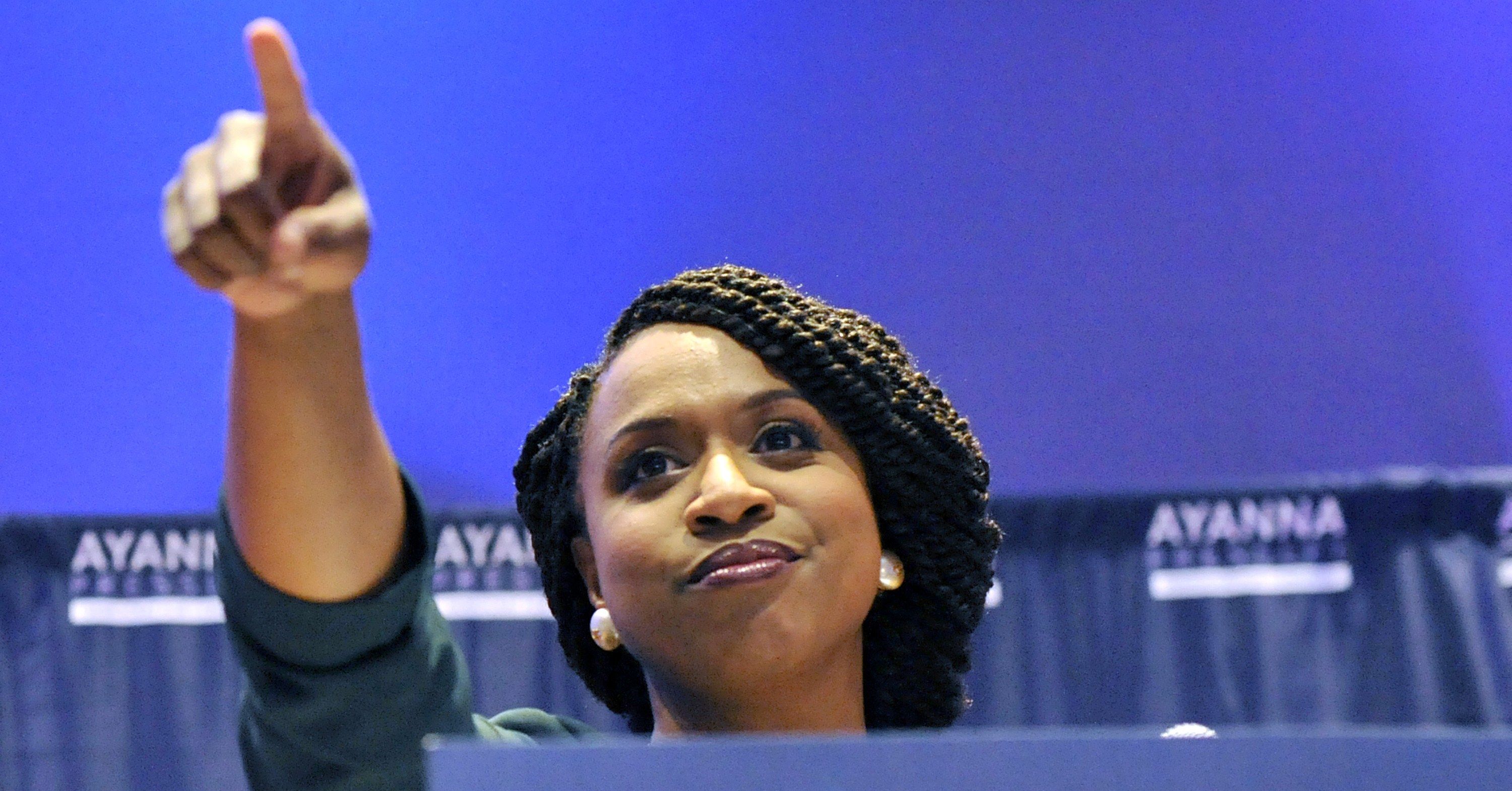
Ayanna Pressley Won the Massachusetts Primary Because She Ran the Best Race


The headlines framed the narrative.

“A Stunner: Ayanna Pressley Topples Michael Capuano,” wrote WBUR. “In Primary Stunner, Pressley Unseats Incumbent,” pronounced the Associated Press. The New York Times chimed in similarly. So did the Los Angeles Times and HuffPost.

The stories teased out some nuance, but all across the media landscape, an overall assessment took shape: In one of the last primaries of this midterm season, one more woman of color beat one more establishment white man at the ballot box. The articles insisted that the race had seemed like a lock for Rep. Michael Capuano, who represented (and had been popular in) his district in Massachusetts for 10 terms.

But then Ayanna Pressley swooped in! An “upset.” And a “stunner.” A vanquisher of familiar political orders! No surprise: Instantaneous comparisons were drawn to Alexandria Ocasio-Cortez, the Democratic Socialist and political newcomer, who crushed Rep. Joe Crowley in New York in June. How else to explain Pressley’s triumph? Commentators insinuated that in the end, voters had picked her as part of a national trend that favors women and minorities, not because she ran a matchless race. Outlets leaned on terms of shock and surprise, with a tone that said, “No one could have anticipated this! Not even us.”

Except, it wasn’t like that at all.

Unlike Ocasio-Cortez, Pressley isn’t a political newcomer—not by a stretch. In 2009 she was elected to the Boston City Council and has served on it ever since. (With that first win, she became the first black woman ever in her seat.) In 2015, Emily’s List handed her their annual Gabrielle Giffords Rising Star Award. She’s helped lead Emerge Massachusetts, an organization that trains women to run for office. She is not 28. She’s 44, just three years younger than Barack Obama was when he was elected president of the United States.

True, Ocasio-Cortez boosted her in June, and Democratic leadership rebuffed her, reluctant as usual to back someone in a seat a Democrat already occupies. But also true? Massachusetts Attorney General Maura Healey endorsed her. She’s popular in the district. Her team ran a pitch-perfect race, with a motto that resonated (“Change Can’t Wait”) and an approach that was cost-effective. It worked.

Her reputation is in fact so storied that when the race was called, writer Rebecca Traister tweeted: “I know I’ve said this before, but I have never been as blown away by a politician as I was the first time I heard Ayanna Pressley speak.”

And Jamilah Lemieux, now an advisor on Cynthia Nixon’s New York gubernatorial bid and a communications consultant and critic, put an even finer point on it: “Ayanna Pressley might be our first Black woman president,” she tweeted. Lemieux didn’t write that to herald some “stunner,” a force no one saw in the distance. She tweeted that three years ago.

Earlier this summer, Glamour interviewed Pressley for our November issue. (Ahem, we were not “stunned” by this win.) In our conversation, Pressley reflected on what it was like to be the first black woman on the Boston City Council—not so much how it felt for her, but how people received her.

“It was always in the recesses of my mind that if we were successful, that I would be a first,” she said. “But it was not the motivation behind my run.” She ran because she knew she could do the work and because she had good ideas. She didn’t run to fit into someone else’s “trend piece.”

“There were so many naysayers who couched my victory solely [as motivated by] voters who wanted to make history,” Pressley said. The narrative frustrated her. “To me, [it] took away from what I had accomplished.”

Ayanna Pressley didn’t stun Boston. She’s not an upset. She ran a brilliant race, and she won. Those who missed her rise? You weren’t paying attention.


Mattie Kahn is a senior editor for Glamour.

MORE: Ayanna Pressley Reacting to Her Historic Massachusetts Primary Win Will Make Your Day


Source link

Categories
Health

Primary Takeaways: A Big Win for Democratic Women in Virginia and a Sexist Narrative in North Dakota


Another round of primary elections meant more big wins for women this week, notably in the commonwealth of Virginia where there are no Democratic women in Congress currently.

But Tuesday night may have changed that, come November.

Democratic women won three House primaries in Virginia last night. This is just the latest example of the party’s surging female demographic in the Trump era.

  • Democrat Jennifer Wexton, a state senator, now goes up against vulnerable incumbent Republican Rep. Barbara Comstock in VA-10.

  • Democrat Abigail Spanberger, formerly of the CIA, will challenge Tea Party sensation Dave Brat, who famously won his VA-7 seat by knocking out former House Majority Leader Eric Cantor.

  • Democrat Elaine Luria’s primary win gives her a shot at unseating GOP Rep. Scott Taylor in a VA-2 general election battle between two Navy veterans. (Another Democratic woman, Leslie Cockburn, previously locked up the VA-5 nomination at the party convention; a book she wrote with her husband years ago on US-Israeli relations has led to questions about whether she is anti-Semitic.)

Also in Virginia, former Hillary Clinton running mate, Tim Kaine, will compete for re-election to the U.S. Senate against controversial GOP nominee Corey Stewart, who’s best known for things like defending Confederate monuments and appearing with Jason Kessler, organizer of the Charlottesville white nationalist rally during which counter protester Heather Heyer was hit by a car and killed.

There’s a sexist narrative brewing in North Dakota:

In another notable win, North Dakota Democratic Senator Heidi Heitkamp will now go on to face GOP Rep. Kevin Cramer in a bid for another term. Heitkamp is already in a tense situation just based on the numbers, given that Donald Trump won her state by 36 points and she’s trying to keep her job while balancing her relationships with both her president and her party.

But there’s an added layer to the story framed around Heitkamp’s interactions with Trump—and the fact that she’s a woman. Per a Washington Post report, Cramer is upset that the president gave Heitkamp a shout-out and a handshake at the recent banking bill signing. He also accused her of being “insecure” and trying to stand as close to Trump as possible during the event.

“Have you ever watched the video? It’s obscene,” Cramer told the Post.

Taking it a (sexist) step further, he insinuated that the President’s treatment of Heitkamp is based on the fact that she is a woman. “I do think there’s a little difference in that she’s a woman,” Cramer said. “That’s probably part of it — that she’s a, you know, a female. He doesn’t want to be that aggressive, maybe. I don’t know.” Bear in mind, Trump has had no qualms getting politically aggressive with women in the past. Just ask Hillary Clinton, Elizabeth Warren, and Kirsten Gillibrand.

Or Claire McCaskill, as Heitkamp herself points out. “Well, that wouldn’t explain Claire. I think she’s a woman, right?” Heitkamp said of the Missouri Democratic Senator, whom Trump has criticized. “That theory falls apart almost immediately.”

Needless to say, this race will be an interesting one to watch over the next few months.

Here are the other primary results you might have missed from around the country:

In South Carolina, Rep. Mark Sanford conceded a close GOP primary in which Trump had endorsed his challenger, Katie Arrington. Trump hate-tweeted against Sanford while the polls were still open, reminding SC-1 voters of the weird scandal in which Sanford (then the married governor of South Carolina) went off the grid and lied about being on a hiking trip when he was really hanging with his girlfriend in Buenos Aires. Arguably, it was an ironic line of attack for a president who has been married three times and repeatedly called to task for infidelities, but the Sanford upset might also highlight the price Republicans can pay in the 2018 midterms for being critical of Trump.

Also in South Carolina, Democrat Archie Parnell won a four-way primary for the chance to go up against GOP Rep. Ralph Norman in November. This is all despite his admission that he abused his ex-wife 45 years ago in an incident she said made her fear for her life and which led to their 1974 divorce. The Democratic Party and Parnell’s campaign staff shunned him after his history came to light, but he says his SC-5 win shows people believe, “You don’t have to be defined by your worst mistake. You don’t have to be cast aside. You are not alone. You can be better. And, together, we can be better.”

In Maine, Janet Mills is currently leading in the Democratic primary for governor. Mills is the first female attorney general of Maine and, if elected governor in November, would be the first woman to hold that office. However, Maine is trying out ranked-choice voting for the first time in this race, and a winner hasn’t been called yet. (Under this setup, also known as the instant runoff system, voters pick a first choice, a second choice, and so on. If no candidate wins an outright 50% of the vote, they distribute the votes of the candidates at the bottom of the list until someone gets a majority and is declared victor.) Elsewhere, the mayor of Waterville, Maine survived a recall vote after having tweeted “Eat it” at Florida student David Hogg while sticking up for Laura Ingraham amid the ad pullouts generated by her post-Parkland remarks about guns.

In Nevada, Democratic philanthropist Susie Lee will go up against GOP businessman and repeat candidate Danny Tarkanian to fill the NV-3 House seat of Democratic Rep. Jacky Rosen, who is now her party’s nominee to topple incumbent GOP Senator Dean Heller. That could be a tough race for Heller, who is seeking re-election as a Republican in a state that went for Hillary Clinton in 2016.

And so, the march to the November mid-terms continues.


Source link

Categories
Health

With Georgia Democratic Primary Win, Stacey Abrams Is One Step Closer to Becoming the First Black Woman Governor


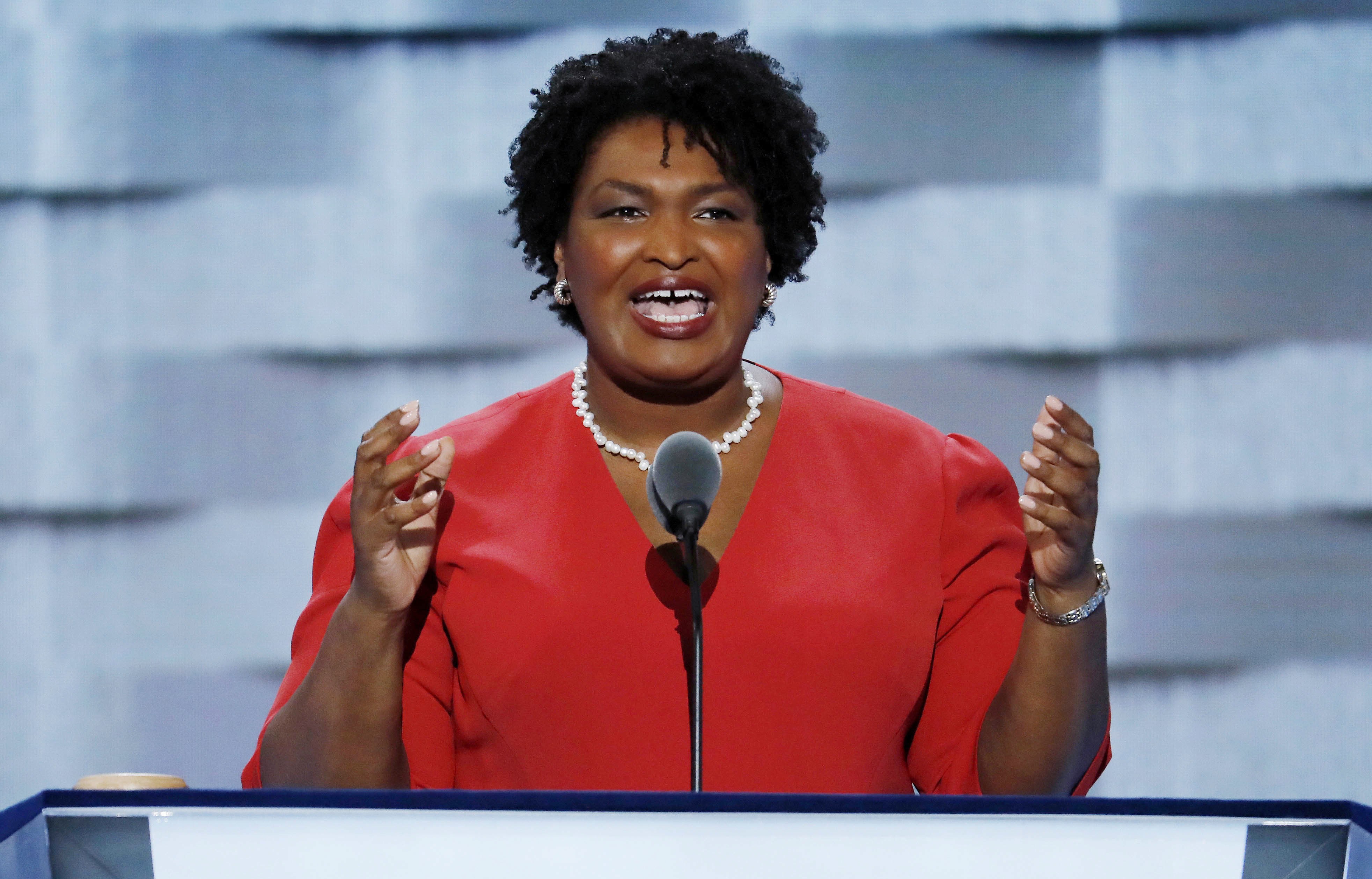
Georgia Democrats handed Stacey Abrams a landmark win in Tuesday’s primary, propelling her to a shot at becoming America’s first black woman governor.

The contest between Abrams and Stacey Evans was bound to make history no matter who won: no woman has ever been the Democratic nominee for Georgia’s top job.

Right now, women run the state houses of Alabama, Iowa, New Mexico, Oklahoma, Oregon and Rhode Island. There are currently no sitting black governors at all.

Abrams declared victory in a 9 p.m. Facebook post, saying her win belonged to “everyone who believed that a little Black girl who sometimes had to go without lights or running water – who grew up to become the first woman to lead in the Georgia General Assembly – could become the first woman gubernatorial nominee from either party in Georgia’s history.”

Georgia’s “Stacey vs. Stacey” showdown came in a midterm year that’s drawn a record number of female candidates, although many face steep challenges to ultimately winning office.

The high-profile race played out in a traditionally Republican southern state where voters must choose a successor to term-limited Republican Gov. Nathan Deal. Democrats are hoping to make inroads in the Peach State, where Donald Trump convincingly defeated Hillary Clinton by about 51 percent to 46 percent in the 2016 presidential election.

Abrams attracted endorsements from Clinton and other marquee Democrats in the leadup to her decisive primary win over Evans. Whether she can defeat the GOP nominee to break the next glass ceiling isn’t yet clear.

As put to Glamour Tuesday by University of Georgia associate professor of political science Audrey Haynes, Democrats in the South tend to run moderates who “can appeal to pragmatic voters who may straddle the two major political parties, or generally, appeal to more educated white Republican voters who are fiscal conservatives [and] law-and-order oriented, but not as invested in the culture war.”

That battle plan, Haynes said, has been in part based on who historically shows up at the polls in past midterm election cycles. “Republican voters consistently turn out; minority voters less so. But that may be changing, particularly when you have a candidate who is visibly identifiable as a member of a minority group,” she said. “If Abrams wins by turning out large numbers of minority voters across the state, that will be a game-changer. But there are questions about her appeal to that more moderate voter.”

Analysts have taken specific note of the role black women have played in recent elections. Their participation in the 2012 presidential vote outstripped that of other groups, and they overwhelmingly supported Hillary Clinton in 2016 while white women split between Clinton and Trump. African-American women also had a significant role in the victory of Alabama Democrat Doug Jones in a widely watched 2017 special election for U.S. Senate.

A SurveyUSA poll conducted this month found that in a hypothetical November matchup for governor, Republican Lt. Gov. Casey Cagle led Abrams 46 percent to 41 percent, with 14 percent of likely voters undecided.

Abrams ran as a Yale-educated lawyer, businesswoman, novelist and veteran of the Georgia House of Representatives. Having experienced discrimination in her own life, as well as struggling with personal debt, she said as governor she’d champion “a vision for Georgia where equality fosters prosperity, and where everyone has the opportunity to succeed – not just survive.”

Evans, meanwhile, said the challenges of her life, including an impoverished childhood, had fueled and informed her achievements. She worked her way through college, supplementing scholarships with jobs as a telemarketer and waitress, before going on to law school, a career as an attorney, and election to the Georgia House.

The two women, both in their 40s, shared many of the same Democratic planks during a campaign that at times exposed racial tensions.

In a notable campaign flashpoint, Evans accused Abrams of having shorted the disadvantaged while a legislator by buying into a Republican-led deal that slashed scholarship funding. Per the Washington Post, Abrams countered that the program she supported “preserved money for pre-kindergarten programs and staved off even tougher academic requirements she says Republicans wanted for all four-year award recipients.”

According to an NBC News analysis, television and radio ad spending on the Democratic primary ran into the millions: The Evans for GA Governor group plunged $1.5 million into the race. Abrams for GA Governor spent $475,000, but other pro-Abrams groups, such as BlackPAC and PowerPAC, threw in more than $2 million.

Darrell West, vice president and director of governance studies at the Brookings Institution, said the primary highlighted alternative Democratic approaches to the electorate for women running in a heated 2018 cycle. Abrams, he said, “focused on an appeal to progressive voters and people of color” in hopes of riding a “wave of anti-Trump sentiment into the general election.” By contrast, West said an Evans win could have been interpreted as the primary electorate betting “a moderate Democrat has a better shot at beating a male Republican in the general election.”

Jeanne Zaino, a political science professor at Iona College, said while gender will unavoidably be an issue in a November vote that pits a Democratic woman against a Republican man, “what also matters is their ability to appeal to voters on the ground and address issues of concern to Georgian voters, as well as the all-important issues of fundraising and turnout.”

Zaino noted that “among Democrats across the nation, in the special elections we’ve seen so far that turnout has been rivaling presidential election years.”

Given the state’s traditional Republican leanings, she cautioned, “It may be too early to call Georgia a swing state or talk about a ‘blue wave’ sweeping Georgia.”


Source link