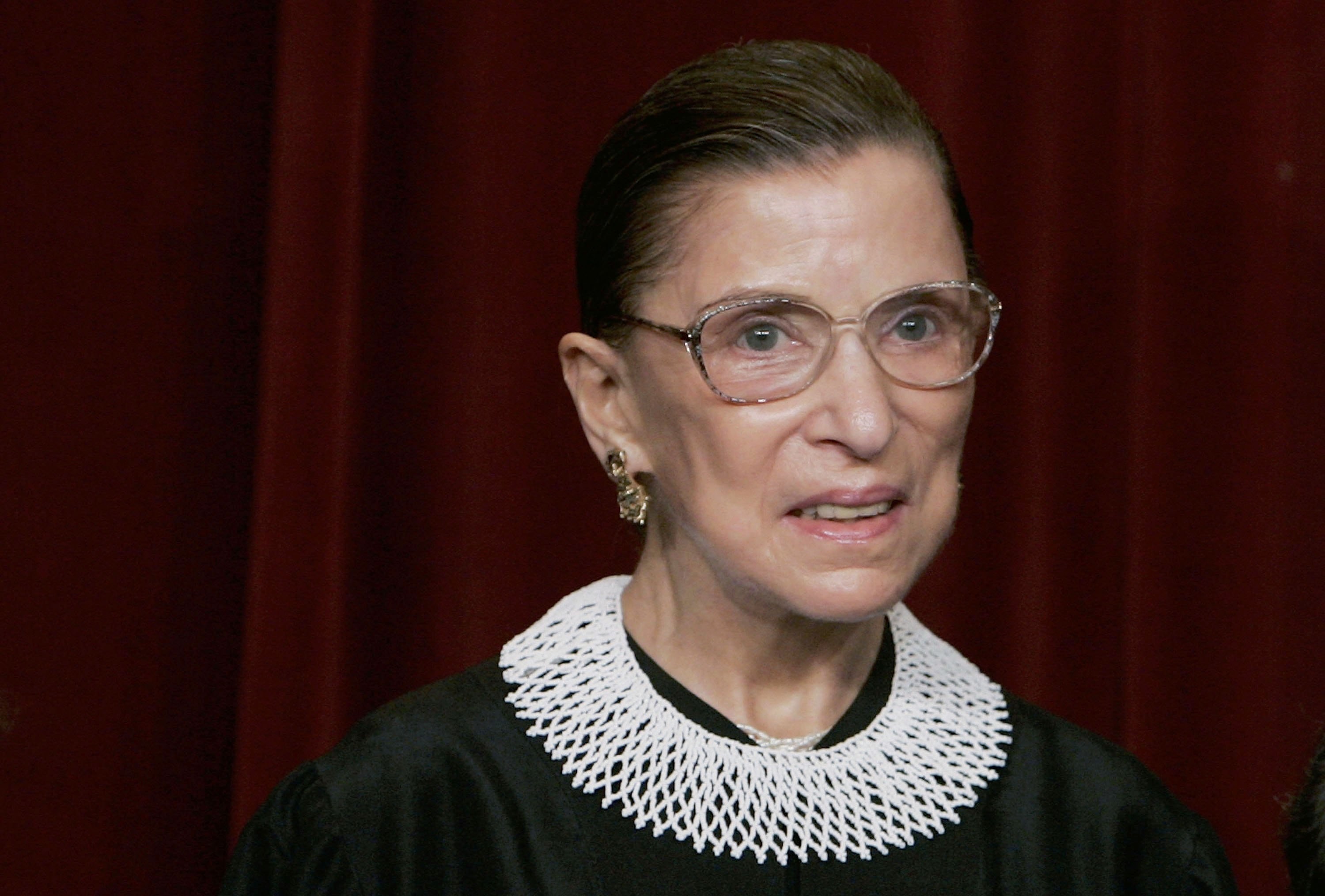
Supreme Court Justice Ruth Bader Ginsburg was hospitalized early Thursday morning after falling in her office Wednesday evening and fracturing three ribs, according to a statement from the court.
“She went home, but after experiencing discomfort overnight, went to George Washington University Hospital early this morning,” the statement said. “Tests showed that she fractured three ribs on her left side and she was admitted for observation and treatment.”
Ginsburg, a lifelong champion of women’s rights, has become a cultural icon and is revered and beloved by feminists across America. The Notorious RBG, as she is often called, was the subject of a documentary earlier this year that covered her incredible career, marriage, and, yes, even her workout routine—which is incredibly impressive for an 85-year-old.
“These days we rarely go out without people—mostly women—asking to take a picture or telling her they admire her,” Ginsburg’s granddaughter Clara Spera wrote of her “Bubbie” for Glamour in May. “It’s equally strange and touching for me to see a young woman, probably my age, ask Bubbie if she can give her a hug.”
Spera further explained her grandmother’s significance to women of all ages. “As a young lawyer, Bubbie won several landmark gender equality cases before the Supreme Court in the 1970s. Most people who wear ‘You Can’t Spell Truth Without Ruth’ T-shirts or sport ‘I Dissent’ tote bags might not be able to name any of them or point to a specific opinion she’s written on the Court since. But they don’t need to,” she says. “They know that her search for justice and for legal and social equality has been relentless. She doesn’t have one case or moment that has defined her career. Instead, to many, she’s a feminist icon because of her tireless persistence at inching us all closer to equality.”
Given the current makeup of the Supreme Court, which shifted toward the conservative side with the confirmation of Brett Kavanaugh in October, and the overwhelming affection for RBG, there were strong reactions to the news of her hospitalization on social media.
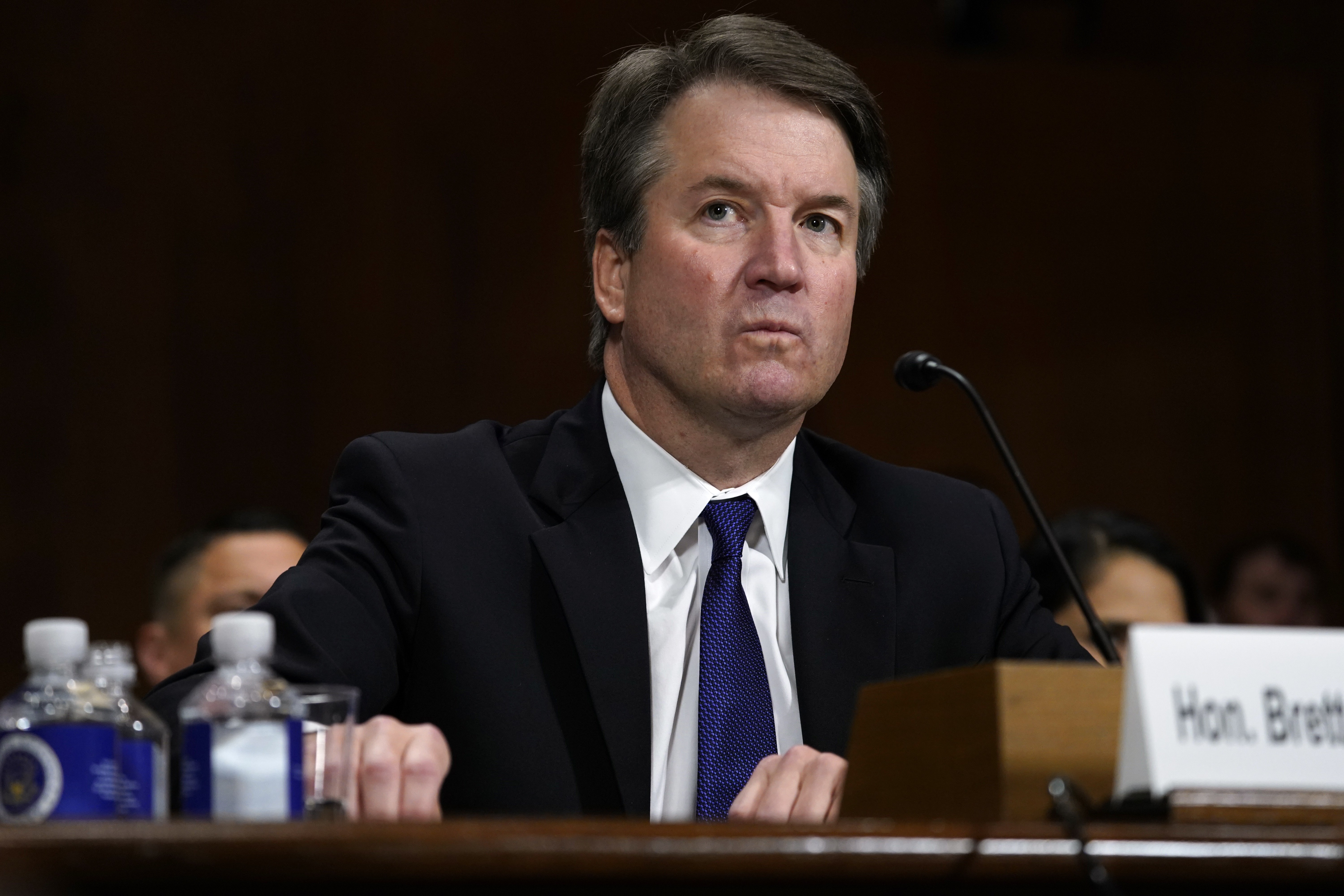
Judge Brett Kavanaugh was confirmed on Saturday as the 114th U.S. Supreme Court Justice. The final vote was the conclusion of a weeks-long process of primary confirmation votes, hearings, and powerful testimony—particularly the testimony delivered by Dr. Christine Blasey Ford, who accused Kavanaugh of sexual assault and took her allegations to the Senate floor, where she unflinchingly and bravely detailed her account to the judiciary committee.
During the confirmation vote Saturday afternoon, protestors could be heard screaming and shouting from the public gallery, with cries of “Shame! Shame! Shame!” and “I do not consent!” Thousands of other protestors surrounded the Supreme Court Building and U.S. Capitol.
Twitter users, of course, took to the platform to express their feelings after Kavanaugh’s final confirmation vote on Saturday.
And finally, there was one strong message that shone through: “November is coming.” Kavanaugh’s confirmation—and nomination—seems to have raised awareness that voting in the upcoming midterm elections is more important than ever.
Americans are poised for the dawn of a new era in federal justice as one of the most divisive Supreme Court nominations in modern history comes to a close. As protestors screamed and shouted from the public gallery, the Senate voted to confirm Brett Kavanaugh three months after his selection by President Donald Trump—weeks marked by public protests that came to a head after three women accused the judge of past sexual assaults.
Republicans, looking to boost their party ahead of November’s midterm election, steamed ahead with the nomination. Finally, on Saturday, the Senate voted 50 to 48 to make Kavanaugh the 114th justice of the high court. Notably, Republican Sen. Lisa Murkowski, from Alaska, voted present instead of “no” as a favor to Sen. Steve Daines, a Republican from Montana, who was was attending his daughter’s wedding and would have voted yes.
“When a senator is necessarily absent (for example, attending their daughter’s wedding), they can ‘pair’ with another senator who is voting the opposite way,” a spokesman for Senate Majority Leader Mitch McConnell told reporters Friday night.
“I have extended this as a courtesy to my friend. It will not change the outcome of the vote,” Murkowski said Friday night on the Senate floor. “But I do hope that it reminds us that we can take very small, very small steps to be gracious with one another and maybe those small, gracious steps can lead to more.”
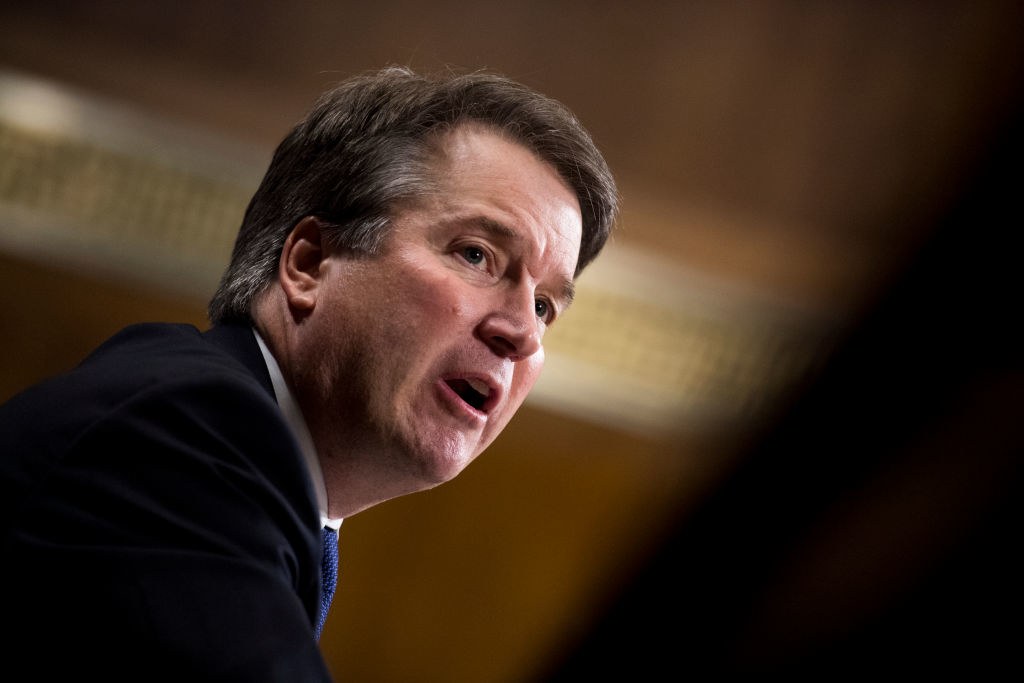
One of the judge’s accusers, California college professor Dr. Christine Blasey Ford, galvanized supporters—and critics—by telling the Senate Judiciary Committee under oath in a September testimony that a drunk Kavanaugh tried to force himself on her at a high school party in the ’80s. The judge denied the accusations with force that sometimes veered into belligerence. Kavanaugh, of course, was no longer a lock: Senate Judiciary Democrats interrogated him about Ford’s accusations. Republicans railed against maligning a man never convicted of a crime. #MeToo activists saw a moment to speak out—and to not repeat the scrutiny that Anita Hill endured, who in 1991 accused SCOTUS nominee Clarence Thomas of sexual harassment.
Following Ford’s testimony, the battle over Kavanaugh reached another peak as the Senate voted 51-49 on Friday to push past a procedural hurdle and advance his appointment. Republican senators mostly fell along from party lines, with on-the-fence senators including Jeff Flake, Susan Collins, and Joe Manchin, voting to move Kavanaugh forward to a full vote. An exception came with Murkowski, a crucial swing vote who voted not to advance the embattled nominee ahead.
The Senate Judiciary Committee had initially planned to weigh in on Kavanaugh’s confirmation on Sept. 28, less than 24 hours after the country had been rocked by emotional testimony from both Kavanaugh and Ford. However, things took a dramatic turn when Arizona Senator Jeff Flake signaled he would only vote to confirm Kavanaugh if an FBI investigation was conducted into the allegations.
The investigation was completed this week. It looked into Ford’s claims that Kavanaugh had held her down and covered her mouth with his hand when they were in high school in 1982. The FBI also examined the accusations of Deborah Ramirez, a Yale classmate of Kavanaugh’s who accused him of exposing himself to her at a party. The summary of the FBI’s findings said that the allegations could not be corroborated.
“The Supplemental Background Investigation confirms what the Senate Judiciary Committee concluded after its investigation: there is no corroboration of the allegations made by Dr. Ford or Ms. Ramirez,” the summary reads.
Chuck Grassley, the Republican chairman of the Senate Judiciary Committee, referenced the summary on Friday to assert Kavanaugh’s innocence, insisting that an unfair smear campaign had been leveled against Trump’s nominee.
However, Democratic senators suggested the FBI investigation had been limited and curtailed by the White House. Multiple people, including former classmates of Kavanaugh’s, had said that they wanted to provide statements to the FBI but could not reach the organization. The executive summary had detailed the 10 people that the FBI interviewed, including Kavanaugh’s childhood friends Mark Judge and PJ Smyth, and Dr. Ford’s friend Leland Keyser—all people Dr. Ford said had been at the party during which the assault occurred. According to early reports, the FBI chose not to interview Dr. Ford or Kavanaugh again.
In addition to the allegations against him, Kavanaugh has also rattled pro-choice supporters with some of his past positions a judge. What comes across his desk as a Supreme Court justice remains to be seen, but what is coming up are the midterm elections. Read up on your voting rights here.
If you’re finding it difficult to keep up with the fast-moving news cycle around Supreme Court nominee Brett Kavanaugh, you are not alone. Sunday night brought a new allegation of sexual misconduct from a second woman via a piece by Ronan Farrow and Jane Mayer in The New Yorker. And now Thursday’s scheduled hearings—which were to feature testimony by Kavanaugh and his first accuser, Christine Blasey Ford—may be in jeopardy of being canceled.
So let’s break down the latest updates in Kavanaugh’s nomination hearings.
A second woman, Deborah Ramirez, has accused Kavanaugh of sexual misconduct.
Ramirez claims that the incident occurred during she and Kavanaugh’s freshman year at Yale University. She told The New Yorker that she was initially hesitant to speak publicly (partly because of gaps in her recollection due to the consumption of alcohol) but later told Farrow and Mayer that “she remembers Kavanaugh had exposed himself at a drunken dormitory party, thrust his penis in her face, and caused her to touch it without her consent as she pushed him away.”
Like Ford before her, she is asking the FBI to investigate the incident and Kavanaugh.
Kavanaugh denied the allegations in a statement to the magazine. “This alleged event from 35 years ago did not happen. The people who knew me then know that this did not happen, and have said so,” it reads. “This is a smear, plain and simple. I look forward to testifying on Thursday about the truth, and defending my good name—and the reputation for character and integrity I have spent a lifetime building—against these last-minute allegations.”
But according to an unnamed former classmate, who told the New Yorker he is “one-hundred-per-cent sure,” Kavanaugh was the student who exposed himself to Ramirez. “I’ve known this all along,” he told the magazine. “It’s been on my mind all these years when his name came up. It was a big deal.”
Others, including the wife of one of the male students she says was involved in the incident, disputes Ramirez’s claims.
“We were the people closest to Brett Kavanaugh during his first year at Yale. He was a roommate to some of us, and we spent a great deal of time with him, including in the dorm where this incident allegedly took place,” a statement given to the New Yorker from the wife and three other classmates—identified as Dino Ewing, Louisa Garry, and Dan Murphy—reads. “Some of us were also friends with Debbie Ramirez during and after her time at Yale. We can say with confidence that if the incident Debbie alleges ever occurred, we would have seen or heard about it—and we did not.”
Christine Blasey Ford agreed to publicly testify about her allegations.
On Sunday, the New York Times reported that Ford had reached an agreement with the Senate Judiciary Committee to appear before them on Thursday. This was after much back and forth that saw Republican leadership pushing for a quick date while Ford and her legal team worked to ensure she was treated fairly.
“Despite actual threats to her safety and her life, Dr. Ford believes it is important for senators to hear directly from her about the sexual assault committed against her they will not impede the hearing taking place,” her lawyers said in a statement.
However, Sen. Dianne Fienstein (D-Calif.) is calling for Thursday’s hearings to be canceled.
In a letter to Senate Judiciary Committee chairman Chuck Grassley (R-Iowa), Feinstein cited the second allegation against Kavanaugh as reason to postpone the hearings. She called for both Ramirez and Blasey Ford’s claims to be investigated by the FBI.
“We need a fair, independent process that will gather all the facts, interview all the relevant witnesses, and ensure the Committee receives a full and impartial report,” she writes. “Should the White House continue to refuse to direct the FBI to do its job, the Committee must subpoena all relevant witnesses.”
“It’s time to set politics aside,” she continues. “We must ensure that a thorough and fair investigation is conducted moving forward.”
The White House and leading Republicans are standing by Kavanaugh—for now.
White House spokesperson Kerri Kupec said in a statement to CNN, “This 35-year-old, uncorroborated claim is the latest in a coordinated smear campaign by the Democrats designed to tear down a good man. This claim is denied by all who were said to be present and is wholly inconsistent with what many women and men who knew Judge Kavanaugh at the time in college say. The White House stands firmly behind Judge Kavanaugh.”
Just this morning President Donald Trump called the allegations “totally political” and says “I am with him [Kavanaugh] all the way.”
Sen. Lindsey Graham (R-S.C.), a member of the Senate Judiciary Committee went on Fox News Sunday to deride Ford’s claims. “What am I supposed to do? Go ahead and ruin this guy’s life based on an accusation?” he said. “I don’t know when it happened, I don’t know where it happened, and everybody named in regard to being there said it didn’t happen.”
Women are mobilizing in support of Blasey Ford and Ramirez.
A number of women’s groups have organized a walkout scheduled for 1 PM ET Monday. The National #BelieveSurvivors Walkout will call attention to the plight of survivors of sexual assault and misconduct everywhere, while also asking the Senate to vote against Kavanaugh’s nomination.
“The groundswell of support for Dr. Ford is exactly what the me too. movement is about. So often, survivors struggle to disclose their assault or abuse and when they do, the response is similar to what we’re seeing now,” says #MeToo founder, Tarana Burke. “It’s been almost 30 years since Anita Hill’s testimony and we want to ensure that the Senate Judiciary Committee does the right thing this time.”
We will continue to update this story as it evolves.
You like drama? Stories with strong female voices? Shade in spades? Then Supreme Court nominee Brett Kavanaugh’s confirmation hearings are the show for you—oh, also because they’ll directly, and significantly, affect your life. Unfortunately, this bit of must-see TV airs when most everyone’s working or watching their kids, so we’ll be here to recap each day of these monumentally important proceedings.
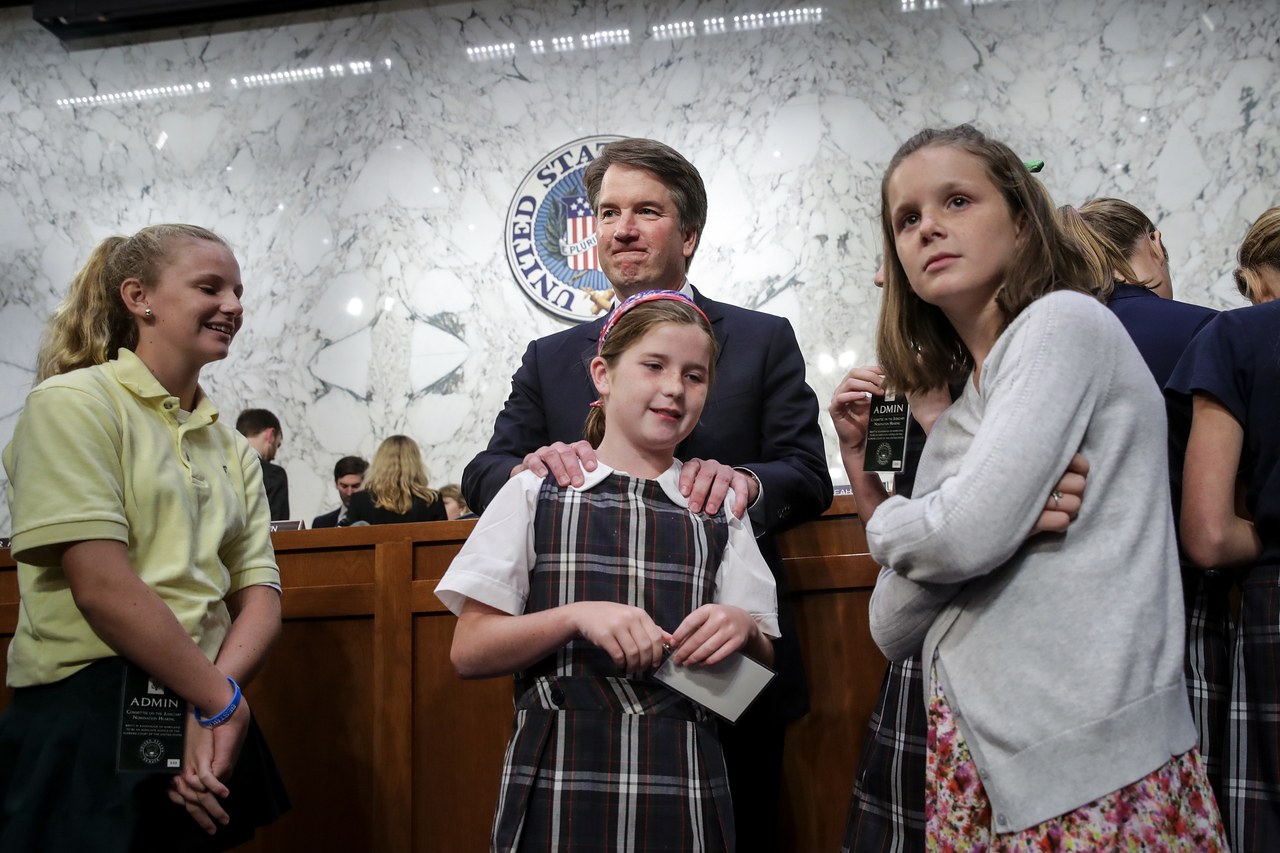
Here’s the good news about Brett Kavanaugh, who looks likely to be the country’s next Supreme Court justice: He is great on carpool duty! Also, probably an attentive listener at parent-teacher conferences! This much, we have been told.
All week, during his confirmation hearings, Kavanaugh was painted as the nice guy. We heard about his commitment to hiring and mentoring women, his standing volunteer date at a local soup kitchen, and his passion for coaching girls’ basketball. All week, Republican senators, Kavanaugh’s colleagues, and the judge’s own unfailingly polite demeanor reminded us: This is a normal man. This is the dad next door.
The theme reached its saturation point today, when Rebecca Taibleson, a former clerk of Kavanaugh’s, pointed out that he’s a “regular at his local bar, where he’s partial to a Budweiser and a hamburger.”
I like beer and hamburgers and nice people. After watching over 30 hours of Kavanaugh-TV, I am thoroughly sold on the fact that he is a hoot at a neighborhood BBQ.
PHOTO: Drew Angerer
But here’s the bad news for anyone concerned about reproductive freedom, unchecked presidential power, or common sense gun reform: He refused to address his views on any of them. I heard his jump shot extolled this week, but based on what I’ve seen, it’s nothing compared to his duck. He dodged just about every opportunity to say something of substance.
Perhaps the most bizarre example of this: Kavanaugh repeatedly name-checked four landmark Supreme Court decisions, calling them “the four greatest moments in Supreme Court history.” But whenever someone asked him if these personal faves of his were “correctly decided,” he refused to say. Great, but not correct? Sounds like a MAGA hat went to law school.
Is there a protocol-related reason that might make Kavanaugh feel unable to confirm that something he just said is great is great? Maybe. But is it possible that this is all comical, tragic shadiness? I’m just a regular gal who likes Budweiser and beer, so what do I know?
And that’s not the only question I have. As a result of this weeklong shade brigade—brought to you by your own taxes, by the way—I still have several questions about Brett Kavanaugh, and you should too.
What was the point of all that relentless branding of Kavanaugh this week? Being nice to women and following precedent is to Kavanaugh as Calabasas is to Kim Kardashian—in other words, essential to his new brand. This was driven home hard all week. In the short term, this was likely meant to pacify whichever American women aren’t protesting his nomination yet. But it has a second, long-term purpose. If Kavanaugh gets on the Court, and casts ice-cold votes against women’s health interests, he’ll want us to remember that as a dude, he actually loves women. Awesome, cool. I’ll think of him fondly when I have to smuggle my birth control in from Toronto.
But wait—does he always follow precedent? If you ask him, abso-frickin’-lutely! (Frickin’ is for sure as crass as this guy gets.) But if you ask other knowledgeable parties: Not so much, especially when it comes to matters of same-sex marriage and abortion. When questioned on both topics, Kavanaugh repeatedly referenced specific decisions as the legal last word on the subjects—even though there were more recent cases expanding or clarifying the Court’s opinion on them. If that sounds complicated, you can read more about it here—but suffice to say that Kavanaugh has a curious habit of deferring to cases that happen to match his conservative beliefs, rather than the most current rulings. Convenient.
So, with that in mind—would he vote to overturn Roe v. Wade, or not? Judiciary Committee members tried, to no avail, to get a straight answer from him all week. Ten million times, Kavanaugh referred to Roe as “settled law”—though, characteristically, he would not say whether he believed it was correctly decided—and for some time, that chorus of “precedent on precedent” seemed, on its face, reassuring. But while Kavanaugh’s poker face never broke down, his show of sureness on the matter did. First, a leaked email from his time working in the White House seemed to indicate that Kavanaugh doesn’t really think Roe is all that airtight. Then, in what felt like perhaps the loudest indication of his own personal views from the entire proceedings, Kavanaugh referred to various kinds of contraception as “abortion-inducing drugs.” And perhaps that’s no big deal! Happens to all of us, right? We wake up, panicked, and we text our best friends, “Oh shit! Forgot to take my abortion last night!” Could be an honest mistake. Who knows.
Okay, so—what could this guy have possibly told Senator Susan Collins (R—Maine), a key vote in his confirmation and a firm advocate of choice, to reassure her that he won’t gut abortion rights? Hard to say. If you’re a Maine resident and want to talk it over with someone from her staff, call (202) 224-2523 and press 0 to be connected.
Does Kavanaugh really believe that a sitting president can’t be investigated or indicted? Kavanaugh went out of his way to say that “no one is above the law,” and reiterated over and over the importance of an “independent judiciary,” but he evaded all Trump-related questions under the guise of wanting to “stay three zip codes away” from political matters. Fine.
What should concern us here is the same thing that’s concerned us since it was announced that Kavanaugh would be the Supreme Court nominee: Despite what his pals and coworkers would have us believe, he’s not coming into this nomination with a reputation for measuredness. On this issue, he’s coming in as a potential presidential appointee, culled from a short list of options, and what seemed to set him apart from everyone else was his stated belief that presidents shouldn’t have their days interrupted by investigations. Kavanaugh had the opportunity this week to assuage the country’s collective raised eyebrow on that one by firmly asserting that he wouldn’t let presidential power go unchecked. He simply didn’t do it. He wouldn’t tell the committee whether he’d recuse himself in Trump-related matters.
Furthermore, as Senator Sheldon Whitehouse (D—Rhode Island) pointed out, he may have chosen his words carefully to create an “escape hatch” that would allow him to spare President Trump from having to appear before a grand jury by differentiating those circumstances from ones that eventually led to President Richard Nixon handing over the infamous Watergate tapes. Clever.
How good of a friend would Kavanaugh be to the NRA? Uh, BFF-level, it seems. Claiming a blind loyalty to precedent once again, Kavanaugh more or less confirmed that he would be unlikely to vote for the regulation of semiautomatic weapons or the future regulation of 3-D printed weapons. He hinted at his personal ideas about how to deal with America’s mass-shooting crisis when he talked about his daughters’ (private) school: “They do a lot of things now that are different than they did just a few years ago in terms of trying to harden the school and make it safer for everyone.”
Wasn’t there something in the mix about him doing something sketchy with emails?Yes, though the implications are unclear. In the early 2000s, while he was working in the Bush administration, Kavanaugh was the recipient of some strategy intel on several Democratic congresspersons. As he testified this week, he didn’t know that the information had been stolen in a hack of the congresspersons’ emails. But Kavanaugh’s emails from back then—which leaked this week—make that theory seem kinda hard to believe. Much of the information that was passed on to Kavanaugh was still labeled “not for disclosure”—meaning that he wants us to believe he saw that and thought, “Well, shucks, I guess the Dems didn’t want anyone outside their office to see this except for me, a guy working in a Republican White House. Two points!” And, um, the subject heading of this one is literally “spying.” Anyway, seeing as double standards don’t exist, I’m sure we’ll be hearing cries of “But his emails!” any second now.
Lastly: Why was Kavanaugh taking notes with a Sharpie all week? Sir! What do you have against the other side of the paper?
Megan Angelo writes about TV and is the author of the novel Followers, which will be published in 2019.
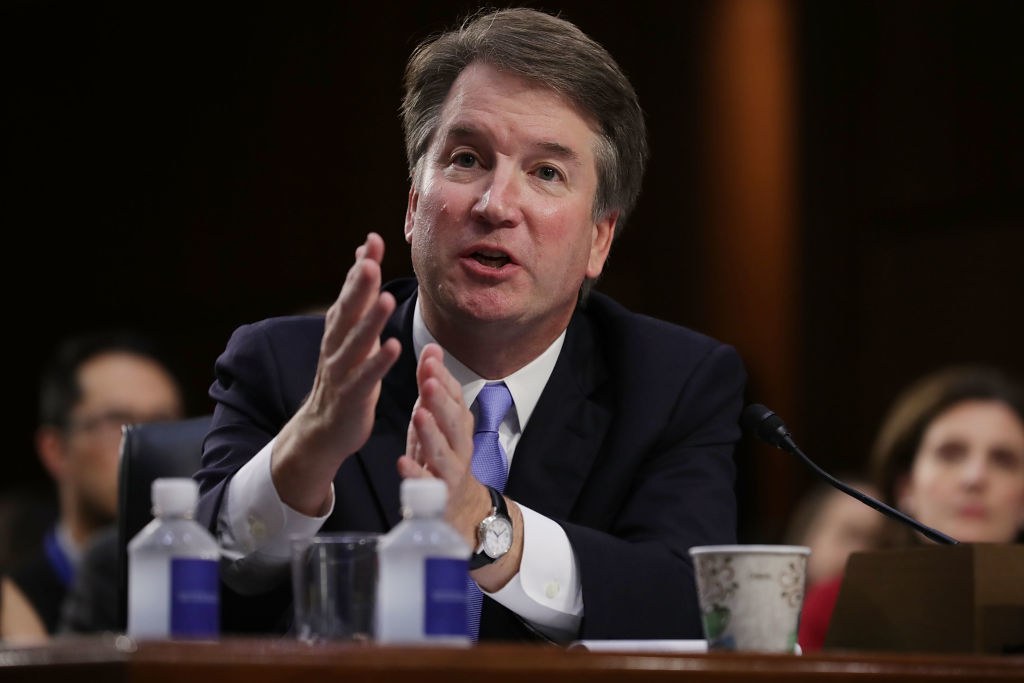
On the third day of confirmation hearings for Supreme Court nominee Brett Kavanaugh, Democratic senators continued their probe to get the conservative judge’s stance on women’s reproductive rights—and a clue in one of his answers may say it all.
In an exchange with Senator Ted Cruz (D-Tex.), Kavanaugh referred to birth control as “abortion-inducing drugs,” a term many women’s rights advocates say is dog-whistle politics and a clear nod to pro-lifers who oppose abortion.
Kavanaugh’s calculated answer came when Cruz asked the judge about his dissent in the case Priests for Life v. the U.S. Department of Health and Human Services, which involved an Affordable Care Act mandate that required employers to cover contraception for workers. Kavanaugh explained why he ultimately sided with the plaintiffs, who are an anti-abortion Catholic group.
“The question was first, was this a substantial burden on their religious exercise? And it seemed to me, quite clearly, it was,” Kavanaugh said. “They said filling out the form would make them complicit in the abortion-inducing drugs that they were, as a religious matter, objected to.”
For pro-choice supporters, the phrase “abortion-inducing drugs” is an alarm bell. Organizations such as the Center for Reproductive Rights pointed out that the verbiage is what many anti-abortion groups use to talk about contraception. “Saying ‘abortion-inducing drugs’ to describe contraception is straight out of the anti-choice, anti-science phrase book used to restrict women’s access to essential health care,” the Center for Reproductive Rights wrote on Twitter.
The wording is also just plain wrong. Contraception, which includes birth control and Plan B, does not cause abortions, despite the assertion of some organizations. Using contraceptive methods like birth control and IUDs can prevent fertilization from occurring, but it does not end existing pregnancies. But despite the facts, the concepts are often conflated among anti-abortion groups. Senator Elizabeth Warren (D-Mass) reminded the public of the misconception by tweeting, “Newsflash, Brett Kavanaugh: Contraception is NOT abortion. Anyone who says so is peddling extremist ideology – not science –and has no business sitting on the Supreme Court.”
Kavanaugh’s stance on reproductive rights has been questioned by many pro-choice supporters since President Donald Trump announced his nomination. Although Kavanaugh has stated he will abide by precedent set in Roe v. Wade, his record suggests anti-choice leanings. In addition to his defense in Priests for Life v. the U.S. Department of Health and Human Services, Kavanaugh also dissented in Garza v. Hargan and argued that an undocumented minor in U.S. detention could not receive an abortion. More evidence mounted late Wednesday, when leaked emails showed that while serving as a lawyer in the Bush administration, Kavanaugh had offered advice about changing a description that said Roe v. Wade was “the settled law of the land.”
On Thursday, Kavanaugh was also grilled by Senator Kamala Harris (D–Calif.), who asked him about the reproductive freedom of men compared to women. Kavanaugh stumbled while answering some of the questions—marking just another example of why Kavanaugh may be a threat to Roe v. Wade and other important principles of women’s rights.