Categories
Health

Why Can't Everyone Stop Shipping Jennifer Aniston and Brad Pitt?


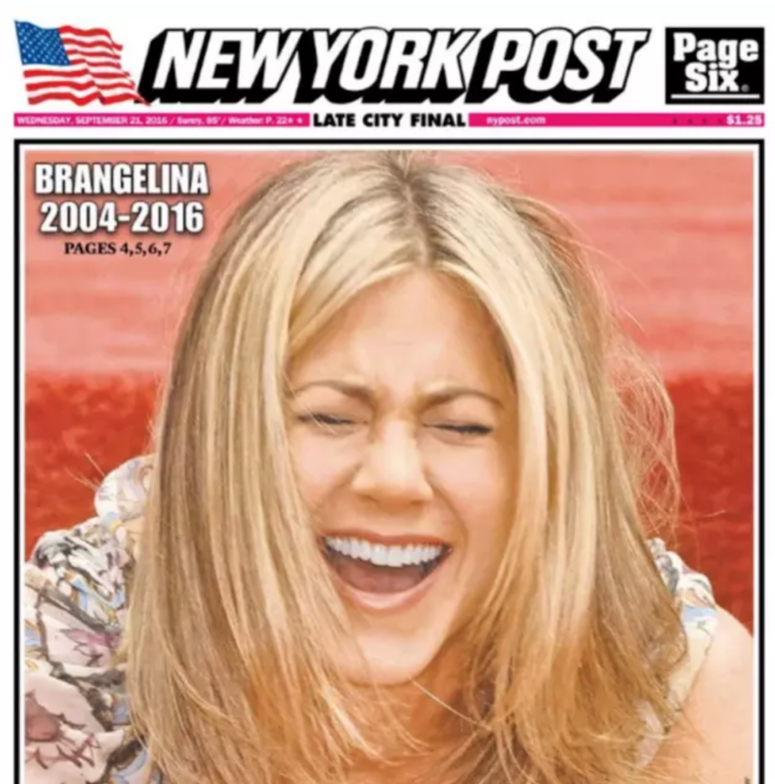
Jennifer Aniston‘s face was on the cover of the New York Post the day after Angelina Jolie and Brad Pitt announced their divorce. Not Jolie’s face. Not Pitt’s. Aniston’s.

The picture is a happy one—deliriously, flamboyantly happy. Her eyes are squinting, and her mouth’s in the shape of a big, goofy grin, as if she were on Space Mountain at Disney World. “Brangelina: 2004–2016” was printed on the top left corner in small font, and Aniston’s face explained the rest. Brad Pitt and Angelina Jolie’s marriage was dead, the Post said, and Jennifer Aniston was dancing on its grave.

This, in a nutshell, perfectly encapsulates the public’s relationship with Aniston for the past 14 years. Her happiness, in their eyes, has been determined solely on her love life—specifically in comparison to Pitt’s. By now their love triangle is ancient history: Aniston and Pitt were married from 2000 to 2005, and they divorced shortly after he met Jolie on the set of Mr. & Mrs. Smith. There were allegations of infidelity on Pitt’s end that were never confirmed, but the media had already painted its narrative: Pitt and Jolie are happy, and Aniston’s sad.

New York Post

Sad and single. That last word is key, because apparently Aniston can’t be fulfilled if she’s single—even though she has millions of dollars, a great career, and good health. But the tides turned, interestingly, in February 2018 when news broke Aniston and her husband, Justin Theroux, were divorcing after two years of marriage. The only reason people were cool with Aniston being single then (and now) is because Pitt is also unattached. Tweets about them possibly getting back together are, unsurprisingly, all over the Internet:

These feelings intensified even more over the weekend, when Pitt was spotted outside Aniston’s 50th birthday party in West Hollywood. To be clear, we don’t even know how much they interacted. Aniston had a ton of friends there—Katy Perry, Gwyneth Paltrow, and Reese Witherspoon, to name a few—so it’s very possible they just exchanged pleasantries and moved on. They’re adults, people. It’s entirely possible to be friends with your ex.

Of course, fans are metaphorically ringing the wedding bells over this news:

Which is bullshit, of course. Twitter’s shipping of Aniston and Pitt right now is beyond problematic because it suggests, yet again, that Aniston is incapable of being happy on her own—that Brad Effing Pitt has been the key this entire time, and now she can finally have him. It’s insulting.

Aniston is one of the most accomplished and in-demand actresses in Hollywood, with a reported net worth of $220 million, a slew of friends, and endorsement deals galore. Are people saying none of this matters if Aniston isn’t with Pitt—or married in general? It’s beyond frustrating our culture at large still has trouble seeing single women as content—that professional accomplishments play second-fiddle to the white-picket fence ideal, even in 2019. Aniston’s said, on multiple occasions, that she’s fulfilled with her life, and yet here she is: fighting the spinster persona tabloids gave her at 36 years old. She’s now 50. It’s been nearly 15 years.

Brad Pitt isn’t “the one who got away.” He’s someone Aniston was married to for five years and divorced. People split. It happens. Life moves on—and so has Aniston. It’s time we do too.


Source link

Categories
Health

'The Breakfast Club' Was a Great Movie. Here's Why I Can't Let My Eight-Year-Old Daughter Watch It.


Your first crush is a rite of passage. The fixations that follow it are just life. Nervous, awkward, sublime. Disasturous. Transcendent. Here, we celebrate infatuations, obsessions, and passions in all their exquisite splendor. Meet our “It’s Just a Little Crush” series. Isn’t she divine?

Sure, the Punic Wars lasted nearly 100 years, but the Mean Girls battles at my eight-year-old daughter’s school have felt longer. There’s drama and shifting alliances. Ceasefires. No bloodshed—yet—but plenty of tears.

In an effort to distract her from her woes on a winter weekend, I decided we could watch The Breakfast Club together. Some of the plot details escaped me, but I remembered its message about labels and their limits. I hoped it would feel like a respite. (The Breakfast Club is rated R, which probably disqualifies it as an appropriate watch in most parents’ minds. But I assumed the “R” was for language and my household is unorthodox when it comes to profanity. Call me a “dummy” and you’ll get a time-out. Say “fuck” quietly behind your closed door while trying to put on a pair of recalcitrant tights, and I’ll let it pass.)

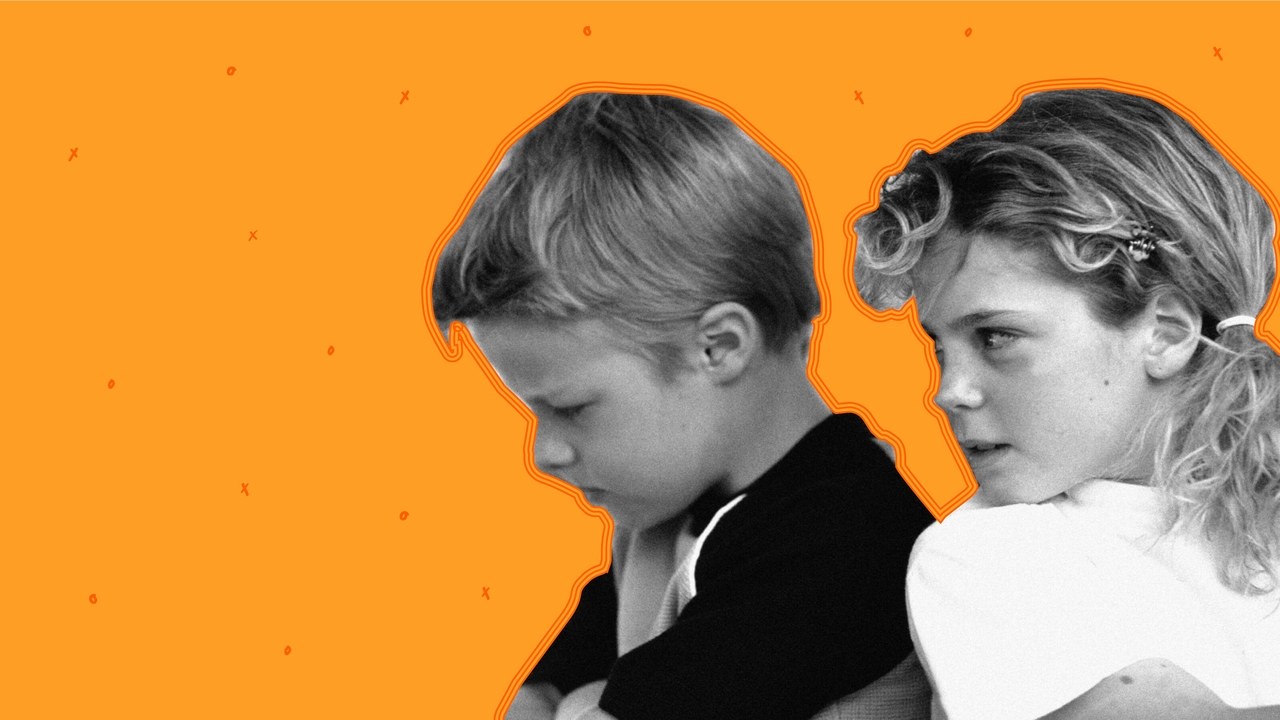
Fewer than 15 minutes in, I had to turn the movie off, in part because it was more sexually frank than I recalled. But the bigger concern was that Bender, the “rebel” played by Judd Nelson, is…a raging asshole. In the space of nine hours—compressed to two for the movie’s purposes—he taunts Claire (Molly Ringwald) until she cries, then kisses her tenderly in a closet, then accepts her gift of a diamond stud. Cue triumphant fist pump to the sky as “Don’t You Forget About Me” plays.

“Does he like her?” my daughter asked over and over during the few minutes of the film she managed to see. “No,” I said. “I mean, he will. But, you see– The thing is– Well, he’s a very angry boy and he has a sad story, AND I AM TURNING THIS OFF RIGHT NOW. IT IS INAPPROPRIATE.”

Whenever we watch old movies, our memories of their pitfalls and foibles a little faint, our main concern has always been that we will expose our daughter (and her brother many years before her) to what the MPAA rating system describes as “material inappropriate for children under the age of 13.” But there’s no ratings system to caution a parent that an old movie—or a book, or a song—might contain backwards ideas about relationships and affection.

Only a few weeks ago, my daughter announced that two boys at school had crushes on her “because I’m a good flirter.” She said she preferred one and was pretty sure it was mutual. When I asked how she knew this, she said, “Because he ignores me when the other boys are around. But on the field trip, when it was just the two of us, he was so nice to me.”

I’m not often speechless, but I needed a few seconds to recover from the feeling that my heart had just cracked in two. I have always wanted my daughter to feel she can talk to me about anything. It never occurred to me that her confidences would remind me of my own youthful mistakes and heartaches. I grew up around boys who lobbed lacrosse balls at my back and taunted me about my changing body, yet grown-ups insisted my classmates did those things because they “liked” me.

“Well,” I said carefully once I sorted out my own thoughts, “Once upon a time that was the old-fashioned way of a boy showing that he liked you, but the new-fashioned way is that the boy says he likes you and is nice to you.”

“Oh, Mama,” she said with a sigh. “I have at least 32 new-fashioned ways of knowing that he likes me.”

Later, she confided, “I think I’m a better flirter than I am a friend. Because I only a few girlfriends, but so many boys have crushes on me.”

We watch a lot of old movies and television shows in our house. We read old books. The parameters are loose, but in general my husband and I want to find that sweet spot—entertainment that sparks our daughter’s interest without boring us to pieces. Green Acres is an unexpected favorite—surreal and goofy, but good hearted. We adore Seven Brides for Seven Brothers, despite its problematic plot. (Six brothers kidnap women after they hear their new sister-in-law talk about the Sabine women. So, not great.) But in the end, the kidnapped girls are the true agents of their own fate, deciding which suitors they prefer. We have no problem with the violence in West Side Story.

But what to do with the countless rom-coms that begin with bickering? With sloppy men and “uptight” women? Fun guys and humorless gals—he needs to grow up and she needs to loosen up. Where’s the MPAA rating for “could possibly warp your daughter’s self-esteem for life”?

Notice these perils, and prepare to be disappointed. I have nothing but affection for Anne of Green Gables, but whether one chooses the book, the 1985 film, or the newer Netflix series, one has to contend with the fact that Anne’s future husband pulls her pigtails and calls her “Carrots” because he is desperate for her attention. The latest version, Anne with an E, has added much nuance and gallantry to this scene, but still—Gilbert pulls her pigtails and calls her “Carrots.”

Once you start to notice this trend, you can’t unsee it. The African Queen, The Philadelphia Story, His Girl Friday, My Fair Lady, Raiders of the Lost Ark—we’ve started to spend a lot of time “contextualizing” what we once thought of as wholesome entertainment.

I’m not about to give my daughter a paperback of the self-help book He’s Just Not That Into You, much less let her watch the episode of Sex and the City that spawned that phrase and franchise. (Although I would understand perfectly if you believe by now I am capable of doing that, given that I tried to watch an R-rated movie with her.) But the fact is she’s received the message it seeks to address all the same—he’s mean because he loves you.

If we tell our children that their soulmates might be unkind at first, if we accept light malice as a prelude to romance—what are we setting them up for? So many beloved stories are rooted in the idea that people who are destined for one another begin by disliking each other. My husband and I “met cute”—he spilled coffee on my desk when I wasn’t there and literally tried to blot it with my blotter—but I always liked him. When I confronted him about the mess he made, he admitted to it and, at my request, gave me a copy of his first book, inscribed “Do you want cream with that?” It would be almost a decade before we went on a date, but when we did, he just asked me straight up, with nary a shoulder punch or a cruel word.

So I tell my daughter again and again: If your crush really likes you, he will act as if he likes you. And I remind myself that even teasing within marriage, where love should be presumed, can go too far. Maybe I should throw a few more compliments at my spouse, especially within my daughter’s earshot.

The Breakfast Club is tabled for now, possibly forever. Bender and Claire aside, who needs another movie in which a thoroughly interesting girl has to reinvent herself as a conventional cutie in order to get the thoroughly boring boy? Better to watch Some Like It Hot, in which Tony Curtis and Jack Lemmon disguise themselves as women in order to escape wrathful mobsters. When millionaire Joe E. Brown learns that “Daphne” is really “Jerry,” he doesn’t waver in his affection, delivering what is considered one of the greatest last lines in the history of movies: “Nobody’s perfect.”

And, like all sentient feminist households, we prefer Grease 2 to Grease, but that’s a discussion for another day.

Laura Lippman has written more than 20 crime novels, most set in her hometown of Baltimore. Her most recent book is the national bestseller Sunburn.
Source link

Categories
Health

Grammys 2019: Hair and Makeup Looks You Can't Miss


At this point in the game, we’re deep in awards season—and that means we’ve had plenty of hair and makeup looks to ooh and ah over. Take, for example, the blue eyeshadow at the Golden Globes or affordable beauty moments at the SAGs.

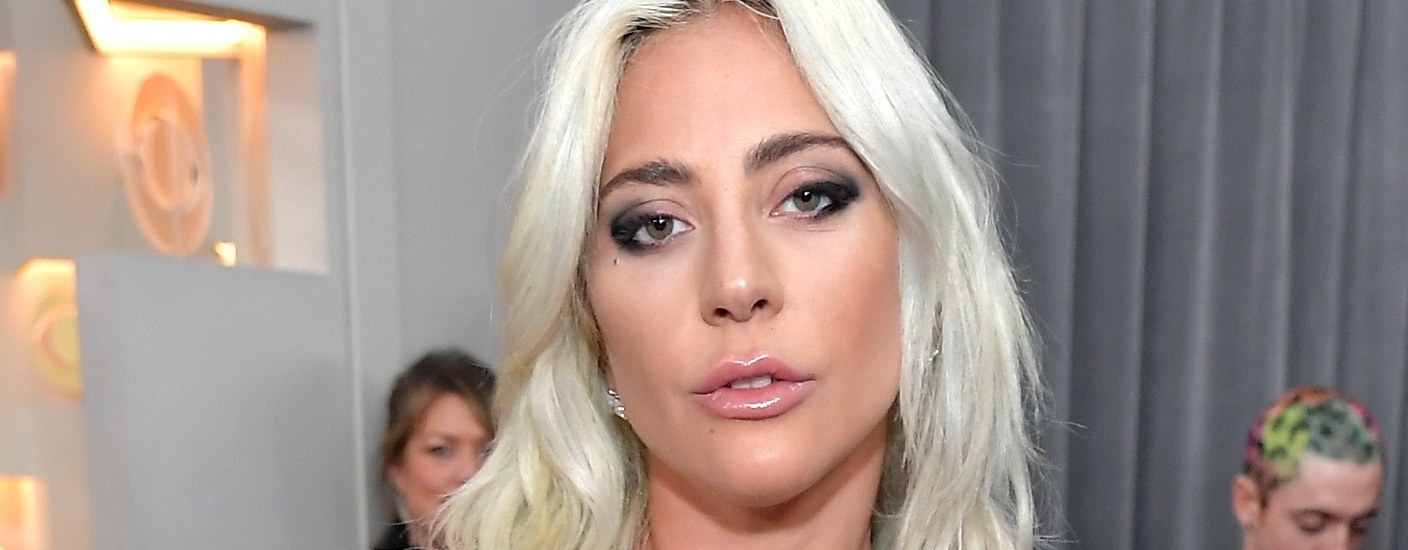
But tonight’s Grammy Awards brought a little something extra to the table. Movie stars always look glam, of course, but women in music tend to have fun with their looks. And where better to show that off than the Grammys? How could we forget Gaga’s iconic egg entrance or Alicia Keys’ makeup free statement? (Which, by the way, she did again tonight.) We can only expect more iconic looks that will have people talking for years to come.

Between Cardi B’s braided updo and Dua Lipa’s statement mani, there have been plenty of looks that’ve made us shout at our TV. Check out our favorite looks from the night, below. We’ll be adding more details as they roll in throughout the evening.


Source link

Categories
Health

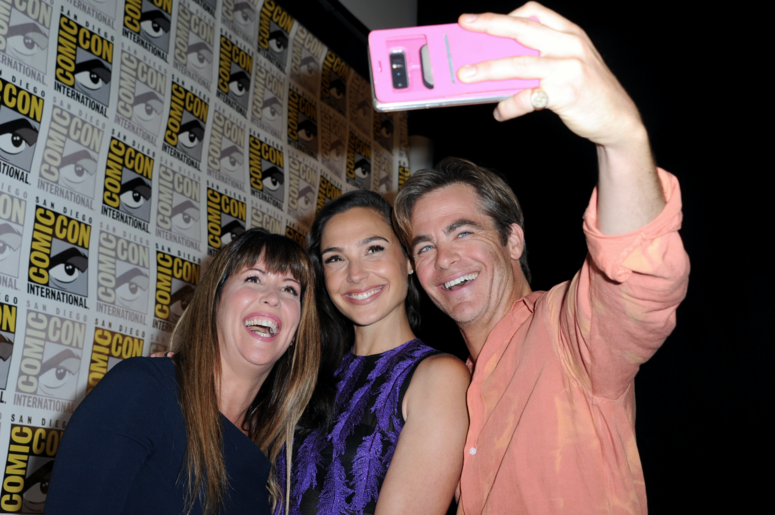
Patty Jenkins Says Even Some of Her Family Can't See a Woman Being a Director


Patty Jenkins and Chris Pine are supposed to be exhausted. They’ve been promoting their new series, TNT’s I Am the Night (Pine stars and executive produces; Jenkins directs), nonstop and have just taken the red-eye to Los Angeles from New York. But when I sit down with them, they’re just as sharp as if it were their first interview about the show. In fact, when a publicist tries to wrap us up, Pine graciously asks for more time so he and Jenkins can finish answering my questions. Talk about dedication!

The two first met when Jenkins recruited Pine for Wonder Woman (he originally passed on the role before Jenkins was attached to the project), and it was pretty much obsession at first sight. Millions of dollars at the box office later, they’ve not only teamed up for Wonder Woman 2 but also I Am the Night, which takes on a new angle in the Black Dahlia case.

But no matter how much success Jenkins has achieved (just one example: Wonder Woman is the highest grossing live-action film directed by a woman), she admits that people still have trouble seeing her as a director. “Somehow the association of being a director and being a woman is something people have some weird thing about,” she says. In fact, Jenkins admits even her extended family gets tripped up by it.

So at a time when more women are starting to call the shots behind the camera—and certainly more attention is on Hollywood to do its part—what’s still so foreign about it? Here, Jenkins and Pine share their thoughts on that and more. Read on.

Glamour: Do you remember the first time you met? And what were your first impressions of each other?

Chris Pine: Oh yeah! Wonder Woman was [originally going to be] directed by someone else and I had this great meeting with this other person about it but [the character] really didn’t sound interesting to me and I had other stuff going on, so I kinda wasn’t into it. It came around again and Patty was involved, and I wanted to meet her, but I didn’t know if [the movie] sounded like my thing. But within five minutes of meeting Patty at this restaurant, I knew almost immediately that I’d be doing this film.

Wow. How so?

Chris: I think she spent, like, an hour acting out the entire film of Wonder Woman in this restaurant bar at like noon on a Tuesday. I was completely captivated and I just knew pretty much immediately even though there was only 20 pages of a script. I was just really into Patty and I thought that she understood the qualities that I could bring to it and that was it.

Patty, did you know this?

Patty Jenkins: He had told me that he [was on the fence at first] and then I was super psyched that changed because I was like, ‘This is fucking happening!’ I was like, ‘I’m not coming out of that meeting with a no. Chris has to do it. It has to be Chris.’ The funny thing was, as I signed on to it, the importance of who played that role was tremendous. We needed an incredibly powerful dynamic, funny, rich actor, and that person was Chris.

Patty Jenkins, Gal Gadot (Wonder Woman), and Chris Pine

Getty Images

Even though you wanted him to play the part, what was it like when you first met him?

Patty: It’s funny, because when it’s a famous actor you already know so much more about them. But he was chiller and even more fun to talk to [than I could have imagined]. We stayed for a long time at the restaurant just talking and laughing and having a great time. And then when we started working together, I remember thinking, “Wow, you are just so fucking incredibly skilled.”


Source link

Categories
Health

I Can't Stop Buying House Plants Even Though They Always Die


Although I was born on the cusp of Gen Z, I identify with a lot of millennial stereotypes. I have social anxiety, a baby pink Away suitcase (totally worth the money, IMO), and I’m addicted to my phone. Recently I’ve fallen into another trope newly associated with my generation: I’ve become a plant mom.

I’m certainly not alone in this obsession. In 2016 more than 5 million millennials took up gardening for the first time, according to the National Gardening Survey. And in 2017 the number of 18- to 34-year-olds who bought plants reached an all-time high. Altogether, the gardening industry raked in a record $47.8 billion last year. It could be Instagram or a growing interest in our health as more studies are confirming the benefits of houseplants, but plants are now as much a millennial status symbol as Glossier and weighted blankets.

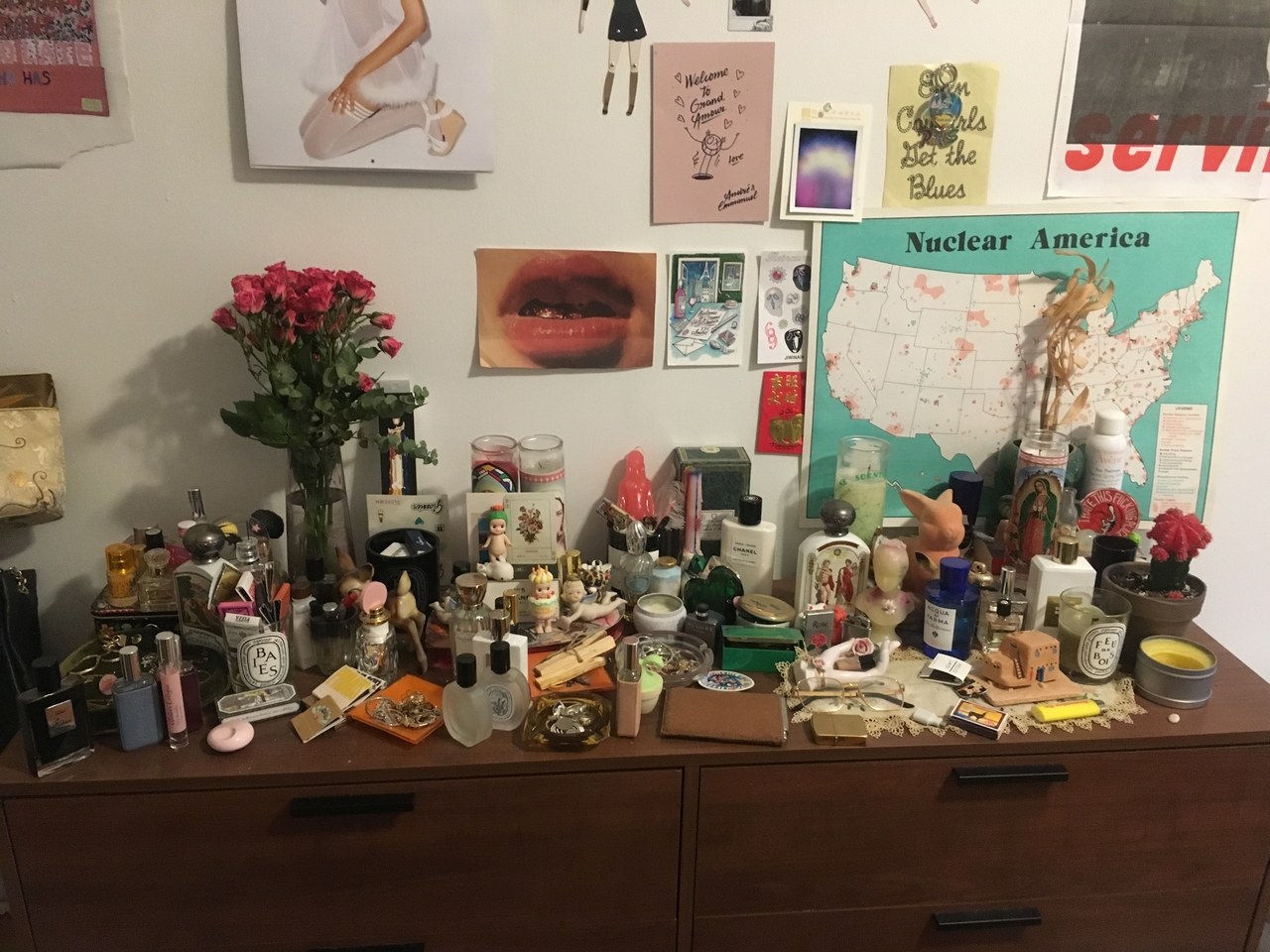
My journey started slow, a succulent here and there to make my college dorm feel more homey. When I moved into my first apartment, I adopted a tall leafy plant that I found on the street. In hindsight, this was probably a terrible idea, but what first-apartment decoration really ever is? Now in my current place, cacti and small palms line the windowsill in my living room. Flowers from Trader Joe’s cover my kitchen table, bedroom, and living room. A bodega bamboo plant sits on my dresser among my collection of perfume bottles and vintage ashtrays, and a planter shaped like a young pope holds an ivy plant on the window by my bed.

With every big, waxy Monstera leaf or pint-size succulent that flickered across my feed, my inner green thumb ached.

Before I knew it, my house held almost as many plants as pairs of shoes, and I couldn’t pop into a bodega or Trader Joe’s (two of my favorite spots for affordable plants) without leaving sans greenery. To be completely honest, the reason I first become a plant hoarder is the same (embarrassing) reason I make most of my decisions these days: Instagram. I follow more models and It Girls than people I know in real life, and it no longer felt like enough just to dress like them, I wanted to live like them too.

With every big, waxy Monstera leaf or pint-size succulent that flickered across my feed, my inner green thumb ached. I didn’t even know I had it, in fact, until literally all I could think about were plants. How would a cactus look in that corner? Ooh, what about a palm over there? I wondered as I aimlessly scrolled away, designing in my head to try an emulate the apartments I lusted over online. For every selfie posted with a lush green leaf in the background, I picked up another bouquet in hopes that it would make me more like the person I wanted to be.

Of course, that’s not how it works. Buying more plants didn’t make me more photogenic or outgoing—but it did make me feel like an adult who has her shit together. Instead of spending money on a quick thrill like a new lipstick or sweater I’ll wear once, I was purchasing something beautiful for my home. Studies have shown that houseplants can make us feel calmer and reduce toxins in the air. I’d like to think that’s mostly true. There really is something cozy and relaxing about being surrounded by greenery, especially when you get so little of that living in a city.

My plant purchasing habits also made me feel responsible in a way I never have before by giving me something to take care of. I’m not quite ready for a pet, and kids are way far off in my future—if at all—but I still have that maternal ache to care for something. Enter my collection of house plants. They don’t have names, but I lovingly refer to all of them as “she.” They give me something to tend to; plus, they help make my small, cluttered apartment feel a little more like a sanctuary.

PHOTO: Bella Cacciatore

My non-Insta material dresser—despite the plants

The problem is I’m a terrible plant mom. About 70 percent of the plants I bring into my apartment die within two months. Buying the plants only gives me the illusion of responsibility, but I have absolutely no follow-through. I’m awful at remembering to water them. Thankfully, my boyfriend is much more attentive, and I credit him for keeping our plants alive at all. My apartment has very little natural light and is shared by five people, so it’s super crowded and things are constantly being moved around. This isn’t a great environment for plants to flourish, and my apartment is often so messy that caring for them seems pointless. It’s not having them there magically transforms my space into an Instagram apartment.

And still, I continue to buy them. The initial thrill is so good that I convince myself this time will be different—this is the plant that will beat all the odds and live. But I’ve had to set a few ground rules. I won’t spend more than $20 on a plant (my boyfriend doesn’t follow this rule, though, so we have a few plants from The Cactus Store), and I tend to stick to succulents or cacti since they require less attention.

Although I longingly scroll through The Sill’s Instagram, I will not invest in a plant from them until I prove to myself I have the skills to care for it. Instead, I stick to corner stores and the local greenmarket. If I’m looking for something a little more interesting, I’ll splurge a bit at Rosehip and Other Times, which are both in my neighborhood and have reasonably priced plants. And for those not in NYC, obviously Urban cornered that market quick. (There’s an entire “Grow Shop” section on its website.) I’ve found I’m more likely to keep something alive if I keep it in a cute vessel—that way it feels more permanent—so I buy vintage planters and vases on Etsy as motivation.

Even though I’ve proved myself time and time again an unfit plant mom, I won’t let it stop me. The allure that, if I could just take care of it, I could be the woman I’m meant to be is too strong. Maybe one day.

Bella Cacciatore is a beauty assistant at Glamour.


Source link

Categories
Health

Carly Pearce Can't Live Without This $10 Curling Iron


As a country musician, I’ve tried literally every single curling iron and wand you can imagine—expensive ones, high-tech ones, you name it. My wavy hair isn’t only a part of who I am, when I’m on stage, it’s my source of confidence. So needless to say, when I curl my hair, I need it to hold up through an entire performance and look perfect.

I get asked so many times, “How do you do your hair?” and “What kind of curling iron are you using?” Fans always assume it’s something really exclusive or that it costs a lot of money, so it’s always fun to see the look on their faces when I say, nope, you can actually buy it at Target. It’s a regular old Conair one-inch barrel, and nothing holds my fine hair like it.

I started using it when I was 16 and worked at Dollywood, a theme park in Tennessee obviously inspired by Dolly Parton. A fellow performer, who kind of looked like Dolly herself, always had the most amazing hair, so one day I begged her for secret. I figured she had to being using some kind of special curling iron or hair spray to make it look so incredible. So imagine my surprise when she told me that she bought it for $10. I honestly almost didn’t believe her.

Since then, it’s gone with me everywhere. It was especially a game-changer in my early days in Nashville, when I performed in different shows to try and get a record deal. Even once I started going on tour and could afford something in the triple digits, I’d always go back to my trusty Conair. There’s just something about it that makes the perfect curl for me. It gets hot enough that your hair doesn’t stick to it (even if you put hairspray on it!), and it hasn’t damaged my hair ever. The key to getting my waves just right is that I don’t put the curling iron all the way down my hair. I take about two inches out of the iron at the end, so it creates a wave. Then, I tease it—like really tease it.

PHOTO: Courtesy of Carly Pearce

But my love for this curling iron isn’t only that it’s dependable. At this point, it’s also become symbolic of something that’s stuck with me through some of the hardest but most impactful years of my life. Even when jobs were tough or I’ve been traveling away from family and friends, it’s always been something that makes me feel the most “ready” and myself. I’ve lost it on airplanes, left it in hotel rooms, and more, but with the thrifty price tag, the great thing is that I can always just buy it again.

I can firmly say that this is the best curling iron, and the proof is that I’m still using it almost 15 years later at a very different stage of life. It’s a good reminder that just because something isn’t very expensive, doesn’t mean it’s not great.

Conair 1″ Barrel Curling Iron, $10, amazon.com

Related Stories:
–The Best Curling Irons for People Who Can’t Curl Their Hair
–How to Actually Get the Perfect Messy Waves
–The 7 Biggest Curling Iron Mistakes—and How to Avoid Them


Source link