
Categories
Health

'The Breakfast Club' Was a Great Movie. Here's Why I Can't Let My Eight-Year-Old Daughter Watch It.


Your first crush is a rite of passage. The fixations that follow it are just life. Nervous, awkward, sublime. Disasturous. Transcendent. Here, we celebrate infatuations, obsessions, and passions in all their exquisite splendor. Meet our “It’s Just a Little Crush” series. Isn’t she divine?

Sure, the Punic Wars lasted nearly 100 years, but the Mean Girls battles at my eight-year-old daughter’s school have felt longer. There’s drama and shifting alliances. Ceasefires. No bloodshed—yet—but plenty of tears.

In an effort to distract her from her woes on a winter weekend, I decided we could watch The Breakfast Club together. Some of the plot details escaped me, but I remembered its message about labels and their limits. I hoped it would feel like a respite. (The Breakfast Club is rated R, which probably disqualifies it as an appropriate watch in most parents’ minds. But I assumed the “R” was for language and my household is unorthodox when it comes to profanity. Call me a “dummy” and you’ll get a time-out. Say “fuck” quietly behind your closed door while trying to put on a pair of recalcitrant tights, and I’ll let it pass.)

Fewer than 15 minutes in, I had to turn the movie off, in part because it was more sexually frank than I recalled. But the bigger concern was that Bender, the “rebel” played by Judd Nelson, is…a raging asshole. In the space of nine hours—compressed to two for the movie’s purposes—he taunts Claire (Molly Ringwald) until she cries, then kisses her tenderly in a closet, then accepts her gift of a diamond stud. Cue triumphant fist pump to the sky as “Don’t You Forget About Me” plays.

“Does he like her?” my daughter asked over and over during the few minutes of the film she managed to see. “No,” I said. “I mean, he will. But, you see– The thing is– Well, he’s a very angry boy and he has a sad story, AND I AM TURNING THIS OFF RIGHT NOW. IT IS INAPPROPRIATE.”

Whenever we watch old movies, our memories of their pitfalls and foibles a little faint, our main concern has always been that we will expose our daughter (and her brother many years before her) to what the MPAA rating system describes as “material inappropriate for children under the age of 13.” But there’s no ratings system to caution a parent that an old movie—or a book, or a song—might contain backwards ideas about relationships and affection.

Only a few weeks ago, my daughter announced that two boys at school had crushes on her “because I’m a good flirter.” She said she preferred one and was pretty sure it was mutual. When I asked how she knew this, she said, “Because he ignores me when the other boys are around. But on the field trip, when it was just the two of us, he was so nice to me.”

I’m not often speechless, but I needed a few seconds to recover from the feeling that my heart had just cracked in two. I have always wanted my daughter to feel she can talk to me about anything. It never occurred to me that her confidences would remind me of my own youthful mistakes and heartaches. I grew up around boys who lobbed lacrosse balls at my back and taunted me about my changing body, yet grown-ups insisted my classmates did those things because they “liked” me.

“Well,” I said carefully once I sorted out my own thoughts, “Once upon a time that was the old-fashioned way of a boy showing that he liked you, but the new-fashioned way is that the boy says he likes you and is nice to you.”

“Oh, Mama,” she said with a sigh. “I have at least 32 new-fashioned ways of knowing that he likes me.”

Later, she confided, “I think I’m a better flirter than I am a friend. Because I only a few girlfriends, but so many boys have crushes on me.”

We watch a lot of old movies and television shows in our house. We read old books. The parameters are loose, but in general my husband and I want to find that sweet spot—entertainment that sparks our daughter’s interest without boring us to pieces. Green Acres is an unexpected favorite—surreal and goofy, but good hearted. We adore Seven Brides for Seven Brothers, despite its problematic plot. (Six brothers kidnap women after they hear their new sister-in-law talk about the Sabine women. So, not great.) But in the end, the kidnapped girls are the true agents of their own fate, deciding which suitors they prefer. We have no problem with the violence in West Side Story.

But what to do with the countless rom-coms that begin with bickering? With sloppy men and “uptight” women? Fun guys and humorless gals—he needs to grow up and she needs to loosen up. Where’s the MPAA rating for “could possibly warp your daughter’s self-esteem for life”?

Notice these perils, and prepare to be disappointed. I have nothing but affection for Anne of Green Gables, but whether one chooses the book, the 1985 film, or the newer Netflix series, one has to contend with the fact that Anne’s future husband pulls her pigtails and calls her “Carrots” because he is desperate for her attention. The latest version, Anne with an E, has added much nuance and gallantry to this scene, but still—Gilbert pulls her pigtails and calls her “Carrots.”

Once you start to notice this trend, you can’t unsee it. The African Queen, The Philadelphia Story, His Girl Friday, My Fair Lady, Raiders of the Lost Ark—we’ve started to spend a lot of time “contextualizing” what we once thought of as wholesome entertainment.

I’m not about to give my daughter a paperback of the self-help book He’s Just Not That Into You, much less let her watch the episode of Sex and the City that spawned that phrase and franchise. (Although I would understand perfectly if you believe by now I am capable of doing that, given that I tried to watch an R-rated movie with her.) But the fact is she’s received the message it seeks to address all the same—he’s mean because he loves you.

If we tell our children that their soulmates might be unkind at first, if we accept light malice as a prelude to romance—what are we setting them up for? So many beloved stories are rooted in the idea that people who are destined for one another begin by disliking each other. My husband and I “met cute”—he spilled coffee on my desk when I wasn’t there and literally tried to blot it with my blotter—but I always liked him. When I confronted him about the mess he made, he admitted to it and, at my request, gave me a copy of his first book, inscribed “Do you want cream with that?” It would be almost a decade before we went on a date, but when we did, he just asked me straight up, with nary a shoulder punch or a cruel word.

So I tell my daughter again and again: If your crush really likes you, he will act as if he likes you. And I remind myself that even teasing within marriage, where love should be presumed, can go too far. Maybe I should throw a few more compliments at my spouse, especially within my daughter’s earshot.

The Breakfast Club is tabled for now, possibly forever. Bender and Claire aside, who needs another movie in which a thoroughly interesting girl has to reinvent herself as a conventional cutie in order to get the thoroughly boring boy? Better to watch Some Like It Hot, in which Tony Curtis and Jack Lemmon disguise themselves as women in order to escape wrathful mobsters. When millionaire Joe E. Brown learns that “Daphne” is really “Jerry,” he doesn’t waver in his affection, delivering what is considered one of the greatest last lines in the history of movies: “Nobody’s perfect.”

And, like all sentient feminist households, we prefer Grease 2 to Grease, but that’s a discussion for another day.

Laura Lippman has written more than 20 crime novels, most set in her hometown of Baltimore. Her most recent book is the national bestseller Sunburn.

Source link

Categories
Health

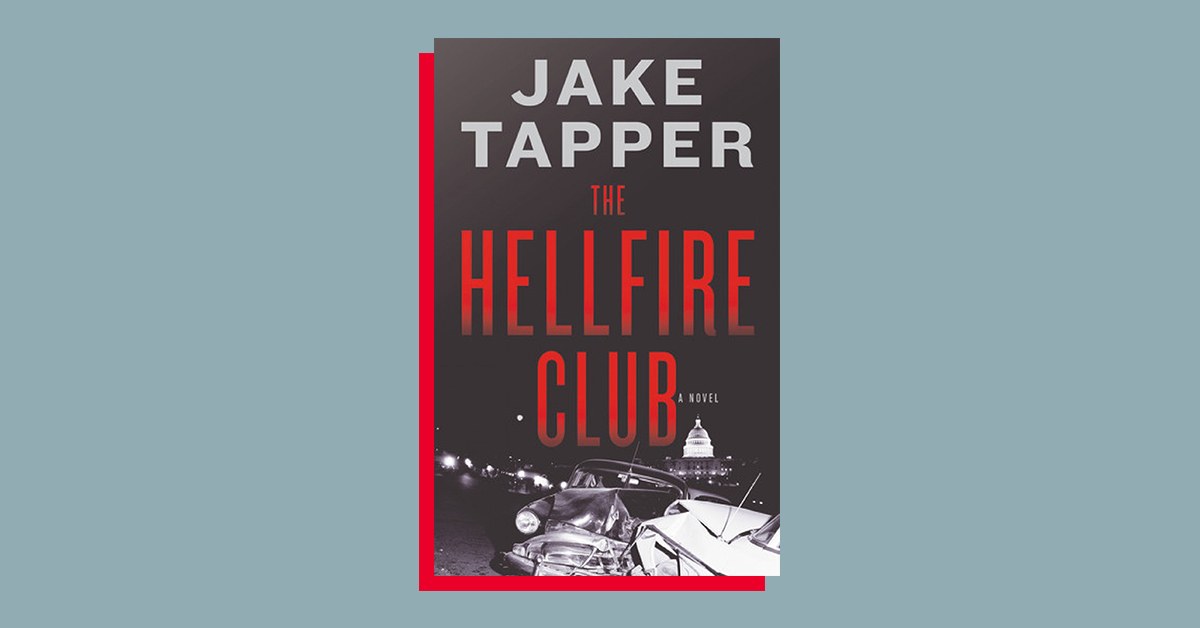
Jake Tapper on 'Hellfire Club': I Knew I Wanted to Write a Strong Woman


If you’ve taken Fiction 101, you may be aware of the golden rule: Write what you know. CNN chief Washington correspondent Jake Tapper stuck to this idea when he wrote his debut political thriller—to an extent. The Hellfire Club is rife with Beltway intrigue and backroom deals, but Tapper’s leading lady is what kept us turning pages. And we’re not alone: Margaret has been praised by Nicole Wallace and Elizabeth Banks, and is perhaps best described by a member of Senator Kirsten Gillibrand‘s staff as a “resourceful badass” and “true queen.” We checked in with Tapper to find out how it feels to be the creator of a woman readers won’t be able to stop thinking about.

Glamour: I know you’re getting all kinds of praise for your Margaret. Can you tell me a little bit about how she came to be?Jake Tapper: As a reader of thrillers, I was well aware that the usual formula is for a single, studly James Bond type to jump from martinis to romance to shootouts. I knew I wanted Charlie Marder to be married to a woman he was madly in love with, and I knew I wanted her to be strong. I think that’s sexier and more romantic than the normal prototype. As a fan of Nick and Nora from The Thin Man, I started off wanting them to have what I hope is witty repartee. As Charlie begins to compromise his principles, Margaret objects to what’s happening to the man she loves and admires. From there, she took on a life of her own.

Glamour: Have you been surprised by the response?JT: Absolutely. I don’t pretend to be Mr. Woke 2018 or to have any special insight into women. I’m just a normal meatheaded man, though I do read, so I’m aware of feminist criticism of art made by men—the Bechdel Test and such. So I’m kind of amazed readers out there think I pulled it off.

Glamour: What was it like to write a woman who is pregnant? I’d love to hear a little bit about your research here.JT: The first challenge was to give Margaret her own complicated backstory, involving her own family struggles and interests and ambitions. Then I wrote for her as I would for any character, though with more noble motivations, since she’s such a kind person of such character. When the book starts, Margaret has just found out she’s pregnant, so I did a lot of checking with my editor, who happens to be a woman, and also my wife (we have two kids), to make sure the physical challenges she faces as she enters her second trimester were even possible. There were some scenes that had to be rewritten because my editor insisted there wasn’t a pregnant woman alive who who would have Margaret’s stamina.

Glamour: Do you think the experience of writing Margaret has made you a better colleague, husband, or friend—or a more empathic one?JT: The simple answer is no. But I do think it’s make me a more critical reader when it comes to the roles of women in fiction, as written by men, and more appreciative of authors who make the effort to include many different types of characters. Look, I think part of it is, at least as far as I’m concerned, I didn’t want to mess it up. I felt a similar anxiousness about an African American character I wrote, in terms of: Who the hell am I to even attempt to create this character? That trepidation might be part of the issue for some authors. But I’m really glad I tried.


Source link

Categories
Health

'Book Club' Writers Were Told Nobody Wants to See a Movie With Women Over 60—They Made It Anyway


You might be surprised that Book Club—a romantic comedy, in theaters now, about four women in their late 60s whose lives and sexualities are awakened after reading Fifty Shades of Grey*— was written by two people in their mid-30s. But it was a story co-writer and producer Erin Simms and director, producer, and co-writer Bill Holderman wanted to tell. In fact, it took them about six years—and a lot of hustle—to get it made. Now, Simms looks back on the “risk” they took, how they got stars Jane Fonda, Diane Keaton, Candice Bergen, and Mary Steenburgen on board, and more.*

There are two types of risks. For me, the “not doing something” kind is never the one worth taking.

No one asked me and Bill Holderman to write Book Club. We wrote the script in our free time and on spec, meaning, for free. We both had full time jobs at a production company and were developing and producing movies for Robert Redford. If that sounds like a pretty great gig, it was. When we left that safe, comfortable existence to blaze our own trail it was, in a word, risky. (I’m pretty sure “stupid” and “irresponsible” were also frequent descriptors at the time, but I digress.) The thing is, I just couldn’t shake the idea of making a movie starring four female Hollywood legends in leading roles. The idea was too exciting. This was the kind of movie I wanted to see, but it wasn’t going to be easy.

The journey to get the movie made was long and fraught with complications. Our script was bought and held hostage for two years. When we finally regained the rights, many financiers wanted us to cast younger so that their returns would be less “risky.” (There’s that word again.) They told us audiences wouldn’t show up for a film about a mature group over sixty, a group that happened to be made up of four women. When we told them our dream cast was Diane Keaton, Jane Fonda, Candice Bergen, and Mary Steenburgen, they scoffed: “You think actresses like that will take a risk on a first-time director?” Other financiers wanted us to replace the Fifty Shades of Grey trilogy featured in the movie because, according to them, E.L. James would never give us clearance to use her books. I can’t tell you how many times we heard: “Why risk it?”   Book Club was a labor of love, but even more so it was a labor of resilience. It was made independently, on a tight budget, and in just 33 days. When our little movie was acquired by Paramount Pictures with their full support for distribution, the amazement I felt was close to awe. Making this movie gave me a profound sense of accomplishment—not because we completed it, but because we started it in the first place. Because we tried.

It also reinforced something I suspected early on: Other people don’t necessarily know any better than you do. Sometimes it’s hard to believe, but it’s true. So when someone tells me “you can’t” or “you won’t,” I smile inside because I know it’s just another hurdle to clear, because that’s what those opinions are. They are a weeding out process—a test. They are other people’s fear of trying something new or different, something that simply might not work out. Something risky.

PHOTO: WireImage

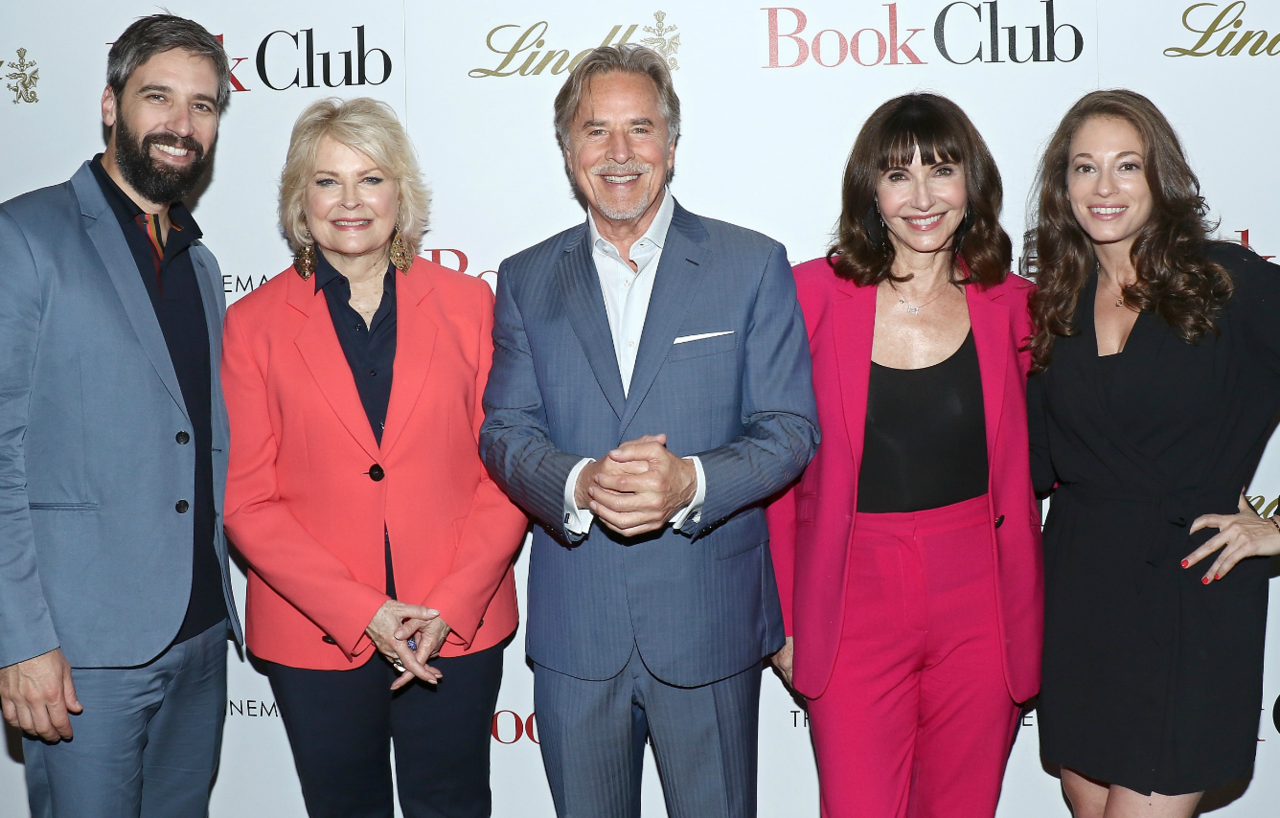
Director/co-writer Bill Holderman, Candice Bergen, Don Johnson, Mary Steenburgen, and co-writer Erin Simms

While I would hardly dare to compare myself with the legends that are Diane Keaton, Jane Fonda, Candice Bergen and Mary Steenburgen, in a way I feel a kinship towards them. These are women who never gave up, never took no for an answer, and who are willing to take the risk. They are also women who have grown up in front of the world and have forgiven themselves for getting older and who are still willing to get out there and try new things no matter the outcome.  It’s the survivor, badass, never-say-die quality in each and every one of them that takes the fear out of getting older for me and makes this movie an actual joy to see (and frankly kind of a miracle).

Those are the themes that inspired this movie: Taking chances and challenging yourself, no matter your age; looking forward instead of looking back, and relying on the beauty of female friendship to carry you along the way. For me, the risk was always the reward.

As the opening day for Book Club arrives, I find myself less focused on its performance and more grateful for the journey. Although it would be nice if this demographic proved to the industry that yes, people will show up if you give them something to show up for!

As the great T.S. Eliot wrote, “For us, there is only the trying. The rest is not our business.” Here’s the thing about trying: It never gets old. And if trying never gets old, then maybe trying is the key to staying young at any age. Furthermore, if the four actresses who star in Book Club are any indication, then without a doubt, the future really is bright.


Source link