And sometimes, Gillian, I look back at the beginning, and I think, “Who was I then?” It’s like an era. And I’m definitely not the same person now, so much has happened. You write your books, but your books write you as well.
Jacobs: In your memoir, Giving Up the Ghost, you wrote, “So now that I come to write a memoir, I argue with myself over every word. Is my writing clear: or is it deceptively clear?” Does that weigh on you when you’re writing someone else’s story? Did you feel any of that when you were writing Thomas Cromwell?
Mantel: I think this question of, “Am I clear, or am I too clear?” is something that every writer of historical fiction has to think about, because the story that you know as the writer is almost infinitely complex, and you have to find a way of making it clear to the reader, but not too clear, because that would be to cheat the reader. Either because you’re oversimplifying, or you’re pretending you know more than you do. Because what’s always interesting are the ambiguities, the gaps of what’s gone missing from the historical record.
And in the same way, when you write a memoir, the bits that you’re putting on the page are the bits you can bear to think about. The bits in some way, you’ve come to terms with. And my memoir, Giving Up the Ghost goes right from early childhood, and it then picks up when I’m a young adult, but it doesn’t have much about my teenage years, because I just wasn’t ready to write about them.
And it might sound strange: You get into middle age, and you’re not ready to deal with that material. And now, I’m not sure… I don’t know whether I’m ready to deal with it now. But on the other hand, those things that you haven’t faced, or you’ve not yet faced—it might be that the source of your power as a writer resides in those hidden things. They needn’t be fully expressed on the page to be present and kind of charge you up day-by-day as you write.
It’s the same way really with Cromwell’s early life, which none of us know very much about. You see, rather than trying to make up a whole story that would account for him, for his birth till he comes onto the historical record, I’ve said, “No, what I’ll do is, I’ll give him fresh memories when he can bear to remember something.” Or sometimes the memories force their way through, and he has no choice.
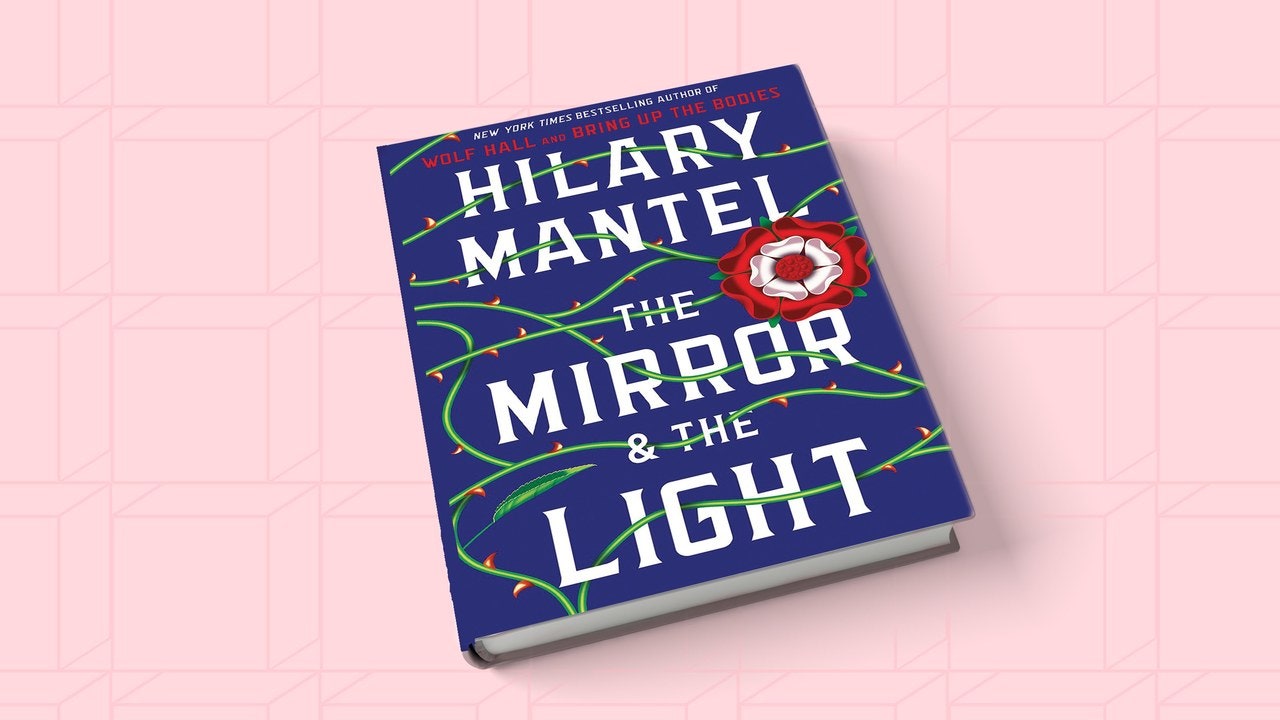
But I’m interested in a way that as you go through your life, your memories change. It’s quite wrong to say that the past doesn’t change. It changes behind you, and every time you try to remember back, in a sense, you’re making a fresh version. What you’re doing is you’re holding up a mirror, and really, that’s why the book is called The Mirror and the Light, because it’s a mirror to the books that have gone before and it has fresh light.
Jacobs: Did you feel the weight of the first two books, as you sat down to write the third, or were you still just so immersed in the story and the characters, that it was more of an internal pressure than external one?
Mantel: I felt internal pressure. So much has happened for these books and the prizes, and the reader expectations, and so on. But I think when I’m actually writing, I’m just in 1536, or whenever it is. And the pressure comes from me, and the rest of the world has receded, and the world of Thomas Cromwell is more real. And then of course, you emerge, breaking into the daylight, saying, “I’ve been away.”
Gillian Jacobs is an actor and director, best known for her roles on the TV shows Community and Love and the short documentary The Queen of Code for ESPN. Her coming projects include the films I Used to Go Here and Fear Street. She’ll direct an episode of the documentary series 616 for Disney+.