Categories
Health

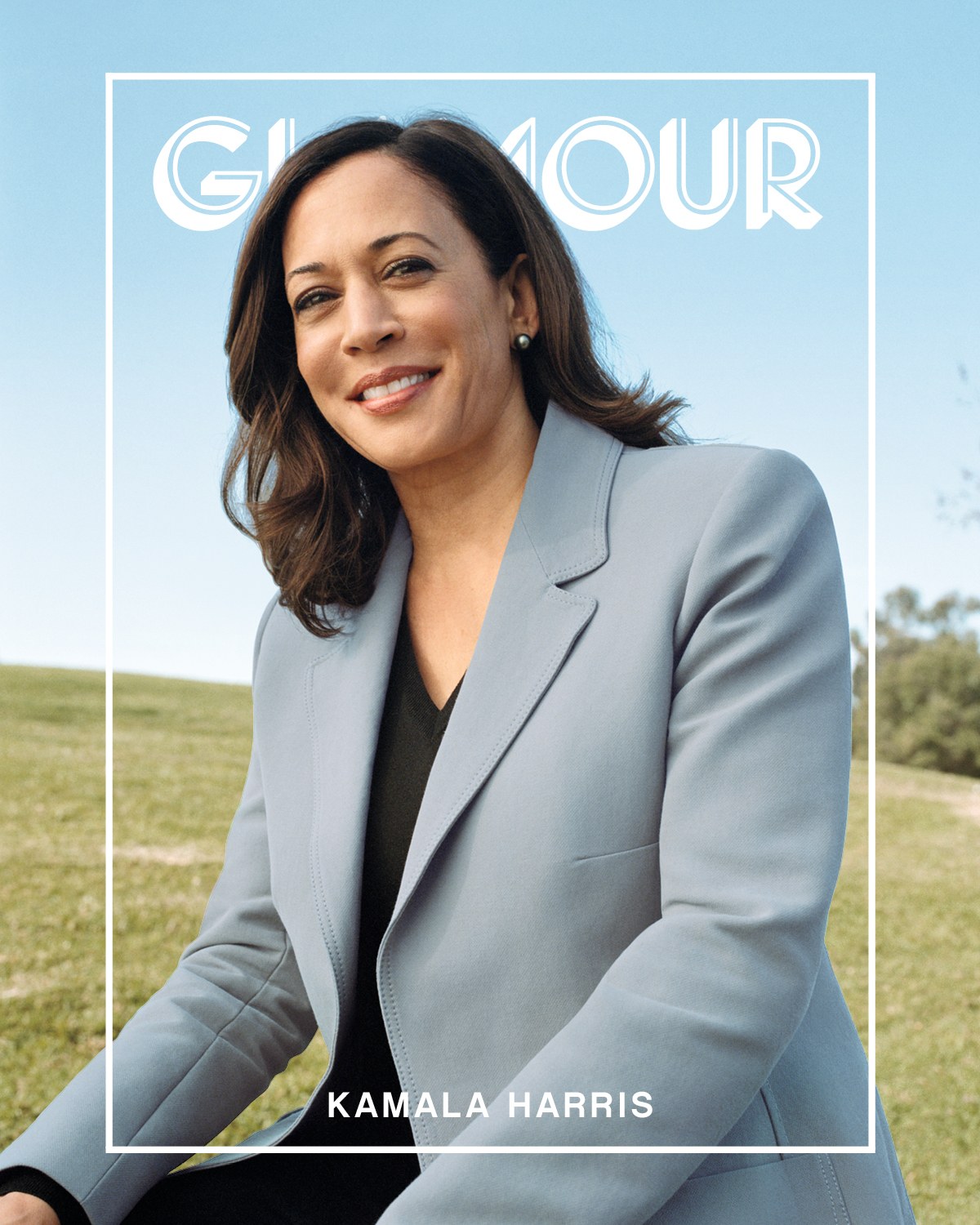
Kamala Harris Is the Politician America Needs Right Now


If you want to ask Senator Kamala Harris whether she’s planning to run for president, keep in mind her favorite Cardi B track: “Be Careful.”

The California Democrat will answer with polite exasperation because to discuss the race with her now, she believes, implies that political ambition motivates her work in the Senate. Instead it’s a deep sense of justice that drives her. “I’m just trying to get at the truth,” says Harris, 54. “I don’t believe my time is to sit here and spew poetry. It’s not for some kind of performance art. It’s not about grand gestures.”

Still, the narrative of her rise is the stuff great political careers are built on. Elected in November 2016, Harris is the lone African American woman in the Senate and its first ever Indian American. She was appointed by Democratic leadership to a seat on the powerful Senate Judiciary Committee and has pushed legislation centered around national security, civil rights, and bail reform (an issue on which she has found common ground with Senator Rand Paul, a Republican from Kentucky).

PHOTO: Zoe Ghertner/Art Partner/Courtesy of Vogue

Outside Washington she’s gained fans and critics for her well-documented blunt talk. She’s been on the front lines of every major issue in 2018, and the viral clips add up: Harris grilling Secretary of Homeland Security Kirstjen Nielsen about the Trump administration’s controversial child-separation policy; staring down Attorney General Jeff Sessions over his contacts with Russian nationals; pressing then Supreme Court justice nominee Brett Kavanaugh to name laws that govern the bodies of men (as abortion laws govern the bodies of women). After that exchange left Kavanaugh flustered, Trevor Noah, host of The Daily Show, tallied the scorecard: “Goddamn, Kamala Harris brings it.”

Harris credits her childhood as a daughter of immigrants for her confidence—even swagger. Her mother, Shyamala Gopalan Harris, a student from India, and her father, Donald Harris, an economics student from Jamaica, met as activists in the civil rights movement. As children, Kamala and her sister, Maya, followed them to marches. “It was the sixties and seventies, a charged time where everyone in my life was very actively involved,” Harris says. “One of the soundtracks of my childhood is ‘Young, Gifted and Black.’ It was about being told you can do anything you want to do.”

“My mother always told me, ‘You may be the first to do many things,’” she says. “‘Make sure you’re not the last.’”

But Harris absorbed another message too: You’re accountable. After her parents divorced when she was seven, her mother emphasized it. Harris remembers coming home and complaining about some mishap at school. “Other kids’ parents would give them a big hug, ‘Oh, what happened, I’ll handle that,’” she recalls. “My mother would look at me: ‘Well, what did you do?’ ” Harris learned to make her peace with it: “I was like, ‘You never took my side.’ I realized she was teaching us that you’ve got to identify your position of power in a dynamic and not let things just happen to you.” At Howard University, Harris joined the debate team and became a member of Alpha Kappa Alpha, the country’s first African American sorority. Jill B. Louis, who pledged in spring 1986 with Harris, remembers a calm about her even then. “She was always a model of stability and composure,” Louis says. “Night or day, she was never rattled.”

Harris went on to law school at University of California Hastings College of the Law and became a prosecutor, determined to enact criminal justice reform from within. “There is certainly a very important role to be played being on the outside,” she says. “But there is also a role to be played being on the inside at the table where the decisions are being made.” After, she served as district attorney of San Francisco and then was elected attorney general of California. There she worked in the trenches with now Senator Catherine Cortez Masto (D–Nev.). “When you’re the top law enforcement officer of the state, you are going to be surrounded mainly by men,” says Cortez Masto, who was attorney general of Nevada at the time. “Some, but not all men, are going to be dismissive. You don’t let that slow you down. The Kamala Harris that I know is not going to be forestalled by anybody trying to get in the way of her doing her job.”

Sitting on a couch in her Senate office, across from a bust of Thurgood Marshall, the first African American Supreme Court Justice, Harris connects her time as a prosecutor to her responsibilities now. It’s the last week of September, and a vote on Kavanaugh looms. She knew the nation was overdue for a public conversation about sexual assault, she says. When she’d overseen jury selection for such cases as an attorney, men and women would often ask to be excused. Behind closed doors, they’d say, stricken, “I don’t want to share this in the open courtroom because I’ve never told anybody, but I cannot sit on this jury because that happened to me.” Not long ago, after a black-tie event, an acquaintance’s wife sent her a note. “When she was 14, she was raped by an 18-year-old student,” Harris says. The woman had kept it a secret for years, but now she implored: “Please fight for women everywhere whose stories may not have been told.

“Leaders need to do is speak truth, even if it’s an uncomfortable truth. I think it is really important that we are fighting for the best of who we are as a country, and I do believe we are better than this.”

Such stories are her motivation now, despite attacks from all sides. Both conservatives and even some progressives have taken up the hashtag #neverkamala to voice their concern that she’s either too liberal or not progressive enough. The White House Twitter account took aim at her in July, tweeting “@SenKamalaHarris, why are you supporting the animals of MS-13? You must not know what ICE really does,” after Harris called for Immigration and Customs Enforcement to be rebuilt “starting from scratch.” (Harris tweeted back: “As a career prosecutor, I actually went after gangs and transnational criminal organizations. That’s being a leader on public safety. What is not, is ripping babies from their mothers.”)

In the meantime, Harris has raised over $5 million to help elect Democrats in the midterms, proof she’s a bankable leader. Her second book, The Truths We Hold: An American Journey, is set for release in January 2019, well-timed for the unofficial kickoff for the 2020 race. About President Trump, she pulls no punches: He “has decided to, I think, spew hate and division,” she says. She’d like to take a different path. “One of the things that all leaders need to do is speak truth, even if it’s an uncomfortable truth. I think it is really important that we are fighting for the best of who we are as a country, and I do believe we are better than this.”

Yamiche Alcindor is the White House correspondent for PBS NewsHour and a political contributor for NBC News and MSNBC.




Source link

Categories
Health

The Changing Face of Beauty In America


The first thing you notice is the lips. No, the eyes. Well, not so much the eyes themselves, but the eye region: the plump cheeks, the bold brow, and the plumed lashes offset by all that dewy, sculpted skin. Maybe you see beauty. Maybe you see artifice. Maybe you want some of it anyway. The good news? You have options.

We’re living in the age of facial tweaks. In addition to the rising number of masks, serums, and contour kits we’re buying, a growing number of American women are taking it a step further and seeking treatments that won’t rinse off in the pool. According to the latest report from the American Society of Plastic Surgeons, the use of minimally invasive cosmetic procedures grew by 186 percent between 2000 and 2017. The favorites include Botox, up 819 percent in the same period, fillers, up 312 percent—collagen is out, hyaluronic acid, in—and laser-skin resurfacing, up 244 percent. (Botox and other neurotoxins temporarily paralyze muscles, which leads to a softening of the wrinkles those muscles create. Fillers, which plump skin, add volume to lips and cheeks, fill out the area around the eyes, and smooth wrinkles.)

Meanwhile, the “going under the knife” variety of plastic surgery is down 6 percent in the same timeframe, with nose jobs down 44 percent, chin augmentation down 40 percent, and eyelid surgery down 36 percent.

So how, exactly, is all this reflected in the faces of the women around us? We know the answer in big, coastal cities, where many women are inspired by their reality-TV-star neighbors and tend to go for a more-is-more approach when it comes to their faces. While they may not go full Kardashian-Jenner-West, the family’s influence is evident, especially in New York and Los Angeles. But what about the rest of the country? Are women elsewhere seeking out Botox and fillers with equal gusto? And, if so, are they looking for a radical transformation? Or subtle tweaks to their “problem spots”?

Glamour.com reached out to plastic surgeons, medical spa employees, and women in eight states across the country to learn what treatments local women are turning to, and what they’re hoping to achieve with them.

Plastic surgeries and cosmetic procedures remain rare in New Hampshire, which seems to have the most trigger-shy women among the states we surveyed. And when women do go under the knife or needle, they don’t like to talk about it—with each other, other the press. Many of the plastic surgeons and medical spas that we reached out to refused to speak with Glamour.com. This didn’t happen in the other seven states.

“Women here are more skeptical and conservative,” said Dr. Lawrence Gray, a plastic surgeon in Portsmouth, New Hampshire. While he sees a demand for fillers and Botox, they’re mostly used to address aging concerns—not to create a whole new face. He said lip lifts are growing in popularity, as they create a fuller lip that some feel appears more natural than fillers.

“It’s definitely not about creating what isn’t there,” said Emily Sullivan, a physician’s assistant at Concord Med Spa in Concord, New Hampshire, who uses Botox and fillers to smooth her face. “Women here get nervous about looking like a Kardashian or Joan Rivers. There’s not a ton of knowledge about what aesthetic procedures can achieve. It’s just not super-popular here compared to the rest of the country.” She said the vast majority of women she sees in the local supermarket or mall don’t appear to use fillers. “It’s maybe 10 to 15 percent.”

Thought facial tweaks don’t appear to be popular, overall, in New Hampshire, the youngest fans in the state are getting a little bolder. “People see social media and want that look,” said Jennifer Lawson, a surgical scheduler for Richard Zeff, a plastic surgeon in Stratham, New Hampshire.

Still, the culture surrounding plastic surgery remains hush-hush. Sullivan said the over-40 women she knows tend to keep their treatments entirely to themselves, while women in their 30s tend to tell one or two close friends. “There’s no shame or guilt, but they’re still close-lipped about it.”

Arizona has two vastly different plastic surgery cultures: In Phoenix, the state’s most populated city, and nearby Scottsdale, women whose looks were obviously inspired by the Kardashian-Jenner-Wests are a common sight. In Sonoran Desert-adjacent Tuscon, women “want to look like themselves, but refreshed,” said Dr. Raman Mahabir, a Scottsdale plastic surgeon and editor-in-chief of the American Society of Plastic Surgery’s education network. “You have that sharp contrast.”

What’s popular in Phoenix and Scottsdale? “I still have my original nose and my boobs. It’s rare around here,” said Phoenix resident Teresa Strasser, 48, an Emmy-winning writer and co-host of The List. “The lips here are not conservative. The lips and boobs are competing to see who can be most inflated. I don’t know who’s winning. Maybe we’re all losing.”

Strasser said plastic surgery, including Botox and fillers, appears to be more common in Phoenix and Scottsdale than in Los Angeles, where she used to live. There’s also a lot of enthusiasm in the Phoenix area, she said, for facials and skin-rejuvenating treatments.

From what she’s seen, women often start small and then continue to tweak until there’s little left to do. “You add a little of this and it’s so pretty,” she said. “So you want you more.”

With this enthusiasm comes little taboo. Strasser said people talk about it openly—and exchange notes: “There is not a lot of derm-shame here. Nobody cares.”

Many Minnesotans are in pursuit of the youthful femininity that a syringe of filler can offer.

“People think of us as a flyover state, but we still really see a lot of volume with our fillers, Botox, and skincare,” said Kally Karjala, a medical aesthetician at Edina Plastic Surgery, located in an affluent suburb outside of Minneapolis. “They’re out there, people do want them. They just might not talk about it as much.” Her patients are mostly 40 and older, though she does see women in their 20s and 30s as well. The younger patients, she said, want the #Instaface look—poster child: Kylie Jenner—but they want to enhance their natural beauty, and “do it without looking extreme.”

“We all want to look like Kylie,” said Samantha Prestidge, a 22-year-old web developer in Minneapolis, who said she and her friends are inspired by what they see on social media. “I think the Minnesota version of Kylie is less about her body, and more focus on the top end. We want to be youthful looking, with a feminine face.”

Dr. Joe Gryskiewicz, a plastic surgeon in the Twin Cities said, that his younger patients tend to go for bolder looks with fillers and neurotoxins. “The younger they are, the harder they want to hit it,” he said. “They want to like what they look like in their selfies.”

Oregonians aren’t against getting work done, but they’re not willing to give up on their individuality in the process.

“Our community is about being different. Portland prides itself on being less cookie-cutter than other places,” said Portland plastic surgeon Dr. Juliana Hansen. She said the women she sees of all ages want to look like themselves, not like one particular celebrity. “Our version of beautiful is so much wider. … People here aren’t buying into this notion that there’s one look that’s great or beautiful.”

Heather Moffenbeir, a 31-year-old registered nurse, began getting Botox in her forehead and filler in her lips last year. She said her goal with Botox was never to achieve a completely smooth look.

And while she’s noticed a rise in the use of injectables in the Portland area, the effect tends to be subtle. “There’s way less vanity here than in other cities,” she said. “Obviously they want to look younger, but they look for a natural-looking way to do it. And they don’t like to talk about it when they get things done.”

Kentucky women want a polished, feminine look with a little glamour, and they’re not ashamed to get help to achieve it.

They’re “looking at Kim Kardashian, they’re all looking at social media, but they’re much more conservative than that,” said plastic surgeon Dr. Sandra Bouzaglou, who has an office in Lexington, Kentucky, and also works in Ontario, Canada. “They have the same reference points” as the rest of America, she said, but they’re not going to extremes.

Marica Jenkins, 42, an order-filler at American Greetings Corp., said her favorite source of inspiration is the Bravo Housewives franchise. “They’ve influenced me more so than the Kardashians, both in terms of treatment and look,” she said. Jenkins gets Botox and fillers regularly to smooth and plump, and had a facelift at 40. “It’s really natural. I didn’t go crazy overboard.”Her most recent tweak was a lip lift: “I’m six weeks out and absolutely adore it.”

Dr. S. Randolph Waldman, a plastic surgeon in Lexington, Kentucky, said he’s seen a rise in patients interested in filling out their lip and cheek areas in recent years. “They’re recognizing the importance of the mid-face, even at younger ages.” Still, many request “a subtle, natural looking, result.”

While the women of Baltimore are well aware of the #Instaface and there seems to be a small population of Kylie wannabes, the majority of women opting for facial tweaks there want to look like a better version of themselves.

Dr. Michele Shermak, a plastic surgeon in Baltimore, said her average patient wants to “normalize, not exaggerate” her look. “People want to look refreshed and proportionate, and get back to the middle of the spectrum,” she said. They want fillers and Botox to help them look “like they’ve been on a vacation, not in the doctor’s office,” she said.

Women in Maryland “don’t use fillers and Botox like make-up,” said Amy Ford, a surgical assistant at Dr. Shermak’s office.

Mesha Ross, 40, who owns Lux Lash Spa in Pennsylvania, just over the Maryland border, said she got injections to feel rejuvenated. “I had kids, and saw my body and face transform for the worse,” she said.

She also got fillers in her lips, which she said was controversial among her African-American peers. “They question why I’m doing it,” she said. “It isn’t to make me look like Kylie Jenner. I do it get a little fuller, but I don’t get ridiculous with it.”

Ross said that the women she knows seek inspiration from plastic surgeons’ Instagram pages, not from celebrities. “What entices us are the before-and-afters of regular people,” she said. “This is the big thing. Who did her butt? Who did her face? That’s what we want to know.”

Like Arizona, we saw two distinct plastic surgery cultures in Utah: In Park City, which has a large population of transplants from big, coastal cities, women tend to go for a bolder, more obvious look. In Salt Lake City, there’s equal enthusiasm for facial tweaks, but the desired effect is more muted.

Plastic surgeon Dr. Larry Sargent said Park City clients prefer minimally invasive procedures that have no downtime, including injectables and lasers. It’s “more of a healthy, athletic sort of look,” he said. “They don’t have any problems having something done,” but the goal is to “look youthful and fit, like you’re taking care of yourself.”

Dr. Renato Saltz, a plastic surgeon with offices in Salt Lake City and Park City and president of the International Society of Aesthetic Plastic Surgery, said the “mommy makeover”—a tummy tuck and breast lift with optional augmentation—is popular among Salt Lake City moms, who also get facial tweaks to help them maintain a vibrant look.

Maddie Bryant, a 23-year-old student in Salt Lake City, said women there, above all, like to look younger: “Kind of ageless.” She gets chemical peels and fillers in her laugh lines. “I saw them peeking through and I wanted them to be gone,” she said. “It’s definitely a smoother look.” Facial tweaks are common among the women she knows in their late 20s, who get Botox and fillers, often in their lips.

She said Salt Lake City women want to look good and are inspired by celebs’ appearances, but “there’s a limit to how much we’re getting done. I’m not going to take away every single flaw. I just want to slow down [aging] a little.”

Women in Ohio embrace plastic surgery, including minimally invasive treatments, but most don’t want to look too “done.”

“We’re down to earth, but we also want to look like rock stars,” said Dr. Anne Taylor, a plastic surgeon in Columbus, Ohio. While she’s seen a big rise in women, particularly younger ones, seeking fillers to make them look more youthful, they don’t want their faces to look “pulled” or fake. She said a lot of her patients enjoy the impermanence of fillers, and often view them as an opportunity to “test out a new look.”

“I don’t have one friend who doesn’t [use fillers] to enhance and contour. Everybody gets filler under their eyes,” said Allison Newman, who does marketing and PR for Ponsky & Frankel, a plastic surgeons’ office in Cleveland. “Getting Botox … is as common as getting your nails done.” But the end goal isn’t #Instaface: “We want to feel pretty and groomed.”

Rachel Fife, 45-year-old stay-at-home mom, said that in Cincinnati, fillers and Botox are common among the women she knows as well. But, unlike in Cleveland and Columbus, the effect in Cincinnati isn’t always subtle. “Everyone’s trying to look the same with the big huge lips,” but she says the results aren’t always good.

Fife gets fillers to help reverse the effects of aging and plump her face. She said it can be hard finding someone who’ll give her subtle work, so she often turns to RealSelf to find good doctors. “When you live in a small city, you need help to scope out the scene,” she said


Source link

Categories
Health

Donald Trump and His Son Think the #MeToo Era Is 'a Very Scary Time' for Men in America


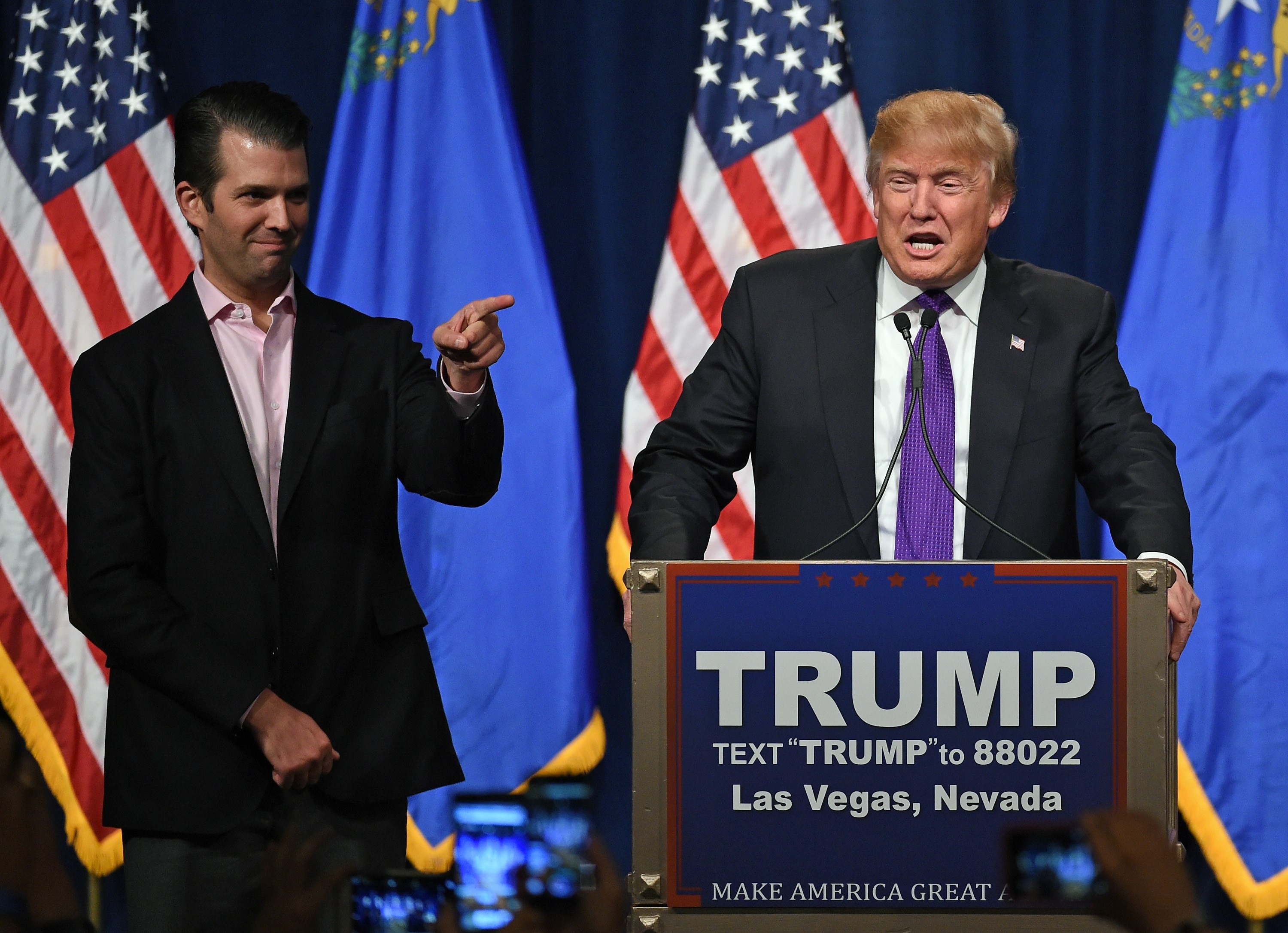
As women rally and mobilize around survivors of sexual assault, and coming in a week that will see the one-year anniversary of the #MeToo Harvey Weinstein allegations, President Donald Trump said Tuesday that he’s highly concerned for the safety of America’s young men as he answered questions about the FBI inquiry into his Supreme Court pick, Brett Kavanaugh.

While en route to board Marine One, NBC National Correspondent Peter Alexander asked the president what message he had for both young men and women in America right now.

“Well, I’d say that it’s a very scary time for young men in America when you can be guilty of something you may not be guilty of,” Trump very quickly replied. “This is a very difficult time. What’s happening here has much more to do than even the appointment of a Supreme Court Justice. You could be somebody who was perfect your entire life and somebody could accuse you of something. Doesn’t necessarily have to be a woman, as everybody says, but somebody could accuse you of something and you’re automatically guilty. But in this realm, you’re truly guilty until proven innocent. That’s one of the very very bad things that’s taking place right now.”

According to a White House pool report, filed by Hunter Walker of Yahoo! News, Trump was then asked if he had a message for young women. Trump reportedly replied, “Women are doing great.”

Trump’s comments came just one day after a similar question was asked by the Daily Mail to his son, Donald Trump Jr.

“I’ve got boys, and I’ve got girls. And when I see what’s going on right now, it’s scary,” he told the outlet. When pressed on who he was more frightened for, he replied, “Right now, I’d say my sons.”

“For the people who are real victims of these things, when it is so obviously political in cases like this, it really diminishes the real claims.”

It should be noted that false reports count for between 2 and 10 percent of sexual assault allegations, according to the National Sexual Violence Resource Center. A sexual assault occurs every 98 seconds, and 90 percent of adult rape victims are female. In total, one out of every six American women has been the victim of sexual assault or rape in her lifetime.

It shouldn’t be surprising that Trump and his son would side with the accused, especially when you consider that 20 women have come forward with allegations that the president engaged in sexual misconduct.

But, it doesn’t make it any less shocking, especially when the numbers prove them wrong.

Related Content:

Donald Trump Just Told White House Reporter Cecilia Vega She ‘Never’ Thinks

Donald Trump Takes Aim at the ‘Me Too Generation’ at Montana Rally


Source link

Categories
Health

Miss Michigan Called Out the Flint Water Crisis During the Miss America Pageant


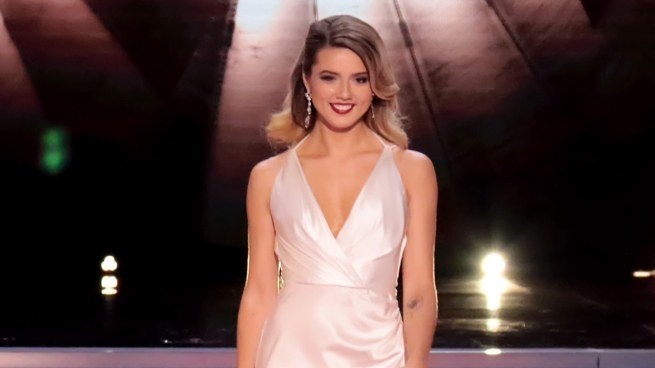
Last night, Nia Franklin of New York was crowned the latest Miss America, but it is Miss Michigan, Emily Sioma, who is making headlines thanks to her short introduction during the broadcast.

Instead of using the moment to highlight her achievements or qualifications—she graduated with a degree in women’s studies and works to support survivors of sexual violence—Sioma instead chose to call attention to the continuing water crisis in Flint, MI. “From the state with 84% of the United States’ fresh water but none for its residents to drink, I am Miss Michigan Emily Sioma,” she said.

The city’s water problems have been ongoing since 2014 when it was found that the water in the city’s pipes was contaminated with high levels of lead and other toxins.

Social media users were quick to praise Sioma for her bold move with one writing this was “clearly not your mother’s Miss America pageant.”

Another said, “Been rolling my eyes all weekend that Miss America is still a thing but MISS MICHIGAN FOR PRESIDENT.”

This is surely the type of positive attention that the Miss America organization is looking for as it continues to rebrand and attempts to focus more on the intellect of its contestants. Back in June, board of trustees chairwoman Gretchen Carlson announced that the pageant would no longer include its famous swimsuit competition. “We are no longer a pageant,” Carlson told Good Morning America at the time. “We are a competition. We will no longer judge our candidates on their outward physical appearance. That’s huge.”

“Who doesn’t want to be empowered, learn leadership skills, and pay for college and be able to show the world who you are as a person from the inside of your soul,” she continued. “That’s what we’re judging them on now.”

While Sioma didn’t even make the final 15 in the competition, her message was most definitely heard.


Source link

Categories
Health

America Ferrera Is Breastfeeding in Public—and Doesn't Care What You Think


There’s nothing stigmatized about this. Not one bit.

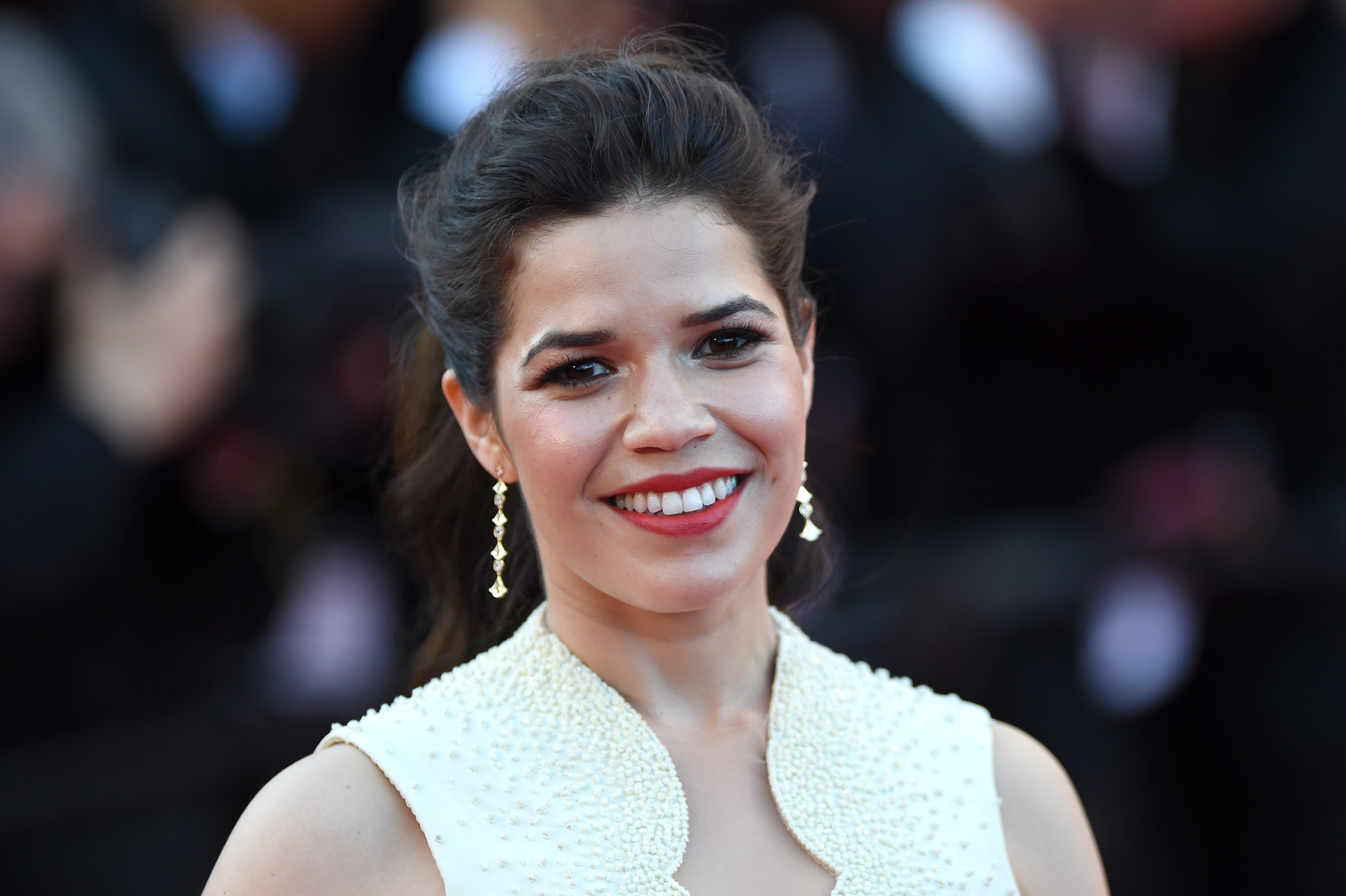
In support of World Breastfeeding Week, America Ferrera just posted a cute photo to Instagram to stand with mothers choosing to breastfeed their children. In the photo, which blurs out her newborn son Sebastian’s face with a Phineas and Ferb character, Ferrera is smiling as her son feeds. “They’re my boobies, and I’ll feed where I want to – feed where I want to – feeeeed where I want to,” she wrote as the accompanying caption, adding “#worldbreastfeedingweek.” The week, coordinated by the World Breastfeeding Action, aims to protect, promote, and support mothers who wish to breastfeed in public or private. “In a world filled with inequality, crises and poverty, breastfeeding is the foundation of lifelong good health for babies and mothers,” the official website reads. Similar to Ferrera, singer-songwriter Alanis Morissette also posted an Instagram photo that showed her breastfeeding her child in support of the initiative.

While breastfeeding doesn’t suit all mothers—and that’s totally okay, formula is just as popular with nursing newborns—the issue of whether a woman should breastfeed in public has been divisive as of late. However, public spaces have been making increasingly great strides to accommodate mothers and their post-natal needs, especially involving breastfeeding. Amtrak, for instance, plans to build “lactation suites” in five stations across the country for mothers who want to pump or feed on the go, while more and more airports are creating special rooms for mothers to do their business in peace.

Perhaps most importantly, though, every single state in America has made it legal for mothers to breastfeed in public without fear of retribution or discrimination as of last month. In fact, the Pope is very pro-breastfeeding in public, calling it a “language of love.” Hard to argue against that … or U.S. laws.

Related Stories:

America Ferrera Just Welcomed Her First Child—and the Pic Is So Cute


Source link

Categories
Health

Families Belong Together March: Watch Incredible Speeches by Diane Guerrero, Kerry Washington, America Ferrera, and More


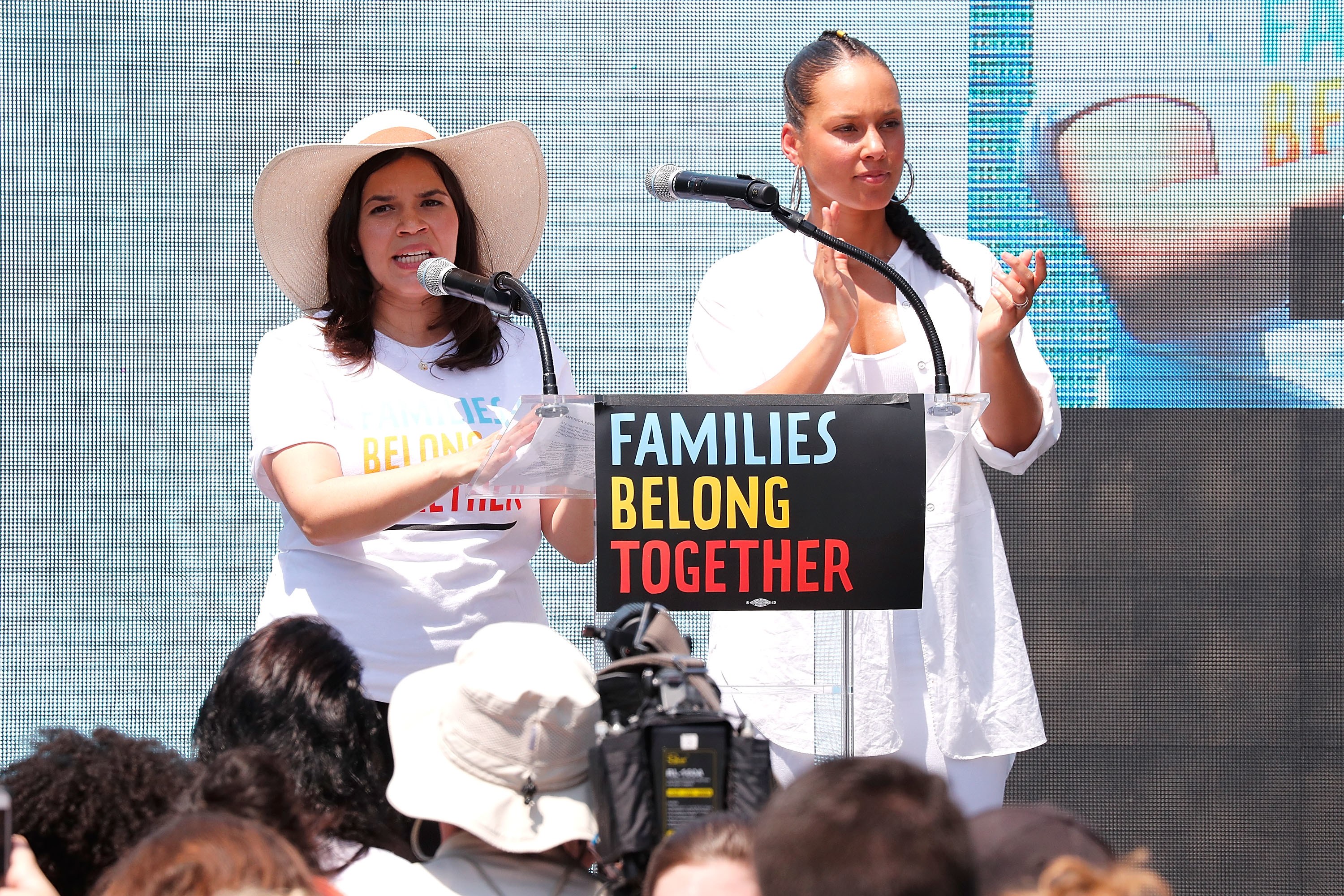
Tens of thousands gathered across the U.S. for Families Belong Together marches on Saturday, which took place in over 700 locations, including Boston, Los Angeles, New York, St. Louis, and Washington, D.C. According to CNN, protesters organized around three main tenets: that families separated at the U.S. border be reunited immediately, that the government end family detention, and that President Donald Trump’s administration discontinue its zero-tolerance immigration policy.

A number of high-profile figures—including celebrities, politicians, and activists—took to the stage at various Families Belong Together marches to share their own stories of immigration and calls for change. America Ferrera spoke as a child of Honduran immigrants; Diane Guerrero shared her experience, having been separated from her family as a child; a 12-year-old named Leah opened up about her fears of losing her mom to deportation. Read on for some of the most poignant speeches from various events across the country.

Diane Guerrero in Washington, D.C.

“I am here today as a woman who as a young child was separated from her family,” Guerrero, who’s appeared on Orange Is the New Black and Jane the Virgin, told the crowd in Washington, D.C. “I am here today to be painfully honest about the damage these government policies do to human beings, do to kids. Even some 17 years later, I can still remember how it felt when I first cried out for my parents and they couldn’t answer. I have to believe that this an opportunity to rise above the tyranny, the ignorance, the malpractice and believe in change. This is a chance for us to come together as a nation and rise above division and fear. Only then can we stop the separation of families and stop the policies that place children in cages.”

Rep. Maxine Waters in Los Angeles

“How dare you?” Waters asked the Trump administration, in California. “How dare you take the babies from mothers’ arms? How dare you take the children and send them all across the country into so-called detention centers?”

“You are putting them in cages. You are putting them in jails,” the congresswoman continued. “And you think we’re going to stand by and allow you to do that? I don’t think so. Donald Trump, you think you can get away with everything, but you have gone too far when you are trying to break up families in the way that you do.”

Leah in Washington, D.C.

“I am here today because the government is separating and detaining refugee parents and children at the border who are looking for safety,” the 12-year-old said. “Our government also continues to separate U.S. citizen children like me from their parents every day. This is evil. It needs to stop. It makes me sad to know that children can’t be with their parents. I don’t understand why they’re being so mean to us children. Don’t they know how much we love our family? Don’t they have a family too? Why don’t they care about us children?”

“I live with the constant fear of losing my mom to deportation,” she continued. “My mom is strong, beautiful, and brave. She is also a person who taught me how to speak up when I see things that aren’t fair.”

“ICE wants to take away my mom from me. I don’t like to live with this fear,” Leah told the crowd. “It’s scary. I can’t sleep, I can’t study, I am stressed,” she told the crowd.

Sen. Elizabeth Warren in Boston

“The President’s deeply immoral actions have made it obvious: We need to rebuild our immigration system from top to bottom, starting by replacing ICE with something that reflects our morality and that works,” Warren said in her speech.

“President Trump seems to think the only way to have immigration rules is rip parents from their families, is to treat rape victims and refugees like terrorists and to put children in cages,” she told her constituents. “This is ugly, this is wrong, and this is not the way to run our country.”

America Ferrera in Washington, D.C.

“I am here not only as a brand new mother, as the proud child of Honduran immigrants and not only an American who sees it as her duty to be here defending justice,” the actress said. “I am here as a human being with a beating heart, who can feel pain, who understands compassion and who can easily imagine what it must feel like to struggle the way families are struggling right now. It is easy to imagine that I would hope that if it was my family being torn apart, if it was my brother being arbitrarily criminalized, if it was my sister who was being banned, that someone would stand up for me and my family.”

She continued: “It is that simple. This fight does not belong to one group of people, one color of people, one race of people, one gender — it belongs to all of us. What makes humans remarkable is our capacity to imagine. We have an imagination, let’s use it.”

Ferrara also read a letter from a grandfather who wants his separated granddaughter, who’s currently being held in Texas, to be able to live with him in California: “I got the impression the investigator thought I didn’t make enough money. I know I don’t make enough money, but I make enough to care for (you). Everything I have I will give to you.”

Lin-Manuel Miranda in Washington, D.C.

The Hamilton creator sang a lullaby for the kids separated from their parents to the crowd.

John Legend and Chrissy Teigen in Los Angeles

“Making America great doesn’t mean building walls to keep people out; it means continuing to embrace the dreams of immigrants who add to our culture, our economy, and our humanity,” Teigen told the crowd while holding her son, Miles, before introducing her husband, John Legend. “Making America greater most definitely doesn’t mean turning asylum-seekers away or kidnapping their kids to turn them away from coming here.”

Legend performed a new song, “Preach,” which he introduced with a speech. He said: “If you’re committed to this kind of love, it means you believe in justice, but it’s not easy. It’s not a passive activity, it requires you opening your eyes to injustice. To see the world through the eyes of another you’ve got to read; you’ve got to travel to other neighborhoods and other parts of the world. You may have to get your hands dirty. You can’t just talk about it or tweet about it. You’ve got to do something.”

Alicia Keys in Washington, D.C.

“My seven-year-old son is here with me today. His name is Egypt. And I couldn’t even imagine not being able to find him,” Keys said. “I couldn’t even imagine being separated from him or scared about how he is being treated, so this is all of our fight, because if it can happen to any child, it can happen to my child and your child and all of our children.”

She continued by reading a letter from a mom who was separated from her child, which said, in part: “I had spent nights without sleep, searching and searching for my son, not knowing where he was, a torture day by day.”

“Our democracy is at stake,” Keys said, after finishing the letter. “Our humanity is at stake. We are out here to save the soul of our nation. We need all the children reunited to their parents. We demand to end the zero humanity policy. We need to save the Supreme Court and we need to vote, because when we vote, we win.”

Kerry Washington in New York City

“This country comes from immigration,” Washington began. “Slavery is a part of my legacy, I understand the legacy of family separation because slavery is a part of my story and so is immigration. My grandparents on my mother’s side came to this country through Ellis Island in the ’30s from the Caribbean, and they came here like every immigrant seeking better opportunities because of a lack of opportunity in their land — running from poverty, running from racism, running from a place where they couldn’t fulfill a dream. I am the fulfillment of their dream. And I will not stand for somebody else turning this country further down the road of racism and disenfranchisement. Enough is enough!”

She also read a letter from a migrant mother, Margarita, who had been separated from her son—he was in Kansas City, Missouri; she in Portland, Oregon: “‘First they tell you that in a few weeks you will have your child, then in a month then in another month, but they never fulfill their promises. With such delay, I have asked myself, what am I doing wrong? Have I not sent everything they asked for me? I want them to at least allow me to see him one day, if for a while. What mother would not want to have her son in her arms. If only for a moment.'”

Watch Washington’s speech below, or read the full transcript here.

[embedded content]

Cher in Los Angeles

“What I really want to try to impress on you is to vote,” the singer said. “You know, I’ve been through 11 Presidents in my life, and I thought I saw everything, but I have never seen anything like this…. When I was little, women were not introduced by their name; they were introduced by their husband’s name—’this is Mrs. John Smith.’ We had no choice over our bodies when I was little… There was no birth control; there was no such thing as your husband raping you, you know? If a husband beat up his wife and the police came, they would just go, ‘Hey buddy, walk around, you know? Walk around the corner, cool off, and come back.’ So what I’m saying to women is get your friends and vote. Because if you don’t vote, you will not recognize this country and you will lose everything that you will just now take for granted, every right that you have. And I’m not being dramatic—well, maybe I am—but I mean it, OK? I’m trying to impress this upon you because you’ve been through a time, you live in time, when women have freedom. I remember a time when women didn’t have freedom, and I don’t want to see this happen to you.”

Related Stories:

All Your Questions About Trump’s Executive Order on Family Separation, Answered

The Most Powerful Signs From the ‘Families Belong Together’ Marches

A Ton of Celebrities Just Showed Up at the Border to Protest the Separation of Migrant Families


Source link